Construction projects are exciting, but they often leave behind a big mess. Dust, debris, paint splatters, and leftover materials can make a newly built or renovated space unsafe and uncomfortable to use. This is where construction cleaning services become essential. These services focus on removing construction-related dirt and hazards so the space is clean, safe, and ready for living or working.
Unlike regular cleaning, post construction cleaning services are designed to handle fine dust, heavy debris, and hard-to-remove residue left after construction or renovation work. From wiping down walls and fixtures to deep cleaning post construction floors, windows, and air vents, this type of cleaning helps protect indoor air quality and highlights the quality of the finished project.
In this guide, you’ll learn everything you need to know about construction cleaning. We’ll cover the types of services available, why professional cleaning matters, how much it typically costs, how to choose the right cleaning company, and what to expect from local construction cleaning services near you. This article is written to help homeowners, builders, and property managers make informed, practical decisions with confidence.
What Are Construction Cleaning Services?
Construction cleaning services are professional cleaning services designed specifically for spaces that have just been built, remodeled, or repaired. The goal is simple: remove the dust, debris, and leftover mess from construction work so the property is safe, clean, and ready to use.
After construction, even a “finished” space can still have:
- Fine drywall dust on every surface
- Paint drips or adhesive residue
- Sawdust inside cabinets and vents
- Footprints, scuffs, and packaging trash
- Sharp debris like nails, screws, or broken tile pieces
That’s why post construction cleaning is usually more detailed and more time-consuming than a normal clean.
Construction Cleaning vs General Cleaning (What’s the Difference?)
A regular house or office cleaning focuses on day-to-day dirt—things like surface dust, bathroom sanitation, mopping, and tidying.
Construction cleaning is different because it deals with job-site mess and fine particles that spread everywhere. It often includes:
- Removing construction dust from walls, trim, vents, and light fixtures
- Scraping paint spots or grout haze from hard surfaces
- Detailed cleaning inside drawers, cabinets, closets, and built-ins
- Heavy-duty vacuuming with professional equipment (often HEPA filters)
- Safe removal of leftover materials and debris
In short: general cleaning maintains a space, but construction cleaning rescues it after major work.
How Construction Cleaning Prepares a Space for Occupancy
One of the biggest reasons people hire construction cleaning services is because a newly built or renovated place may look done—but it isn’t truly ready to live in or open to customers until it’s properly cleaned.
Construction cleaning helps by:
- Improving indoor air quality by removing fine dust (especially drywall dust)
- Reducing safety risks from sharp objects or slippery debris
- Making surfaces usable (kitchen counters, floors, bathrooms, windows)
- Presenting the property in a “move-in-ready” condition for homeowners, tenants, or buyers
Whether you’ve completed a new build, a kitchen remodel, or a full home renovation, post renovation cleaning services are often the final step that makes the space feel finished.
Types of Construction Cleaning Services
Construction cleaning is not a one-step process. Professional cleaners usually break the work into clear stages, each designed to make the site safer, cleaner, and closer to being fully usable. Understanding these stages helps you know what level of service you need and what to expect at each point.
Rough Cleaning — Removing Bulk Debris
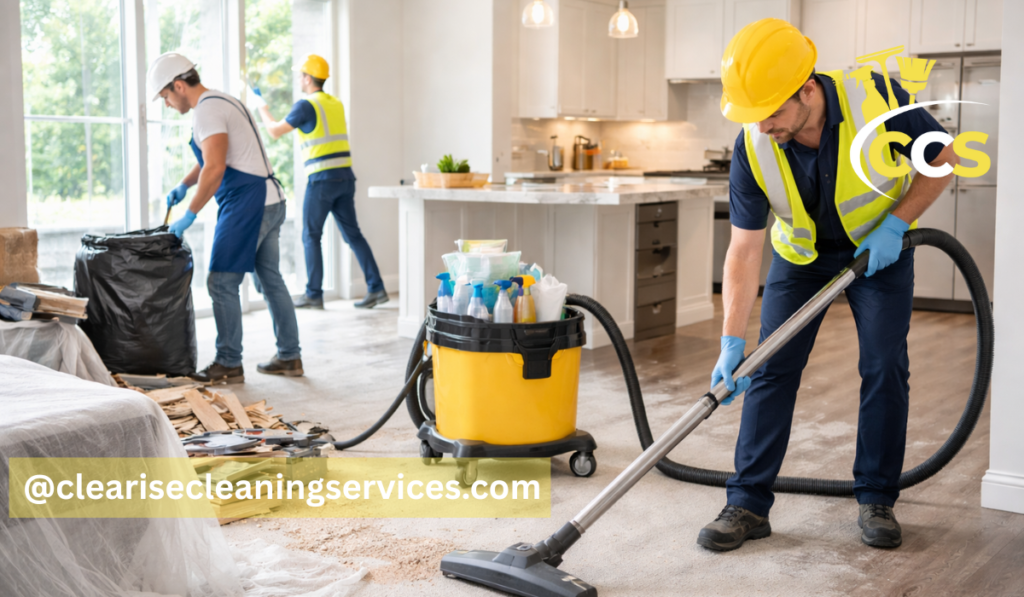
Rough cleaning is the first major cleaning phase after construction work is completed. At this stage, the focus is on clearing out large, obvious messes left behind by builders and contractors.
This phase usually includes:
- Removal of large debris such as wood scraps, drywall pieces, cardboard, and plastic wrap
- Collecting nails, screws, staples, and other sharp materials
- Disposing of protective floor coverings and packaging materials
- Basic sweeping or vacuuming to remove loose dirt and dust
Safety is the main benefit of rough cleaning. Construction sites often contain hidden hazards, and clearing these materials reduces the risk of injuries, damaged flooring, or broken fixtures. Rough cleaning also makes it easier for the next cleaning stages to be done properly.
Light / Detail Cleaning — Dusting & Surface Care
Once heavy debris is gone, the next step focuses on fine dust and surface-level cleaning. Construction dust spreads easily and settles in places people don’t expect.
This phase typically covers:
- Dusting walls, baseboards, trim, and door frames
- Cleaning vents, ceiling fans, light fixtures, and ledges
- Wiping down countertops, shelves, and built-in cabinets
- Cleaning windows, frames, tracks, and glass panels
Detail cleaning is important because fine dust can affect air quality and make a space feel unfinished. This stage is where the property starts to look clean, not just cleared.
Final Cleaning — Ready for Use
Final cleaning is the most detailed stage and is usually done right before move-in or opening. The goal is to make the space fully functional, sanitary, and presentable.
This phase often includes:
- Polishing and mopping hard floors
- Deep vacuuming carpets and rugs
- Sanitizing bathrooms, kitchens, sinks, toilets, and appliances
- Spot-cleaning walls and removing remaining smudges
- A final walkthrough to catch missed areas or touch-ups
After this step, the space should be truly move-in ready, with no visible dust or residue left behind.
Specialty Construction Cleaning Services
Some projects require extra care beyond standard cleaning phases. Professional companies may offer specialty services such as:
- Deep cleaning post construction for heavy dust buildup or neglected areas
- Carpet extraction to remove embedded dust, dirt, or construction residue
- Pressure washing exterior areas like driveways, sidewalks, patios, or building entrances
These services are especially helpful for large renovations, high-end finishes, or properties preparing for sale or inspection.
Residential vs Commercial Construction Cleaning
While the goal is the same—clean, safe spaces—the approach differs between homes and businesses.
Residential construction cleaning services focus on:
- Kitchens, bathrooms, bedrooms, and living spaces
- Protecting delicate surfaces, finishes, and personal fixtures
- Creating a comfortable, healthy environment for families
Commercial or office construction cleaning often involves:
- Larger open spaces and high-traffic areas
- Strict timelines before business opening
- Compliance with workplace safety and cleanliness standards
Understanding these differences helps ensure you hire the right service for your specific project and expectations.
Why Construction Cleaning Matters
After a build or renovation, it’s easy to think, “It looks done, so it’s ready.” But in reality, the cleanup phase is what turns a dusty worksite into a healthy, usable space. Construction cleaning isn’t just about appearance—it’s about safety, comfort, and making sure the property is truly ready for people.
Safety Is Non-Negotiable
One of the biggest reasons construction cleaning services matter is safety.
Construction dust is not normal dust. It often includes very fine particles from drywall, concrete, wood, and insulation. These tiny particles can:
- linger in the air for days,
- settle inside vents and corners,
- trigger breathing irritation, allergies, and coughing (especially in closed spaces).
Professional post-cleaning usually involves thorough vacuuming (often with HEPA filtration), damp wiping, and careful dust removal from hard-to-reach areas.
Also, construction sites can hide sharp debris such as:
- nails, screws, staples,
- broken tile pieces,
- glass shards or metal scraps.
Removing these properly reduces injury risks for homeowners, children, workers, and anyone doing the final walkthrough. It also helps prevent damage to flooring and shoes, which is a common “last-minute” problem before move-in.
Improves Aesthetic & Functionality
Even the best renovation can look disappointing if dust and residue are still everywhere.
Clean surfaces help the finished work stand out:
- Fresh paint looks cleaner and more even once dust is removed.
- New cabinets look sharper when interiors, handles, and edges are wiped down.
- Fixtures and hardware shine when construction film, fingerprints, and debris are gone.
Two areas that change first impressions fast are windows and floors:
- Clean glass and tracks make rooms feel brighter and more high-end.
- Proper floor care removes grit that can scratch surfaces and makes new flooring look truly “new.”
Construction cleaning also improves functionality. For example, when cabinets and drawers are cleaned properly, you can actually use them without wiping them yourself again and again.
Helps Comply With Regulations
In many locations and project types, cleaning isn’t just a preference—it’s part of the handover process.
Depending on the building type, some occupancy approvals and inspections may require the site to be reasonably clean and safe (free of debris and hazards). Even when not officially required, a professional clean helps support:
- smoother final inspections and walkthroughs,
- contractor punch-list completion,
- property handover to owners, tenants, or buyers.
It can also help with insurance and documentation, especially for commercial projects or large renovations where a clean, safe handover reduces disputes and liability concerns.
In simple terms: construction cleaning helps you move from “project completed” to “ready for real life.”
Deep Dive: What’s Included in Post Construction Cleaning
Many people are surprised by how detailed post construction cleaning really is. It’s not just a quick sweep and wipe-down. A proper job follows a structured process to make sure nothing is missed and the space is genuinely ready for use.
Below is a clear, step-by-step look at what’s typically included.
Debris Removal
The first step focuses on clearing out all leftover construction materials and visible mess.
This usually includes:
- Collecting and removing wood scraps, drywall pieces, and packaging
- Safely disposing of nails, screws, and sharp objects
- Removing protective coverings from floors, windows, and fixtures
- Clearing dust piles and loose debris from corners and closets
This stage creates a safer environment and allows cleaners to work efficiently in later steps.
Dusting and HVAC Vent Cleaning
Construction dust travels far and settles deep into a space.
Professional cleaners typically:
- Dust walls, ceilings, trim, baseboards, and door frames
- Clean light fixtures, ceiling fans, and vents
- Wipe air returns and visible HVAC vent covers
- Use controlled techniques to prevent dust from spreading again
This step is especially important for improving indoor air quality after construction work.
Flooring Care (Vacuuming, Mopping, Polishing)
Floors collect more dust and debris than any other surface.
Post construction floor care often includes:
- Heavy-duty vacuuming to remove fine dust and grit
- Damp mopping to pick up remaining residue
- Polishing or buffing hard floors when appropriate
- Careful treatment of new flooring to avoid scratches or damage
Proper floor cleaning not only improves appearance but also protects newly installed surfaces.
Window and Glass Cleaning
Construction work often leaves windows cloudy or streaked.
This phase covers:
- Cleaning interior glass, mirrors, and glass doors
- Wiping window frames, tracks, and sills
- Removing paint specks, stickers, and residue
- Ensuring clear visibility and natural light flow
Clean glass makes a big difference in how finished a space feels.
Sanitization of Bathrooms and Kitchens
Bathrooms and kitchens require extra attention because they are high-use, high-contact areas.
Cleaning typically includes:
- Disinfecting sinks, toilets, tubs, showers, and countertops
- Cleaning inside cabinets and drawers
- Wiping appliances such as ovens, ranges, and refrigerators
- Removing dust from plumbing fixtures and handles
This step ensures these areas are safe, hygienic, and ready for daily use.
Detail Cleaning for Fixtures, Appliances, and Hardware
The final step focuses on the small details that are easy to overlook but very noticeable once the space is occupied.
Detail cleaning often involves:
- Wiping light switches, outlets, and switch plates
- Cleaning door handles, hinges, and knobs
- Polishing faucets and metal fixtures
- Spot-cleaning walls and removing fingerprints or smudges
These finishing touches are what separate a “cleaned” space from a professionally finished one.
Tools, Techniques & Best Practices
Professional construction cleaning services rely on the right tools and proven methods to handle heavy dust, residue, and delicate new finishes safely. Using proper equipment is one of the main reasons professional cleaning delivers better results than DIY efforts.
Essential Tools Used in Construction Cleaning
Experienced cleaners typically use:
- HEPA-filter vacuums to capture fine dust particles without releasing them back into the air
- Microfiber cloths and mops that trap dust instead of spreading it
- Scrapers and blades (used carefully) for dried paint, adhesive, or sticker residue
- Commercial-grade mops and floor machines for large or newly installed flooring
- Personal protective equipment (PPE) such as gloves, masks, and eye protection
These tools help cleaners work efficiently while protecting both the workers and the finished surfaces.
Techniques for Tough Construction Messes
Some construction residue is difficult to remove without the right approach.
Professionals often use:
- Gentle scraping and approved solvents to remove paint splatters without damaging surfaces
- Controlled cleaning solutions for adhesives and tape residue, tested first on small areas
- Damp wiping instead of dry dusting to prevent dust from becoming airborne
- Top-to-bottom cleaning methods so dust doesn’t resettle on already cleaned areas
These techniques come from experience and help avoid costly damage to new finishes.
Eco-Friendly Cleaning Considerations
Many construction cleaning companies now offer eco-conscious options, such as:
- Low-odor, biodegradable cleaning products
- Reduced chemical use in living spaces
- Efficient water usage during floor and exterior cleaning
Eco-friendly methods are especially helpful in homes, schools, and offices where air quality and long-term exposure matter.
How Much Do Construction Cleaning Services Cost?
The cost of construction cleaning services can vary widely depending on the project. There is no one-size-fits-all price, but understanding the main factors can help you budget more accurately.
Factors That Affect the Cost
Size of the project
Larger homes, buildings, or multi-floor spaces require more time, labor, and equipment.
Depth of cleaning required
A light post-construction clean costs less than a full deep cleaning post construction, especially if heavy dust or residue has built up.
Location and service frequency
Prices may vary by city or region, and ongoing or repeat services can sometimes reduce per-visit costs.
Specialty add-ons
Extra services such as deep carpet extraction, pressure washing, or high-window cleaning will increase the total cost.
Typical Price Ranges (General Estimates)
While pricing depends on many variables, rough estimates may look like:
- Small residential projects: often priced per square foot or as a flat rate
- Medium renovations or homes: moderate range depending on detail level
- Large commercial projects: typically quoted after an on-site inspection
Most professional companies prefer to provide custom quotes after reviewing the space, which helps avoid surprises and ensures the right level of service.
How to Choose the Best Cleaning Service
Not all construction cleaning companies offer the same level of quality or reliability. Choosing the right provider can save you time, money, and frustration—especially after a major build or renovation.
What to Look For in a Provider
A trustworthy construction cleaning company should meet a few key standards:
Experience and proper coverage
Look for a company with proven experience in post construction cleaning services, not just general cleaning. Proper insurance and, where applicable, industry certifications help protect you from liability.
Custom service plans
Every project is different. A good provider will assess your space and tailor the cleaning plan to your needs rather than offering a one-size-fits-all package.
Trust and reliability
Check online reviews, testimonials, or ask for references. Consistent feedback about punctuality, attention to detail, and communication is a strong sign of a dependable service.
Questions to Ask Before Hiring
Asking the right questions upfront helps avoid misunderstandings later.
Consider asking:
- Have you completed similar post construction cleaning services before?
- What tools and cleaning methods do you use?
- Do you handle both heavy debris removal and detailed cleaning?
- How flexible is your scheduling, especially if timelines change?
- How is pricing structured, and do you offer any guarantees on the work?
Clear answers show professionalism and transparency.
Red Flags to Avoid
Be cautious if you notice:
- No site inspection and no clear quote
- Lack of insurance or worker screening
- Vague task lists without specific cleaning details
These signs can indicate inexperience or unreliable service.
Service Areas & Local Targeting
Local search matters when hiring construction cleaning services. Using location-specific terms helps you find providers who understand regional building styles and requirements.
Construction Cleaning Services Near Washington, DC
In Washington, DC, demand often comes from:
- Office renovations and commercial builds
- Residential remodels in urban and suburban areas
Local providers are usually familiar with tight timelines, building regulations, and mixed-use properties common in the area.
Construction Cleaning Services Near Georgetown, Washington
Georgetown properties often include:
- Historic homes and older buildings
- High-end finishes and delicate materials
Cleaning in this area requires extra care to protect original features, specialty flooring, and detailed woodwork. Experience with precision cleaning is especially important here.
Construction Cleaning Services Near Me
When searching for construction cleaning services near me, use:
- Your city or neighborhood name
- Terms like “post construction cleaning” or “post renovation cleaning services”
- Google Maps and local business listings
Reading local reviews and checking service areas helps you quickly narrow down reliable options nearby.
Careers & Jobs in Construction Cleaning
The demand for construction cleaning jobs has grown as more homes, offices, and commercial spaces are built and renovated every year. For many people, this work can be a steady entry point into the cleaning industry, and for others it becomes a long-term career with room to grow.
What Skills Are Needed?
Construction cleaning is more hands-on than standard cleaning. Employers often look for people who have:
- Attention to detail (construction dust hides everywhere)
- Basic safety awareness (sharp debris, slippery surfaces, ladders)
- Physical stamina (lifting, bending, long standing hours)
- Time management (projects often have strict deadlines)
- Teamwork and communication (cleaning crews work with supervisors and sometimes contractors)
Experience is helpful, but many companies provide training—especially for safe chemical use, floor care, and proper dust-control methods.
Typical Pay Ranges
Pay depends on location, experience level, and whether the work is residential or commercial.
In general, construction cleaning work may be paid:
- Hourly (common for team members)
- Per project or per shift (common for contractors or crews)
Rates can range from entry-level wages to higher pay for experienced cleaners who handle specialty work such as floor polishing, high dusting, or deep cleaning post construction. If you want exact numbers for a specific city (like Washington, DC), I can tailor it to the local market.
Growth Potential in the Industry
Construction cleaning has real growth potential because it sits at the end of every successful project. With consistent performance, workers can move into roles such as:
- Crew leader / site supervisor
- Quality control or inspection roles
- Specialty cleaning technician (floors, windows, pressure washing)
- Starting a small cleaning business focused on post construction cleaning services
The more reliable and skilled a worker becomes, the more opportunities open up—especially in active building markets.
Conclusion
A renovation or new build isn’t truly finished until it’s clean, safe, and ready to use. That’s why construction cleaning services matter—they remove fine dust, leftover debris, and residue that standard cleaning often can’t handle. A proper clean protects health, improves indoor air quality, and makes the finished work look its best.
If your project is large, time-sensitive, or involves heavy dust or delicate surfaces, it’s smart to contact professional post construction cleaning services for a quote. A well-cleaned site improves safety, boosts first impressions, and ensures the space is truly move-in or open-for-business ready.
FAQs
What Is The Difference Between Construction Cleaning And Standard Cleaning?
Standard cleaning focuses on everyday dust and dirt. Construction cleaning targets heavy debris, fine dust, and residue left behind after building or renovation, including detailed cleaning inside cabinets, vents, and fixtures.
When Should I Schedule Post Construction Cleaning?
The best time is when major work is complete and contractors are done creating dust—usually after final installations (trim, fixtures, paint touch-ups). Many projects benefit from a staged approach: rough cleaning, then final cleaning before move-in.
Do I Need Professional Services Or Can I DIY?
Small projects can sometimes be handled DIY if you have time and the right equipment. But professional construction cleaning services are strongly recommended for:
- large renovations or full builds,
- heavy drywall dust,
- high-end finishes,
- tight timelines (move-in, inspection, handover).
How Long Does Post Construction Cleaning Take?
It depends on size and how messy the job is. A small space might take a few hours, while larger homes or commercial projects can take a full day or more—especially if deep cleaning post construction is required.
Are Eco-Friendly Options Available?
Yes. Many companies offer eco-friendly cleaning products and low-odor solutions, along with dust-control methods that reduce airborne particles. If air quality is a concern (especially in homes), it’s worth requesting these options.
Disclaimer: The information provided in this article is for general informational purposes only. While every effort has been made to ensure accuracy and usefulness, construction cleaning needs, costs, and requirements may vary based on project size, location, and local regulations. This content should not be considered professional, legal, or contractual advice. For precise recommendations or pricing, readers are encouraged to consult directly with qualified construction cleaning service providers.
Thanks for visiting Clearise Cleaning Services! Discover more helpful tips and expert cleaning insights by exploring our related categories.