If you are searching for how get rid gnats in house, it usually means small flying insects have started appearing inside your home and are becoming annoying. This topic matters because gnats can spread quickly, and if the source is not treated, they often keep coming back.
Gnats are commonly seen in kitchens, around houseplants, and near drains or sinks. They are attracted to moisture, food scraps, and organic matter. Even a small issue, like overwatered plants or leftover fruit, can turn into a bigger gnat problem in a short time.
The good news is that gnats are usually more annoying than dangerous. They do not bite in most cases and rarely cause harm, but their constant presence can make a home feel unclean and uncomfortable.
In this guide, you will learn why gnats appear, how to remove them effectively, and what steps you can take to prevent them from returning. The focus is on simple, practical solutions that work for everyday homes, including safe options for families.
What Are Gnats? Types, Behavior, and Life Cycle
Gnats are small flying insects that often appear indoors and are commonly mistaken for fruit flies or drain flies. Although they look similar, gnats usually have slimmer bodies and are attracted to moisture and organic matter. Knowing what you are dealing with makes it easier to solve the problem correctly.
Inside homes, the most common types include fungus gnats, fruit flies, and drain flies. Fungus gnats are often found near houseplants and damp soil. Fruit flies gather around ripening or rotting food, especially in kitchens. Drain flies usually come from sinks, drains, or areas with standing water.
Gnats have a short life cycle, which is why their numbers can increase very quickly indoors. Eggs are often laid in moist areas, and within days, larvae hatch and grow into flying adults. If the breeding source is not removed, new gnats continue to appear even after adults are killed.
Understanding the type of gnat you have helps you choose the right solution. For example, plant-related gnats need soil treatment, while drain gnats require cleaning pipes. Treating the correct source is the key to getting rid of gnats for good.
Common Causes of Gnats in Your Home
Gnats usually show up because something in the home gives them food, moisture, or a place to breed. Often, it’s not one big problem but a few small issues happening at the same time.
Most common reasons gnats appear indoors
- Overwatered houseplants
When plant soil stays wet for too long, it becomes an ideal breeding ground for fungus gnats. The adults fly around, but the real problem is the larvae living in the soil. - Open or rotting produce and food residue
Gnats are strongly attracted to ripe or spoiled fruits, spilled juices, and sticky surfaces. Trash bins that are not emptied often can also become a hidden source. - Damp organic matter in drains and sinks
Food particles stuck inside drains, garbage disposals, or sink pipes can hold moisture and organic matter. This is a common cause of drain gnats that seem to appear out of nowhere.
Sometimes the cause is not obvious at first.
Moisture from leaks, condensation, or poor ventilation—especially under sinks, in bathrooms, or near washing machines—creates conditions that gnats love. Even a small, slow leak can support their life cycle.
Another overlooked cause is new plants or soil mixes. Gnat eggs can come home with store-bought plants, and once they hatch, the problem becomes noticeable very quickly.
Why Do I Suddenly Have Gnats In My House?
Gnats reproduce fast. Once they find moisture and food, their population can grow in just a few days. That’s why it can feel like gnats appear “overnight,” even though the source has been there quietly for a while.
How to Get Rid of Gnats in House: Natural and DIY Methods
Getting rid of gnats works best when you target adults and stop breeding at the source. The methods below are simple, low-cost, and effective for most homes. You don’t need harsh chemicals—just consistency and the right approach.
1. Vinegar Traps and Variations
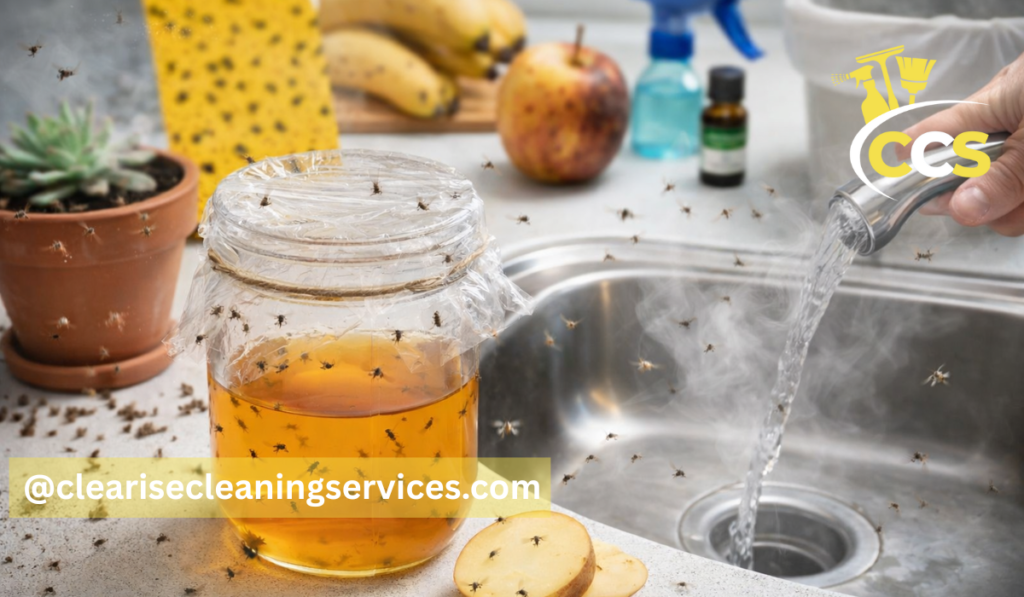
Vinegar traps are one of the most popular home remedies because they are easy to make and work quickly on adult gnats.
How to make the trap
- Pour a small amount of apple cider vinegar into a bowl or jar
- Add a few drops of dish soap (this breaks the surface tension)
- Place the trap near gnats, such as the kitchen counter or trash area
Why this works
Apple cider vinegar attracts adult gnats with its smell. The dish soap causes them to sink, trapping them before they can lay more eggs. Using multiple traps in problem areas improves results.
2. White Vinegar Solutions
If you don’t have apple cider vinegar, white vinegar can still help.
White vinegar works well:
- In drains and sinks
- On hard surfaces where gnats rest
- In areas where food smells are not the main attraction
White vinegar is especially useful when gnats are coming from plumbing rather than fruit or plants. It also helps reduce odors that attract insects.
3. Sink and Drain Remedies
Drains are a hidden breeding area, so cleaning them is important.
You can try:
- Pouring boiling water slowly down the drain to kill larvae
- Using a diluted bleach solution occasionally (with proper ventilation)
- Flushing drains with a mix of salt, baking soda, and vinegar, followed by hot water
These methods help break the breeding cycle by removing organic buildup inside pipes where gnats lay eggs.
4. Soil and Plant-Based Techniques
If gnats are flying near plants, the problem is usually in the soil.
Effective plant-focused solutions include:
- Letting soil dry out between waterings
- Using a hydrogen peroxide and water mix to kill larvae safely
- Adding sand or diatomaceous earth on top of the soil as a barrier
- Placing raw potato slices on soil to attract and remove larvae
Reducing moisture is the most important step when dealing with plant-related gnats.
5. Sticky Traps, Lights, and Physical Barriers
Sometimes, physical tools help control adult gnats while you treat the source.
Helpful options include:
- Yellow sticky traps placed near plants or windows
- Blue light traps for general flying insects
- Installing or repairing window screens
- Sealing small cracks around doors and windows
These methods don’t solve the root cause alone, but they reduce the number of flying gnats while other treatments work.
Home Remedies That Work Fast
When gnats are everywhere, you usually want quick relief. The remedies below are useful when you need fast results while you work on removing the main cause. Using more than one method at the same time often works best.
How to Get Rid of Gnats Overnight
Getting rid of gnats overnight is possible if you combine a few simple tactics instead of relying on just one.
Helpful steps to take together:
- Set up vinegar traps in all active areas before bedtime
- Empty trash bins and remove exposed food
- Dry sinks, counters, and plant soil as much as possible
- Turn off unnecessary lights that attract flying insects
This approach reduces adult gnats quickly and stops them from laying more eggs.
Rubbing Alcohol Sprays (For Flying Adults)
A light rubbing alcohol spray can knock down gnats on contact. This method works well for quick control but should not be the only solution.
How to use it safely:
- Mix rubbing alcohol with water (never use full strength)
- Spray lightly where gnats are flying or resting
- Avoid spraying directly on plants or delicate surfaces
This helps reduce adult gnats while other treatments work on the breeding source.
Essential Oils and Diffusers
Some essential oils naturally repel flying pests, including gnats. While they do not kill gnats, they help keep them away from certain areas.
Commonly used oils include:
- Peppermint
- Eucalyptus
- Lavender
- Tea tree
Using a diffuser or adding a few drops to water for surface wiping can make rooms less attractive to gnats.
Cinnamon and Chamomile for Plant Infestations
For gnats coming from houseplants, natural soil treatments can help.
- Cinnamon powder sprinkled lightly on soil can slow fungal growth that gnats feed on
- Chamomile tea, once cooled, can be used to water plants and reduce larvae activity
These remedies are gentle and useful for homes with children or pets, especially when combined with reduced watering.
Special Cases: Gnats in Specific Areas
Sometimes gnats keep coming back because they are breeding in one specific area of the home. Treating these spots directly makes gnat control much easier and faster.
Gnats in the Bathroom
Bathrooms are a common place for gnats because they offer moisture, warmth, and drains—all things gnats need to survive.
Gnats often appear in bathrooms due to:
- Moisture around sinks, tubs, and showers
- Organic buildup inside drains
- Poor ventilation that keeps the area damp
To eliminate breeding spots:
- Clean drains regularly using hot water and baking soda
- Scrub sink and shower drains to remove buildup
- Fix leaks and improve ventilation with fans or open windows
Keeping bathroom surfaces dry after use greatly reduces gnat activity.
Gnats Around Houseplants
Gnats near plants are usually fungus gnats, and the problem almost always starts in the soil.
Moist soil attracts fungus gnats because it allows larvae to grow. If plants are watered too often, the soil never dries out, creating perfect breeding conditions.
Helpful plant care practices include:
- Letting soil dry between waterings
- Avoiding standing water in plant trays
- Using well-draining potting mix
- Removing dead leaves from the soil surface
Healthy plant care habits are one of the most effective ways to prevent gnats from returning.
Why DIY Cleaning Often Misses Critical Areas
Many people clean their homes regularly but still struggle with gnats. This happens because DIY cleaning often focuses on visible areas only.
A common mistake is killing adult gnats without addressing where they are coming from. Adults may disappear for a day or two, but new gnats hatch if larvae remain in soil, drains, or damp areas.
Another issue is poor moisture control. Even small amounts of ongoing moisture—like damp soil, slow leaks, or wet sponges—can keep infestations alive.
To fully solve the problem, it’s important to:
- Find the breeding source, not just the flying gnats
- Reduce moisture wherever possible
- Combine cleaning with targeted treatments
When the source is removed, gnats usually disappear completely instead of returning again and again.
Advanced and Expert-Backed Strategies
In most cases, home remedies are enough to control gnats. However, some infestations are persistent and need a more advanced approach. Experts usually recommend stepping up treatment when gnats keep returning despite repeated cleaning and DIY methods.
When DIY Methods Are Not Enough
Professional pest control may be needed if:
- Gnats continue appearing after several weeks
- The source cannot be clearly identified
- The infestation spreads to multiple rooms
Pest control professionals can inspect hidden areas, identify the exact gnat type, and treat breeding sources that are hard to reach.
When to Call a Pest Specialist
Calling a specialist is a good idea for large or recurring infestations, especially in apartment buildings or homes with plumbing issues. Professionals use targeted treatments that focus on larvae and breeding zones rather than just killing flying insects.
Long-Term Environmental Adjustments
Experts also stress the importance of changing the environment so gnats cannot return. This includes:
- Improving ventilation in kitchens and bathrooms
- Using dehumidifiers in damp areas
- Fixing leaks and sealing moisture-prone spaces
These adjustments reduce moisture levels and remove the conditions gnats need to survive long-term.
Safety and Pet/Child-Friendly Considerations
When dealing with gnats, safety should always come first—especially in homes with children or pets. Many effective solutions do not require harsh chemicals.
Choosing Safe, Non-Toxic Remedies
Safer options include:
- Vinegar-based traps
- Baking soda and salt drain treatments
- Natural plant soil treatments like cinnamon or chamomile
These methods control gnats without introducing harmful substances into living spaces.
What to Avoid
Some products and mixtures can be unsafe. It’s best to avoid:
- Strong chemical sprays used indoors without guidance
- Mixing cleaning products like bleach and ammonia
- Overusing pesticides near food, toys, or pet areas
Natural Repellents for Family Homes
Natural repellents can help discourage gnats:
- Essential oils such as peppermint or lavender (used lightly)
- Keeping areas clean and dry to remove attraction
- Regular airflow to prevent damp conditions
By choosing gentle but effective methods, families can manage gnat problems while keeping their home safe and healthy.
How to Prevent Gnats From Coming Back
Getting rid of gnats is only half the job. The most important step is making sure they don’t return. Prevention mainly comes down to cleanliness, moisture control, and a few simple daily habits.
One of the biggest factors is kitchen and trash hygiene. Food scraps, spills, and open trash attract gnats quickly. Wiping counters daily, rinsing recyclables, and taking out trash regularly removes the smells that draw them in.
Houseplants also need attention. A simple plant care schedule helps keep soil from staying wet too long. Allowing the top layer of soil to dry between waterings and emptying water trays prevents fungus gnats from breeding.
Other helpful prevention steps include:
- Regular drain maintenance using hot water or baking soda
- Fixing leaks and reducing moisture under sinks
- Storing food in sealed containers
- Cleaning spills as soon as they happen
When moisture and food sources are controlled, gnats have no reason to return.
Conclusion
Learning how get rid gnats in house is mainly about understanding their behavior and removing the conditions that allow them to survive. Gnats are attracted to moisture, food, and organic matter, which is why they often appear in kitchens, bathrooms, and around houseplants. Once you identify the source, controlling them becomes much easier.
Throughout this guide, we discussed common causes of gnats, fast home remedies, natural DIY methods, and expert-backed strategies. Traps help reduce adult gnats, while proper cleaning, moisture control, and plant care stop them from breeding. Focusing on both short-term removal and long-term prevention is the key to lasting results.
With consistent effort and simple daily habits, gnats can be eliminated and kept from coming back. Maintaining a clean, dry environment not only solves the current problem but also prevents future infestations, helping you keep your home comfortable, healthy, and gnat-free.
Frequently Asked Questions (FAQs)
Why Do Gnats Keep Coming Back In My House?
Gnats usually return because moisture or food sources are still present. Overwatered plants, dirty drains, or uncovered food can allow them to breed again.
Can I Get Rid Of Gnats Overnight?
You can reduce gnats overnight by using vinegar traps, cleaning food areas, and drying moisture sources. However, complete removal takes a few days if larvae are present.
Are Gnats Harmful To Humans Or Pets?
Gnats are mostly harmless. They do not usually bite, but they can be annoying and may indicate hygiene or moisture issues in the home.
What Is The Best Natural Way To Get Rid Of Gnats?
The best natural approach is combining vinegar traps, proper cleaning, drain maintenance, and keeping plant soil dry. This removes both adult gnats and breeding sources.
How Long Does It Take To Completely Get Rid Of Gnats?
With consistent cleaning and moisture control, most gnat problems can be resolved within one to two weeks.
Disclaimer: The information in this article is provided for general guidance only. Results may vary depending on the type of gnats, home conditions, and treatment methods used. This content is not a substitute for professional pest control advice. If gnat infestations persist or worsen, readers should consult a qualified pest control specialist.
Thanks for visiting Clearise Cleaning Services! Discover more helpful tips and expert cleaning insights by exploring our related categories.