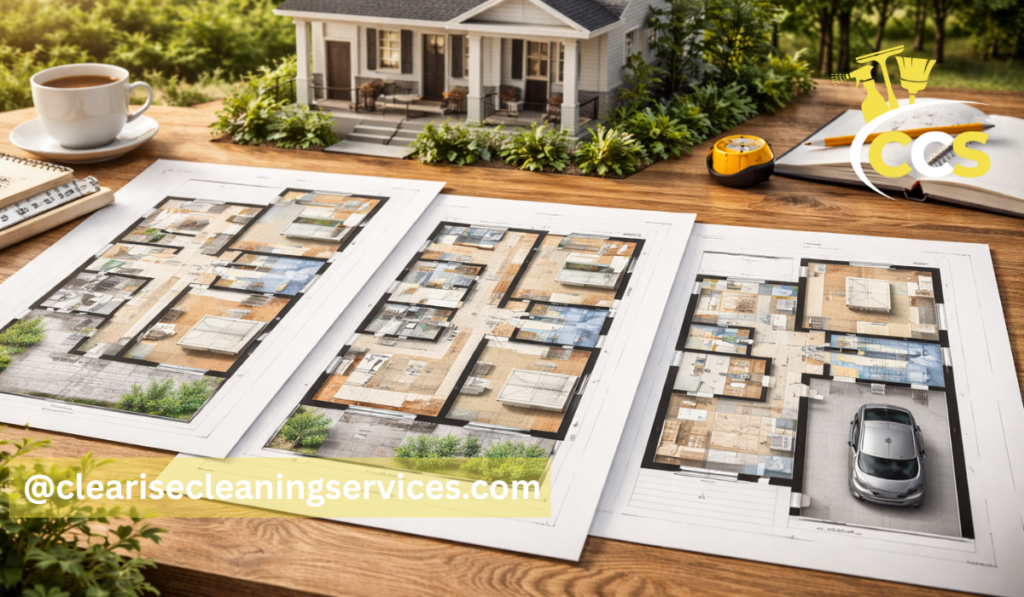
A well-drawn 1000 sq ft house plan can feel surprisingly roomy—if the layout is intentional. The best small-home designs lean on efficient circulation, multi-purpose spaces, and smart storage, instead of adding “more rooms” that end up cramped.
In this guide, I’ll walk you through the layouts people actually build (and why they work), including 1000 sq ft house plans 3 bedroom, 2 bedroom, 1 bedroom, open concept 1000 sq ft house plans 2 bedroom, 1000 sq ft house plans 2 story, and plans with garage—plus how to borrow ideas from 800 sq ft house plans for extra efficiency.
Start With The “real-life Brief” (before You Fall In Love With A Floor Plan)
Most plan regrets come from skipping this step: you fall for a pretty layout online, then realize it doesn’t match how your family actually lives. Before you compare 1000 sq ft house plans by bedroom count or exterior style, translate your day-to-day routine into a simple checklist. In a small home, one “wrong” decision—like a wasted hallway or missing storage—shows up every single day.
The 5 Questions That Decide The Right Plan Fast
1) Who lives here now—and in 3–5 years?
A plan that works for two adults can feel tight once you add a baby, then a toddler, then school schedules. If you’re a new parent (or planning to be), think about the unglamorous stuff: stroller parking, a spot for diaper supplies, where laundry piles happen, and whether the nursery shares a wall with the TV area. Small details like this decide whether your home feels calm or chaotic.
2) Do you need true privacy or flexible space?
Some families need a quiet home office, others need a nursery close to the primary bedroom, and some want a guest room that can convert later. In 1000 sq ft, flexibility often beats perfection. A “flex room” that can switch between office / nursery / guest room is usually a smarter long-term move than a third bedroom you can barely furnish.
3) What’s your storage reality?
Storage is what separates a small home that feels tidy from one that feels constantly crowded. Be honest about what you own: coats, shoes, pantry items, toys, linen, cleaning tools, luggage. If a plan has great-looking rooms but no real closets, you’ll end up buying extra cabinets and losing floor space later.
4) How do you actually cook and eat?
If you cook daily, you’ll notice a cramped kitchen immediately—even in an open concept layout. Decide if you need bigger prep space, more pantry storage, or a simple “quick-meal” setup. Some people love a kitchen island; others prefer an uninterrupted counter and a proper dining nook. Your cooking style should drive the plan, not Pinterest.
5) What’s the climate + site like?
A plan that’s perfect in one region can be uncomfortable in another. Pay attention to sun direction, cross-breeze, and practical site issues like monsoon drainage, snow loads, and heat gain. Small homes can overheat or feel dark quickly if windows and orientation aren’t planned well.
A Quick Expert-backed Rule Of Thumb (space Planning)
In smaller homes, the “feel” comes from three big layout wins:
- Fewer hallways (more usable sq ft). Hallways look harmless on paper, but they quietly eat the space you want in your living room, bedrooms, or kitchen.
- Daylight + sightlines. When you can see through the main living area and light reaches deeper into the house, rooms feel bigger without adding a single square foot.
- “Service zones” grouped together. Keeping the kitchen, baths, and laundry close (or back-to-back) usually lowers plumbing complexity and makes the home easier to build and maintain.
This mirrors what top plan libraries emphasize: small plans win by efficiency and multi-functional design, not by squeezing in extra rooms that don’t work.
Choose The Right Bedroom Count: 1 Bed Vs 2 Bed Vs 3 Bed (what Works In 1000 Sq Ft)
When people search 1000 sq ft house plans, the first thing they usually filter by is bedrooms. That makes sense—but the “best” bedroom count isn’t just about how many people live with you today. It’s about how you want the house to function every day: privacy, noise, storage, and whether the rooms will actually fit furniture without feeling squeezed.
1000 Sq Ft House Plans 1 Bedroom (best For: Couples, Retirees, WFH Minimalists)
A one-bedroom layout can be the most comfortable way to live in 1000 sq ft because you’re not forcing the footprint to do too many things at once. You can “spend” your square footage where it matters most: a bigger great room, a kitchen that feels generous, a bathroom that doesn’t feel like an airplane lavatory, or a real walk-in closet instead of tiny wardrobes.
Why it works:
- Fewer interior walls = better light and a more open feel
- More flexibility to make one room truly comfortable (bigger living, bigger kitchen, or bigger bath)
- Easier to keep tidy—less “overflow” space needed
Pro tip (future-proofing without crowding):
Add a flex room, even something modest like 7’ x 9’. It can be a home office now and a nursery later, or a guest space when family visits. This protects resale value and real-life usefulness without turning the plan into a cramped two-bedroom.
1000 Sq Ft House Plans 2 Bedroom (the Sweet Spot For Most Families)
For many households, 1000 sq ft house plans 2 bedroom hit the best balance: enough privacy for adults and kids (or guests), without shrinking every space to make the math work. A lot of popular layouts also pair two bedrooms with two baths and keep the living/kitchen area more open—because that open zone is what makes the home feel bigger day-to-day.
Why this layout tends to feel “right”:
- Bedroom 2 can be nursery, kid room, office, or guest room
- You can still have a decent living area (especially in open concept plans)
- Two baths can be possible if the plan is efficient (especially when plumbing lines are shared)
New-parent-friendly idea:
Place Bedroom 2 close enough for night checks, but avoid sharing a wall with the living room TV area. That one decision can save you months of tip-toeing and volume battles.
H3) 1000 sq ft house plans 3 bedroom (possible—but layout discipline is mandatory)
Yes, 1000 sq ft house plans 3 bedroom can work—but only if the plan is disciplined. The risk is ending up with three small bedrooms and a living area that feels tight, plus wasted square footage in corridors.
To make a 3-bedroom plan feel livable, look for these specific moves:
- Keep bathrooms compact but functional. A smart small bath beats a “bigger” bath with awkward layout.
- Avoid long corridors. Hallways kill small-house comfort faster than almost anything.
- Use pocket doors where it makes sense. They free up floor area and reduce door conflicts.
- Consider a “micro-bedroom.” One smaller room designed as a nursery/office is often more realistic than trying to make all three bedrooms equal size.
A good 3-bedroom plan usually feels like a 2-bedroom plan plus one flexible room—not three full-size bedrooms squeezed in.
1000 Sq Ft House Plans 3 Bedroom Indian Style (common Priorities)
For 1000 sq ft house plans 3 bedroom Indian style, the priorities often look a little different from typical Western plan catalogs. Many families value:
- Natural light and airflow (cross-ventilation is a big comfort factor)
- Verandah/courtyard vibes (even a small front sit-out or semi-open space changes how the home feels)
- Practical daily-use zoning (a defined washing area, a pooja/quiet corner, and more covered outdoor utility space)
Real-life tip (kitchen comfort matters):
If you cook frequently—especially with spices or stronger aromas—a totally open kitchen isn’t always the best experience. A semi-closed kitchen or an L-shaped kitchen with partial separation can keep the living area fresher while still feeling connected. In a small footprint, this can be a quality-of-life upgrade.
Open Concept Layouts: How To Make A 1000 Sq Ft Home Feel 30% Bigger
When people say a small home “feels big,” they’re usually describing an open concept layout done well. In 1000 sq ft house plans, openness isn’t about removing every wall—it’s about reducing visual breaks so your main living space feels like one calm, connected zone.
Why Open Concept Works In Small Homes
Top open-concept collections tend to follow one winning strategy: combine the living + dining + kitchen into one bright zone. When those areas flow together, the house reads as “one large space,” not three small rooms competing for square footage. That improves:
- Sightlines: you can see through the space, so it feels wider
- Daylight spread: one good window wall can brighten the whole main area
- Furniture flexibility: you can shift dining, seating, and storage without redesigning the house
A practical note: the best open plans still include “soft boundaries,” like an island, a change in ceiling detail, or a partial wall. Those little cues help the space feel organized, not messy.
Open Concept 1000 Sq Ft House Plans 2 Bedroom: The Best Setup
For open concept 1000 sq ft house plans 2 bedroom, the layout details matter more than the style. The goal is to keep the main zone open while making daily life easy.
Here’s what to look for:
- A kitchen island that doubles as dining.
This is one of the simplest ways to save space. An island can handle prep, casual meals, homework, and even quick entertaining without needing a large dining room. - A defined wall for the TV/sofa.
Open plans fail when the living area has nowhere to “land.” A solid wall (even a short one) makes furniture placement easy and prevents that floating-furniture feeling. - Bedrooms placed toward the back for privacy.
This is especially helpful in a 2-bedroom plan. You want the sleeping area to feel separate from cooking noise, guests, and everyday activity—without adding a long hallway.
Small-home “acoustic Control” (new Parents Will Love This)
Open concept homes can be noisy, and that matters a lot with a baby or light sleeper. The good news: you can reduce noise without closing the layout.
Simple fixes that actually work:
- Soft-close cabinetry to prevent constant slamming
- Area rugs + curtains to absorb sound (hard floors echo in open plans)
- Upholstered seating (fabric helps; all-leather and all-wood rooms bounce noise)
- A sliding door or pocket door on the bedroom hallway so you can “close down” the sleep zone when needed
This is one of those real-life details people don’t think about when browsing floor plans—but it’s exactly what makes a 1000 sq ft home feel peaceful instead of chaotic.
One-story Vs 1000 Sq Ft House Plans 2 Story: What You Gain, What You Sacrifice
A big decision inside 1000 sq ft house plans is whether to keep everything on one level or go vertical. Both can work beautifully—but they solve different problems. The right choice depends on your lot, your lifestyle, and how you want the home to feel day-to-day.
When A Single-story Plan Wins
A one-story layout is often the most comfortable “long-term” option because life is simpler when everything is on one level.
- Easier for aging-in-place. No stairs to worry about later, and daily movement stays effortless.
- Simpler structural costs. Many single-story homes can be more straightforward to build (depending on roof design and site conditions).
- Great indoor-outdoor flow. Porches, patios, and backyard access feel more natural when your main living space is on the ground floor. In small homes, outdoor areas often act like an extra “room,” especially in good weather.
Real-life note: Single-story plans shine when you love open living and want quick access to outdoor space—kids playing outside, quick gardening, morning tea on the porch, or pets going in and out.
When 1000 Sq Ft House Plans 2 Story Are Smarter
1000 sq ft house plans 2 story are popular for a reason: they can solve the lot-size problem and create better separation between “day space” and “sleep space.”
Two-story designs often show up in curated plan collections because they can:
- Fit narrower lots. If your plot is tight or the local rules limit width, vertical space gives you options.
- Separate noisy living downstairs from sleeping upstairs. This is a big comfort upgrade for families, especially with different sleep schedules.
- Add bonus storage under the stairs. In a small home, that under-stair zone can become a pantry, broom closet, toy storage, or even a compact powder room (depending on layout).
Family advantage: If you’re working from home or managing kids’ naps, the “quiet upstairs / active downstairs” split can make a small house feel more organized.
Practical Tip: Protect Your Stair Footprint
Stairs can either be a smart space-saver—or the reason the whole upstairs feels cramped. In 1000 sq ft, you want the stair to work double duty.
Look for plans where the stair:
- Also creates storage (closet or pantry tucked beside/under it)
- Sits near the entry (so it doesn’t cut your living area in half)
- Doesn’t force long upstairs hallways (hallways upstairs are “dead space” you can’t furnish)
If you’re comparing two similar plans and one has a tighter stair and shorter hallway, it usually feels better in real life—because more of your square footage becomes usable rooms, not circulation.
Bathrooms That Don’t Feel Tiny: Smart Combos Like 2 Bed / 2 Bath And “2 Bath Lite”
In 1000 sq ft house plans, bathrooms can make or break the daily experience. A bathroom that’s awkward, dark, or hard to clean will feel like a constant annoyance. The good news: you don’t need big bathrooms—you need well-planned bathrooms.
1,000 Sq Ft House Plans 2 Bedroom 2 Bath: Why It’s So Popular
There’s a reason 1,000 sq ft house plans 2 bedroom 2 bath show up so often in best-selling layouts: it’s one of the most livable combinations for a small home. Many high-performing plans make it work by keeping each bathroom efficient and stacking plumbing lines (placing bathrooms back-to-back or close together).
Why people love it:
- Privacy for guests: visitors don’t have to use the same bath as the primary bedroom
- Easier mornings: two people can get ready without a schedule conflict
- Better resale: buyers consistently value the second bathroom, even in smaller homes
A key detail: “2 bath” doesn’t mean both bathrooms need to be big. In small plans, it’s better to have two practical bathrooms than one oversized bathroom and one cramped living room.
A Layout Trick That Feels Luxury (without Extra Square Footage)
If you want a small home to feel upgraded, this bathroom approach works surprisingly well:
- One “primary” bath with a shower and niche storage (a wall niche keeps bottles off the floor and makes the shower feel cleaner and more modern).
- One compact bath with either a shower or a tub/shower combo (great for guests and kids).
- Put the linen cabinet outside the bathroom.
That last point is a real space-saver. A linen closet inside a small bathroom eats up room fast. If you move it into the hallway (right outside the door), the bathroom can stay smaller while still being fully functional.
Extra tip: In tight baths, a pocket door can prevent the door from fighting the vanity or towel hooks.
New-parent Micro-optimization
If you’re planning for a baby, here’s a detail that sounds small—but feels huge in real life:
Place the laundry close to the bedrooms if possible.
Night blowouts, spit-up, and daily laundry loads are real, and steps matter in small homes. Even moving laundry from “across the house” to “near bedrooms” can make the routine calmer and faster—especially when you’re tired. If the plan can’t put laundry near bedrooms, aim for a layout where the path is simple and not blocked by tight doorways.
1000 Sq Ft House Plans With Garage (or Car Parking): Best Ways To Do It Without Ruining The Layout
Adding parking sounds simple—until you see what it does to a small floor plan. In 1000 sq ft house plans with garage, the garage can easily steal daylight, force awkward room shapes, and make the front of the home feel like “garage first, house second.” The goal is to keep parking practical without sacrificing the livability of the main rooms.
Attached Garage Vs Detached (small-house Reality)
A garage can dominate a small footprint. If your site and budget allow, a detached garage is often the cleaner solution in a small home because it:
- protects natural light (your living room doesn’t end up shaded by a big box),
- keeps the front elevation balanced (your home looks like a home, not a garage door),
- and reduces noise/smell transfer into the main living area.
Detached doesn’t mean inconvenient—you can connect it with a covered walkway or place it close enough for easy grocery runs.
If You Must Attach The Garage
Sometimes an attached garage is non-negotiable (weather, security, narrow lots). In that case, look for these “small-house friendly” details:
- A short, direct mudroom entry
Even a tiny mudroom zone is a lifesaver: a bench, shoe storage, hooks for bags and jackets. It keeps clutter out of the living room. - Pantry access from the garage side
This is one of those layouts that feels smart every single week. Groceries go straight from car → pantry/kitchen without cutting through the whole house. - A proper wall between garage and living
You want separation for sound and smell control. A garage beside a bedroom or main living area without a buffer can make the house feel less peaceful, especially if you have early-morning schedules.
Extra practical tip: If the plan has space, a small “drop zone” cabinet right at the garage entry works better than a big empty hallway. Kids’ backpacks, keys, diaper bag—everything gets a home.
“Parking-First” Layouts Common In Compact Plans
Some compact plans take a “parking-first” approach: they prioritize a covered porch, a deep front sit-out, or even a wraparound outdoor zone, while keeping the internal footprint tight and efficient. This can work really well in 1000 sq ft because outdoor covered space often functions like an extra room—morning tea, kids’ play area, evening seating, or a place to dry/air things depending on climate.
The key is balance: if the parking setup forces a cramped living room or tiny kitchen, it’s usually not worth it. A good plan protects the interior comfort first, then fits parking in a way that doesn’t steal the best light and airflow.
Where To Find “1000 Sq Ft House Plans Free” (and How To Use Free Plans Safely)
Searching for 1000 sq ft house plans free is completely understandable—especially if you’re trying to control costs early. Free plans can be a helpful starting point, but they should be treated as concept references, not ready-to-build drawings.
What “Free” Usually Means
In most cases, “free” means you’re getting a basic concept layout or PDF. It shows room sizes, general flow, and sometimes elevations—but it usually still needs work before construction.
Free plans often require:
- Local code adaptation (setbacks, stair rules, ventilation requirements)
- Structural engineering (especially for slabs, beams, columns, and roofs)
- Site-specific changes (orientation, soil conditions, access, utilities)
Some platforms do offer downloadable plan PDFs, particularly for Indian home layouts, but customization is still normal—and often necessary—for comfort and safety.
Safety Checklist Before Building From A Free Plan
Before you commit to a free plan, slow down and run through this checklist:
- Verify dimensions, stair code, and ventilation. Small errors here can cause big problems during approval or construction.
- Confirm the structural system fits your region. RCC, steel, and timber systems behave very differently depending on climate and local practice.
- Adapt the design for climate. Heat, humidity, heavy rain, or cold all affect roof design, window placement, and materials.
- Budget for a professional review. A local architect or engineer reviewing a “free” plan is usually money well spent—it can prevent costly fixes later.
Free plans are most valuable when they help you clarify what you want, not when you expect them to solve everything.
Simple 1000 Sq Ft House Plans: Why “simple” Often Builds Better
Many of the most successful simple 1000 sq ft house plans share a few traits:
- Simpler rooflines
- Stacked plumbing zones
- Fewer corners and structural breaks
This combination usually leads to:
- easier construction,
- fewer leak and maintenance points,
- and better cost control over time.
In real projects, simple often ages better than complex—especially in smaller homes, where every design choice is more noticeable.
Conclusion
The best 1000 sq ft house plans don’t feel small because they’re drawn to match real life: efficient circulation, smart storage, and the right bedroom and bathroom balance. Borrow ideas from 800 sq ft house plans when you want maximum efficiency, and choose between open concept, 2 story, and with garage layouts based on your lot and daily routine—not trends.
Whether you’re deciding between 1000 sq ft house plans 2 bedroom, 1,000 sq ft house plans 2 bedroom 2 bath, or stretching into 1000 sq ft house plans 3 bedroom (including Indian style), your “best” plan is the one that stays comfortable after the excitement of the first week.
If you want, paste your preferred plot size (for example, 25×40, 20×50, or a narrow lot), and I’ll recommend the most suitable layout approach with a room-by-room space allocation that fits 1000 sq ft without crowding.
FAQs
Is 1000 Sq Ft Enough For A Family Home?
Yes, a 1000 sq ft home can work well for small families if the layout is planned efficiently. Open living areas, smart storage, and the right bedroom count make a big difference.
Can You Build A 3 Bedroom House In 1000 Sq Ft?
Yes, but it requires careful planning. Bedrooms are usually smaller, hallways are minimized, and one room often works as a nursery or office rather than a full-size bedroom.
Which Is Better In 1000 Sq Ft: 1 Story Or 2 Story?
Single-story homes offer easier movement and better outdoor connection, while 2-story plans work better on narrow plots and help separate living and sleeping areas.
Are Open Concept 1000 Sq Ft House Plans Practical?
Very practical. Open concept layouts help small homes feel larger by improving light flow and reducing visual barriers between rooms.
Can A 1000 Sq Ft House Have 2 Bathrooms?
Yes. Many 1,000 sq ft house plans include 2 bedrooms and 2 bathrooms by keeping bathrooms compact and placing plumbing close together.
Are Free 1000 Sq Ft House Plans Safe To Build?
Free plans are useful for ideas, but they usually need local code checks, structural engineering, and climate adjustments before construction.
How Much Does It Cost To Build A 1000 Sq Ft House?
Costs vary by location, materials, and labor. A simple design with fewer structural changes usually keeps construction more affordable.
Disclaimer: This article is for general informational purposes only. House plans, building codes, and construction requirements vary by location and site conditions. Always consult a licensed architect, engineer, or local authority before finalizing or building any house plan.
Thanks for visiting Clearise Cleaning Services! Discover more helpful tips and expert cleaning insights by exploring our related categories.