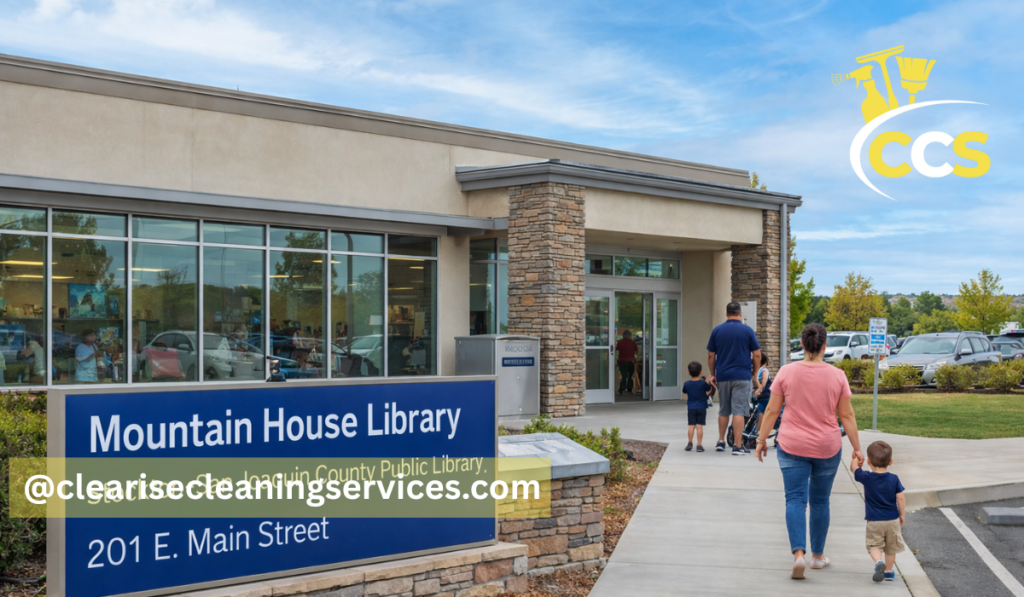
The Mountain House Library is more than a quiet place to borrow books. It’s a welcoming community space where families gather, children discover the joy of reading, and parents find practical support for everyday life. Whether you’re new to the area or have lived here for years, the library offers resources that go far beyond shelves of novels.
Families especially appreciate how accessible and family-friendly the Mountain House Library feels. From storytime sessions and learning programs to study spaces and online borrowing options, it provides tools that make parenting a little easier. You can check mountain house library hours before heading out, manage your account through the mountain house library login, attend mountain house library events, or explore mountain house library online services from home.
In this guide, you’ll find clear information about visiting the library, using your account, exploring upcoming events, and making the most of its services. By the end, you’ll know exactly how to plan your visit, log in, and use the library to make parenting easier.
Mountain House Library at a Glance
Before planning your visit, it helps to understand what the Mountain House Library offers and how it serves the community. This branch is part of the Stockton-San Joaquin County Public Library system and provides essential public library services to residents of Mountain House and nearby areas. It functions as a local hub for reading, studying, community programs, and digital access.
Location and Service Area
The Mountain House Branch Library is located at:
201 E. Main Street, Mountain House, CA 95391
It serves families, students, remote workers, and seniors in the Mountain House community. The location is easy to access and offers a welcoming environment for both quick visits and longer study sessions.
Mountain House Library Phone Number
If you need assistance, the mountain house library phone number is:
209-937-8221
You can call this number to ask about account issues, event registration, current hours, or general library services. Staff members are available during open hours to provide guidance.
Mountain House Library Hours
The library generally operates on the following schedule:
- Sunday: 12:00 pm – 5:00 pm
- Monday: 10:00 am – 8:00 pm
- Tuesday: 10:00 am – 8:00 pm
- Wednesday: 1:00 pm – 8:00 pm
- Thursday: 10:00 am – 8:00 pm
- Friday: 10:00 am – 5:00 pm
- Saturday: 10:00 am – 5:00 pm
Mountain house library hours may change during holidays or special closures, so it is always wise to check the official website or call ahead before visiting.
Parking and Book Drop
Visitors will find nearby parking available for convenient access. For returns outside regular hours, the branch provides a 24-hour book drop, allowing you to return materials safely at any time.
What You Can Do at the Library
The Mountain House Library offers more than just book borrowing. Services include:
- Free Wi-Fi throughout the building
- Public computers for adults and children
- Study rooms for individual or group use
- Printing, scanning, copying, and fax services
- Access to physical books, audiobooks, and children’s materials
These services make the branch practical for schoolwork, job searches, research, and family visits.
First visit? Save this information:
Address: 201 E. Main Street, Mountain House, CA 95391
Phone: 209-937-8221
Check today’s hours online or by phone before heading out.
Planning Your Visit Like a Pro (Especially With a Baby)
A library trip with a baby or toddler can be one of the easiest “out of the house” activities, as long as you plan it like a parent, not like a student. The goal is not to stay for hours. The goal is to leave feeling successful, with a few books (or even just one) and a calm child.
Best Times to Visit With Little Ones
If you want a quieter visit, aim for times when the building is naturally less busy. In most communities, the library gets louder after school and early evening, especially on weekdays. For a calmer experience, try:
- Late morning on weekdays (after breakfast, before lunch)
- Early afternoon on days when the library opens later
- Weekend mornings, if your child does well early in the day
If you can, avoid the typical after-school rush. That’s when kids and teens arrive, and the energy level naturally goes up. If you only have that time available, it still works — just choose a simple plan, like picking up holds and checking out quickly.
Parking and Stroller-Friendly Entry Tips
Keep this part simple and stress-free. Park as close as you comfortably can, then take a minute in the car to set yourself up before you walk in. A few practical tips that help most parents:
- Use a stroller if your baby naps well in it, or a carrier if your baby prefers being held
- Keep your hands free by packing light and using one bag
- If your toddler likes to run, hold hands early and set a clear “walking rule” at the door
Because entrances and layouts can vary, if you ever want the easiest path in with a stroller, you can call the mountain house library phone number and ask staff what entrance they recommend.
What to Pack (Parent-Friendly Checklist)
Think of this as your “quick library kit.” You don’t need everything every time, but these items cover most situations:
- Wipes (for hands, tables, and quick cleanups)
- A small snack and water, if allowed (something quiet and non-messy)
- One small toy or comfort item (helps during checkout lines)
- A photo of your library card on your phone (or the card itself)
- Child-sized headphones if you plan to use computers or kid learning stations
- A lightweight tote bag for books, so your diaper bag stays manageable
Pro Tip: Plan Around Nap Windows and Keep It Short
For your first few visits, treat it like a quick win. Plan around your child’s nap window and aim for a “20–30 minute win” visit. That usually looks like:
- 5 minutes to browse
- 10 minutes to pick books or attend a short activity
- 5 minutes to check out
- 5–10 minutes to leave calmly
Once your child is comfortable with the routine, you can naturally stay longer. But starting short builds confidence for you and makes the library feel like an easy place to return to again and again.
How to Get a Library Card and Borrow Materials
Getting a library card is usually the first step to using everything the Mountain House Library offers. The process is simple, and once you have your card, you can borrow books, place holds, and access online services.
How Library Cards Typically Work
To receive a library card, you generally need:
- A valid photo ID
- Proof of residency (such as a utility bill, lease agreement, or official document with your address)
Most public libraries require proof of residency to confirm that you live within their service area. If you are unsure what documents are accepted, it’s always best to call ahead and ask before visiting.
For families, parents can usually sign up for cards for their children. This allows kids to check out their own books and begin learning responsibility for borrowed items. If you’re visiting for the first time, plan for about 10–15 minutes to complete registration.
Once your card is issued, you will receive a card number and often set up a PIN. This information is important for borrowing materials and using your online account.
Borrowing Basics
After you receive your library card, you can begin borrowing materials right away.
Checking Out Books and Children’s Books
Borrowing is straightforward:
- Choose your books from the shelves.
- Bring them to the checkout desk or use a self-checkout station if available.
- The items are scanned under your account.
- You receive a due date, either printed on a receipt or emailed to you.
Children’s books are organized separately in most libraries, making it easy for parents to browse by age group. If you’re unsure what to choose, ask a librarian for recommendations based on your child’s age or interests.
A helpful parent tip: let your child pick at least one book they choose themselves. This builds excitement about reading, even if the book seems simple.
Placing Holds for Pickup (Parent-Friendly Explanation)
If the book you want is not on the shelf, you can place a hold. A hold means the library will reserve the book for you when it becomes available.
Here’s how it works in simple terms:
- Log in to your account online.
- Search for the book.
- Click “Place Hold.”
- Choose your pickup location (Mountain House Library).
- Wait for a notification when it’s ready.
Once the book arrives, you’ll receive an email or message telling you it’s available for pickup. You then visit the library, pick up your reserved items, and check them out.
For busy parents, holds are one of the most useful tools. You can search and reserve books from home during nap time, then stop by for a quick pickup visit instead of browsing with a tired toddler.
If you ever feel unsure about the process, staff members are trained to guide you step by step. Libraries are designed to be supportive, especially for first-time visitors.
Mountain House Library Login: Step-by-Step (My Account)
Your mountain house library login (often labeled “My Account” on the library website) is the control center for your library life. Once you’re signed in, you can handle most tasks from home instead of making extra trips with a stroller or tired toddler.
What “My Account” is used for
When you log in, you can typically:
- Place and manage holds (reserve items to pick up later)
- Renew items you’re still using
- Check due dates so nothing sneaks up on you
- View fees/fines (if any) and account notes
These are standard “My Account” features across the Stockton–San Joaquin County Public Library system.
Login essentials: card number + PIN
In most cases, logging in requires:
- Your library card number
- Your PIN (a short password)
Your PIN is usually created during sign-up, or a temporary PIN is provided and can be changed later. Even if your first PIN is simple, it’s smart to update it to something you can remember but others can’t guess (especially if you store your card number on your phone).
Troubleshooting common login problems
If you forgot your PIN
- Start with the library’s online “forgot PIN” option if available in your catalog/account area.
- If that’s not working (or you don’t have email access set up), the fastest fix is calling the branch so staff can guide you through the reset steps.
If your account is locked (too many attempts)
- This often happens after repeated tries with the wrong PIN. The safest solution is to stop trying, then contact the library so they can help you regain access without further locking.
When to call staff
Call the branch if you:
- Can’t reset your PIN online
- Aren’t sure which card number is connected to your account
- See an account message you don’t understand
The mountain house library phone number is 209-937-8221.
Mountain House Library Online: Ebooks, Learning, and Homework Help
The mountain house library online options are one of the biggest advantages for families. You can borrow and learn from home during nap time, late nights, or those “we’re not leaving the house today” afternoons.
Digital borrowing: ebooks and audiobooks
With a library card, you can access the library’s eLibrary collection, which includes eBooks and eAudiobooks (and often other digital media). The exact apps/platforms can vary, but the main idea is the same: you check out digitally and read or listen on your phone, tablet, or computer.
Learning tools families actually use
The Stockton–San Joaquin County Public Library also lists a range of learning resources that can be helpful for parents, teens, and kids, such as:
- Language learning (example: Mango Languages)
- Skill and career learning (example: LinkedIn Learning video courses)
- Online tutoring/homework help (example: Tutor.com)
- Test prep and study support (example: LearningExpress)
- Kid-focused learning (example: ABCmouse)
These resources are designed to be used with your library card credentials and can support everything from school assignments to adult upskilling.
Parent-focused wins (real-life ways families use it)
- “Read on your phone at 2 a.m.” When the house is finally quiet, digital borrowing makes it easy to read without turning on extra lights or hunting for a bookmark.
- Audiobook during a stroller walk. It’s a simple way to stay consistent with reading even when your hands are full.
- Kid-friendly learning time on tablets. If you use learning resources on a tablet, gentle limits help: keep sessions short (10–20 minutes), choose one learning activity, and end with a physical break (snack, stretching, or a quick walk around the room).
If you want, I’ll write the next section on events and upcoming events (including the library’s family story times and the Chess Club listing that appears on the branch events feed).
Events That Matter to Families (Storytime, LEGO, and More)
One of the best parts of the mountain house library events calendar is that it gives families something easy, free, and genuinely useful to do each week. These programs are not just “activities.” They are structured ways for children to practice language, attention, social skills, and creativity in a calm environment. The library also makes it simple to filter and find mountain house branch library upcoming events, so you can plan ahead instead of showing up and hoping something is happening.
How To Find The Events Calendar (and What To Look For)
To find events, start on the library’s official events calendar and filter for the Mountain House branch. Each listing usually includes the details that matter most to parents, such as:
- Age range (for example, 0–2 years, 3–5 years, all ages, teens)
- Exact location inside the library (community room, makerspace, or another room)
- Time and date (helpful for nap planning)
- Whether registration is needed (some events are drop-in; others may require a spot)
A practical parent tip: when you open an event listing, check two things first—the age group and the room/location. That saves you from arriving with a toddler for a teen program, or walking in late and missing the entry point.
Typical Family-friendly Event Categories You’ll See
While specific programs change by season, Mountain House’s calendar often includes a mix of early childhood activities and “whole family” events. Examples shown on the branch listings include:
- Baby and toddler programs such as “All About Baby Story Time (0–2yrs)” and “Stay & Play! (0–5yrs)”
- Preschool story time (commonly ages 3–5)
- Crafts and makerspace-style activities (kids’ workshops and occasional adult crafts)
- LEGO/building sessions such as “Lego Building Fun! (all ages)”
- Family events like family bingo or family movies (varies by month)
If you’re a new parent, start with the simplest win: a short storytime or a “stay and play” style program. It tends to be more flexible for babies and early walkers.
New-parent Angle: Why These Events Actually Help Development
Library storytimes and early childhood programs support early language development in very practical ways. Babies and toddlers learn language by hearing repeated sounds, rhythms, and simple words in a social setting. Songs, rhymes, and short stories make it easier for young brains to recognize patterns, build vocabulary, and practice listening—without it feeling like “learning.” That is why even a 20–30 minute program can make a difference over time.
How To Handle A Fussy Baby Without Stress
Parents often skip events because they worry their child might cry or get restless. A few small strategies make it easier:
- Sit near an exit or aisle so you can step out for a minute without feeling watched.
- Bring one quiet comfort item (a teether or small toy).
- If snacks are allowed, keep them non-messy and quiet.
- Give yourself permission to arrive late or leave early. The “perfect” session is the one you actually attended.
The library is a public family space—most staff and regular attendees understand that babies do baby things.
Mountain House Library Chess and Game Culture (For Kids, Teens, and Parents)
The mountain house library chess community is a great example of how libraries build learning through play. Chess fits libraries well because it encourages focus, patience, and respectful social interaction—skills that support reading, schoolwork, and emotional regulation too.
Why Chess Is Popular In Libraries
Chess works as a library program because it:
- Helps kids practice attention and planning (thinking ahead, not rushing)
- Builds patience and sportsmanship (winning and losing calmly)
- Creates community (kids meet others who like the same activity)
And it’s flexible: a beginner can learn the rules in one session, while advanced players can keep growing for years.
If The Library Hosts Chess Sessions, How To Check
The easiest way is to check the official Mountain House branch event listings for “Chess Club.” Recent listings show a Chess Club event at the Mountain House branch, labeled for children/teens with a listed time window.
If you don’t see it on the calendar, programs may be seasonal—so it’s worth calling the branch and asking what’s currently scheduled.
A Simple Starter Plan For Parents
Ages that can start
Many kids can start learning basic chess concepts around ages 5–7, but younger children can still enjoy “piece learning” (naming pieces, moving them correctly) without playing full games.
Best beginner resources
Look for beginner-friendly materials such as:
- Picture-based chess books for kids
- “Mate in 1” or “mate in 2” puzzle-style books
- Kid-friendly chess workbooks that teach one skill at a time
If you’re not sure what to pick, librarians can help you find the right level.
A 10-minute at-home routine (easy and realistic)
- 2 minutes: review how 2 pieces move (for example, rook and bishop)
- 3 minutes: set up a simple capture challenge (“Can the knight capture the pawn?”)
- 3 minutes: do one easy puzzle (mate in 1, if your child is ready)
- 2 minutes: free play or one mini-game rule (like “only pawns and kings”)
Short sessions are better than long ones. Ten minutes, a few times a week, is enough to build real progress without turning it into a chore.
Study Rooms, Wi-Fi Printing, Computers — The “Practical Stuff” Most Guides Miss
If you’re using the Mountain House Library as a real-life tool (not just a place to browse), these practical services matter most. They’re the difference between “we should go sometime” and “this actually makes my week easier.”
Study Rooms: Who They’re Great For
The Mountain House branch lists 4 study rooms (3 small, 1 large), which is a big win for families and students.
They’re especially helpful for:
- Remote-work parents who need a quiet hour for a call while another adult watches the baby
- Students doing homework, projects, or tutoring
- Quiet readers who want a calm space away from the main floor
Parent tip: if your child is old enough to do homework, study rooms can be a “focus zone” where the expectation is clear—work first, then pick a book or attend an event.
Public PCs And kids’ Computers
This branch offers 15 public PCs and 2 children’s public PCs, which can be useful for printing documents, school portals, job applications, or quick research.
If you’re bringing kids, it helps to set a simple plan before you sit down: “We’re here to do one thing, then we pick one book.”
Printing, Scanning, Copying: What To Ask At The Desk
Mountain House lists scanner, copier, and fax among branch services.
For printing, the library system also offers wireless printing, which allows you to send print jobs from a laptop or mobile device.
When you’re at the desk, the most helpful questions are:
- “What’s the easiest way to print from my phone?”
- “Can you show me where the scanner is and how it saves files?”
- “What are the current printing costs and payment options?”
This keeps it simple and gets you to the correct station quickly.
The 24/7 Book Drop And How To Use It Safely With Kids In Tow
The branch has an outdoor book drop on the parking lot side, and it’s open 24 hours a day, 7 days a week for returns.
Parent safety tips that work well:
- Park, then do a quick “hands-free” setup (carrier on, toddler hand held) before you step out.
- Let your child help only if it’s safe and calm—otherwise drop the items yourself and make it quick.
- If you’re returning Link+ materials, note that the branch specifies those should be returned to a staff member inside during open hours.
Parent-Tested Library Habits That Build Readers (Without Pressure)
These are the small habits that work in real homes—especially when you’re tired, busy, and your child’s attention span is unpredictable.
The “Two-book Rule” For Toddlers
For toddlers, keep it simple:
- One familiar favorite (comfort and confidence)
- One new book (fresh vocabulary and curiosity)
This prevents the “we brought home ten books and read none” problem, and it keeps returns manageable.
How To Choose Books By Age
Babies:
Go for high-contrast board books, simple faces, and one-picture-per-page styles. Babies don’t need long stories—they need repetition and clear visuals.
Toddlers:
Choose books with repetition and rhythm—the kind they can “predict.” Repeating phrases and sound patterns helps language stick, and it turns reading into a game.
Preschoolers:
Pick stories about feelings and routines: sharing, bedtime, starting school, being brave, trying again. These books help kids name emotions and make daily life easier to talk through.
Keep Books In Rotation So Your Home Stays Tidy
A realistic system:
- Keep 5–10 library books in one visible basket.
- When new books come in, return the same number.
- Put “library return day” on one predictable day each week (even if you use the 24/7 drop).
The goal is consistency, not perfection.
If Your Child Won’t Sit Still: Try “Motion Reading”
Some kids listen better while moving. Instead of forcing stillness:
- Read while they play with blocks
- Read while they snack
- Read one page at a time, then pause
You’re still building language exposure—just in a way that fits their personality.
Safety, Etiquette, and Comfort (New Parent Edition)
Libraries are family spaces, but a little planning helps you feel confident—especially with babies and toddlers.
Germ-conscious Routines That Don’t Feel Extreme
- Wipe hands after using shared toys or surfaces
- Avoid face-touching (as much as is realistic with kids)
- Pack wipes and use them calmly, not anxiously
You don’t need to “sanitize everything.” A simple routine is enough.
Noise Expectations: Flexible, But Still Considerate
Modern libraries are often more flexible than people expect—especially during children’s programs. Still, it helps to:
- Keep loud running games outside
- Step out for a minute if a baby is crying hard
- Choose seats near the aisle if you might need a quick exit
Teaching “Library Voice” Without Shaming
Instead of “Stop shouting,” try simple, neutral cues:
- “Library voice is a quiet voice.”
- “Let’s whisper like we’re telling a secret.”
- “We can be loud outside. Inside we use calm voices.”
Kids learn faster when the correction is calm and consistent.
How to Contact the Library Fast (Phone + Best Questions to Ask)
Sometimes the quickest solution is a 2-minute call, especially when you’re juggling kids, school deadlines, or a last-minute event. If you only save one contact from this guide, save the mountain house library phone number: 209-937-8221.
Here are the best reasons to call, with questions that get you a clear answer fast:
- Card or PIN help
- “Can you help me reset my PIN for My Account?”
- “Is my card active, or does it need updating?”
- Holds and pickup
- “Is my hold ready for pickup yet?”
- “How long will my hold be held before it expires?”
- Event registration
- “Does this program require registration, or is it drop-in?”
- “Is there an age range for this event?”
- Lost items
- “I may have left a stroller/toy/water bottle—do you have a lost and found?”
If you prefer checking details online first, the branch page and events calendar are the fastest places to confirm hours and upcoming programs.
Mountain House Library Jobs, Volunteering, and Community Involvement
Many people discover the library is not just a service—they want to be part of it. If you’re looking for mountain house library jobs, the clearest starting point is the library system’s official jobs page.
Where Job Listings Are Posted
The Stockton–San Joaquin County Public Library directs applicants to apply through GovernmentJobs.com for current openings, and also mentions “career interest cards” so you can get notified when new roles open.
A practical tip: even if you don’t see a job that fits today, the interest card option is useful because library openings can appear and close quickly.
Volunteering: Why Libraries Value It (and How It Helps Families)
Libraries value volunteers because they support community programs and keep services running smoothly—especially during busy seasons and events. Volunteering can also be a parent-friendly way to stay connected, meet people locally, and model “community helping” for your children.
Since volunteer programs can change by branch and season, the most accurate approach is to call or ask at the desk what’s currently available at Mountain House.
Parent-friendly Ways To Get Involved
- One-off event help vs weekly commitments
- If your schedule changes often, ask about single-event support (craft prep, room setup, summer reading help) instead of weekly shifts.
- Friends-of-the-Library support
- Many library systems have Friends groups that support fundraising and book sales; SSJCPL notes Friends groups help maintain book sale areas in libraries.
- For Mountain House specifically, it’s best to confirm what’s active right now by asking at the branch or checking the branch/community listings.
Conclusion
The Mountain House Library can be one of the easiest “parenting helpers” in your routine: you can check mountain house library hours before you leave, use the mountain house library login to manage holds and renewals, explore mountain house library online options when you’re stuck at home, and attend mountain house library events that support learning and connection.
Pick one small step today: get your card, save the mountain house library phone number, or bring your child to one event.
FAQ
What Are The Mountain House Library Hours On Weekends?
Weekend hours are typically Saturday 10:00 am–5:00 pm and Sunday 12:00 pm–5:00 pm, but hours can change for holidays, so check the official locations page before you go.
How Do I Reset My Mountain House Library Login PIN?
Use the account help options in the library’s catalog/My Account area if available, or call the branch for help resetting your PIN. (Calling is often the fastest if your account is locked after multiple attempts.)
Where Do I See Mountain House Branch Library Upcoming Events?
Use the library system’s events calendar and filter by the Mountain House branch. Event listings usually show age range, time, and room/location details.
Does The Library Have Study Rooms And Wi-fi Printing?
Yes. The Mountain House branch lists study rooms and public computers, and the library system provides wireless printing instructions for sending print jobs from your device.
Is There A 24-hour Book Drop?
Yes. The Mountain House branch lists an outdoor book drop that is available 24/7 for returns.