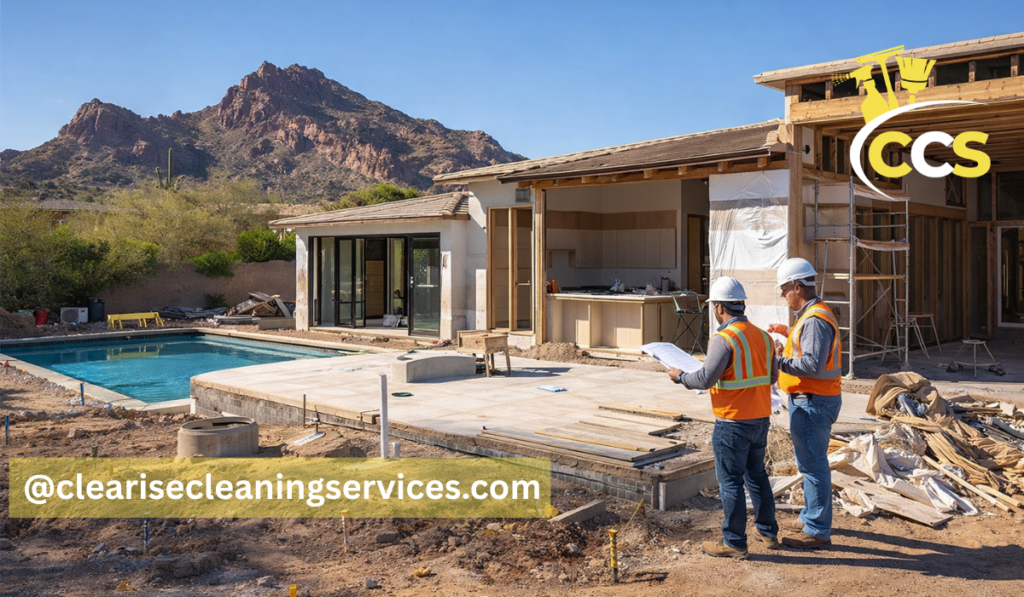
A paradise valley home renovation often looks similar to a remodel anywhere else—until you get into the details. Paradise Valley homes commonly sit on unique lots (slopes, washes, drainage easements), expectations tend to be higher for finish quality and indoor–outdoor living, and permitting can require more documentation than people expect. On top of that, custom materials (windows, stone, specialty doors, cabinetry) can have long lead times that affect your schedule.
This guide makes the process feel clearer and less stressful. You’ll get practical steps, local realities (especially permits), and family-first upgrades that actually make daily life easier—without wasting money on trends that don’t last.
Start Here — Clarify Your Renovation Goals (Before You Call Anyone)
Choose Your Renovation “Type”
Before you meet with an architect or contractor, decide what kind of project you’re truly planning. In Paradise Valley, this helps you predict the level of design work, engineering, and permitting you’ll likely need.
- Refresh vs. partial remodel vs. whole-home renovation vs. addition/casita/guest house
A refresh might focus on surfaces and lighting, while a partial remodel usually changes one or two key areas like the kitchen and primary suite. A whole-home renovation often includes layout changes and infrastructure upgrades. Additions, casitas, and guest houses can add privacy and flexibility, but they also tend to increase planning, documentation, and timeline complexity.
Your Non-Negotiables Vs. Nice-To-Haves (Simple Decision Method)
A simple approach is to write two short lists: non-negotiables and nice-to-haves. Then add a third list that many homeowners forget: daily friction points. These are the things that annoy you every day—traffic flow, storage, noise, temperature swings, and lighting. The best renovation plans solve daily friction first, because that’s what improves your quality of life long after the new finishes stop feeling “new.”
New Parent Lens: What Actually Makes Daily Life Easier
If you’re renovating as a new parent (or planning for it), the goal shifts from “pretty” to “calm, safe, and functional.” You’ll usually get the most value from upgrades that reduce stress and support routines.
- Quiet, safer materials, better airflow, smarter storage, smoother routines
Quiet spaces support sleep. Safer materials and better airflow help you feel comfortable in the home every day. Smart storage prevents clutter from taking over. And smoother routines—like easier laundry flow and a more functional kitchen—save time when you have less of it.
Paradise Valley Renovation Costs (And Why Budgeting Works Differently Here)
The Real Reason Budgets Blow Up: “The Unseen”
In many remodels, the biggest cost surprises aren’t the finishes. They’re the hidden conditions you only discover after opening walls or starting site work.
- Aging wiring, HVAC limitations, past unpermitted work, utilities surprises
If a home has older electrical capacity, a new kitchen or EV charger plan can force upgrades. HVAC may need resizing or zoning if the layout changes. Past unpermitted work can create rework. Utilities can surprise you, too—Paradise Valley’s permit guidance even calls out verification of existing water meter details for certain properties.
A Practical Budget Framework
A budget works best when it’s built like a checklist, not a single number. This helps you avoid the “we forgot that” problem.
- Base scope + design/engineering + permits/fees + contingency + furnishings/landscape
Also remember that in higher-end homes, “finishing costs” can be significant: window treatments, lighting packages, hardware, closets, and landscaping improvements add up quickly and are often outside a contractor’s initial scope unless you include them on purpose.
Contingency That’s Actually Realistic
A realistic contingency protects your timeline and your sanity. For remodels, many professionals plan 15–20% for unknowns—especially when you’re changing layouts, touching plumbing, or updating older systems.
- Why many pros recommend 15–20% for unknowns in remodels
Even if everything goes smoothly, contingency gives you the freedom to make better decisions (instead of choosing the cheapest option under pressure).
Value Planning: Resale Still Matters (Even If You’re Not Selling Soon)
Most homeowners aren’t renovating to sell next month, but value still matters because life changes. A smart value plan focuses on timeless layout improvements, quality infrastructure, and durable materials. These choices usually keep the home appealing even if design trends shift.
Timeline Reality — A Paradise Valley Home Renovation Is Not “Just Construction”
The Timeline Has Three Phases
A renovation timeline isn’t only the build. It’s the full process from planning to final inspection.
- Design + engineering → permits/approvals → build
If you plan only for construction, you’ll feel behind before you even start. A better approach is to treat design decisions and permitting as part of the project—not “pre-work.”
Permits And Custom Materials Can Add Months
In Paradise Valley, permitting can require specific documentation depending on your site and scope. Specialty materials can also create gaps if they’re ordered late or go out of stock.
- PV permits + HOA/variance possibility + specialty material lead times
A simple way to avoid delays is to identify your “long-lead” items early—windows/doors, custom cabinetry, stone slabs, major appliances, and specialty lighting—and order them as soon as the design is finalized.
A Sample Timeline (Small / Medium / Full Renovation)
A small refresh may move quickly if it avoids structural changes. A medium remodel typically includes design time, permit review, and then the build. A full renovation with layout changes, infrastructure upgrades, and outdoor work usually takes the longest, especially if grading/drainage engineering or native plant planning applies.
The most helpful question to ask your team is not just “how long?” but “what decisions must be made by what date?” That’s what keeps projects moving.
Permits & Local Requirements You Can’t Ignore In Paradise Valley
The Citizen Portal And Common Permit Types
Paradise Valley uses an online Citizen Portal for many applications and tracking. You’ll commonly see permits for building, demolition, electrical, mechanical, plumbing, pool/spa, and related work.
Demolition Rules That Surprise People
Many homeowners assume demolition is “included” in a remodel permit, but Paradise Valley’s permit guidance notes that demolition permits can be required when removal crosses certain thresholds (for example, sections of walls/fences or portions of roof/structure).
Dust Control Requirements (Especially With Larger Disturbed Areas)
Dust control is not optional. Paradise Valley requires a dust control plan for building permits, and if your disturbed area is greater than 0.10 acre (4,356 sq ft), a county dust control permit may be required depending on the permit type and circumstances.
Maricopa County’s guidance is also clear: disturbing 0.1 acre or more triggers Rule 310 requirements and a dust control permit.
Fire Sprinklers And “50% Remodel” Threshold
Fire sprinklers can become required not only for new structures, but also when an existing structure undergoes a 50% structural addition/alteration/repair or affects 50% or more of the building, per the Town’s building permit application information.
Floor Area Ratio (FAR) And Accessory Building Limits
Even if you’re not “adding a second story,” floor area calculations can still surprise homeowners. Paradise Valley’s guidance notes that total floor area can include areas under roof in accessory buildings (like gazebos/ramadas) and certain courtyard areas under zoning rules. This is why early site planning matters, especially if you’re adding covered outdoor structures.
Hillside Lots, Wash/Drainage Easements, And Retention Planning
If your property has wash features, drainage paths, or a hillside condition, expect engineering requirements. Paradise Valley’s remodel requirements include grading and drainage plan elements, including engineer sealing, keeping washes undisturbed unless approved, and providing drainage easement documentation where applicable.
Native Plant Inventory/Salvage And Environmental Plans (Uncommon But Important)
If your scope triggers grading, demolition, or certain high-value additions, Paradise Valley may require a Native Plant Preservation Plan before protected native plants are removed or relocated. The Town’s preservation requirements list protected plant types and explain that the plan must be approved before moving protected plants.
For some projects, you may also hear about stormwater documents (such as SWPPP/NOI concepts) depending on scope and disturbance. When in doubt, your civil engineer and the Town’s requirements list are the right starting point.
Build The Right Team (Design-Build Vs. Architect + GC)
Who You May Need (And When)
Not every project needs every specialist, but Paradise Valley remodels often involve multiple roles because the site and expectations are complex.
- Architect, interior designer, structural engineer, civil engineer, GC, landscape, AV/smart home, HVAC
A good rule: if you’re changing walls, rooflines, drainage, or adding square footage, you’ll likely need engineering input early—not after the design is “done.”
How To Vet Contractors The Smart Way
The best vetting is practical, not emotional. You want a team that can explain scope clearly, document choices, and manage schedule and quality.
- Portfolio fit, licensing/insurance, clear scope, allowances, schedule control
- Luxury remodel hiring expectations (goals, craftsmanship, indoor-outdoor details)
Ask how they handle change orders, how they track selections, and what they do when a material is delayed. Clear answers here usually predict a smoother build.
The “Communication System” That Prevents Chaos
Many renovation problems are communication problems in disguise. A simple system prevents confusion: weekly site meetings, written decisions, and a shared tracker for selections and deadlines.
- Weekly site meetings, decision deadlines, shared selections tracker
If you’re a new parent, this system is even more valuable because it reduces the mental load of “keeping everything in your head.”
Infrastructure First (The Upgrades You Don’t See—but You’ll Feel Every Day)
Electrical Capacity And Modern Loads
Electrical planning matters because homes are carrying more load than ever—especially with larger kitchens, home offices, EV chargers, and smart systems.
- EV charger planning, kitchen loads, panel strategy
The best approach is to plan future capacity early. Upgrading a panel is far easier before walls are closed than after a new kitchen is finished.
HVAC Zoning And Comfort-By-Room
Zoned HVAC can be a comfort upgrade that feels “invisible” until you live with it—especially when one room runs hot and another runs cold.
- Nursery comfort, sleep temperature stability
Temperature stability is a quality-of-life upgrade, not a luxury, when sleep schedules matter.
Plumbing And Water Pressure Strategy
This is where your accidental keyword “maintenance plumbing services” can actually fit naturally. During a Paradise Valley renovation, plumbing should be planned like a system: supply lines, drains, shutoffs, fixture placement, and water pressure. If you’re updating bathrooms or moving a kitchen, it’s a smart time to add accessible shutoffs and plan for easier future maintenance plumbing services without opening walls again.
Sound Control As A Luxury (And A Sanity Saver)
Sound control is one of the most underrated upgrades—especially for families. Small choices can make a big difference: insulation in key walls, solid-core doors, and quieter ventilation.
- Interior insulation, solid-core doors, quiet ventilation
If you work from home, have a baby, or host guests often, sound control can improve daily life more than a trendy tile ever will.
Why Infrastructure Beats Finishes In Long-Term Satisfaction
Finishes are what you see, but infrastructure is what you live with. When a home feels comfortable, quiet, and reliable, it simply feels better—no matter what style you choose.
Family-Friendly (New Parent) Renovation Priorities That Are Actually Worth It
Health-First Materials
With a baby, many homeowners care more about air quality and cleanability than they expected.
- Low-VOC paints, formaldehyde-free cabinetry options, dust control during work (practical tips)
A practical tip is to schedule the dustiest work early, seal off work zones, and consider running portable air filtration in living areas. You don’t have to be extreme—just consistent.
Baby-Safe Layout Planning
Safety isn’t only about outlet covers. It’s also about layouts that reduce daily risk.
- Sightlines, stair safety, slip-resistant floors, soft-close hardware
If you’re changing the floor plan, consider how easy it is to watch a crawling toddler from the kitchen, and where gates will realistically be placed.
“Night Shift” Design
Parents quickly learn that night routines need good design.
- Dim-to-warm lighting, silent switches, bottle station, laundry flow
Think about soft lighting paths, quiet hardware, and where you’ll prep bottles or do quick cleaning without waking the whole house.
Storage That Prevents Daily Mess
Storage is stress management. The goal is not more cabinets—it’s better systems.
- Drop zones, concealed bins, stroller/diaper gear parking
When storage is placed where life actually happens, your house stays calmer with less effort.
A Calmer Home: Air Filtration + Humidity + Quiet Rooms
Comfort upgrades stack together: better filtration, stable temperature, and quieter rooms all reduce “background stress.” In a busy household, that matters.
High-Impact Renovation Projects In Paradise Valley (Room-By-Room)
Kitchen Remodel: The “Family Command Center”
In many homes, the kitchen is where routines happen—meals, homework, conversations, and quick cleanups.
- Island rules, pantry planning, durable surfaces, appliance lead times
A great kitchen is less about being huge and more about working smoothly: landing zones, good lighting, and durable finishes you don’t have to baby.
Primary Suite: Spa + Function
The best primary suites feel calm and easy. Function is what keeps them feeling that way.
- Better layout, shower planning, heated floors, storage
Plan storage for real life (not just display), and avoid tight walkways that become annoying fast.
Bathrooms For Busy Mornings
Bathrooms work best when they’re easy to clean and easy to share.
- Double vanity logic, easy-clean materials
If mornings are hectic, layouts that reduce traffic and clutter pay off every day.
Nursery + Flexible Guest Room
A smart nursery plan doesn’t lock you into one use forever.
- Future-proofing for toddler/office/guest
Think about blackout options, safe flooring, and storage that evolves as your child grows.
Additions, Casitas, And Guest Houses (When They Make Sense)
Extra space can be life-changing when it solves a real need—privacy, multi-generation help, or a quiet workspace.
- Privacy, in-laws help, long-term value
Just remember additions often increase the need for engineering, site planning, and careful permitting.
Desert-Smart Outdoor Living (A Paradise Valley Must)
Shade And Heat Strategy
Comfort outside is mostly shade strategy. Done well, it expands your living space for much of the year.
- Covered patios, pergolas, retractable shades
Shade planning should consider sun angles, not just aesthetics.
Pool/Spa And Enclosure Considerations
Pools and spas can be a major quality-of-life upgrade, but they also require careful planning for safety, code compliance, and long-term maintenance.
Low-Maintenance Landscaping And Native Plant Considerations
Paradise Valley’s native plant preservation requirements are a reminder that desert landscaping has real rules, especially when protected plants are involved. If your project affects protected native plants, plan salvage and relocation correctly and early.
Indoor-Outdoor Transitions (Doors, Thresholds, Durable Flooring)
The best indoor–outdoor transitions feel effortless. Pay attention to thresholds, drainage, and flooring durability so the connection looks great and holds up over time.
2026 Design & Lifestyle Trends You Can Use Without Dating Your Home
Wellness Features That Stay Valuable
Wellness trends that last usually improve comfort: better lighting, improved air filtration, quiet rooms, and easy-to-use spaces. These don’t scream “2026,” but they keep the home feeling good.
Sustainable Upgrades With Real Payoff
The most practical sustainability upgrades reduce long-term costs and maintenance—efficient systems, durable materials, and smart water use. These are easier to justify than “green” features that create headaches later.
“Defined Zones” For Real Living (Less Chaotic Than Fully Open Plan)
Many homeowners are moving toward defined zones: spaces that feel connected but still support focus and quiet. This often works better for families than one giant open area where noise travels everywhere.
Living Through Renovation (Especially With A Baby)
Phasing Plan (Kitchen First Vs. Bedrooms First)
If you’re staying in the home, phasing matters. Families often prioritize bedrooms and bathrooms first for sleep and routines, then move to public spaces like the kitchen. Your best sequence depends on your layout and whether you can create a clean, safe zone away from work areas.
Dust, Noise, And Safety Boundaries
Dust control is a health and comfort issue, not just a cleanliness issue. Paradise Valley requires dust control planning, and larger disturbed areas may trigger county permit requirements.
Inside the home, set clear boundaries: sealed doors, protected HVAC returns, and a safe “no tools” path for daily movement.
Temporary Kitchen And Sleep Routines
If the kitchen is down, plan a temporary station with a sink plan, mini-fridge, microwave, and a simple dish routine. For sleep, pick one quiet room to protect at all costs. Even small steps—solid doors, temporary seals, white noise—can help.
When To Move Out (Simple Decision Checklist)
If the renovation affects your only kitchen, primary bathroom, or safe sleeping areas for a long stretch, moving out can be less expensive than the stress and lost productivity. If dust control becomes hard to manage or noise will be heavy for months, temporary housing is often the healthier choice—especially with a baby.
Paradise Valley Home Renovation Checklist (Printable-Style)
- Pre-design checklist
- Pre-permit checklist
- Pre-construction checklist
- Weekly build checklist
Before you start, make sure you have a clear scope, a realistic budget with contingency, and a timeline that includes design and permitting—not just the build. During construction, track decisions and changes weekly so you don’t get surprised by costs or delays later.
Conclusion
A successful paradise valley home renovation is rarely about copying a trendy look. It’s about smart planning, local compliance, and comfort-focused choices that make the home work better every day. When you clarify goals early, budget realistically, respect Paradise Valley’s permitting requirements (especially dust control, fire sprinkler triggers, and site considerations), and prioritize infrastructure and family-friendly upgrades, you get a remodel that feels calm, durable, and worth the investment.
FAQs
How Long Does A Paradise Valley Home Renovation Take?
Small updates may take a few weeks. Larger remodels with permits and custom materials can take several months. Design time and approvals often add more time than construction itself.
Do I Need Permits?
Yes, most structural, electrical, plumbing, or major remodeling work requires permits. It’s best to confirm requirements early with the town and your contractor.
What’s The Best Order To Renovate Rooms?
Start with infrastructure (electrical, plumbing, HVAC), then major structural changes, followed by kitchens and bathrooms, and finish with cosmetic updates.
What Upgrades Add Value In Paradise Valley?
Functional layout improvements, updated kitchens and bathrooms, energy-efficient systems, and strong indoor–outdoor living spaces typically add the most value.
How Do I Avoid Change-Order Surprises?
Finalize design decisions early, include a realistic contingency (15–20%), and make sure your contractor provides a clear, detailed scope of work before construction begins.
Disclaimer: This article is for general informational purposes only and does not replace professional advice. Renovation requirements, permits, and costs may vary based on property conditions and local regulations. Always consult licensed professionals and confirm current guidelines with the Town of Paradise Valley before starting any renovation project.
Thanks for visiting Clearise Cleaning Services! Discover more helpful tips and expert cleaning insights by exploring our related categories.