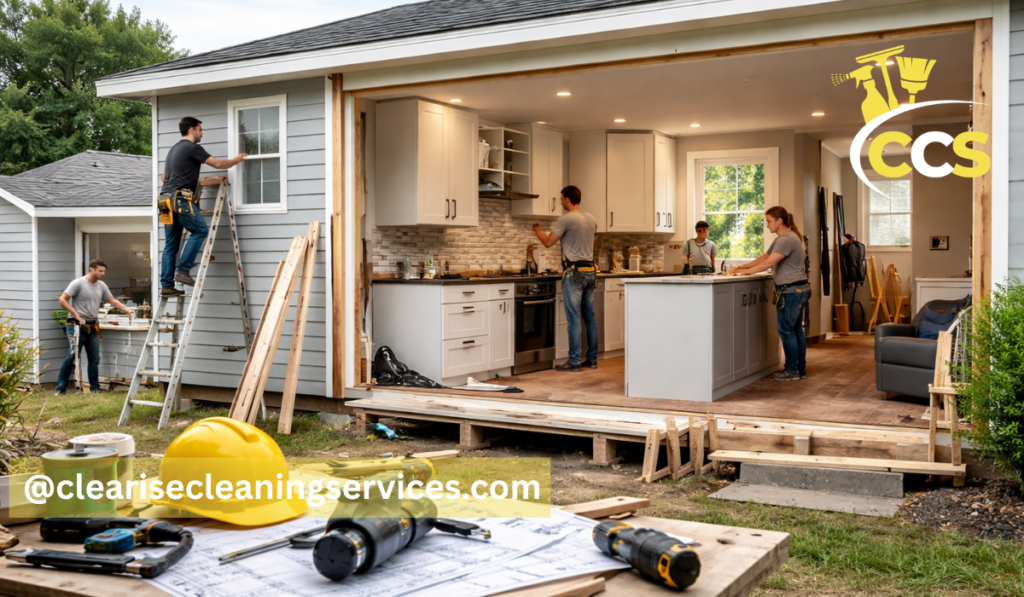
“Renovating with a baby or toddler changes everything—timelines, materials, mess, and safety.”
If you’re searching modular home renovation because you want a cleaner layout, safer finishes, and a home that works better for family life, this guide is built for you. You’ll learn how to plan the project, what usually drives modular home renovation cost, which upgrades are worth doing first, and how to borrow budget-friendly ideas from manufactured and mobile-home remodels without making expensive mistakes.
One important clarification before you start: modular homes and manufactured/mobile homes are both factory-built, but they follow different rules—modular homes typically follow state/local building codes like site-built homes, while manufactured homes are built to the federal HUD Code, so renovation rules and permitting can differ.
Modular Vs Manufactured Vs Mobile: Know What You Own First
Modular homes (What it usually means)
A modular home is built in sections in a factory and assembled on-site. In most cases, it must meet the same state and local building codes as a site-built home, and it’s commonly set on a permanent foundation. That’s why modular renovations often feel similar to “regular” home remodels in terms of permits, inspections, and contractor workflows.
Manufactured homes (And why the rules can differ)
A manufactured home (sometimes casually called a “mobile home”) is built to federal construction and safety standards under the HUD Code. HUD also distinguishes “mobile homes” as factory-built homes constructed before June 15, 1976, while those built after that date are “manufactured homes.”
Why this matters for renovation
If you renovate under the wrong assumptions, you can lose time (permit delays), money (redo work), or both. The safest move is to confirm your home type early—then your contractor, inspector, and insurer can all stay on the same page.
A practical way to confirm:
- Check for a HUD data plate / certification label if you suspect manufactured housing.
- Ask your county or local authority how your home is recorded (real property vs personal property can affect financing and insurance, too).
Modular Home Renovation Cost In 2026: How To Budget Without Surprises
When people ask about modular home renovation cost, what they usually want is a realistic range and a way to avoid budget blow-ups. The most reliable method is to budget by “buckets” instead of guessing one big number.
Cost ranges (A realistic planning baseline)
Renovation costs vary widely by region and scope, but many industry guides group projects roughly like this:
- Cosmetic updates: about $50–$100 per sq ft
- Mid-range renovations: about $100–$250 per sq ft
- High-end/custom: about $250–$400+ per sq ft
These ranges aren’t “quotes.” They’re planning guardrails. Your real price depends on layout changes, plumbing moves, moisture fixes, and finish choices.
The budget buckets that keep you in control
Instead of budgeting only by room, build a simple list you can adjust as decisions change:
- Design + permits + engineering (especially if you’re moving walls)
- Demolition + disposal
- Structural work (openings, beams, subfloor repairs)
- MEP: mechanical, electrical, plumbing (the hidden budget eater)
- Surfaces/finishes: floors, cabinets, tile, paint
- Ventilation + indoor air quality upgrades
- Safety and kid-proofing upgrades
- Contingency (many families set aside 10–20% depending on risk)
What makes cost jump fast in modular renovations
Costs climb quickly when you change the “bones” of the home. Creating an open plan, moving plumbing, or reworking HVAC can shift a project from “refresh” to “major renovation” even if the design looks simple on Pinterest.
Modular Home Renovation Ideas That Help New Parents (Not Just “pretty Upgrades”)
The best modular home renovation ideas for families are the ones that reduce daily friction. You’re not just designing a house—you’re designing mornings, naps, feeding, laundry, and safety.
Layout upgrades that make parenting easier
A family-friendly layout usually has three traits: clear sightlines, safe zones, and storage where you actually need it.
In practical terms, that often means opening the kitchen view to the living/play area, creating a “drop zone” near the entry, and placing storage within arm’s reach of the chaos (diaper supplies, wipes, spare outfits, towels).
Kitchen upgrades for feeding, cleanup, and one-hand cooking
A parent-friendly kitchen isn’t about fancy appliances—it’s about flow.
A few high-impact choices:
- Put the trash/compost near the prep zone so you’re not carrying mess across the room.
- Add a dedicated drawer for bottles, formula, bibs, and snack containers.
- Choose surfaces you can wipe quickly (and that won’t punish you for sticky fingerprints).
Bathroom upgrades for bath time and safer routines
If bath time feels like an obstacle course, focus on traction, ventilation, and storage height.
Ventilation matters more than people think—good airflow helps control moisture and odors, and it protects finishes so you’re not repainting in two years.
Nursery and kids’ room upgrades that age well
Aim for a room that can “grow” without another full renovation:
- Keep furniture flexible (crib wall that later becomes a desk wall).
- Plan lighting for night feeds now, and homework later.
- Prioritize closed storage so the room resets fast.
Living spaces that baby-proof without looking temporary
The trick is to build safety into the design:
- More closed storage means fewer visible hazards.
- Better cord management means fewer daily battles.
- Softer corners and calmer layouts reduce the need for constant policing.
Planning Your Modular Home Renovation: A Step-by-step Timeline That Works With Kids
Renovating with children in the home is less about speed and more about control—dust control, noise control, and clear phases.
Step 1: Define your scope (Refresh, rework, or restructure)
Most families do best when they pick a “primary goal” first, like:
- Make the kitchen workable and safer
- Add storage and improve flow
- Fix comfort problems (temperature, drafts, humidity)
When you try to solve everything at once, you usually overspend on the wrong things.
Step 2: Make a kid-safe living plan before demo starts
This is where “experience-style” planning saves you. Decide where naps happen, where meals happen, and which bathroom stays functional. Even if your contractor is excellent, you’ll be happier if you set boundaries early.
A short, practical checklist (keep it simple):
- One “clean room” stays off-limits to tools
- Sealed pathways through the work area
- A daily cleanup time agreed in writing
Step 3: Confirm permits and inspection needs early
If you’re removing walls or changing structural elements, you may need engineering and permits. Requirements vary by location and home type, so treat local guidance as the final authority.
Step 4: Hire for factory-built experience when it matters
A contractor can be great at site-built homes and still struggle with factory-built details. Ask directly what types of modular/manufactured projects they’ve done and what surprised them. You want someone who has learned the “gotchas” already.
Step 5: Renovate in the order that prevents rework
Even if your project is mostly cosmetic, sequencing matters. The typical order is:
Structure → rough plumbing/electrical/HVAC → insulation/air sealing → walls → floors → cabinets → paint/trim → fixtures.
That Order Reduces “redo Costs,” Which Is One Of The Biggest Silent Budget Killers.
Materials And Finishes That Survive Babies, Toddlers, And Real Life
Flooring choices that stay clean and safe
For parents, the best flooring is usually the one that’s easy to clean, forgiving to falls, and repairable. If you love the look of a delicate material but it stresses you out daily, it won’t feel like an upgrade.
Paint and wall strategy for high-touch homes
Pick finishes that tolerate wiping and scuffs, and be intentional about where you place “impact zones” (hallways, behind dining chairs, near toy storage). This is one of the cheapest ways to make a home feel fresh for years.
Lighting that supports routines
Layer lighting so the home works in both modes: bright and functional for cleanup, soft and calm for bedtime. Small changes like dimmers and warmer bedside lighting can make night feeds feel less disruptive.
Mobile Home Remodeling Ideas On A Budget (useful Even If You Own A Modular Home)
This section is here for two reasons: (1) your related keywords, and (2) because budget mobile/manufactured remodelers are often brilliant at high-impact upgrades.
Mobile home remodeling ideas on a budget that look intentional
A few proven “budget wins” show up again and again in real remodels:
- Fresh paint in a consistent palette
- One continuous flooring choice to visually enlarge the home
- Lighting and hardware upgrades that modernize instantly
Single wide mobile home remodel ideas (Space first)
Single wide mobile home remodel ideas often focus on keeping pathways open, using vertical storage, and turning dead corners into useful stations (laundry, coats, diaper supplies).
Double wide mobile home remodel ideas (Zones and flow)
With more width, double wide mobile home remodel ideas usually succeed when the space is clearly zoned—play, lounge, dining—so clutter doesn’t spread everywhere.
Double wide mobile home remodel ideas on a budget (A phased approach)
If you need double wide mobile home remodel ideas on a budget, phases help:
- Safety + floors + paint
- Storage + lighting
- Kitchen refresh
- Bathroom and ventilation
Manufactured Home Remodel Before And After: What Changes Make The Biggest Difference
People love manufactured home remodel before and after projects because the transformation can be dramatic with surprisingly simple moves: better lighting, consistent finishes, smarter storage, and a layout that supports daily routines.
The key is to avoid “photo-only” decisions. If a change looks great but increases cleaning time, reduces storage, or makes nap time louder, it’s not a win for a new-parent home.
Common Mistakes To Avoid (and What To Do Instead)
Mistake 1: Going open-concept without checking structure
Open plans can be amazing for supervision and togetherness, but structural changes should be engineered properly, permitted when required, and priced with a contingency.
Mistake 2: Underestimating ventilation and moisture
Bathrooms, laundry areas, and kitchens are moisture factories—especially with kids. If you skip ventilation, you may pay later in peeling paint, odors, or repeated repairs.
Mistake 3: Picking finishes that punish you daily
Some materials are beautiful but require constant maintenance. In a baby/toddler season, choose “easy wins” first. You can always upgrade to higher-maintenance finishes later when life calms down.
Conclusion
A modular home renovation can be one of the most practical ways to create a safer, calmer, more functional home for your family—especially when you plan around real life: naps, mess, and tight schedules. Start by confirming whether your home is modular or manufactured, budget using clear cost buckets, and choose renovation ideas that reduce daily friction (sightlines, storage, ventilation, and easy-clean finishes). If you take a phased approach, you can improve comfort fast without blowing the budget—while still setting your home up for a “before and after” transformation you’ll actually enjoy living in.
If you want, paste your target country (US/UK/PK) and your desired word count, and I’ll tailor this into a publish-ready version with region-appropriate cost notes and a tighter internal-link plan for SEO.
Frequently asked questions
Is Modular Home Renovation Different From Renovating A Normal House?
Often it’s similar because modular homes typically follow local building codes like site-built homes, but the details depend on your home type and location. Confirm early whether your home is modular or manufactured.
How Do I Keep My Renovation Safer For A Newborn?
Plan a sealed clean zone, control dust pathways, schedule loud work around naps, and prioritize ventilation. Also avoid rushing paint/finish curing—time and airflow matter.
Can Financing Differ For Modular Vs Manufactured Homes?
It can. Financing options and requirements may depend on whether the home is treated as real estate (often tied to being permanently affixed to land) versus personal property.
Disclaimer: This article is for informational and educational purposes only and does not constitute professional construction, engineering, financial, or legal advice. Renovation requirements, building codes, permits, and costs vary by location and home type (modular, manufactured, or mobile). Always consult qualified contractors, licensed professionals, and your local building authority before starting any renovation project. The author is not responsible for any decisions made based on the information provided.
Thanks for visiting Clearise Cleaning Services! Discover more helpful tips and expert cleaning insights by exploring our related categories.