Commercial floors face heavy foot traffic every day, which makes commercial floor maintenance essential for businesses. Clean and well-maintained floors not only improve the appearance of a building but also help create a safer environment for employees and visitors.
Proper floor care can prevent common issues such as scratches, stains, and surface damage caused by dirt and moisture. It also reduces the risk of slips and accidents while helping flooring materials last longer, saving businesses from expensive repairs or replacements.
In this guide, we will explain the importance of commercial floor maintenance, common challenges businesses face, and practical strategies to keep floors clean, safe, and durable through proper maintenance and professional services.
What Is Commercial Floor Maintenance?
Commercial floor maintenance means regularly cleaning and protecting floors in business spaces so they remain clean, safe, and durable despite heavy daily use.
Understanding the Concept
Commercial floor maintenance includes different cleaning and care activities used to protect floors in commercial buildings. These tasks usually involve sweeping, mopping, machine scrubbing, polishing, and applying protective coatings. The main goal is to remove dirt, prevent damage, and keep floors looking professional for employees and visitors.
Another important part of the concept is understanding how it differs from residential cleaning. Commercial spaces handle much heavier foot traffic and larger areas, which means floors wear out faster. Because of this, businesses often use professional equipment and structured cleaning schedules to maintain floor quality.
Why Businesses Need Professional Floor Care
Businesses need proper floor care because commercial floors experience constant use throughout the day. Foot traffic, dirt, moisture, and moving equipment can quickly cause scratches, stains, and surface wear if floors are not maintained regularly.
Professional floor care also helps businesses meet safety requirements. Clean and properly maintained floors reduce the risk of slips and accidents, which is important for employee safety and customer protection. In addition, well-maintained floors create a clean and professional appearance that improves the overall customer experience.
Industries That Depend on Floor Maintenance
Many industries rely heavily on proper floor maintenance to keep their spaces clean and safe. Offices and corporate buildings need regular cleaning to maintain a professional environment for employees and visitors.
Healthcare facilities such as hospitals and clinics require strict floor maintenance to support hygiene and infection control standards. Retail stores and shopping malls depend on clean floors to create a pleasant shopping experience for customers.
Restaurants, hotels, and other hospitality businesses must maintain clean floors to meet health regulations and ensure guest satisfaction. Warehouses and industrial facilities also require regular maintenance because heavy machinery and equipment can easily damage flooring surfaces without proper care.
Types of Commercial Flooring and Their Maintenance Needs
Different commercial spaces use different types of flooring, and each material requires its own maintenance approach. Understanding the cleaning and care requirements of each floor type helps businesses protect their investment and extend the life of the flooring.
Vinyl and Luxury Vinyl Tile (LVT)
Vinyl and LVT floors are common in offices, hospitals, and retail stores because they are durable and easy to maintain. However, they still require regular care to prevent scratches and dullness.
Cleaning Methods
Vinyl floors should be cleaned with regular sweeping or dust mopping to remove dirt and debris. Neutral floor cleaners and damp mopping are commonly used to maintain the surface without damaging the finish.
Stripping and Waxing Requirements
Over time, vinyl floors may lose their shine due to heavy traffic. Periodic stripping and waxing help restore the protective layer and keep the floor looking polished and professional.
Hardwood and Engineered Wood Floors
Hardwood floors add a professional and elegant appearance to commercial spaces such as offices and hotels, but they require careful maintenance.
Moisture Control
Wood floors are sensitive to moisture, so excessive water during cleaning should be avoided. Using damp mops and proper ventilation helps prevent swelling, warping, or damage.
Polishing and Refinishing Schedules
Regular polishing keeps the surface smooth and attractive, while refinishing may be required after several years to restore the wood’s original appearance.
Tile and Grout Floors
Tile flooring is widely used in restaurants, restrooms, and commercial kitchens because of its durability and water resistance.
Deep Grout Cleaning
Grout lines can easily trap dirt, grease, and bacteria. Professional deep cleaning helps remove buildup and keeps the floor hygienic.
Sealing Techniques
Applying grout sealant protects the surface from stains and moisture penetration, making future cleaning easier.
Concrete Floors
Concrete flooring is common in warehouses, factories, and industrial facilities due to its strength and durability.
Polishing and Sealing
Concrete floors are often polished and sealed to create a smooth, dust-resistant surface. This process also improves the floor’s appearance and durability.
Industrial Cleaning Techniques
Heavy-duty floor scrubbers and specialized cleaning solutions are often used to remove oil, dust, and industrial residue from concrete surfaces.
Carpeted Commercial Floors
Carpet is often used in offices and hospitality spaces because it improves comfort and reduces noise.
Extraction Cleaning
Deep extraction cleaning removes embedded dirt, dust, and allergens from carpet fibers. This process helps maintain cleanliness and extend the life of the carpet.
Stain Protection Treatments
Applying protective treatments helps prevent stains from spills and makes carpets easier to clean in high-traffic areas.
Key Components of an Effective Commercial Floor Maintenance Program
A successful commercial floor maintenance program includes consistent cleaning routines and scheduled deep maintenance. Regular care prevents damage, keeps floors safe, and maintains a professional appearance.
Daily Maintenance Tasks
Daily cleaning helps remove dirt and debris before they cause long-term damage.
Sweeping and Dust Mopping
Regular sweeping or dust mopping removes dust, sand, and small particles that can scratch flooring surfaces.
Spot Cleaning Spills
Immediate cleaning of spills helps prevent stains and reduces the risk of slip hazards.
Weekly Cleaning Routines
Weekly maintenance focuses on deeper cleaning tasks that go beyond daily surface cleaning.
Machine Scrubbing
Floor scrubbers help remove built-up dirt and grime from hard floor surfaces that normal mopping cannot eliminate.
Carpet Vacuuming and Edge Cleaning
Regular vacuuming removes dust and debris from carpets, while edge cleaning helps maintain areas along walls and corners.
Monthly Deep Maintenance
Monthly maintenance focuses on restoring the appearance of floors and addressing stubborn dirt or stains.
Floor Buffing and Polishing
Buffing restores shine and smoothness to hard floors while helping protect the surface from wear.
Stain Removal Treatments
Deep cleaning treatments help remove stains and buildup that accumulate over time.
Annual Restoration Services
Some floor maintenance tasks are required only once or twice a year but are essential for long-term floor protection.
Floor Stripping and Waxing
Stripping removes old wax and buildup, while new wax layers restore protection and shine to the floor.
Concrete Polishing
Polishing concrete floors improves durability and provides a clean, professional finish.
Carpet Deep Extraction
Annual deep extraction removes deeply embedded dirt and allergens that regular cleaning cannot eliminate.
Essential Equipment Used in Commercial Floor Maintenance
Proper commercial floor maintenance requires specialized equipment that can clean large areas efficiently while protecting different flooring materials. Using the right tools helps improve cleaning results and extend the life of commercial floors.
Professional Floor Cleaning Machines
Commercial cleaning machines are designed to handle large spaces and heavy dirt buildup that normal cleaning tools cannot manage.
Auto Scrubbers
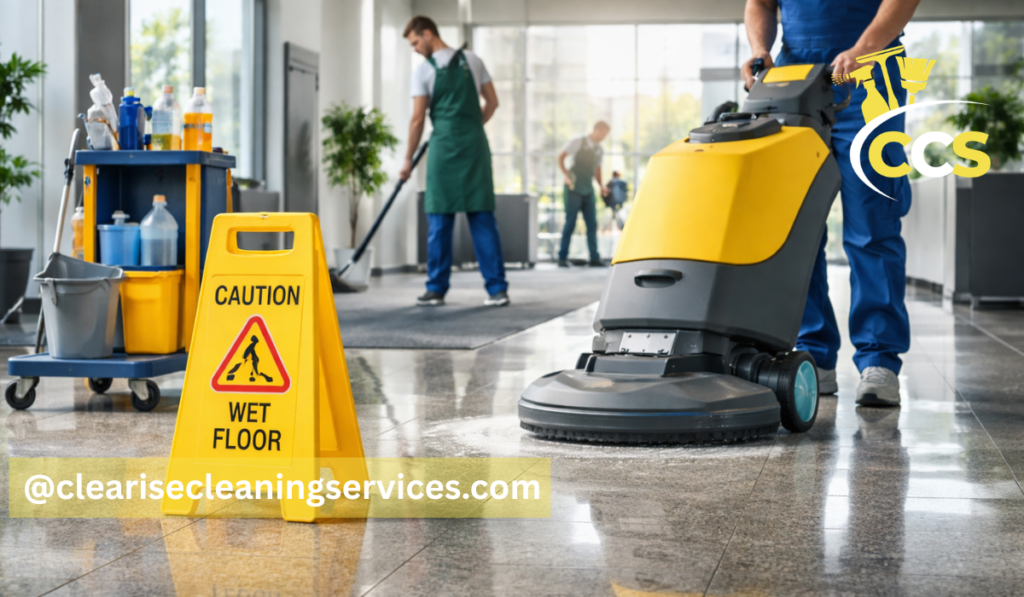
Auto scrubbers are commonly used for cleaning large hard-floor areas such as offices, warehouses, and shopping centers. They scrub the floor with cleaning solution while simultaneously removing dirty water, leaving the surface clean and dry.
Burnishers and Buffers
Burnishers and buffers help restore shine to hard floors such as vinyl, tile, and polished concrete. These machines smooth the surface and maintain the protective finish of the flooring.
Carpet Extractors
Carpet extractors perform deep cleaning by injecting cleaning solution into carpet fibers and then extracting dirt, moisture, and debris. This method helps remove embedded dust and stains from commercial carpets.
Cleaning Chemicals and Solutions
Cleaning chemicals play an important role in removing dirt, stains, and bacteria while protecting the floor surface.
Neutral Cleaners
Neutral floor cleaners are designed to clean surfaces without damaging protective finishes. They are commonly used for routine cleaning of many commercial floor types.
Disinfectants
Disinfectants help eliminate bacteria and germs from floors, which is especially important in healthcare facilities, schools, and food service environments.
Floor Finish and Sealers
Floor finishes and sealers create a protective layer that helps prevent scratches, stains, and moisture damage while maintaining the appearance of the flooring.
Safety and Efficiency Tools
In addition to machines and chemicals, simple tools also help improve cleaning efficiency and workplace safety.
Microfiber Mops
Microfiber mops are highly effective at capturing dust, dirt, and moisture. They are widely used in commercial cleaning because they require less water and provide better cleaning results.
Wet Floor Signage
Wet floor signs warn employees and visitors about slippery surfaces during cleaning, helping prevent accidents and injuries.
Protective Coatings
Protective coatings are applied to floors to create a durable surface layer that resists scratches, stains, and heavy foot traffic.
Commercial Floor Maintenance Best Practices from Industry Experts
Maintaining commercial floors effectively requires more than routine cleaning. Industry experts recommend a combination of preventive care, scheduled maintenance, and strategic cleaning practices to keep floors in excellent condition.
Preventive Maintenance Strategies
Preventive measures help reduce wear and protect floors from damage before problems occur.
Entryway Mat Systems
Placing high-quality mats at entrances helps capture dirt, moisture, and debris before they reach interior floors. This simple step can significantly reduce floor wear.
Protective Floor Coatings
Applying protective coatings or finishes helps create a barrier against scratches, stains, and daily foot traffic.
High-Traffic Area Management
Some areas in commercial buildings experience heavier use than others and require special attention.
Identifying Wear Zones
Entrances, hallways, and reception areas usually experience the most traffic. Identifying these zones helps facility managers focus maintenance efforts where they are most needed.
Increasing Cleaning Frequency
High-traffic areas may require more frequent cleaning and polishing to prevent dirt buildup and maintain a professional appearance.
Seasonal Floor Care Adjustments
Environmental conditions can affect commercial flooring, so maintenance strategies often change with the seasons.
Winter Salt Damage Prevention
Salt and moisture tracked inside during winter can damage flooring surfaces. Regular cleaning and protective treatments help prevent this type of damage.
Summer Humidity Control
High humidity levels can affect materials such as wood and carpet. Proper ventilation and moisture control help maintain floor quality.
Facility Manager Tips for Long-Lasting Floors
Facility managers play an important role in maintaining effective floor care programs.
Creating Maintenance Checklists
Structured cleaning schedules and checklists help ensure that daily, weekly, and monthly maintenance tasks are completed consistently.
Staff Training Programs
Training cleaning staff on proper techniques and equipment use helps prevent accidental damage and improves cleaning efficiency.
Benefits of Professional Commercial Floor Maintenance Services
Professional cleaning services provide expertise and specialized equipment that help businesses maintain high standards of cleanliness and safety.
Improved Workplace Safety
Clean and well-maintained floors reduce the risk of workplace accidents.
Reducing Slips and Fall Hazards
Regular cleaning removes moisture, grease, and debris that can create slippery surfaces, helping protect employees and visitors.
Extending the Lifespan of Flooring
Proper maintenance protects flooring materials from damage.
Preventing Expensive Replacements
Routine care and professional cleaning help prevent long-term damage, allowing businesses to avoid costly floor replacements.
Enhancing Business Image
The appearance of a facility often reflects the professionalism of the organization.
Clean Floors Create Better First Impressions
Visitors and customers notice clean, polished floors immediately, which helps create a positive and professional environment.
Health and Hygiene Advantages
Clean floors contribute to healthier indoor environments.
Removing Allergens and Bacteria
Professional cleaning methods remove dust, allergens, and harmful bacteria that can accumulate on flooring surfaces.
How to Choose the Right Commercial Floor Maintenance Company
Selecting the right service provider is important for maintaining high cleaning standards and protecting flooring investments.
What to Look for in a Service Provider
Businesses should evaluate cleaning companies based on experience, reliability, and professional qualifications.
Certifications and Industry Experience
Companies with industry certifications and experienced staff are more likely to follow proper cleaning practices and safety standards.
Insurance and Compliance
A professional service provider should carry proper insurance and follow industry regulations to protect both the business and its employees.
Questions to Ask Before Hiring
Asking the right questions can help businesses select the most suitable cleaning partner.
Cleaning Methods and Equipment
Understanding the cleaning methods and equipment used helps ensure that the company can handle specific flooring materials.
Service Guarantees
Reliable cleaning companies often provide service guarantees to ensure customer satisfaction.
Local Service Options
Many businesses prefer working with local service providers for convenience and faster response times.
Searching for Commercial Floor Maintenance Near Me
Local searches help businesses find nearby professionals who understand regional cleaning requirements.
Finding Commercial Floor Maintenance Services Near Me
Comparing multiple service providers allows businesses to choose the one that best fits their maintenance needs and budget.
Example of a Professional Provider
Some companies specialize in providing comprehensive floor maintenance solutions.
How Companies Like Foreman Pro Cleaning Deliver Specialized Floor Maintenance Solutions
Professional providers such as Foreman Pro Cleaning offer tailored cleaning programs, advanced equipment, and trained staff to maintain different types of commercial flooring effectively.
Signs Your Business Needs Immediate Floor Maintenance
Commercial floors often show clear warning signs when maintenance is overdue. Ignoring these signs can lead to safety risks, higher repair costs, and a poor impression for visitors and customers.
Visible Scratches and Dullness
When floors lose their shine or show noticeable scratches, it usually means the protective layer has worn down. This is common in high-traffic areas where dirt and debris slowly damage the surface.
Persistent Stains
Stains that remain even after regular cleaning may indicate that dirt has penetrated the floor surface or grout lines. Deep cleaning or restoration may be required to remove these marks.
Slippery or Uneven Surfaces
Slippery floors or uneven surfaces can become safety hazards for employees and visitors. These issues often occur when floors are not cleaned properly or when finishes begin to wear out.
Strong Odors from Carpets or Grout
Unpleasant odors may develop when dirt, moisture, or bacteria build up in carpets or grout lines. Deep cleaning can help eliminate these odors and improve indoor air quality.
Cost of Commercial Floor Maintenance
The cost of commercial floor maintenance can vary depending on several factors such as floor type, size of the facility, and how often cleaning services are required.
Factors That Affect Pricing
Floor Type
Different flooring materials require different cleaning methods. For example, carpets may need extraction cleaning, while vinyl or concrete floors may require polishing or sealing.
Square Footage
Larger buildings naturally require more time, equipment, and cleaning supplies, which increases the overall maintenance cost.
Frequency of Service
Businesses that schedule regular maintenance may have lower long-term costs compared to facilities that require occasional deep cleaning due to neglect.
Average Commercial Floor Cleaning Costs
Per Square Foot Estimates
Many cleaning companies calculate prices based on the size of the area being cleaned. Rates can vary depending on the complexity of the job and the type of flooring.
Monthly Maintenance Plans
Some service providers offer monthly maintenance plans that include scheduled cleaning and periodic deep maintenance.
How Preventive Maintenance Saves Money
Avoiding Costly Floor Replacement
Regular maintenance helps prevent long-term damage, which can significantly extend the lifespan of flooring and reduce the need for expensive replacements.
DIY vs Professional Commercial Floor Maintenance
Businesses often choose between handling floor maintenance internally or hiring professional cleaning services.
When In-House Cleaning Is Enough
Daily Maintenance Tasks
Basic tasks such as sweeping, dust mopping, and cleaning small spills can usually be handled by in-house janitorial staff. These daily routines help keep floors clean between deeper maintenance services.
When Professionals Are Necessary
Deep Restoration
Professional services are often needed for tasks such as stripping and waxing, concrete polishing, or deep carpet extraction.
Specialized Floor Treatments
Certain flooring materials require specialized equipment and cleaning solutions that trained professionals are better equipped to handle.
The Hybrid Maintenance Model
Combining Janitorial Staff with Professional Services
Many businesses use a hybrid approach by handling daily cleaning internally while hiring professional companies for periodic deep maintenance and restoration.
Creating a Commercial Floor Maintenance Schedule
A structured maintenance schedule helps ensure that cleaning tasks are performed consistently and that floors remain in good condition throughout the year.
Daily Cleaning Checklist
Daily tasks usually include sweeping, dust mopping, vacuuming carpets, and cleaning spills immediately to prevent stains or slip hazards.
Weekly Maintenance Plan
Weekly maintenance often includes machine scrubbing of hard floors, detailed carpet vacuuming, and cleaning corners and edges that may collect dirt.
Monthly Deep Cleaning Tasks
Monthly cleaning may involve buffing and polishing hard floors, removing stubborn stains, and performing deeper carpet cleaning.
Annual Restoration Schedule
Some maintenance tasks are performed once or twice a year, such as stripping and waxing floors, concrete polishing, or deep carpet extraction.
Future Trends in Commercial Floor Maintenance
The commercial cleaning industry continues to evolve with new technology and sustainable practices that improve efficiency and environmental responsibility.
Smart Cleaning Technology
Robotic Floor Cleaners
Automated cleaning machines are increasingly used in large facilities such as airports and shopping malls to maintain floors efficiently.
AI-Powered Cleaning Equipment
Some modern machines use artificial intelligence to optimize cleaning routes and improve performance.
Eco-Friendly Cleaning Solutions
Green-Certified Chemicals
Many businesses are adopting environmentally friendly cleaning products that reduce chemical exposure while maintaining effective cleaning results.
Sustainable Cleaning Practices
Water-saving equipment and reusable cleaning materials are becoming more common in modern floor maintenance programs.
Data-Driven Facility Management
Predictive Maintenance Systems
Advanced facility management systems can monitor floor conditions and predict when maintenance is needed, helping businesses plan cleaning schedules more efficiently.
Conclusion
Commercial floor maintenance is an essential part of managing any business environment. Clean and well-maintained floors not only improve the appearance of a facility but also help create a safer and healthier workplace.
Regular maintenance, preventive care, and professional cleaning services play an important role in protecting flooring materials from damage. By following a structured maintenance program, businesses can extend the life of their floors, reduce safety risks, and avoid costly repairs.
Investing in proper commercial floor maintenance ensures that workplaces remain clean, professional, and welcoming for employees, customers, and visitors. Businesses that adopt a proactive approach to floor care can maintain better safety standards while also protecting their long-term investment in flooring.
FAQs
What Is Commercial Floor Maintenance?
Commercial floor maintenance is the regular cleaning, polishing, and care of floors in business environments such as offices, retail stores, hospitals, and warehouses to keep them safe, clean, and durable.
How Often Should Commercial Floors Be Cleaned?
Daily cleaning is recommended for high-traffic areas, while deep cleaning tasks like polishing or machine scrubbing may be scheduled weekly or monthly depending on the floor type and usage.
Can Businesses Handle Floor Maintenance In-house?
Basic tasks like sweeping, mopping, and spot cleaning can be handled by in-house staff, but deep cleaning and restoration usually require professional equipment and trained technicians.
What Types Of Flooring Require Commercial Maintenance?
Common commercial flooring types include vinyl, tile, hardwood, concrete, and carpet. Each material requires specific cleaning methods and maintenance routines.
Why Is Professional Commercial Floor Maintenance Important?
Professional services help maintain floor appearance, reduce safety risks, remove deep dirt and bacteria, and extend the lifespan of flooring materials.
Disclaimer: The information provided in this article is intended for general educational and informational purposes only. While every effort has been made to present accurate and practical guidance on commercial floor maintenance, maintenance needs may vary depending on the type of flooring, building environment, and level of foot traffic. Readers should consider consulting qualified cleaning professionals or facility maintenance experts before applying specialized cleaning methods or treatments. The author and publisher are not responsible for any damages, losses, or issues that may arise from the use of the information provided in this guide.
Thanks for visiting Clearise Cleaning Services! Discover more helpful tips and expert cleaning insights by exploring our related categories.