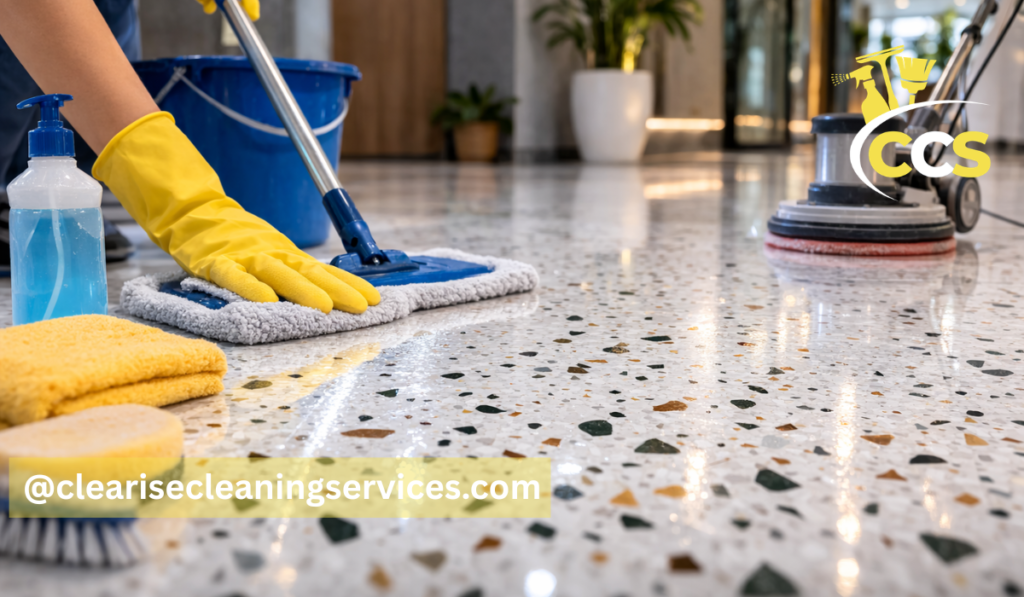
Terrazzo floor maintenance plays an important role in keeping terrazzo flooring clean, polished, and long-lasting. Terrazzo floors are widely used in homes, commercial buildings, offices, schools, and public spaces because of their attractive appearance and durability. Even though terrazzo is known for being a strong flooring material, it still needs proper care to maintain its shine and smooth finish over time.
Terrazzo flooring is made by combining small chips of materials such as marble, glass, quartz, granite, or other decorative aggregates with a binder. The binder is usually cement or epoxy. Once the mixture is poured and hardened, the floor surface is ground and polished. This polishing process reveals the decorative chips inside the floor and creates the glossy surface that terrazzo floors are known for.
Proper terrazzo floor maintenance is important because the polished surface can gradually lose its shine if it is exposed to dirt, sand, and heavy foot traffic without regular cleaning. Small particles of debris can act like sandpaper and slowly scratch the surface. Spills can also cause stains if they are not cleaned quickly. With regular care, however, terrazzo floors can remain bright, smooth, and attractive for decades.
Consistent maintenance helps preserve both the durability and the appearance of terrazzo floors. Cleaning the floor regularly removes harmful debris, while using the correct cleaning products prevents chemical damage. When terrazzo floor maintenance is done correctly, the floor stays polished, hygienic, and visually appealing.
In this guide, you will learn how to properly care for terrazzo flooring through daily cleaning habits, weekly routines, safe cleaning products, stain removal techniques, and long-term protection methods. Understanding these simple practices can help ensure that terrazzo floors remain beautiful and durable for many years.
Terrazzo Floor Maintenance Essentials
| Maintenance Task | Recommended Method | Frequency | Purpose |
| Dust Removal | Use a microfiber dust mop or soft broom | Daily | Removes dirt and grit that can scratch the surface |
| Mopping | Damp mop with warm water and pH-neutral cleaner | Weekly | Keeps the floor clean without damaging the finish |
| Spill Cleaning | Blot spills immediately with a soft cloth | As needed | Prevents stains and surface etching |
| Buffing | Use a soft pad mechanical buffer | Periodically | Restores shine and removes light scuff marks |
| Sealing | Apply penetrating sealer | Every 1–3 years | Protects terrazzo from moisture and stains |
| Professional Polishing | Diamond polishing by professionals | When floor becomes dull | Restores mirror-like finish |
Understanding Terrazzo Floors and Their Maintenance Needs
Terrazzo flooring is unique because it combines decorative design with exceptional durability. Unlike traditional tile or wood flooring, terrazzo surfaces are created by embedding decorative chips within a solid binder. This creates a seamless and polished floor that is both attractive and strong.
The materials used in terrazzo floors play a large role in their appearance and performance. Common aggregates include marble chips, quartz pieces, glass fragments, and granite particles. These decorative materials are placed within a cement or epoxy base and then polished to produce a smooth surface. Because terrazzo floors are made from natural and mineral-based materials, they require gentle care to prevent damage.
Terrazzo requires specific maintenance methods because harsh chemicals or abrasive tools can damage the polished surface. Strong acidic cleaners can react with the stone chips or the binder, which may cause dull spots or surface erosion. For this reason, terrazzo floor maintenance focuses on mild cleaning solutions and soft cleaning tools.
Maintaining terrazzo floors properly offers several benefits. Regular maintenance keeps the floor looking bright and polished, prevents stains from forming, and helps extend the lifespan of the flooring. With proper care, terrazzo floors can remain in excellent condition for many decades.
Daily Terrazzo Floor Maintenance Practices
Daily cleaning is one of the most important parts of terrazzo floor maintenance. Removing dust and debris each day helps prevent scratches and surface damage. The best way to perform daily cleaning is by using a microfiber dust mop or a soft broom. Microfiber materials are effective at trapping fine particles without scratching the floor.
Daily cleaning helps prevent surface scratches because it removes small particles such as sand and dirt that can damage the polished finish. When people walk across a floor covered with grit, those particles rub against the surface and gradually wear down the shine.
Keeping grit and dirt away from the surface is essential for maintaining the glossy appearance of terrazzo floors. When debris accumulates, the floor may begin to look cloudy or dull. Regular cleaning keeps the floor smooth and reflective.
Simple daily habits also play an important role in protecting terrazzo surfaces. Cleaning spills immediately, avoiding rough cleaning tools, and keeping entry areas clean can all help protect the floor from damage. These small habits contribute greatly to effective terrazzo floor maintenance.
Weekly Cleaning Routine for Terrazzo Floors
While daily dusting removes loose dirt, terrazzo floors also need deeper cleaning on a regular basis. Weekly cleaning usually involves damp mopping the floor to remove any remaining dirt or residue.
Proper mopping techniques are important when performing terrazzo floor maintenance. The mop should be damp rather than soaking wet, as too much water can leave streaks or marks on the surface. Gentle mopping is enough to clean the floor effectively without damaging the finish.
Warm water combined with a pH-neutral cleaner is typically recommended for terrazzo floors. These cleaners are designed to remove dirt and stains without harming the surface. They are mild enough to protect the binder and the decorative stone chips.
It is also important to clean terrazzo floors carefully so that the polished finish remains intact. Harsh scrubbing or abrasive tools should be avoided. Soft mop heads and gentle cleaning techniques are the safest approach.
After mopping, drying the floor is an important step. Drying helps prevent water marks and reduces the risk of slipping. It also helps maintain the smooth and polished appearance of the terrazzo surface.
Simple Step-by-Step Terrazzo Floor Maintenance Routine
- Dust daily using a microfiber mop to remove sand, dust, and debris.
- Clean spills immediately to prevent stains from forming.
- Mop weekly with warm water and a pH-neutral cleaner.
- Dry the floor after mopping to avoid water spots and slipping.
- Buff the surface occasionally to restore shine.
- Apply a sealer every 1–3 years for long-term protection.
- Schedule professional polishing if the floor loses its gloss.
Best Cleaning Products for Terrazzo Floor Maintenance
Choosing the right cleaning products is a key part of terrazzo floor maintenance. Safe cleaning products are usually mild and non-corrosive. They should not contain harsh chemicals that could damage the surface.
pH-neutral cleaners are recommended for terrazzo flooring because they are balanced and gentle. Unlike acidic or highly alkaline cleaners, pH-neutral products do not react with the natural materials in terrazzo floors. This helps maintain the floor’s appearance while still removing dirt and residue.
There are many cleaning solutions specifically designed for stone or terrazzo surfaces. These products help remove dirt without leaving harmful residues. Using the correct cleaning solution makes regular maintenance easier and safer for the floor.
Some specialized cleaners are designed to help maintain the shine of terrazzo floors. These products clean the surface while preserving the polished finish. Choosing suitable cleaning products ensures that terrazzo floors remain bright and well maintained.
Sealing and Long-Term Protection for Terrazzo Floors
Sealing is another important step in terrazzo floor maintenance. A sealer acts as a protective barrier that helps prevent moisture and stains from penetrating the floor surface.
Because terrazzo contains porous materials, liquids can sometimes seep into the surface if it is not properly sealed. Sealers help block oil, water, and other substances that could otherwise cause stains or discoloration.
The frequency of sealing depends on the level of foot traffic and how often the floor is exposed to spills or moisture. In many cases, terrazzo floors should be sealed every one to three years to maintain protection.
There are several signs that indicate a terrazzo floor may need resealing. If the floor begins to stain easily, loses its shine, or stops repelling water, it may be time to apply a new layer of sealer. Regular sealing helps maintain both the appearance and durability of the floor.
Buffing and Professional Polishing for Restoring Shine
Buffing is a helpful technique used in terrazzo floor maintenance to restore shine and remove minor scuff marks. This process involves polishing the surface with a mechanical buffer fitted with a soft pad.
Buffing smooths the floor surface and enhances the natural shine of terrazzo. It can also help remove light scratches and restore the polished appearance of the floor.
Mechanical buffers are commonly used for this process. These machines gently polish the floor without causing damage. When used properly, buffing can significantly improve the appearance of terrazzo floors.
In some situations, professional polishing may be necessary. Floors that experience heavy foot traffic may eventually lose their shine despite regular maintenance. Professional polishing services use advanced tools to restore the floor’s original finish.
Diamond polishing is one of the most effective methods used by professionals. This process uses specialized diamond pads to grind and polish the surface, resulting in a mirror-like shine.
Common Mistakes to Avoid When Maintaining Terrazzo Floors
Certain cleaning habits can damage terrazzo floors if they are not avoided. One common mistake is using acidic or harsh chemical cleaners. Products such as vinegar, bleach, or ammonia can react with the materials in terrazzo flooring and cause surface damage.
Another mistake is scrubbing the floor with abrasive tools. Steel wool, stiff brushes, and rough scouring pads can scratch the polished surface and remove the shine.
Applying wax is also not recommended for terrazzo floors. Traditional wax coatings can trap dirt, turn yellow over time, and create a slippery surface.
Ignoring spills for long periods is another common mistake. Liquids such as coffee, juice, or oil can stain the surface if they remain on the floor too long. Prompt cleaning is an important part of proper terrazzo floor maintenance.
How to Remove Different Types of Stains from Terrazzo Floors
Even with regular care, stains can sometimes appear on terrazzo floors. Fortunately, many stains can be removed using gentle cleaning methods.
Light surface stains can often be cleaned using a neutral cleaning solution and a soft cloth. Gentle cleaning usually removes these stains without damaging the floor.
Oil and grease stains require a slightly different approach. A paste made from baking soda and water can help absorb oil from the surface. The paste is applied to the stain and left for several hours before being cleaned away.
Organic stains, such as coffee or wine stains, can sometimes be removed using hydrogen peroxide solutions. These solutions help break down the organic compounds that cause discoloration.
Rust stains may require specialized stone-safe rust removers. These products are designed to remove rust without harming terrazzo surfaces.
Maintenance Tips for High-Traffic Terrazzo Floor Areas
Floors located in busy areas often require additional attention. High-traffic spaces such as hallways, shopping centers, and office entrances experience more wear and dirt buildup.
Protecting terrazzo floors in these areas often begins with preventative measures. Entrance mats can help reduce the amount of dirt and debris brought into the building.
Regular cleaning schedules are also important in commercial environments. Frequent cleaning helps prevent dirt accumulation and keeps the floor looking polished.
Preventing uneven wear is another important part of terrazzo floor maintenance. Rotating rugs, using protective pads under furniture, and maintaining consistent cleaning routines can help distribute wear evenly across the floor.
Conclusion
Terrazzo flooring is known for its durability, beauty, and long lifespan. However, maintaining its polished appearance requires consistent care. Proper terrazzo floor maintenance includes regular dust removal, gentle cleaning, periodic sealing, and occasional polishing.
Consistent cleaning helps protect the surface from scratches and stains. Using safe cleaning products ensures that the floor’s materials remain undamaged. These simple practices help maintain the natural shine of terrazzo floors.
When terrazzo floors are properly maintained, they can last for many decades while continuing to look elegant and attractive. Regular care not only preserves the appearance of the floor but also helps avoid costly repairs.
By following simple terrazzo floor maintenance practices, homeowners and facility managers can ensure that their floors remain clean, polished, and durable. With the right care routine, terrazzo floors can continue to provide beauty and performance for many years to come.
FAQs
How Often Should Terrazzo Floors Be Cleaned?
Terrazzo floors should be dusted daily and mopped weekly using a pH-neutral cleaner. Regular cleaning prevents dirt buildup and keeps the surface shiny.
Can Vinegar Be Used To Clean Terrazzo Floors?
No. Vinegar and other acidic cleaners can damage the terrazzo surface and dull its shine. It is best to use pH-neutral cleaning products designed for stone floors.
How Long Do Terrazzo Floors Last With Proper Maintenance?
With proper terrazzo floor maintenance, these floors can last several decades and often remain in good condition for 40–75 years or more.
Do Terrazzo Floors Need Sealing?
Yes. Sealing terrazzo floors every one to three years helps protect them from stains, moisture, and everyday wear.
What Is The Best Way To Restore Dull Terrazzo Floors?
Light dullness can be restored with buffing. If the floor is heavily worn, professional diamond polishing may be required to bring back the original shine.
Disclaimer: The information provided in this article is intended for general educational purposes about terrazzo floor maintenance. Cleaning results may vary depending on floor type, condition, and environment. Always follow manufacturer guidelines or consult flooring professionals before using cleaning products or performing restoration procedures.
Thanks for visiting Clearise Cleaning Services! Discover more helpful tips and expert cleaning insights by exploring our related categories.