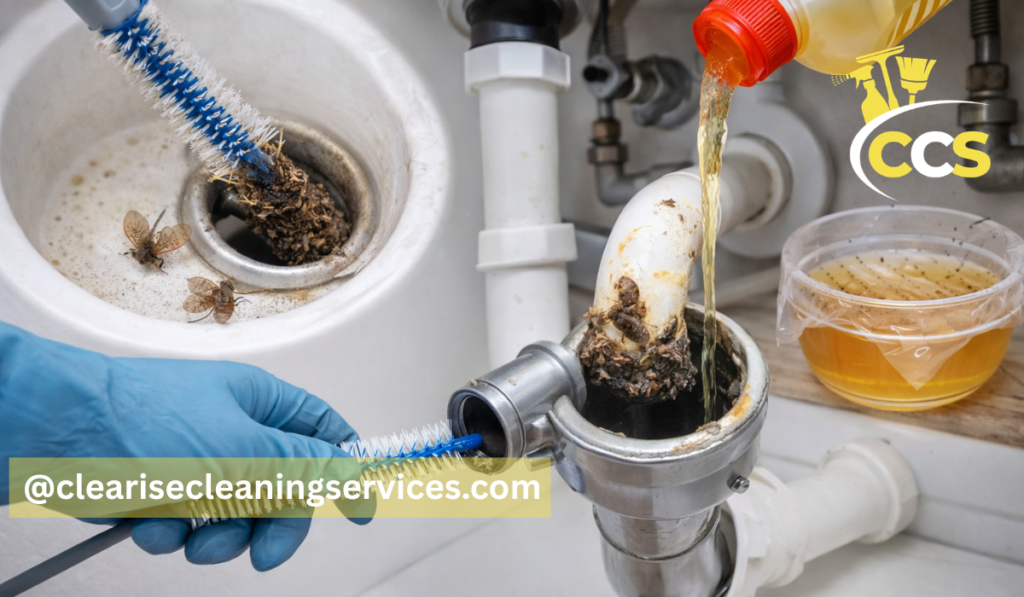
Drain flies, also known as moth flies, are tiny, fuzzy insects that often appear around sinks, showers, and floor drains. While they don’t bite or spread serious diseases, they can quickly become a frustrating nuisance in any home. Many people notice them hovering near drains or resting on walls, especially in bathrooms and kitchens.
These flies usually show up when there is standing water and organic buildup inside pipes. They are attracted to moist environments where they can lay eggs and feed. What makes them difficult to eliminate is that the real problem is not the flies you see—it’s the hidden slime inside your drains where they breed.
If you’re trying to figure out how to get rid of drain flies, it’s important to understand that simply killing the adults won’t solve the issue. The key is to remove the buildup inside your pipes and stop their life cycle at the source. Once you focus on that, getting rid of drain flies becomes much more manageable and long-lasting.
Easy Overview
| Step | What to Do | Why It Works | Frequency |
| 1 | Identify source (tape test) | Finds exact breeding drain | Once |
| 2 | Scrub drain pipes | Removes biofilm where larvae grow | Deep clean |
| 3 | Clean P-trap | Clears trapped debris and sludge | Monthly |
| 4 | Use enzyme cleaner | Breaks down hidden organic matter | Weekly |
| 5 | Set vinegar traps | Reduces adult flies quickly | As needed |
| 6 | Fix leaks & moisture | Prevents new breeding spots | Ongoing |
What Drain Flies Are and Why They Keep Coming Back
Drain flies are small, gray or brown insects with fuzzy wings that resemble tiny moths. They are commonly found near drains, sewage systems, and other damp areas. Unlike fruit flies, they don’t feed on food left out in the open. Instead, they thrive on organic matter that collects inside pipes.
They lay their eggs in a sticky layer of material called biofilm. This layer forms when grease, soap residue, hair, and other debris stick to the walls of your pipes. Over time, this buildup creates the perfect environment for drain flies to grow and multiply.
One of the main reasons drain flies keep coming back is that many people only focus on killing the visible flies. Sprays, boiling water, or quick fixes may reduce their numbers temporarily, but they don’t remove the breeding ground. As long as the biofilm remains inside the drain, new flies will continue to appear.
Understanding this cycle is essential when learning how to get rid of drain flies effectively. The goal is not just to eliminate the insects you see, but to remove the environment that allows them to survive.
How to Identify the Exact Source of Drain Flies
Before you start treating the problem, you need to identify where the drain flies are coming from. In most cases, the source is a specific drain in your home, but sometimes there can be multiple breeding spots.
Common areas include bathroom sinks, shower drains, kitchen sinks, floor drains, and even rarely used pipes. In some cases, they may also breed in damp mops, buckets, or areas with constant moisture.
A simple way to confirm the source is by using the tape test. Place clear adhesive tape loosely over a suspected drain before going to bed, leaving small gaps for airflow. If drain flies are coming from that drain, you will likely see them stuck to the tape the next morning.
Identifying the correct source is important because treating the wrong area will not solve the problem. When you know exactly where the flies are breeding, you can focus your efforts and get better results faster.
The Most Effective Way to Remove Drain Fly Breeding Grounds
The most reliable method for getting rid of drain flies is physically cleaning the inside of your drains. This step is often overlooked, but it is the most important part of the process.
Inside your pipes, the biofilm sticks to the walls and creates a thick, slimy layer. This is where drain flies lay eggs and where their larvae feed. Simply pouring liquids down the drain will not remove this layer completely.
Using a long-handled drain brush or pipe cleaner allows you to scrub the inside of the pipes and break apart the buildup. This process removes the environment that supports the flies and stops their life cycle.
It’s also important to pay attention to areas that are often missed, such as the sides of the pipes, bends, and connections. These hidden sections can hold a large amount of organic material and continue to support infestations if not cleaned properly.
Deep Cleaning Your Drain System Step by Step
A thorough cleaning process is essential when learning how to get rid of drain flies for good. Start by removing any visible debris from the drain opening. Then use a drain brush to scrub as far down the pipe as possible, focusing on loosening and removing the slimy buildup.
Next, clean the P-trap, which is the curved pipe located under sinks. This part of the plumbing often collects hair, grease, and other materials that contribute to biofilm. Carefully remove it, clean out any debris, and rinse it before reinstalling.
Hot water can help loosen grease and flush out small particles, but it should be used carefully. If your pipes are made of PVC, avoid pouring boiling water directly into them, as it can cause damage over time. Warm or moderately hot water is usually a safer option.
Taking the time to clean each part of the drain system thoroughly will make a big difference. This step removes the main source of the problem and prepares the drain for further treatment if needed.
Step-by-Step Quick Action Guide
- First, confirm which drain has the problem using the tape test
- Then scrub inside the drain using a long brush
- Remove and clean the P-trap under sinks
- Pour enzyme cleaner to break down leftover buildup
- Use vinegar traps to control flying insects
- Keep drains clean and dry to prevent return
Using Enzyme and Biological Cleaners for Long-Term Results
After manual cleaning, enzyme-based cleaners can help maintain a clean drain and prevent the return of drain flies. These cleaners use natural bacteria and enzymes to break down organic material inside pipes.
Unlike harsh chemical cleaners, enzyme products do not just push debris further down the pipe. Instead, they digest the buildup and help keep the pipe walls clean over time. This makes them especially useful for long-term maintenance.
They are most effective when used after you have already scrubbed the drain. At this stage, they can reach areas that may still have small amounts of residue and continue the cleaning process.
Using these cleaners regularly can help prevent future infestations and reduce the chances of drain flies coming back.
Simple DIY Methods to Reduce Adult Drain Flies
While removing the breeding source is the main solution, you can also reduce the number of adult flies in your home using simple DIY methods. These methods help control the visible population while you address the root cause.
One common approach is using a vinegar trap. A small bowl filled with apple cider vinegar and a few drops of dish soap can attract and trap flies. Covering the bowl with plastic wrap and making small holes allows the flies to enter but not escape.
Another method involves using a mixture of baking soda, salt, and vinegar in the drain. This can help loosen minor buildup and reduce odors, although it is not a complete solution on its own.
These methods are helpful for short-term control, but they should not replace proper cleaning. They work best when combined with deeper treatment of the drains.
Common Mistakes That Make Drain Fly Problems Worse
Many people struggle to get rid of drain flies because they rely on quick fixes that don’t address the real problem. One common mistake is using insect sprays. While these may kill adult flies, they do nothing to remove the breeding ground.
Another mistake is pouring boiling water down the drain and expecting it to solve the issue. While it may kill some larvae, it does not remove the biofilm where new eggs are laid.
Skipping deep cleaning is another major reason infestations continue. Without physically removing the buildup inside the pipes, the problem will return again and again.
Ignoring hidden moisture sources can also make things worse. Leaks, damp areas, and unused drains can all create new breeding spots if not addressed.
How to Prevent Drain Flies from Coming Back
Once you have successfully removed drain flies, prevention becomes the next priority. Keeping your drains clean and active is one of the best ways to avoid future infestations.
Running water regularly through unused drains helps prevent stagnant conditions where flies can breed. This is especially important for guest bathrooms or rarely used sinks.
Fixing leaks and reducing moisture around your home is also essential. Even small drips can create the damp environment that drain flies need to survive.
Regular maintenance, such as occasional drain cleaning and the use of enzyme products, can help keep pipes free of buildup. These simple habits can go a long way in preventing the problem from returning.
When Drain Flies Indicate a Bigger Plumbing Problem
In some cases, drain flies may continue to appear even after thorough cleaning. This can be a sign of a deeper plumbing issue that needs attention.
Persistent infestations may indicate problems such as damaged pipes, cracks in the plumbing system, or issues with the sewer line. These problems can create hidden areas where water and organic material collect.
If you have cleaned all visible drains and the flies still return, it may be time to consider a professional inspection. A plumber can identify hidden issues and recommend the best solution.
Addressing these underlying problems is important not only for getting rid of drain flies but also for maintaining the overall health of your plumbing system.
Conclusion
Getting rid of drain flies requires more than just dealing with the insects you can see. The real solution lies in removing the hidden buildup inside your drains where they live and breed.
By identifying the source, cleaning your pipes thoroughly, and using proper treatments, you can break their life cycle and eliminate the problem for good. Simple DIY methods can help reduce the number of visible flies, but they should always be combined with deeper cleaning.
Prevention is just as important as treatment. Keeping your drains clean, fixing leaks, and maintaining a dry environment will help ensure that drain flies do not return.
If you follow a consistent, step-by-step approach, learning how to get rid of drain flies becomes much easier, and you can enjoy a cleaner, more comfortable home without recurring infestations.
FAQs (People Also Ask)
What Causes Drain Flies In The First Place?
Drain flies are caused by organic buildup (biofilm) inside pipes, where they lay eggs and grow.
How Long Does It Take To Get Rid Of Drain Flies?
With proper cleaning, it usually takes about 5–10 days to fully eliminate them.
Will Boiling Water Kill Drain Flies?
Boiling water may kill some larvae, but it won’t remove the buildup, so flies will come back.
Are Drain Flies Harmful?
They are mostly harmless but can spread bacteria from dirty surfaces.
Why Do Drain Flies Keep Coming Back?
They return if the biofilm inside drains is not completely removed or if moisture remains.
Disclaimer: This article is for informational purposes only. Results may vary depending on the condition of your plumbing system. For severe or persistent issues, consult a licensed professional plumber.
Thanks for visiting Clearise Cleaning Services! Discover more helpful tips and expert cleaning insights by exploring our related categories.