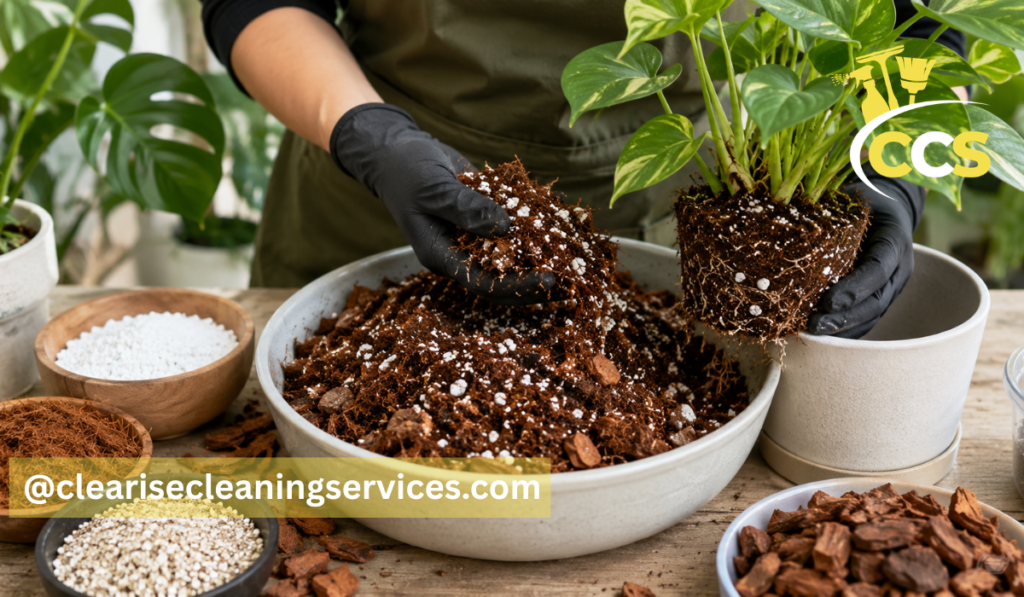
A soilless potting mix is a growing medium made without natural garden soil, field soil, or clay. Instead, it combines lightweight materials such as coco coir, peat moss, perlite, vermiculite, bark, and sometimes compost. These ingredients create a soft, open environment where roots can receive both moisture and oxygen.
Many products sold as “potting soil” are actually soilless. Garden soil can become dense in a container, slowing drainage and reducing air around the roots. University of Minnesota Extension advises using lightweight potting mixes rather than garden soil or topsoil in pots.
Soilless mixes are used for indoor plants, balcony pots, hanging baskets, seed trays, greenhouse crops, and some hydroponic systems. A good blend holds enough water for roots while allowing extra water to escape. It should remain loose and make moisture and nutrition easier to manage.
Quick Guide to Soilless Potting Mix
| Feature | Quick Information |
| Main purpose | Supports container plants with balanced moisture, drainage, and airflow |
| Common base | Coco coir or peat moss |
| Drainage materials | Perlite, pumice, coarse bark, or horticultural grit |
| Moisture-holding material | Vermiculite, coco coir, or peat moss |
| Best for | Indoor plants, seedlings, hanging baskets, patio pots, and propagation |
| Main advantage | Lightweight structure that is less likely to compact |
| Nutrient level | Often low unless compost, worm castings, or fertilizer are added |
| Watering need | Water according to the plant and moisture level, not a fixed schedule |
| Where to buy | Nurseries, garden centers, hydroponic shops, Home Depot, Lowe’s, or online |
| Storage | Keep unused mix sealed in a clean, cool, and dry location |
Simple Steps for Choosing the Right Mix
- Identify whether your plant prefers moist or fast-draining conditions.
- Check the ingredients instead of relying only on the product name.
- Choose finer particles for seedlings and chunkier materials for tropical plants.
- Check whether fertilizer is already included.
- Make sure the finished mix stays loose and drains without drying too quickly.
What Makes a Potting Mix Truly Soilless
A mix is truly soilless when its main structure comes from materials other than mineral field soil. The base may be coco coir, sphagnum peat moss, composted bark, wood fiber, or a blend of these. Perlite, pumice, or vermiculite is usually added to change how the mix handles air and water.
Ordinary garden dirt contains mineral particles such as sand, silt, and clay. It may also carry weed seeds and living organisms. It works naturally in the ground, but inside a container it may settle into a hard mass and remain wet for too long.
A soilless medium is blended to be more predictable. However, “soilless” does not always mean sterile. Products containing compost or worm castings naturally contain microorganisms. A quality mix may lower the risk of weeds and some soil-borne problems compared with untreated garden soil.
Ingredient lists also vary widely. One bag may be mostly peat and perlite, another may use coir and bark, and a seed-starting product may have a much finer texture. The name on the front matters less than the ingredients and intended use.
How Soilless Potting Mix Supports Plant Roots
Healthy roots need water, oxygen, and physical space. A good soilless potting mix supports all three. Fine, absorbent materials hold moisture near the roots, while larger particles form air spaces and drainage channels. The balance between these spaces determines whether a mix feels wet, dry, dense, or airy.
Coarse particles such as bark, pumice, and large perlite create bigger gaps that help water move through the container. Finer materials such as peat, coir, and vermiculite hold more water. Soilless-media specialists describe this as a balance between larger pores that support drainage and smaller pores that store moisture.
The loose structure also reduces compaction. Roots can grow through the mix more easily instead of pushing against packed soil, and air can return to the root zone after watering.
Too much air and too little moisture can cause a plant to dry quickly. Too much moisture and too little air can leave roots stressed and may encourage rot. The best mix is therefore not always the one that drains fastest. It is the one that matches the plant, pot, climate, and gardener’s watering habits.
Main Benefits of Using Soilless Potting Mix
Two major benefits are drainage and lower weight. Extra water can leave the pot instead of collecting around the roots, while peat, coir, perlite, and bark make containers easier to move. This is useful for indoor pots, balconies, shelves, and hanging baskets.
Soilless mixes are also less likely to contain weed seeds than soil taken from a yard. Clean propagation media may reduce exposure to certain soil-borne problems, but no bag guarantees a pest-free growing space. Fungus gnats can still become a problem around indoor plants.
Another advantage is control. More pumice or perlite creates a drier blend, while extra coir or vermiculite increases moisture retention. Because many soilless ingredients contain few nutrients, feeding can also be managed more precisely.
Soilless Potting Mix vs Potting Soil
The difference between soilless potting mix and potting soil is not always clear on store labels. Some companies use “potting soil” as a familiar name even when the product contains no field soil. Others use “potting mix” for light blends and “garden soil” for products intended for outdoor beds.
A typical soilless mix contains peat or coir, perlite, bark, and perhaps starter fertilizer. It is usually light, airy, and made for containers. A true soil-based product includes mineral soil and is generally heavier. It may hold nutrients well, but it can compact more easily when used alone in a pot.
Drainage also differs. Soilless media are built to provide both drainage and water storage. Garden soil may drain well in the ground but poorly in a container because the small space changes how water moves. Heavy soil can restrict air and water movement around container roots.
For indoor plants, seedlings, hanging baskets, and most patio pots, a quality potting mix is usually the safer choice. Garden soil is better used in garden beds or mixed into outdoor landscapes. Always read the bag because the product name alone may not reveal whether it is truly soilless.
Core Ingredients and Their Individual Roles
Coco coir and peat moss usually form the moisture-holding base. Coir is often sold loose or as a compressed brick. Peat moss is also light and absorbent, and peat-based mixes may include lime to adjust acidity.
Perlite is a light, expanded volcanic material that creates air pockets and improves drainage. Pumice serves a similar purpose but is heavier, which can help stabilize tall plants.
Vermiculite is an expanded mineral used in moisture-holding and seed-starting blends. It is often paired with peat or coir, while perlite is used to keep the mix more open.
Bark adds structure and suits orchids, aroids, and plants with thicker roots. Compost and worm castings provide organic matter and mild nutrition but make the blend heavier. Horticultural charcoal is optional and cannot correct poor drainage or overwatering.
Choosing the Best Soilless Potting Mix
The best soilless potting mix is the one that fits the plant’s natural needs. A cactus or succulent needs a fast-draining blend with plenty of mineral material. A fern usually prefers a mix that stays evenly moist. A Monstera benefits from larger bark pieces that allow thick roots to breathe.
Texture is one of the easiest clues. Fine mixes are useful for seeds and small cuttings because they make close contact with delicate roots. Medium-textured blends work well for many common houseplants. Coarse mixes are better for plants that need large air spaces or for pots that remain wet for too long.
Check whether the bag contains fertilizer. Some mixes include a small starter charge, while others contain slow-release plant food that lasts for a stated period. An unfertilized mix gives you more control, but it requires a feeding plan. Also look for wetting agents, lime, compost, and moisture-holding crystals, as these can change how the product behaves.
Your environment also matters. A sunny balcony pot may need more water retention than the same plant in a cool room. Plastic and glazed pots dry slowly, while unglazed clay dries faster. Frequent waterers may need a more open blend.
Soilless Potting Mix for Indoor Plants
A useful soilless potting mix for indoor plants should drain freely but not become dry within a few hours. For many houseplants, a medium blend of coir or peat, perlite, and fine bark offers a practical starting point. The mix should feel springy in the hand rather than muddy or hard.
Tropical foliage plants often enjoy slightly more moisture, but they still need air around the roots. Adding bark or pumice can improve a dense store-bought mix. Aroids such as Monstera, Pothos, and Philodendron generally do well in chunkier blends. Plants with fine roots, including many ferns and young plants, usually need smaller particles and more even moisture.
Good drainage also requires an open drainage hole. Do not leave excess water inside a decorative cover pot or saucer.
To discourage fungus gnats, avoid keeping the surface constantly wet and empty standing water. A clean mix may reduce the chance of bringing problems indoors, but care habits remain important.
A Reliable All-Purpose Soilless Potting Mix Recipe
A simple all-purpose recipe can be used for many foliage plants, flowering annuals, herbs, and patio containers. Measure by volume using the same scoop or container for every ingredient.
- 1 part coco coir or peat moss
- 1 part perlite or fine pumice
- 1 part vermiculite
This 1:1:1 blend holds moisture while remaining light and airy. For plants that dislike wet roots, replace some vermiculite with extra perlite or bark. For plants that dry too quickly, slightly increase the amount of coir or peat.
You may add a small amount of screened compost or worm castings for gentle nutrition. Keep the amount modest so the mix does not become heavy. If you use peat moss, check whether the product is already pH-adjusted before adding lime. Adding lime without knowing the starting condition can push the mix outside the range preferred by the plant.
Moisten the base material first, then blend everything in a clean tub or bucket. The finished mix should hold together lightly when squeezed but fall apart when touched. It should not drip water or form a sticky ball.
Custom Soilless Potting Mix Recipes
Different plants perform better when the blend is adjusted to their root type and water needs.
Chunky aroid blend
- 2 parts orchid bark or pine bark
- 1 part coco coir or peat
- 1 part perlite or pumice
- ½ part horticultural charcoal, optional
This open blend suits Monstera, Pothos, Philodendron, and similar tropical plants. Reduce the bark slightly for small plants with undeveloped roots.
Fine seed-starting blend
- 2 parts fine coco coir or peat moss
- 1 part fine vermiculite
Seed-starting media should be fine, clean, and low in fertilizer. Large bark pieces can prevent small seeds from making steady contact with moisture. Penn State Extension notes that mixes of peat, vermiculite or perlite, and suitable organic materials can provide a useful balance of air and water for propagation.
Fast-draining succulent blend
- 1 part coco coir or peat
- 1 part perlite or pumice
- 1 part coarse horticultural grit
This mixture dries faster and reduces the amount of water held near sensitive roots. Avoid fine construction sand, which may pack tightly.
Moisture-retentive blend
Use 2 parts coir or peat, 1 part vermiculite, and 1 part perlite. This option can work for ferns and other plants that dislike drying completely, but watering should still be based on actual moisture.
Preparing and Using a Soilless Potting Mix
Dry coir bricks should be expanded according to the package directions. Peat-based material also benefits from gradual moistening. Add a little water, mix, wait, and repeat until it is evenly damp. Seed-starting guidance likewise recommends moistening soilless media before use.
Combine the ingredients gently. Crushing perlite, bark, or pumice creates dust and removes the larger air spaces you are trying to build. Wearing a dust mask and lightly dampening dusty materials can make mixing more comfortable.
When filling a pot, add the mix loosely and tap the container to settle it. Do not press it down firmly. Position the plant at the same depth it was growing before, unless that species has a special planting requirement. Fill around the roots and press only enough to hold the plant upright.
During repotting, remove loose old mix without tearing healthy roots. Cut away roots that are black, mushy, hollow, or badly damaged, using clean tools. After repotting, water thoroughly so the mix settles around the roots, then allow all extra water to drain.
Watering and Fertilizing Plants in Soilless Mix
A soilless mix may dry faster or slower than expected depending on its ingredients. Coarse bark and perlite increase drainage, while coir, peat, and vermiculite hold moisture. Pot size, room temperature, light, airflow, and root growth also affect drying time.
Instead of watering on a fixed schedule, check the mix. Feel the upper layer, lift the pot to judge its weight, or use a clean wooden stick to test deeper moisture. Water thoroughly when needed, then let excess water leave through the drainage hole.
Many soilless mixes contain little lasting nutrition. Some commercial products include starter fertilizer, but container plants often need additional feeding as they grow. University of Minnesota Extension notes that container plants require ongoing fertilizer management and recommends following product directions to avoid root damage.
Use a complete fertilizer suitable for the plant, usually at a diluted strength during active growth. Do not assume more fertilizer means faster growth. Follow label directions, water so excess can drain, and reduce feeding when growth slows.
Where to Buy Soilless Potting Mix
To find a soilless potting mix near you, search local garden centers, plant nurseries, hydroponic shops, farm suppliers, and home-improvement retailers. When checking Home Depot or Lowe’s, use their online garden sections to search for container mixes, seed-starting blends, perlite, peat moss, or coco coir. Confirm local availability before visiting because product selection may vary by location and season.
Do not rely only on terms such as “potting soil” or “premium mix.” Read the ingredients and look for peat, coir, or bark with an aeration material such as perlite or pumice. Avoid products mainly made from topsoil for indoor containers.
Compare the intended plant use, particle size, bag volume, weight, added fertilizer, and price per usable amount. A compressed coir brick may expand greatly after hydration, while a loose bag is ready to use. Professional products also vary. For example, current Sunshine Mix formulas include blends designed for balanced container use and others made for higher drainage.
Buying separate ingredients makes sense when you keep many plants or need custom recipes. A premade bag is easier when you have only a few pots. In either case, choose a clean, sealed product and store unused material in a dry place.
Conclusion
A well-made soilless potting mix gives container plants a better balance of moisture, drainage, airflow, and root space than ordinary garden dirt can usually provide in a pot. It is light, flexible, and easy to adjust for indoor plants, seedlings, tropical foliage, succulents, and outdoor containers.
Success comes from matching the blend to the plant rather than searching for one universal formula. Coir and peat hold moisture, perlite and pumice improve airflow, vermiculite buffers water, and bark creates structure. Compost or worm castings can add gentle nutrition, but they should not make the mixture dense.
Whether you buy a ready-made product or prepare your own soilless potting mix recipe, check the ingredients, use a container with drainage, water according to actual moisture, and provide nutrients when needed. A simple, balanced blend and careful routine will usually do more for plant health than an expensive mix used without understanding the roots it is meant to support.
Frequently Asked Questions
What Is Soilless Potting Mix Made From?
Soilless potting mix commonly contains coco coir or peat moss as its base, along with perlite, pumice, vermiculite, bark, compost, or worm castings for drainage, structure, and moisture control.
Is Soilless Potting Mix Better Than Potting Soil?
It is often better for containers because it is lighter, drains more freely, and resists compaction. However, the right choice depends on the plant, container, climate, and product ingredients.
Can I Use Soilless Potting Mix For Indoor Plants?
Yes. A balanced soilless potting mix works well for most indoor plants. Adjust it with extra bark or perlite for plants needing more drainage and airflow around their roots.
Does Soilless Potting Mix Need Fertilizer?
Many soilless ingredients contain little natural nutrition. Check the product label and add a suitable fertilizer when needed, especially during active growth, while avoiding excessive feeding that may damage roots.
Where Can I Buy Soilless Potting Mix?
You can find it at plant nurseries, garden centers, hydroponic stores, Home Depot, Lowe’s, and online retailers. Compare ingredients, bag size, intended use, and included fertilizer before purchasing.
Disclaimer: This article provides general gardening information. Plant needs can vary by species, climate, container, and growing conditions. Always check product labels and adjust watering, fertilizer, and ingredients according to your plant’s response.
Thanks for visiting Clearise Cleaning Services! Discover more helpful tips and expert cleaning insights by exploring our related categories.