
To clean properly means to plan first, work in the right order, use the right tool and product for each surface, and finish with a check, so dirt is removed rather than moved around. Proper cleaning is not about more products or more time; it is about a method that works in any room.
Many people clean hard but still end up with streaks, dust on freshly wiped surfaces, or floors that feel dirty again quickly. The usual cause is not a lack of effort. It is cleaning in the wrong order, using the wrong cloth, or adding too much product, so dirt returns to a surface that was just cleaned.
This guide gives a method you can use anywhere: in a kitchen, bathroom, bedroom, or living room. It covers planning, order, tools, products, and finishing, and ends with a routine that keeps proper cleaning easy to repeat.
What Cleaning Properly Really Means
Cleaning properly means removing dirt, not just moving it, and leaving each surface clean, dry, and ready to use, without damage from the wrong product or tool. It includes three parts: the right order, the right product, and the right finish, and all three matter equally.
Order matters because dust falls downwards and dirty water runs downwards. If you mop the floor first and then dust high shelves, dust falls onto your clean floor. Product matters because a strong cleaner on the wrong surface can damage it, while a weak cleaner on grease will not work. Finish matters because a surface left wet, soapy, or streaky is not truly clean, even if dirt was removed.
Proper cleaning also means knowing when to stop. A surface that is clean, dry, and undamaged is done, even if it is not new. Chasing perfection with stronger chemicals or harder scrubbing often causes damage, not a better clean.
Plan Before You Start Cleaning
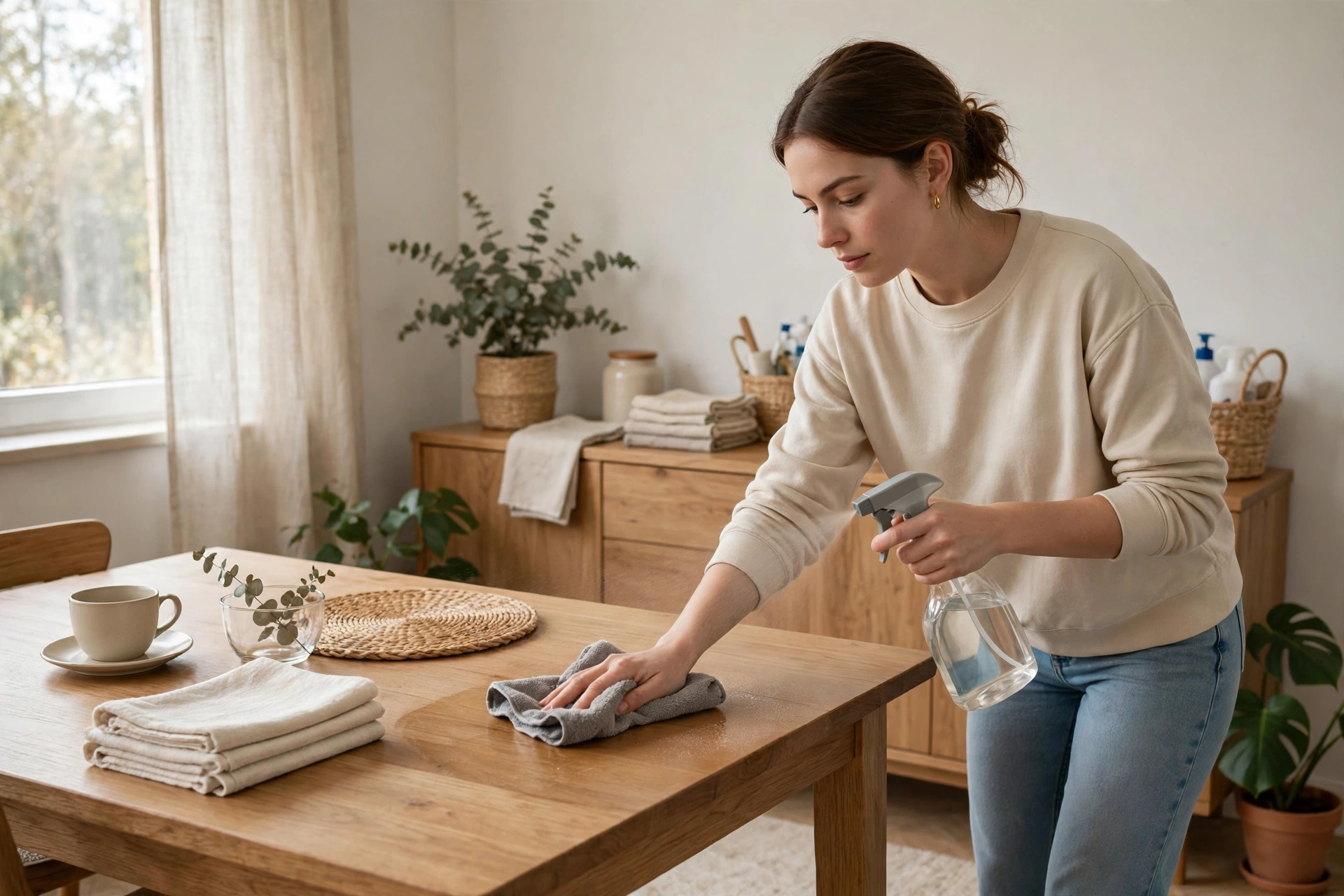
To clean properly, plan first: decide which rooms or zones to clean, gather supplies, set a realistic time, and clear clutter from the areas you will clean. Planning takes a few minutes, but it prevents half-cleaned rooms and repeated trips for supplies.
Start by listing the rooms in order, usually from the least dirty to the dirtiest, or from bedrooms to kitchens and bathrooms, so dirt does not spread to clean rooms. Gather a caddy with cloths, a suitable cleaner, a scrub sponge, a brush, gloves, and bags, so everything is within reach. Set a time limit for each room, such as twenty minutes, so cleaning stays focused.
Clear clutter first, because cleaning around clutter is slow and incomplete. Put items away, throw away rubbish, and move light furniture if you can. A clear room is much faster to clean properly than a cluttered room, however good your tools are.
- Decide the room order, from cleanest to dirtiest if possible
- Gather a caddy: cloths, cleaner, sponge, brush, gloves, bags
- Set a realistic time for each room, such as twenty minutes
- Clear clutter and rubbish before you spray or wipe anything
Follow the Right Order: Top to Bottom, Dry to Wet
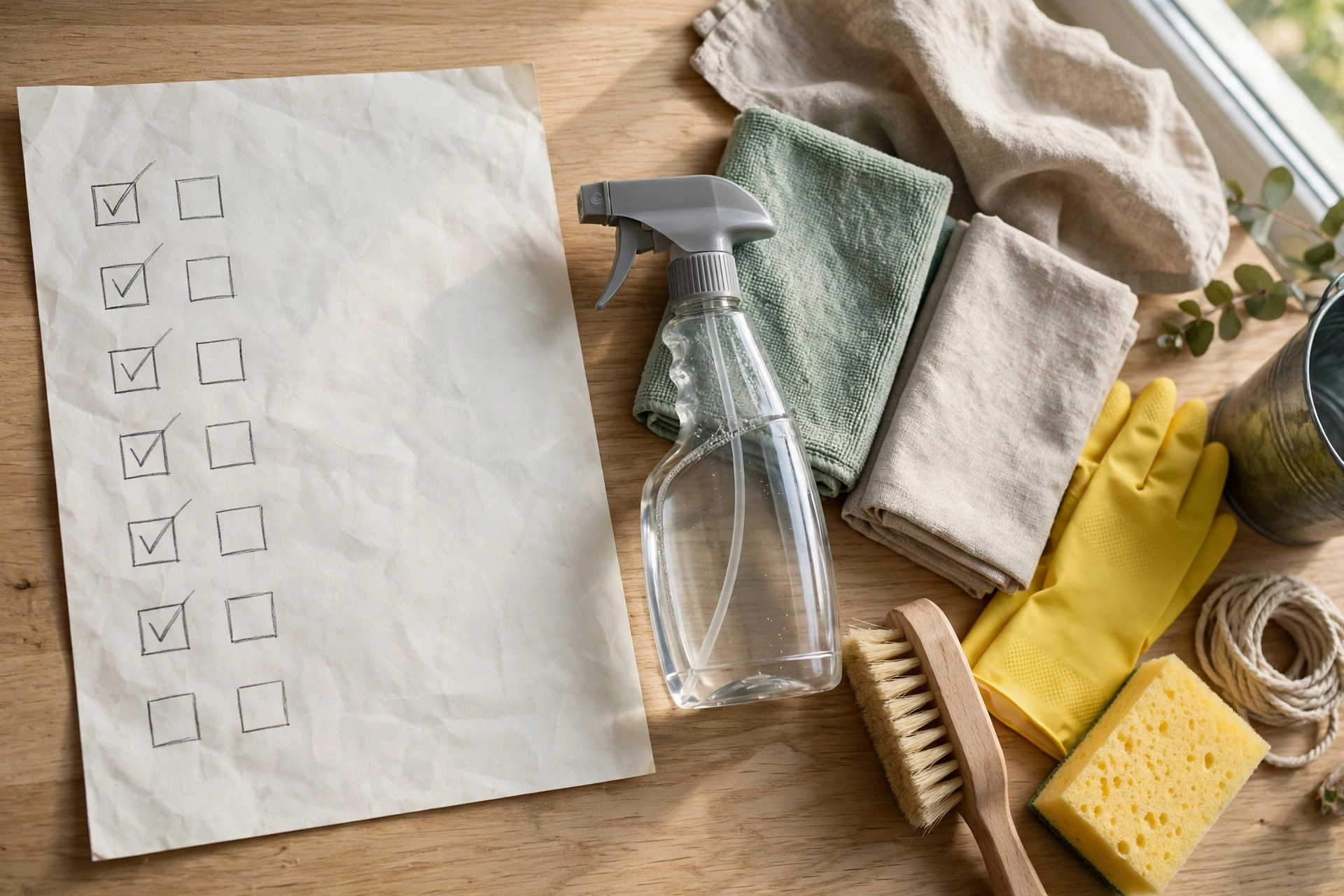
The core rule for cleaning properly is top to bottom and dry to wet: dust high surfaces first, then wipe, then wash, and finish with the floor last. This order stops dust and dirty water from spoiling surfaces you have already cleaned.
Start with dry dirt. Dust shelves, lights, and high surfaces with a dry cloth, and sweep or vacuum floors lightly to remove loose dirt, before any wet cleaning. Wet cleaning over dry grit spreads dirt and can scratch surfaces, especially floors and glass.
Next, clean wet areas in order: high surfaces, then mid-level surfaces such as counters and tables, then low surfaces such as sinks and appliances, and finally the floor. Within a room, work from the far corner toward the door, so you do not walk over a clean floor. This order is simple, but it is the single biggest difference between proper cleaning and random cleaning.

Choose the Right Tools for the Job
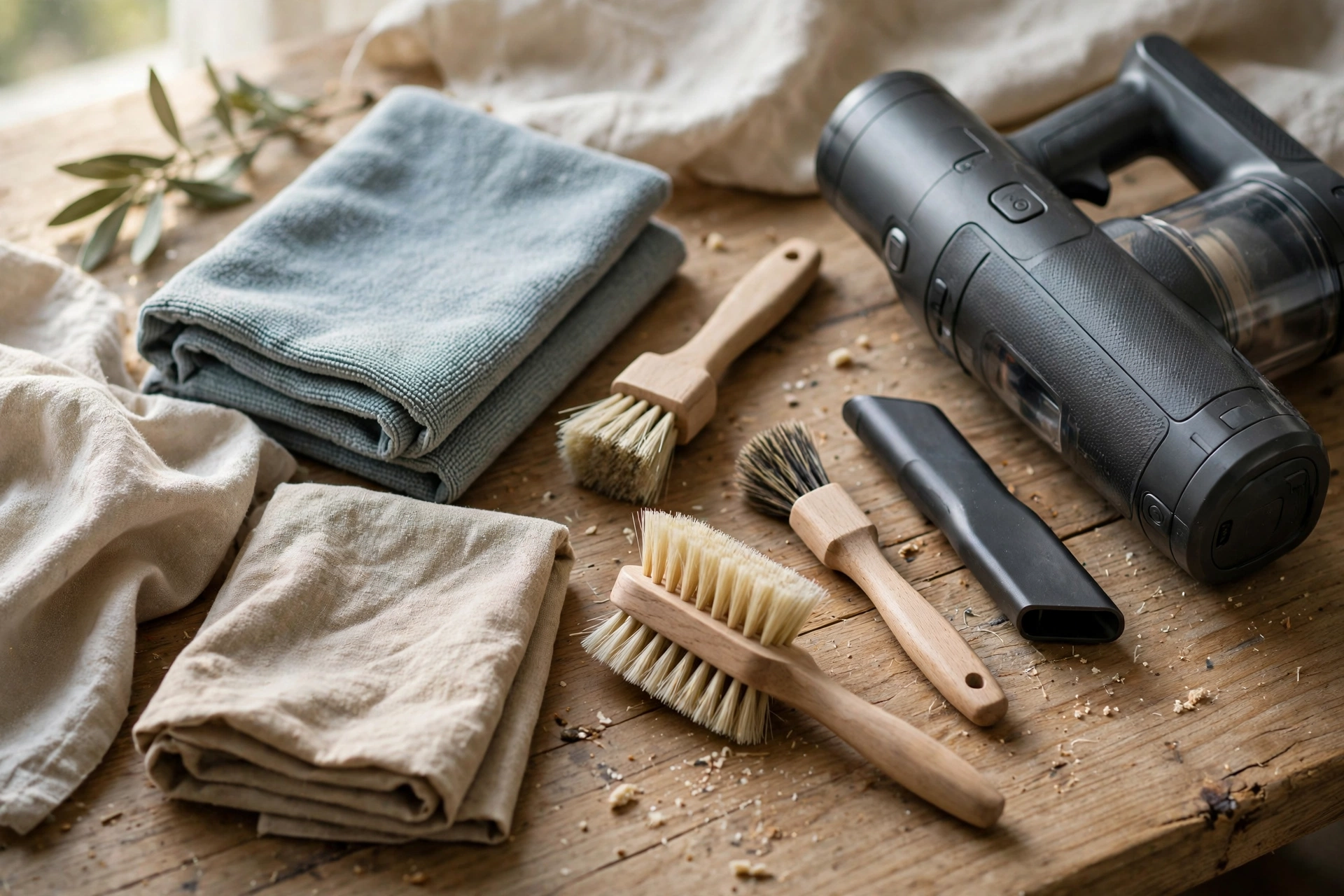
To clean properly, choose tools that suit the surface: microfibre cloths for most wiping, a non-scratch sponge for scrubbing, a brush for edges and grout, and a vacuum or mop for floors. The right tool removes dirt without damage, while the wrong tool can scratch, smear, or spread dirt.
Microfibre cloths are useful because they trap dust and absorb water well, but they must be clean and dry for finishing, or they will leave streaks. Use separate cloths for different jobs, such as one for bathrooms and one for kitchens, and wash them after use. A single dirty cloth used everywhere spreads germs and dirt between rooms.
Check tools before you start. A vacuum with a full bag or clogged filter loses suction, a mop with a dirty head spreads dirt, and a squeegee with a nicked blade leaves lines. Clean tools are not an extra; they are part of cleaning properly, because dirty tools cannot produce a clean result.
Use Products Correctly, Not Excessively
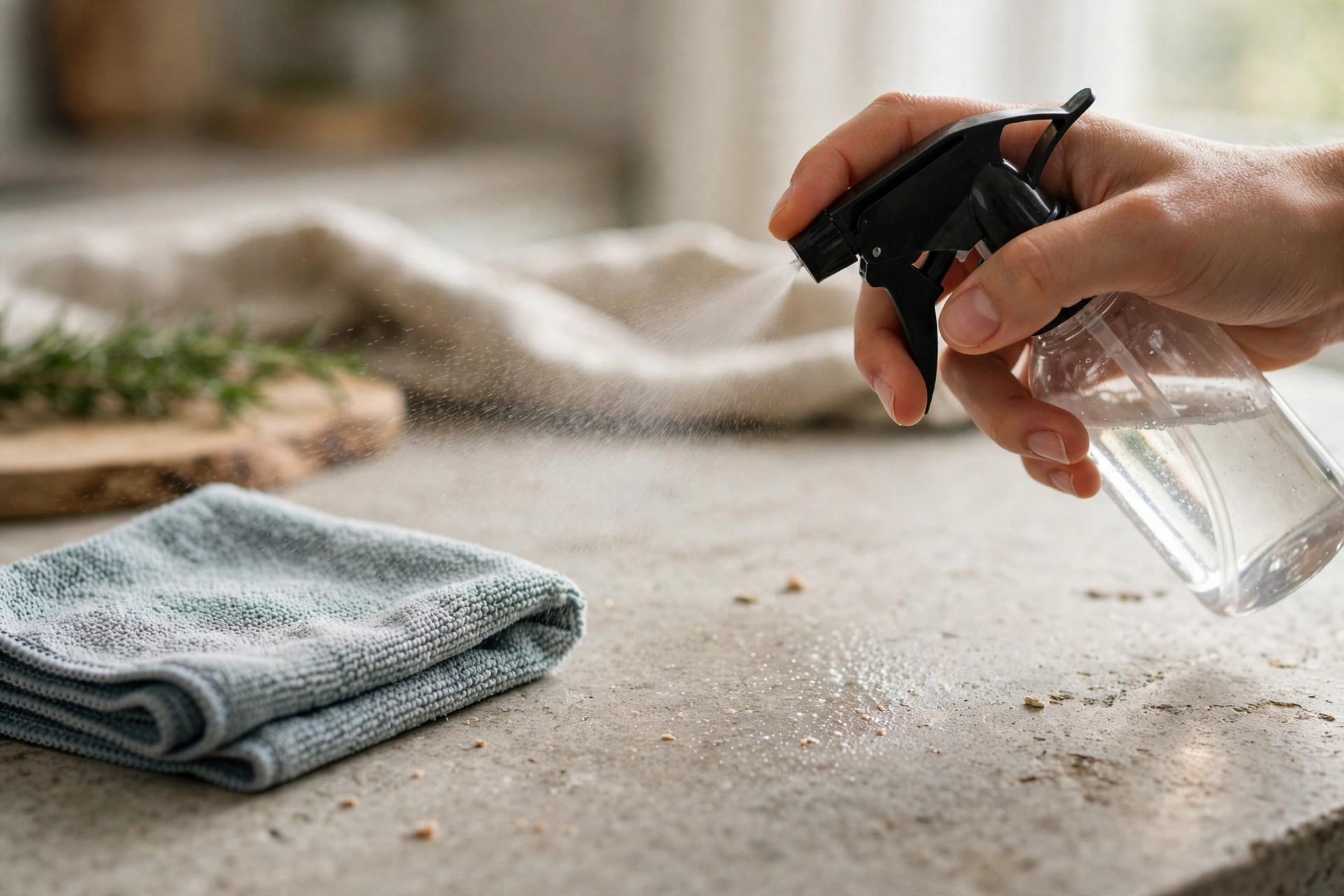
To use cleaning products properly, read the label, use the dilution stated, give the product the contact time it needs, and rinse well afterwards. More product does not mean cleaner surfaces; excess product leaves residue that attracts dirt and can damage finishes.
Read the label for the surface, the dilution, the contact time, and any warnings, such as not to use on stone, wood, or coated glass. Mix products only if the label allows it, and never mix bleach with vinegar or other cleaners, because that combination can create harmful fumes. Keep products away from children and pets, and store them safely.
Give products time to work. Spraying and wiping at once often fails, because the cleaner has not loosened dirt yet. Let it sit for the time stated on the label, then wipe, rinse, and dry. Rinsing matters as much as cleaning, because residue left on a surface will dry into a film or streak.
Clean Rooms in a Sensible Sequence
To clean a home properly, work through rooms in a sensible sequence, finishing one room before moving to the next, rather than jumping between rooms. Finishing one room gives a sense of progress and stops dirt from being carried back into a room you have already cleaned.
A common sequence is bedrooms first, then living areas, then kitchens, then bathrooms last, because kitchens and bathrooms are usually the dirtiest and wettest rooms. Within each room, follow the top-to-bottom, dry-to-wet order, and finish with the floor. Carry a caddy with you, so you do not need to return to a previous room for supplies.
If time is short, clean the most used rooms first, such as the kitchen and bathroom, and leave bedrooms for another day, rather than half-cleaning every room. A few rooms cleaned properly are better than a whole house cleaned badly, because half-cleaned rooms need redoing and feel untidy despite the effort.

Clean Kitchens and Bathrooms With Extra Care
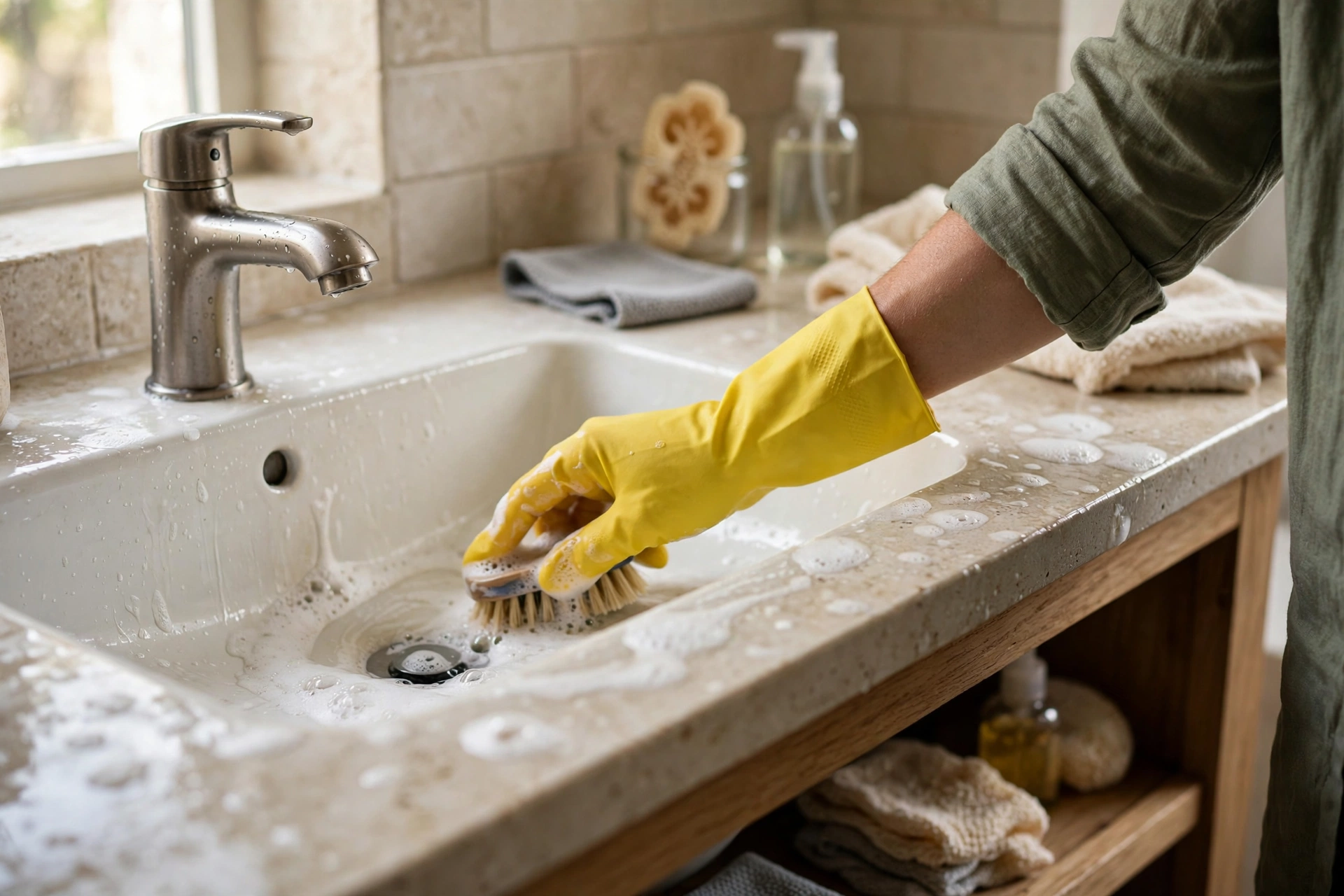
Kitchens and bathrooms need extra care when cleaning properly, because they combine water, grease, food, and germs in ways other rooms do not. In kitchens, focus on food preparation surfaces, the sink, and the stovetop, and keep cleaning products away from food. In bathrooms, focus on the toilet, sink, and shower, and use separate cloths for toilet areas.
In both rooms, dry surfaces at the end, because dampness causes smells, spots, and, in bathrooms, mould. Ventilate while cleaning, especially when using strong cleaners, and follow product labels for contact time, particularly for disinfectants, which need time to work and are not the same as ordinary cleaners.
Do not use the same cloth for the toilet and the kitchen, or for raw food areas and ready-to-eat areas, without washing it thoroughly in between. Separate cloths, or a clear colour system, prevent cross-contamination and are a simple part of cleaning properly in these rooms.
| Cleaning mistake | Why it matters | Proper fix |
|---|---|---|
| Cleaning floor first | Dust falls onto clean floor | Dust high first, floor last |
| Too much product | Residue attracts dirt, streaks | Use label dilution, rinse well |
| Dirty cloth or water | Spreads dirt to next surface | Change cloths and water often |
| Same cloth everywhere | Cross-contamination risk | Separate cloths for bathroom/kitchen |
| Skipping the dry finish | Water spots, damp smells | Dry surfaces and edges at the end |
Finish With Floors, Last
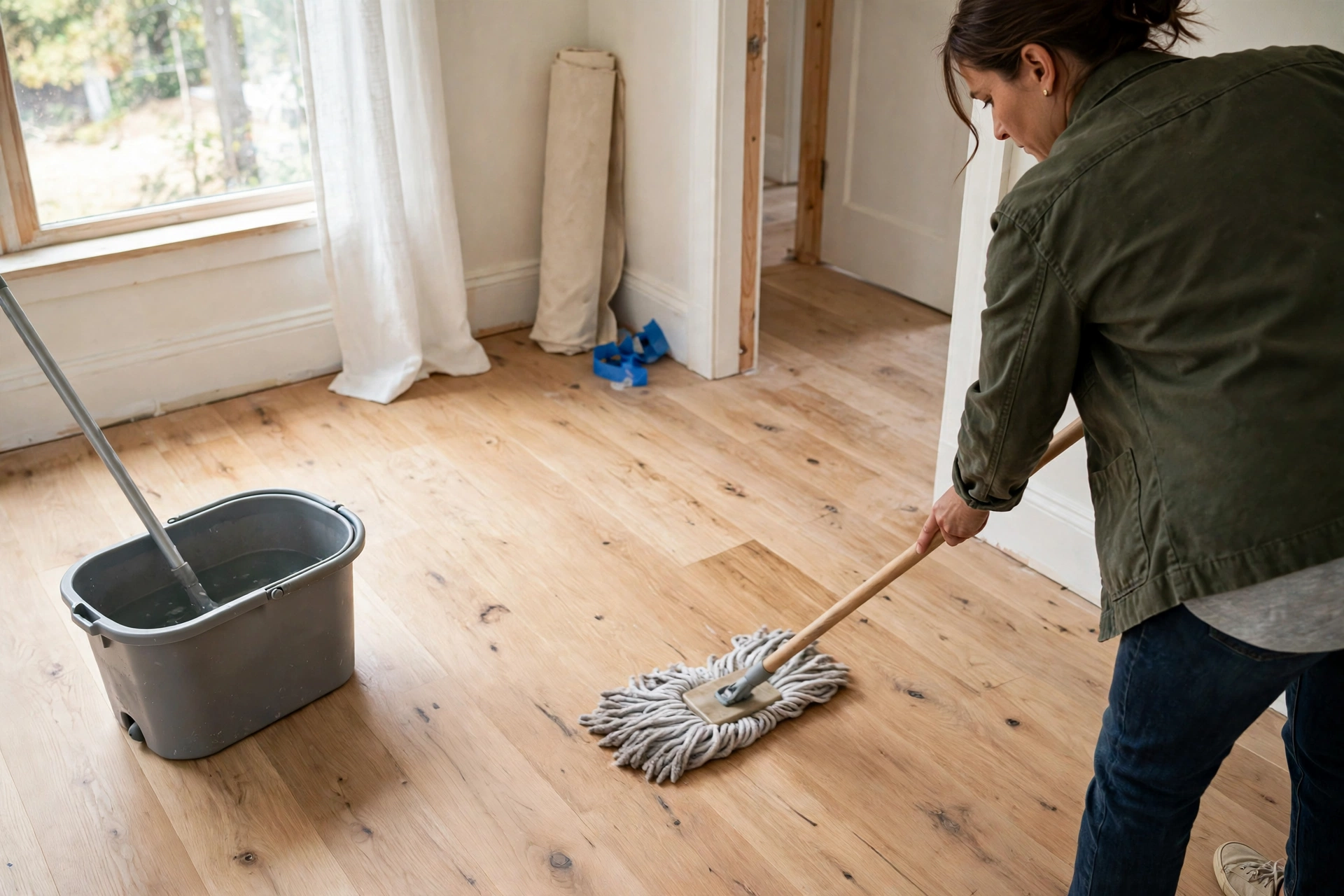
To finish cleaning properly, clean floors last, after all dusting, wiping, and washing in the room is done. Floors collect everything that falls during cleaning, so cleaning them first guarantees they will need cleaning again.
Start by sweeping or vacuuming to remove loose dirt, crumbs, and hair, including corners, edges, and under light furniture. Then mop with a cleaner suited to the floor type, working from the far corner toward the door, and using only a lightly damp mop for wood or laminate, to avoid standing water. Dry the floor if needed, and replace mats only when it is dry.
Pay attention to high-traffic areas, such as hallways and kitchen entrances, where dirt builds up fastest. A floor that is swept, mopped, and dried properly feels clean underfoot and stays clean longer than a floor that was mopped over dry grit.
Do a Finishing Check Before You Stop
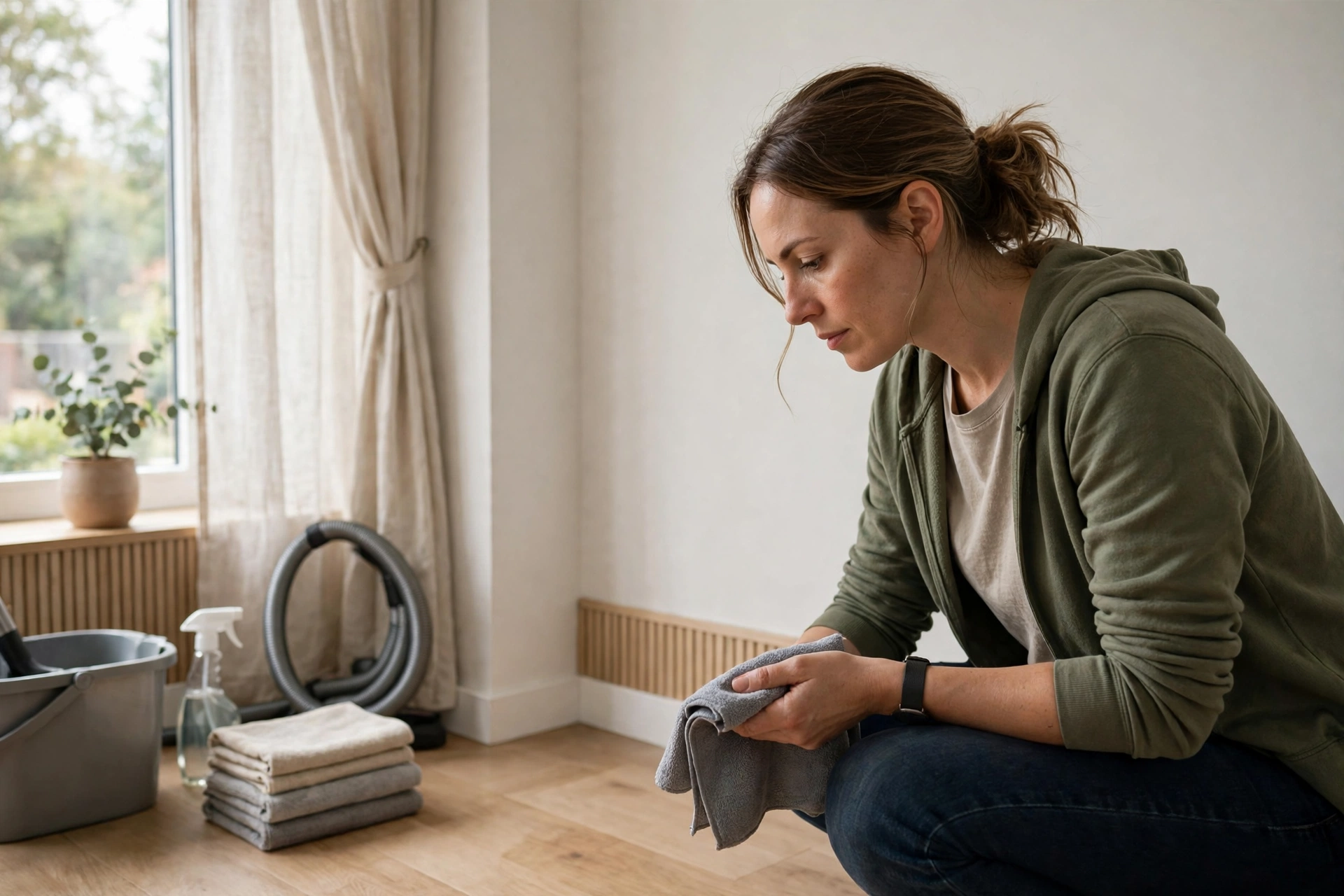
A finishing check is a short but important part of cleaning properly: walk through the room, look at surfaces from an angle, check edges and corners, and fix anything you missed while your tools are still out. A check takes a minute and prevents the small misses that make a room feel unfinished.
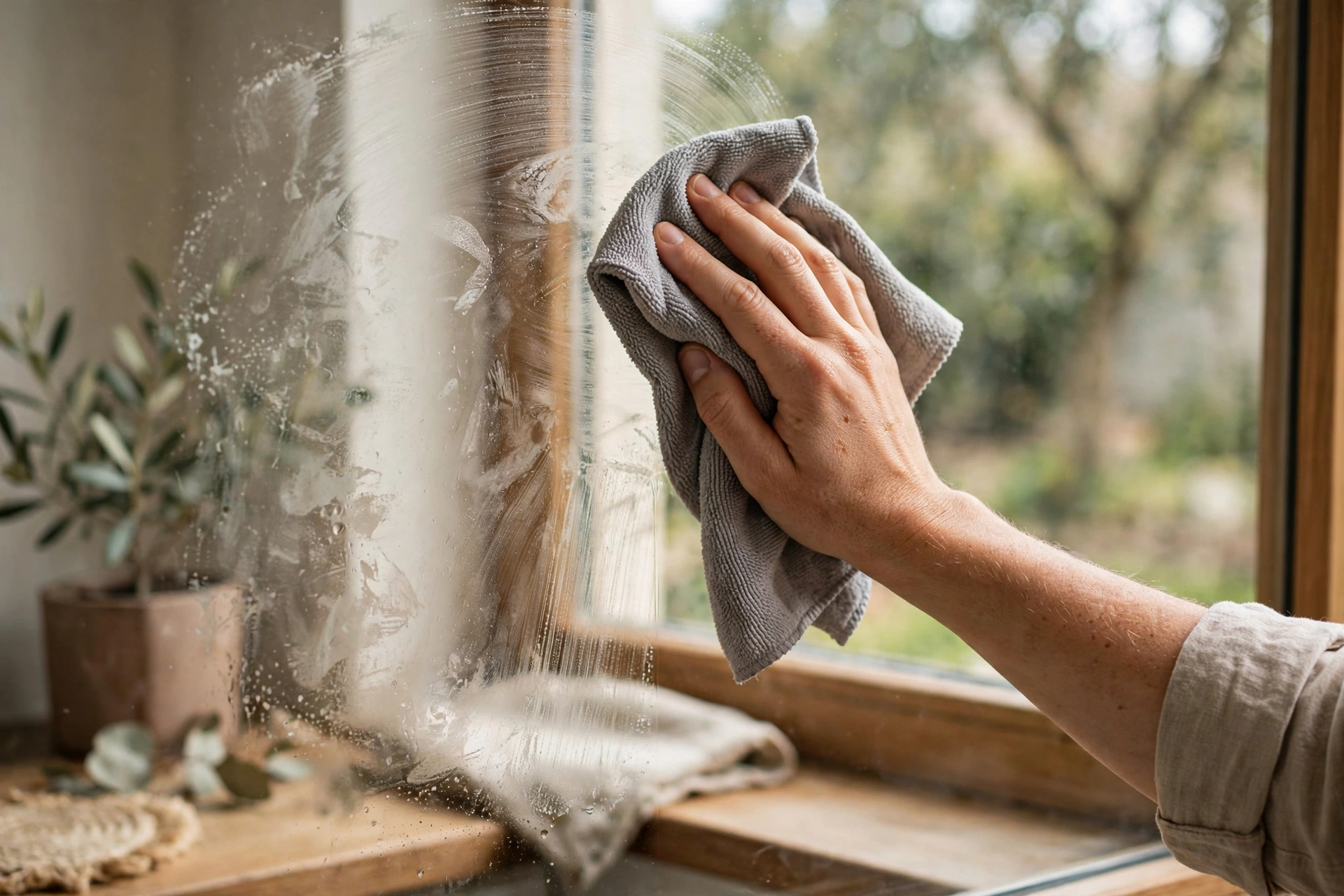
Look for streaks on glass and mirrors, water spots on taps, dust on high surfaces, and crumbs in corners. Check that bins are empty, towels are clean, and items are back in their places. Open a window briefly if the room smells of cleaner, and let surfaces dry before use.
Use the check to learn, not just to fix. If you keep missing the same spot, such as a high shelf or a floor corner, add it to your routine or change your order so it is covered. Proper cleaning improves with each check, because you notice patterns and adjust your method.
Avoid Common Cleaning Mistakes
Common cleaning mistakes undo good work, and avoiding them is often easier than adding new tasks. The most common are cleaning in the wrong order, using too much product, using dirty tools, skipping the dry finish, and trying to clean everything at once without a plan.
Other mistakes include spraying cleaner onto dusty surfaces, which turns dust into mud, and using abrasive pads on delicate surfaces, which cause scratches that show up quickly. Always test a new product in a hidden spot first, especially on stone, wood, coated glass, and coloured grout, and follow the maker’s guidance over a general guide.
- Wrong order: dust high first, wash next, floor last
- Too much product: use the label dilution and rinse well
- Dirty tools: clean cloths, vacuum, and mop heads before use
- No drying: dry surfaces, edges, and floors at the end
- No plan: decide rooms, order, and time before you start
If a mistake happens, fix it simply: rinse with clean water, dry with a clean cloth, and move on. Adding more product to a streaky or sticky surface usually makes it worse, not better.
Build a Routine That Keeps Proper Cleaning Easy
To keep cleaning properly easy, build a routine that links tasks to habits: daily quick wipes, weekly room cleans, and monthly deeper tasks. A routine that is too ambitious will fail, while a routine that fits your life will last.
Daily tasks should take minutes: wipe kitchen counters after cooking, clear the sink, and tidy the main living area. Weekly tasks should cover each room in order, including floors, bathrooms, and kitchens, in about an hour or two, depending on home size. Monthly tasks should add one deeper job, such as an oven, a fridge, or a set of cabinets, so deep work stays spread out.
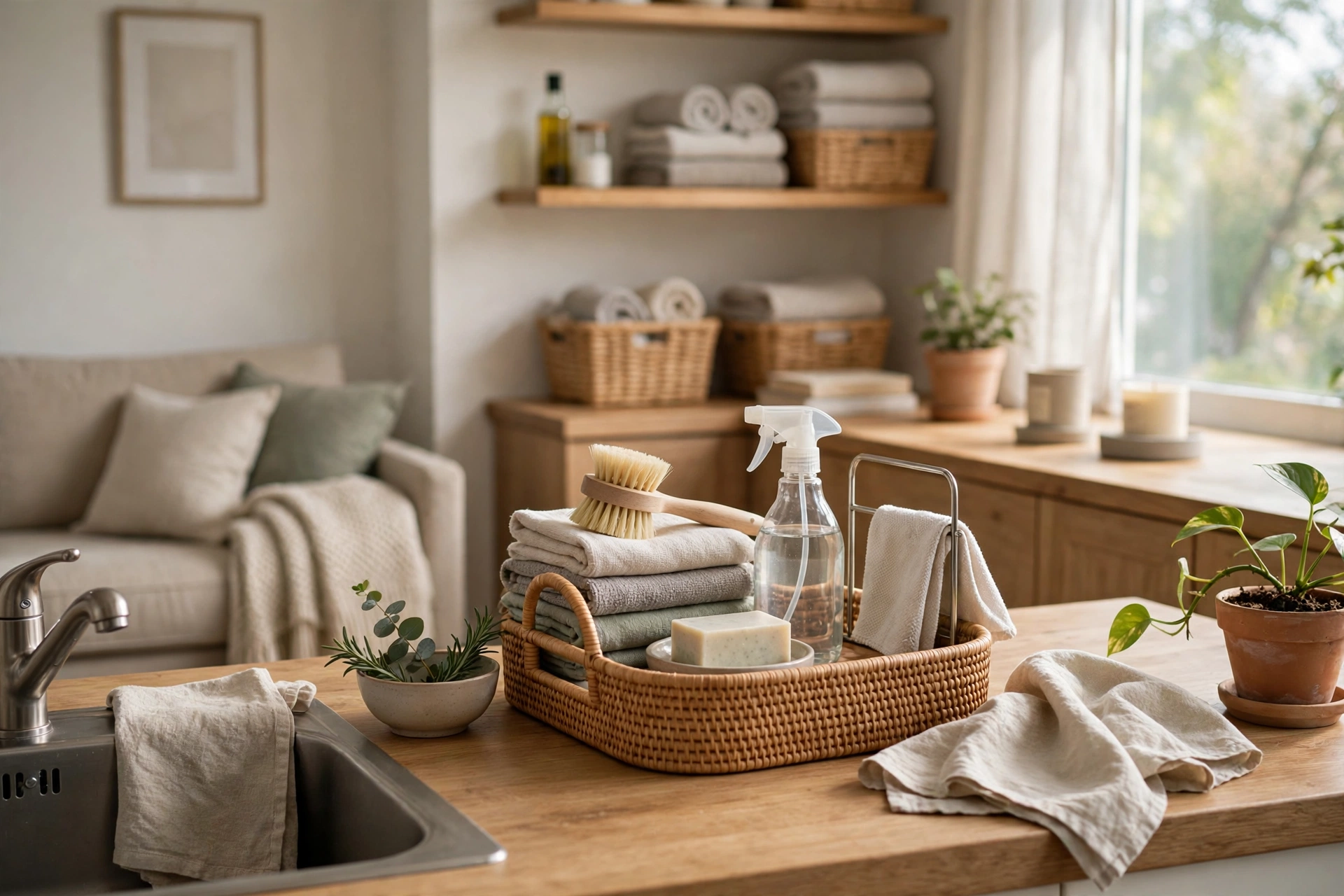
Keep supplies in one easy spot, such as a caddy under the sink, so a quick clean does not feel like a project. Replace cloths and sponges regularly, and keep a simple checklist on the fridge or in a phone note, so you can see what is due. A routine that is simple, visible, and repeatable is the key to cleaning properly over time, not just on one day.
Store Supplies So Proper Cleaning Stays Easy
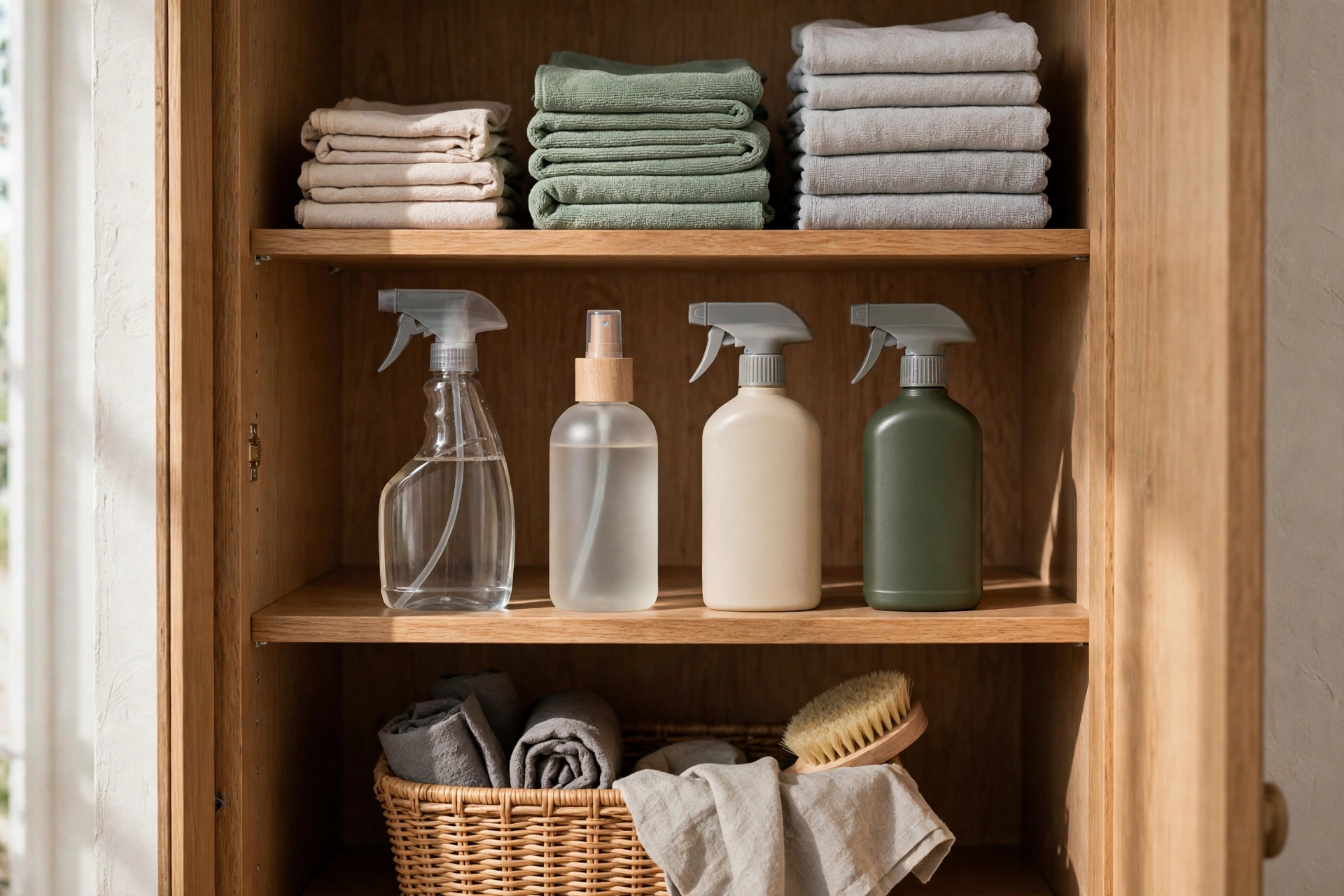
To keep proper cleaning easy, store supplies in one accessible place, keep cloths clean and dry, and replace worn tools before they cause streaks or damage. A cleaning caddy under the sink, or a small cupboard near the main rooms, works well for most homes.
Keep a separate set of cloths for kitchens and bathrooms, labelled or colour-coded if that helps your household, and wash them after use so they are ready next time. Store products upright, with labels visible, and keep them away from children and pets. Check supplies monthly, and replace sponges, mop heads, and squeegee blades when they wear out.
When supplies are ready, a proper clean starts quickly and finishes well. When supplies are scattered, dirty, or missing, even a good method feels like hard work, and shortcuts creep back in.
Conclusion
How to clean properly is not a secret product or a long list of chores. It is a method: plan first, work top to bottom and dry to wet, use the right tool and product in the right amount, finish with floors and a check, and repeat the routine regularly. With that method, any room can be cleaned well, in less time, and with a result that lasts.
FAQs
What is the correct order for cleaning a house?
Work top to bottom and dry to wet: dust high surfaces first, then wipe and wash mid-level surfaces, and finish with floors last. Within a home, clean bedrooms and living areas before kitchens and bathrooms.
How much cleaning product should I use?
Use the dilution and amount stated on the label, and rinse well afterwards. More product does not clean better; excess residue leaves streaks, attracts dirt, and can damage surfaces.
Should I clean or disinfect first?
Clean first, then disinfect if needed, because disinfectants work best on a clean surface. Follow the product label for contact time, and ventilate while using strong products.
How often should I clean my home properly?
Do quick daily wipes, a full room-by-room clean weekly, and one deeper task monthly, such as an oven or fridge. Adjust the frequency for busy households, pets, and children.
What is the biggest cleaning mistake people make?
Cleaning in the wrong order is the biggest mistake, such as mopping the floor before dusting high shelves. Dust and dirty water then fall onto clean surfaces, so the work must be done twice.
Disclaimer: This article is for general information only and does not provide professional cleaning, food safety, or safety advice. Always follow the instructions for your surfaces, appliances, and cleaning products, never mix bleach with vinegar or other cleaners, keep products away from children and pets, ventilate rooms when using strong cleaners, and seek qualified help for electrical, gas, plumbing, or damaged appliance problems. Clearise Cleaning Services does not offer guest posting, paid promotion, or advertising through this article.