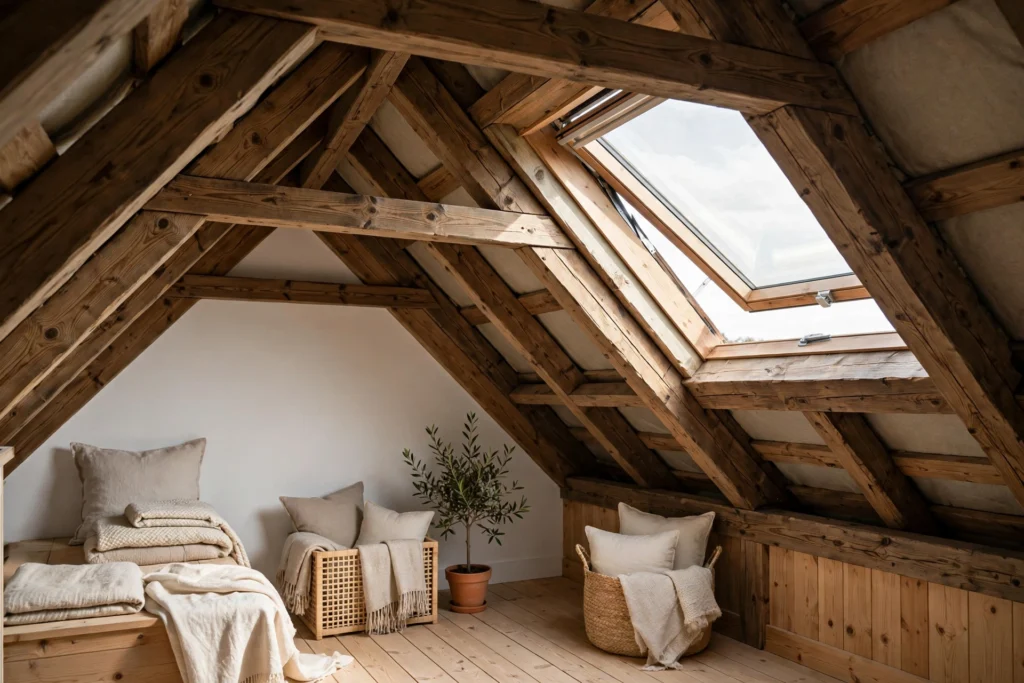
Learning how to ventilate an attic starts with one simple idea: fresh air should enter low, travel through the roof space, and leave high, carrying heat and moisture away with it. When that flow works, the attic stays drier and the rooms below feel more comfortable.
Most homeowners rarely think about the space above their ceilings, yet the air moving through that space quietly affects the whole house. When that flow does not work, moisture can settle, summer heat can build up, and small problems can grow unnoticed for years. This guide explains the principles behind attic ventilation in plain language, so you can judge what your own attic needs and know when to call a professional.
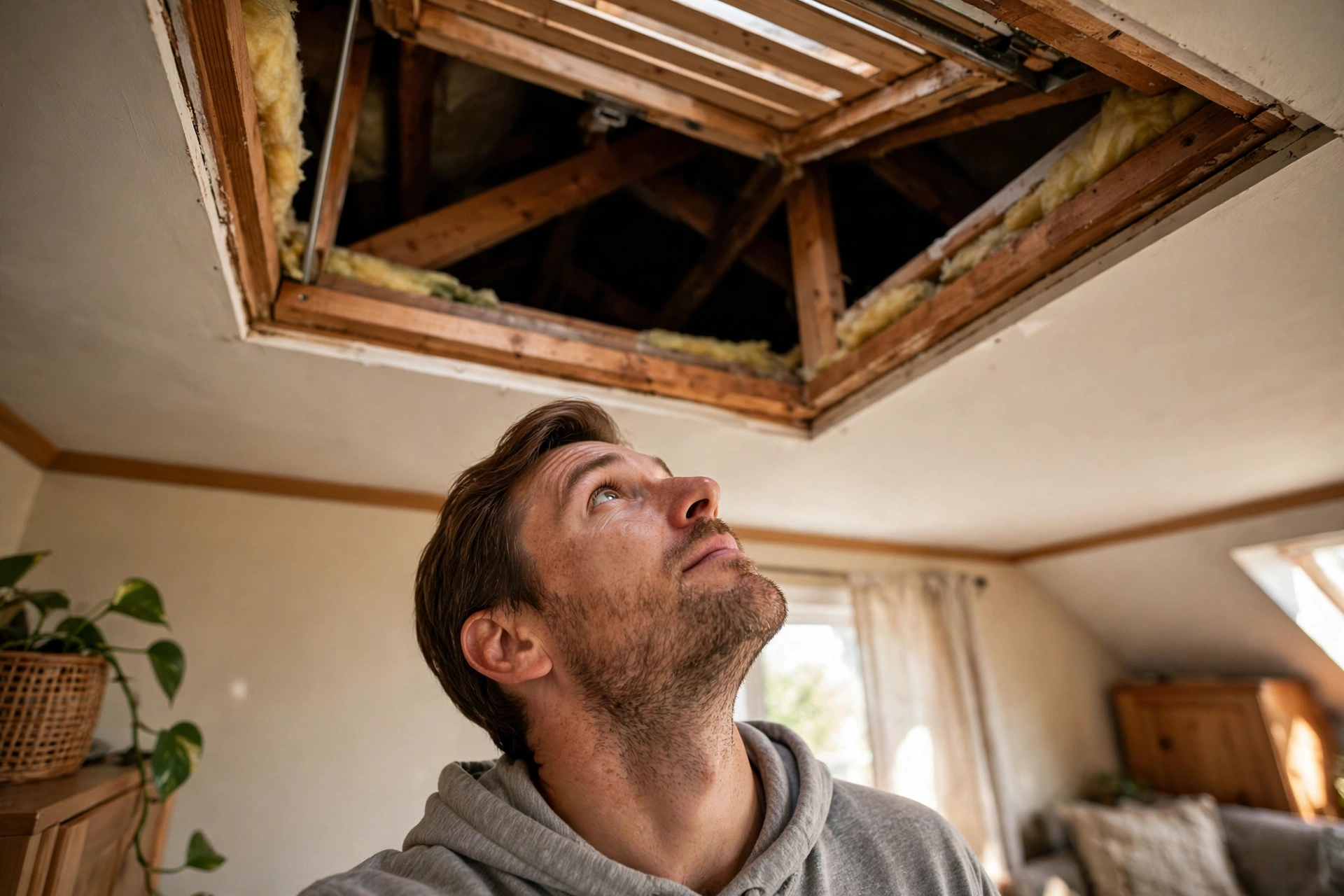
The Short Answer: What Does It Mean to Ventilate an Attic?
To ventilate an attic means to let outside air flow through the roof space in a controlled way, entering through low openings and leaving through high openings, so heat and moisture do not build up inside. It is not about sealing the attic shut.
It is not about blowing conditioned air from the house into the roof space either. A ventilated attic stays close to the outdoor temperature, which helps the roof structure stay dry and stable through the seasons.
The key word here is “controlled.” Random gaps and leaks are not ventilation, because they let air in at the wrong places and can carry moisture into insulation. Good ventilation is planned: openings are placed so air travels across the whole roof space, from the eaves to the ridge, rather than short-circuiting through one small area. That is why two attics with the same number of vents can behave very differently.
Why an Attic Needs Ventilation at All
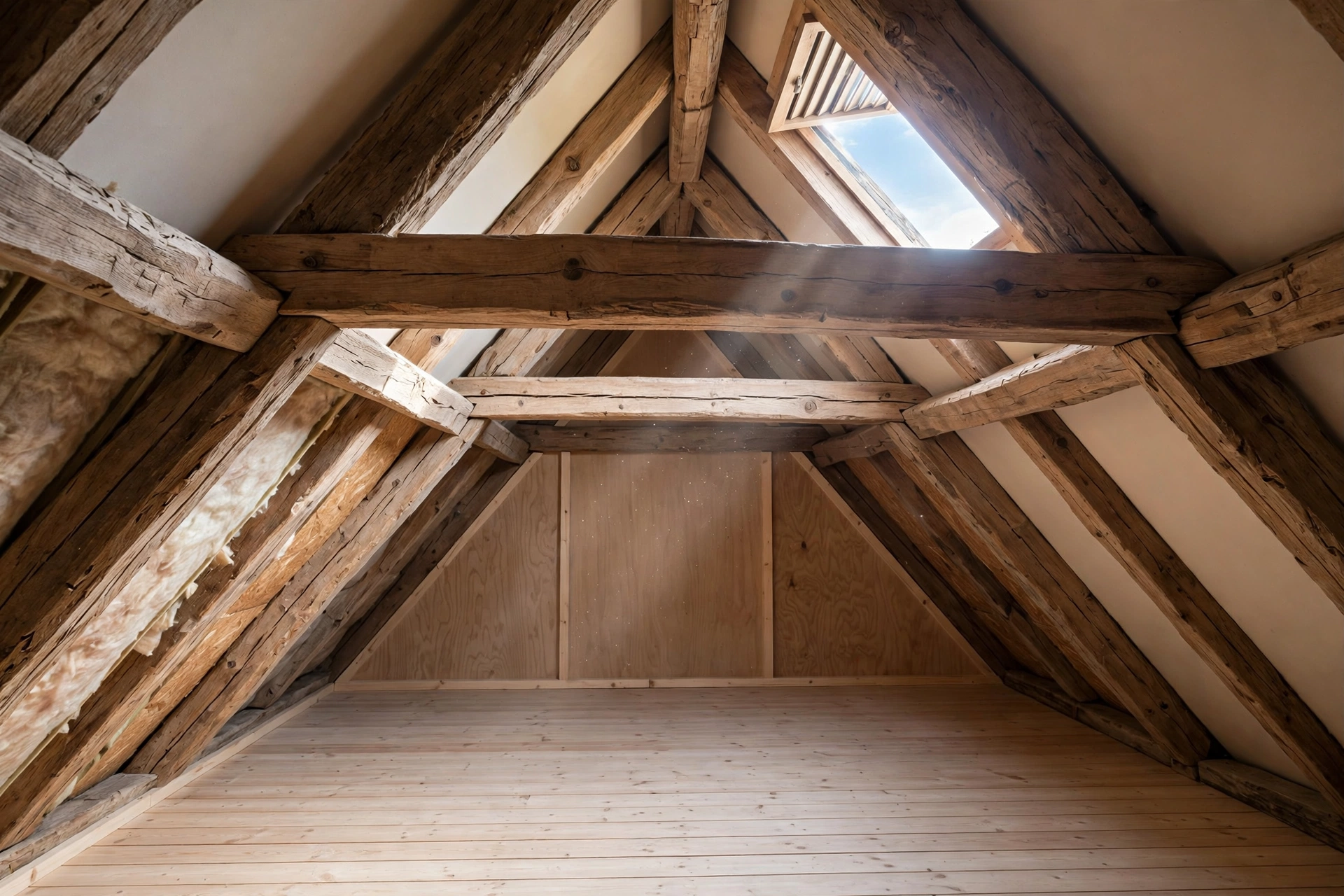
An attic needs ventilation because warm, moist air from the home below naturally rises into the roof space, and without a way out, that moisture settles on cold timber, insulation and roof boards. Ventilation gives that moisture an escape route before it can do lasting damage.
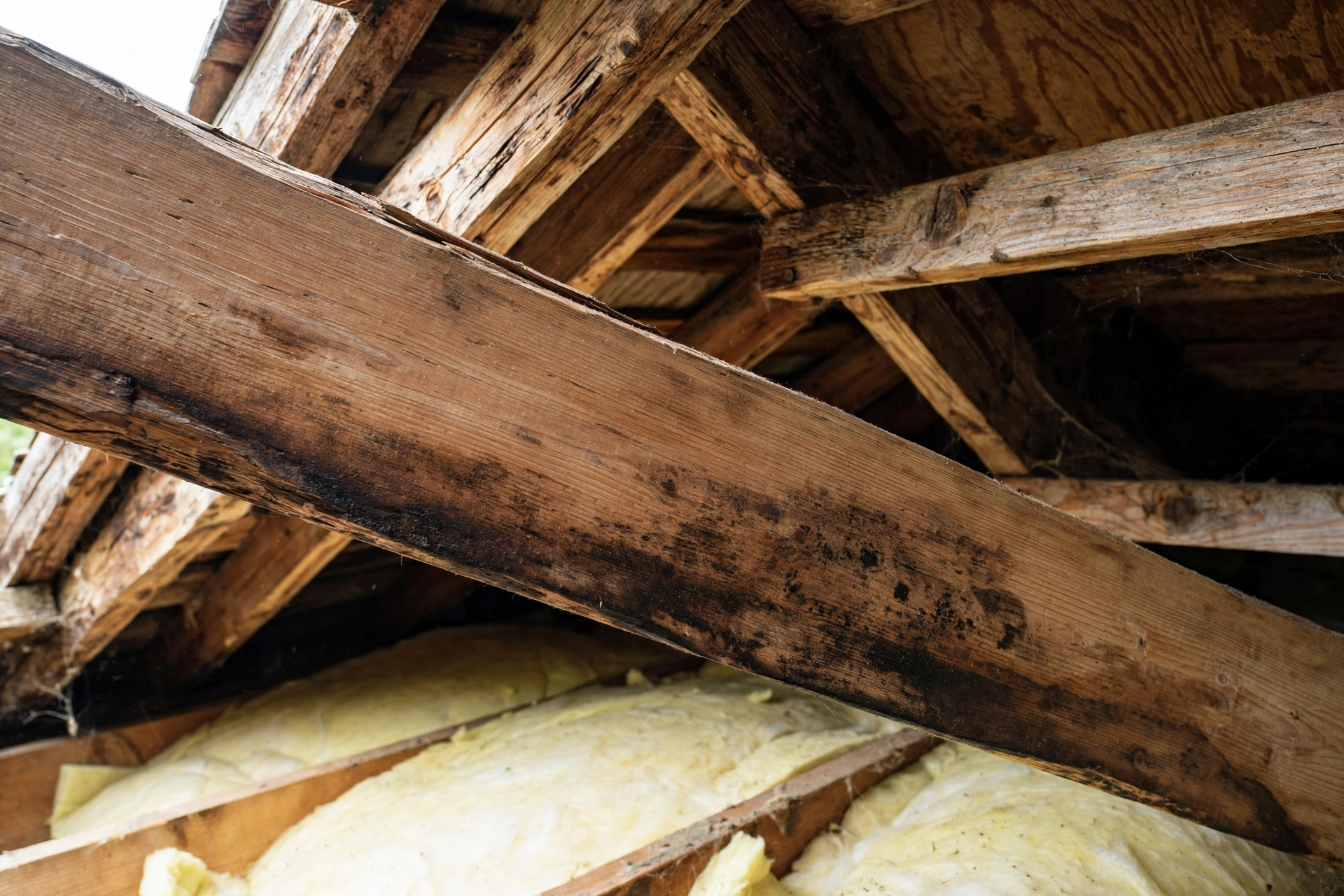
Over time, damp conditions can encourage mould growth, stain timber, and reduce how well insulation works.
Heat is the other reason. In summer, a roof absorbs strong sun, and the attic can become far hotter than the rooms below. That heat radiates downward, making the top floor harder to cool and putting extra strain on cooling equipment. Airflow through the attic carries much of that heat away before it reaches the ceiling. In winter, the same airflow helps keep the roof surface cold and even, which reduces the uneven melting that can lead to ice dams at the eaves in cold climates. Ventilation does not solve every roof problem on its own, but it removes two of the biggest stresses on a roof: trapped moisture and trapped heat.
How Air Moves Through an Attic
Air moves through an attic mainly because warm air rises and wind creates pressure differences around the house, and good design uses both forces to keep air travelling in one steady direction. Cool air enters low, near the eaves, and leaves near the top of the roof.
As it passes under the roof, the air warms slightly, then rises and exits near the top. This is the same natural rising-air effect that makes a chimney draw, and it works even on calm days.
Wind helps too. When wind blows against one side of a house, it pushes air into openings on that side and pulls air out of openings on the sheltered side. That is why vent placement matters more than vent size alone: openings need to be spread along the roof so air sweeps across the whole space. If air only enters and leaves on the same side, the far corners of the attic can sit still and damp while the area near the vents looks fine. Picture a gentle river, not a whirlpool: steady movement from one end of the roof space to the other.

Intake and Exhaust: The Balance That Matters
Intake and exhaust balance means the amount of air entering an attic at low level should roughly match the amount leaving at high level, so air flows smoothly instead of stalling or pulling from the wrong places. Neither side should dominate the other.
If exhaust openings are much larger than intake openings, the attic can pull air from inside the house through gaps around lights, hatches and pipes, bringing moisture with it. If intake is much larger than exhaust, air has nowhere to go and the flow weakens.
Think of it as breathing: the attic needs both an inhale and an exhale of similar size. In practice, homeowners do not need to calculate this themselves, because a qualified roofer or ventilation professional can assess the existing openings and the roof layout. What matters for a homeowner is the principle: adding a big exhaust vent without enough intake rarely fixes a stuffy attic, and blocking intake vents with insulation is one of the most common causes of poor airflow. Balance, not just more vents, is what makes ventilation work.

Passive Ventilation: How It Works Without Power
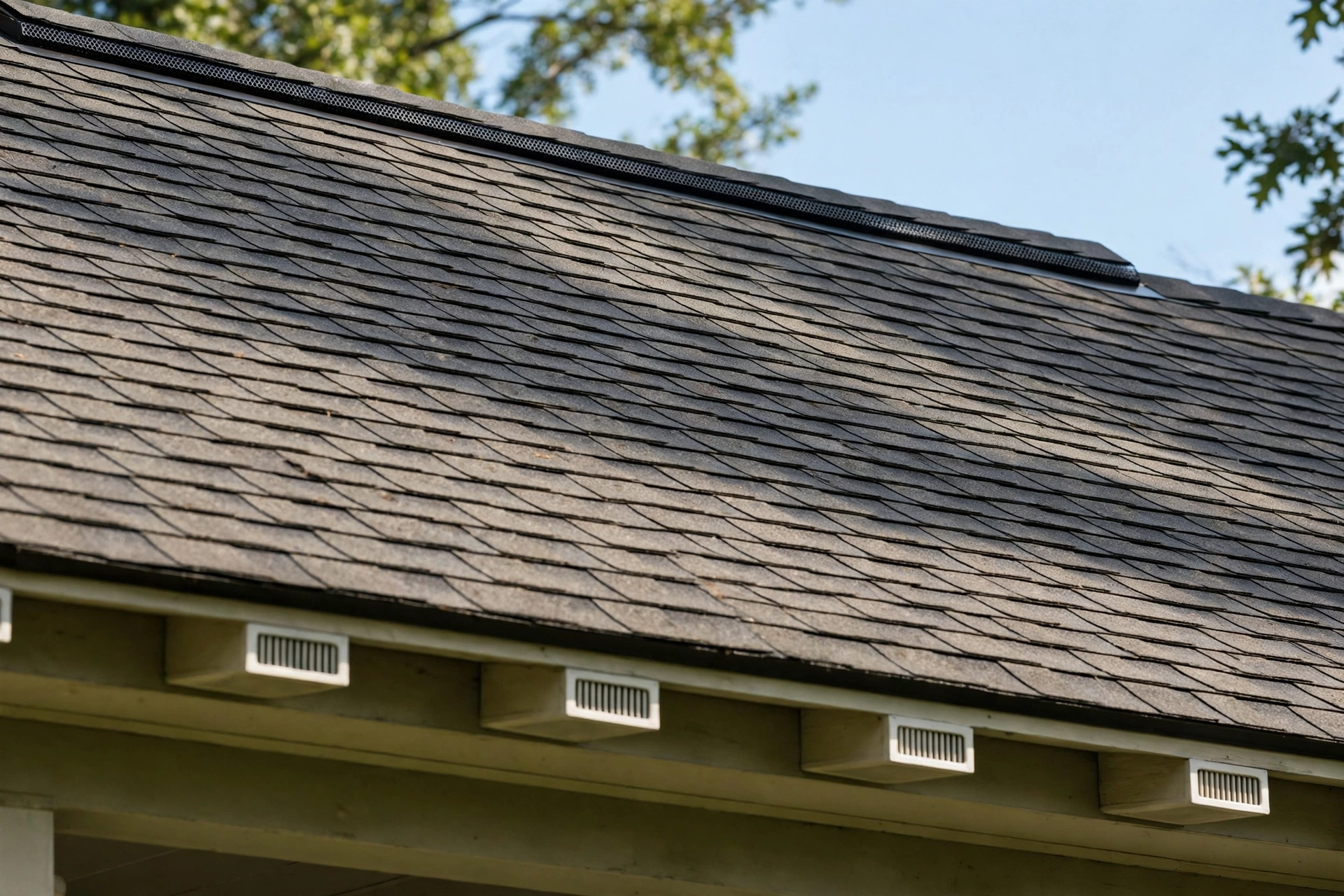
Passive ventilation moves air through an attic using only natural forces, mainly rising warm air and wind, with no fan, motor or electricity involved. Because it has no moving parts, it is quiet and costs nothing to run, and keeps working during a power cut.
Most homes rely on passive ventilation, and for many roof shapes it is all that is needed, provided the intake and exhaust openings are balanced and kept clear.
The strength of passive ventilation is also its limit: it depends on the weather. On a still, mild day, airflow slows down, and on a very hot day it may not remove heat as fast as a fan would. Passive systems also need clear paths, so insulation must not be pushed into the eaves, and vents must not be painted over or blocked by storage. When a passive system underperforms, the cause is usually a blocked path or an imbalance, not the absence of a fan.
Powered Ventilation: Fans and When They Help
Powered ventilation uses an electric fan to force air through an attic, and it can help in situations where natural airflow is weak, such as a complex roof shape, a sheltered site with little wind, or an attic with limited space for passive openings.
A fan can move air on still days and can clear summer heat faster than natural flow alone, which is why some homeowners consider one after passive improvements have been made.
Fans are not, however, a cure-all, and they can cause problems if they are fitted without fixing the basics first. A powerful fan with too little intake can pull conditioned air and moisture out of the living space below, which wastes energy and can make damp problems worse rather than better. Fans also need power, maintenance and occasional replacement, and a noisy or failed fan can go unnoticed in an attic for months. Check intake, exhaust and insulation first, and only then ask a professional whether a fan would help your roof.
| Ventilation type | How it works | Best suited to | Things to watch |
|---|---|---|---|
| Passive ventilation | Natural rising air and wind move air through the attic | Most standard roof shapes with balanced openings | Needs clear intake paths and balanced exhaust |
| Powered ventilation | An electric fan forces air through the attic | Sheltered sites or complex roofs with weak natural flow | Needs enough intake or it can pull air from the house |
| Mixed approach | Passive openings plus a fan for peak conditions | Homes where passive flow alone falls short | Fan should support, not replace, balanced openings |

Ventilation and Insulation: Why They Work Together
Ventilation and insulation work together because insulation slows heat moving between the house and the attic, while ventilation removes the heat and moisture that still reach the roof space. Neither one replaces the other. Both need to be right for the roof to stay dry.
Thick insulation in a sealed, damp attic can still suffer moisture damage, and strong ventilation in an uninsulated attic will not keep the rooms below comfortable. The two systems protect different things.
The connection is practical as well as theoretical. Insulation laid across the attic floor must leave the eaves clear so intake air can enter, and any gaps around pipes, wires and hatches should be sealed so moist indoor air does not leak into the roof space. When insulation is pushed tight against the roof boards at the eaves, it blocks the very airflow the attic depends on. A good rule for homeowners is to think of insulation as a blanket and ventilation as fresh air: the blanket keeps warmth where it belongs, and the fresh air keeps the space above it dry.

What Good Ventilation Looks Like in Summer
In summer, good attic ventilation looks like a roof space that feels warm but not stifling, with air moving gently from the eaves toward the ridge and no pockets of trapped, still heat. The attic stays warm, but not stifling.
The attic will still be warmer than the rooms below on a hot day, because the roof absorbs sun, but the difference should be moderate rather than extreme. A well-ventilated attic also helps the top floor stay cooler, since less heat radiates through the ceiling.
There are a few simple summer clues worth noticing. If the upstairs rooms feel much hotter than the rest of the house even with cooling running, or if the attic feels like an oven with no air movement at all, ventilation may be falling short. Stored items can offer clues too: warped cardboard, brittle plastic or a musty smell after summer can point to heat and moisture build-up. Together, these signs are worth a closer look before the next hot season.

What Good Ventilation Looks Like in Winter
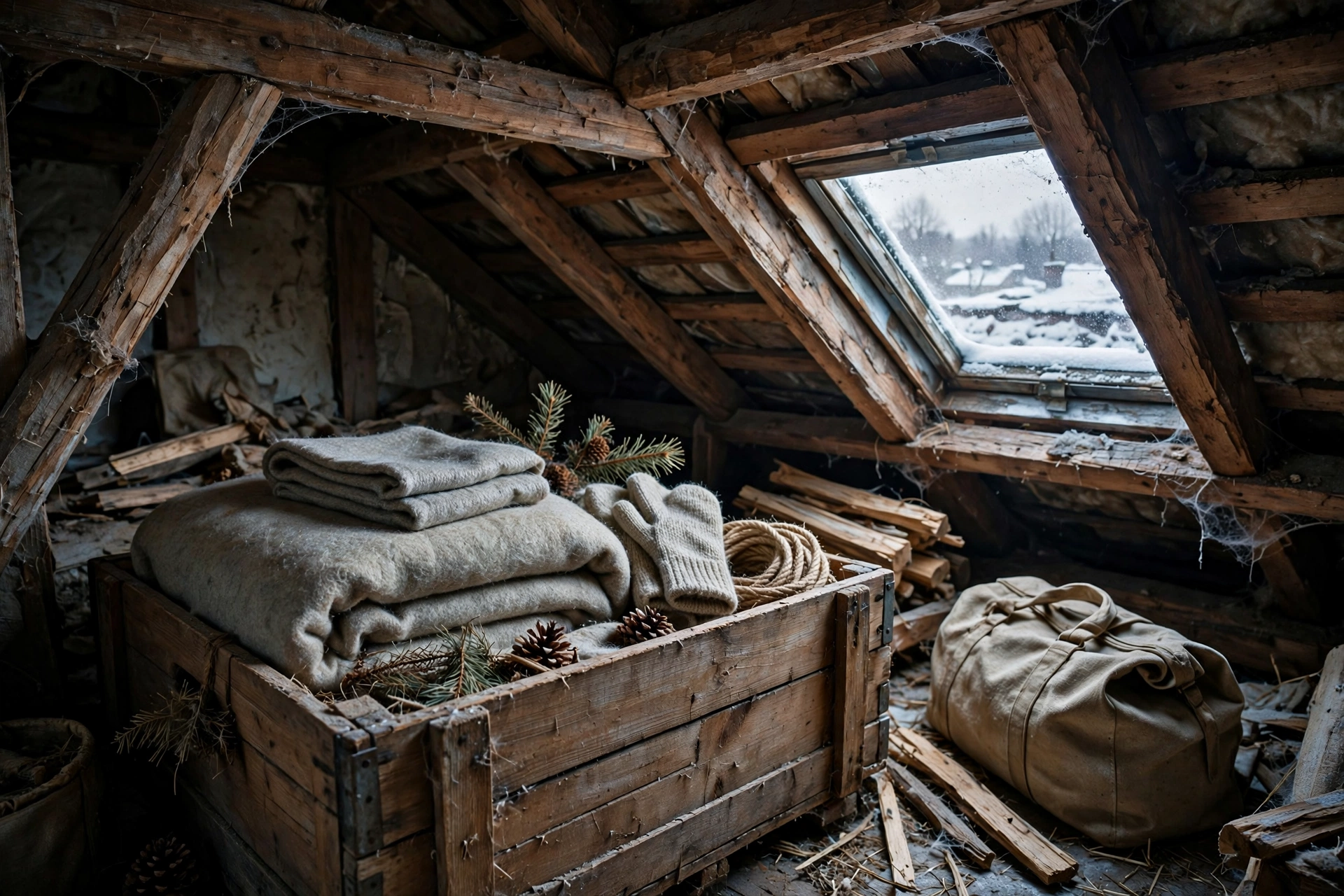
In winter, good attic ventilation looks like a roof space that stays cold, dry and close to the outdoor temperature, with no damp patches, frost on the underside of the roof, or musty smell. A cold attic in winter is a healthy sign.
This surprises many homeowners, because a cold attic in winter sounds wrong, but it is exactly what protects the roof. When the attic stays cold, snow on the roof melts evenly rather than in patches, which reduces the risk of ice dams forming at the eaves.
Winter is also when moisture problems show most clearly, because warm indoor air carries more moisture and cold roof surfaces condense it readily. Frost on nails or roof boards, damp insulation, or water stains that appear in cold weather are all signs that moist air is reaching the attic faster than ventilation can remove it. In that case, sealing air leaks from the house below often matters as much as adding vents.
Roof Shapes and What Changes With Them
Roof shapes change how attic ventilation works because they change where air can enter, how far it must travel, and where it can leave, so a layout that suits one roof may not suit another. The layout must follow the roof shape.
A simple gable roof, with two sloping sides meeting at a ridge, is the easiest to ventilate, because air can enter at both eaves and leave along the full ridge line. The path is short and even, and most of the roof space gets airflow.
Hip roofs, where all sides slope down to the eaves, have a shorter ridge and more corners, so air must travel further to reach an exit, and some corners can be left still. Flat or very low-slope roofs have almost no height difference between intake and exhaust, so rising air gives little help and wind matters more. Complex roofs with dormers, valleys and extensions create separate pockets of roof space that may each need their own airflow path. The principle stays the same, but the layout must follow the roof shape.

Warning Signs Your Attic Ventilation Is Falling Short
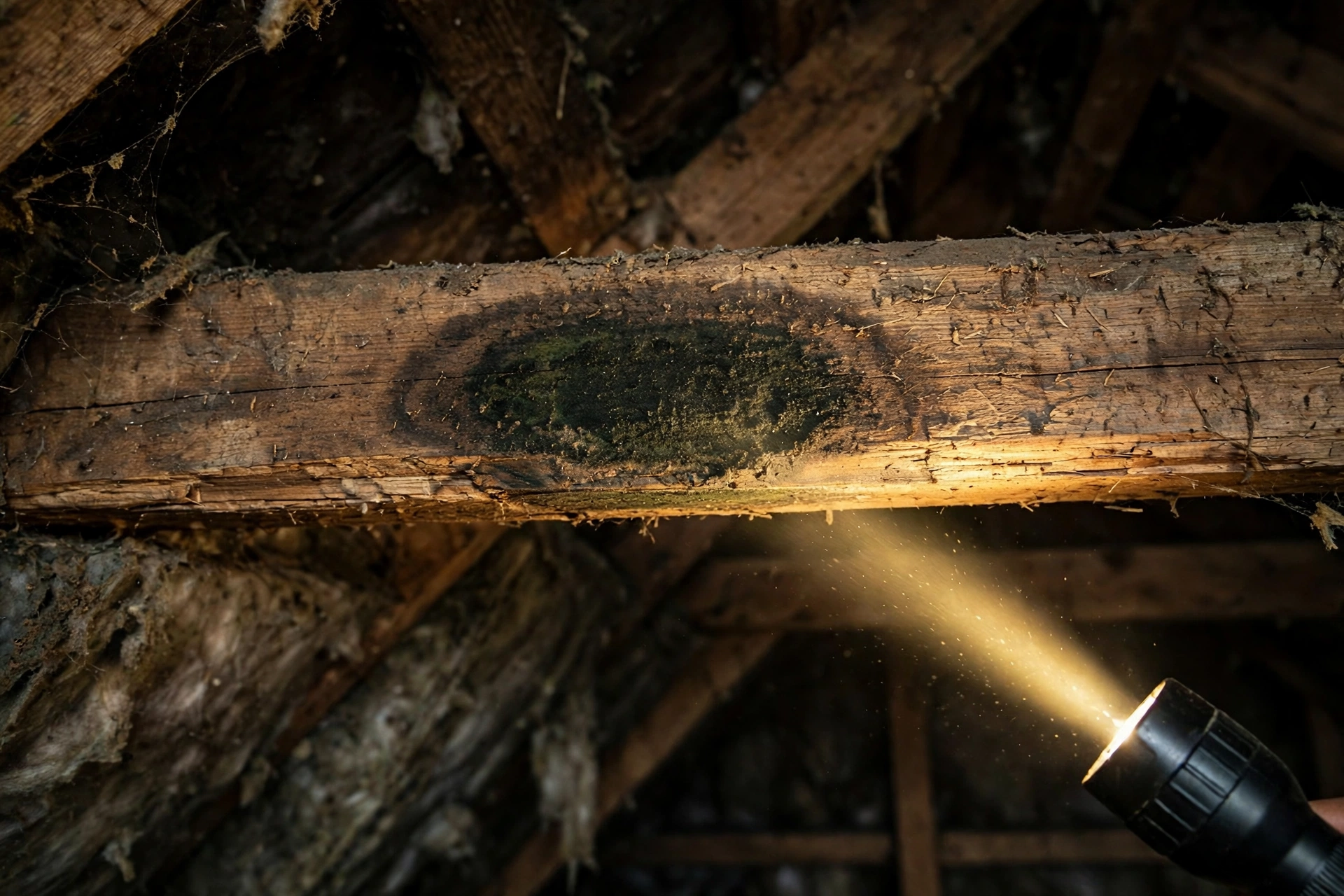
Warning signs that attic ventilation is falling short include damp or musty smells, mould spots on timber, damp or compressed insulation, rust on nails, and a top floor that is hard to keep comfortable in either summer or winter. Any one deserves attention.
Attic problems usually develop slowly and quietly, and early signs are much cheaper to deal with than the damage that follows years of damp.
A simple attic check, done safely from a stable footing with a torch and without stepping through the ceiling, can reveal a lot. Look for dark staining on timber, insulation that looks wet or flattened, daylight where it should not be, and vents blocked by insulation, boxes or debris. Also check whether bathroom and kitchen extractors vent into the attic instead of outside, which pumps moist air straight into the roof space. If you find mould over a wide area, damaged timber, or anything that looks unsafe, leave it to a professional rather than disturbing it yourself.
A Decision Checklist Before You Call a Professional
Before calling a professional, it helps to work through a short checklist, so the visit is focused and you can describe what you have already noticed. This checklist is about observation and simple checks, not about climbing onto the roof or cutting new openings yourself.
- Note the symptoms: damp smell, mould spots, hot upstairs rooms, frost, or stains, and when they appear.
- Check from inside the attic, safely, whether vents look blocked by insulation, storage or debris.
- Check whether bathroom or kitchen extractors vent into the attic instead of outside.
- Look at the eaves from outside, from the ground, for blocked or missing vent openings.
- Note your roof shape, its age in general terms, and any recent changes such as new insulation or a loft conversion.
- Decide what you want from the visit: an assessment of airflow balance, not just a quote for a fan.
- Ask the professional to explain the intake and exhaust balance they found, in plain language, before agreeing to any work.
Taking these notes to the visit helps the professional diagnose the real cause instead of guessing, and it helps you compare advice if you get a second opinion.
Conclusion
Ventilating an attic is less about adding vents and more about understanding airflow: cool air in low, warm air out high, balanced openings, and a clear path across the whole roof space. That single idea explains most of what matters.
When ventilation works with insulation rather than against it, the attic stays drier, the roof lasts longer, and the rooms below stay more comfortable in both summer and winter. Roof shape, season and existing openings all change the details, but the principles stay the same. If your attic shows warning signs, a careful look and a professional assessment will tell you far more than guesswork, and will keep a small ventilation problem from becoming a large repair.
FAQs
How can I tell if my attic is ventilated well enough?
Look for a dry attic with gentle air movement, no musty smell, no mould on timber, and a top floor that stays reasonably comfortable. Damp, frost, or still, stifling air suggests the airflow needs attention.
Does attic ventilation matter in winter as well as summer?
Yes, it matters in both seasons. In summer it removes trapped heat, and in winter it keeps the attic cold and dry, which reduces condensation and helps prevent uneven snow melt and ice dams.
Can too much ventilation be a problem?
Ventilation itself is rarely the problem, but imbalance can be. Too much exhaust without enough intake can pull moist air from the house below, so openings should be balanced rather than simply made larger.
Should I add a powered attic fan?
Only after checking the basics first, such as blocked intake vents and insulation at the eaves. A fan can help on sheltered or complex roofs, but it should support balanced ventilation, not replace it.
Do I need a professional to assess attic ventilation?
A professional assessment is wise if you see mould, damp timber, widespread staining, or persistent comfort problems. Roof work and ventilation sizing are best judged on site by someone qualified.
Disclaimer
This article is for general information only and is not professional, building, or safety advice. Attic ventilation needs vary by roof shape, climate, and local building rules, so readers should check their local requirements and consult a qualified roofer or building professional before making changes. No products or services are promoted here, and any work at height, on a roof, or near wiring should be left to qualified professionals.