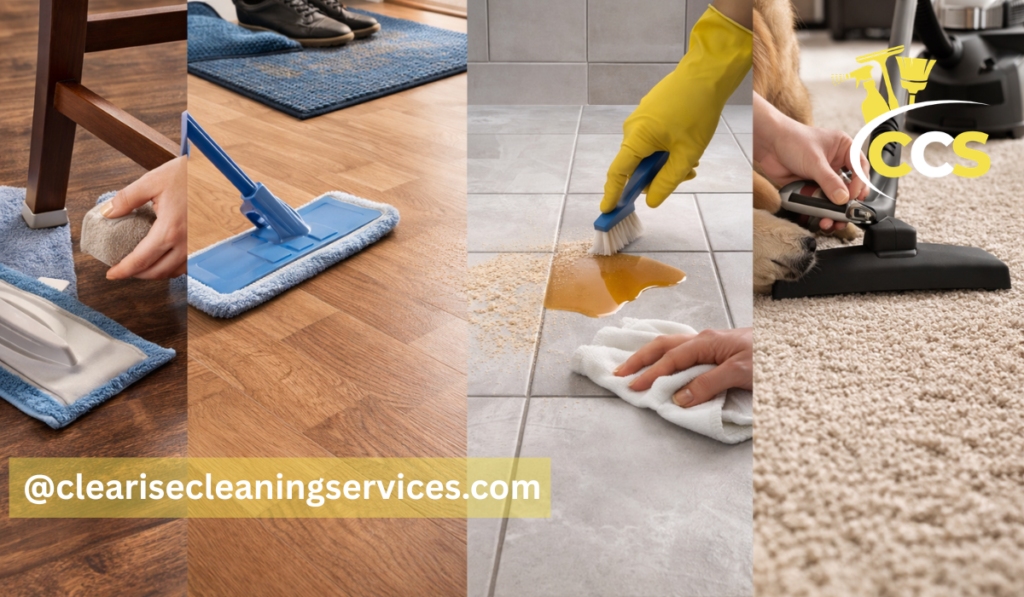
Floors are one of the most used surfaces in any home or building. Every day they handle foot traffic, furniture movement, spills, dust, and debris. Because of this constant use, proper floor care is essential to keep them looking clean and functioning well for many years. This is where floor care & maintenance 101 becomes important. It focuses on simple habits, proper cleaning methods, and regular maintenance that protect different types of flooring.
Good floor maintenance is not just about appearance. Well-maintained floors last longer, stay safer to walk on, and help create a cleaner indoor environment. Dust, dirt, and moisture can slowly damage flooring materials if they are not removed regularly. Over time, this can lead to scratches, stains, fading, or structural damage.
Understanding the basics of floor care & maintenance 101 helps homeowners choose the right cleaning approach for each flooring type. Hardwood, laminate, vinyl, tile, and carpet all require slightly different care techniques. Using the wrong tools or cleaning products may cause unnecessary wear or damage.
Another important part of floor care is prevention. Small daily habits, such as removing dirt at the entrance, cleaning spills quickly, and using furniture protectors, can significantly reduce damage. Along with preventative care, a consistent maintenance routine—daily, weekly, and seasonal—helps keep floors in excellent condition.
When the right cleaning practices and preventative habits work together, floors stay attractive, durable, and easier to maintain over time. Learning these simple principles is the foundation of effective floor care & maintenance 101.
Floor Care & Maintenance 101
| Floor Type | Best Cleaning Tool | Recommended Cleaner | What to Avoid | Maintenance Tip |
| Hardwood | Microfiber mop | pH-neutral wood cleaner | Steam mops, excess water | Clean spills immediately |
| Laminate | Dry or damp microfiber mop | Laminate floor cleaner | Soap residue, steam | Avoid soaking the floor |
| Vinyl (LVP/LVT) | Soft mop or vacuum | Mild vinyl cleaner | Bleach, ammonia | Sweep regularly to prevent dullness |
| Tile | Mop or grout brush | Mild detergent or warm water | Metal brushes | Clean grout occasionally |
| Carpet | Vacuum | Carpet-safe cleaner | Excess moisture | Professional cleaning yearly |
Understanding the Basics of Floor Care and Maintenance
Floor care and maintenance involve much more than occasional sweeping or mopping. It is a continuous process that includes cleaning, protecting, and preserving the surface of the floor so it remains durable and visually appealing. Proper maintenance helps remove dirt, prevent damage, and protect the material from everyday wear.
Every flooring material has its own structure and protective finish. Hardwood floors, for example, rely on a protective coating that shields the wood underneath. Laminate flooring has a decorative layer that can be damaged by excessive moisture. Vinyl flooring is durable but still requires proper cleaning to avoid surface dullness. Tile floors are resistant to moisture but their grout lines can collect dirt and stains if not maintained.
Regular maintenance is essential because small particles like sand and dust act like sandpaper when people walk across the floor. Over time, these particles can slowly scratch and wear down the surface. Without regular cleaning, floors may lose their shine and become more difficult to restore.
Another important benefit of proper floor care is cost prevention. When floors are maintained properly, they remain strong and attractive for a longer time. This reduces the need for expensive repairs, refinishing, or complete floor replacement. Many flooring manufacturers even recommend regular maintenance as part of their warranty guidelines.
By understanding the basic principles of floor care & maintenance 101, homeowners can create simple habits that protect their flooring investment while keeping their home clean and comfortable.
Preventative Habits That Protect Floors from Daily Damage
One of the most effective ways to protect flooring is by preventing damage before it occurs. Preventative care is a key part of floor care & maintenance 101 because it reduces the amount of cleaning and repairs needed later.
Dirt and debris often enter homes through shoes. Placing high-quality doormats both outside and inside entryways helps capture dust, sand, and moisture before they reach the floor. This simple habit significantly reduces scratching and wear on many flooring surfaces.
Furniture movement is another common source of floor damage. Chairs, tables, and heavy items can leave scratches or dents when they are dragged across the surface. Using felt pads or protective caps on furniture legs helps distribute weight and reduce friction against the floor.
Spills are unavoidable in daily life, but how quickly they are handled makes a big difference. Liquids should be cleaned immediately using a soft cloth or paper towel. Allowing moisture to sit on flooring surfaces—especially wood, laminate, or vinyl seams—can lead to swelling, staining, or warping.
Indoor humidity also plays a role in floor health. Natural materials like wood expand and contract depending on humidity levels. Maintaining indoor humidity between moderate levels helps prevent issues such as gaps, cupping, or floor movement.
For households with pets, regular nail trimming is another useful preventative step. Sharp claws can easily scratch wood or laminate flooring when pets run or play indoors.
These small habits may seem simple, but together they form an important foundation of floor care & maintenance 101 and greatly reduce long-term damage.
Essential Cleaning Practices for Different Floor Types
Different flooring materials require slightly different cleaning approaches. Understanding these differences helps ensure that cleaning methods protect the floor rather than damage it.
Hardwood floors should be cleaned gently to protect their finish. Regular sweeping or vacuuming removes dust and grit that can scratch the surface. When mopping is necessary, a lightly damp microfiber mop and a wood-safe cleaner are usually recommended. Excess water should always be avoided.
Laminate floors have a durable surface but are sensitive to moisture. Cleaning them with a dry or slightly damp microfiber mop helps maintain their appearance without allowing water to seep into seams. Harsh scrubbing or soaking the floor should be avoided.
Vinyl flooring, including luxury vinyl planks or tiles, is known for its durability and moisture resistance. It can typically be cleaned with a damp mop and a mild floor cleaner. Regular sweeping prevents debris from dulling the surface over time.
Tile flooring is one of the most moisture-resistant options, making it easier to clean. Warm water and a mild detergent usually work well for regular maintenance. However, grout lines may require occasional deeper cleaning to remove trapped dirt.
Carpet floors require a different type of care. Frequent vacuuming helps remove dust, pet hair, and small particles embedded in the fibers. Periodic deep cleaning or professional steam cleaning helps restore the carpet’s freshness and remove deeper stains.
Following the right cleaning approach for each floor type is an essential part of floor care & maintenance 101, ensuring that floors stay clean without risking damage.
Choosing the Right Tools for Effective Floor Cleaning
The tools used during cleaning can greatly influence the condition of flooring surfaces. Selecting gentle and effective cleaning tools helps prevent scratches and unnecessary wear.
Microfiber mops are widely recommended for many floor types because they trap dust and dirt without requiring excessive water. Their soft fibers glide smoothly across surfaces while picking up small particles.
Dust mops are also useful for daily maintenance. They allow homeowners to remove loose debris quickly without the need for a full cleaning routine. This is especially helpful in high-traffic areas.
Vacuums designed for hard floors are another important tool. Many modern vacuums include settings that disable rotating brushes, which can scratch delicate surfaces like hardwood or laminate.
For tile flooring, small brushes or grout cleaning tools can help remove dirt that collects between tiles. Using soft or medium bristles prevents damage to grout lines.
Overall, choosing the right tools ensures that cleaning is both effective and safe. In floor care & maintenance 101, proper tools are just as important as proper cleaning solutions.
Safe Cleaning Solutions for Modern Flooring Materials
Cleaning solutions play an important role in maintaining the appearance and durability of floors. Using gentle, appropriate products helps protect finishes and avoid long-term damage.
pH-neutral cleaners are commonly recommended for many flooring materials because they clean effectively without reacting with protective coatings. These cleaners remove dirt and grease while preserving the floor’s finish.
Some floors benefit from cleaners specifically designed for their material. For example, wood floor cleaners often include ingredients that clean without drying out the wood finish.
Mild detergents mixed with warm water can also work for certain surfaces, especially tile or vinyl flooring. However, it is important to avoid overly strong chemicals that may strip protective layers.
Harsh chemicals such as bleach or ammonia may damage finishes or cause discoloration. For this reason, many flooring experts recommend sticking with gentle, tested cleaning products.
Choosing the right cleaning solution is an important principle in floor care & maintenance 101, helping floors stay clean without compromising their protective layers.
Cleaning Methods and Products to Use with Caution
While many cleaning methods appear helpful, some can cause long-term damage if used incorrectly. Understanding these risks helps homeowners make better cleaning decisions.
Vinegar is often promoted as a natural cleaner, but its acidity may slowly wear down protective finishes on certain floors, especially hardwood and laminate. Over time, this can dull the surface and reduce its protective coating.
Steam mops are another tool that requires caution. Although they can sanitize surfaces effectively, the combination of heat and moisture may cause problems for flooring materials that are sensitive to water. Wood, laminate, and vinyl planks may experience damage if exposed to high heat and pressure.
Products that promise instant shine can also create issues. Some “mop and shine” solutions leave behind a waxy layer that attracts dirt and becomes difficult to remove. This buildup may make floors appear cloudy or sticky after repeated use.
Being aware of these potential risks helps homeowners follow safer cleaning practices as part of floor care & maintenance 101.
Creating a Consistent Floor Maintenance Routine
Consistency is one of the most important aspects of effective floor care. A regular cleaning schedule prevents dirt from building up and reduces the need for intensive cleaning later.
Daily maintenance usually involves quick sweeping or dust mopping in high-traffic areas. This removes loose dirt and small debris that could otherwise scratch the floor.
Weekly cleaning often includes vacuuming the entire floor surface and lightly mopping where necessary. Regular weekly care helps maintain cleanliness and prevents stains from becoming permanent.
Occasional deeper maintenance may be required depending on the flooring type. Tile grout lines may need deeper cleaning from time to time, while hardwood floors may benefit from occasional polishing if recommended by the manufacturer.
Annual maintenance can include professional carpet cleaning or specialized floor services such as sealing grout lines. These deeper maintenance steps help extend the lifespan of flooring materials.
A consistent routine is a key principle of floor care & maintenance 101, ensuring that floors remain clean and well-protected year after year.
Step-by-Step Guide: Basic Floor Maintenance Routine
Step 1: Remove Loose Dirt Daily
Sweep or vacuum high-traffic areas to prevent dust and sand from scratching floors.
Step 2: Clean Spills Immediately
Use a soft cloth to wipe spills before moisture damages the surface.
Step 3: Use the Right Cleaning Method
Choose a cleaning solution designed for the specific floor material.
Step 4: Protect Floors from Furniture Damage
Attach felt pads to furniture legs and avoid dragging heavy objects.
Step 5: Follow a Regular Maintenance Schedule
Daily dust removal, weekly cleaning, and occasional deep cleaning keep floors in excellent condition.
Common Floor Care Mistakes That Shorten Floor Lifespan
Even with good intentions, certain cleaning habits may accidentally damage floors. Recognizing these mistakes helps prevent unnecessary wear.
One common mistake is using excessive water when cleaning floors that are sensitive to moisture. Too much water can seep into seams, causing swelling or structural damage.
Dragging furniture across the floor is another frequent issue. This action may leave deep scratches that are difficult to repair, especially on hardwood surfaces.
Ignoring small signs of damage can also lead to bigger problems. Minor scratches, stains, or loose grout lines should be addressed early before they worsen.
Using the wrong cleaning products for a particular flooring material is another mistake. Each flooring type has specific maintenance needs, and using unsuitable cleaners can damage finishes or cause discoloration.
Avoiding these mistakes is an important step in maintaining the long-term condition of flooring.
Long-Term Strategies to Extend the Life of Your Floors
Maintaining floors for many years requires more than occasional cleaning. Long-term strategies focus on protecting flooring materials from gradual wear and environmental changes.
Protective finishes and coatings should be maintained according to manufacturer recommendations. These finishes act as a shield against scratches, stains, and moisture.
Indoor environmental conditions also affect flooring materials. Temperature and humidity levels should remain stable to prevent expansion, contraction, or warping of certain floor types.
Preventative maintenance is another important strategy. Addressing minor issues early, such as resealing grout or refinishing wood floors, can prevent more serious damage later.
With consistent attention and care, floors can remain strong and attractive for decades.
Conclusion
Proper floor maintenance is an essential part of keeping any home clean, comfortable, and visually appealing. Understanding the principles of floor care & maintenance 101 helps homeowners protect their flooring investment and avoid unnecessary damage.
Simple habits such as removing dirt at entryways, cleaning spills quickly, and using appropriate cleaning tools can significantly reduce daily wear. Choosing the right cleaning methods for each flooring type also ensures that surfaces remain strong and attractive over time.
When preventative care, safe cleaning solutions, and consistent maintenance routines work together, floors remain easier to manage and last much longer. By following these basic guidelines, homeowners can maintain beautiful, durable floors that continue to enhance their living spaces for many years.
Frequently Asked Questions (FAQs)
1. What Does Floor Care & Maintenance 101 Mean?
It refers to the basic principles of cleaning, protecting, and maintaining floors so they remain durable, hygienic, and visually appealing over time.
2. How Often Should Floors Be Cleaned?
High-traffic areas should be swept daily, while most floors benefit from weekly vacuuming or mopping and occasional deep cleaning depending on the material.
3. Is Vinegar Safe For Cleaning Floors?
Vinegar can damage the protective finish of hardwood and laminate floors over time. It is safer to use pH-neutral cleaners designed for specific flooring materials.
4. Are Steam Mops Safe For All Floors?
No. Steam mops can damage wood, laminate, and some vinyl floors because heat and moisture may weaken adhesives or finishes.
5. What Is The Best Way To Prevent Floor Damage?
Use entrance mats, clean spills quickly, maintain proper humidity, and attach protective pads to furniture legs.
Disclaimer: The information in this article is intended for general educational purposes only. Cleaning recommendations may vary depending on the specific flooring material and manufacturer guidelines. Always follow the instructions provided by your flooring manufacturer before using any cleaning products or tools.
Thanks for visiting Clearise Cleaning Services! Discover more helpful tips and expert cleaning insights by exploring our related categories.