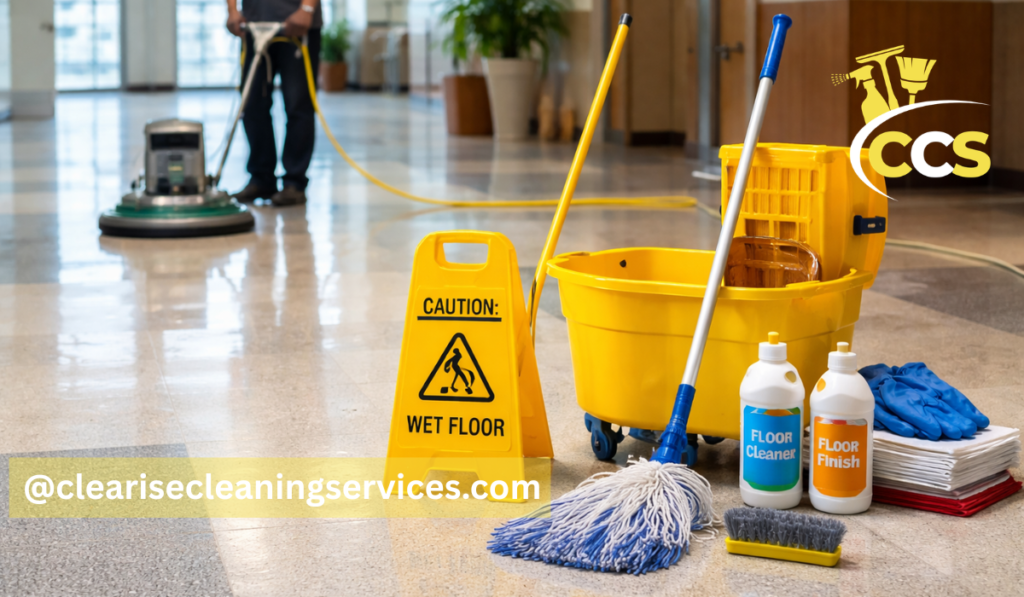
Vinyl Composition Tile, commonly known as VCT, is a popular flooring choice in schools, hospitals, offices, and commercial spaces. It is valued for its durability, affordability, and clean, professional appearance. However, unlike some modern flooring types, VCT requires regular care to maintain its look and performance over time.
Proper VCT tile floor maintenance is essential because the material is naturally porous. Without a protective finish, dirt, moisture, and stains can easily penetrate the surface, leading to discoloration and damage. A well-maintained VCT floor not only looks polished and attractive but also lasts significantly longer.
This guide will walk you through everything you need to know about VCT tile floor maintenance. From daily cleaning routines to periodic polishing and full restoration, you will learn how to keep your floors in top condition with simple and effective practices.
Complete Overview
| Aspect | Details |
| Floor Type | Vinyl Composition Tile (VCT) |
| Main Purpose | Maintain shine, protect surface, extend lifespan |
| Daily Care | Dust mopping, light cleaning |
| Weekly Care | Damp mopping with neutral cleaner |
| Monthly Care | Buffing or burnishing |
| Quarterly Care | Scrub and recoat (add wax layers) |
| Deep Maintenance | Stripping and waxing |
| Frequency of Stripping | Every 6–12 months (or sooner for heavy traffic) |
| Key Products | pH-neutral cleaner, floor finish/wax |
| Tools Required | Mop, buffer, burnisher, scrub machine |
| Avoid | Ammonia, excess water, abrasive pads |
| Best Practice | Use entrance mats & furniture protectors |
| Suitable Areas | Schools, hospitals, offices, commercial spaces |
Understanding VCT Flooring and Why Maintenance Matters
VCT flooring is made from a mixture of vinyl, limestone, fillers, and pigments, which gives it strength and flexibility. Unlike luxury vinyl or sealed flooring, VCT does not come with a permanent protective layer. This is what makes it unique—and also why it requires ongoing maintenance.
Because of its porous nature, VCT absorbs dirt and moisture if left unprotected. To prevent this, a layer of floor finish or wax is applied to act as a barrier. This coating protects the tile from daily wear while giving it a smooth, glossy appearance.
Without proper maintenance, the protective layer wears down over time. When this happens, the tile becomes vulnerable to scratches, stains, and dullness. In high-traffic areas, neglect can quickly lead to permanent damage, making restoration more difficult and costly. Consistent care ensures that the floor remains both visually appealing and structurally sound.
Daily and Weekly VCT Tile Floor Maintenance Routine
A strong maintenance routine begins with simple daily and weekly habits. These small efforts play a big role in preserving the finish and preventing long-term damage.
Dust and debris are the biggest enemies of VCT flooring. Daily sweeping or dust mopping helps remove dirt and grit that can scratch the surface. Using a microfiber mop is especially effective, as it traps fine particles instead of spreading them around.
Damp mopping should be done regularly using a pH-neutral cleaner mixed with water. It is important to avoid soaking the floor, as too much water can seep into the seams and weaken the adhesive underneath. A lightly damp mop is enough to clean the surface without causing harm.
Choosing the right cleaning solution is also important. Harsh chemicals can strip away the protective finish, while gentle, neutral cleaners help maintain it. Always follow product instructions and avoid mixing different chemicals.
Spills should be cleaned immediately. Liquids can stain the surface or create slippery conditions if left unattended. Quick action not only keeps the floor safe but also prevents long-term discoloration.
Step-by-Step VCT Maintenance Guide
- Start with daily dust mopping to remove dirt and grit
- Clean weekly using a damp mop and neutral cleaner
- Buff monthly to restore shine and smooth scuffs
- Perform scrub and recoat every 3–6 months
- Strip and wax the floor when finish becomes dull or damaged
Monthly and Quarterly Maintenance for Long-Lasting Shine
Even with regular cleaning, the protective finish on VCT floors gradually loses its shine. Monthly and quarterly maintenance helps restore the floor’s appearance and extend the life of the finish.
Buffing or burnishing is commonly used to bring back the gloss. This process uses a floor machine to smooth out light scuffs and enhance the shine. In areas with heavy foot traffic, this may need to be done more frequently to maintain a polished look.
Over time, the top layer of wax becomes worn and soiled. A scrub and recoat process removes this upper layer without affecting the base coats. After cleaning the surface thoroughly, a few fresh layers of finish are applied. This refreshes the floor and strengthens its protective barrier.
Preventive measures also play a role during this stage. Entrance mats help reduce the amount of dirt and moisture brought in from outside. By minimizing what reaches the floor, you reduce wear and make maintenance more effective.
Deep Cleaning: Stripping and Waxing VCT Floors
Eventually, routine maintenance is not enough to restore the floor’s original appearance. When the finish becomes dull, yellowed, or heavily scratched, a complete stripping and waxing process is required.
This process involves removing all layers of old finish using a floor stripper. Once the surface is completely clean and free of residue, new coats of wax or finish are applied. Typically, several layers are needed to rebuild the protective barrier and achieve a smooth, glossy result.
The frequency of this deep cleaning depends on the level of traffic. In busy environments, it may be needed every few months, while lower-traffic areas can go longer between treatments. Regular observation of the floor’s condition will help determine the right timing.
Stripping and waxing may seem like a major task, but it is essential for maintaining the long-term quality of VCT flooring. Skipping this step can lead to permanent damage that cannot be reversed with simple cleaning.
Best Products and Tools for VCT Floor Maintenance
Using the right products and tools makes a noticeable difference in how well your VCT floor performs and looks over time. Not all cleaners or finishes are suitable, so careful selection is important.
A pH-neutral cleaner is ideal for daily and weekly cleaning. It effectively removes dirt without harming the finish. For maintenance coats, high-quality floor finishes or waxes are recommended, as they provide better durability and shine.
Equipment also plays a key role. Floor buffers and burnishers help maintain the surface by smoothing out imperfections and restoring gloss. Scrubbing machines are useful for deeper cleaning and preparing the floor for recoating.
When choosing products, it is best to consider the level of traffic and the specific needs of your space. Commercial environments may require stronger finishes, while lighter-use areas can rely on standard options. Consistency in product use also helps avoid compatibility issues.
Common Mistakes to Avoid in VCT Floor Care
Many issues with VCT flooring come from simple mistakes that can easily be avoided. Understanding these common problems can help you protect your investment and maintain better results.
Using harsh chemicals, such as ammonia-based cleaners, can damage the finish and dull the surface. These products may seem effective in the short term, but they weaken the protective layer over time.
Over-wetting the floor is another frequent issue. Excess water can seep into the seams, causing tiles to loosen or curl. Keeping the mop only slightly damp is a safer approach.
Skipping regular maintenance cycles can lead to buildup and wear that is harder to fix later. Consistency is key when it comes to VCT tile floor maintenance.
Using the wrong pads or tools can also cause damage. Abrasive pads may scratch the surface or remove the finish too quickly. Choosing the correct equipment ensures that cleaning and polishing are both effective and safe.
Seasonal and High-Traffic Area Maintenance Tips
Different seasons and environments can affect how VCT floors perform. Adjusting your maintenance routine accordingly helps keep the floor in good condition year-round.
During winter, salt and moisture from shoes can leave residue and damage the finish. Increasing the frequency of damp mopping helps remove these materials before they cause harm. In rainy seasons, extra attention to moisture control is important.
High-traffic areas require more frequent care because they experience faster wear. Entryways, hallways, and common spaces benefit from additional cleaning and regular buffing to maintain their appearance.
Using entrance mats is one of the most effective ways to reduce the impact of seasonal conditions. These mats capture dirt and moisture before it reaches the floor, making maintenance easier and more efficient.
Initial Care After VCT Floor Installation
The first few days after installation are critical for the long-term performance of VCT flooring. Proper initial care helps ensure that the tiles and adhesive set correctly.
It is important to allow enough time for the adhesive to dry before exposing the floor to heavy traffic. This usually takes a few days, depending on the environment and installation conditions.
Wet cleaning should also be avoided during the early stages. Giving the floor time to stabilize prevents issues such as tile movement or weakened bonds.
Establishing a maintenance routine from the beginning sets the foundation for long-term care. Applying the right finish and following a consistent schedule will help preserve the floor’s appearance from day one.
How to Extend the Life of Your VCT Flooring
Long-term durability depends on both maintenance and preventive measures. Simple steps can make a significant difference in how long your VCT flooring lasts.
Protecting the surface from scratches and dents is essential. Furniture legs should have non-marking pads, and heavy equipment should be handled carefully to avoid damage.
Using mats in strategic locations helps reduce wear, especially in high-traffic zones. These mats act as a first line of defense against dirt and moisture.
Planning a long-term maintenance schedule ensures that the floor receives the care it needs at the right time. Regular cleaning, periodic recoating, and occasional deep restoration work together to keep the floor in excellent condition.
Conclusion
Maintaining VCT flooring requires a consistent and well-planned approach. From daily cleaning to periodic polishing and full restoration, each step plays an important role in preserving the floor’s appearance and durability.
By following proper VCT tile floor maintenance practices, you can protect the surface from damage, extend its lifespan, and keep it looking clean and professional. Small, regular efforts often prevent the need for costly repairs or replacements.
In the end, the key to successful maintenance is consistency. With the right routine and attention to detail, VCT floors can remain strong, attractive, and reliable for many years.
FAQs (People Also Ask)
How Often Should VCT Floors Be Maintained?
Daily cleaning is recommended, with deeper maintenance like buffing monthly and stripping every 6–12 months depending on traffic.
Can I Use Regular Cleaners On VCT Floors?
No, it’s best to use a pH-neutral cleaner. Harsh chemicals like ammonia can damage the finish.
Why Is Waxing Important For VCT Flooring?
Wax creates a protective layer that prevents stains, moisture damage, and wear while giving the floor a shiny appearance.
What Happens If VCT Floors Are Not Maintained?
Without maintenance, the floor becomes dull, stained, scratched, and may suffer permanent damage over time.
Is VCT Flooring High Maintenance?
Yes, compared to other flooring types, VCT requires regular care, but proper maintenance keeps it durable and cost-effective.
Disclaimer: This article is for informational purposes only. Maintenance practices may vary based on floor condition, environment, and product used. Always follow manufacturer guidelines and consult professionals for large-scale or commercial flooring needs.
Thanks for visiting Clearise Cleaning Services! Discover more helpful tips and expert cleaning insights by exploring our related categories.