If you’re a new parent, dust stops being “just a housekeeping thing” and starts feeling like a daily battle—because your baby is on the floor, touching everything, and putting hands in their mouth. If you keep asking why is my house so dusty, you’re not failing at cleaning. In most homes, constant dust is caused by airflow + entry points + filtration + fabrics, not effort.
This guide breaks down the real reasons dust keeps coming back (even after cleaning, even with an air purifier), and gives you a practical, baby-friendly plan to fix it without living in a constant wipe-down cycle.
What Household Dust Really Is (and Why It Builds Up Fast in Family Homes)
Household dust isn’t one single thing, and it’s not just “dirt.” It’s a mix of tiny particles that quietly build up every day, especially in active family homes.
What Dust Is Made Of (the Non-gross, Helpful Version)
Dust is usually a combination of several common sources working together:
- Outdoor particles like soil, pollen, and pollution that sneak in through doors, windows, shoes, strollers, and even small gaps you don’t notice.
- Indoor fibers from everyday living—lint from clothes, bedding, carpets, rugs, and upholstered furniture slowly shedding over time.
- Skin flakes and pet dander, which are completely normal in lived-in homes, even if you clean regularly.
- Fine debris stirred up by HVAC airflow, especially when air moves through vents, returns, and ducts multiple times a day.
None of this means your home is dirty—it simply means it’s being used.
Why New Parents Notice It More
Dust often feels more overwhelming after a baby arrives, and there are real reasons for that:
- Babies live in the “dust layer.” Floors, rugs, and baseboards are exactly where dust settles, and that’s where babies crawl, play, and explore.
- You clean more often, which makes dust reappearing more noticeable than before.
- Winter heating and dry air can make dust more visible and easier to spread through the air, which can feel especially frustrating during colder months.
Once you understand what dust actually is and why it shows up more in family homes, it becomes easier to focus on reducing it—rather than feeling like you’re constantly losing the cleaning battle.
Quick Home Test: Where Is the Dust Coming From?
Before changing your cleaning routine or buying new products, it helps to figure out where the dust is actually coming from. This quick check takes just a few minutes and often gives very clear answers.
Do The “Dust Map” In 2 Minutes
Walk through your home and look at where dust builds up the fastest:
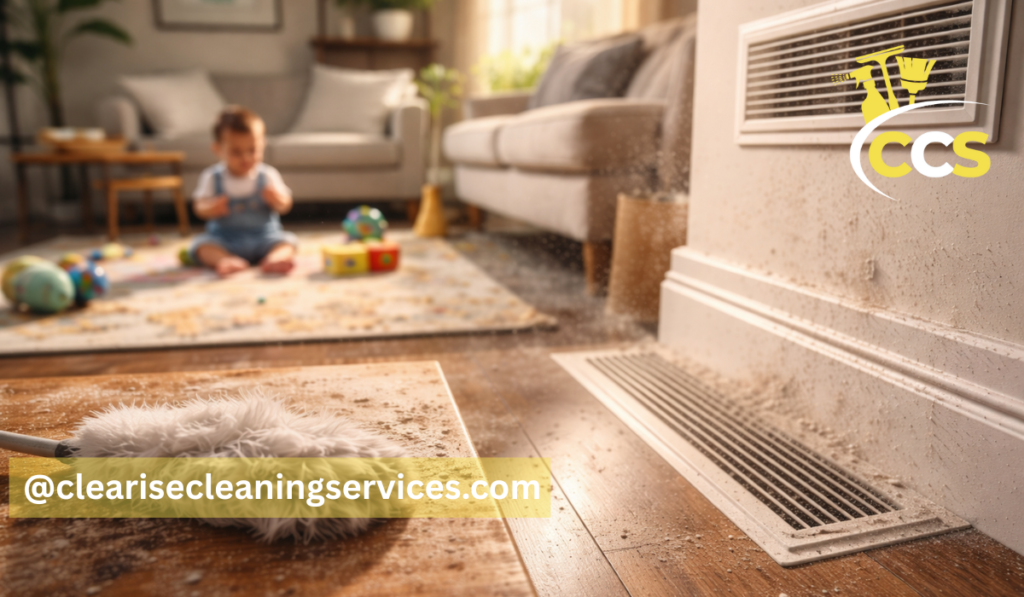
- Near vents and air returns → this often points to an HVAC filter that needs attention, possible duct leaks, or dirty HVAC components.
- On window sills and near doors → usually a sign of drafts or small air leaks that allow outdoor dust to enter.
- Mostly on fabrics (sofa, curtains, rugs) → these materials naturally shed fibers and trap dust over time.
- Mostly in one room → this can be caused by one leaky window, one clogged return vent, one especially dusty rug, or uneven airflow in that space.
Noticing patterns matters more than how much dust you see.
A Simple Tape Test (fast Clue)
This easy test can help confirm your suspicion:
- Place a small piece of clear tape on:
- a vent cover
- a window sill
- a shelf in the middle of the room
After 24 hours, compare the tape pieces.
Whichever spot collects the most dust usually tells you where the main source is coming from—airflow, outdoor leaks, or indoor fabrics.
The Biggest Culprit: HVAC Filters, Duct Leaks, and Air Pressure Problems
This is the number one reason many people feel like their house is dusty no matter what they do. If dust seems to come back quickly—especially around vents—experts often point to HVAC filters, duct sealing, and air pressure issues rather than cleaning habits.
Dirty or Low-Quality HVAC filter
Your HVAC filter’s job is to catch fine particles before they circulate through your home. When a filter is clogged, overdue, or very low quality, it simply can’t do that job well. Instead of trapping dust, it allows tiny particles to keep moving through the system and settle on surfaces again and again.
Parent-proof habit:
Check your HVAC filter once a month. Many homes need a replacement every 1–3 months, depending on pets, recent renovations, seasonal use, and overall airflow. Setting a recurring reminder makes this easy to stay on top of, even with a busy baby schedule.
Leaky Ductwork (Dust Pulled From Attic Or Crawlspace)
If ductwork isn’t properly sealed, it can pull air from places you definitely don’t want dust coming from—like attics, crawlspaces, or inside wall cavities. That dusty air then gets pushed directly into your living space every time the system runs.
This is why some homes feel dusty even when everything looks clean. The dust isn’t starting in your room—it’s being pulled in behind the scenes and redistributed through the vents.
Negative Pressure (Your House “sucks” Dust In)
Certain setups can cause your home to operate under negative pressure, meaning air is being pulled inside instead of pushed out in a balanced way. Strong bathroom fans, kitchen exhausts, or unbalanced HVAC systems can all contribute to this.
When that happens, outside air (and dust) gets pulled in through:
- door gaps
- window frames
- small cracks you don’t normally notice
New-Parent Note
If your baby’s room seems to get dusty faster than other rooms, check:
- the return vent in that room
- the gap under the door
Airflow problems often show up there first, and fixing them can make a noticeable difference in how quickly dust builds up.
Why Is My House So Dusty Even After Cleaning?
If you’re searching why is my house so dusty even after cleaning or why does my house get so dusty everyday, the problem is usually not how often you clean—but how dust is being captured (or not captured) during cleaning.
The Cleaning Loop That Keeps Dust Coming Back
Many homes get stuck in the same cycle without realizing it:
- Dry dusting lifts dust into the air instead of removing it.
- Dust floats, then slowly settles again—often within a few hours.
This makes it feel like cleaning “did nothing,” even though you put in the effort.
The Simple Trick To Eliminate Dust In Your House (That Actually Works)
This method is simple, fast, and realistic for parents.
Two-step finish (fast + effective):
- Damp microfiber wipe – captures dust instead of pushing it around.
- Vacuum right after – removes whatever falls during wiping before it resettles.
Used together, these two steps stop the constant dust return cycle.
Don’t Skip These Dust Factories (Parent Edition)
Some spots quietly create dust over and over if they’re ignored:
- Ceiling fan blades, even if you never turn the fan on.
- Behind and under the crib and dresser, where dust builds unnoticed.
- Stroller wheels, which track outdoor dust straight onto your floors.
- Entry rug + inside doormat combo, one of the biggest daily dust reducers in family homes.
Catching these areas consistently can make a noticeable difference in how clean your home feels between cleanings.
Why Is My House So Dusty Even With Air Purifier? (HEPA, Placement, And Sizing)
An air purifier for dusty house problems can definitely help—but only when it’s the right type, right size, and properly maintained. Otherwise, it may feel like it’s doing nothing at all.
HEPA Filter Basics (What “HEPA” Actually Means)
A HEPA filter (High-Efficiency Particulate Air) is commonly cited as capturing 99.97% of particles around 0.3 microns under controlled test conditions. This includes very fine dust that normal cleaning can’t easily catch.
That’s why many parents use a HEPA air purifier as part of their dust-control setup—especially in baby bedrooms and play areas where air quality matters most.
Why Purifiers “Don’t Work” For Dust (Common Reasons)
When people ask why is my house so dusty even with air purifier, one or more of these issues is usually the reason:
- Wrong size for the room – the purifier can’t move enough clean air to keep up.
- Filter overdue – clogged filters lose efficiency and stop trapping fine particles.
- Bad placement – blocked by furniture, pushed into corners, or placed too low.
- Source problem still active – duct leaks, drafts, or heavy fabrics continue producing dust faster than the purifier can remove it.
An air purifier helps with airborne dust, but it can’t fix dust that’s constantly being generated or pulled into the home.
Quick Sizing Tip (No Math Headache)
Ignore vague claims like “covers up to X square feet” when possible. Instead, look for CADR (Clean Air Delivery Rate) and match it to your room size. While some guides mention air changes per hour, real homes vary based on layout, ceiling height, and airflow.
Parent-friendly setup:
Start by placing a purifier in:
- Baby’s sleep space, and
- The main play area
Once those areas are covered, you can decide if additional units are needed elsewhere in the house.
Why Is My House So Dusty In The Winter (And Why Is My House So Dry)?
If you’ve noticed why is my house so dusty in the winter and also why is my house so dry, you’re seeing a real and very common seasonal effect. Winter conditions change how air behaves inside your home, which directly impacts dust.
Why Winter Makes Dust Worse
Cold-weather months create the perfect setup for dust problems:
- Cold, dry outdoor air plus heating systems strip moisture from indoor air.
- Dust particles feel lighter in dry air, so they stay airborne longer instead of settling quickly.
- Static electricity builds up more easily, causing dust to cling to surfaces, fabrics, and even walls.
This combination often makes it feel like dust appears faster and spreads everywhere, even if your cleaning routine hasn’t changed.
What Humidity Level Helps Most Families
Indoor air quality experts commonly recommend keeping indoor humidity between 40–60% for comfort and overall health, especially during winter months. Within this range, air feels less dry, dust settles more quickly, and irritation to skin, nose, and throat is reduced.
New-Parent Caution
If you use a humidifier to improve dry air, make sure it’s cleaned regularly. Poor humidifier maintenance can introduce bacteria or mold into the air, creating new air-quality issues instead of solving them.
Why Is My House So Dusty All Of A Sudden (Or In A New House)? + When To Call A Pro
Sometimes dust doesn’t slowly build up—it seems to explode overnight. If you’re asking why is my house so dusty all of a sudden, there’s usually a clear trigger behind it.
Why Dust Spikes “Out Of Nowhere”
Sudden dust problems are often caused by recent changes, including:
- HVAC season changes – when heating or cooling starts running more often, settled dust gets stirred up and redistributed.
- A filter that recently crossed from “fine” to “clogged” – airflow continues, but filtration drops sharply.
- Renovations or small projects – drilling, drywall work, furniture assembly, or even mounting shelves can release fine dust.
- More drafts due to weather changes – wind and temperature shifts pull outdoor dust inside.
- Duct gaps – openings in ductwork can pull dusty air from attics or crawlspaces directly into living areas.
These changes often go unnoticed until dust suddenly becomes impossible to ignore.
Why Is My New House So Dusty?
If you’ve moved recently and are wondering why is my new house so dusty, this is extremely common.
New or new-to-you homes often have:
- Construction dust still settling, even months after work is finished.
- Builder-grade HVAC filters, which don’t trap fine particles well.
- Dust inside ducts from construction debris or previous occupants.
Best First-Week Reset (High Impact)
If you’ve just moved in—or dust suddenly feels out of control—this reset can make a big difference:
- Replace the HVAC filter immediately
- Wipe vent covers and air returns
- HEPA vacuum floors and the baby’s main play zone
- Run an air purifier in the baby’s room consistently for 2–4 weeks
This helps clear out leftover dust while stopping new particles from circulating.
When It’s Worth Getting Professional Help
Consider a professional inspection if:
- Dust is heaviest right around vents or returns
- You see visible “puffs” of dust when the system turns on
- One room is dramatically dustier than the rest
- You suspect duct leaks or airflow imbalance
In these cases, cleaning alone won’t solve the problem—fixing airflow and duct issues is often the real solution.
Conclusion
If you’ve been stuck asking why is my house so dusty, the answer is usually not “clean harder.” Long-term results come from a combination of better dust capture, strong filtration, and stopping dust at the source—including drafts, duct leaks, and HVAC issues.
Start with the simple wins: replace your HVAC filter, use the two-step microfiber and vacuum method, and place a properly sized HEPA air purifier where your baby sleeps and plays. If dust builds up fastest near vents or comes back quickly after cleaning, it’s a strong sign that duct sealing or airflow balance needs attention.
With the right system in place, dust becomes manageable—and your home feels cleaner, healthier, and far less stressful for you and your baby.
FAQs
Why Does My House Get So Dusty Every Day?
Daily dust usually means dust is being created or pulled in constantly—through HVAC airflow, fabrics like carpets and sofas, outdoor air leaks, or tracked-in dirt from shoes and strollers. It’s rarely about not cleaning enough.
Why Is My House So Dusty Even After Cleaning?
If dust comes back fast after cleaning, it’s often because dry dusting spreads dust into the air instead of removing it, or your vacuum doesn’t trap fine particles well. Airflow issues can also keep dust circulating.
Why Is My House So Dusty Even With An Air Purifier?
An air purifier helps with airborne dust, but it won’t stop dust coming from duct leaks, drafts, or shedding fabrics. Wrong size, poor placement, or an overdue filter can also reduce effectiveness.
What Is The Simple Trick To Eliminate Dust In Your House?
The most effective method is a two-step finish:
- Wipe surfaces with a damp microfiber cloth
- Vacuum immediately after
This prevents dust from floating back into the air.
Why Is My House So Dusty In The Winter?
Winter air is drier, and heating systems run more often. Dry air lets dust stay airborne longer, and static electricity makes it cling to surfaces.
Why Is My House So Dusty All Of A Sudden?
Sudden dust spikes often happen after season changes, renovations, clogged HVAC filters, or increased drafts that pull outdoor dust inside.
Why Is My New House So Dusty?
New or newly renovated homes often have construction dust, low-quality builder filters, and dust inside ductwork that hasn’t been cleared yet.
Does A Hepa Filter Really Help With Dust?
Yes. A HEPA filter can capture very fine dust particles in the air, especially helpful in baby rooms—but it works best alongside proper cleaning and airflow control.
Disclaimer: This article is for general informational purposes only. It does not replace professional HVAC, air-quality, or home inspection advice. If dust problems are severe, persistent, or linked to health concerns, consult a qualified professional for proper evaluation.
Thanks for visiting Clearise Cleaning Services! Discover more helpful tips and expert cleaning insights by exploring our related categories.