Wood floor maintenance is essential for keeping hardwood floors strong, clean, and attractive over time. Hardwood flooring is durable, but without proper care it can develop scratches, dull spots, and moisture damage. Regular cleaning and the right maintenance routine help protect the surface and extend the life of the floor.
Proper care also preserves the natural beauty and value of hardwood floors. Well-maintained floors keep their shine and smooth finish, which can make a home look more inviting and well cared for.
In this guide, you will learn practical tips for wood floor maintenance, including safe cleaning methods, how to deep clean wooden floors, and when treatments like a hardwood floor maintenance coat or wood floor refinishing may be needed. These simple steps can help homeowners keep their floors looking their best for years.
Understanding Different Types of Wood Floor Finishes
A wood floor finish is the protective layer applied to hardwood floors to seal the wood and protect it from scratches, stains, and moisture. The type of finish on your floor plays a major role in how it should be cleaned and maintained. Using the wrong cleaning method or product can damage the finish and shorten the life of the floor.
Common Finishes Used on Hardwood Floors
Polyurethane is one of the most common finishes used today. It forms a strong protective coating on the surface of the wood and is resistant to moisture and everyday wear. Floors with this finish are usually easy to maintain with regular sweeping and a wood-safe cleaner.
Oil-based finishes penetrate the wood rather than sitting on top of it. They enhance the natural grain and color of the wood. These floors may require periodic oil treatments to maintain their protective layer.
Wax finishes were common in older homes. They create a soft, natural shine but need more frequent maintenance. Waxed floors should be cleaned carefully and occasionally re-waxed to maintain their appearance.
This is a highly durable finish often found on prefinished hardwood floors. It provides strong resistance to scratches and wear, making it suitable for high-traffic areas.
How to Identify the Finish on Your Wood Floor
To identify your floor finish, observe how the surface reacts to light and cleaning. Floors with a glossy protective layer are often polyurethane or aluminum oxide. If the floor has a softer shine and feels slightly textured, it may have an oil or wax finish. When unsure, consulting a flooring professional can help determine the finish and guide proper wood floor maintenance.
Daily and Weekly Wood Floor Maintenance Routine
Regular wood floor maintenance does not have to be complicated. A few simple habits done daily and weekly can help protect hardwood floors from scratches, dust buildup, and long-term damage. Consistent cleaning keeps the surface smooth, preserves the wood floor finish, and helps maintain the natural shine of the flooring.
Simple Habits That Protect Hardwood Floors
Dust, sand, and small debris can slowly scratch the floor surface if they are left in place. Light sweeping or dusting removes these particles before they damage the finish. Using a microfiber mop is also helpful because it gently captures dust and dirt without harming the floor. In most homes, sweeping or dusting a few times a week and doing a light cleaning once a week is enough to keep hardwood floors in good condition.
Best Tools for Regular Cleaning
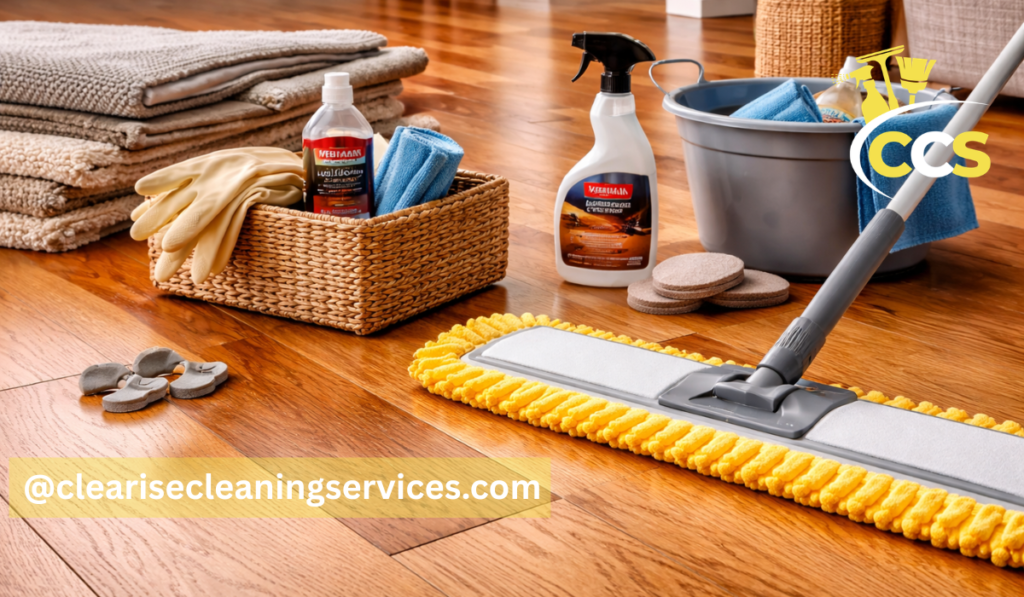
Using the right tools makes wood floor maintenance easier and safer. Soft-bristle brooms are effective for removing loose dust and debris without scratching the surface. Microfiber mops are widely recommended because they trap fine dust and work well for gentle cleaning. A vacuum cleaner designed for hardwood floors can also be used, as long as it has a floor setting or brush attachment that will not damage the wood.
What Is the Best Thing to Use to Clean Wood Floors?
Keeping hardwood floors clean requires using safe products that protect the wood floor finish while removing dirt and stains. The best cleaning solutions are gentle, wood-safe, and designed specifically for hardwood surfaces. Using harsh chemicals or excessive water can damage the floor and reduce its lifespan.
Safe Cleaning Solutions for Hardwood Floors
The safest option for routine cleaning is a combination of light moisture and a mild cleaner made for wood floors. A slightly damp microfiber mop with a wood-safe cleaning solution helps remove dust, footprints, and light stains without harming the finish.
Many flooring experts recommend pH-neutral cleaners because they clean effectively without leaving residue or causing discoloration. These cleaners are designed to protect the surface while maintaining the natural look of hardwood floors.
Recommended Hardwood Floor Cleaners
Many homeowners choose specialized cleaners that are designed specifically for hardwood floors. One commonly used product is Weiman hardwood floor cleaner, which is formulated to clean the surface while helping maintain the floor’s natural shine.
Specialized cleaners are useful because they remove dirt gently while protecting the protective coating on the wood. Using products made for hardwood flooring helps reduce the risk of damaging the finish.
Where to Buy Hardwood Floor Cleaners
Quality hardwood floor cleaners can be purchased from home improvement stores, supermarkets, or online retailers. Many homeowners search for Weiman floor cleaner where to buy to find reliable options both online and in local stores.
When choosing a cleaner, look for products labeled safe for hardwood floors and avoid strong chemicals that may damage the wood floor finish.
How to Deep Clean Wooden Floors Without Damaging Them
Even with regular cleaning, hardwood floors may occasionally require deeper cleaning to remove buildup from dirt, oils, and heavy foot traffic. Deep cleaning should always be done carefully to protect the wood and prevent moisture damage.
When Deep Cleaning Is Necessary
Deep cleaning is usually needed when floors begin to look dull or when regular cleaning no longer removes stubborn dirt. Signs that your wood floor may need deeper cleaning include visible grime, cloudy areas on the finish, or buildup in high-traffic areas such as hallways and living rooms.
Step-by-Step Deep Cleaning Process
The first step is removing dust and loose debris by sweeping or vacuuming the floor. This helps prevent small particles from scratching the surface during cleaning.
Next, apply a hardwood floor cleaner using a microfiber mop and spread it evenly across the floor. Always follow the instructions provided with the cleaner to avoid applying too much solution.
It is important to use minimal moisture, as excessive water can seep into the wood and cause swelling or damage. After cleaning, allow the floor to dry properly. Good airflow or gently wiping the surface with a dry microfiber cloth can help remove any remaining moisture.
Mistakes to Avoid When Deep Cleaning Wood Floors
Several common mistakes can damage hardwood floors. Using excessive water, harsh chemical cleaners, or rough scrubbers can harm the protective finish.
Steam cleaners are also not recommended for many hardwood floors because heat and moisture can weaken the wood over time. Following proper cleaning methods helps keep the floor protected and looking its best for many years.
Hardwood Floor Maintenance Coat: Protecting the Surface
A hardwood floor maintenance coat is a thin protective layer applied over the existing finish of a wood floor. It helps refresh the surface and restore protection without the need for full sanding or refinishing. This coating works by strengthening the protective barrier that shields the wood from scratches, stains, and everyday wear.
What a Hardwood Floor Maintenance Coat Is
A maintenance coat is typically applied when the floor finish begins to show light wear but the wood itself is still in good condition. Instead of removing the entire finish, the new coat simply reinforces the existing protective layer.
When a Maintenance Coat Should Be Applied
Homeowners usually consider applying a maintenance coat when the floor begins to look slightly dull or shows light surface scratches. High-traffic areas such as living rooms, hallways, and kitchens often benefit the most from this treatment.
Benefits of Applying a Maintenance Coat
Applying a maintenance coat helps restore the shine of the floor and extend the life of the original finish. It also protects the wood from deeper damage, which can delay the need for full wood floor refinishing.
Professional vs DIY Maintenance Coating
Some homeowners choose to apply a maintenance coat themselves using products designed for DIY use. However, hiring a flooring professional can provide more consistent results, especially for large areas or floors with visible wear.
Preventing Damage to Hardwood Floors
Preventing damage is one of the most important parts of wood floor maintenance. Simple precautions can significantly reduce scratches, moisture damage, and long-term wear.
Protecting Floors from Scratches
Furniture legs can easily scratch hardwood floors if they are moved or dragged. Installing furniture pads under chairs, tables, and sofas helps protect the surface.
Rugs and runners are also useful in high-traffic areas such as entryways and hallways. They help trap dirt and reduce the amount of debris that reaches the floor.
Managing Moisture and Humidity
Wood naturally expands and contracts depending on humidity levels. Excess moisture can cause the floor to swell, while extremely dry conditions may cause cracks or gaps.
Maintaining balanced humidity inside the home helps protect hardwood floors. Most flooring experts recommend indoor humidity levels between 35% and 55% for optimal wood floor stability.
Preventing Stains and Discoloration
Spills should always be cleaned immediately to prevent moisture from penetrating the wood surface. Even small amounts of liquid can damage the finish if left unattended.
It is also important to avoid harsh chemical cleaners that may weaken the wood floor finish. Using products designed specifically for hardwood floors helps maintain the natural appearance of the flooring.
When Wood Floor Refinishing Becomes Necessary
Even with regular care, hardwood floors may eventually require wood floor refinishing. This process restores the surface when the protective finish becomes too worn to protect the wood.
Signs Your Floors Need Refinishing
Floors may require refinishing when deep scratches appear on the surface or when the finish begins to wear away. Other signs include dull patches, uneven shine, or areas where the wood looks exposed.
Understanding the Wood Floor Refinishing Process
Refinishing usually begins with sanding the floor to remove the old finish and smooth the surface. After sanding, a new wood floor finish is applied to protect the wood.
The floor then needs time to dry and cure before normal use can resume. Proper drying allows the new finish to harden and form a strong protective layer.
Cost Considerations and Professional Help
Refinishing hardwood floors requires specialized tools and experience. While some homeowners attempt the process themselves, many prefer hiring professionals to ensure an even finish and long-lasting results.
Professional Hardwood Floor Maintenance Services
Professional floor maintenance services can help homeowners protect their flooring and address problems before they become serious.
When Hiring Professionals Makes Sense
Professional services are useful when floors show heavy wear, when refinishing is required, or when homeowners want expert guidance on long-term maintenance.
How to Search for Hardwood Floor Maintenance Near Me
Many homeowners search online for hardwood floor maintenance near me to find local flooring specialists. Reading customer reviews and checking experience can help identify reliable professionals.
Questions to Ask Before Hiring a Floor Maintenance Service
Before hiring a service, it is helpful to ask about their experience with hardwood flooring, the products they use, and the maintenance methods they recommend. Clear communication helps ensure the floor receives proper care.
Recommended Products for Long-Term Wood Floor Care
Choosing the right products can make a significant difference in maintaining hardwood floors over time.
Wood Floor Cleaners
Cleaners designed specifically for hardwood floors help remove dirt without damaging the finish. Many homeowners prefer products that are gentle and leave minimal residue.
Protective Coatings and Sealers
Protective coatings help reinforce the wood floor finish and provide additional resistance to scratches and stains.
Polishes and Conditioners
Some hardwood floors benefit from occasional polishing or conditioning treatments that restore shine and enhance the appearance of the wood.
How to Select Safe Products for Different Floor Finishes
Different finishes require different cleaning products. Always check the manufacturer’s recommendations and choose products designed for the specific finish on your floor.
Expert Tips for Keeping Wood Floors Looking New
Experienced flooring professionals often recommend simple routines that help preserve hardwood floors for many years.
Cleaning Methods Recommended by Flooring Professionals
Regular sweeping, dust removal, and gentle mopping are the most effective ways to maintain hardwood floors. Keeping dirt and debris off the surface helps prevent scratches.
Maintenance Schedules Used by Experts
Experts often suggest weekly cleaning, periodic deep cleaning, and occasional maintenance coats to protect the floor’s finish.
Long-Term Preservation Strategies for Hardwood Flooring
Using rugs in busy areas, maintaining proper indoor humidity, and addressing small problems early can significantly extend the life of hardwood flooring. With consistent care and the right maintenance routine, wood floors can remain beautiful and durable for decades.
Downloadable Resources and Guides
Many homeowners find it helpful to keep a wood floor maintenance PDF or guide that explains the proper cleaning and care routine. A simple guide can serve as a quick reference for maintaining hardwood floors and avoiding common mistakes.
Overview of a Wood Floor Maintenance PDF Guide
A maintenance guide usually explains basic cleaning routines, safe products to use, and how often floors should be maintained. It may also include instructions for deep cleaning and protecting the wood floor finish.
What a Comprehensive Maintenance Checklist Should Include
A useful checklist often includes tasks such as regular sweeping, weekly cleaning with a wood-safe cleaner, checking for scratches or damage, and maintaining proper indoor humidity levels. These steps help homeowners stay consistent with their maintenance routine.
Why Homeowners Should Keep a Maintenance Guide
Keeping a simple maintenance guide makes it easier to follow a regular cleaning schedule and protect the floor over time. It also helps homeowners understand when additional care, such as applying a maintenance coat or refinishing, may be necessary.
Common Wood Floor Maintenance Mistakes to Avoid
Even with good intentions, some cleaning habits can damage hardwood floors. Avoiding common mistakes helps preserve the wood and extend the life of the floor finish.
Using Excessive Water
One of the most common mistakes is using too much water during cleaning. Hardwood floors should never be soaked because moisture can seep into the wood and cause swelling or warping.
Applying Harsh Chemicals
Strong chemical cleaners may damage the protective finish and leave the floor looking dull. It is always safer to use products designed specifically for hardwood floors.
Ignoring Small Scratches or Damage
Small scratches may seem minor, but over time they can grow into larger problems if they are not addressed. Repairing small issues early helps prevent more expensive repairs later.
Skipping Regular Cleaning
Dust and debris can gradually wear down the floor’s surface. Regular sweeping and gentle cleaning help prevent buildup that may lead to scratches or dullness.
Long-Term Wood Floor Care Strategy
Maintaining hardwood floors over the long term requires a simple but consistent care routine. A well-planned maintenance strategy helps protect the flooring and reduce the need for major repairs.
Seasonal Maintenance Tips
Different seasons can affect hardwood floors. In humid months, it is helpful to maintain proper airflow to prevent excess moisture. During dry seasons, using a humidifier can help prevent the wood from shrinking or cracking.
Creating a Yearly Hardwood Floor Care Routine
A yearly care routine may include regular cleaning, occasional deep cleaning, and checking the floor finish for signs of wear. If needed, homeowners can also consider applying a maintenance coat to protect the surface.
How Regular Care Prevents Expensive Repairs
Consistent maintenance reduces the chances of severe damage. Simple habits like cleaning spills quickly and protecting high-traffic areas can prevent problems that may otherwise require costly refinishing or repairs.
Conclusion
Wood floor maintenance is essential for preserving the beauty and durability of hardwood flooring. Regular cleaning, using the right products, and protecting the surface from scratches and moisture can significantly extend the life of the floor.
Following a consistent care routine helps prevent common problems such as dullness, surface wear, and moisture damage. With proper maintenance, hardwood floors can remain attractive and functional for many years.
By taking simple steps to protect and maintain the flooring, homeowners can ensure their wood floors continue to add warmth, value, and natural beauty to their homes.
FAQs
How Often Should Wood Floors Be Cleaned?
Wood floors should be swept or dusted several times a week and gently cleaned with a wood-safe cleaner about once a week.
What Is The Best Cleaner For Hardwood Floors?
A pH-neutral cleaner made specifically for hardwood floors works best. Products like Weiman hardwood floor cleaner are commonly used because they clean without damaging the finish.
Can Water Damage Hardwood Floors?
Yes, excessive water can damage wood floors. Always use a slightly damp mop instead of soaking the floor.
When Should Hardwood Floors Be Refinished?
Refinishing is usually needed when the floor has deep scratches, a worn finish, or dull areas that regular cleaning cannot restore.
How Can I Protect My Hardwood Floors From Scratches?
Use furniture pads, place rugs in high-traffic areas, and remove dust and debris regularly to reduce surface scratches.
Disclaimer: This article is intended for general informational and educational purposes about wood floor maintenance. The tips and recommendations provided are based on common flooring care practices and general industry knowledge. However, different types of wood flooring and finishes may require specific maintenance methods. Homeowners should always follow the manufacturer’s care instructions for their flooring and consider consulting a professional flooring specialist before applying new products, coatings, or refinishing treatments.
Thanks for visiting Clearise Cleaning Services! Discover more helpful tips and expert cleaning insights by exploring our related categories.