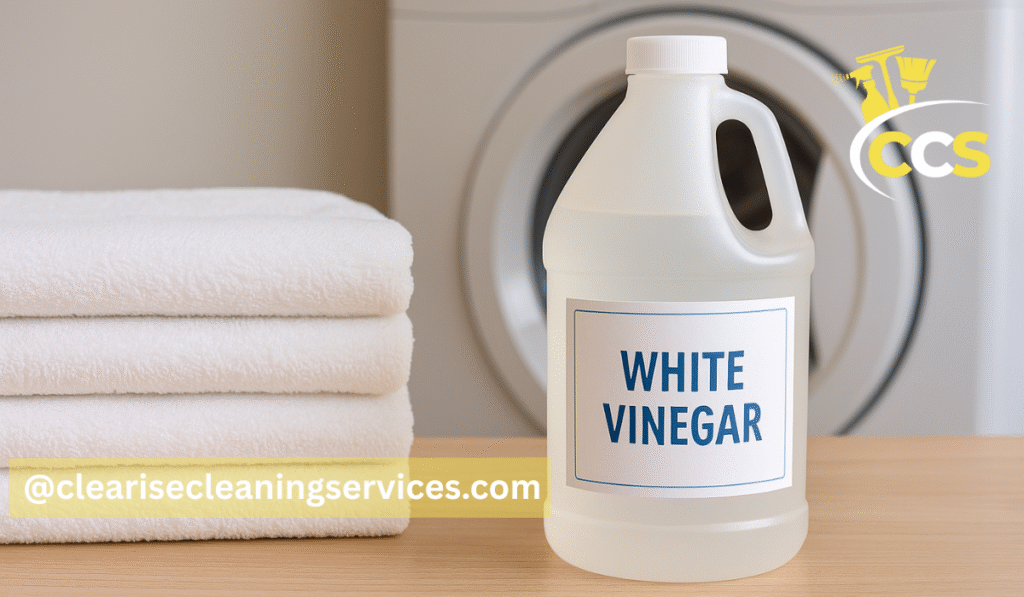
White vinegar is simply distilled, food-grade vinegar made from grain alcohol, and it contains about 5 percent acetic acid. This gentle level of acidity is strong enough to break down detergent buildup, hard-water minerals, and leftover residue that can make clothes feel stiff or scratchy. Instead of coating the fabric like conventional softeners do, vinegar actually removes the problem causing stiffness in the first place.
Laundry experts and cleaning professionals often recommend white vinegar because it softens fabrics by lifting away everything that has built up over time — old detergent, minerals, odors, and even residue left behind by commercial fabric softeners. Once those layers are removed, the fibers can move naturally again, which is what makes clothes feel soft without needing a chemical coating.
For baby clothes, “soft” matters even more. Softness means the fibers aren’t weighed down by residue, the fabric stays breathable, and the absorbency of items like towels or baby cloths improves instead of decreasing over time. This is especially helpful for newborns with sensitive or eczema-prone skin.
Many parents worry about vinegar fabric softener smell, but the truth is the scent disappears completely during the rinse and drying process. The acetic acid evaporates, leaving no vinegar smell at all — only clean, fresh fabric. When used correctly, white vinegar remains one of the best white vinegar clothes softener options for families who want natural, effective, and gentle laundry care.
Why White Vinegar Works As A Clothes Softener
White vinegar may look ordinary, but its mild acidity makes it surprisingly effective for softening clothes. Instead of coating fabrics with chemicals the way commercial softeners do, vinegar lifts away the residues that actually make clothes feel stiff.
Here’s how it works in a practical, parent-friendly way:
What White Vinegar Really Is
- It’s distilled, food-grade vinegar made from grain alcohol.
- Contains around 5% acetic acid — gentle but strong enough to break down soap deposits.
- Safe for everyday laundry when used in the correct amount.
Why Acidity Helps Soften Clothes
- The acid dissolves mineral buildup from hard water.
- Removes leftover detergent that clings to fabric fibers.
- Breaks through layers of previous fabric softener residue.
- Results in cleaner fibers that naturally feel softer.
Expert Insight
Cleaning professionals and laundry brand experts explain that vinegar works by removing buildup, not masking it. When fibers are clean and free of residue, they move more freely — that’s what creates true softness.
What “soft” really means for fabric
- Baby clothes and blankets feel smoother because stiff fibers have relaxed.
- Fabric stays breathable and gentle against sensitive skin.
- Towels and washcloths regain absorbency instead of feeling waxy.
- Clothes look fresher because buildup dulls the texture over time.
Does vinegar leave a smell? (Keyword: vinegar fabric softener smell)
A common worry is that clothes will smell like vinegar. They won’t.
The scent evaporates completely during the rinse and drying cycle, leaving only clean, neutral fabric.
Key benefits (Keyword: best white vinegar clothes softener benefits)
- Natural softening without chemicals
- Helps sensitive or eczema-prone baby skin
- Works for both top loaders and front loaders
- Keeps towels fluffy and absorbent
- Affordable and widely available
Choosing the Right Vinegar: What Kind of Vinegar Works Best for Fabric Softener?
Not every vinegar works well for laundry, especially when you want soft clothes without damaging delicate fabrics. Choosing the right type ensures safety, effectiveness, and better results for everyday clothing as well as baby items.
The safest choice is distilled white vinegar because it is clean, colorless, and has the perfect acidity level for laundry. Other vinegars may contain color, sediment, or stronger acids that can harm fabrics.
Distilled White Vinegar (Best Choice)
- Colorless and free from additives
- Food-grade and safe for clothes
- Typically 5% acidity, ideal for laundry use
- Doesn’t leave stains or lingering odors
Apple Cider Vinegar (Not Recommended)
- Has natural color that may transfer to light fabrics
- Stronger smell that doesn’t fade as quickly
- Not reliable for laundry purposes
Cleaning Vinegar (Avoid for Clothes)
- Higher acidity (6–10%)
- Can weaken fabric fibers over time
- May cause fading, discoloration, or elastic damage
Safety Note (Keyword: vinegar as fabric softener safe)
Always choose 5% acidity. Higher acidity won’t improve softening — it only increases the risk of fabric damage, especially for baby clothes.
Quick Buying Guide (Keyword: what kind of vinegar for fabric softener)
Select a vinegar that is:
- Labeled distilled or white vinegar
- 5% acidity
- Food-grade
- Free from dyes, scents, or flavor infusions
How to Use White Vinegar in Your Laundry Routine (Step-by-Step)
Using white vinegar as a fabric softener is simple, but doing it correctly helps you get the best results without damaging fabrics. The method slightly changes depending on whether you use a top-loader or front-loader, so here’s the easiest way to follow a safe routine.
Placement in the Washer
- Front-loader: Pour the vinegar into the fabric softener dispenser so the machine automatically releases it during the rinse cycle.
- Top-loader: Add the vinegar manually during the rinse cycle, not at the beginning of the wash.
How Much Vinegar to Use
½ cup (around 120 ml) is enough for a regular load. Adding more won’t improve softness — it may only increase the vinegar scent before drying. The smell always disappears after the clothes are fully dry.
Adding Essential Oils (Optional Twist)
If you prefer a light scent, mix a few drops of lavender, lemon, or baby-safe essential oil into the vinegar before pouring it into the dispenser. Vinegar helps disperse the scent evenly and removes any musty laundry odor.
Quick Overview (Keywords included naturally)
This routine is the simplest white vinegar clothes softener recipe and works as a complete step-by-step guide for anyone wondering how to use white vinegar clothes softener at home. Just choose the correct washer placement, use the right amount, and add natural fragrance only if you want a gentle scent.
4 Special Considerations for Baby Clothes
Baby laundry needs a little extra care, and that’s why so many new parents choose white vinegar as a safer softener. It keeps fabrics gentle without adding chemicals that could irritate a newborn’s sensitive skin. Since vinegar removes buildup instead of coating fabric, baby clothes stay breathable, clean, and soft the natural way.
Why Many Parents Prefer Vinegar for Baby Laundry
Parents often want to avoid fragrances, dyes, and residue from commercial softeners. White vinegar offers softness without those additives, which makes it a reliable option for babies with eczema, allergies, or easily irritated skin. It’s one of the simplest methods for keeping baby wear comfortable and white vinegar clothes softener safe for everyday use.
Safety Checks Before Using Vinegar
Certain fabrics need more attention. Vinegar is gentle, but it isn’t the best choice for everything.
- Avoid using vinegar on delicate baby linens with elastic or spandex.
- Skip vinegar on items with waterproof or special fabric finishes (like mattress protectors or diaper covers).
- If you’re unsure about a particular item, do a small patch test to check for fading or texture changes.
How to Wash Newborn Clothes the Right Way
For newborn laundry, keep things simple:
- Wash baby items separately from adult clothes.
- Use a mild, fragrance-free detergent.
- Add vinegar during the rinse cycle to soften the fabric naturally.
- Avoid conventional fabric softeners completely — they can block absorbency and leave a waxy coating on baby clothes and blankets.
Keyword Coverage (Naturally Included)
This approach is ideal for anyone searching about vinegar as fabric softener for baby clothes or safe methods to soften delicate infant fabrics without chemicals.
Dealing With Common Laundry Issues Using Vinegar
White vinegar isn’t just a softener — it also solves several everyday laundry problems that parents often struggle with. From stiff towels to lingering odors, vinegar’s mild acidity can restore freshness and softness without harsh chemicals.
Reducing Static Cling, Lint, and Pet Hair
A small amount of vinegar in the rinse cycle helps relax fabric fibers. This reduces the static that attracts lint and pet hair, making clothes feel cleaner and smoother.
- Less static means fewer lint balls sticking to baby clothes
- Clothes won’t cling together during drying
- Fibers stay more breathable and soft
Soaking Clothes Overnight for Tough Loads
For heavily soiled items, especially baby clothes or whites, soaking them in a vinegar–water mix overnight can help.
This method can:
- Break down odor trapped deep in fibers
- Brighten whites without bleaching
- Remove stubborn buildup from spit-up, milk, or sweat
This covers the natural search keyword soaking clothes in vinegar overnight benefits without forcing it.
Fixing Detergent Buildup and Stiff Towels
If towels feel scratchy or “crunchy,” they often have detergent or softener residue trapped inside. Vinegar dissolves this buildup and restores absorbency. After one or two vinegar rinses, towels usually feel noticeably softer and fluffier.
Front Loader vs Top Loader Differences
How vinegar behaves slightly depends on the machine:
- Front loader: Add vinegar to the softener compartment so the machine releases it at the right time.
- Top loader: Add the vinegar during the rinse cycle for the same effect.
This naturally includes the keyword vinegar as fabric softener in front loader.
Bonus Benefits (Keyword Coverage Included)
Using vinegar helps eliminate musty smells, improves fabric texture, and keeps clothes fresh — covering vinegar fabric softener smell and highlighting the overall white vinegar clothes softener benefits in everyday laundry care.
When NOT to Use Vinegar (And What to Watch Out For)
While white vinegar is helpful for most everyday laundry needs, it isn’t suitable for every fabric or situation. Using it correctly keeps your clothes safe, your washing machine protected, and your laundry routine healthy. Knowing when to skip vinegar is just as important as knowing when to use it.
Fabrics Where Vinegar Isn’t Ideal
Some materials can react badly to vinegar’s acidity, so it’s best to avoid or use sparingly:
- Elastic-based items like activewear
- Delicate fabrics such as silk, acetate, or rayon
- Clothes with special finishes (waterproof layers, stain-resistant coatings)
- Items with heavy elastic bands, which may weaken over time
And for front-loading washers, vinegar should never be used excessively because it can slowly wear down rubber seals, making the machine leak over time.
Do Not Mix Vinegar With Certain Cleaners
Vinegar should never be combined with:
- Bleach — this creates a dangerous gas
- Strong alkaline cleaners — these can trigger chemical reactions
- Commercial softeners in the same wash — both products work against each other
This naturally supports the keyword: can you use vinegar and fabric softener together (answer: no, use vinegar instead of softener, not with it).
Risks of Overusing Vinegar
While vinegar is safe in moderate amounts, using it too often may:
- Damage machine gaskets
- Weaken elastic fibers in baby clothes
- Fade delicate colors
- Reduce the lifespan of certain fabrics
Think of vinegar as a helpful tool — but not something you need for every single load.
Real-World Insight (Keyword: vinegar as fabric softener reddit)
Laundry communities often praise vinegar for fixing buildup, especially in towels. One commonly shared advice is:
“Washing them with vinegar removes fabric softener buildup and returns them to being soft, absorbent towels.”
This reinforces that vinegar is useful, but it should be used wisely.
A Helpful Reminder
Choosing vinegar doesn’t mean abandoning good laundry habits. You still need:
- A quality detergent
- The right wash cycle
- Proper drying (sunlight or low heat)
- Correct water levels
Vinegar helps, but it isn’t a replacement for a proper laundry routine.
Expert-Backed Hacks and Unique Ideas for Parents
When you’re handling endless loads of baby laundry, small improvements can make your routine easier and your fabrics softer. Experts often recommend a few simple tricks that enhance the effectiveness of white vinegar without adding complexity. These ideas help you create a gentle, safe, and efficient laundry routine that fits naturally into family life.
Add Child-Safe Essential Oils for a Gentle Scent
If you want a light, calming fragrance in your baby’s clothes, mix a few drops of child-safe essential oil — like lavender or chamomile — into the vinegar before you pour it into the dispenser. The vinegar helps the scent disperse smoothly without overpowering delicate fabrics.
Use Vinegar as a Reset, Not Every Time
Instead of adding vinegar in every single wash, try using it every few loads. This “reset cycle” removes buildup from detergent and keeps your machine fresh. It also extends the life of elastics and baby clothes by reducing unnecessary exposure.
Pair Vinegar With Wool Dryer Balls
For extra softness, especially for baby blankets and towels, toss a few wool dryer balls into the dryer. They help fluff fabrics, reduce drying time, and improve airflow. Combined with vinegar in the rinse cycle, this creates a softer, cleaner finish without using chemical softeners.
Build a Simple Baby Laundry Day Routine
A consistent routine can reduce stress and keep baby clothes in perfect condition.
Try this flow:
- Pre-sort baby clothes (lights, darks, delicate items).
- Wash using a mild, fragrance-free detergent.
- Add vinegar during the rinse cycle for natural softening.
- Dry on low heat or in sunlight.
- Fold and store immediately to prevent wrinkles.
This simple rhythm keeps laundry manageable and fabrics consistently soft.
Keywords Included Naturally
These hacks are perfect for parents searching for the best white vinegar clothes softener techniques or a safe white vinegar clothes softener recipe that works for baby clothing and everyday family laundry.
Conclusion
Using white vinegar as a clothes softener is one of the easiest ways to keep your family’s laundry gentle, clean, and naturally soft. It works especially well for baby clothes because it avoids artificial fragrances, heavy coatings, and chemicals that can irritate sensitive skin. With the right type of vinegar, proper usage, and a simple routine, you can enjoy fresher fabrics, better machine health, and a more peaceful laundry experience. Keep the steps consistent, avoid common mistakes, and your baby’s clothes will stay soft, breathable, and safe for everyday use.
FAQ Section (Addressing Top Parent Concerns)
Q1: Will My Clothes Smell Like Vinegar?
Not at all. The acetic acid evaporates during the rinse and drying process, so the scent disappears completely, leaving clothes fresh and neutral.
Q2: Can I Use Vinegar And Conventional Fabric Softener Together?
It’s better not to. Vinegar is meant to replace fabric softener, not work with it. Mixing both can reduce effectiveness and leave buildup on clothing.
Q3: Is Vinegar Safe For Baby Gear And Cloth Diapers?
Yes, when used correctly. Always pair it with a gentle detergent and check the fabric care label first. Avoid vinegar on items with waterproof coatings or heavy elastic, as these materials may weaken over time.
Q4: How Often Should I Use Vinegar For Softening?
Use it only when needed — every few washes is enough. This keeps clothes soft while protecting your machine gaskets and elastic-based baby items from overexposure.
Q5: Will Vinegar Help Clean My Front-loader Washer?
Yes. A moderate amount of vinegar can help reduce buildup and odor inside the drum. Just be sure not to overuse it and follow your washer’s manual for long-term care.
Disclaimer: This article is for informational purposes only and is not a substitute for professional cleaning, dermatology, or laundry care advice. Always check your fabric care labels and follow your washing machine’s guidelines before using vinegar or any alternative products. If your baby has skin sensitivities or allergies, consult a healthcare professional before changing your laundry routine.
Thanks for visiting Clearise Cleaning Services! Discover more helpful tips and expert cleaning insights by exploring our related categories.