If you’ve ever noticed cloudy spots on your shower glass, brown rings inside the toilet, or white chalky marks on faucets, you’ve already met hard water stains. These stains come from minerals like calcium and magnesium that stay behind when water dries. Over time, these mineral deposits harden into limescale, making surfaces look dull, dirty, and sometimes even older than they really are. That’s why so many people search for how to get rid of hard water stain effectively, because the stains don’t always disappear with simple soap and water.
The tricky part is that hard water stains behave differently depending on where they form. Glass might get hazy, metal fixtures can turn spotted, plastic containers get a white film, and toilets often develop stubborn brown rings. This guide will walk you through how to get rid of hard water stains on every common surface — from windows and dishes to showers, cars, faucets, and more. You’ll find natural cleaning methods, expert-backed tips, and safe commercial solutions that actually work, helping you restore shine without damaging your home.
What Causes Hard Water Stains (And Why They Are Hard to Remove)
Hard water simply means your water contains a high amount of dissolved minerals, mainly calcium and magnesium. These minerals aren’t harmful, but they leave visible marks almost everywhere water touches. When water dries or evaporates, the minerals stay behind and form a thin layer of residue. Over time, this residue builds up into chalky spots on faucets, cloudy patches on glass, or brownish rings inside a toilet.
The longer these minerals sit, the harder they become. What starts as a light film can turn into solid limescale that clings tightly to the surface. In some cases, especially on glass, the minerals can even begin to etch into the surface and cause permanent dullness. That’s why fresh hard water stains are easier to remove, while older ones often need stronger methods or multiple treatments to fully break down.
Common Household Methods for Removing Hard Water Stains (Natural & DIY Solutions)
When it comes to tackling hard water stains, you don’t always need harsh chemicals. Many everyday household items work surprisingly well because they naturally break down mineral deposits without damaging surfaces.
Vinegar
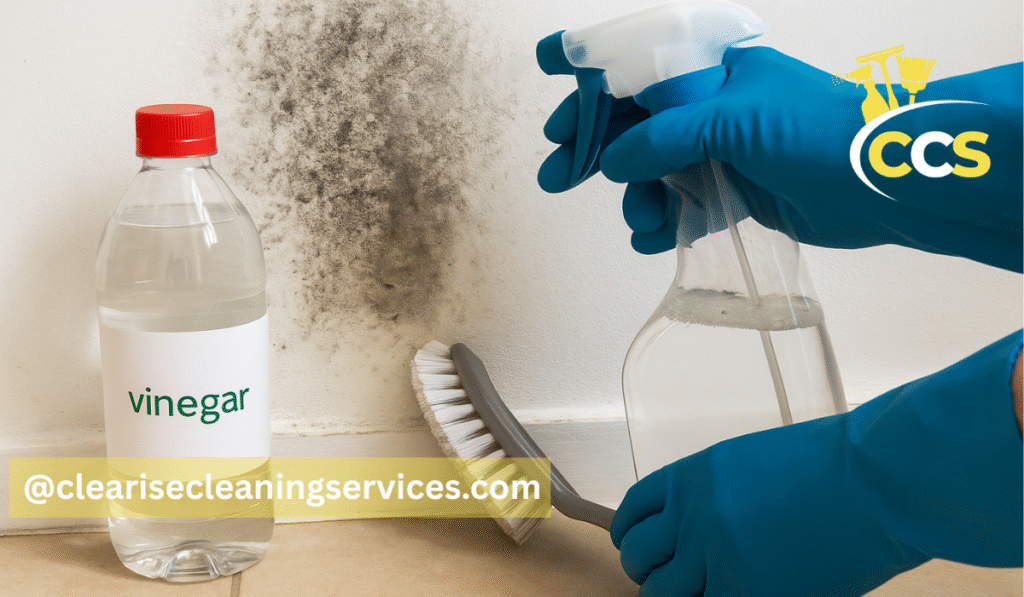
White distilled vinegar is one of the most effective natural cleaners for hard water stains. Its mild acidity helps dissolve calcium and magnesium buildup, making it ideal for glass, chrome faucets, tiles, showerheads, and stainless steel. Simply spray it on, let it sit, and wipe away — the longer it sits, the better it works.
Baking Soda Paste
Baking soda adds gentle scrubbing power when stains are more stubborn. Mixing it with a little water creates a paste that can lift mineral residue without scratching most surfaces. When combined with vinegar, the fizzing reaction helps loosen buildup even more, especially on sinks, tubs, and shower walls.
Lemon Juice or Salt + Lemon
Lemon juice is another natural acidic cleaner. It works well on lighter stains and leaves a fresher scent than vinegar. Adding a pinch of salt gives you a mild abrasive boost, which helps when dealing with cloudy shower glass or buildup on bathtubs.
Hydrogen Peroxide or Other Mild Acids
For delicate surfaces or stains that need something stronger than lemon but gentler than commercial cleaners, hydrogen peroxide can help. It lifts mineral residues without being overly harsh, making it useful for light buildup on plastic, tile grout, or certain metals. Just be sure to test a small spot first to make sure it’s safe for your specific surface.
Surface-Specific Techniques for Removing Hard Water Stains
Hard water stains don’t behave the same way on every surface, which is why choosing the right cleaning method matters. Below are practical, surface-specific techniques that help you clean effectively without causing damage.
Glass (Shower Doors, Windows, Glass Tables, and More)
Vinegar Spray:
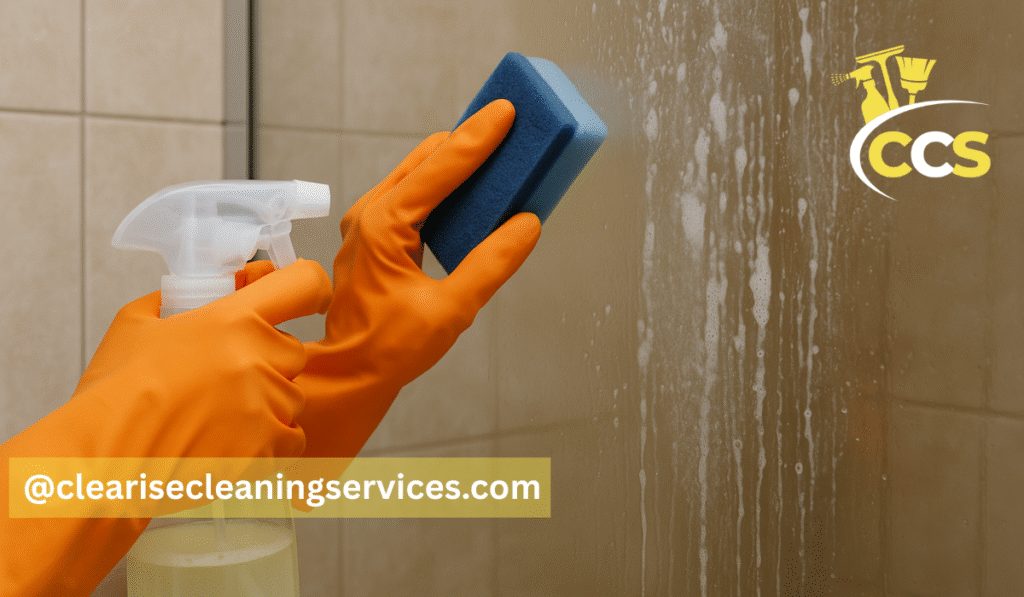
Glass often shows hard water stains as cloudy patches or streaks. Spray undiluted white vinegar directly on the glass and let it sit for 15–30 minutes. Once the minerals soften, wipe the surface using a microfiber cloth or soft sponge.
For Stubborn Stains:
If the cloudiness doesn’t go away, apply a baking soda paste (a little water mixed with baking soda) and gently scrub. After that, spray vinegar again and let the foaming reaction break down the leftover deposits. Rinse well, then dry with a lint-free cloth or a squeegee to avoid new spots.
Prevention Tip:
Dry glass after each shower or use a water-repellent spray to stop minerals from sticking in the first place.
Toilet Bowls and Porcelain Toilets
Basic Vinegar + Baking Soda Method:
Pour white vinegar into the toilet bowl or directly onto stained areas. Let it sit so the acidity can loosen the minerals. Add baking soda afterward to create a fizz that helps lift the buildup. Scrub with a toilet brush and flush.
For Extremely Stubborn Stains:
Use a pumice stone, but make sure it’s fully wet before touching the porcelain. Wet the stained area too. Gently scrub in small circles — the key is to avoid scratching the surface.
Commercial Option:
There are toilet-safe hard water stain removers available. If you choose one, wear gloves, ensure ventilation, and never mix different cleaners.
Metal Faucets, Shower Heads, and Fixtures (Chrome, Stainless Steel, Brass, etc.)
Vinegar Wrap:
Mineral buildup on metal appears as white crusty spots or dull patches. Soak a clean cloth in vinegar and wrap it around the fixture for 15–30 minutes. This softens the mineral layer, making it easier to scrub off with a soft sponge.
For More Persistent Spots:
Use a mild baking soda paste after the vinegar soak, or choose a commercial cleaner designed for the specific metal finish. Always rinse and dry afterward to prevent future spots.
Sinks, Tiles, Bathtubs, and Shower Enclosures (Ceramic, Porcelain, Fiberglass, Tile)
Ceramic and Porcelain:
A mix of vinegar and baking soda works well. Apply vinegar first, follow with a baking soda paste, scrub lightly, and rinse.
Fiberglass or Tile:
Use a gentle, non-abrasive cleaner or paste. Harsh scrubbing can scratch fiberglass or damage tile glaze.
Maintenance Tip:
Wipe surfaces dry after showers or baths. A quick weekly cleaning prevents minerals from hardening into tough limescale.
Plastic, Dishes, Kitchenware, and Other Household Items
Plastic containers and dishes can develop a chalky white film from hard water.
Simple Vinegar Soak:
Soak items in a mixture of warm water and white vinegar. Let them sit long enough for the minerals to dissolve.
For Heavier Buildup:
Use a mild baking soda paste, but scrub gently to avoid scratches, especially on clear plastic.
Finish Properly:
Rinse and dry fully, because water left on plastic can form new mineral marks.
Cars, Exterior Glass, Metal Trim, and Windows
Hard water stains also appear on cars, especially after sprinklers or rainwater dry on the surface.
For Exterior Glass:
Use a vinegar solution or a hard water stain remover designed for automotive glass. Apply it, let it sit briefly, then rinse and dry thoroughly to avoid streaks.
Chrome or Metal Trim:
Soak a soft cloth in vinegar, wrap it around the affected area, and let sit. Afterward, gently scrub and rinse. Drying is important here too — it stops new spots from forming.
Commercial Hard Water Stain Removers: When & How to Use Them Safely
There are times when home remedies just can’t break down thick mineral buildup. If the stains have been sitting for months or the limescale has turned into a hard crust, this is when commercial hard water removers make sense. These products use stronger acidic ingredients designed specifically to dissolve heavy deposits that vinegar or lemon can’t handle.
But before using them, keep safety in mind:
- Wear gloves so the cleaner doesn’t irritate your skin.
- Make sure the room has fresh air — turn on a fan or open a window.
- Never mix two different cleaners together, especially if one contains bleach.
- Read the label so you know exactly how long the product should stay on the surface.
One more smart step:
Test a tiny hidden spot first. Every surface reacts differently, and this quick test helps you avoid discoloration or damage on delicate materials. If everything looks fine after a few minutes, you can go ahead and clean the stained area with more confidence.
Preventive Measures to Avoid Hard Water Stains from Reappearing
Once you remove hard water stains, keeping them away is much easier than dealing with heavy buildup again. Here are a few simple habits that make a big difference:
- Rinse and Dry Right After Use
Glass shower doors, tiles, sinks, and faucets collect minerals every time water sits on them. A quick rinse and a fast wipe with a cloth or squeegee can stop stains before they even form. - Use Protective Coatings
Water-repellent sprays or glass protectors help water roll off the surface instead of sticking and drying into spots. These coatings work especially well on shower glass, bathroom mirrors, and metal fixtures. - Treat the Water at the Source
If you know your home has very hard water, installing a water softener or small filtration unit can reduce mineral levels before they reach your bathroom or kitchen. It’s one of the most effective long-term solutions, especially for homes with well water. - Stick to a Simple Cleaning Routine
A quick weekly or bi-weekly clean prevents minerals from hardening into thick limescale. Light maintenance saves you from having to scrub away stubborn stains later.
Tips from Experts and Real-World Cleaners (Practical Advice & Mistakes to Avoid)
Here are some helpful tricks professionals often rely on when dealing with stubborn hard water stains. These small adjustments can save you time, effort, and even prevent damage.
Use the Right Tools
Soft cloths, microfiber towels, and non-abrasive sponges are your safest choices. Rough pads, steel wool, or anything gritty may scratch surfaces like glass, fiberglass, plastic, or polished metal, leaving marks that are much harder to fix than the stain itself.
Let the Cleaner Do the Work
Many people scrub too hard, thinking pressure will remove stains faster. In reality, letting vinegar sit longer usually works better. Giving the acid time to soften the minerals reduces the amount of scrubbing you need and helps protect delicate surfaces.
Be Patient with Tough Stains
If you live in an area with very hard water, some stains won’t disappear with just one round of cleaning. A slow, repeated process often works best — for example:
vinegar soak → baking soda paste → rinse → repeat
This approach breaks down the buildup layer by layer without damaging the material underneath.
A Quick Real-Life Example
When I moved into a home with older bathroom fixtures, the shower glass was completely cloudy. I sprayed vinegar and let it sit, then used a baking soda paste twice over two days. After cleaning, I added a water-repellent coating, and now the glass stays clearer for far longer. Sometimes simple consistency makes all the difference.
When Hard Water Stains Become Permanent: What You Need to Know
Hard water stains don’t stay harmless forever. If they sit too long, the minerals can slowly damage the surface itself, turning a simple cleaning job into a permanent problem. Here’s what actually happens and why early cleaning is so important:
Minerals Can Start Etching The Surface.
When calcium and magnesium sit for weeks or months, they harden and bond with the material underneath. Glass turns cloudy, metal loses shine, and plastic becomes rough.
Once Etching Begins, Cleaning Won’t Fully Restore The Look.
Even strong commercial cleaners can only lighten the marks. The damaged part of the surface usually stays dull or cloudy because the minerals have already eaten into it.
Sometimes Replacement Is The Only Solution.
Severely etched shower doors, stained faucets, or damaged tiles may need to be replaced. Professional restoration can help, but results depend on how deep the etching is.
This Is Why Regular Maintenance Matters.
A quick wipe once or twice a week prevents minerals from turning into permanent damage. It saves you time, effort, and money in the long run.
Conclusion
Hard water stains can be frustrating, but they’re manageable once you understand how they form and which cleaning methods work best. Whether you prefer natural options or commercial cleaners, choosing the right approach for each surface makes the job easier and safer. With simple habits like drying surfaces, using protective coatings, and keeping a regular cleaning routine, you can prevent stains from returning and keep your home looking fresh.
And if you ever wonder how to get rid of hard water stain on glass, tiles, faucets, or even your car, remember that a little consistency and the right tools are all you need. Test products when you’re unsure, clean gently, and tackle buildup early — it’s the easiest way to avoid tough stains in the future.
Frequently Asked Questions (FAQ) — Quick Answers
Is Vinegar Safe For All Surfaces?
Vinegar works on most glass, ceramic, and metal surfaces, but it’s not ideal for natural stone like marble, granite, or limestone. These materials can react to acids and become dull. Always test a small spot first.
Can Hard Water Stains Damage My Fixtures Permanently?
Yes, if left for too long. Minerals can etch into glass or wear down the shine on metal fixtures. Regular cleaning prevents this kind of long-term damage.
How Often Should I Clean To Prevent Buildup?
A quick weekly or bi-weekly clean is enough for most homes. If your water is very hard, wiping surfaces after each use (like shower glass or faucets) helps a lot.
Can I Use Baking Soda Or Vinegar On Coloured Plastic Or Delicate Surfaces?
Yes, but gently. Baking soda is mildly abrasive, so avoid heavy scrubbing on soft or coloured plastic. Vinegar is usually safe, but test a small hidden spot just to be sure.
Are Commercial Hard Water Removers Safe For Toilets And Appliances?
Most of them are designed for these surfaces, but always follow the label instructions. Make sure the product clearly states that it is safe for toilets, tubs, or the appliance you plan to clean.
Disclaimer: The information in this article is for general cleaning guidance only. Always test any product or homemade solution on a small, hidden area first, since surfaces can react differently. If you’re unsure about a material, follow the manufacturer’s care instructions or consult a professional cleaning service for safe advice.
Thanks for visiting Clearise Cleaning Services! Discover more helpful tips and expert cleaning insights by exploring our related categories.