Cleaning products have evolved significantly over the years, and one of the most effective innovations in modern cleaning is the enzyme cleaner. Unlike traditional cleaning solutions that simply remove surface dirt or mask odors, an enzyme cleaner works by breaking down organic messes at a microscopic level. This makes it particularly effective for stains and smells that come from biological sources such as food spills, pet accidents, or bodily fluids.
An enzyme cleaner uses natural proteins called enzymes to break down complex organic materials into smaller, harmless substances. Instead of covering up unpleasant smells, these cleaners eliminate the source of the odor. This ability makes them especially useful in homes with pets, children, or busy kitchens where organic messes are common.
In recent years, enzyme-based cleaning products have become increasingly popular in modern households. Many people prefer them because they are effective, easy to use, and often considered safer than harsh chemical cleaners. In addition, many enzyme cleaners are designed with eco-friendly formulas, which appeals to households looking for more sustainable cleaning solutions.
Another reason for their popularity is their versatility. Enzyme cleaners can be used in many areas of the home, including carpets, laundry, kitchen surfaces, and pet areas. Whether it is removing stubborn food stains or eliminating pet odors from carpets, these cleaners provide a practical solution for everyday cleaning challenges.
Enzyme Cleaner Explained
| Feature | Details |
| Product Type | Biological cleaning solution |
| Main Function | Breaks down organic stains and odors |
| Key Ingredients | Natural enzymes (protease, lipase, amylase, cellulase) |
| Works Best On | Pet urine, food stains, grease, blood, organic messes |
| Cleaning Method | Enzymes digest organic material at the molecular level |
| Odor Removal | Eliminates odor source instead of masking smells |
| Common Uses | Carpets, laundry, pet areas, kitchens, upholstery |
| Eco-Friendly | Many formulas are biodegradable and chemical-free |
| Application Time | 15–30 minutes minimum (longer for deep stains) |
| Continued Action | Can keep working for several hours after application |
What an Enzyme Cleaner Is and Why It Works So Effectively
An enzyme cleaner is a cleaning product that contains enzymes designed to break down organic materials such as proteins, fats, and starches. Enzymes are natural biological molecules that act as catalysts. In simple terms, they speed up chemical reactions that help break down complex substances into smaller and easier-to-remove particles.
The concept behind enzyme-based cleaning comes from nature. Enzymes play an important role in many biological processes, including digestion. Just as enzymes in the human body help break down food, cleaning enzymes break down organic stains and residues on surfaces.
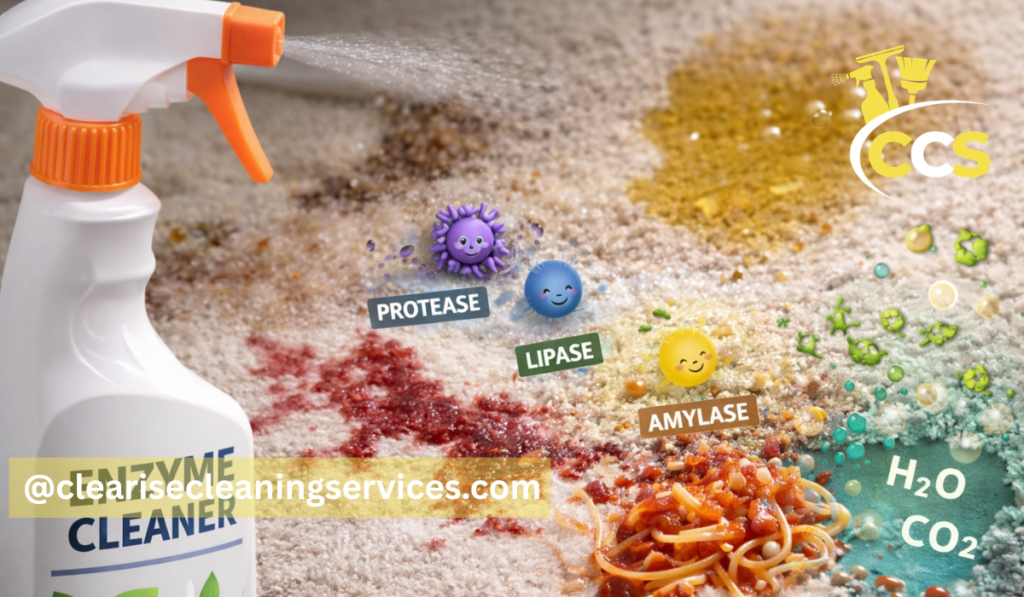
When an enzyme cleaner is applied to a stain, the enzymes begin to target specific types of organic material. For example, some enzymes break down proteins found in blood or pet urine, while others focus on oils or food residues. This targeted approach allows enzyme cleaners to remove stains more effectively than many traditional cleaners.
Another reason enzyme cleaners work so well is that they address the source of the problem. Traditional cleaning products may lift a stain or cover up a smell temporarily. However, the organic residue that causes the odor can remain behind. Enzyme cleaners, on the other hand, break down the residue itself. Once the material is broken down into smaller molecules, it can be easily removed or evaporate naturally.
The Science Behind How Enzyme Cleaners Break Down Stains
The effectiveness of an enzyme cleaner comes from the catalytic activity of enzymes. A catalyst is a substance that speeds up a chemical reaction without being permanently changed in the process. Enzymes are extremely efficient catalysts, allowing them to break down organic matter quickly and effectively.
When an enzyme cleaner is applied to a stain, the enzymes attach to the molecules in the organic material. This interaction begins a chemical reaction that breaks the molecules apart. Large compounds such as proteins, fats, or carbohydrates are separated into smaller and simpler substances.
In simple terms, enzymes “digest” the stain. For example, a protein stain like blood contains complex molecules that are difficult to remove with ordinary cleaners. An enzyme cleaner breaks those molecules down into smaller fragments that can be rinsed away or absorbed into the cleaning solution.
During this process, odor molecules are also destroyed. Many unpleasant smells come from organic compounds such as uric acid or decomposing food particles. When enzymes break these compounds apart, the source of the odor disappears. This is why enzyme cleaners are particularly effective for removing persistent smells.
Another important advantage is that enzyme cleaners often continue working even after they are applied. As long as there is moisture and organic material present, the enzymes can keep breaking down the stain. In many cases, this process can continue for several hours after application, which helps remove deep or set-in stains.
Types of Enzymes Used in Enzyme Cleaners
Different types of enzymes are used in cleaning products to target different kinds of stains. Each enzyme specializes in breaking down a specific type of organic material, which allows enzyme cleaners to handle a wide variety of household messes.
Protease is one of the most common enzymes used in an enzyme cleaner. It focuses on protein-based stains, such as blood, sweat, urine, and certain food residues. Because many common stains contain proteins, protease plays a key role in many cleaning formulas.
Lipase is another important enzyme used in cleaning products. This enzyme targets fats, oils, and grease. Kitchen surfaces, cooking equipment, and food preparation areas often accumulate greasy residues, and lipase helps break these substances down so they can be removed more easily.
Amylase is designed to break down starches. Many foods, including pasta, sauces, and chocolate, contain starch molecules that can leave stubborn stains. Amylase breaks these starches into smaller components, making them easier to wash away.
Cellulase is also commonly included in some enzyme cleaners, especially those used for laundry. This enzyme works on cellulose, a natural component found in plant fibers. In cleaning applications, cellulase helps remove dirt trapped in fabrics and can even help improve the softness and brightness of certain materials.
Together, these enzymes allow a single enzyme cleaner to address many different types of stains and organic residues.
Common Household Problems an Enzyme Cleaner Can Solve
One of the reasons enzyme cleaners are so popular is their ability to solve common household cleaning problems. Many everyday messes contain organic materials that respond well to enzyme-based cleaning.
Pet accidents are one of the most common situations where an enzyme cleaner is used. Pet urine, vomit, and feces can leave strong odors that are difficult to remove with regular cleaning products. Because enzyme cleaners break down the organic compounds responsible for these smells, they can effectively eliminate both the stain and the odor.
Food spills are another frequent challenge in homes. Cooking and eating often lead to spills that contain proteins, oils, or starches. An enzyme cleaner can break down these materials and help remove stains from countertops, floors, and fabrics.
Grease buildup in kitchens is also a common issue. Oils and fats can accumulate on surfaces over time, especially near cooking areas. Enzyme cleaners that contain lipase are particularly useful for breaking down greasy residues.
Laundry stains are another area where enzyme cleaners are highly effective. Grass stains, blood stains, and food stains on clothing often contain organic compounds that respond well to enzyme-based cleaning solutions.
Carpets and upholstery can also benefit from enzyme cleaning. Over time, fabrics may absorb odors from pets, spills, or general household activity. An enzyme cleaner can break down the organic particles trapped in the fibers and help restore freshness to the fabric.
Key Benefits of Using an Enzyme Cleaner Instead of Traditional Cleaners
One of the main advantages of an enzyme cleaner is its ability to provide deep cleaning at the molecular level. Instead of simply removing visible dirt, the enzymes break down the substances that cause stains and odors. This results in a more thorough cleaning process.
Another benefit is long-lasting odor removal. Because enzyme cleaners destroy the molecules responsible for unpleasant smells, they prevent odors from returning after cleaning.
Many enzyme cleaners are also designed with environmentally friendly ingredients. Compared with harsh chemical cleaners, enzyme formulas often rely on biodegradable components that are safer for the environment.
In addition, enzyme cleaners reduce the need for strong chemicals in everyday cleaning routines. This can be especially helpful for households that prefer gentler cleaning products or want to avoid strong chemical smells.
Another advantage is efficiency. Because enzyme cleaners are specifically designed to target organic messes, they can remove stubborn stains that might otherwise require repeated cleaning attempts.
Enzyme Cleaner vs Traditional Cleaner
| Feature | Enzyme Cleaner | Traditional Chemical Cleaner |
| Cleaning Method | Breaks down organic matter | Lifts dirt from surface |
| Odor Removal | Eliminates odor source | Often masks odors |
| Best For | Organic stains and pet messes | General surface cleaning |
| Environmental Impact | Often biodegradable | May contain harsh chemicals |
| Cleaning Duration | Continues working for hours | Stops after wiping |
Where Enzyme Cleaners Are Most Commonly Used
Enzyme cleaners can be used in many areas throughout the home. Their versatility makes them useful for both routine cleaning and specialized cleaning tasks.
Carpets and upholstery are among the most common places where enzyme cleaners are used. These materials can trap organic residues from spills, pets, or everyday use. An enzyme cleaner helps break down those residues and remove lingering odors.
Pet areas are another common application. Litter boxes, pet bedding, and areas where pets spend time can develop odors over time. Enzyme cleaners help neutralize these smells by breaking down the organic materials that cause them.
Laundry is also a major use for enzyme cleaning products. Many modern laundry detergents include enzymes that help remove tough stains from clothing and fabrics.
Kitchen areas benefit from enzyme cleaning as well. Garbage containers, sinks, and food preparation surfaces often collect organic residues that can lead to unpleasant smells. Enzyme cleaners help break down these residues and keep surfaces fresh.
Bathrooms may also benefit from enzyme cleaners, especially in areas where organic buildup occurs over time.
Best Practices for Using an Enzyme Cleaner Correctly
To get the best results from an enzyme cleaner, it is important to prepare the surface properly before applying the product. In many cases, this means removing as much of the spill or residue as possible before applying the cleaner.
Allowing enough time for the enzymes to work is also important. Enzyme cleaners rely on biological processes that take time to break down stains. Allowing the cleaner to remain on the surface for a sufficient period helps ensure effective results.
Moisture plays an important role in enzyme activity. Enzymes need a damp environment to function properly, which is why enzyme cleaners often work best on slightly moist surfaces.
Temperature is another factor to consider. Warm conditions usually help enzymes work more efficiently. However, extremely hot water should be avoided because high heat can damage the enzymes and reduce their effectiveness.
Simple Step-by-Step Guide: How to Use an Enzyme Cleaner
- Remove excess mess
Blot or wipe away as much liquid or residue as possible. - Apply the enzyme cleaner
Spray or pour enough solution to cover the stain completely. - Allow dwell time
Let the cleaner sit for 15–30 minutes or longer for deep stains. - Keep the area slightly moist
Enzymes work best in a damp environment. - Allow the area to dry naturally
This helps the enzymes continue breaking down organic material.
Common Mistakes to Avoid When Using Enzyme Cleaners
Although enzyme cleaners are easy to use, certain mistakes can reduce their effectiveness. One common mistake is mixing an enzyme cleaner with strong chemicals such as bleach. Harsh chemicals can destroy the enzymes and prevent them from working properly.
Another mistake is removing the cleaner too quickly. Because enzymes need time to break down organic materials, wiping away the cleaner too soon may stop the cleaning process before it is complete.
Using very hot water can also be problematic. High temperatures can damage the enzymes and reduce their cleaning ability.
Applying too little product may also limit the cleaner’s effectiveness. Deep stains or large areas of contamination often require enough cleaning solution to fully saturate the affected surface.
How to Choose the Right Enzyme Cleaner for Different Cleaning Needs
Choosing the right enzyme cleaner depends on the type of cleaning task. Different products are designed for specific purposes, and selecting the right formula can improve cleaning results.
Pet stain removers are one of the most common types of enzyme cleaners. These products are specifically designed to break down urine, feces, and other organic materials associated with pets.
Enzyme laundry detergents are another option. These products contain enzymes that help remove food stains, sweat, and other organic residues from clothing during the washing process.
Carpet and upholstery formulas are designed to penetrate deep into fabric fibers. These cleaners are useful for removing odors and stains from furniture, rugs, and other soft surfaces.
Eco-friendly enzyme cleaners are also available for households that prefer environmentally conscious cleaning solutions. These products often use plant-based ingredients and biodegradable formulas.
Conclusion
An enzyme cleaner offers a modern approach to cleaning that focuses on breaking down stains and odors at their source. By using natural enzymes to digest organic materials, these cleaners provide a deeper and more effective solution than many traditional cleaning products.
Their ability to eliminate odor molecules, remove stubborn stains, and work across a variety of surfaces makes them a practical choice for everyday cleaning tasks. From pet accidents to kitchen spills and laundry stains, enzyme cleaners address many of the most common household cleaning challenges.
As more households look for effective and environmentally friendly cleaning solutions, enzyme cleaners continue to grow in popularity. For anyone dealing with organic stains or persistent odors, an enzyme cleaner can be a reliable and efficient tool for maintaining a clean and fresh home.
Frequently Asked Questions (FAQs)
1. What Does An Enzyme Cleaner Do?
An enzyme cleaner breaks down organic stains and odors using natural enzymes. It removes the source of the mess instead of simply masking the smell.
2. Where Can An Enzyme Cleaner Be Used?
Enzyme cleaners are commonly used on carpets, pet areas, laundry stains, kitchen surfaces, and upholstery where organic spills or odors occur.
3. How Long Does An Enzyme Cleaner Take To Work?
Most enzyme cleaners begin working within minutes but typically require 15–30 minutes to break down stains. Deep stains may need several hours.
4. Can Enzyme Cleaners Remove Pet Urine Completely?
Yes. Enzyme cleaners break down the uric acid crystals in pet urine, which helps eliminate both the stain and the odor completely.
5. Can Enzyme Cleaners Be Mixed With Bleach?
No. Bleach and other harsh chemicals can destroy the enzymes and make the cleaner ineffective.
Disclaimer: The information in this article is intended for educational and informational purposes only. Cleaning results may vary depending on the product used, the type of stain, and the surface being cleaned. Always follow the manufacturer’s instructions before using any cleaning product.
Thanks for visiting Clearise Cleaning Services! Discover more helpful tips and expert cleaning insights by exploring our related categories.