Hats are more than just accessories. They protect you from the sun, complete your outfit, and often carry sentimental value. But over time, sweat, dust, and daily wear can make even your favorite hat look dull and dirty. That’s why learning how to clean hat properly is so important if you want to keep it looking fresh and lasting longer.
Many people make simple mistakes when cleaning hats. Using hot water, tossing them into the washing machine without protection, or scrubbing too hard can damage the fabric and ruin the shape. In some cases, the hat may shrink or lose its structure completely.
The key to cleaning hats safely lies in understanding their material and construction. Not all hats are made the same, and the cleaning method that works for one may damage another. When you take a little time to identify what your hat is made of and how it’s built, you can choose the safest way to clean it without causing harm.
Best Ways to Clean Different Hats
| Hat Type | Cleaning Method | Water Safe | Special Care Needed | Drying Method |
| Cotton Cap | Hand wash / Machine | Yes | Mild detergent only | Air dry on shape |
| Polyester Hat | Hand wash | Yes | Avoid high heat | Air dry |
| Wool Hat | Cold hand wash | Limited | Use wool detergent | Flat air dry |
| Straw Hat | Spot clean only | No | Avoid soaking | Air dry, reshape |
| Vintage Hat | Spot clean | No | Cardboard brim risk | Air dry carefully |
Understanding Your Hat Before Cleaning
Before you start cleaning, it’s important to know exactly what kind of hat you’re dealing with. Different materials react differently to water, soap, and handling.
Most everyday hats are made from cotton, polyester, or a blend of both. These are generally durable and easier to clean. Wool hats, on the other hand, require extra care because they can shrink or lose their texture if handled incorrectly. Straw hats are even more delicate and usually cannot be soaked at all.
Another important factor is the age of the hat. Modern hats, especially those made after the early 1980s, typically have plastic brims that can handle water. Older or vintage hats may contain cardboard brims, which can warp or break down if soaked. If you’re unsure about the age, it’s safer to avoid full submersion and stick to gentle cleaning.
The brim itself also plays a big role. A plastic brim can tolerate moisture, while a cardboard brim cannot. This small detail can make a big difference in choosing the right cleaning method. Taking a moment to check these features helps prevent accidental damage and ensures your hat stays in good shape.
The Safest Way to Clean Most Hats (Hand Washing Guide)
For most hats, especially baseball caps and everyday wear items, hand washing is the safest and most reliable method. It gives you full control over how the hat is handled and reduces the risk of damage.
Hand washing is gentle and works well for cotton, polyester, and many blended fabrics. It also allows you to focus on specific dirty areas instead of exposing the entire hat to harsh conditions. This is particularly useful for hats with sweat stains or light dirt buildup.
This method works best when the hat is not extremely fragile and does not contain materials that are sensitive to water. If your hat falls into this category, hand washing is the easiest way to clean it without worrying about losing its shape or color.
Step-by-Step Process to Hand Wash a Hat Properly
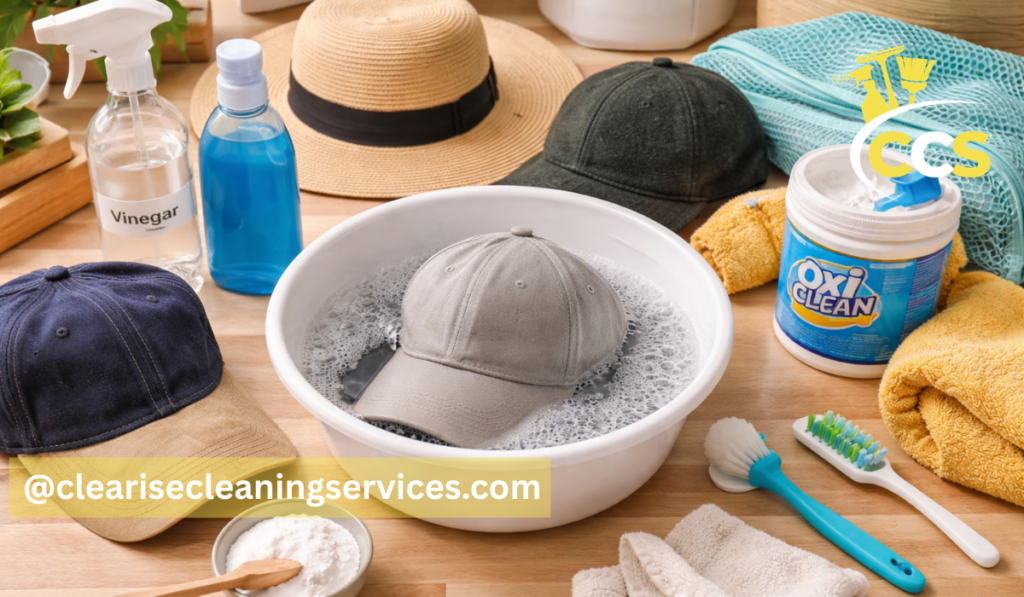
To clean a hat safely, start by preparing a simple cleaning solution. Fill a sink or a bucket with cool or slightly warm water. Avoid hot water, as it can shrink the fabric or cause colors to fade. Add a small amount of mild detergent or dish soap and mix it gently.
Before fully cleaning the hat, test a small hidden area for color bleeding. Dab a bit of the solution under the brim or inside the hat. If the color stays intact, you can continue with confidence.
Next, focus on the dirtiest parts of the hat. Areas like the sweatband often collect the most grime. Use a soft toothbrush or cloth to gently scrub these spots. Avoid applying too much pressure, as this can damage the fabric.
Once the problem areas are treated, you can soak the hat in the water. Let it sit for about 30 minutes. If the hat is very dirty, you can leave it a bit longer, but avoid soaking it for too many hours.
After soaking, rinse the hat thoroughly under cool running water. Make sure all soap is removed, as leftover detergent can leave marks or stiffen the fabric.
When it comes to drying, do not twist or wring the hat. Instead, gently press it with a towel to remove excess water. To help the hat keep its shape, place it over a bowl, jar, or a rolled towel. Let it air dry in a shaded area, away from direct sunlight.
Step-by-Step Quick Guide (Simple Version)
- Fill a bowl with cool water and mild soap
- Test color in a hidden area
- Gently scrub dirty spots
- Soak (only if safe for material)
- Rinse with clean water
- Pat dry (don’t twist)
- Reshape and air dry
How to Remove Sweat Stains and Tough Dirt
Sweat stains are one of the most common issues when learning how to clean a hat. Over time, sweat leaves behind salt and oils that can create visible marks, especially on light-colored hats.
To remove these stains, you can use simple household solutions. A mixture of white vinegar and water is effective for breaking down salt buildup. Apply it to the stained area and gently scrub with a soft brush.
Another option is a baking soda paste made with water. This works well for deeper stains. Apply the paste to the affected area, let it sit for a short time, and then scrub lightly before rinsing.
For more stubborn stains, a color-safe oxygen-based cleaner can be used. This is especially helpful for hats that are heavily soiled. However, it’s important to avoid using strong chemicals on delicate materials like wool or silk, as they can cause damage.
Taking a gentle approach is always better. It may take a little more time, but it helps preserve the look and quality of your hat.
Cleaning Different Types of Hats the Right Way
Not all hats should be cleaned in the same way. Each type requires a slightly different approach to avoid damage.
Baseball caps made from cotton or synthetic materials are usually the easiest to clean. They can handle hand washing well and, in some cases, even a gentle machine cycle. Mesh hats should be cleaned carefully to avoid tearing the netting.
Wool hats need extra attention. They should always be washed in cold water with a detergent designed for delicate fabrics. Rough handling or warm water can cause the fibers to shrink and lose their softness.
Straw hats are more fragile and should never be soaked. Instead, clean them with a damp cloth and spot treatment. Too much moisture can weaken the straw and change its shape.
Specialty or designer hats often require the most care. These may include unique materials, decorations, or structures that cannot handle water. In such cases, professional cleaning or very gentle spot cleaning is the safest option.
Machine Washing and Other Alternative Methods
While hand washing is the safest method, some hats can be cleaned using a washing machine. This option is suitable for sturdy cotton or synthetic hats that do not have delicate parts.
If you choose to use a machine, place the hat in a mesh laundry bag or a protective frame to help maintain its shape. Use a gentle cycle with cold water and a mild detergent. This reduces the risk of damage during the wash.
Some people use dishwashers to clean hats, but this method is widely debated. Dishwashers use high heat and strong detergents, which can warp the hat or cause colors to fade. Because of these risks, it is generally better to avoid this method unless you are certain the hat can handle it.
In most cases, sticking to hand washing is still the safest and most reliable approach.
Drying Your Hat Without Losing Its Shape
Drying is just as important as washing when it comes to maintaining the shape of your hat. Using heat from a dryer can shrink the fabric and distort the structure, making the hat unwearable.
The best way to dry a hat is to let it air dry naturally. After removing excess water with a towel, reshape the hat carefully. Placing it over a rounded object helps it keep its original form.
Avoid direct sunlight, as it can fade colors and weaken certain materials. Instead, choose a cool, shaded area with good airflow.
Simple tools like a bowl, jar, or even a rolled towel can help support the hat as it dries. This small step makes a big difference in preserving its appearance.
Common Mistakes to Avoid When Cleaning Hats
Many people unknowingly damage their hats by making a few common mistakes. One of the biggest errors is using hot water, which can shrink the fabric and cause colors to bleed.
Another mistake is using harsh detergents or bleach. These can weaken the material and lead to fading or discoloration. It’s always better to use mild cleaning products.
Scrubbing too hard is also a problem. While it may seem like a good way to remove stains quickly, it can actually damage the fibers and leave the hat looking worn out.
Improper drying methods, such as using a dryer or placing the hat in direct sunlight, can also ruin its shape and color. Being gentle and patient throughout the process helps avoid these issues.
How Often Should You Clean Your Hat?
Knowing how often to clean your hat is just as important as knowing how to clean it. Cleaning too frequently can wear out the fabric, while not cleaning it enough can lead to buildup and odors.
If you wear your hat regularly, especially in warm weather, it may need cleaning every few weeks. Signs that your hat needs attention include visible stains, a strong smell, or a stiff texture.
For hats that are worn occasionally, cleaning them less often is usually enough. The goal is to maintain a balance that keeps the hat fresh without causing unnecessary wear.
Regular light cleaning, such as wiping down the surface or spot cleaning, can help extend the time between full washes.
Conclusion
Learning how to clean a hat the right way can make a big difference in how long it lasts and how good it looks. By understanding the material, age, and structure of your hat, you can choose the safest cleaning method and avoid common mistakes.
Hand washing remains the most reliable option for most hats, while special materials require extra care. Gentle cleaning, proper drying, and regular maintenance all play a role in keeping your hat in great condition.
With the right approach, you can keep your hats clean, comfortable, and looking their best for years to come.
FAQs
Can I Put My Hat In The Washing Machine?
Yes, but only for strong materials like cotton or polyester. Always use cold water, gentle cycle, and a protective bag to keep its shape.
How Do I Clean A Hat Without Ruining It?
The safest way is hand washing with mild detergent, gentle scrubbing, and air drying. Avoid heat and harsh chemicals.
What Removes Sweat Stains From Hats?
A mix of vinegar and water or a baking soda paste works well for removing sweat and salt stains.
Can I Dry My Hat In A Dryer?
No, heat can shrink and damage the hat. Always air dry it to maintain its shape.
How Often Should I Clean My Hat?
Clean your hat every few weeks if used regularly, or when you notice stains, odor, or stiffness.
Disclaimer: This article is for general informational purposes only. Cleaning methods may vary depending on the hat’s material and condition. Always check manufacturer instructions or test a small area before full cleaning to avoid damage.
Thanks for visiting Clearise Cleaning Services! Discover more helpful tips and expert cleaning insights by exploring our related categories.