Homemade laundry detergent is a simple cleaning solution you can make at home using a few basic ingredients instead of buying a commercial product. It is usually made from a mix of soap, washing soda, and sometimes borax. These ingredients work together to clean clothes, remove dirt, and reduce odors.
In recent years, more people have started using homemade laundry detergent because they want better control over what touches their skin. Many store-bought detergents contain strong chemicals, artificial fragrances, and additives that some people prefer to avoid. Making your own detergent gives you the freedom to choose safer or more natural ingredients.
Another reason for its popularity is cost. Homemade versions are often much cheaper than branded detergents, especially if you do laundry regularly. It can also feel more eco-friendly since you can reduce plastic waste and avoid unnecessary chemicals.
That said, results can vary. Homemade laundry detergent may work very well for some people but not as effectively for others. Factors like water type, washing machine, and the specific recipe you use can all affect how well it performs. Understanding how it works will help you decide if it is the right choice for your home.
Quick Comparison Table
| Type of Detergent | Key Ingredients | Best For | Pros | Cons |
| Powder Detergent | Soap, washing soda, borax | Regular laundry, long storage | Easy to make, long shelf life, budget-friendly | May not dissolve well in cold water |
| Liquid Detergent | Soap, washing soda, borax, water | Cold water washing | Dissolves easily, gentle on clothes | Takes time to prepare, can become thick |
| Natural Detergent | Castile soap, baking soda | Sensitive skin, eco-friendly use | Mild, fewer chemicals, skin-safe | Less effective on heavy stains |
| Baking Soda Mix | Soap + baking soda | Odor removal | Good for smell control | Not strong for deep cleaning |
| Essential Oil Blend | Any base + essential oils | Fragrance lovers | Custom scent, fresh smell | Can irritate skin if overused |
What Homemade Laundry Detergent Is Made Of
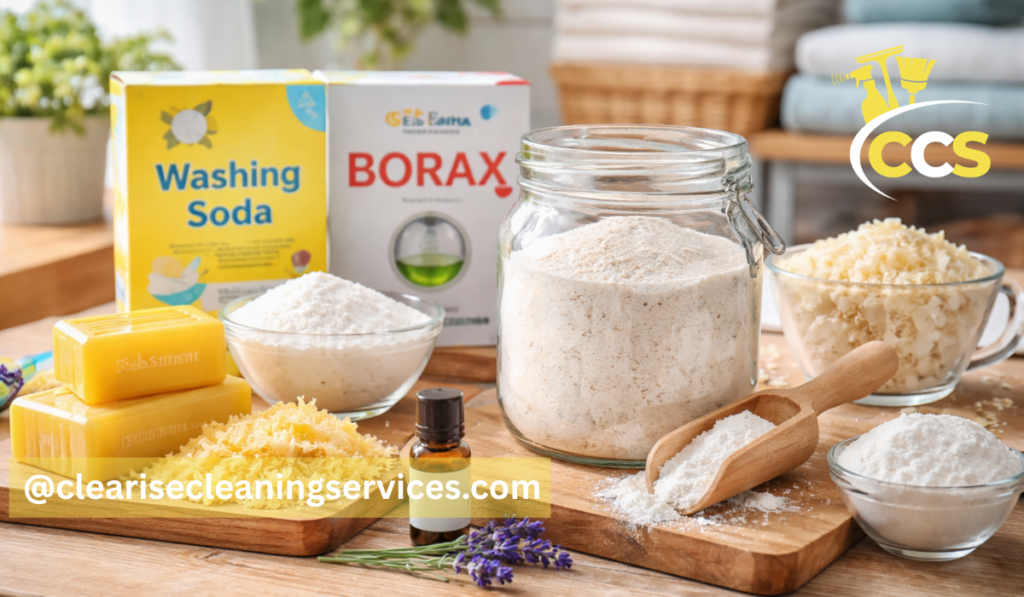
Most homemade laundry detergent recipes are built around three core ingredients: washing soda, borax, and a bar of soap. Each of these plays an important role in cleaning your clothes.
Washing soda is a powerful cleaning agent that helps break down grease and dirt. It also softens water, which allows the detergent to work more effectively. Borax is often added to boost cleaning power, brighten clothes, and reduce odors. While some people choose to skip borax, it is still commonly used in many recipes.
The soap is what actually lifts dirt and oils from fabric. Popular options include Fels Naptha, Zote, and Castile soap. Fels Naptha is known for its strong stain-fighting ability, while Castile soap is a plant-based option that is gentler and often preferred for sensitive skin.
It is also important to understand the difference between washing soda and baking soda. While they may sound similar, they are not the same. Washing soda is stronger and more alkaline, which makes it more effective for cleaning. Baking soda is milder and is mainly used to control odors rather than remove heavy dirt.
Best Homemade Laundry Detergent Recipe (Simple and Reliable)
The best homemade laundry detergent recipe is often the simplest one. A common and reliable version includes grated soap, washing soda, and borax mixed together into a fine powder.
This combination works well because each ingredient supports the other. The soap removes dirt, washing soda boosts cleaning power, and borax helps with stains and odors. Together, they create a balanced solution that can handle everyday laundry needs.
This recipe is especially good for beginners because it is easy to prepare and does not require special equipment. You simply grate the soap, mix it with the other ingredients, and store it in an airtight container. It can be used in small amounts, making it both practical and long-lasting.
Quick Step-by-Step Guide (Simple Process)
- Grate one bar of soap (like Fels Naptha or Castile).
- Mix with 1 cup washing soda and 1 cup borax.
- Blend for a fine texture (optional).
- Store in an airtight container.
- Use 1–2 tablespoons per load.
3 Ingredient Homemade Laundry Detergent (Quick Version)
If you prefer something even simpler, a 3 ingredient homemade laundry detergent is a great option. It uses the same core ingredients but focuses on speed and convenience.
This quick version is ideal for people who want to save time or try homemade detergent without too much effort. It works well for lightly soiled clothes and regular washing loads.
The biggest advantage of this approach is how easy it is to make. There are fewer steps, and you do not need to worry about complicated measurements. While it may not be as powerful as more advanced recipes, it is often enough for everyday use and can still provide noticeable savings.
Homemade Laundry Detergent Powder vs Liquid
When making homemade laundry detergent, one of the main choices is between powder and liquid forms. Both options have their own benefits and drawbacks.
Powder detergent is easier to make and store. It has a longer shelf life and does not require cooking or heating. It is also less likely to spoil over time. However, powder can sometimes have trouble dissolving in cold water, especially if the particles are not fine enough.
Liquid detergent, on the other hand, dissolves more easily and works better in cold washes. It is often preferred for modern washing machines that use lower temperatures. The downside is that it takes more time to prepare, as you need to melt the soap and mix it with water. It can also become thick or gel-like, which some people find inconvenient.
Choosing between powder and liquid depends on your washing habits, water temperature, and personal preference.
Best Homemade Powder Laundry Detergent Recipe
A well-made powder detergent is one of the most popular choices for homemade laundry detergent. It is simple, reliable, and easy to use over time.
The best powder recipe usually includes finely grated soap, washing soda, and borax mixed thoroughly. For better performance, the mixture can be blended into a finer texture so it dissolves more easily in water.
Powder detergent is popular because it is low-maintenance. You can make a large batch and store it for months without worrying about it going bad. It is especially useful for households that do a lot of laundry and want a cost-effective solution.
It is a good choice when you want something quick, stable, and easy to measure for each load.
Natural Homemade Laundry Detergent Options (Gentle Choices)
For those who prefer a more natural approach, there are homemade laundry detergent options that focus on gentler ingredients. These recipes often replace stronger soaps with plant-based alternatives like Castile soap.
Natural versions are usually chosen by people with sensitive skin or allergies. They avoid harsh chemicals and strong fragrances, making them a safer option for everyday use.
These detergents may not be as strong on heavy stains, but they are effective for regular cleaning. They also provide peace of mind for those who want a simpler and more natural lifestyle.
Homemade Laundry Detergent with Baking Soda (Extra Cleaning Boost)
Adding baking soda to your homemade laundry detergent can improve its performance in certain situations. Baking soda helps neutralize odors and can make clothes feel fresher.
It is especially useful for laundry that has strong smells, such as gym clothes or towels. While baking soda is not as powerful as washing soda, it works well as an extra boost when needed.
It is important to remember that baking soda and washing soda are not interchangeable. Washing soda is better for deep cleaning, while baking soda is more effective for odor control. Using them together can provide a more balanced result.
Homemade Laundry Detergent with Essential Oils (Scent Options)
One of the advantages of homemade laundry detergent is the ability to control the scent. Essential oils can be added to create a pleasant fragrance without using artificial chemicals.
Popular choices include lavender for a calming scent, lemon for freshness, and eucalyptus for a clean, crisp smell. These oils can be mixed into the detergent once it has cooled.
It is important not to use too much. A small amount is enough to add fragrance without causing irritation. Overuse can lead to strong smells or even skin sensitivity, so it is best to keep it simple and balanced.
Why Homemade Laundry Soap Can Be Bad in Some Cases
While homemade laundry detergent has many benefits, it is not perfect. There are some situations where it may not perform as well as expected.
One common issue is soap residue. Since many recipes use real soap instead of synthetic detergents, it can leave a film on clothes or inside the washing machine. This is more likely to happen in hard water areas.
Hard water can also reduce cleaning effectiveness. Minerals in the water can react with soap and prevent it from fully dissolving, which may lead to dull or stiff clothes.
Over time, this build-up can affect your washing machine as well. Some machines may develop residue inside, which can impact performance if not cleaned regularly.
How to Use Homemade Laundry Detergent Properly
Using homemade laundry detergent correctly is important to get the best results. Most recipes require only a small amount per load, usually much less than commercial products.
For high-efficiency machines, it is especially important to avoid overuse. Too much detergent can lead to build-up and reduce cleaning performance. Using the right amount helps keep your machine running smoothly.
To prevent residue, it is helpful to ensure the detergent dissolves properly. Using warm water when possible or making sure the powder is finely mixed can improve results.
Common Mistakes to Avoid When Making DIY Detergent
Many problems with homemade laundry detergent come from simple mistakes. One of the most common is using incorrect ingredient ratios. Too much soap or washing soda can reduce effectiveness instead of improving it.
Another mistake is confusing washing soda with baking soda. Since they look similar, it is easy to mix them up, but they have different roles in cleaning.
Overusing detergent is also a common issue. More detergent does not always mean cleaner clothes. In fact, it can lead to residue and poor rinsing.
Skipping proper mixing is another problem. If the ingredients are not well combined, the detergent may not dissolve properly during washing.
Homemade Laundry Detergent Reviews and Real User Experiences
User experiences with homemade laundry detergent are mixed but generally positive. Many people appreciate the cost savings and the ability to control ingredients.
Some users report that it works just as well as store-bought options for everyday laundry. Others mention that it is especially effective when combined with proper washing techniques.
However, there are also complaints. Some people notice residue on clothes or find that it does not remove tough stains as effectively. These experiences often depend on water quality and how the detergent is used.
Tips to Make Your Homemade Detergent Work Better
There are several ways to improve the performance of homemade laundry detergent. Adjusting the recipe based on your water type can make a big difference. Hard water may require additional boosters to maintain cleaning power.
Adding extra cleaning agents when needed can help with heavy stains or odors. Small changes like these can improve results without making the process complicated.
Proper storage is also important. Keeping the detergent in a dry, sealed container helps maintain its quality and prevents clumping.
Conclusion
Homemade laundry detergent offers a simple and affordable way to clean clothes while giving you more control over the ingredients you use. It can be a great option for those who want to reduce costs, avoid certain chemicals, or try a more natural approach.
At the same time, it is important to understand its limitations. Factors like water type, washing habits, and recipe choice can all affect how well it works. It may not be perfect for every situation, especially when dealing with tough stains or hard water.
In the end, the best choice depends on your needs and preferences. By understanding how homemade laundry detergent works and how to use it properly, you can decide whether it is the right solution for your home.
FAQs
Is Homemade Laundry Detergent Really Effective?
Yes, homemade laundry detergent can clean everyday clothes well. However, results depend on your water type and recipe. It may not be as strong as commercial detergents for heavy stains but works fine for regular use.
Can I Use Homemade Detergent In HE Machines?
Most homemade laundry detergents are low-sudsing and safe for HE machines. Still, it’s best to use small amounts and check your machine’s manual to avoid build-up or performance issues over time.
Why Do Some People Say Homemade Laundry Soap Is Bad?
Some users report residue build-up, especially in hard water. Soap-based formulas can leave a film on clothes or machines if not used properly. This is why correct usage and water adjustment are important.
What Is The Best Smelling Homemade Laundry Detergent?
The best smelling versions include essential oils like lavender, lemon, or eucalyptus. These provide a fresh scent naturally. Just use small amounts to avoid strong fragrance or skin irritation.
Can I Make Homemade Laundry Detergent Without Borax?
Yes, you can skip borax and still make an effective detergent using soap and washing soda. Many people choose borax-free recipes for a more natural or sensitive-skin-friendly option.
Disclaimer: This article is for informational purposes only. Results may vary based on water type, washing machine, and ingredients used. Always test homemade laundry detergent on a small load first and follow your appliance guidelines.
Thanks for visiting Clearise Cleaning Services! Discover more helpful tips and expert cleaning insights by exploring our related categories.