Garage door maintenance is the simple habit of checking, cleaning, lubricating, and testing your garage door so it works safely and smoothly every day. A garage door is one of the largest moving parts in a home, and because it opens and closes often, small issues can slowly turn into noisy operation, uneven movement, broken parts, or expensive repairs.
Good maintenance does not mean you need to become a garage door expert. For most homeowners, it means paying attention to how the door sounds, how it moves, whether the safety sensors work, and whether basic parts look clean and secure. A simple garage door maintenance checklist can help you stay organized and avoid missing important steps.
Regular care matters because a poorly maintained garage door can become unsafe. Springs, cables, rollers, tracks, hinges, sensors, weather seals, and the opener all work together. When one part wears out or becomes loose, the whole system can struggle. The International Door Association recommends homeowners visually inspect parts such as springs, cables, rollers, pulleys, hinges, and mounting hardware, and call a trained technician when something does not look or sound right.
This guide covers residential garage door maintenance, safe DIY checks, garage door maintenance lubrication, choosing the right garage door lubricant, possible garage door maintenance cost, and when searching for garage door maintenance near me makes sense.
Garage Door Maintenance
| Maintenance Area | What to Do | How Often | Why It Matters |
| Visual Inspection | Check springs, cables, rollers, hinges, tracks, and panels for visible damage | Monthly | Helps catch problems early |
| Garage Door Lubrication | Apply proper garage door lubricant to rollers, hinges, springs, and bearings | Every 6 months | Reduces noise and friction |
| Track Cleaning | Wipe tracks with a damp cloth; do not grease them | Every 3–6 months | Keeps the door moving smoothly |
| Hardware Check | Tighten loose bolts, screws, and brackets where safe | Every 3–6 months | Prevents shaking and rattling |
| Safety Sensors | Clean and align photo-eye sensors | Monthly | Helps prevent accidents |
| Auto-Reverse Test | Test whether the door reverses when it touches an object | Monthly | Confirms safety system works |
| Door Balance Test | Disconnect opener and lift door halfway; it should stay in place | Every 3–6 months | Shows if springs may need service |
| Weatherstripping | Check the bottom seal for cracks or gaps | Seasonally | Keeps out water, dust, pests, and cold air |
| Professional Service | Call a technician for springs, cables, opener issues, or yearly inspection | Once a year | Improves safety and long-term performance |
Why Garage Door Maintenance Matters for Every Home
Garage door maintenance matters because your door affects safety, comfort, security, and daily convenience. If your garage door becomes stuck, noisy, or uneven, it can interrupt your routine and may even create a safety risk for people, pets, vehicles, and belongings.
A well-maintained garage door usually opens more smoothly, closes more quietly, and puts less strain on the opener. This can help extend the life of the door system. It can also help you notice early warning signs before a small problem becomes a major repair.
For example, a squeaking hinge may only need lubrication, but a loud banging sound could point to a spring or hardware issue. A slow door may be caused by opener settings, dry rollers, dirty tracks, or worn parts. A door that shakes or moves unevenly may have balance problems or track issues.
Maintenance is also important for safety features. Garage doors with automatic openers should reverse when they meet an obstruction. The U.S. Consumer Product Safety Commission warns that non-reversing automatic garage door openers are a hazard and should be repaired or replaced.
How Often You Should Maintain a Garage Door
Most homes benefit from a simple garage door check once a month and a more complete maintenance routine every three to six months. A professional inspection once a year is also a smart choice, especially if the door is used several times a day.
Monthly checks should focus on safety and obvious signs of trouble. Open and close the door once while watching and listening. Notice whether it moves evenly, makes new noises, shakes, stops suddenly, or reverses for no clear reason. Look at the cables, rollers, springs, hinges, and tracks without touching high-tension parts.
Every few months, you can clean the tracks, tighten easy-to-reach hardware, check the weatherstripping, clean the photo-eye sensors, and apply the right lubricant to moving metal parts. Some home improvement guidance recommends regular residential garage door care that includes inspection, lubrication, and basic replacement tasks where safe.
If your garage door is older, heavy, exposed to extreme weather, or used many times daily, it may need more frequent attention. Homes near salty air, dusty areas, or very hot and cold climates may also need extra care.
Garage Door Maintenance Checklist for Homeowners
A useful garage door maintenance checklist should be simple enough to follow but complete enough to catch common problems. Start by watching the door move. It should travel smoothly without shaking, scraping, or leaning to one side. Listen for grinding, banging, squealing, or clicking sounds that are new or getting worse.
Next, check the tracks. They should be clean and free from dirt, leaves, small stones, or packed debris. You can wipe the inside of the tracks with a damp cloth, but avoid greasing the tracks because this can make the rollers slip and collect dirt.
Look at the hinges, brackets, bolts, and screws. Garage doors move with vibration, so hardware can loosen over time. If you see loose nuts or bolts, gently tighten them with the correct tool. Do not adjust parts connected to springs or cables.
Check the rollers for cracks, chips, or rough movement. Inspect the weather seal at the bottom of the door. If it is cracked, brittle, or missing sections, it may let in water, dust, insects, or cold air.
Finally, test safety features. The photo-eye sensors should be clean, aligned, and able to stop the door from closing when something crosses the beam. The auto-reverse system should also work correctly.
Step-by-Step Garage Door Maintenance Guide
- Watch and listen while the door opens and closes. Notice grinding, scraping, shaking, or slow movement.
- Clean the tracks with a damp cloth and remove dirt or debris.
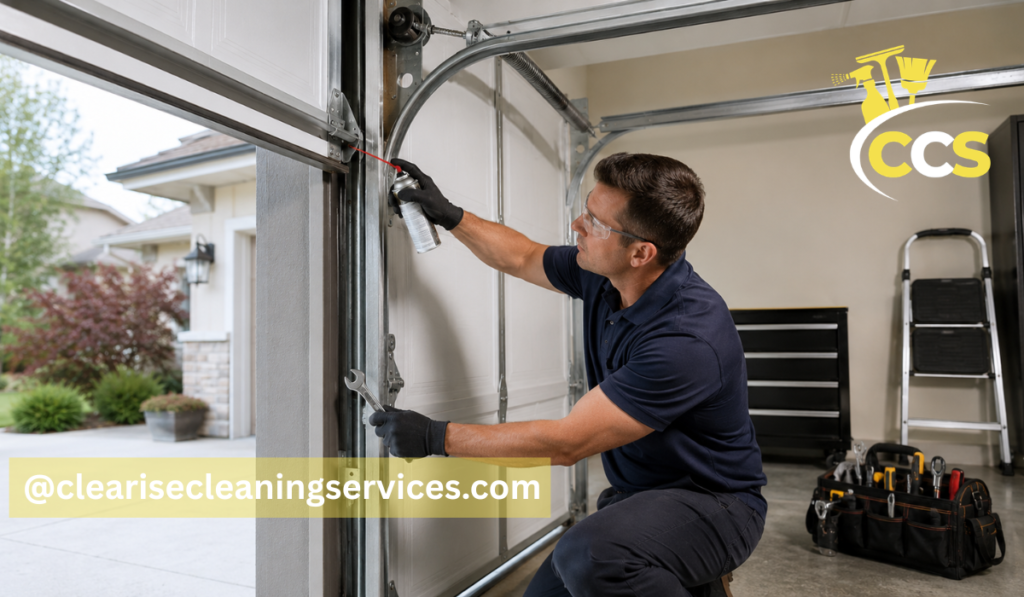
- Lubricate moving parts using silicone-based spray or white lithium grease.
- Check loose hardware and tighten safe, easy-to-reach screws or bolts.
- Test safety sensors to make sure the door stops and reverses correctly.
- Inspect weatherstripping and replace it if cracked or worn.
- Call a professional for springs, cables, balance problems, or serious repair signs.
Garage Door Maintenance DIY Tasks You Can Safely Do
Many garage door maintenance DIY tasks are safe for homeowners when done carefully. These include cleaning, visual inspection, lubrication, sensor cleaning, and simple hardware checks.
You can clean the outside of the door with mild soap and water to remove dirt and protect the finish. This is especially helpful for steel, aluminum, and painted wood doors. You can also clear debris from around the bottom seal so the door closes fully.
Another safe task is cleaning the photo-eye sensors. These small sensors are usually located near the bottom of the tracks. Dust, spider webs, or misalignment can stop the door from closing properly. Wipe the lenses gently with a soft cloth and make sure both sensors face each other.
You can also perform a simple balance check. Disconnect the opener using the release cord only when the door is fully closed. Then lift the door manually to about halfway. If it stays in place, the balance may be okay. If it drops, rises quickly, or feels very heavy, stop using it and call a professional.
Avoid repairing or adjusting springs, cables, bottom brackets, or high-tension parts. These parts can be dangerous because they hold heavy force.
Garage Door Maintenance Lubrication: What to Grease and What to Avoid
Garage door maintenance lubrication is one of the easiest ways to reduce noise and help moving parts work better. A dry garage door can squeak, grind, or feel rough during operation. Lubrication helps reduce friction and may protect parts from early wear.
Focus on moving metal parts such as hinges, roller stems, bearings, springs, and metal contact points. Use a small amount of lubricant and wipe away extra product so it does not drip or attract dirt. Too much lubricant can create a sticky mess.
Avoid greasing the tracks. Tracks guide the rollers, but they are not meant to be slippery. Greased tracks can collect dust and make movement less reliable. Instead, clean the tracks with a damp cloth and keep them clear.
Do not spray lubricant on plastic parts unless the product label says it is safe for plastic. Also avoid using general water-displacing sprays as your main long-term lubricant. They may quiet noise for a short time, but they are not always the best choice for lasting garage door lubrication.
Choosing the Right Garage Door Lubricant
The right garage door lubricant should be made for metal moving parts and should not leave a heavy, sticky buildup. Many homeowners use silicone-based spray or white lithium grease for garage door parts. These products are commonly used because they can reduce friction and stay in place better than light household oils.
Silicone spray is often useful for hinges, rollers, and weather seals because it is clean and easy to apply. White lithium grease is thicker and can work well on metal parts that need longer-lasting protection. Always read the product label before applying it.
The best lubricant also depends on your climate. In cold areas, choose a product that does not become too thick in low temperatures. In dusty areas, avoid overapplying lubricant because extra product can hold dirt.
A good rule is simple: apply lightly, target the correct parts, and wipe off excess. The goal is smooth movement, not a greasy door.
Residential Garage Door Maintenance for Daily Use and Long-Term Safety
Residential garage door maintenance is especially important because many families use the garage door as a main entrance. Some doors open and close several times a day, which means parts experience regular stress.
Daily use can slowly loosen hardware, wear rollers, stretch springs, and affect opener performance. This is why homeowners should not wait until the door stops working before paying attention. Preventive care is usually easier and less stressful than emergency repair.
A safe residential routine includes visual checks, sound checks, sensor testing, lubrication, weather seal inspection, and professional service when needed. It also includes teaching family members not to stand or walk under a moving garage door.
Children should not play with remote controls, wall buttons, or keypad access. Keep controls out of reach and make sure everyone in the home understands that a garage door is heavy equipment, not a toy.
Safety Features You Should Test Regularly
Garage door safety features are designed to protect people and objects from being trapped under a closing door. Two of the most important features are the photo-eye sensors and the auto-reverse system.
Photo-eye sensors send an invisible beam across the bottom of the garage opening. If something breaks the beam while the door is closing, the door should stop and reverse. These sensors are usually placed near the floor on both sides of the door.
The auto-reverse system helps the door reverse if it touches an obstruction. Many safety guides recommend testing this feature regularly. The CPSC has warned about the danger of automatic garage door openers that do not reverse properly.
When testing safety features, follow the instructions in your opener manual. If the door fails a safety test, stop using the opener and contact a professional. Do not ignore sensor problems, because they are directly connected to safe operation.
Common Garage Door Problems Maintenance Can Prevent
Regular garage door maintenance can prevent many common problems. One of the most common is noisy operation. Squeaking, grinding, or rattling often happens when parts are dry, loose, or worn.
Another common issue is uneven movement. This may happen when rollers are damaged, tracks are dirty, or the door is out of balance. Maintenance can help you notice these issues early.
A door that will not close may have dirty or misaligned sensors. A door that closes and then opens again may also have a sensor or force-setting issue. Cleaning the sensors and checking the area around the door can sometimes solve simple problems.
Maintenance can also help prevent weather damage. A cracked bottom seal can let water, dirt, and pests into the garage. Replacing weatherstripping is a simple way to improve comfort and protect stored items.
While maintenance cannot stop every breakdown, it can reduce surprises and help the door system last longer.
Signs Your Garage Door Needs Professional Repair
Some garage door problems should not be handled as DIY projects. Call a professional if you see frayed cables, broken springs, loose bottom brackets, bent tracks, or a door that feels extremely heavy.
You should also get help if the door moves unevenly, slams shut, opens only a few inches, or makes loud banging sounds. These signs may point to spring tension, cable, opener, or balance problems.
If your garage door fails a safety reverse test, do not keep using it as normal. A door that does not reverse properly can be dangerous. Professional service is also wise if your opener is old, unreliable, or missing modern safety features.
A simple rule is this: if the repair involves tension, lifting force, electrical opener problems, or parts you do not understand, call a trained technician. Safety is more important than saving a small repair fee.
Garage Door Maintenance Cost: What Affects the Price?
Garage door maintenance cost can vary based on the type of door, the age of the system, your location, the condition of parts, and whether repairs are needed. A basic maintenance visit may cost less than a major repair, but the final price depends on what the technician finds.
Simple tasks such as lubrication, inspection, sensor alignment, and minor adjustments are usually more affordable than replacing springs, cables, rollers, panels, or openers. If your door has custom parts, heavy materials, smart opener features, or serious wear, the cost may be higher.
Location also matters. Service prices can vary by city, labor rates, travel distance, and emergency availability. Weekend or same-day emergency visits may cost more than scheduled maintenance.
The best way to control cost is to maintain the door regularly. Preventive care can help you avoid urgent breakdowns and make repair decisions before the problem becomes serious.
Garage Door Maintenance Near Me: When Local Service Makes Sense
Searching for garage door maintenance near me makes sense when you need professional inspection, repair, adjustment, or emergency help. A local technician can inspect the door in person and identify problems that are hard to diagnose online.
Local service is especially useful for spring issues, cable problems, opener failures, bent tracks, damaged rollers, and balance concerns. A technician can also check whether your door is safe, properly aligned, and working with the right opener settings.
When choosing a service provider, look for clear pricing, experience with residential garage doors, good local reviews, proper tools, and a willingness to explain the problem in simple language. Avoid companies that pressure you into replacing the whole system without explaining the reason.
Local maintenance can also help with climate-specific problems, such as humidity, salt air, dust, extreme heat, or freezing weather.
Seasonal Garage Door Maintenance Tips
Seasonal garage door maintenance helps your door handle weather changes. In spring, clean the tracks, wash the door, check for rust, and test the opener after colder months. This is a good time to inspect the weather seal and look for water damage.
In summer, heat can dry out rubber seals and make some parts expand slightly. Check the bottom seal, lubricate moving parts lightly, and make sure the opener is not struggling.
In fall, prepare for colder weather by checking weatherstripping, cleaning debris around the door, and making sure the door closes fully. A tight seal can help keep cold air, leaves, and pests out.
In winter, avoid forcing a frozen garage door open. If the bottom seal sticks to ice, forcing the opener can damage the system. Clear snow and ice around the bottom of the door and keep moving parts properly lubricated with a cold-weather-friendly product.
Mistakes to Avoid During Garage Door Maintenance
One common mistake is using the wrong product for lubrication. Not every spray is a proper garage door lubricant. Another mistake is applying too much lubricant, which can attract dirt and make parts messy.
A bigger mistake is trying to repair springs or cables without training. These parts are under high tension and can cause serious injury. Homeowners should inspect them visually but leave repairs to professionals.
Some people also ignore small sounds until they become major problems. A new grinding or banging sound is often a warning sign. It is better to check early than wait until the door fails.
Another mistake is skipping safety tests. A garage door that opens and closes is not always safe. Sensors and auto-reverse features need attention too.
Finally, avoid forcing the door when it is stuck. Forcing it can damage the opener, bend tracks, or make the problem worse.
Simple Monthly and Yearly Garage Door Care Schedule
A simple schedule can make garage door maintenance easier. Every month, watch and listen to the door while it opens and closes. Check the sensors, look for loose hardware, inspect cables from a safe distance, and make sure the area around the door is clear.
Every three to six months, clean the tracks, lubricate moving parts, inspect the weather seal, and check the door balance. This routine does not take long, but it can make a big difference in how the door performs.
Once a year, schedule a professional inspection. A trained technician can check spring tension, cable condition, opener settings, track alignment, rollers, hinges, and safety systems. Annual service is especially helpful for older doors or doors used many times per day.
This balanced approach gives you the best of both worlds: simple DIY care for everyday reliability and professional support for safety and long-term performance.
Conclusion
Garage door maintenance is one of the simplest ways to keep your garage door safe, quiet, and dependable. With regular checks, proper lubrication, clean tracks, working sensors, and timely professional service, you can prevent many common problems before they become expensive repairs.
A good maintenance routine does not need to be complicated. Watch how the door moves, listen for unusual sounds, clean what you can safely clean, use the right garage door lubricant, and follow a practical garage door maintenance checklist. For high-tension parts, serious damage, balance problems, or failed safety tests, call a professional.
When done consistently, residential garage door maintenance helps protect your home, your family, and your daily routine. It also gives your garage door the best chance to work smoothly for years.
FAQs
How Often Should Garage Door Maintenance Be Done?
Basic garage door maintenance should be done monthly, especially safety checks and visual inspections. Lubrication is usually needed every six months, while a professional inspection once a year is helpful for long-term safety and performance.
What Is The Best Lubricant For Garage Door Maintenance?
A silicone-based spray or white lithium grease is usually a good choice for garage door maintenance lubrication. These products help reduce noise and friction. Avoid greasing the tracks because it can attract dirt and cause roller problems.
Can I Do Garage Door Maintenance Myself?
Yes, many garage door maintenance DIY tasks are safe, such as cleaning tracks, lubricating hinges and rollers, checking weather seals, and testing sensors. However, springs, cables, and major balance issues should always be handled by a professional.
What Are Signs My Garage Door Needs Repair?
Common warning signs include loud grinding, jerky movement, slow response, broken springs, frayed cables, bent tracks, or a door that does not close properly. These problems should not be ignored because they can affect safety.
How Much Does Garage Door Maintenance Cost?
Garage door maintenance cost depends on the door type, age, condition, location, and needed repairs. Basic maintenance is usually cheaper than emergency repairs. Regular care can help reduce long-term costs by catching problems early.
Disclaimer: This article is for general informational purposes only. Garage door systems can vary by model, age, condition, and location. For springs, cables, opener issues, or safety concerns, always contact a qualified garage door professional.
Thanks for visiting Clearise Cleaning Services! Discover more helpful tips and expert cleaning insights by exploring our related categories.