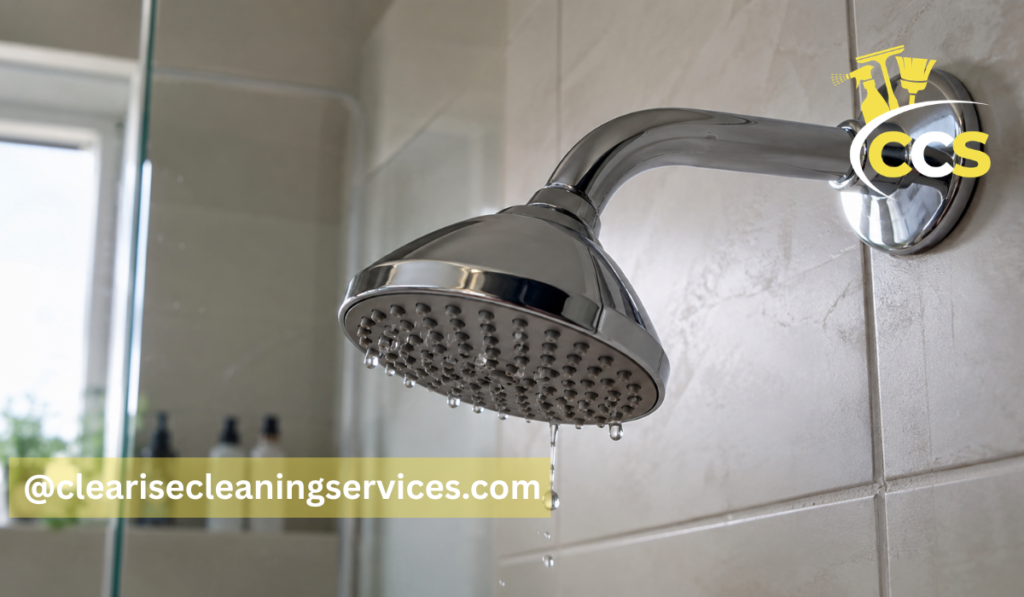
A leaking shower head may look like a small bathroom issue, but it can slowly waste water, increase your bill, and sometimes point to a deeper plumbing problem. In simple words, a leaking shower head means water is coming out when it should not, or it is escaping from a place where it should not be leaking.
The leak may come from different areas. Sometimes water drips from the small nozzles on the front of the shower head. In other cases, it may leak from the base, the connection point, the wall area, or even from the shower valve inside the handle. This is why it is important to first understand where the water is coming from before trying to fix anything.
Not every shower leak has the same cause. A shower head that leaks only while the water is running may have a loose connection or worn washer. A shower head that keeps dripping even after the handle is turned off may have a faulty valve cartridge. A shower head that sprays sideways may simply have mineral buildup blocking the nozzles.
This guide explains the common causes, warning signs, and practical fixes for a leaking shower head. By the end, you will have a clear idea of what may be wrong, what you can safely try yourself, and when it is better to call a plumber.
Quick Guide Table
| Leak Type | Common Cause | Best First Step |
| Drips after turning water off | Leftover water or faulty valve cartridge | Wait a few minutes, then check if dripping continues |
| Leaks at connection | Loose fitting, worn washer, or bad plumber’s tape | Replace washer and reapply plumber’s tape |
| Sprays sideways | Mineral buildup in nozzles | Soak shower head in white vinegar |
| Leaks near wall | Loose shower arm or hidden plumbing issue | Inspect wall area and call a plumber if damp |
| Leaks from side of rain shower head | Trapped water, cracked seal, or mineral buildup | Clean first, then replace if leak continues |
Common Reasons Behind a Leaking Shower Head
There are several common reasons behind a leaking shower head. One of the most frequent causes is mineral buildup. If you live in an area with hard water, minerals can collect inside the small holes of the shower head. Over time, these deposits block the nozzles and force water to spray unevenly or leak from weak spots.
Another common cause is a worn-out rubber washer or O-ring. This small rubber part sits inside the shower head connection and helps create a tight seal. When it becomes flat, cracked, loose, or brittle, water can escape from the connection point.
A loose shower head connection can also cause leaking. If the shower head is not properly tightened onto the shower arm, water may leak from the threads while the shower is running. In many cases, this is easy to fix, but it should be done carefully because over-tightening can damage the threads.
Damaged plumber’s tape is another possible reason. Plumber’s tape, also called Teflon tape, is wrapped around the shower arm threads to help prevent leaks. If the old tape is worn, loose, or applied incorrectly, water can pass through the gaps.
A faulty shower valve cartridge is usually the reason when the shower head keeps dripping after the water is turned off. The valve cartridge sits behind the shower handle and controls the flow of water. If it wears out, water may continue to pass through even when the handle is closed.
Water pressure changes inside the plumbing line can also cause occasional dripping. Sometimes pressure changes happen during the night or when other fixtures in the home are used. Old or low-quality shower head parts can make the problem worse because weaker seals and plastic parts wear out faster.
How to Find Where the Shower Head Is Leaking From
Before you try to fix a leaking shower head, you need to find the exact source of the leak. This step can save time and help you avoid replacing parts that are not actually causing the problem.
Start by watching where the water appears. If water is dripping from the main nozzles, the issue may be leftover water, mineral buildup, or a valve problem. If water is coming from the area where the shower head connects to the shower arm, the issue is likely a loose fitting, bad washer, or damaged plumber’s tape.
Next, look around the shower head base. Some shower heads have swivel joints or moveable parts near the base. If water leaks from this area, the seal inside the joint may be worn out, or the shower head body may be cracked.
You should also check the wall area. If water appears near the wall plate, shower arm, or behind the trim, this can be more serious. A shower head leaking at wall may mean there is a loose shower arm, damaged threads, or a hidden plumbing issue inside the wall.
Pay attention to when the leak happens. Does it leak only while the shower is running? Does it drip for a few minutes after use and then stop? Or does it keep dripping for hours after the water is off? These details matter because they point to different causes.
Also notice the spray pattern. If the water shoots sideways or sprays unevenly, clogged nozzles may be the problem. In that case, cleaning the shower head may solve the issue without replacing anything.
Dripping Shower Head When Water Is Off
A dripping shower head when water is off can be confusing because the shower handle is already closed. Sometimes this is normal for a short time. After a shower, water can remain inside the shower head and arm. This trapped water may drip out slowly for a few minutes.
However, if the dripping continues for a long time, happens hours after use, or starts again in the middle of the night, it may be a sign of a real leak. In many cases, the problem is not the shower head itself. The real issue may be the shower valve cartridge behind the handle.
The valve cartridge is designed to stop water when the handle is turned off. When it becomes worn, cracked, or damaged, it may not close fully. As a result, a small amount of water keeps passing through and eventually drips from the shower head.
This type of leak should not be ignored. Even a slow drip can waste a surprising amount of water over time. It can also make the bathroom damp, create stains, and become annoying if the dripping sound continues at night.
A simple way to understand the difference is timing. If the shower head drips for a few minutes after a shower and then stops, it may only be draining leftover water. If it keeps dripping again and again after the water is off, the valve cartridge may need attention.
Shower Head Leaking at the Connection
A shower head leaking at connection usually means water is escaping from the threaded area where the shower head attaches to the shower arm. This is one of the most common and easiest leaks to identify.
The main causes are a loose fitting, worn washer, or old plumber’s tape. If the shower head was installed without a proper seal, water may leak from the threads while the shower is running. If the rubber washer inside the collar is damaged, the connection will not seal tightly.
You may notice water spraying or dripping from the back of the shower head instead of coming only through the nozzles. Sometimes the leak only appears when the water pressure is high. In other cases, water may run down the shower arm and make it seem like the leak is coming from the wall.
Before repairing it, turn off the shower and carefully inspect the connection. Unscrew the shower head and check the washer inside. If the washer looks cracked, flat, or missing, replace it. Then remove any old plumber’s tape from the shower arm threads and apply fresh tape in the same direction the shower head will screw on.
When reinstalling the shower head, tighten it by hand first. If needed, use a wrench gently, but avoid forcing it. Over-tightening can damage the shower head or the pipe threads.
Shower Head Leaking at Base
A shower head leaking at base can mean different things depending on the design of the shower head. For a fixed shower head, the base may be the area near the connection. For a handheld or adjustable shower head, the base may include a swivel joint, hose connection, or moving part.
If the leak comes from the base, the cause may be a loose joint, cracked housing, or worn internal seal. Some shower heads have small seals inside the swivel area. When these seals wear out, water can escape even if the threaded connection is tight.
In some cases, tightening the connection may help. However, if the water is coming from a crack or from inside a sealed joint, repair may not be practical. Many shower heads are not designed to be taken apart fully, so replacement may be the better option.
If the shower head is older, made from low-quality plastic, or has been dropped before, the base may crack under pressure. A small crack may only leak when the water is running, but it can grow over time.
The best approach is to clean and inspect the base carefully. If the leak is from a loose connection, try a new washer and plumber’s tape. If the leak comes from the body of the shower head, replacing the unit is usually the simplest solution.
Shower Head Leaking at Wall
A shower head leaking at wall should be checked carefully because it may be more serious than a simple drip from the nozzles. Water near the wall can mean the shower arm is loose, the threads are damaged, or there is a hidden leak behind the wall.
Sometimes the problem is easy to see. The shower arm may move when touched, or water may drip around the wall plate. In other cases, the signs are less obvious. You may notice damp drywall, stains, peeling paint, a mold smell, or water behind the trim plate.
A leak near the wall should not be ignored. Water behind the wall can cause damage to wood, drywall, insulation, and surrounding surfaces. It can also create the right conditions for mold and mildew growth.
If the leak is only around the shower arm threads, it may be fixed by removing the arm, applying fresh plumber’s tape, and reinstalling it properly. However, if water seems to come from inside the wall, or if the wall is soft, stained, or damp, it is better to call a plumber.
Hidden wall leaks can become expensive if they are left untreated. Even if the water leak looks small, it can spread behind the surface and cause damage before you notice it.
Rain Shower Head Leaking From Side
A rain shower head leaking from side can happen because rain shower heads are wider and often have more seams, edges, or faceplates than standard shower heads. These designs can hold more water after use, which sometimes causes short dripping after the shower is turned off.
In some cases, this is only normal drainage. Water remains inside the large shower head and slowly escapes from the side or edge. If the dripping stops after a few minutes, it may not be a serious issue.
However, if the leak continues while the shower is running or keeps dripping long after use, the problem may be a loose faceplate, cracked body, mineral buildup, or damaged seal. Mineral deposits can block some nozzles and push water toward the side seams.
Cleaning the rain shower head may help if the spray pattern is uneven or if water is coming from odd angles. A vinegar soak can loosen hard water deposits and improve water flow. If the side leak comes from a cracked seam or loose internal part, replacement may be necessary.
Rain shower heads should also be installed level and securely. If they are loose or tilted, water may collect in certain areas and drain unevenly after use.
Why Does My Shower Head Drip in the Middle of the Night
Many homeowners wonder, why does my shower head drip in the middle of the night, especially when nobody has used the shower for hours. This can happen for a few reasons.
One possible reason is pressure change in the plumbing system. Water pressure can shift when other fixtures are used, when the water heater cycles, or when pressure inside the pipes changes. These small changes can push trapped water out of the shower head.
Another reason is thermal expansion. As water heats and cools, it expands and contracts. This can create small pressure changes that cause a few drips from the shower head. If it happens once and stops quickly, it may not be a major problem.
Leftover water inside the shower head can also drain later, especially in larger rain shower heads. Sometimes water stays trapped due to the angle or design of the head and then releases slowly.
However, repeated dripping at night may point to worn valve parts. If the shower valve is not closing fully, water can slowly pass through and drip from the shower head. If the dripping happens often or lasts a long time, the valve cartridge should be inspected.
Is a Leaking Shower Head Dangerous
Many people ask, is a leaking shower head dangerous? In most cases, a small leak is not immediately dangerous. A few drips from the shower head usually do not create an emergency. However, a leak can still cause problems if it continues for days, weeks, or months.
The first problem is water waste. Even a slow drip can waste a lot of water over time. This can increase your water bill and create unnecessary waste.
A leaking shower head can also keep the bathroom damp. Extra moisture may lead to mold or mildew, especially in bathrooms with poor ventilation. Mold can grow around grout lines, corners, walls, or the shower area if moisture stays for too long.
Another risk is wall damage. If the leak is near the wall or behind the trim plate, water may enter areas that are not meant to stay wet. This can damage drywall, paint, wood, or hidden parts of the wall.
A leaking shower head can also make the shower floor slippery. If water keeps dripping onto the floor, it may increase the chance of slipping, especially for children or older adults.
The leak may also be a sign of a hidden plumbing issue. A small drip from the shower head may seem simple, but if it is connected to a faulty valve or wall leak, it should be fixed before it becomes worse.
How to Fix a Leaking Shower Head
Learning how to fix a leaking shower head starts with simple checks. You do not always need to replace the whole shower head. Many leaks are caused by small parts that are easy to clean or replace.
First, check whether the shower head is loose. If it leaks from the connection, gently tighten it by hand. Do not force it, because too much pressure can damage the threads.
Next, remove the shower head and inspect the washer or O-ring inside the threaded collar. If the washer looks worn, cracked, flat, or missing, replace it with a new one of the same size.
After that, clean the shower arm threads. Remove old plumber’s tape completely. Wrap fresh plumber’s tape around the threads two or three times in a clockwise direction. This helps create a better seal when the shower head is screwed back on.
If the shower head has clogged nozzles, soak it in white vinegar to dissolve mineral buildup. This can improve water flow and stop water from spraying sideways.
Reinstall the shower head carefully and turn the water on to test it. Watch the connection, base, nozzles, and wall area. If the leak stops, the problem was likely a washer, tape, or buildup issue.
If the shower head still drips when the water is off, the problem may be the valve cartridge behind the handle. That repair is more involved and may require shutting off the water supply before removing the handle parts.
Cleaning Mineral Buildup From the Shower Head
Mineral buildup is a common cause of poor spray, sideways water, and small leaks. Hard water contains minerals that can collect inside the nozzles of the shower head. Over time, these deposits block the openings and change the direction of the water.
Cleaning the shower head is often a simple first step. Remove the shower head if possible and place it in a bowl of white vinegar. Let it soak for about 30 to 60 minutes. For heavier buildup, it may need more time.
After soaking, scrub the nozzles gently with an old toothbrush. Do not use sharp tools that may damage rubber nozzles or scratch the surface. Rinse the shower head well and run water through it before reinstalling.
If the shower head cannot be removed easily, you can fill a plastic bag with vinegar and tie it around the shower head so the nozzles are covered. After soaking, remove the bag and wipe the surface clean.
Cleaning is usually enough when the issue is uneven spray or blocked nozzles. However, if the shower head is cracked, leaking from the seams, or still spraying badly after cleaning, replacement may be better.
Replacing the Washer or O-Ring
The washer or O-ring is a small rubber part, but it plays an important role in stopping leaks. It is usually located inside the threaded collar where the shower head connects to the shower arm.
When this rubber seal is in good condition, it helps create a tight connection. When it is damaged, water can escape from the joint. A worn washer is one of the most common reasons for a shower head leaking at connection.
Signs of washer damage include cracked rubber, a flattened shape, brittle texture, or a missing seal. Sometimes the washer may look fine but still fail to seal properly because it has become too hard or thin over time.
To replace it, remove the old washer and take it with you to a hardware store if needed. This helps you find the correct size. Place the new washer inside the shower head connection, making sure it sits flat.
After replacing the washer, reinstall the shower head and test for leaks. This small repair often solves the problem without needing a new shower head.
When the Valve Cartridge Is the Real Problem
Sometimes the shower head is blamed even though it is not the real problem. If water continues to drip when the shower is turned off, the issue may be the valve cartridge inside the handle.
The valve cartridge controls water flow. When you turn the shower handle off, the cartridge should stop the water completely. If the cartridge is worn, broken, or blocked by debris, it may allow water to pass through slowly. That water then comes out of the shower head as a drip.
Signs of cartridge failure include a shower head that keeps dripping long after use, water that does not shut off fully, difficulty turning the handle, or changes in water temperature control.
Replacing a valve cartridge is more complex than replacing a washer. The water supply usually needs to be turned off before the handle is removed. The old cartridge must be taken out and replaced with the exact matching type. Cartridges are not universal, so matching the brand and model is important.
If the cartridge is stuck or the valve body looks damaged, it is safer to call a plumber. Forcing the cartridge out can damage the valve and create a bigger repair.
Mistakes to Avoid When Fixing a Leaking Shower Head
When fixing a leaking shower head, some common mistakes can make the problem worse. One mistake is over-tightening the shower head. Many people think tighter means better, but too much force can crack the shower head or damage the pipe threads.
Another mistake is using too much plumber’s tape. A few wraps are usually enough. Too much tape can make it hard to tighten the shower head properly and may create an uneven seal.
Ignoring a drip that continues when the water is off is also a mistake. This type of leak may point to a worn valve cartridge, not a shower head problem.
Some people replace the entire shower head before checking the washer. Since the washer is cheap and easy to replace, it should be inspected first.
Another mistake is applying new plumber’s tape over old tape. Old tape should always be removed so the new tape can sit smoothly on the threads.
Using the wrong valve cartridge is another common issue. Since cartridges vary by brand and model, using the wrong one can cause leaks, poor handle movement, or no water control.
Finally, never ignore leaks near the wall. A wall-area leak can cause hidden damage and should be checked carefully.
When to Replace the Shower Head Instead of Repairing It
Repair is not always the best choice. Sometimes replacing the shower head is easier, safer, and more cost-effective.
If the shower head body is cracked, replacement is usually the best option. A crack may continue to leak even after changing the washer or applying plumber’s tape.
Rusted or damaged threads are another reason to replace the shower head. If the threads cannot connect tightly to the shower arm, the leak may return again and again.
If you have already replaced the washer, cleaned the nozzles, and applied fresh plumber’s tape but the leak continues, the shower head itself may be worn out.
Poor water flow after cleaning can also mean the shower head is too clogged or damaged inside. Older shower heads may have internal buildup that cannot be fully removed.
An old rain shower head leaking from side seams may also need replacement, especially if the leak comes from a sealed edge or cracked faceplate.
Low-quality plastic parts can wear out faster than metal parts. If the shower head feels loose, weak, or damaged, replacing it may save time and prevent future leaks.
When to Call a Plumber
Many shower head leaks can be fixed with simple steps, but some situations need professional help. If the leak appears to be coming from inside the wall, call a plumber. Hidden leaks can cause serious damage if they are not repaired properly.
You should also call a plumber if the shower valve cartridge is stuck. Trying to force it out can damage the valve body and lead to a bigger repair.
If the water will not shut off fully, the issue should be handled quickly. A shower that keeps running or dripping heavily may waste a lot of water and may point to a valve problem.
Signs of mold, damp walls, water stains, soft drywall, or peeling paint should also be taken seriously. These signs may mean water is leaking behind the wall.
If the shower handle or valve parts are damaged, professional repair may be needed. A plumber can identify the correct parts and replace them safely.
You should also call a plumber if the repair requires opening the wall. This type of work needs care because it involves hidden plumbing lines and wall materials.
Conclusion
A leaking shower head is often caused by mineral buildup, a worn washer, a loose connection, damaged plumber’s tape, or a faulty valve cartridge. The right fix depends on where the water is coming from and when the leak happens.
If the leak comes from the connection, the solution may be as simple as replacing the washer or applying fresh plumber’s tape. If the water sprays unevenly, cleaning mineral buildup may solve the problem. If the shower keeps dripping when the water is turned off, the valve cartridge may be the real issue.
The most important step is to inspect the leak carefully before replacing parts. Start with the simple checks first, such as cleaning the shower head, checking the washer, and tightening the connection gently. If the leak appears near the wall, continues after repair, or points to a valve problem you are not comfortable handling, calling a plumber is the safest choice.
Fixing a leaking shower head early can help save water, protect your bathroom, and prevent a small drip from turning into a bigger problem.
FAQs
Why Is My Leaking Shower Head Dripping When The Water Is Off?
If the drip stops after a few minutes, it may just be leftover water draining out. If it continues for hours, the shower valve cartridge may be worn and not closing fully.
Can I Fix A Leaking Shower Head Myself?
Yes, many leaks can be fixed by cleaning mineral buildup, replacing the rubber washer, tightening the connection, or applying fresh plumber’s tape. Wall leaks or valve issues may need a plumber.
Is A Leaking Shower Head Dangerous?
A small leak is usually not immediately dangerous, but it can waste water, raise bills, cause slippery floors, and lead to mold or wall damage if ignored.
Why Is My Shower Head Leaking At The Connection?
A shower head leaking at the connection is often caused by a loose fitting, damaged washer, or worn plumber’s tape. Replacing the washer and resealing the threads usually helps.
When Should I Replace My Shower Head?
Replace it if the body is cracked, threads are damaged, water still leaks after repair, or mineral buildup continues to block the spray even after cleaning.
Disclaimer: This article is for general informational purposes only. Plumbing problems can vary by home, fixture type, and water system. If the leak continues, appears inside the wall, or requires work beyond basic repair, contact a licensed plumber.
Thanks for visiting Clearise Cleaning Services! Discover more helpful tips and expert cleaning insights by exploring our related categories.