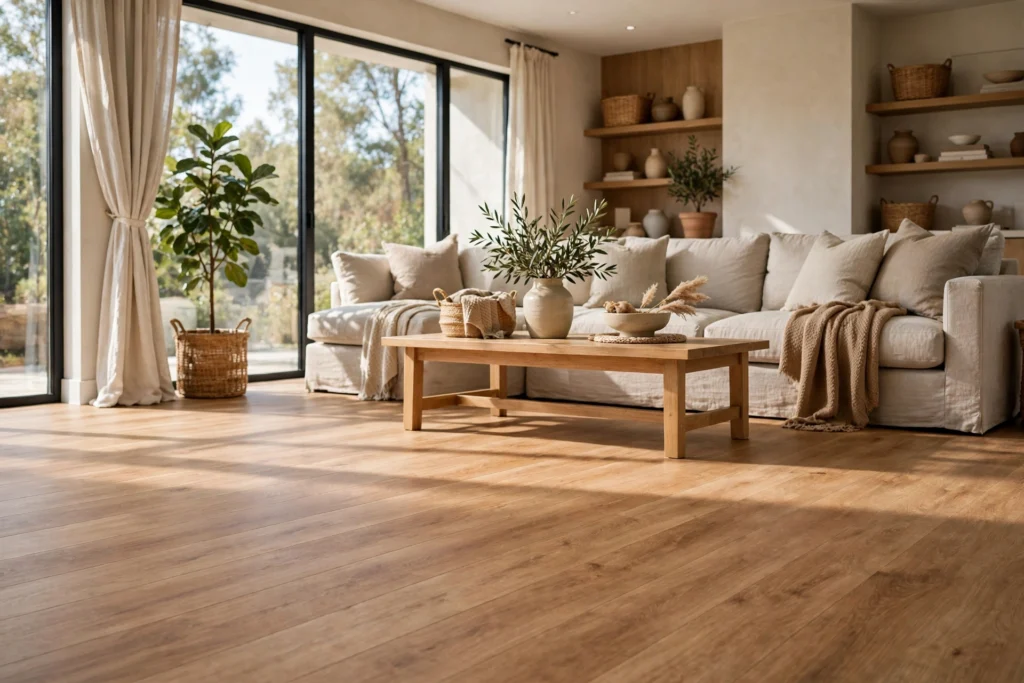
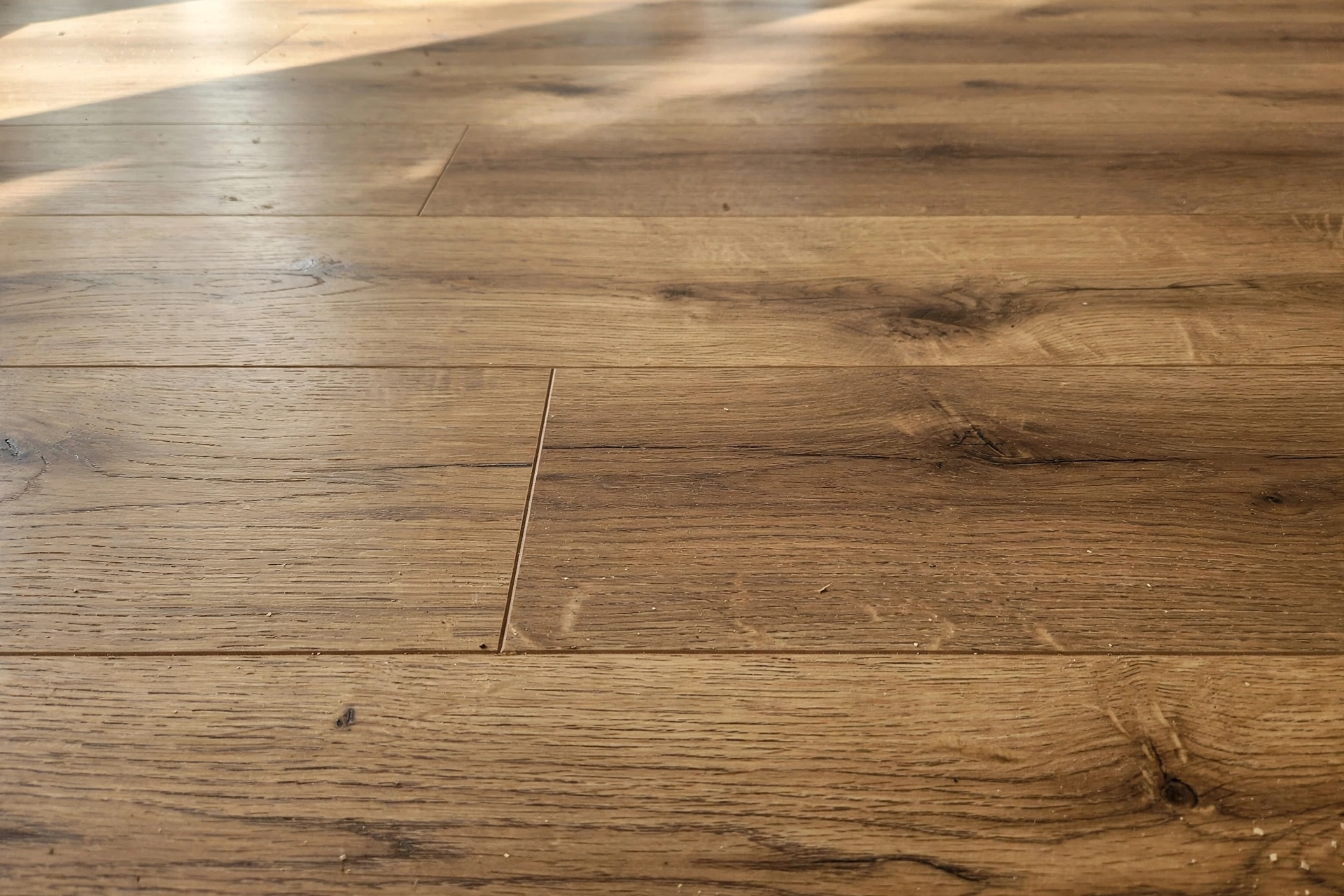
Vinyl plank flooring is a type of hard flooring made to look like wood planks, but it is built from layers of vinyl and other materials rather than solid wood. Each plank is a separate piece, usually with a printed wood-like pattern on top, and the planks join together to form a floor that is practical for busy homes.
It is also known as LVP flooring, short for luxury vinyl plank. That name can be confusing, because not every product labelled luxury is the same quality; here, luxury is mainly a product category name, not a guarantee of a high-end result.
This guide explains what it is in plain language, how it is made, the main types, and where it works well and where it does not, plus installation basics, cost factors, cleaning, and common mistakes, so you can judge whether it fits your home before you buy.
What Vinyl Plank Flooring Really Is
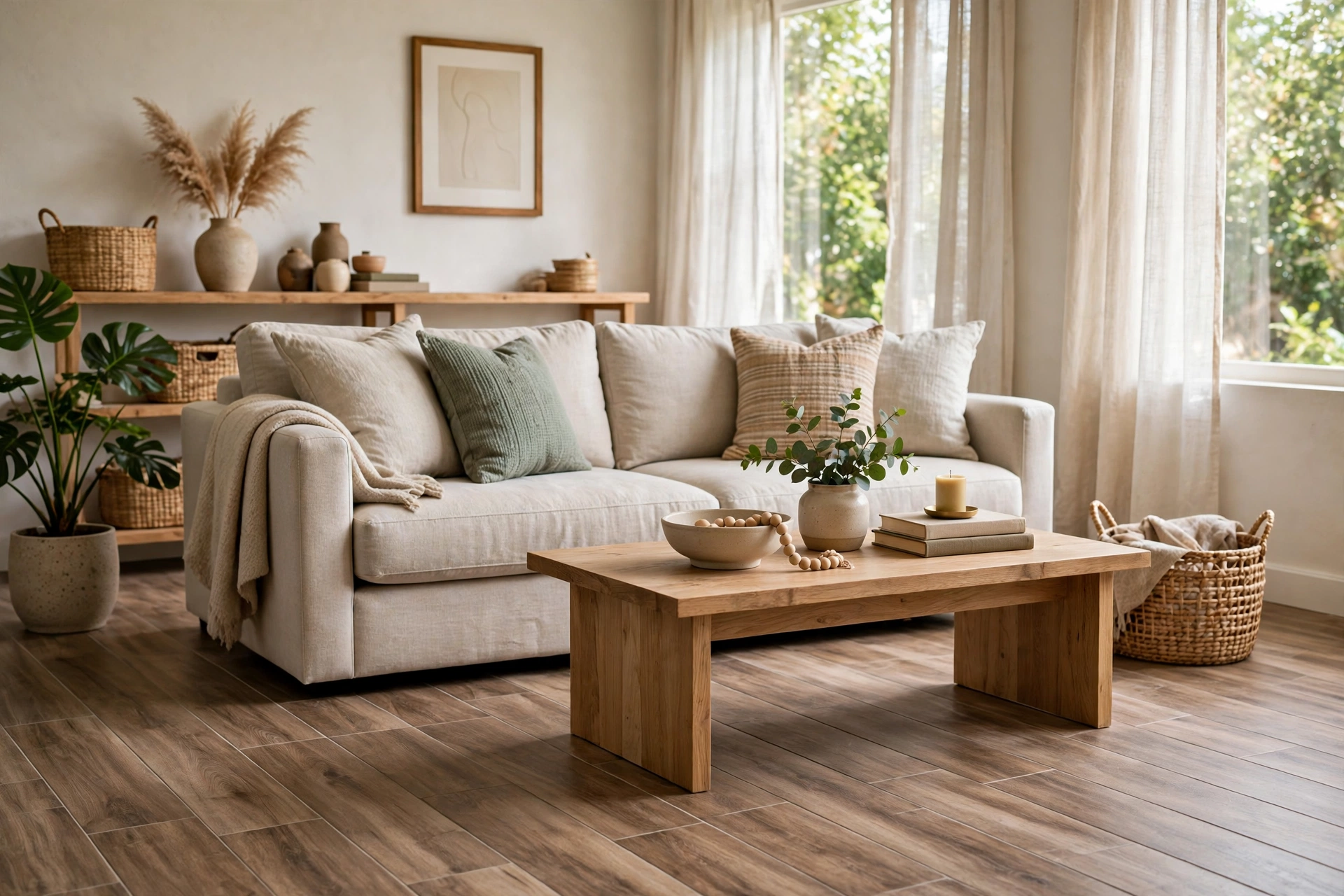
Vinyl plank flooring is a synthetic floor made in long planks that copy the look of wood boards, including grain patterns, plank widths, and sometimes a textured surface. It is not solid wood, laminate, or tile, although it shares some features with each of those floors and is often compared with them.
The key idea is simple: the plank gives you the look of wood without a real wood surface. Because the top layer is printed and protected, the pattern stays consistent, without the natural variation, knots, or colour changes of real timber. That printed look is also its main limit: close up, most people can tell it is not real wood, especially on cheaper products where the pattern repeats too obviously.
It is usually sold by the box. The fitting method matters: some types click together, some are glued down, and some rely on weight and friction, which affects stability, repair of one damaged plank, and whether the floor can be taken up later.
How Vinyl Plank Flooring Is Built
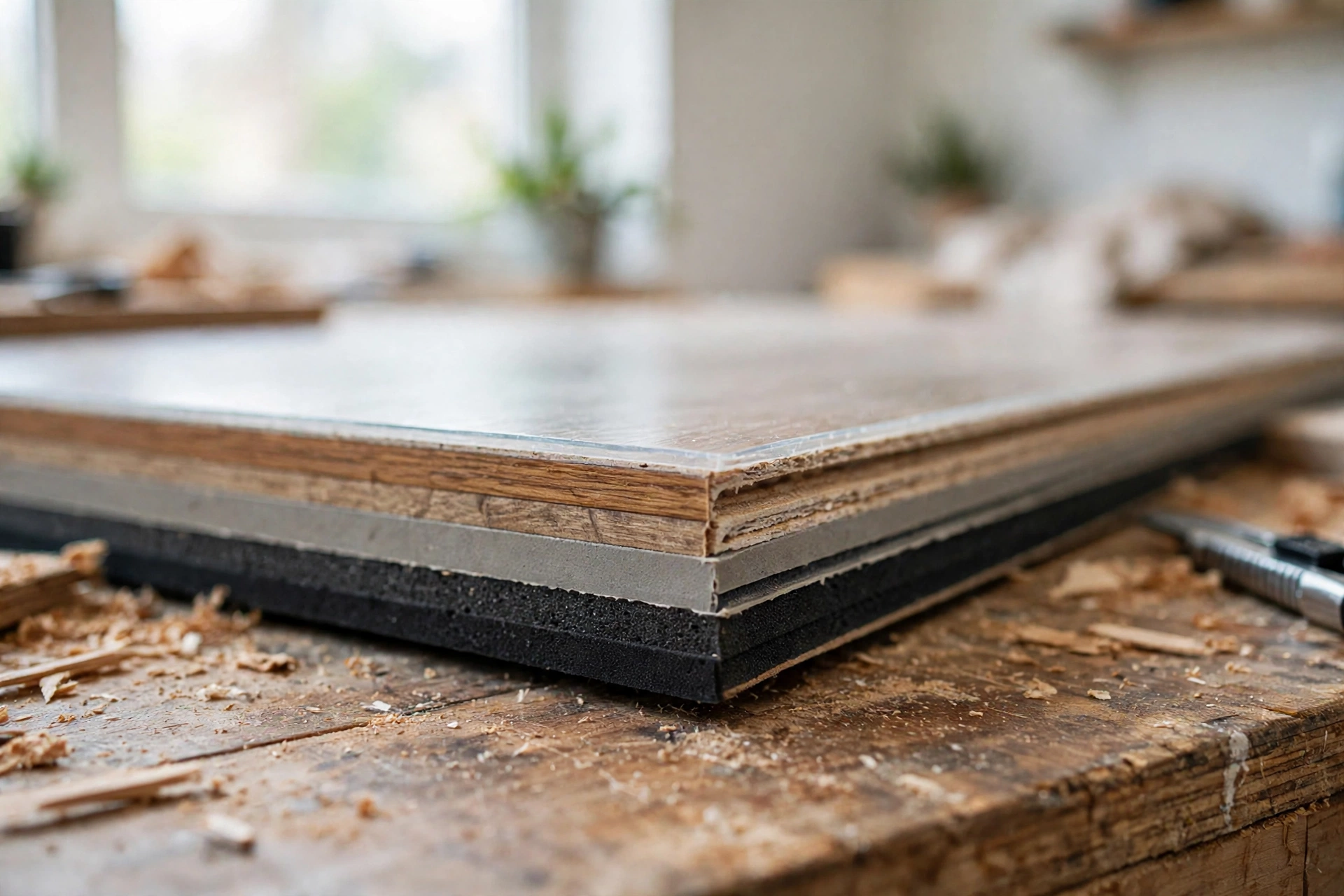
Vinyl plank flooring is built in layers, and each layer has a job, from protecting the surface to keeping the plank stable and comfortable underfoot. The exact make-up varies by product, but most planks follow a similar layered design, with a protective top coat, a printed design layer, a vinyl core, and a backing layer underneath.
The top wear layer is the clear coating that takes daily damage from shoes, pets, furniture, and cleaning. In general, a thicker wear layer copes better with heavy use, while a thinner one suits light-traffic rooms. Below it sits the design layer, which carries the printed wood pattern and decides whether the floor looks convincing or artificial.
Under the design layer is the core, which gives the plank its body and stiffness. Rigid core products are firmer and can help hide small subfloor unevenness, while flexible products bend more easily and usually need a flatter base. The bottom backing layer helps with stability, sound, and comfort, and some products include attached underlayment. Two planks that look alike can therefore behave very differently.
Main Types of Vinyl Plank Flooring
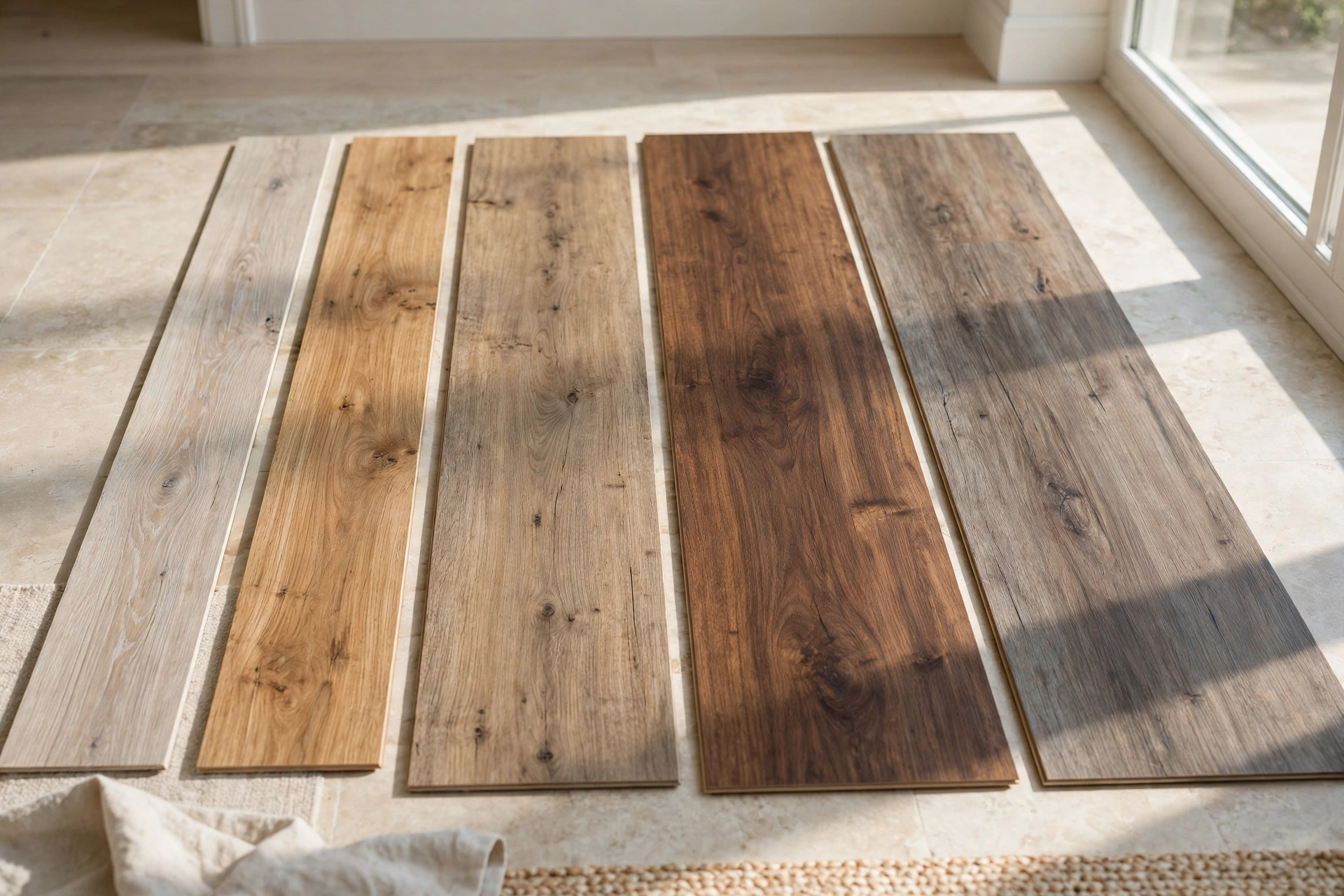
The main types are glue-down, click-lock, loose-lay, and rigid core planks, and the main difference is how they are fixed to the floor. Glue-down planks are stuck with adhesive, click-lock planks join without glue, loose-lay planks rest in place, and rigid core planks are a firmer kind of click product.
Glue-down vinyl plank is often used where a very stable, low-profile floor is wanted. Because each plank is glued down, the floor feels solid and is less likely to move, but fitting takes more care and replacing one plank can be harder. Click-lock vinyl plank is popular at home because the planks lock together and float over the subfloor, making fitting quicker and repairs simpler, although it still needs a suitable base and room for movement at the edges.
Loose-lay planks are heavier and rely on weight and a grippy backing, which can suit rented homes or rooms where you may want to lift the floor later. Rigid core vinyl plank, often called SPC or WPC, has a stiffer core that can feel more solid and may cope better with minor unevenness. For most buyers, the practical difference is firmness and stability rather than appearance.
Vinyl Plank Compared With Other Floors
Vinyl plank flooring is often chosen because it looks like wood, resists water better than laminate or solid wood, and is usually easier to maintain than stone or tile. Compared with laminate, it generally copes better with spills, and compared with solid wood, it is less sensitive to moisture, although neither comparison means it is indestructible.
The table below is a simple, general comparison. Real products vary a lot, so use it as a starting point for questions, not a final verdict on any brand.
| Floor type | Look | Water resistance | Feel underfoot | Repair |
|---|---|---|---|---|
| Vinyl plank flooring | Wood-like print, consistent pattern | Generally good; check the product | Firm, sometimes cushioned | Single planks can often be replaced |
| Laminate flooring | Wood-like print | Lower; clean spills quickly | Firm and hard | Damaged boards are hard to replace neatly |
| Solid wood flooring | Real wood grain, natural variation | Low; water can stain or warp it | Warm and solid | Can often be sanded and refinished |
| Ceramic or stone tile | Stone or tile look | Very good | Hard and cold | Single tiles can be replaced, but matching is hard |
Vinyl plank is not automatically softer or warmer than other hard floors. Comfort depends on the core, backing, and underlayment, so stand on a sample and ask about the backing.
Where Vinyl Plank Flooring Works Best
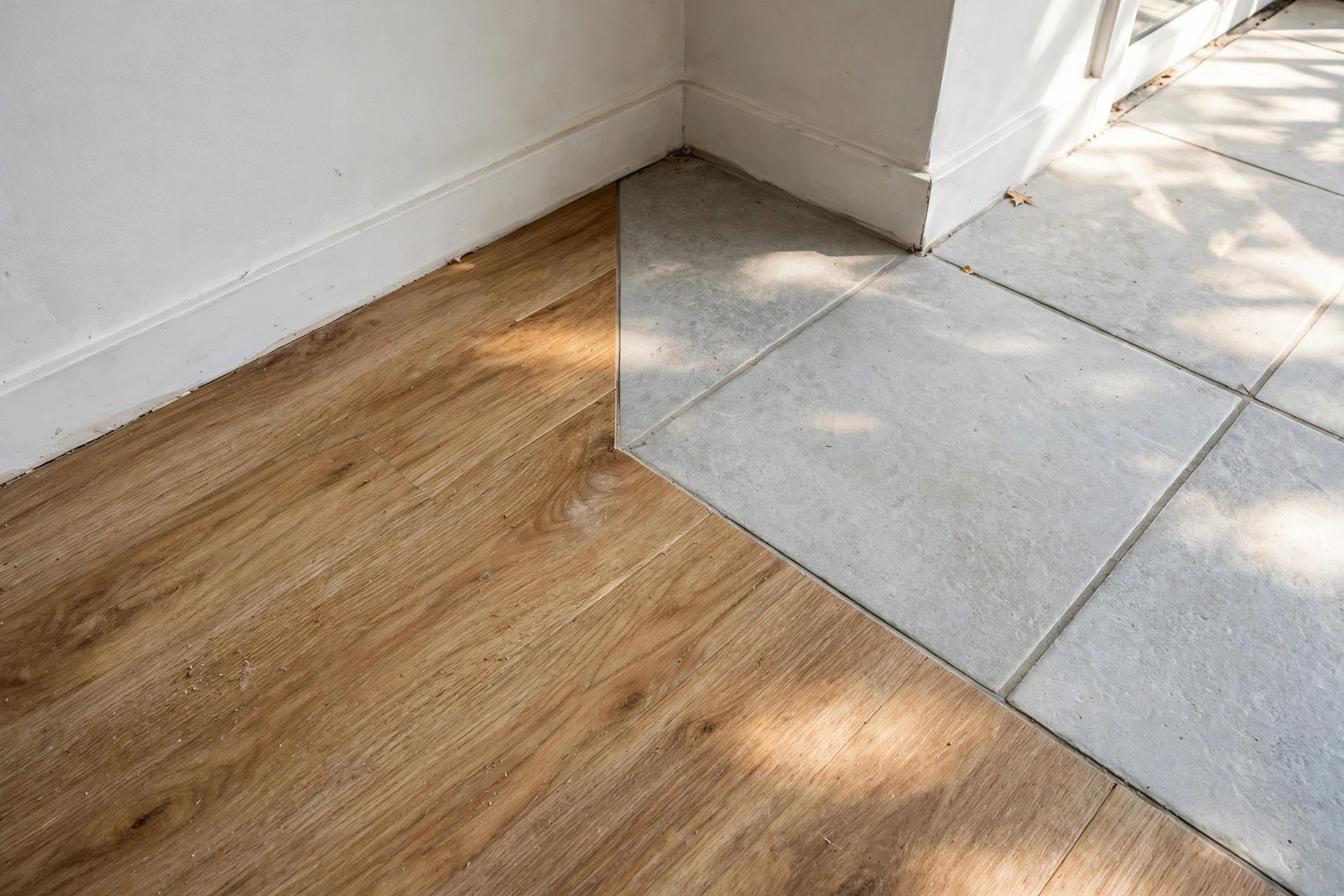
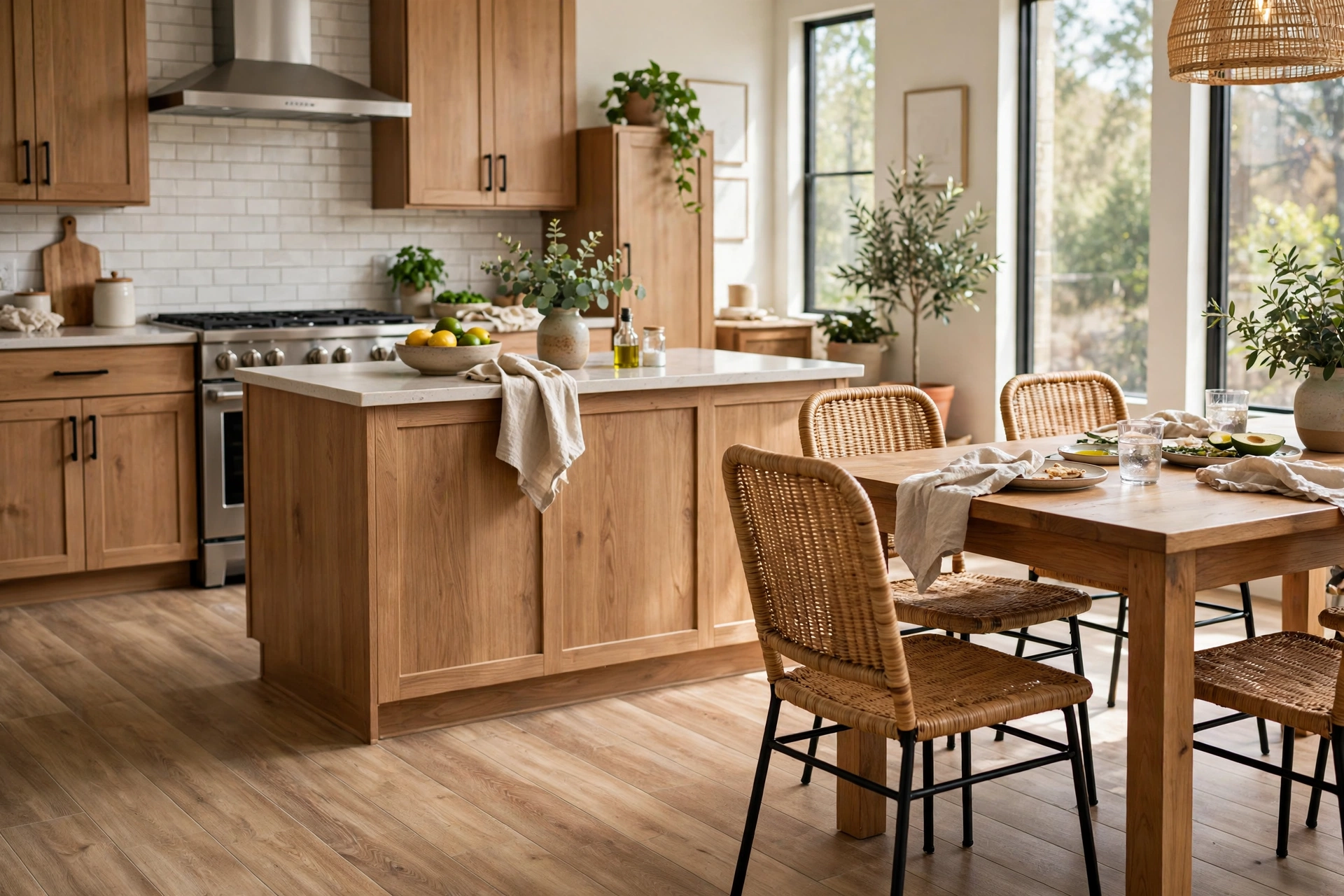
Vinyl plank flooring works best in busy, everyday rooms where spills, pets, and foot traffic are normal, such as kitchens, hallways, living rooms, and family rooms. It also suits homes with children or pets, because the surface is easy to wipe and does not need the same careful treatment as unfinished wood.
Kitchens are a common choice because cooking spills and frequent cleaning are daily life there. A properly fitted floor makes spills easier to manage, as long as standing water is not left for long and the product suits wet areas. Hallways and entrances also benefit, taking the most wear from shoes and outside dirt.
Living rooms and bedrooms can work well too, especially when you want a wood look without real wood’s upkeep. There, pattern, plank width, and texture matter more than water resistance. For rented homes, click or loose-lay products can also be easier to repair or remove than glued floors.
Where It Does Not Work Well
Vinyl plank flooring does not work well in every setting, and its limits matter as much as its strengths, especially in very wet areas, on uneven floors, and in rooms with extreme heat. Waterproof claims on packaging do not mean a floor can sit in standing water, and a plank floor still needs a suitable, stable base underneath it.
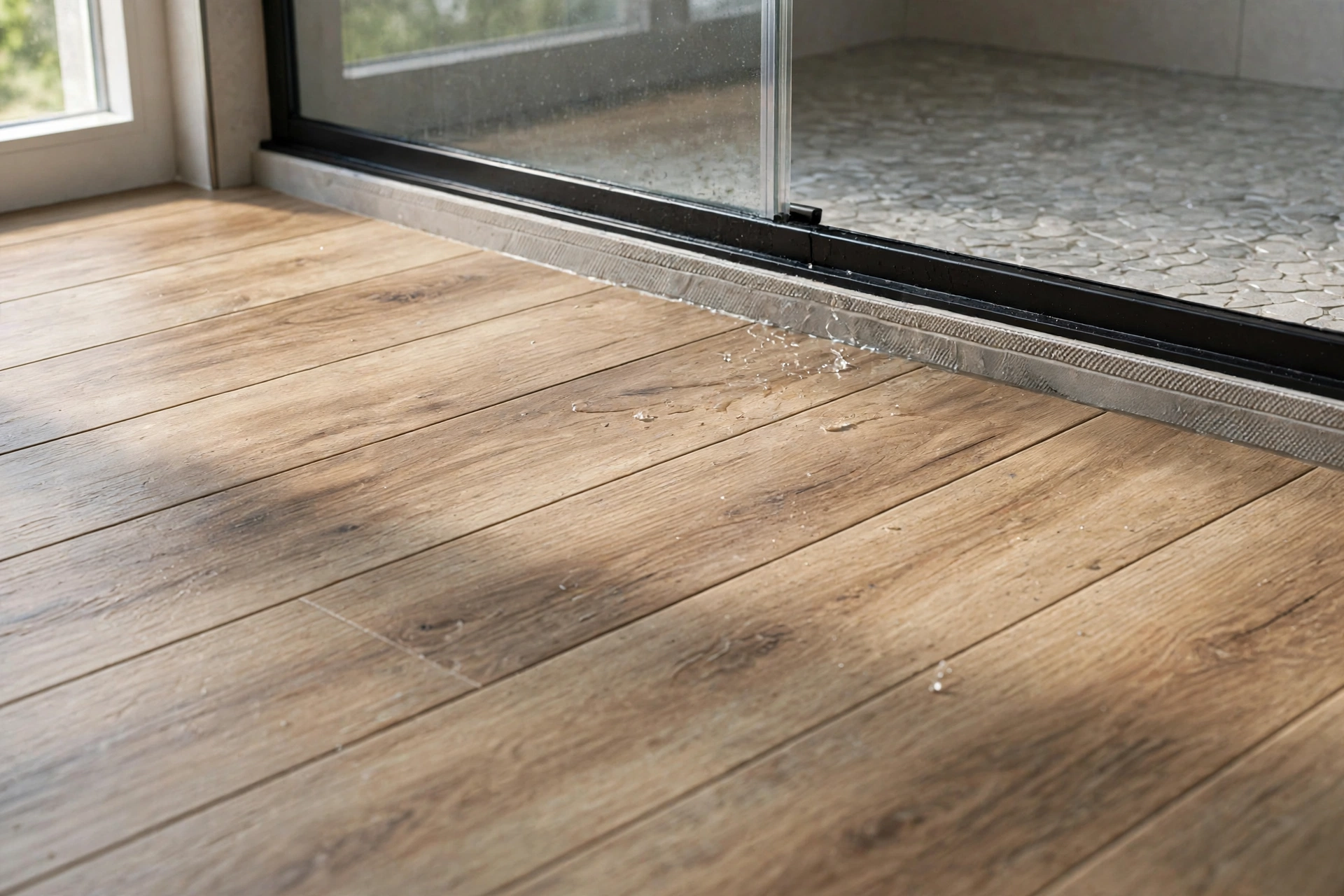
Bathrooms and laundry rooms need extra care. Even waterproof-described products can be damaged if water gets underneath through gaps, edges, or fittings, and trapped moisture can cause unseen problems. Fitting details around baths, showers, and washing machines matter as much as the plank itself.
Very uneven or damaged subfloors are another problem. Rigid core products cope with small unevenness better than flexible ones, but no vinyl plank will fix a moving, bouncing, or deeply dipped floor. Strong sunlight and heat can also cause planks to expand or gap, especially near large glass doors, so check temperature and sunlight guidance first.
How Vinyl Plank Flooring Is Installed
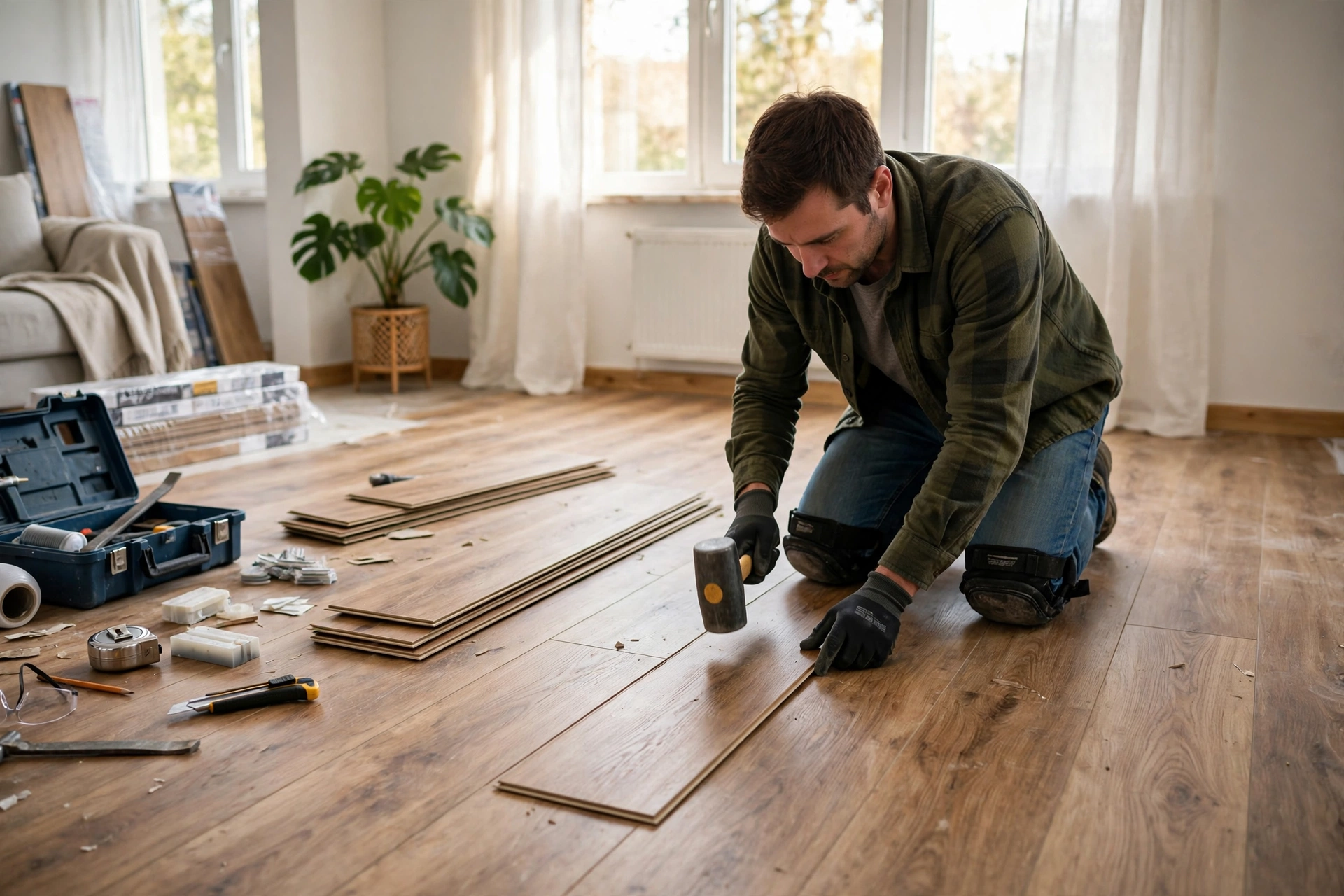
Vinyl plank flooring is installed by preparing the subfloor, laying the planks in rows from one side of the room, and leaving a small expansion gap around the edges. Glue-down products are stuck to the base, while click products lock together and float over it, but both methods depend on a clean, dry, and level starting surface.
Typical steps look like this:
- Check the subfloor is clean, dry, level, and stable, and fix loose boards first.
- Let the planks sit in the room before fitting, so they adjust to room temperature.
- Plan the layout so the first and last rows are not very narrow, and stagger joints for a natural look.
- Fit row by row, using spacers at the walls for the recommended expansion gap.
- Cut planks around door frames, pipes, and corners, and keep each row straight.
- Finish with trims or skirting to cover the gap, and do not fix heavy furniture through a floating floor.
This is a general guide, not a substitute for your product’s instructions. Fitting details, gap sizes, and adhesives vary, and getting them wrong can cause gaps, lifting, or noise. If subfloor preparation or cutting around fittings worries you, a professional fitter can save time and costly mistakes.
What Affects the Cost
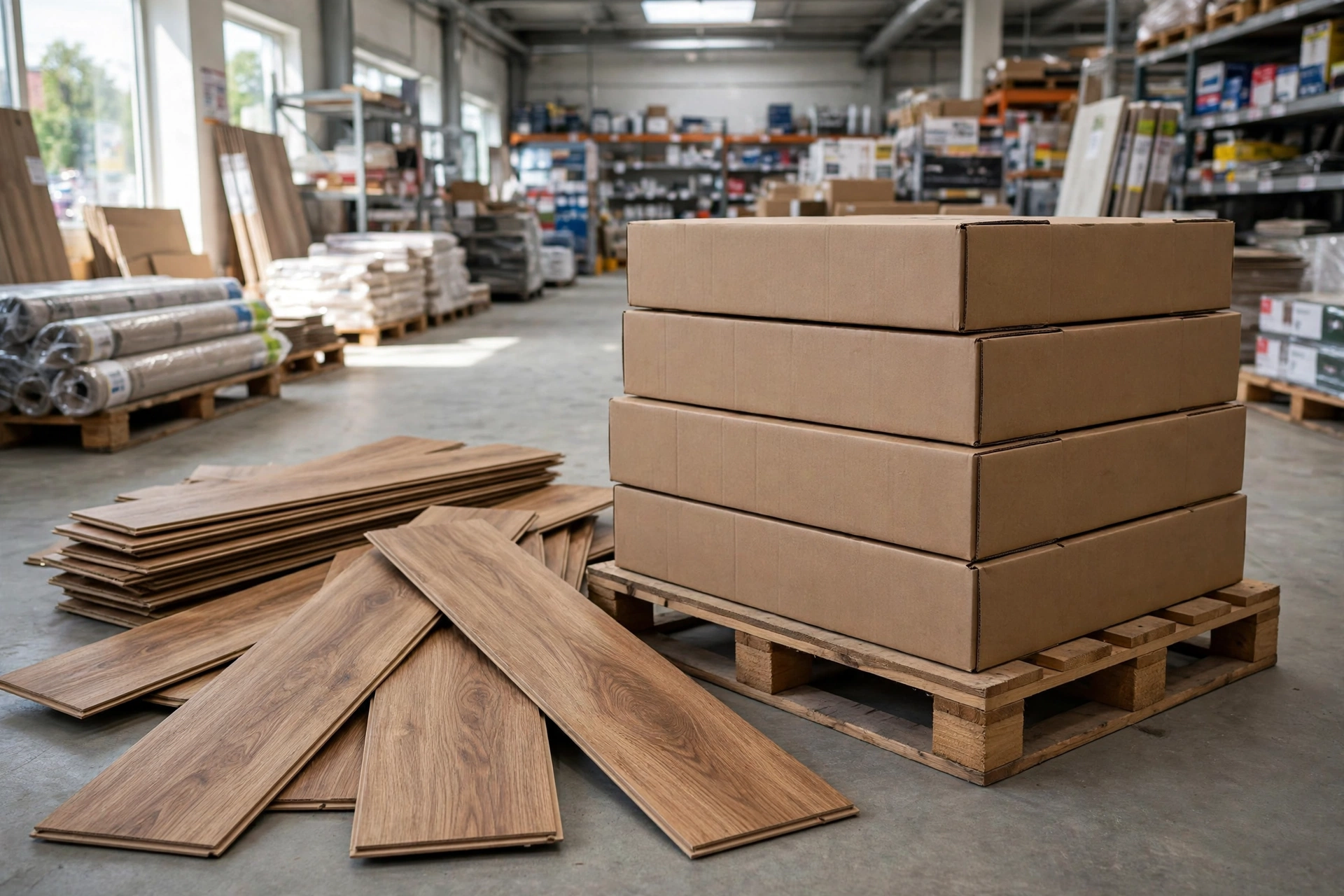
Vinyl plank flooring cost is affected by plank quality, wear layer, core type, fitting method, and subfloor condition, rather than colour or pattern alone. Thicker, more durable products and rigid core ranges usually cost more than basic flexible planks, and professional fitting adds to the total.
Do not compare prices on the plank alone. A cheaper plank needing separate underlayment, more subfloor work, or professional fitting may cost as much as a dearer product that includes backing and fits more easily. Delivery, trims, thresholds, and cutting waste also add up, and most rooms need extra material for cuts.
Because prices change over time and vary by region, supplier, and range, this guide gives no single price figure. Instead, ask suppliers for a complete quote including planks, underlayment if needed, trims, adhesive if needed, subfloor preparation, and fitting, so you can compare like with like. A plank-only quote can be misleading.
How to Clean and Maintain It
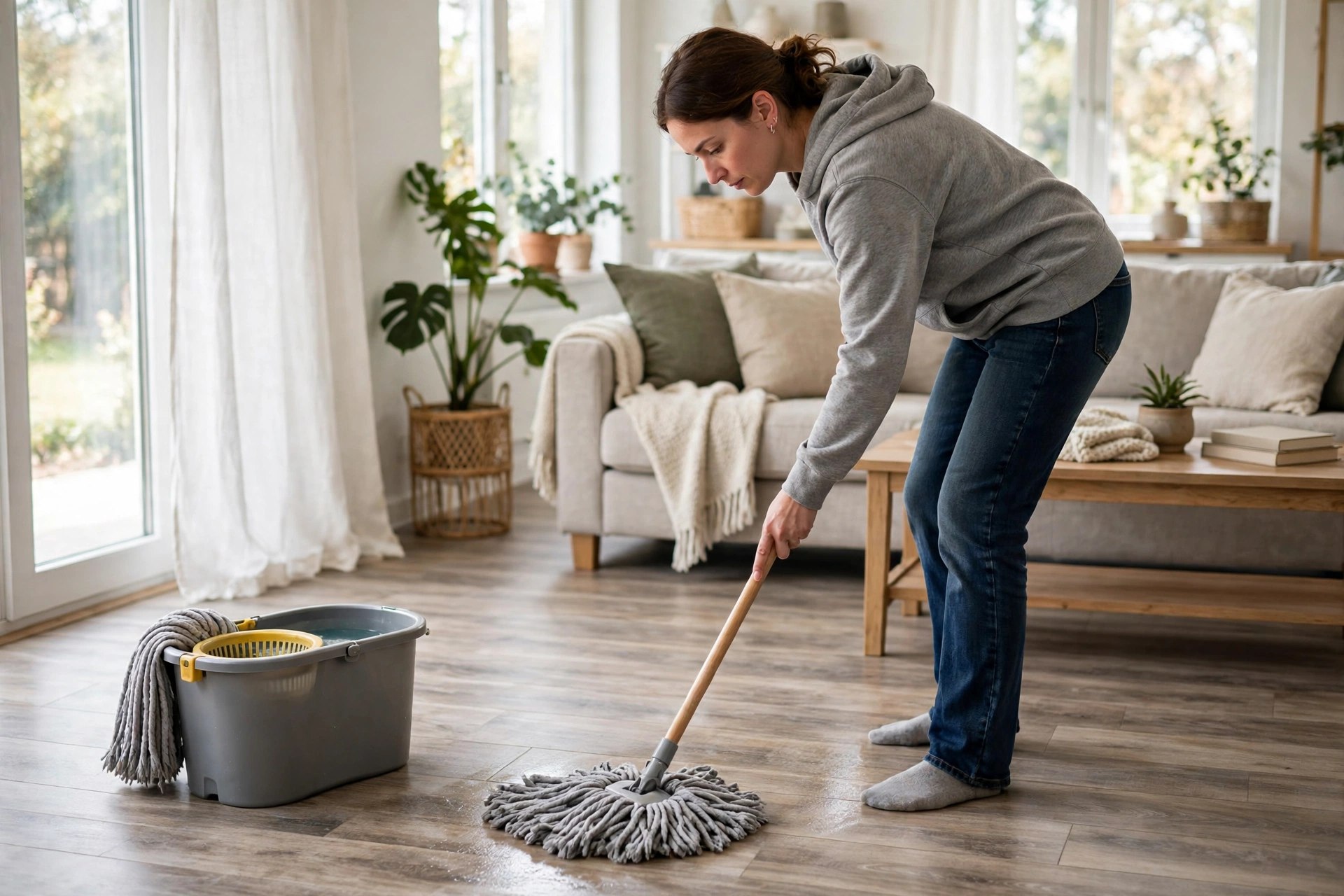
Vinyl plank flooring is maintained with regular sweeping or vacuuming, damp mopping with a suitable cleaner, and prompt cleaning of spills, rather than with harsh scrubbing or soaking. It does not need waxing or sanding like wood, and most daily care is about removing grit and dirt before it scratches the surface.
Sweep or vacuum often, especially in entrances and kitchens where grit builds up, using a soft brush or hard-floor setting. Mop damp, not soaking wet, with a cleaner recommended for vinyl floors. Wipe spills promptly, even on waterproof-described products, because liquid at joints and edges can still cause problems.
Furniture pads under chair and table legs help prevent scratches, and mats at entrances reduce dirt and grit. Avoid steam mops unless the product guidance clearly allows them, and avoid abrasive pads or harsh chemicals that can dull the surface. With steady, gentle care, the floor can stay looking good for a long time, though it will still show wear in the busiest paths first.
Common Mistakes to Avoid
The most common mistakes with vinyl plank flooring are skipping subfloor preparation, ignoring expansion gaps, choosing by colour alone, and believing that waterproof means worry-free. Each of these mistakes can lead to gaps, lifting, noise, or a floor that looks good at first but fails early.
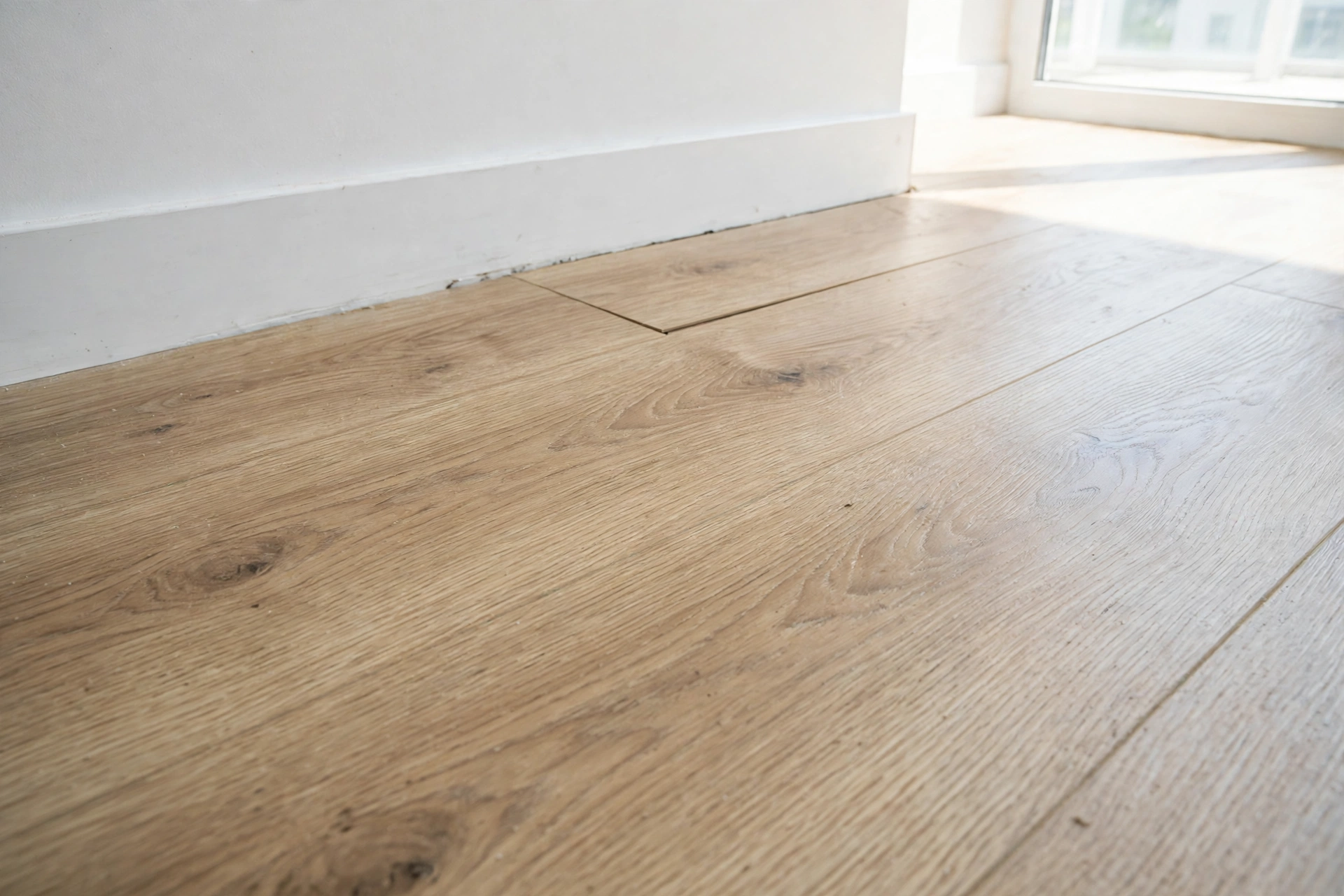
Subfloor preparation is the mistake people regret most. A floor that looks flat may still have dips, loose boards, or moisture problems, and fitting over them usually makes them worse. Expansion gaps are easy to forget because trims hide them, but without them a floating floor cannot move with temperature changes, and planks can buckle.
Choosing by colour alone is another trap. Two planks can look almost identical in a photo but differ in wear layer, core, and backing, and those differences decide how the floor copes with pets, furniture, and traffic. Finally, read waterproof labels carefully: a product may resist surface water well but still fail if water gets underneath.
How Long It Lasts and What Wears It Out
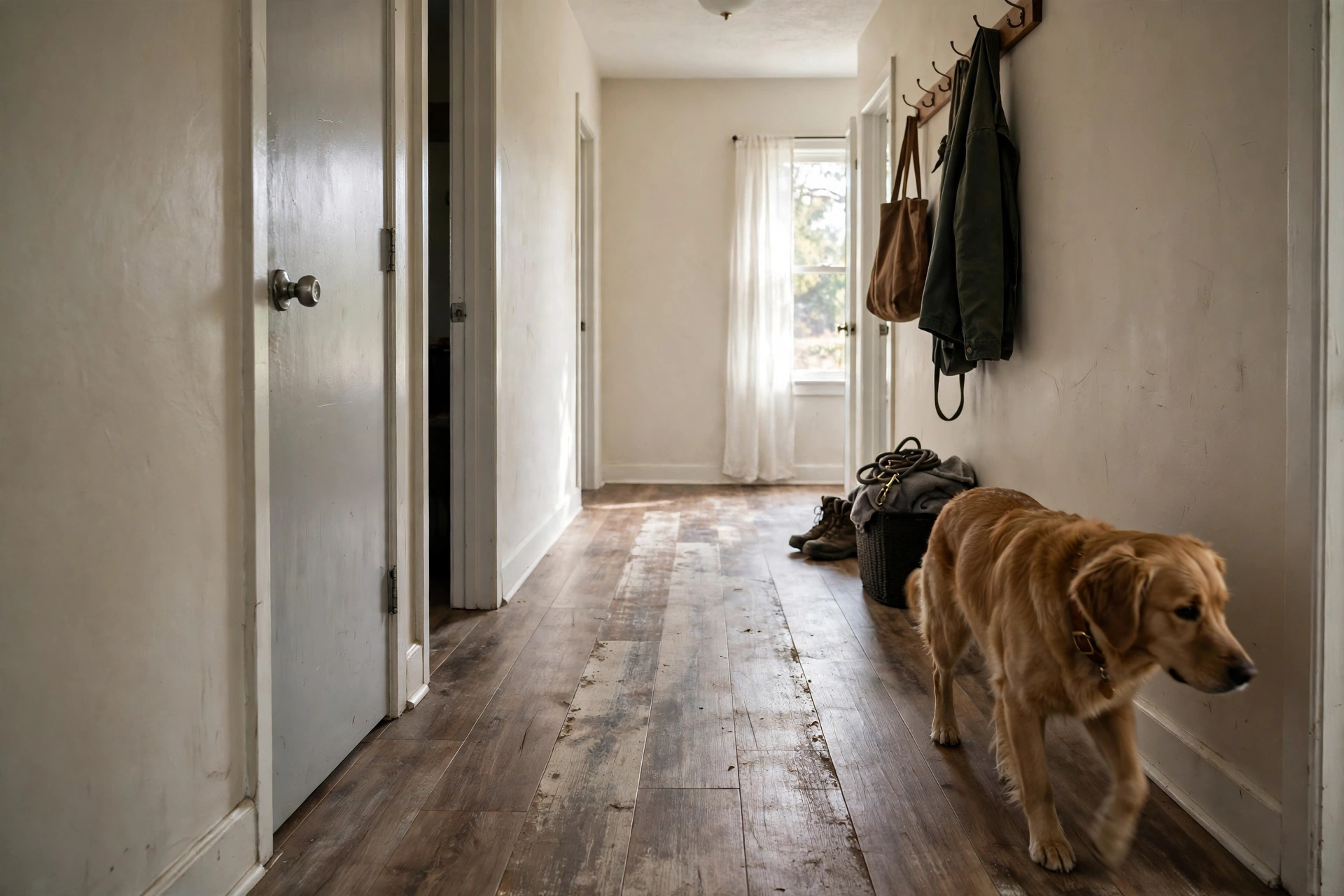
How long vinyl plank flooring lasts depends on the product quality, the wear layer, how busy the room is, and how well the floor is fitted and maintained. A floor in a quiet bedroom will usually show less wear than the same product in a busy hallway or kitchen, and no single lifespan figure applies to every product or home.
The wear layer is the main factor in durability, because it takes the daily damage. Thicker wear layers are generally made for heavier use, while thinner ones suit lighter rooms, so matching the product to the room matters more than choosing the thickest option everywhere. Sunlight, grit, heavy furniture, and dragging objects also wear a floor down slowly.
Fitting quality matters too. A well-fitted floor on a stable base is less likely to gap, lift, or creak, while one fitted over an uneven or damp base may show problems early even if the planks are good. Cleaning helps, but cannot make up for a wrong product or unready base.
Is Vinyl Plank Flooring Right for Your Home?
Vinyl plank flooring suits your home if you want a wood look with easier care and good spill resistance for busy rooms, and if your rooms suit its limits on water, heat, and subfloor condition. It is less suitable if you want real wood grain, a floor you can sand and refinish, or a surface for a constantly wet area.
A short checklist can help:
- Room use: Is this a busy, spill-prone room, or a quiet room?
- Water: Will the room get regular splashes, and can water be kept from joints and edges?
- Sun and heat: Does the room get strong direct sun or high heat?
- Subfloor: Is the base clean, dry, level, and stable, or does it need work?
- Comfort: Do you want a firmer feel, or a cushioned feel with backing?
- Repair: Would you prefer planks replaceable one at a time if damaged?
- Budget: Have you compared complete quotes, not just plank prices?
If most answers point to a practical, easy-care floor for a busy home, vinyl plank is worth considering. If you want real wood’s feel and refinishing options, or a floor for a room that stays wet, compare other options and talk to a supplier about your rooms.
Conclusion
Vinyl plank flooring is a practical, wood-like floor made from layered vinyl planks. It looks like wood, copes better with spills than laminate or solid wood, and is easier to maintain. Its limits matter too: it is not real wood, it will not fix an uneven or damp subfloor, and waterproof labels do not remove the need for careful fitting.
The best choice is rarely the cheapest plank or most attractive pattern alone. It is the product whose wear layer, core, fitting method, and backing suit your rooms, household, and budget, fitted on a prepared base and cleaned regularly. Compare complete quotes, check wet-room and sunlight guidance, and ask about repairs first.
Frequently Asked Questions
Is vinyl plank flooring real wood?
No, vinyl plank flooring is not real wood. It is made from vinyl layers with a printed wood-like pattern on top, so it copies the look of wood planks without using solid timber.
Is vinyl plank flooring waterproof?
Many products are described as waterproof, but this usually means the surface resists water well. Water can still cause problems if it gets under the planks, so spills should be cleaned promptly.
Can vinyl plank flooring go in a kitchen?
Yes, kitchens are a common choice because spills are easy to wipe and the surface is durable. The floor must be fitted correctly, and standing water should not be left on it.
Is vinyl plank flooring easy to clean?
Yes, daily care is simple. Sweep or vacuum regularly, mop with a damp mop and a vinyl-suitable cleaner, and wipe spills quickly to protect the joints and surface.
Can one damaged vinyl plank be replaced?
Often yes, especially with click-lock products, where a single plank can sometimes be lifted and replaced. Glue-down planks can be harder to replace neatly, so check the product type first.
Disclaimer: This article is provided for general information only. It is not professional flooring, building, or installation advice, and it does not promote any brand, product, or service. Product features, prices, and suitability vary, so always check the guidance for the specific product you are considering and seek qualified advice for your home before making a decision.