To clean carpet well means to remove loose dirt first, treat spills promptly by blotting rather than rubbing, deep clean only when the carpet is ready, and dry it fully so no damp smell or damage remains. This order matters more than any single product, because a good method protects fibres while a rushed method can set a stain.
Carpet feels soft underfoot, but it also traps dust, crumbs, pet hair, and spills in its fibres. A quick vacuum helps, yet it does not remove a dried stain or a smell settled deep in the pile. Many people reach for the strongest cleaner first, but that can spread a stain or damage colour.
This guide keeps the process simple and safe: identify your carpet type, vacuum in a way that lifts dirt, treat stains step by step, and decide between a home deep clean and professional help. You will also learn how to dry carpet properly, the step most guides rush past.
What Type of Carpet Are You Cleaning?
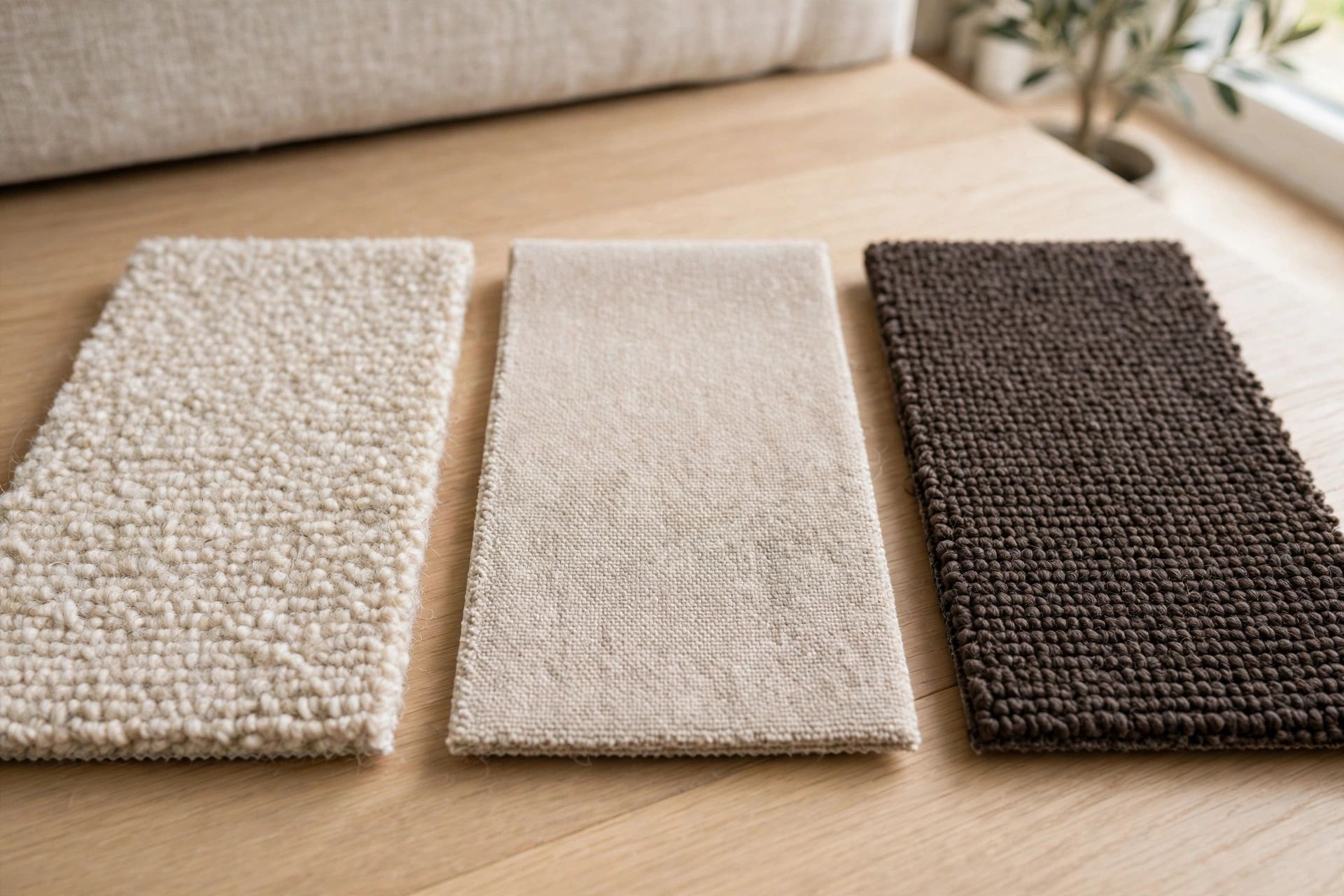
Before you clean carpet, identify its fibre and construction, because wool, nylon, polyester, and natural plant fibres react differently to water, heat, and cleaners. Check the maker’s label, a spare sample, or your purchase records, and test any cleaner in a hidden spot first.
Nylon and polyester are common in family homes and usually handle water-based cleaning well, though they still need care with heat and strong chemicals. Wool is softer and more sensitive: it can shrink or lose colour if it is soaked or treated with harsh alkaline cleaners, so use wool-safe products and less water. Natural plant fibres, such as sisal, also dislike soaking and are best cleaned with minimal moisture.
Colour and pile matter too. A light carpet shows stains sooner, while a dark carpet can hide residue. Loop pile can snag if you scrub hard. If unsure, start with the gentlest method — vacuum, blot, and a small test patch.
Vacuum First, and Vacuum the Right Way
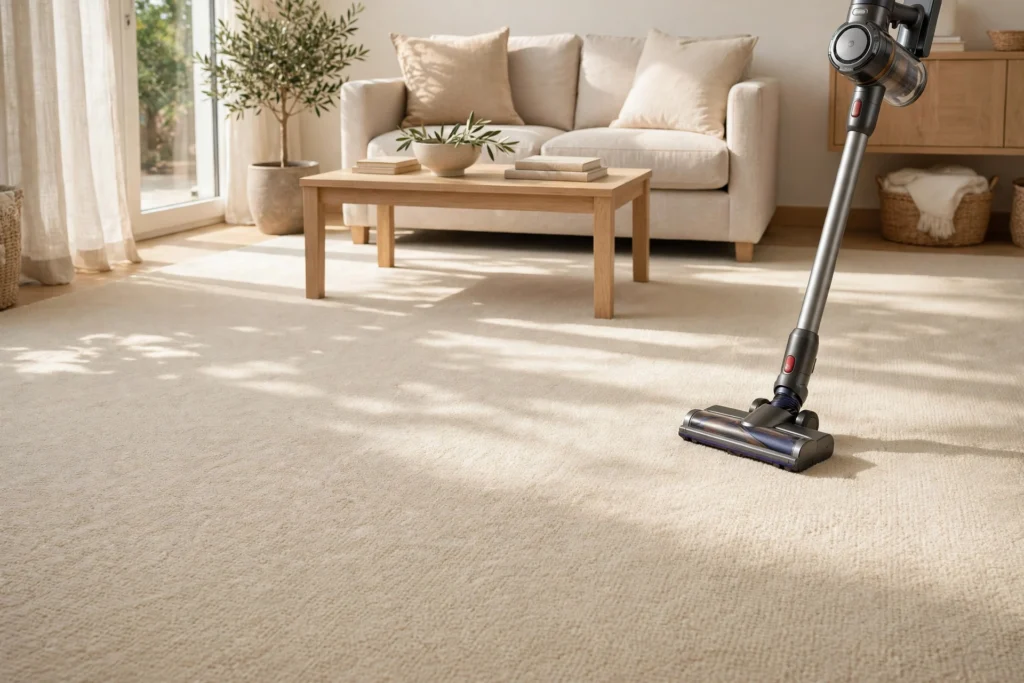
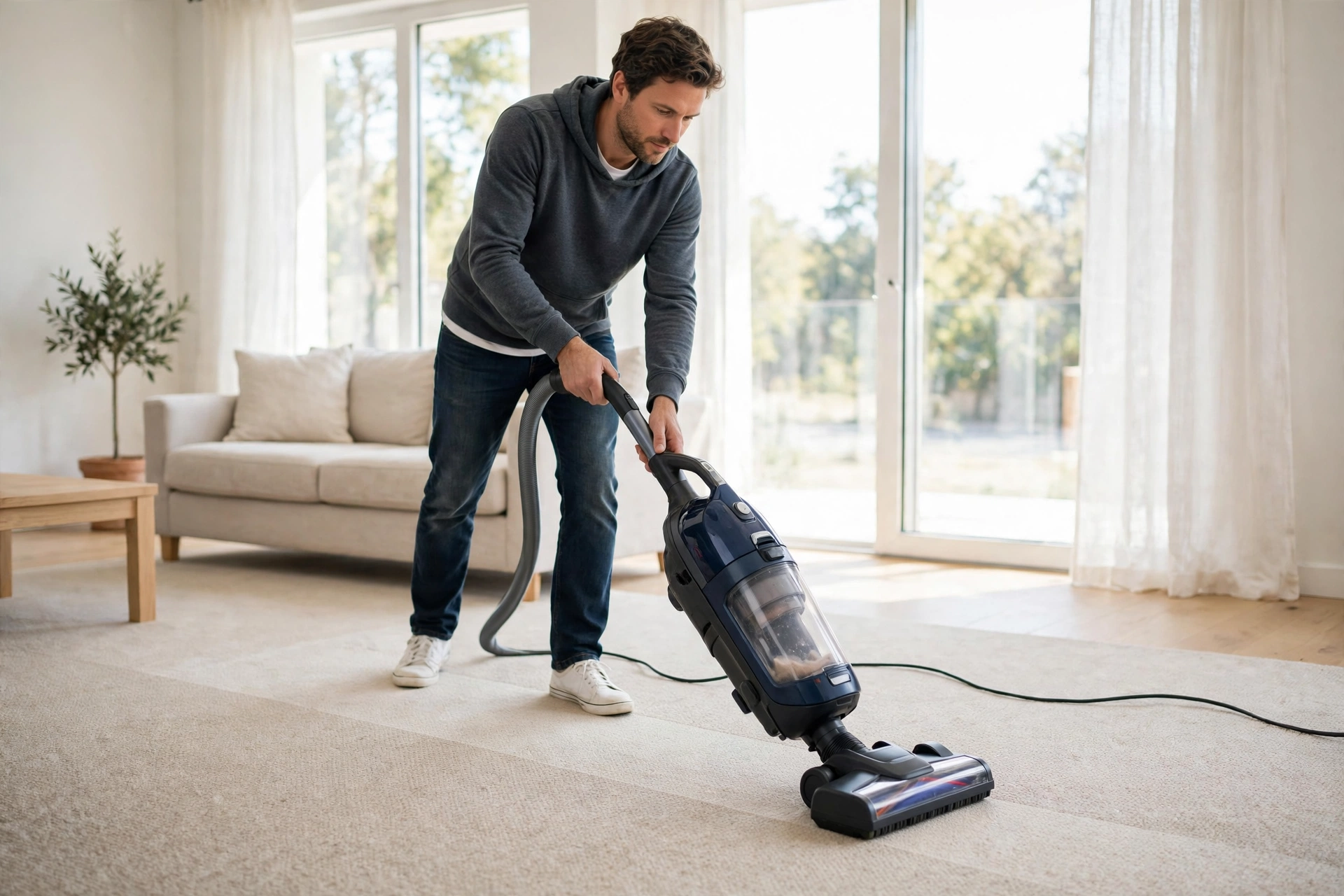
To vacuum carpet well, remove loose items, vacuum slowly in overlapping passes, go over high-traffic areas twice, and empty the bag or bin before it is full. Slow, overlapping passes lift more dirt than fast passes, because the brush has time to loosen soil from the fibres.
Start by picking up toys, cords, and small objects, and move light furniture if you can. Vacuum the room in one direction, then again at a right angle in busy areas, so you reach dirt from more than one side. Pay extra attention to edges, where dust collects along baseboards, and use a crevice tool for corners and stairs.
Check your vacuum before you start. A full bag, a clogged filter, or a worn brush reduces suction. Empty the bin, clean the filter as the maker directs, and check the brush roll for hair and threads.
Treat Spills Before They Become Stains
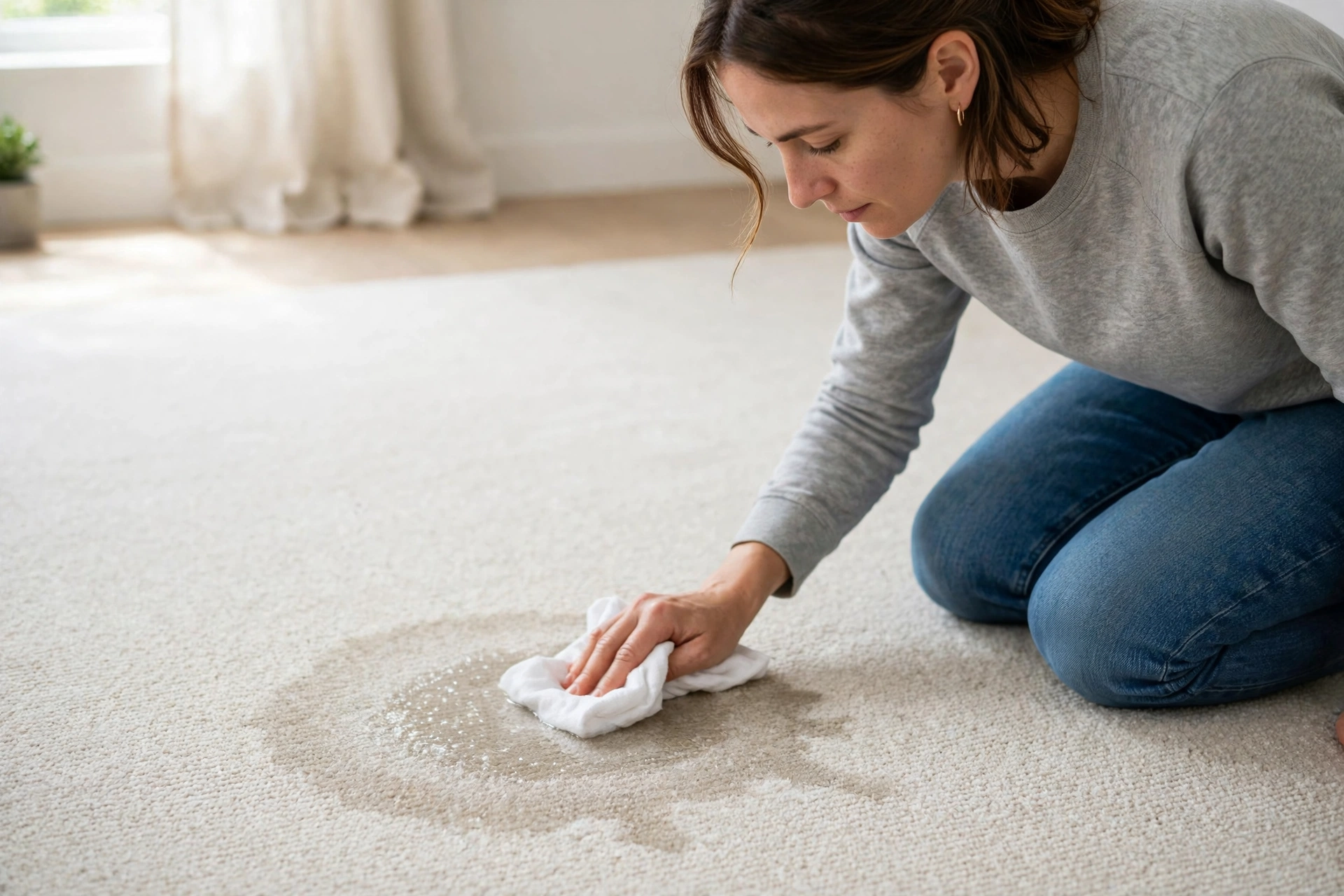
To treat a fresh spill on carpet, act quickly, remove solids gently, blot liquids with a clean white cloth from the outside toward the centre, and test any cleaner in a hidden area first. Blotting lifts the spill, while rubbing spreads it and pushes it deeper into the fibres.
Speed matters, but calm steps matter more. First, lift solids with a spoon or dull knife, working from the edge inward. For liquids, press a clean white cloth or paper towel onto the spill and lift, then repeat with a fresh section of cloth. White cloths help because you can see when colour stops transferring, and they avoid dye transfer from a coloured towel.
Next, test your cleaner. Apply a small amount to a hidden area, wait a few minutes, and check for colour change or damage. If the test is fine, apply the cleaner to a cloth rather than pouring it directly onto the carpet, then blot gently. Work in small sections, and rinse by blotting with a cloth dampened in clean water, so no sticky residue remains to attract dirt later.
- Act quickly, but do not panic or scrub
- Lift solids first, then blot liquids with a white cloth
- Work from the outside of the spill toward the centre
- Test every cleaner in a hidden spot before full use
- Rinse by blotting with clean water, then blot dry
Remove Common Carpet Stains Step by Step
To remove a common carpet stain, identify the stain type, blot up as much as possible, apply a cleaner suited to that stain, let it work briefly, blot again, and rinse by blotting with clean water. Different stains need different first steps, so guessing with one all-purpose method often fails.
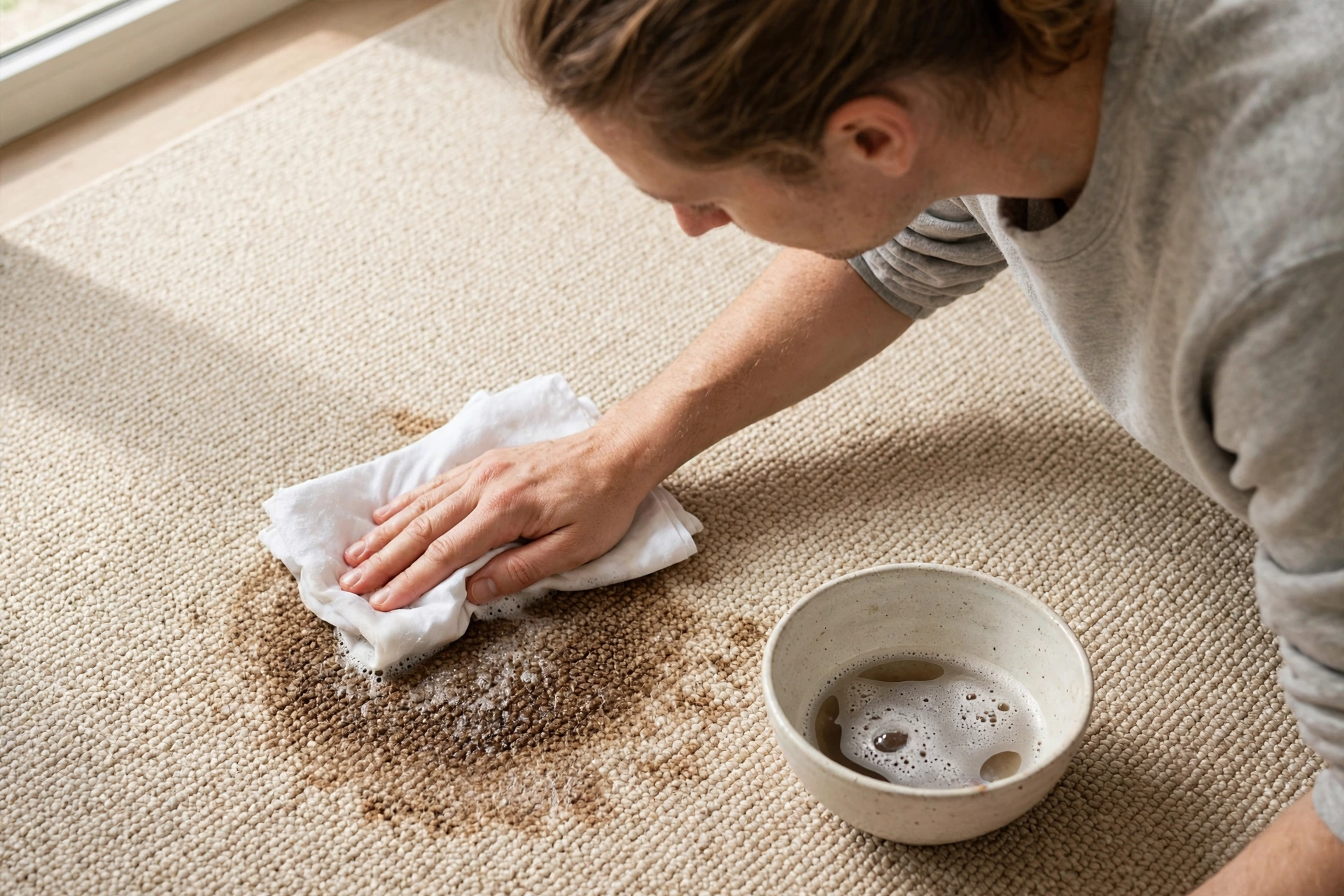
For food and drink spills, blot first, then use a small amount of dish soap in cool water on a cloth, blotting from the edge inward. For coffee, blot, then treat with the same mild solution, and repeat until no colour transfers. For mud, let it dry fully first, then vacuum it up before any wet treatment, because wet mud spreads and stains more. For grease, blot solids, then use a cleaner made for grease, following the label, and rinse well.
Some stains need patience rather than stronger chemicals. Repeat the blot-and-rinse cycle, changing to a clean cloth section each time. If a faint mark remains, let the area dry fully before judging it, because damp carpet often looks darker. For ink, dye, bleach, or a large pet accident, consider professional help.
| Stain type | First step | Do not do |
|---|---|---|
| Fresh food or drink | Blot with a white cloth | Rub or pour cleaner on the pile |
| Coffee or tea | Blot, then mild soap solution | Use hot water first on protein stains |
| Mud | Let dry, then vacuum | Wet it while still muddy |
| Grease or oil | Blot, use a grease cleaner | Flood the area with water |
| Pet urine | Blot, rinse by blotting | Use ammonia-based cleaners |
| Ink or dye | Blot gently, seek advice | Scrub hard or use bleach |
Deep Clean Carpet Without a Machine
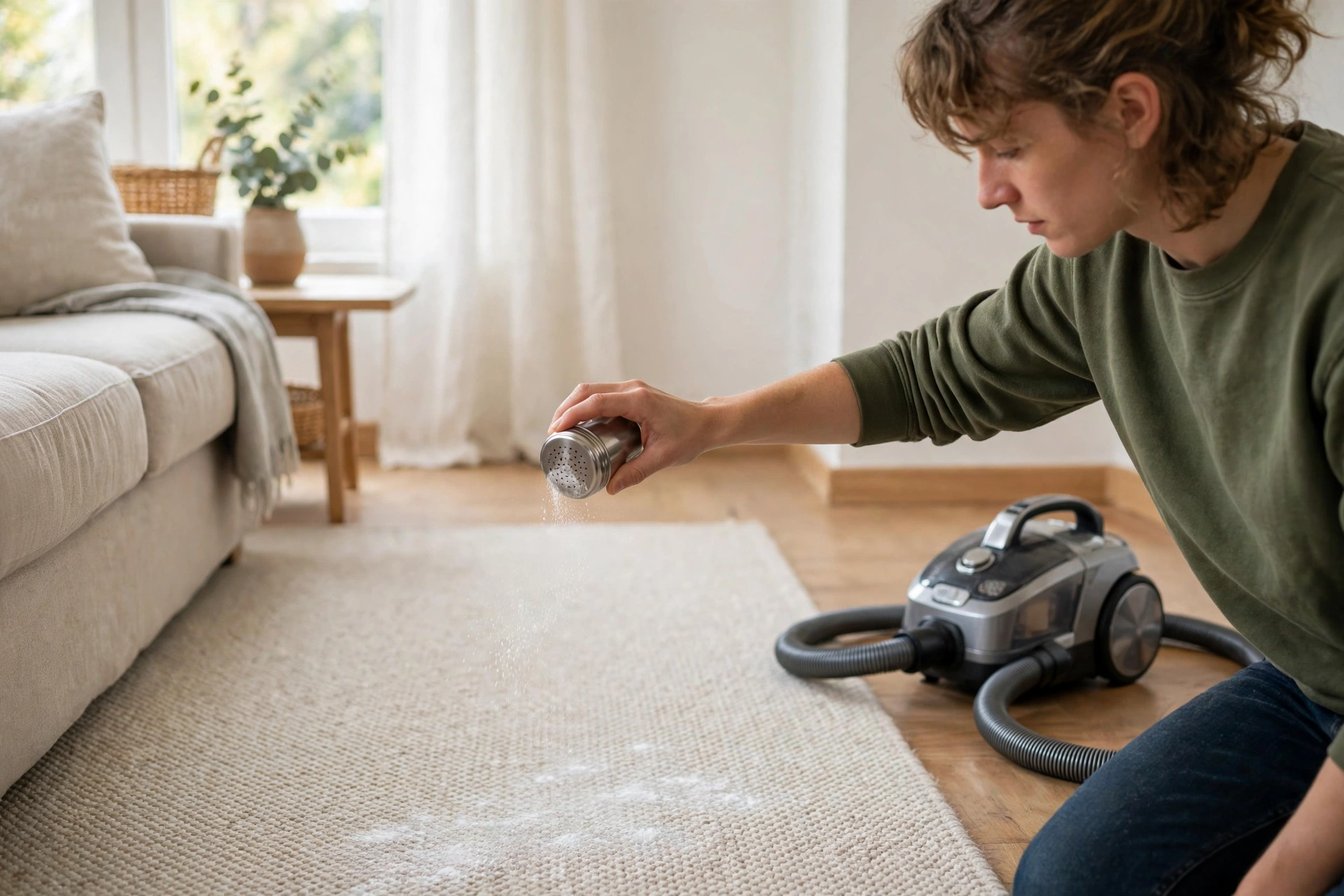
To deep clean carpet without a machine, vacuum thoroughly, treat visible stains, sprinkle baking soda lightly for odour if the carpet allows it, vacuum again after it dries, and spot-clean remaining marks by blotting. This method refreshes carpet well, but it does not replace a full hot-water extraction for heavily soiled carpet.
Start with a careful vacuum, including edges and under light furniture. Treat stains using the blot method above, and let each treated spot dry before you judge the result. For general odour, a light sprinkle of baking soda can help: spread it thinly, leave it for a few hours or overnight if possible, then vacuum slowly and thoroughly. Do not use baking soda on damp carpet, and vacuum until no powder remains, since leftover powder can feel gritty.
For a deeper refresh, work in small sections with a cloth dampened in a mild solution, blotting rather than soaking the pile. Keep the carpet only slightly damp, and open windows or run a fan to help it dry. A no-machine clean suits maintenance and light soil, not heavily stained carpet.
Use a Carpet Cleaner Machine Well
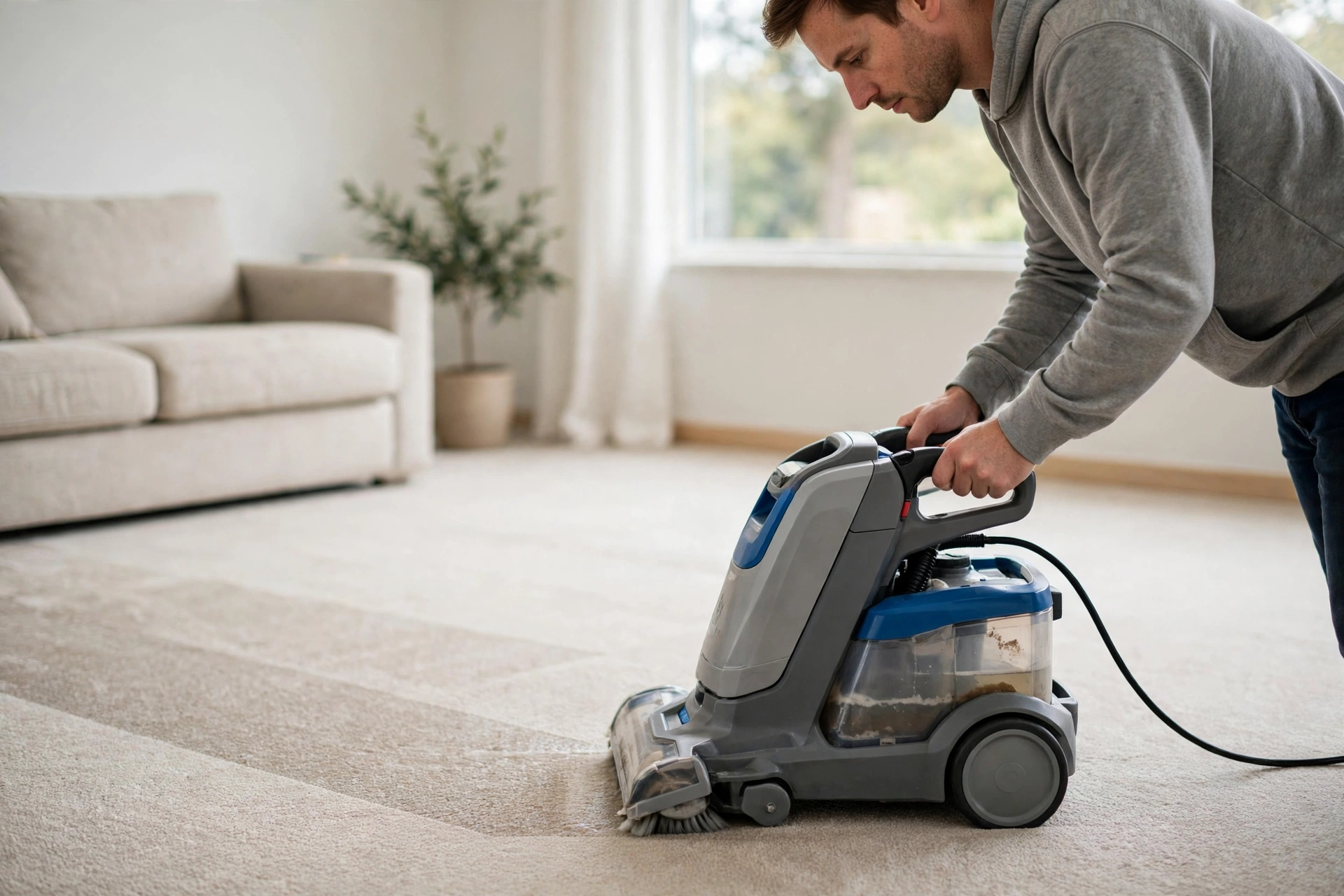
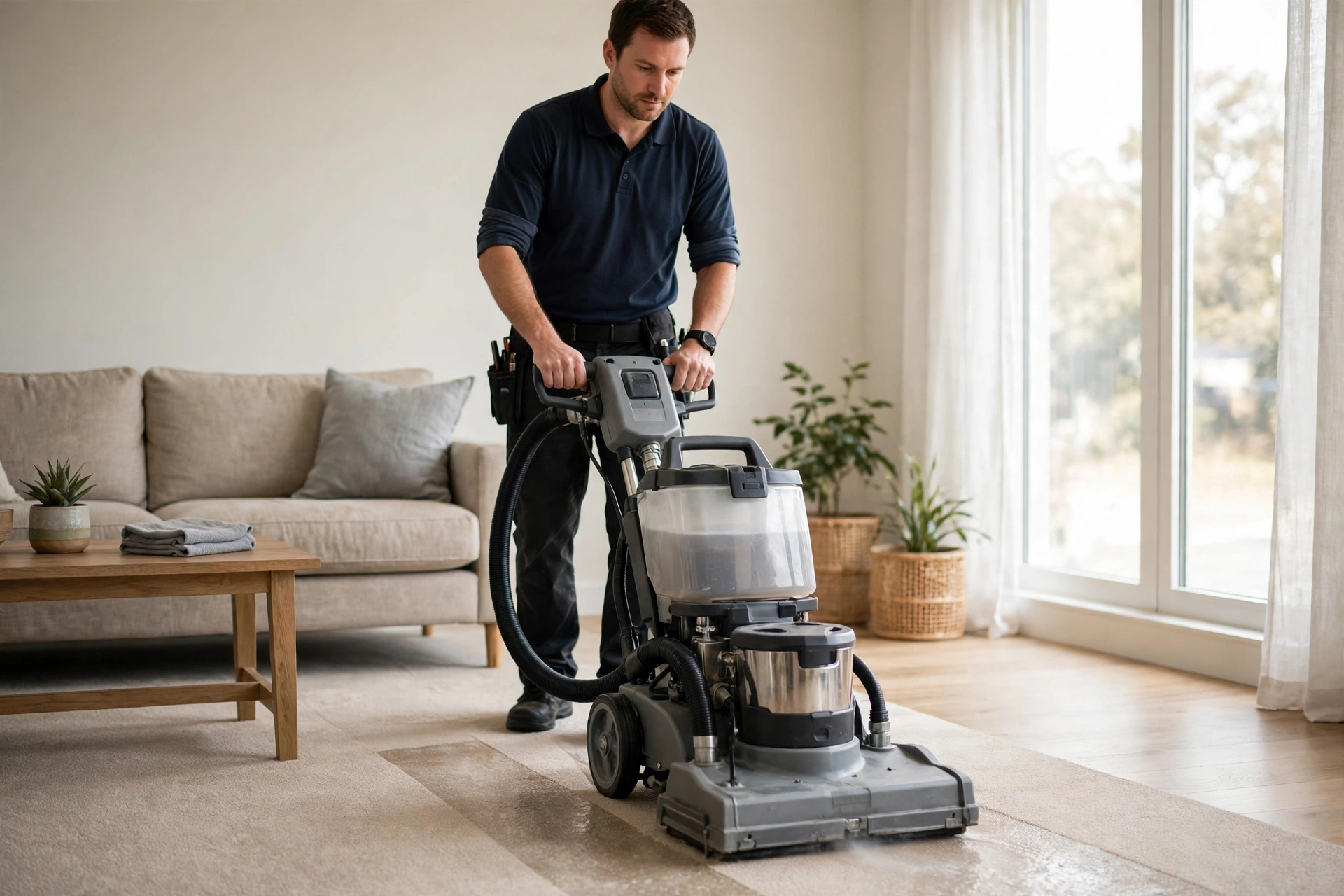
To use a carpet cleaner machine well, vacuum first, pre-treat stains, fill the machine exactly as the maker directs, clean in slow overlapping passes, and make extra dry passes to remove as much water as possible. The goal is clean fibres with the least water left behind, because excess water slows drying and can cause smells.
Read the machine manual before you start, including which cleaning solution it needs and how much to use. More solution does not mean cleaner carpet; excess residue can attract dirt after the carpet dries. Pre-treat stains, then work in small sections, moving the machine slowly so the solution and suction have time to work. Overlap each pass slightly, and do not rush across a large room in one go.
After the cleaning pass, make several dry-only passes to extract water. Check the waste tank often, and empty it before it is full. When you finish, clean the machine as the maker directs. Avoid walking on damp carpet in shoes.
Dry Carpet Properly to Prevent Odour and Mould
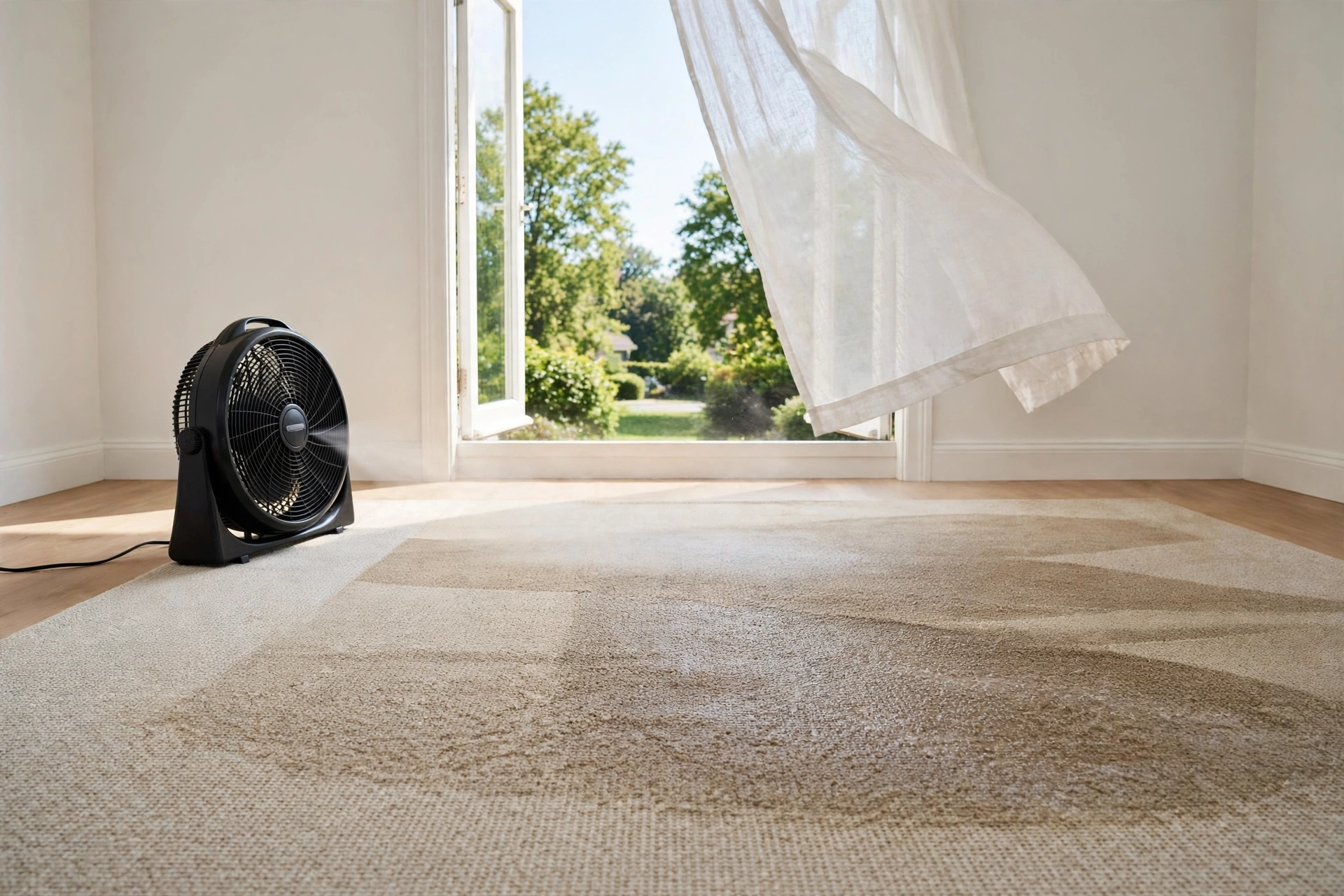
To dry carpet properly after cleaning, blot excess water with dry towels, improve airflow with open windows and fans, keep foot traffic off the area, and check that the carpet and padding feel dry before replacing furniture. Damp carpet that stays wet can develop a musty smell and, in the worst cases, damage to the padding below.
Drying starts during cleaning, not after it. Use dry passes with a machine, or blot by hand with towels, pressing down firmly and changing towels as they become wet. Then create airflow: open windows if the weather allows, run ceiling fans, and place a fan so air moves across the carpet, not just above it. In humid weather, a dehumidifier can help, and air conditioning can also reduce indoor moisture.
Check the carpet by touch after a few hours, and lift a corner if possible to check the padding. Do not replace heavy furniture until the carpet is dry. If a damp smell remains after drying, ventilate more and vacuum again once fully dry. A smell that persists for days, or visible mould, needs professional advice.
Deal With Pet Hair, Odour, and Allergens
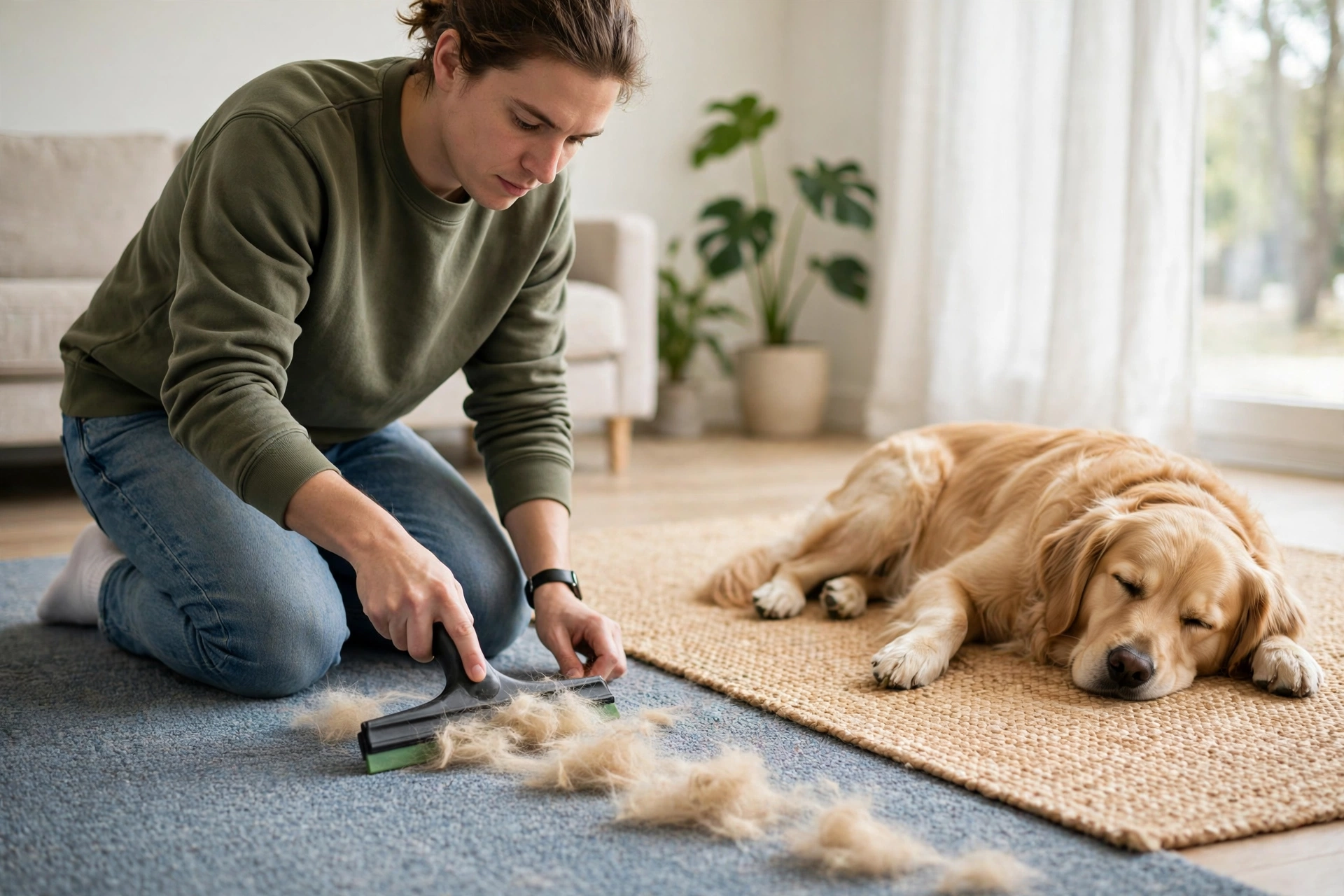
To deal with pet hair and odour on carpet, vacuum often with a brush tool, blot accidents promptly, rinse by blotting with clean water, and use an enzyme cleaner made for pet stains if the label allows it. Pet accidents need prompt, gentle treatment, because heat and the wrong cleaner can set both stain and smell.
Pet hair clings to fibres, especially in corners and on stairs. A vacuum with a brush roll, or a rubber squeegee drawn slowly across the carpet, can lift hair that a single vacuum pass misses. Vacuum pet areas more often than the rest of the house, and empty the bin frequently so suction stays strong.
For pet urine, blot first, then rinse by blotting with cool water, repeating until the cloth shows little transfer. An enzyme cleaner, used exactly as the label directs, can break down the organic material that causes smell. Avoid ammonia-based cleaners, which can smell similar to urine to pets and may encourage repeat accidents. If odour remains after the carpet is fully dry, or if the padding is soaked, professional cleaning may be needed, because surface treatment alone cannot reach deep padding.
Clean High-Traffic Areas and Traffic Lanes
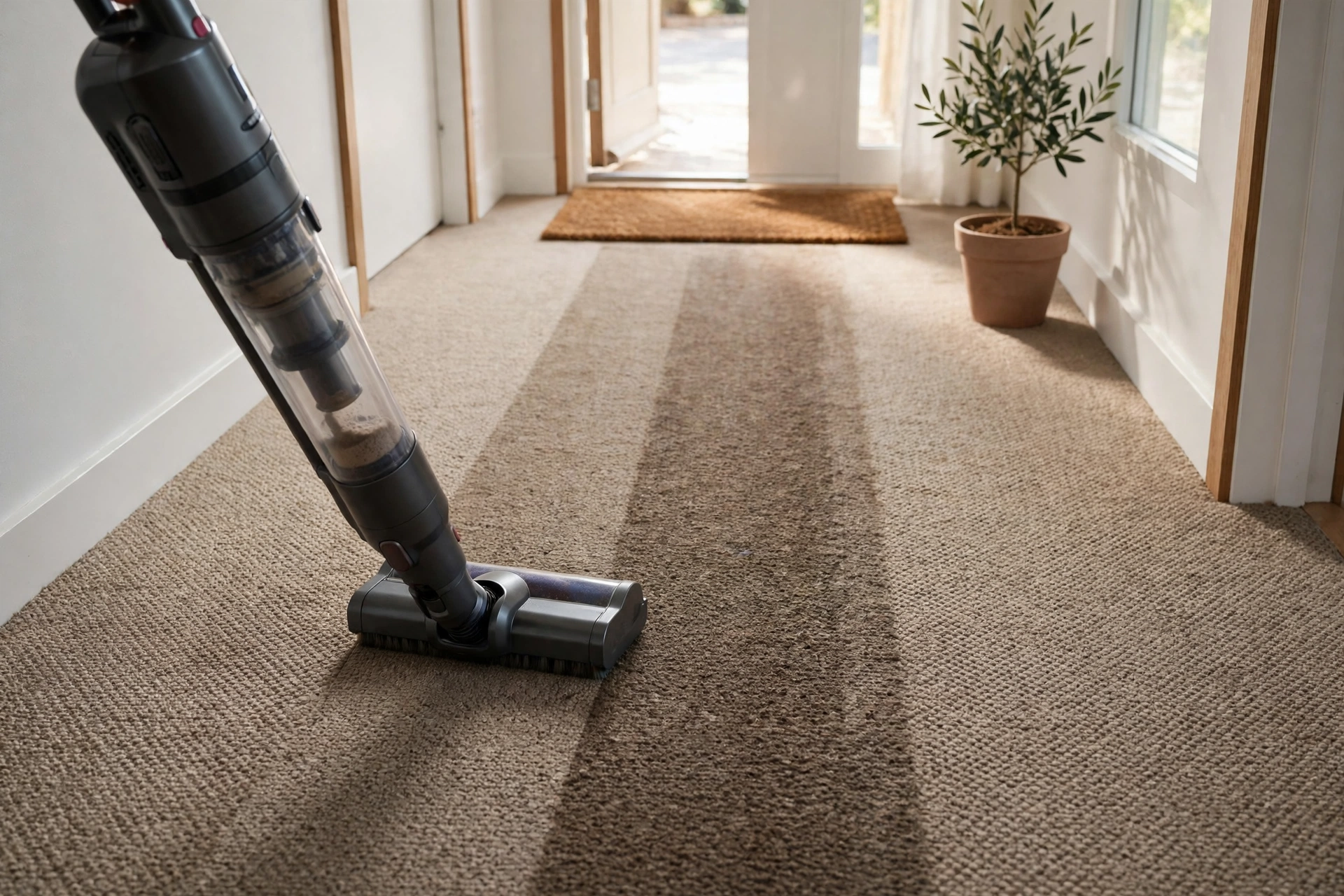
To clean high-traffic areas, vacuum them more often and more slowly, pre-treat the lane before deep cleaning, and work in small sections so the cleaner has time to lift ground-in dirt. Traffic lanes look darker because dirt is pressed into the pile over time, not because the carpet colour has changed.
Hallways, doorways, and the path from the sofa to the kitchen usually show wear first. Vacuum these areas in both directions, and use the crevice tool along edges where dirt collects. Before deep cleaning, pre-treat the lane lightly and let the solution work for the time the label suggests, rather than scrubbing immediately.
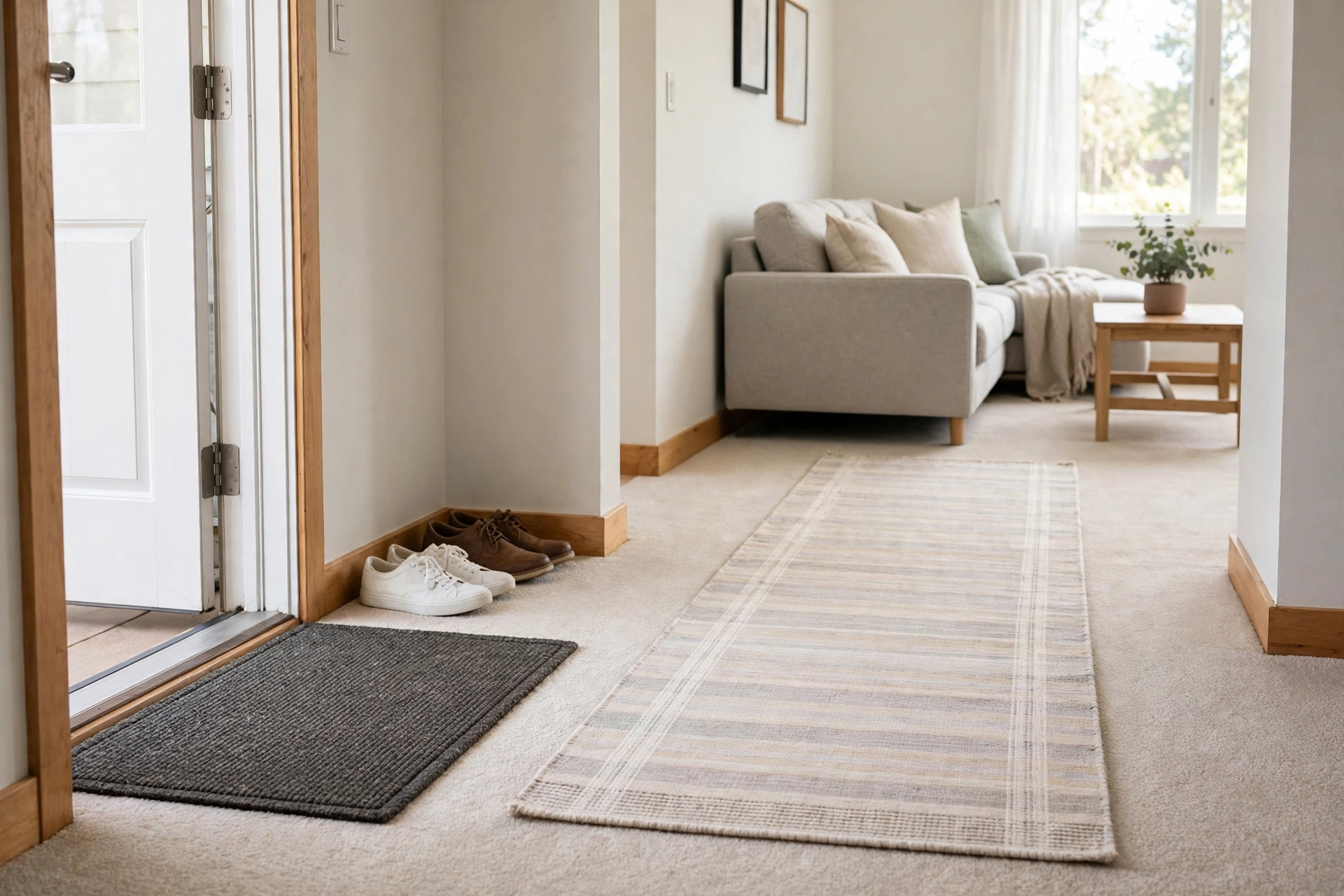
When you deep clean a lane, make extra dry passes and check the result only after it is fully dry. Damp carpet often looks darker, so a lane that seems unchanged while wet may look much better once dry. Protect lanes after cleaning with a doormat at entrances, a runner in a busy hallway, and a no-shoes habit if your household can keep it. Small changes in daily traffic reduce how quickly lanes return.
Protect Carpet After Cleaning
To protect carpet after cleaning, keep it dry, vacuum regularly, use doormats and runners in busy spots, and treat new spills promptly by blotting. Protection is mostly about daily habits, not a single product, and it extends the time between deep cleans.
Place a sturdy doormat outside and inside each main entrance, and clean the mats themselves regularly, or they will stop trapping dirt. In dining areas, use a washable rug or mat under chairs if the carpet allows it, so food spills land on a surface that is easier to wash. Rotate rugs and, where possible, rearrange furniture slightly over time, so wear is spread more evenly.
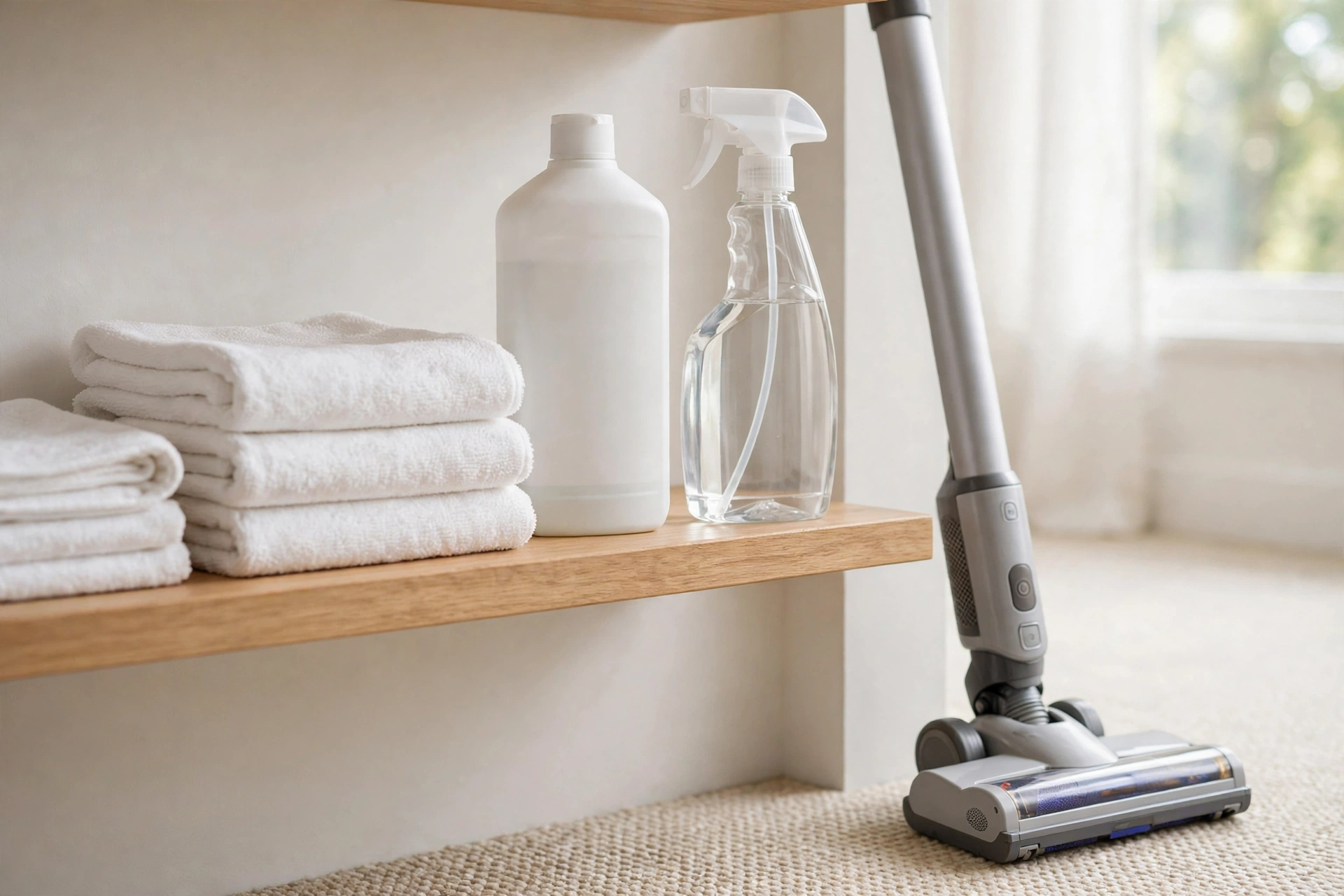
Avoid walking on damp carpet in outdoor shoes, and keep cleaning residue low by rinsing treated spots well. Store leftover cleaning products safely, and keep a small kit — white cloths, a mild cleaner, and a spray bottle of clean water — in an easy spot, so a spill is treated quickly. These habits cost little time, but they make the next deep clean noticeably easier.
When to Call a Professional Carpet Cleaner
To decide when to call a professional carpet cleaner, consider the stain type, the carpet material, the size of the soiled area, and whether home methods have already failed. Large, deep, or delicate jobs are often better handled by a professional with the right equipment and training.
Call a professional if the carpet is wool or another delicate fibre and the stain is large, if the stain is ink, dye, bleach, or a large pet accident, or if the carpet padding is soaked and smells after drying. Also consider professional help for a whole-house deep clean, for carpet that has not been cleaned in years, or for a persistent smell that returns after home cleaning.
Before booking, ask what method the cleaner uses, whether it suits your carpet type, and how long drying will take. Clear the room as the cleaner directs, and point out stains, pet areas, and any previous treatments, since earlier products can affect results. Professional cleaning is not a failure of home care; it is the right tool for jobs that need deeper extraction or specialist knowledge.
Keep a Simple Carpet Cleaning Routine
To keep carpet clean with a simple routine, vacuum high-traffic areas twice a week, vacuum other areas weekly, treat spills immediately, and deep clean every twelve to eighteen months for a normal household, or more often for homes with pets or children. A steady routine prevents dirt from becoming ground-in and keeps deep cleans shorter.
A routine does not need to be complex. Set two short vacuum sessions for busy areas, one longer session for the whole house, and a quick spill kit in an easy place. Mark deep-clean dates on a calendar, so no room is forgotten for years.
Small habits also help: take shoes off at the door when possible, shake out doormats weekly, and move light furniture occasionally to vacuum underneath. If a room looks dull despite regular vacuuming, check the vacuum filter and brush.
Conclusion
Cleaning carpet well is less about finding a miracle product and more about following a calm order: vacuum first, blot spills promptly, treat stains by type, deep clean with care, and dry fully. With a simple routine, carpet stays softer, smells fresher, and lasts longer.
FAQs
How often should I vacuum my carpet?
Vacuum high-traffic areas twice a week and other carpeted areas at least once a week. Homes with pets or children may need more frequent vacuuming, especially in rooms where pets sleep or children play.
Can I use vinegar to clean carpet stains?
Vinegar can help with some fresh stains, but it is not right for every carpet or stain. Always test it in a hidden spot first, use only a small amount on a cloth, and rinse by blotting afterwards.
How long does carpet take to dry after cleaning?
Carpet usually takes six to twelve hours to dry after a machine clean, depending on airflow, humidity, and how much water was used. Good ventilation and extra dry passes can shorten drying time noticeably.
Will baking soda remove carpet odour?
Baking soda can reduce light, surface odour when sprinkled thinly, left for a few hours, and vacuumed thoroughly. It does not fix deep padding odour, pet urine that has soaked through, or mould.
Should I deep clean carpet myself or hire a professional?
Home deep cleaning suits light to moderate soil and routine care, while professionals suit large, delicate, or stubborn jobs. If home methods fail, the carpet is wool, or padding is soaked, professional help is usually the safer choice.
Disclaimer: This article is for general information only and does not provide professional carpet cleaning, veterinary, medical, or allergy advice. Always follow the instructions for your carpet, cleaning products, and machines, test cleaners in a hidden area first, keep products away from children and pets, and seek qualified help for large stains, damaged carpet, persistent odour, or possible mould. Clearise Cleaning Services does not offer guest posting, paid promotion, or advertising through this article.