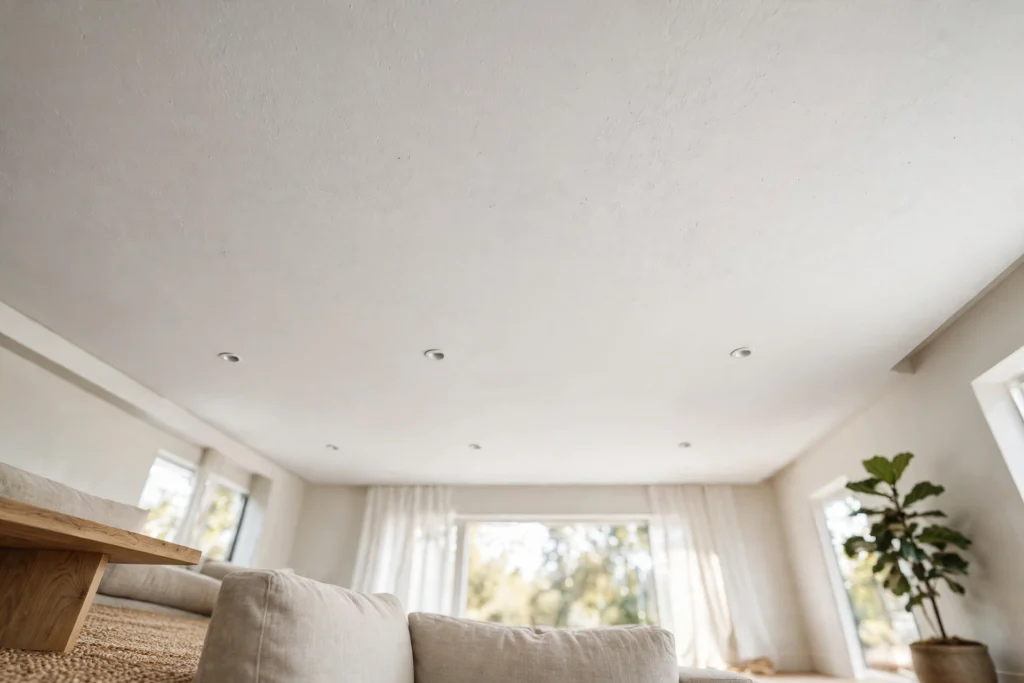
Look up in almost any home and you will see the same thing: a ceiling painted in a soft, non-shiny white. It looks plain, almost like no finish was chosen at all, yet that plain look is a deliberate choice. Ceilings are treated differently from walls for good reasons, and the finish on them matters more than most people realise.
This guide answers a simple question in full: is ceiling paint usually flat? It explains why flat is the usual choice, what ceiling paint actually is, how it differs from wall paint, when another finish makes more sense, which colours work overhead, and how to prepare and paint a ceiling without drips and patchy marks. By the end, you will know exactly what to buy for your own ceiling — and what to avoid.

The Short Answer: Is Ceiling Paint Usually Flat?
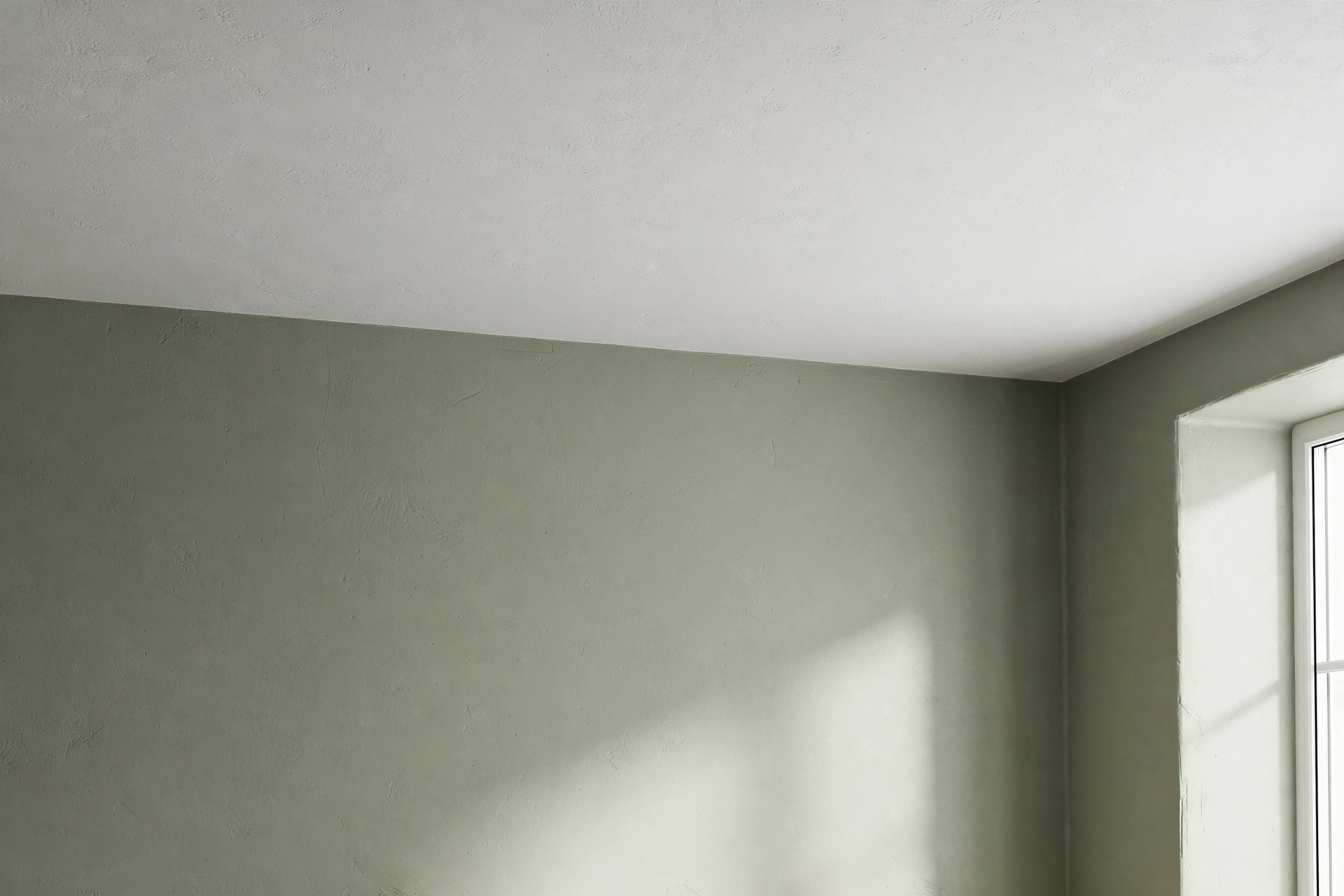
Yes, ceiling paint is usually flat, meaning it has little or no shine, and most ceilings in homes are painted with a flat or matte finish. This is the standard choice because a flat finish hides small bumps, joints and repairs, and it does not reflect light in a way that draws the eye upward to every flaw.
Flat is the default, but it is not the only option, and it is not right for every ceiling. Rooms with steam, grease or frequent splashes sometimes need a finish with a little more sheen, because it wipes clean more easily. For most living rooms, bedrooms and hallways, though, flat is the finish people expect — and the finish that looks best overhead.
Why Ceilings Are Usually Painted Flat
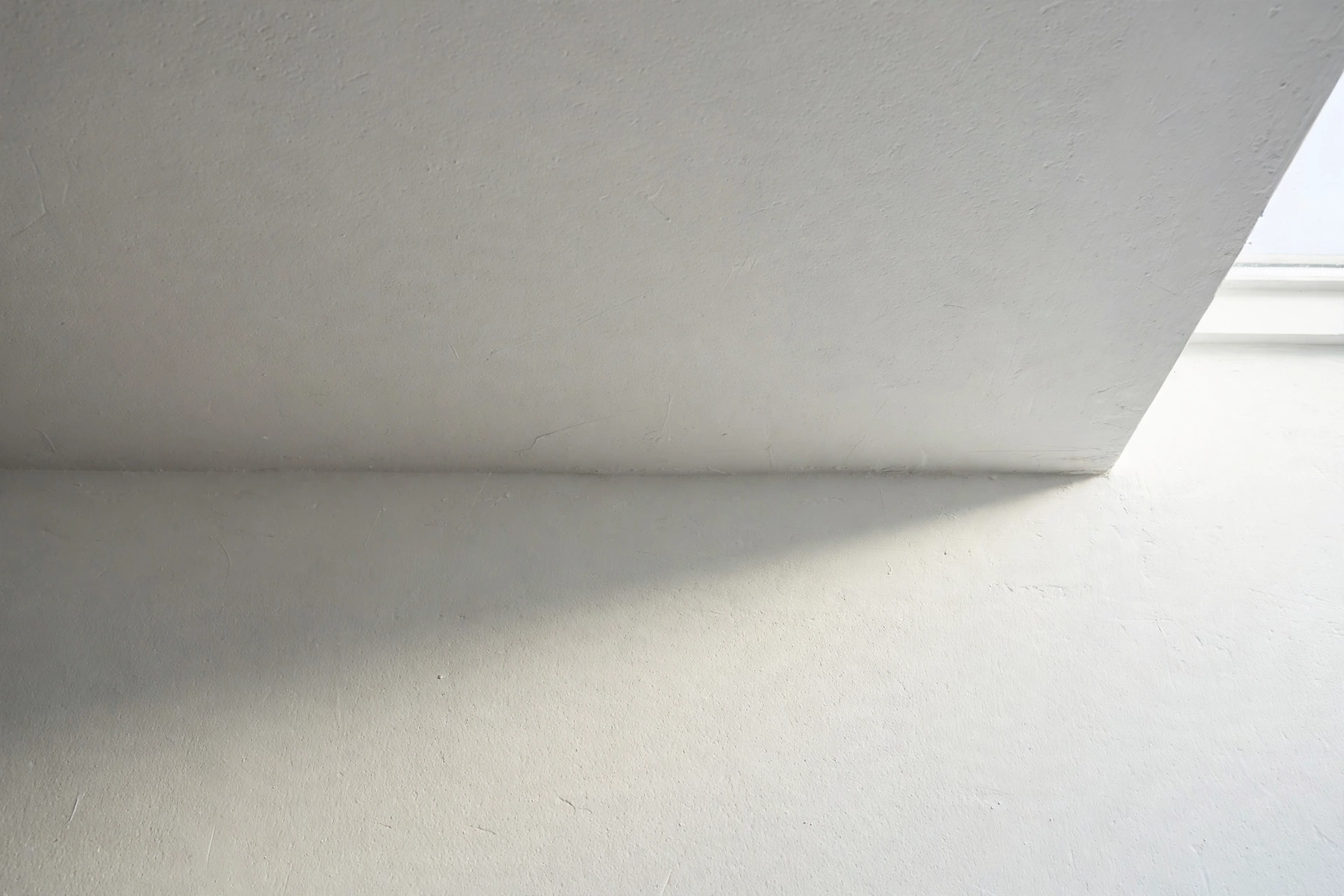
Ceilings are usually painted flat because a flat finish does not reflect light, so it hides the small imperfections that almost every ceiling has. Joints between boards, filled screw holes, slight waves in plaster and old repair patches all catch the light when a shiny paint is used, but they fade into the background under a flat coat.
There is a second reason, just as practical: nobody looks closely at a ceiling, and nobody touches it. Walls need to survive hands, furniture and cleaning, so they often get a tougher, slightly shinier finish. A ceiling only needs to look even and calm from below, and flat paint does that job better than any other finish. It also makes a room feel settled, because light is scattered softly instead of bouncing around the room.
What Ceiling Paint Actually Is
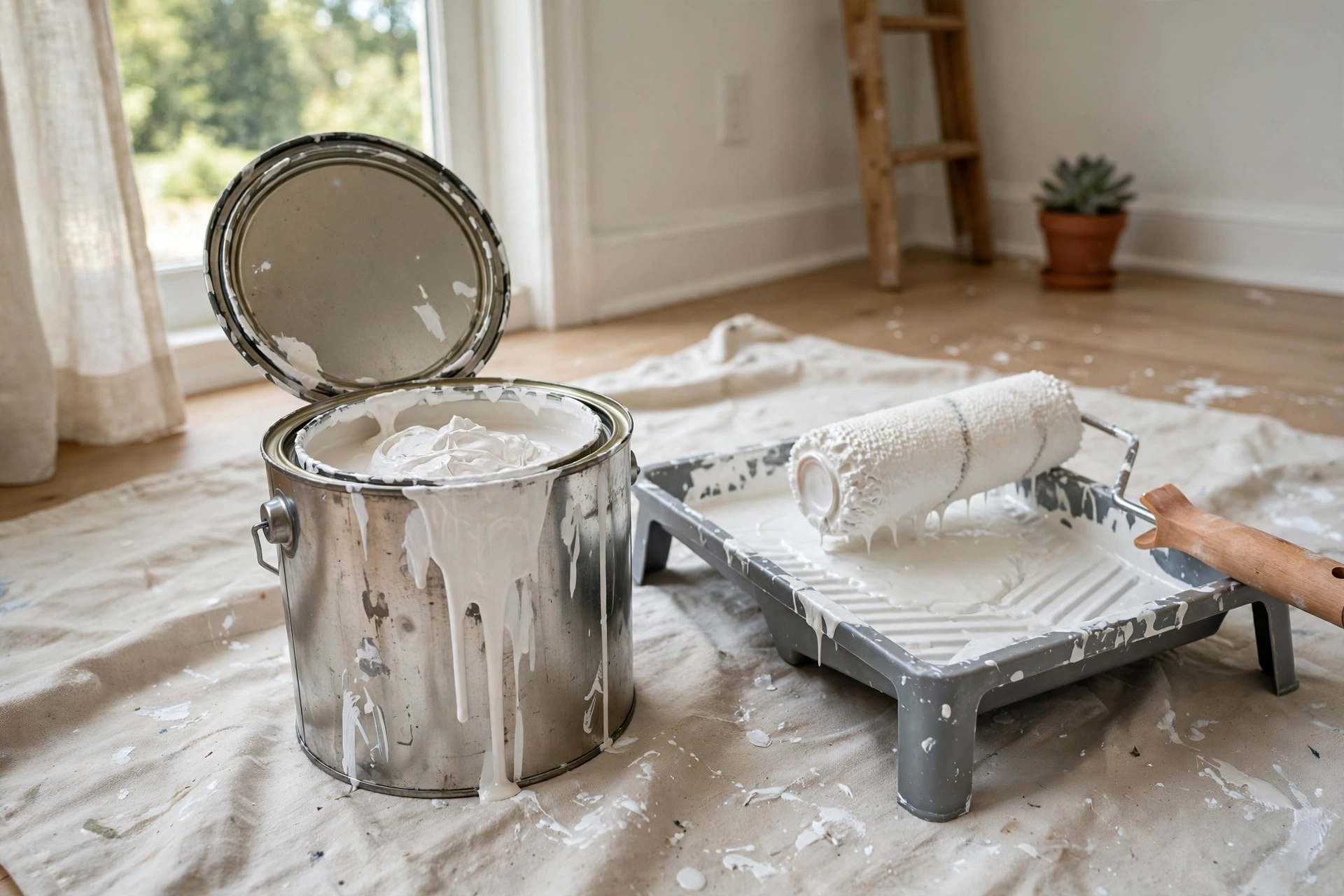
Ceiling paint is paint made for overhead surfaces, usually sold as a flat, water-based paint that is thicker than ordinary wall paint so it drips less while you roll it above your head. Many ceiling paints are white, and some are made to go on slightly tinted and dry white, which helps you see where you have already painted.
The thicker formula is the main practical difference, and it exists for a simple reason: paint on a ceiling is fighting gravity the whole time it is wet. A thinner paint would run down the roller and drip onto the floor, furniture and you. Ceiling paint is also usually made to cover well in one or two coats and to dry to a very even, low-sheen surface. Product names and exact formulas vary by region and maker, so always read the label of the product you buy rather than assuming every ceiling paint behaves the same way.
Ceiling Paint vs Wall Paint: The Real Differences
Ceiling paint and wall paint may look similar in the tin, but they are made for different jobs, and swapping them can cause avoidable problems. Ceiling paint is thicker, flatter and designed to hide flaws overhead, while wall paint is made to be tougher, more washable and available in a wider range of finishes.
Using wall paint on a ceiling is not a disaster, and many people do it, but it is more likely to drip, show roller marks and highlight every bump. Using ceiling paint on a wall is also possible, but it will mark and scuff more easily, because it is not made to be touched or washed often. The table below sums up the differences at a glance.
| Feature | Ceiling paint | Wall paint |
|---|---|---|
| Usual finish | Flat or matte | Flat, eggshell, satin or gloss |
| Thickness | Thicker, made to drip less overhead | Thinner, spreads easily on walls |
| Hiding flaws | Very good, low reflection | Good, but shinier finishes show flaws |
| Washability | Lower, not made for scrubbing | Higher, especially satin and gloss |
| Colour range | Mostly white and pale shades | Wide range of colours |
| Best used on | Ceilings | Walls and woodwork |
When a Flat Ceiling Is Not the Best Choice
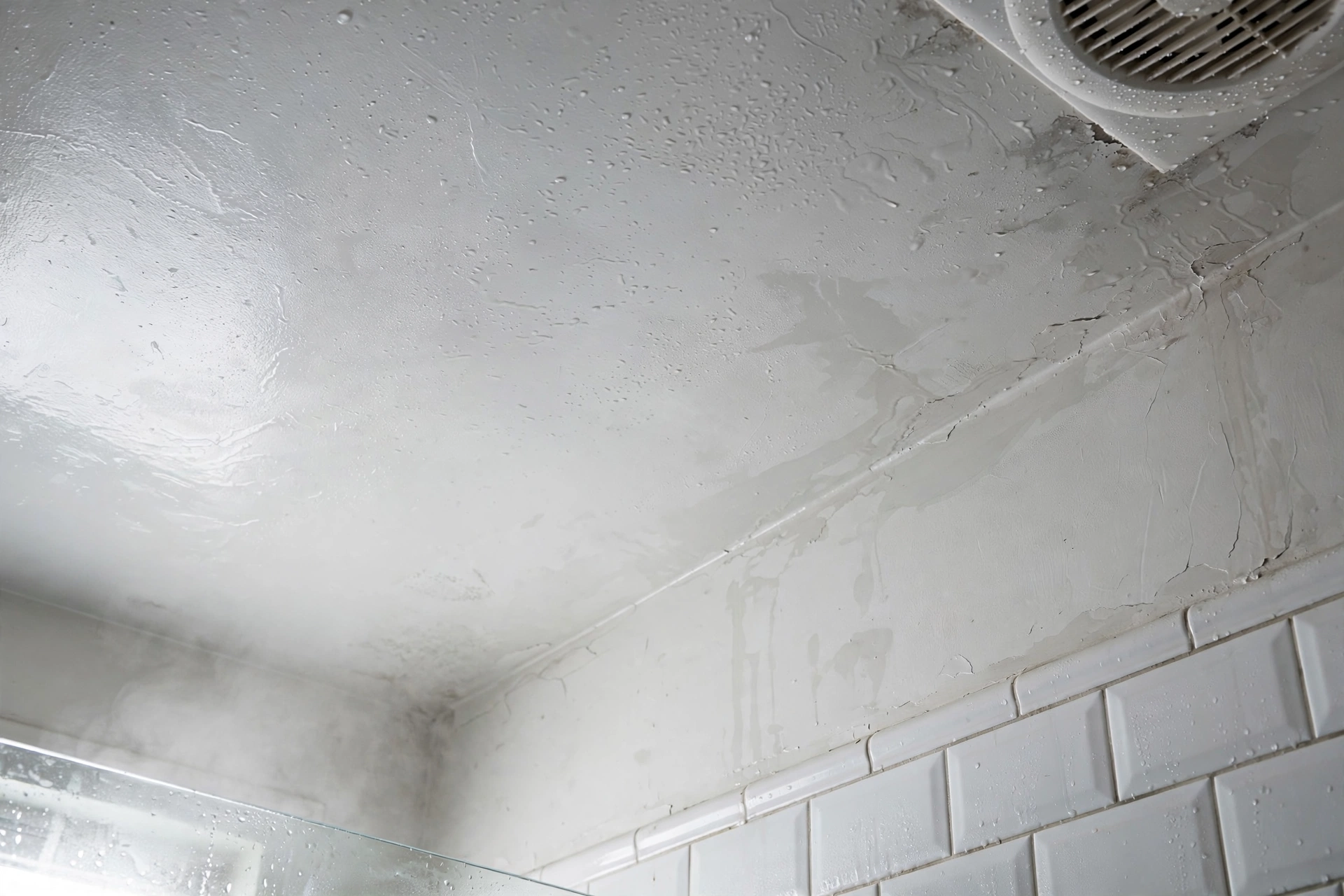
A flat ceiling is not the best choice when the ceiling needs regular cleaning, because flat paint marks easily and does not stand up well to scrubbing. If a ceiling sits above a place where steam, cooking grease or splashes are common, a finish with a slight sheen is often the smarter pick.
A flat finish is also less forgiving in one other situation: a ceiling that gets wet repeatedly. Flat paint can absorb moisture and stain more readily than a slightly shinier finish, so a ceiling with a history of leaks or damp should be fixed first, then painted with a finish suited to that room. In most dry rooms, though, flat remains the better-looking choice, and the trade-off in washability rarely matters, because ceilings are seldom washed.
Ceilings in Kitchens and Bathrooms
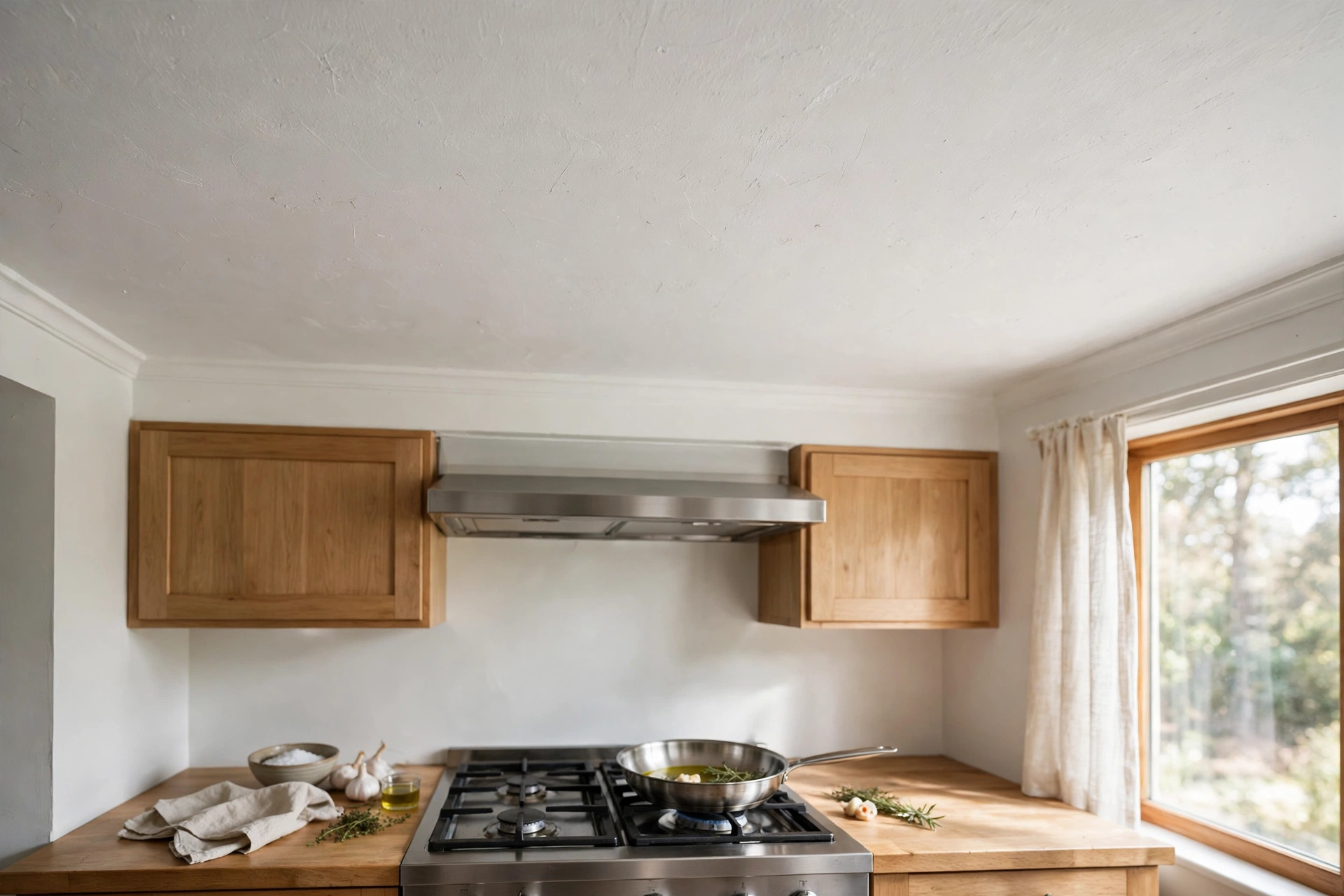
Ceilings in kitchens and bathrooms face steam, cooking grease and splashes, so they often need a paint that can be wiped clean and that resists moisture better than ordinary flat paint. A finish with a little sheen is the usual answer in these rooms because it sheds moisture and wipes clean more easily.
This does not mean a kitchen or bathroom ceiling must be shiny. A soft eggshell or a low-sheen finish still looks calm overhead, and it is far closer to flat than a gloss or semi-gloss paint would be. Ventilation matters just as much as the paint itself: a bathroom fan that actually runs, and a kitchen that vents steam outside, will do more for a ceiling than any paint finish alone. If mould or damp stains keep coming back, fix the moisture problem first, because no paint will hold up over an ongoing leak.
High, Sloped and Textured Ceilings
High, sloped and textured ceilings follow the same flat-first rule, but they add practical problems that a low, smooth ceiling does not have. A high ceiling needs safe access, such as a stable platform or an extension pole, and keeping a wet edge across a large area is harder, so patchiness shows more easily.
Sloped ceilings, such as those under a pitched roof, catch light at an angle, which makes every roller mark and flaw more visible — another reason flat is usually preferred. Textured ceilings, including popcorn-style textures, are also usually painted flat, but they soak up more paint than a smooth ceiling, so they need extra paint and a thicker roller cover. Never scrape or sand a textured ceiling without first checking what it is made of, especially in an older home, because some older textures need professional advice before they are disturbed.

Ceiling Paint Colours: White and Beyond
White is the usual ceiling colour, and for good reason: it reflects light, makes a room feel taller, and never clashes with wall colours or furniture. Most ceiling paints are sold as white, and many homes keep the same white ceiling through every redecoration, changing only the walls.
Coloured ceilings are becoming more common, though, and they can work well when chosen with care. A pale version of the wall colour can make a room feel cosy, while a darker ceiling can make a tall room feel more intimate — but dark ceilings also make a room feel lower and smaller, so they suit high rooms better than low ones. Whatever colour you choose, keep the finish flat in most rooms, because a coloured ceiling in a shiny finish will draw the eye upward and show every flaw, which defeats the purpose.

Preparing a Ceiling for Paint
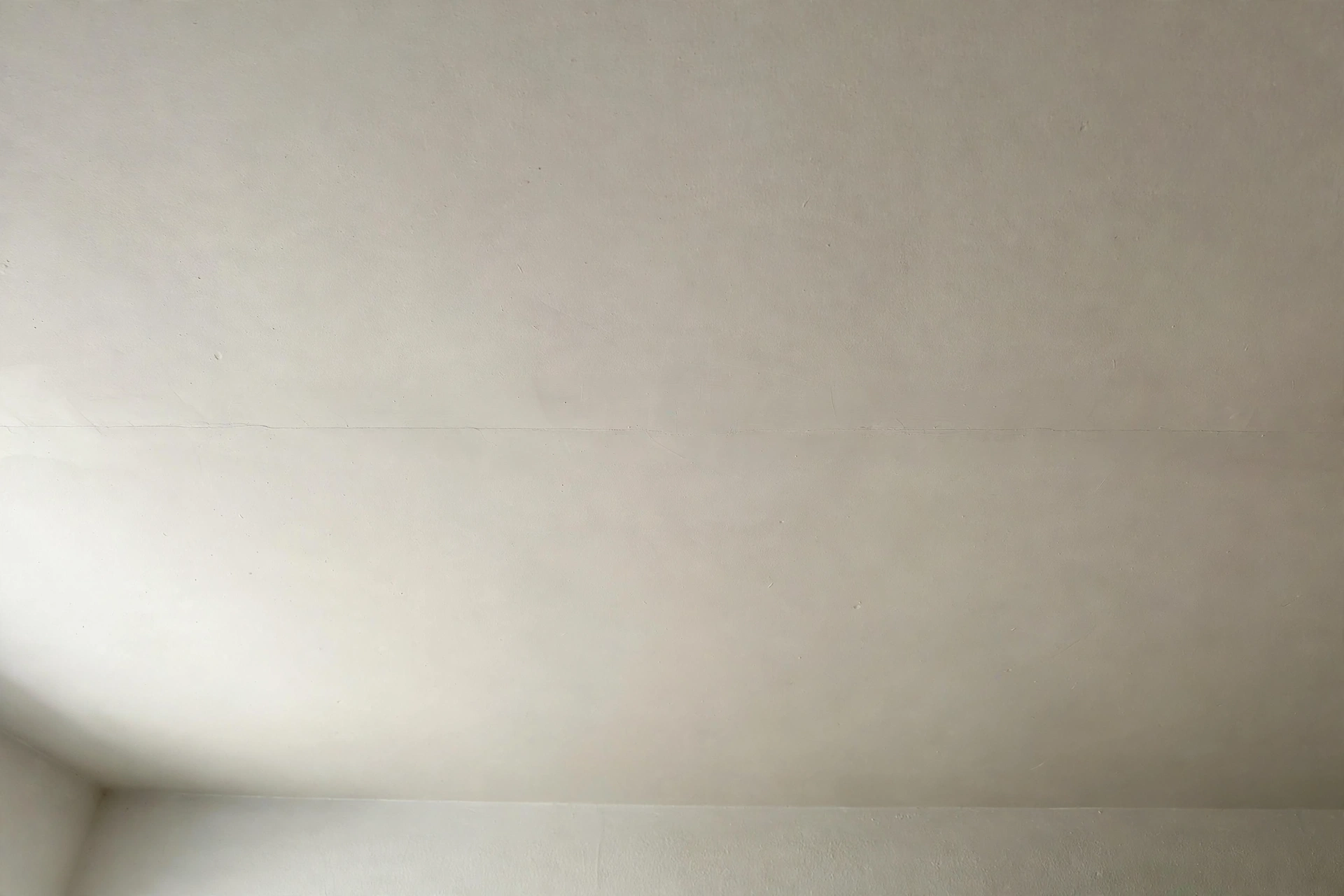
Preparing a ceiling for paint means cleaning it, fixing damage, and protecting everything below, because paint drips are the one certainty of ceiling work. Start by removing cobwebs and dust with a dry cloth or a soft brush, then wipe away any marks, and let the surface dry fully.
Fill cracks and small holes with filler, sand them smooth once dry, and spot-prime any bare patches so the topcoat covers evenly.
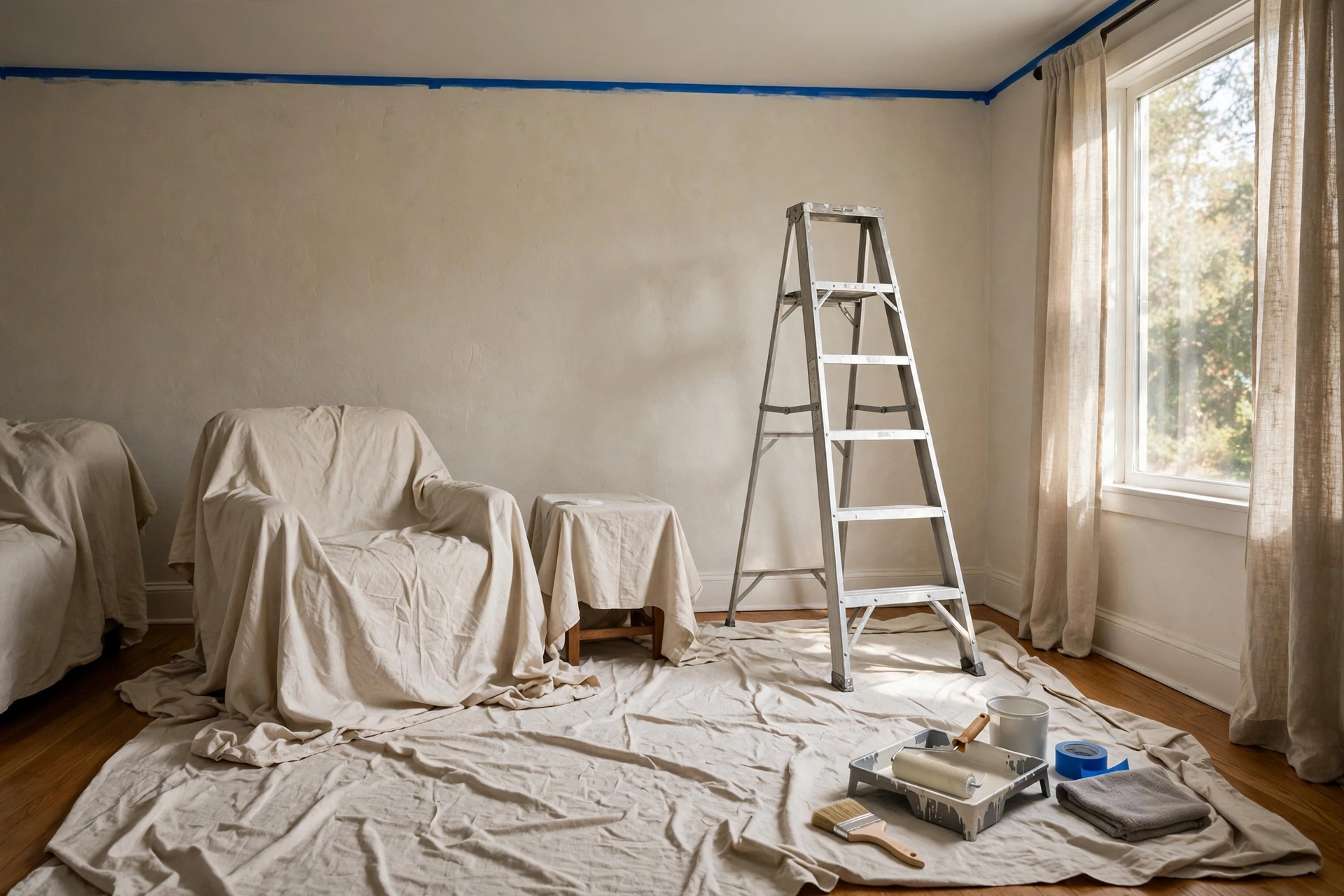
Protection matters more overhead than on walls. Cover the floor and furniture with drop cloths, remove light fittings or cover them, and tape the top edge of the walls where they meet the ceiling if you want a crisp line. Check for stains from old leaks before you start: a brown stain will often bleed through ordinary paint, and it needs a stain-blocking primer and, more importantly, confirmation that the leak itself is fixed. Good preparation takes time, but it is what separates a ceiling that looks even from one that shows every repair.
Painting a Ceiling: A Simple Step-by-Step Guide
Painting a ceiling well is mostly about order and pace: cut in the edges first, then roll the main area in steady sections, keeping a wet edge so each new section blends into the last. Work across the room in one direction, and avoid going back over drying paint, because that causes roller marks and patchiness.
Follow these steps in order:
- Clear the room as much as possible, cover what remains, and put on eye protection, since paint drips fall downward.
- Cut in around the edges with a brush, painting a band a few inches wide where the ceiling meets the walls and around light fittings.
- Load the roller evenly, roll off the excess, and roll the first section in a W or M pattern, then fill it in with straight, even passes.
- Work in sections about a metre wide, always rolling into the wet edge of the previous section so no dry line forms.
- Let the first coat dry fully, then check in daylight and apply a second coat the same way if coverage is uneven.
- Remove any tape while the last coat is still slightly tacky, and clean tools promptly with water for water-based paint.
Take breaks between coats rather than rushing, and check your work from different angles and in daylight, because ceiling flaws are easiest to spot when light rakes across the surface.

Dealing with Drips, Lap Marks and Patchy Coverage
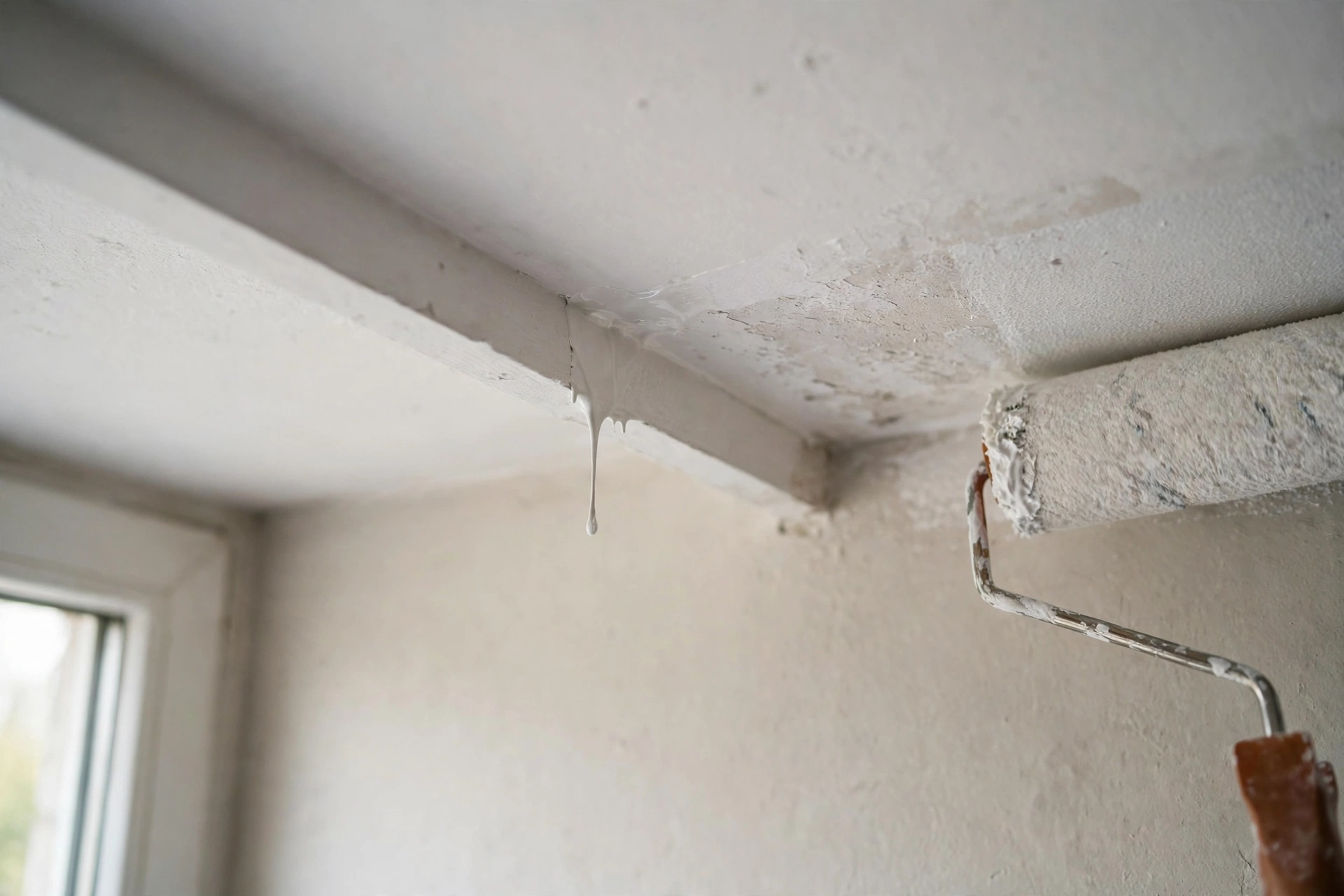
Drips, lap marks and patchy coverage are the three most common ceiling painting problems, and all three come from the same causes: too much paint on the roller, working too slowly, or going back over drying paint. A drip comes from an overloaded roller, a lap mark from a dried join, and patchiness from thin coverage.
Prevention beats repair in every case. Load the roller moderately, roll off the excess, and keep moving at a steady pace so each section joins the last while both are wet. If a drip appears, catch it quickly with a light roller pass while the paint is still wet, and leave it alone once it has started to dry — touching drying paint usually makes the mark worse. For a patchy ceiling, wait until the coat is fully dry, then apply another full coat rather than touching up spots, because spot touch-ups on a ceiling almost always show as patches themselves.
Common Mistakes When Painting a Ceiling
The most common mistake when painting a ceiling is skipping preparation, especially painting over a dirty, dusty or stained ceiling and expecting the topcoat to hide the problem. Dust stops paint gripping properly, stains bleed through, and unfilled cracks reopen in the new paint, so the ceiling looks worse, not better, within weeks.
Other mistakes are easy to make too. Using wall paint instead of ceiling paint leads to more drips and visible roller marks, while using a shiny finish highlights every flaw the flat paint would have hidden. Painting in poor light hides missed patches until daylight reveals them, and rushing the second coat before the first is dry causes peeling and uneven texture. Finally, many people underestimate how much paint a ceiling needs, especially a textured one, and run out halfway through — buy enough for two coats before you start, and keep a little spare for later touch-ups.
Conclusion
Is ceiling paint usually flat? Yes — flat is the usual, sensible default for ceilings in most homes, because it hides flaws, softens light and gives a calm, even look overhead. It is not a rule without exceptions: kitchens, bathrooms and ceilings that need regular wiping often suit a finish with a little more sheen.
Coloured or textured ceilings need the same careful thinking about light and coverage. Whatever finish you choose, the basics stay the same: prepare the surface, protect everything below, use paint made for ceilings, keep a wet edge, and give the ceiling two even coats. Done that way, a ceiling stops being something you notice — which, for a ceiling, is exactly the point.
Frequently Asked Questions
Is ceiling paint usually flat?
Yes, ceiling paint is usually flat or matte, with little or no shine. Flat paint hides joints, bumps and repairs and does not reflect light onto flaws, which is why it is the standard ceiling finish.
Can I use wall paint on a ceiling?
You can, but ceiling paint is usually better overhead. Wall paint is thinner, drips more, and shinier finishes show roller marks and flaws that flat ceiling paint would hide.
What finish is best for a bathroom ceiling?
A finish with a little sheen, or a paint made for kitchens and bathrooms, is usually best, because it resists moisture and wipes clean more easily than ordinary flat paint.
Should ceilings be white?
White is the usual choice because it reflects light and makes rooms feel taller, but pale colours can work well too. Dark ceilings suit high rooms better, as they can make low rooms feel smaller.
Do I need a primer for a ceiling?
You need primer on bare plaster, new drywall, repairs and stains. On a previously painted ceiling in good condition, a good ceiling paint often covers without a separate primer coat.
Disclaimer: This article is provided for general information only. It is not professional painting, building, or safety advice, and it does not promote any brand, product, or service. Paint types, finishes, and suitability vary by product, region, and home, so always read the product label and seek qualified advice before painting, especially for textured ceilings, damp or stained ceilings, or work at height.