
A garden deck is one of the most inviting parts of a home, but choosing the boards can be confusing when every supplier seems to use different words. Composite wood decking is one of the most common modern options, and it often appears alongside solid wood and plastic decking.
This guide explains composite wood decking in plain language. You will learn what it is made of, how it is produced, how it compares with solid wood and PVC decking, what it looks like, how it behaves in everyday use, and what to check before you buy. By the end, you should be able to judge whether composite decking suits your garden, your budget, and the way you use outdoor space.
There is no single right answer for every home. A deck that suits a busy family garden may not suit a quiet cottage garden, and a board that looks perfect in a showroom may look different in your own daylight. That is why this guide focuses on practical differences you can check yourself, rather than on sales claims.

The Short Answer: What Is Composite Wood Decking?
Composite wood decking is a manufactured decking board made by blending wood fibre with plastic, so it looks like wood but behaves more like a man-made material. The wood fibre gives the board its natural colour and grain-like appearance, while the plastic helps it resist moisture, rot, and insect damage better than untreated timber.
In short, composite decking sits between natural wood and fully plastic decking. It aims to offer the warm look of timber with less of the regular sealing, sanding, and staining that solid wood decks usually need. That balance is the main reason many homeowners consider it, though it is not the right choice for every garden or every budget.
It is sometimes sold under names such as wood plastic composite or WPC decking. These names all describe the same basic idea: a board that mixes wood and plastic. If a product description does not mention wood fibre at all, it is probably a fully plastic board rather than a composite one, so reading the description matters.
What Composite Decking Is Made Of
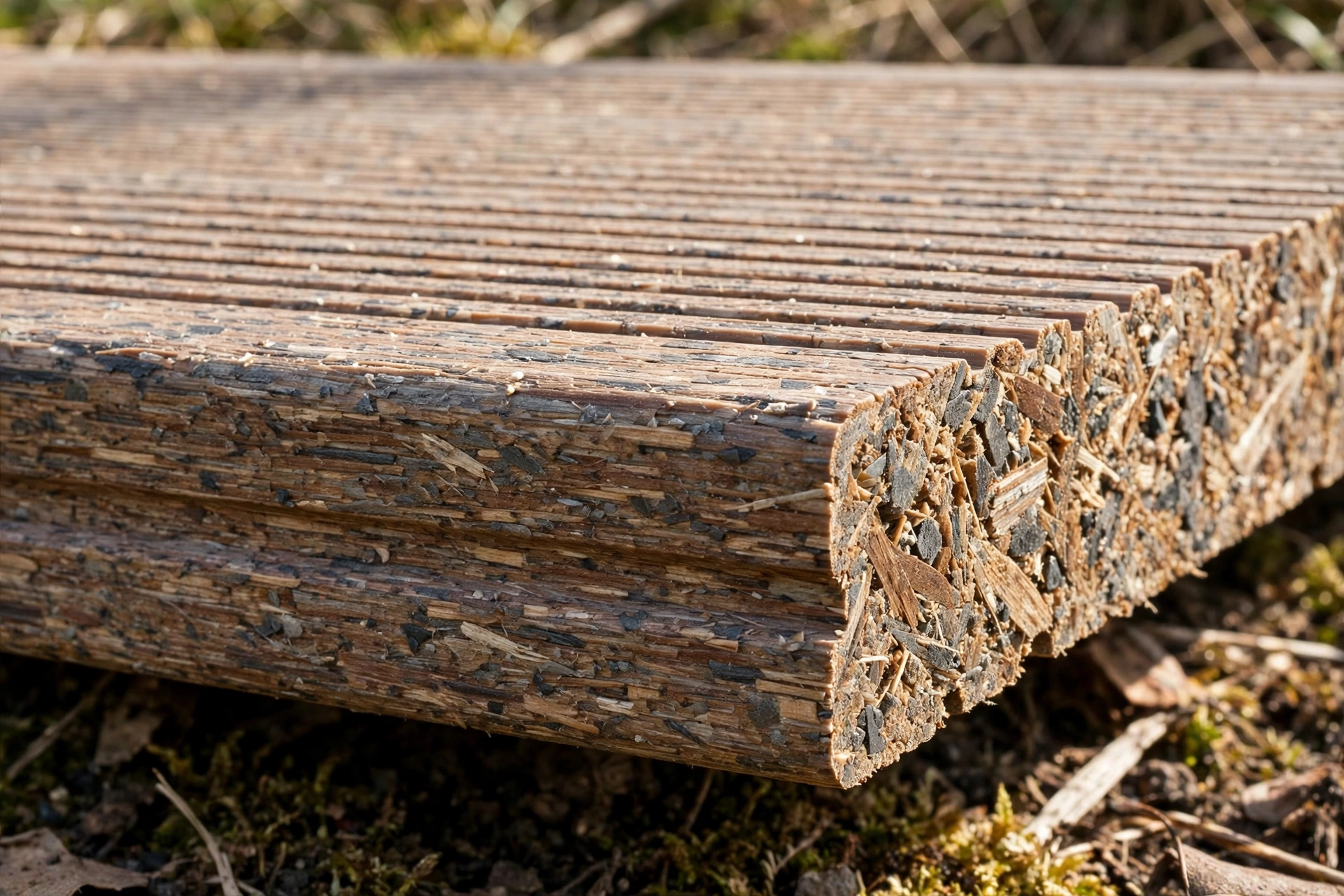
Composite decking is made from a blend of wood fibre and plastic, shaped into boards that can be cut and fixed much like timber decking. The wood fibre usually comes from sawdust or wood offcuts, while the plastic part is often recycled plastic, though the exact mix varies from one maker to another.
The important point is that composite decking is not solid wood, and it is not pure plastic either. It is a mixed material, and different makers use different blends, so two composite boards can feel and perform quite differently. Some boards have a protective outer layer, often called a cap, while others do not, and that difference affects stain resistance and fading. That is why it is worth checking a maker’s description rather than assuming all composite decking is the same.
How Composite Decking Is Made
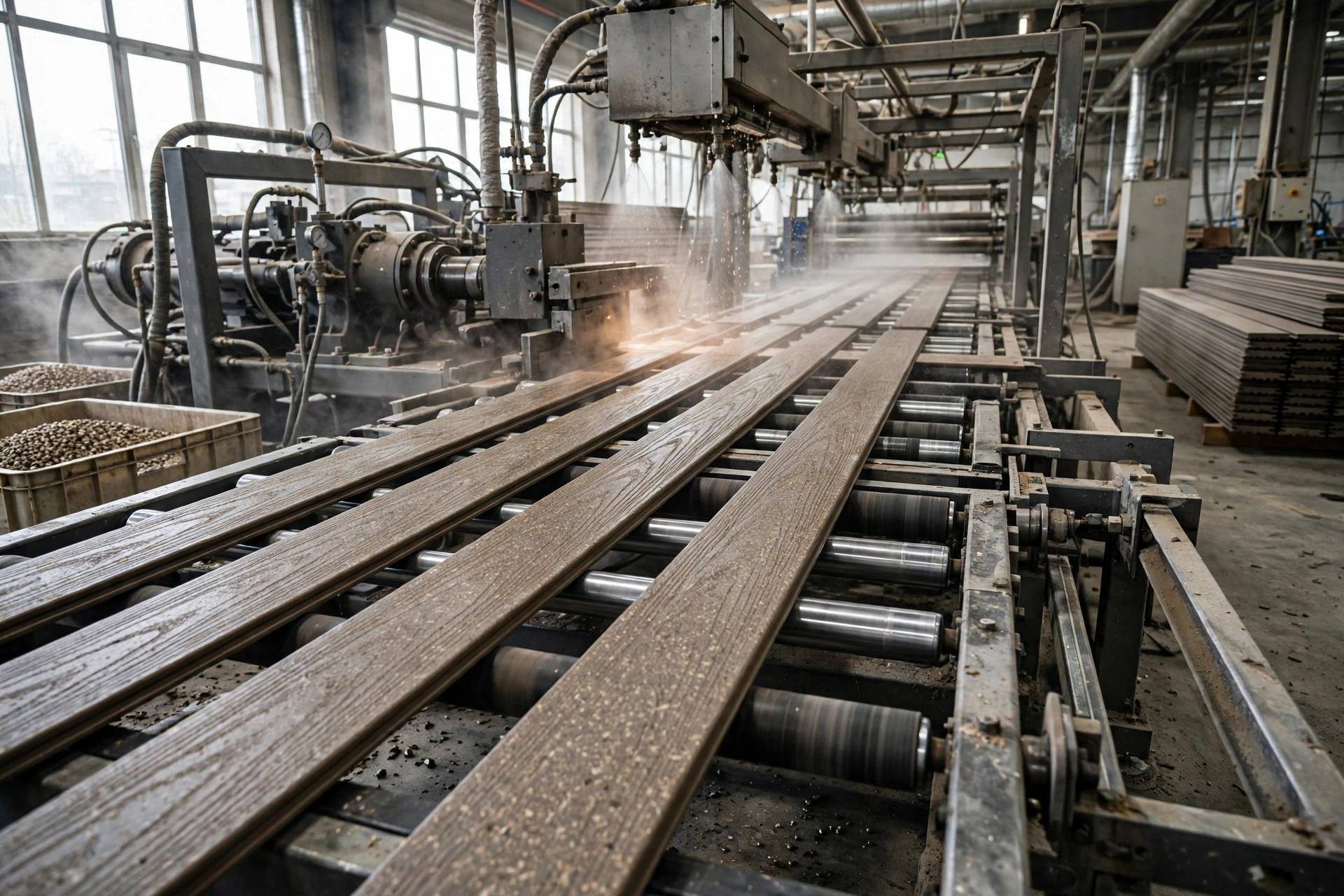
Composite decking is made by mixing wood fibre and plastic, heating the mixture until it softens, and then shaping it into long boards through a moulding or extrusion process. The boards are then cooled, cut to length, and often given a textured surface that copies the grain of real wood.
The manufacturing process is what gives composite decking its even colour and consistent shape. Unlike natural timber, which varies from board to board, composite boards from the same range tend to look very similar. This consistency makes planning easier, and it means you can usually order extra boards later with a close colour match, though shades can still shift slightly between production runs. It also means the surface can look less varied and natural than real wood if you look closely.
Composite Decking vs Solid Wood Decking
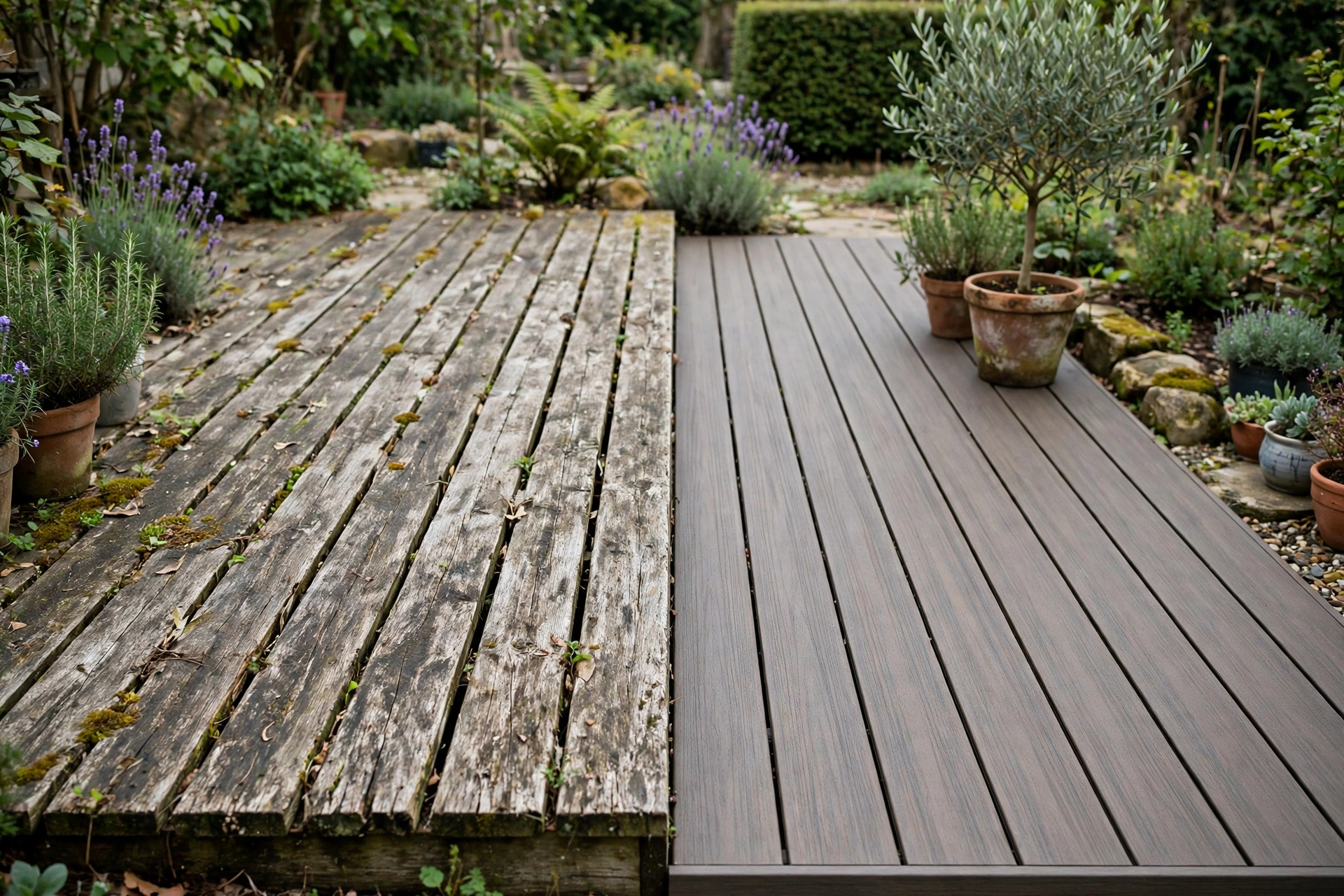
Composite decking differs from solid wood decking mainly in care, appearance, and long-term behaviour. Solid wood looks and feels natural, can be sanded and re-stained, and often costs less at the start, but it needs regular sealing or oiling and can split, warp, or grey with age.
The best choice depends on what you value most. If you enjoy the character of real timber and do not mind regular upkeep, solid wood may suit you. If you prefer a low-care deck and a consistent look, composite decking is worth a closer look. Both can last well when they are fitted properly and looked after, and both feel pleasant underfoot in different ways. Timber feels warm and natural, while composite feels smooth and even, with far fewer splinters.
Composite Decking vs PVC Decking
Composite decking and PVC decking are often confused, but they are not the same material. PVC decking is made entirely from plastic, with no wood fibre, while composite decking blends wood fibre with plastic. PVC boards tend to be lighter and very resistant to moisture, while composite boards usually look and feel more like real wood.
In everyday use, the differences are subtle but real. Composite decking can feel warmer and more timber-like underfoot, while PVC decking can feel more plastic and may expand and contract more with temperature changes. PVC boards also tend to come in a narrower range of wood-like finishes. Your choice may come down to appearance, feel, and what is available in your area, so handling samples of both is the best way to compare them.
| Decking type | Main material | Look and feel | Routine care |
|---|---|---|---|
| Composite decking | Wood fibre blended with plastic | Timber-like, even colour | Sweep and occasional wash |
| Solid wood decking | Natural timber | Natural, varied grain | Sealing, oiling or staining |
| PVC decking | Plastic only | Smooth, more plastic feel | Sweep and occasional wash |
Looks and Colours
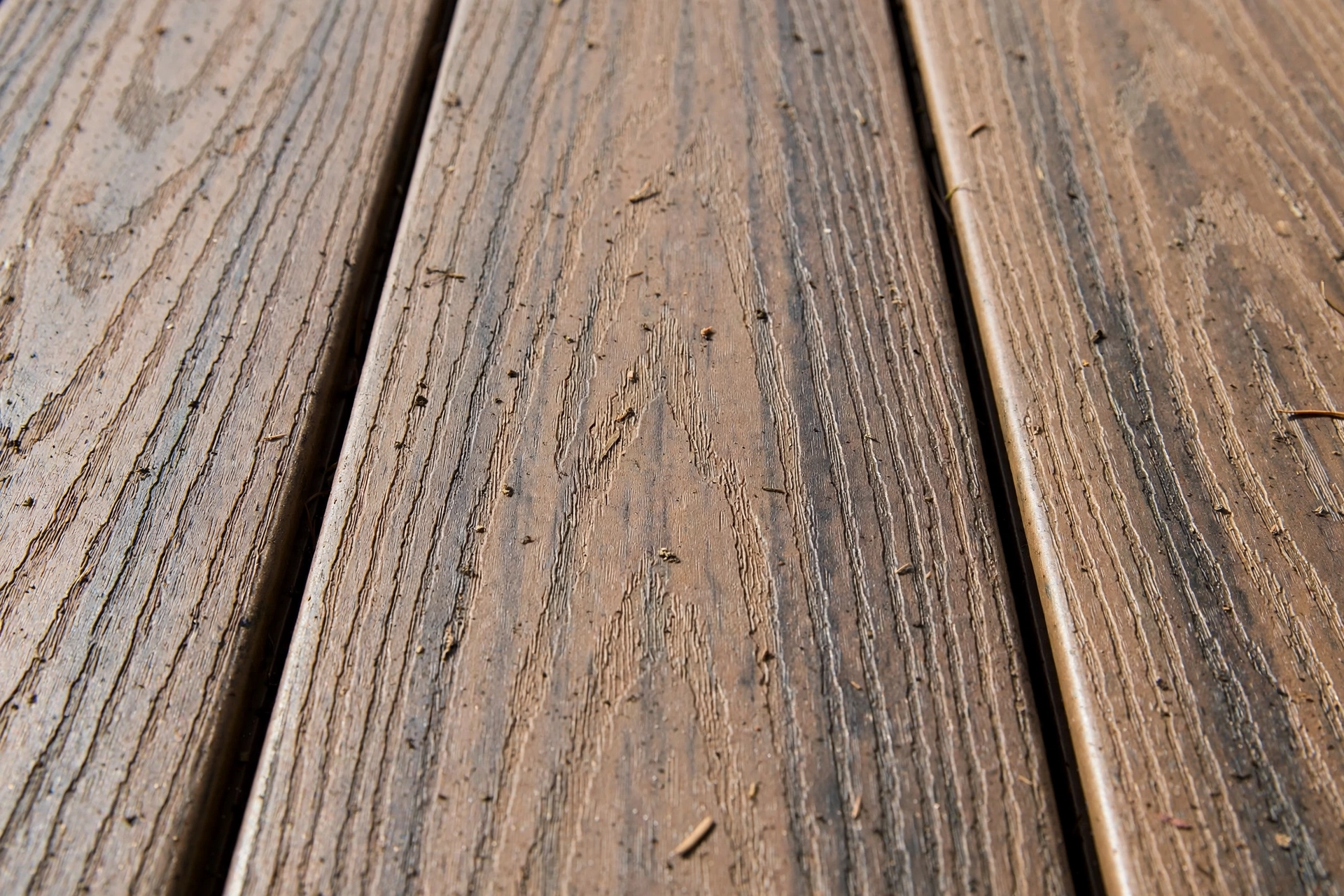
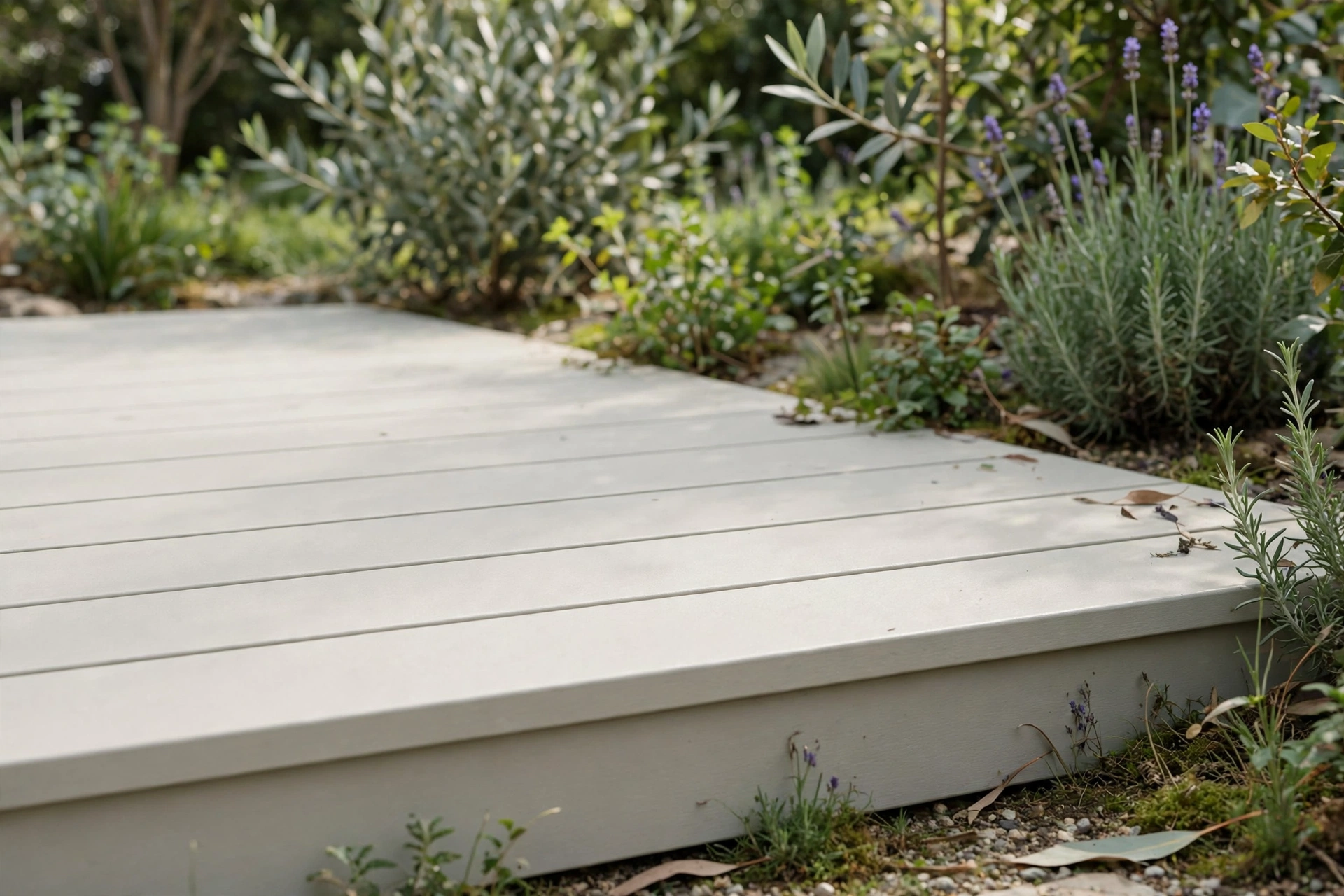
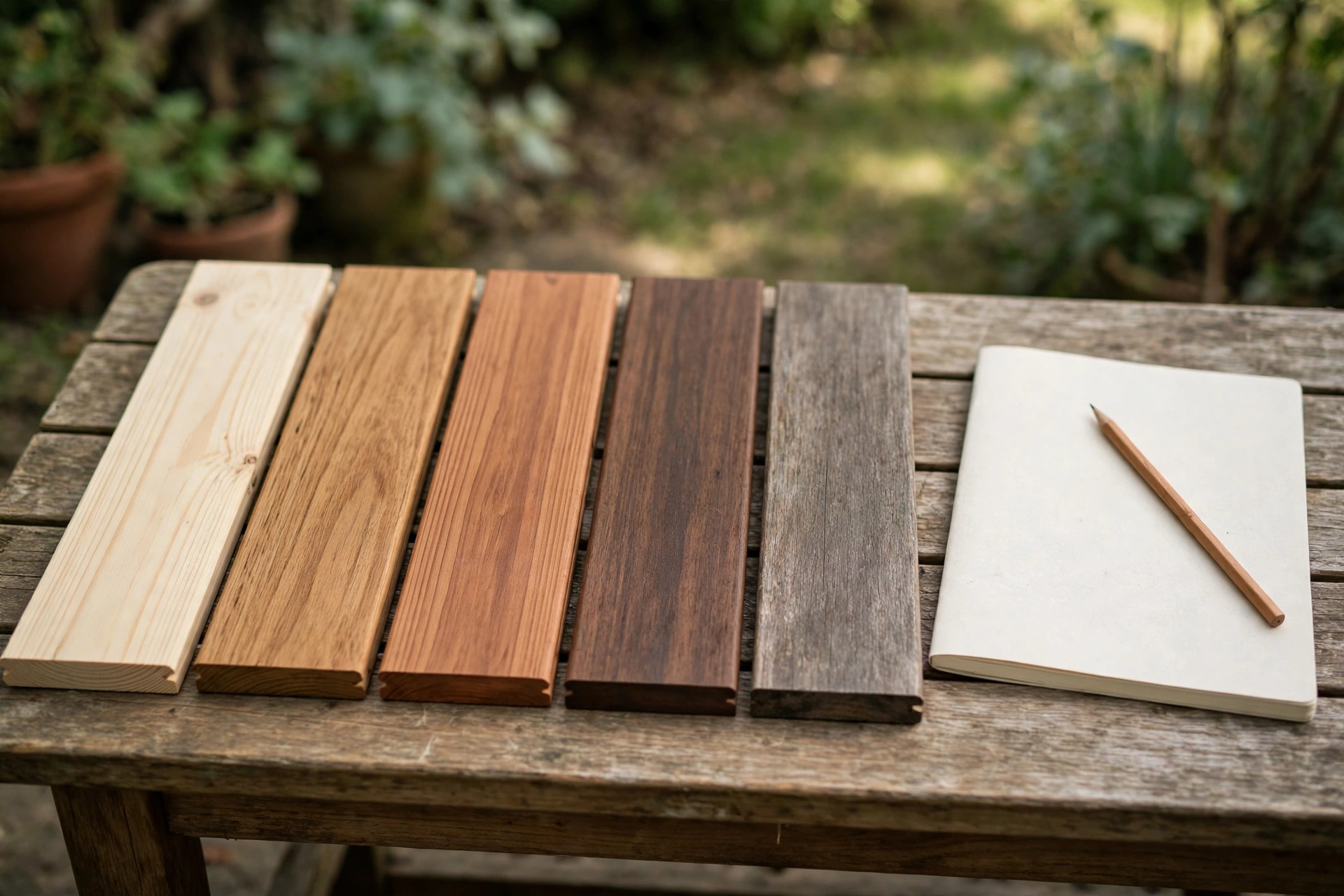
Composite decking comes in a wide range of colours, from pale greys and sandy tones to warm browns and deep charcoal shades. Many boards are made to copy the grain and tone of popular timbers, while others have a plainer, more modern look.
When choosing a colour, think about your garden as a whole. Lighter shades can make a small garden feel brighter and stay cooler in strong sun, while darker shades can look smart against a modern house but may show dust and pollen more clearly. Ordering a small sample and looking at it outdoors in daylight is the safest way to judge a colour before you commit, since indoor lighting can be misleading.
Durability and Everyday Performance
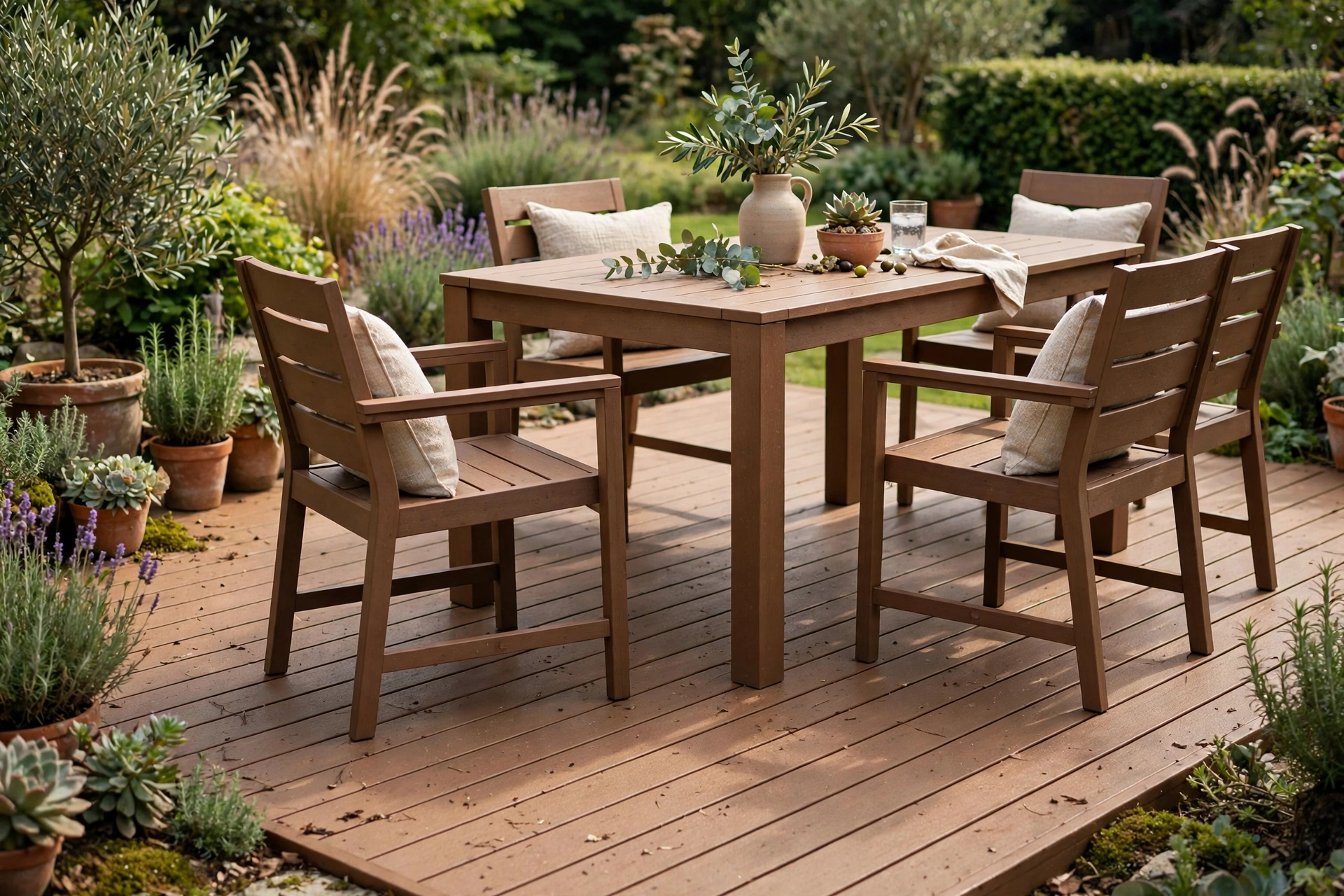
Composite decking is made to handle outdoor weather better than untreated timber, and it generally resists rot, insect damage, and splintering. Most composite boards also handle rain well, since the plastic content helps limit how much moisture the board absorbs. This makes composite decking a popular choice for busy family gardens, where the deck gets daily use.
That said, composite decking is not indestructible. Heavy furniture can leave marks, sharp objects can scratch the surface, and very hot items can damage it. Boards can also expand and contract slightly with temperature, so they need the small gaps the maker recommends during fitting. Good fitting matters as much as the board itself for long-term performance, and a deck built on a sound, well-drained frame will always outlast one built on a poor base.
Some makers offer guarantees on their boards, but the terms vary widely, so read them carefully rather than treating a guarantee as a promise of a fixed lifespan. What matters most in practice is the board quality, the fitting, and the way the deck is used and cleaned.
Care and Cleaning
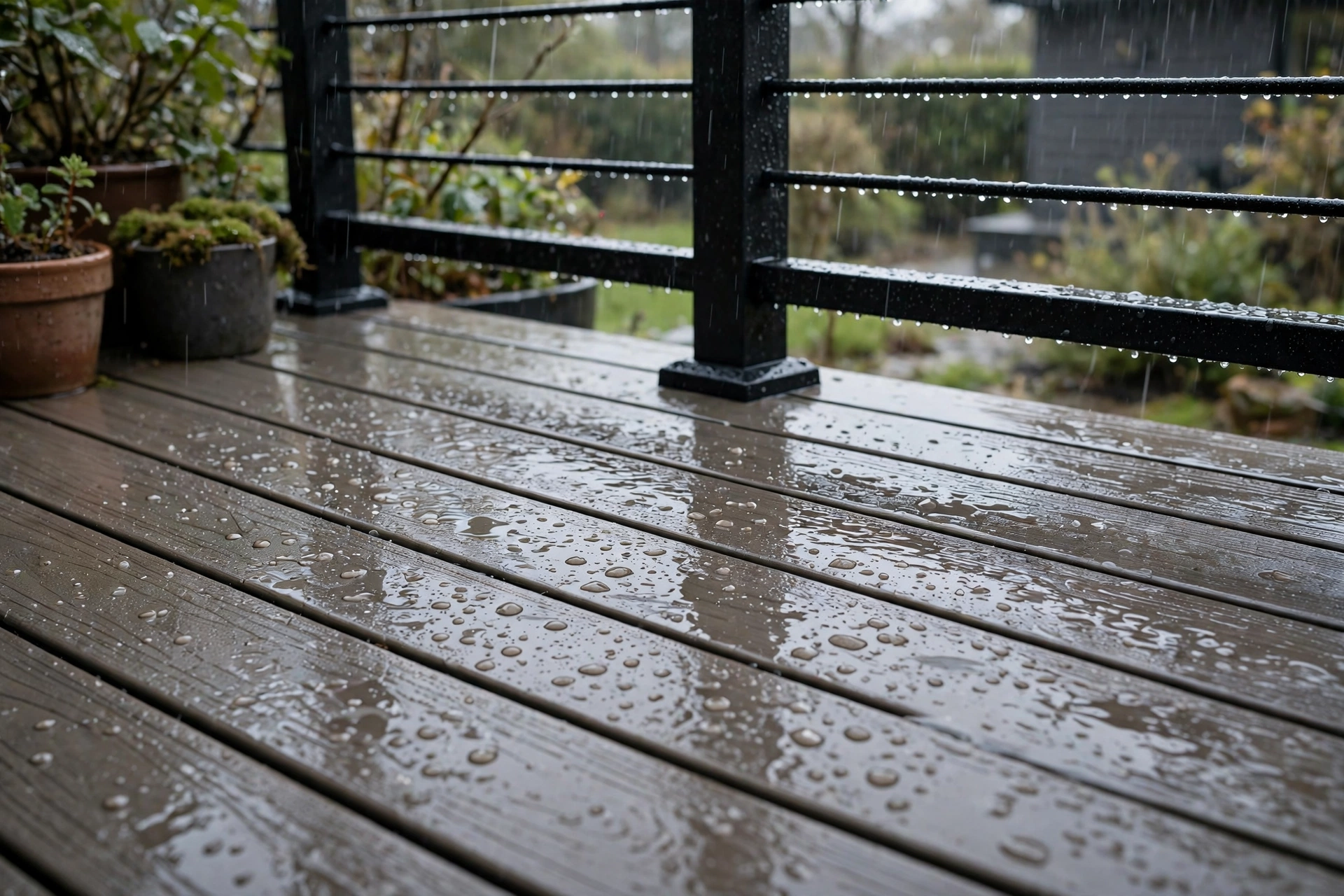
Composite decking is often described as low maintenance, which is true in comparison with solid wood, but it is not maintenance-free. A regular sweep keeps leaves and dirt from building up, and an occasional wash with water and a mild cleaner removes most marks.
What you can skip is the yearly cycle of sanding, sealing, and staining that timber decks usually need. You should still check the deck now and then for trapped debris between boards, blocked drainage, and any damaged fixings. Keeping the gaps clear and the surface clean is the simplest way to keep a composite deck looking good for years.
For stubborn marks, such as grease from a barbecue, clean the spot promptly with a mild cleaner and a soft brush, and avoid harsh chemicals or wire brushes that could damage the surface. If a stain does not lift, check the maker’s cleaning guidance before trying anything stronger, since the wrong product can mark a capped board.

Where Composite Decking Suits Best
Composite decking suits gardens where a tidy, low-care deck is the priority, such as family gardens, rental properties, and busy households that do not want yearly treatment work. It also suits damp or shaded gardens where timber decks tend to rot or grow slippery.
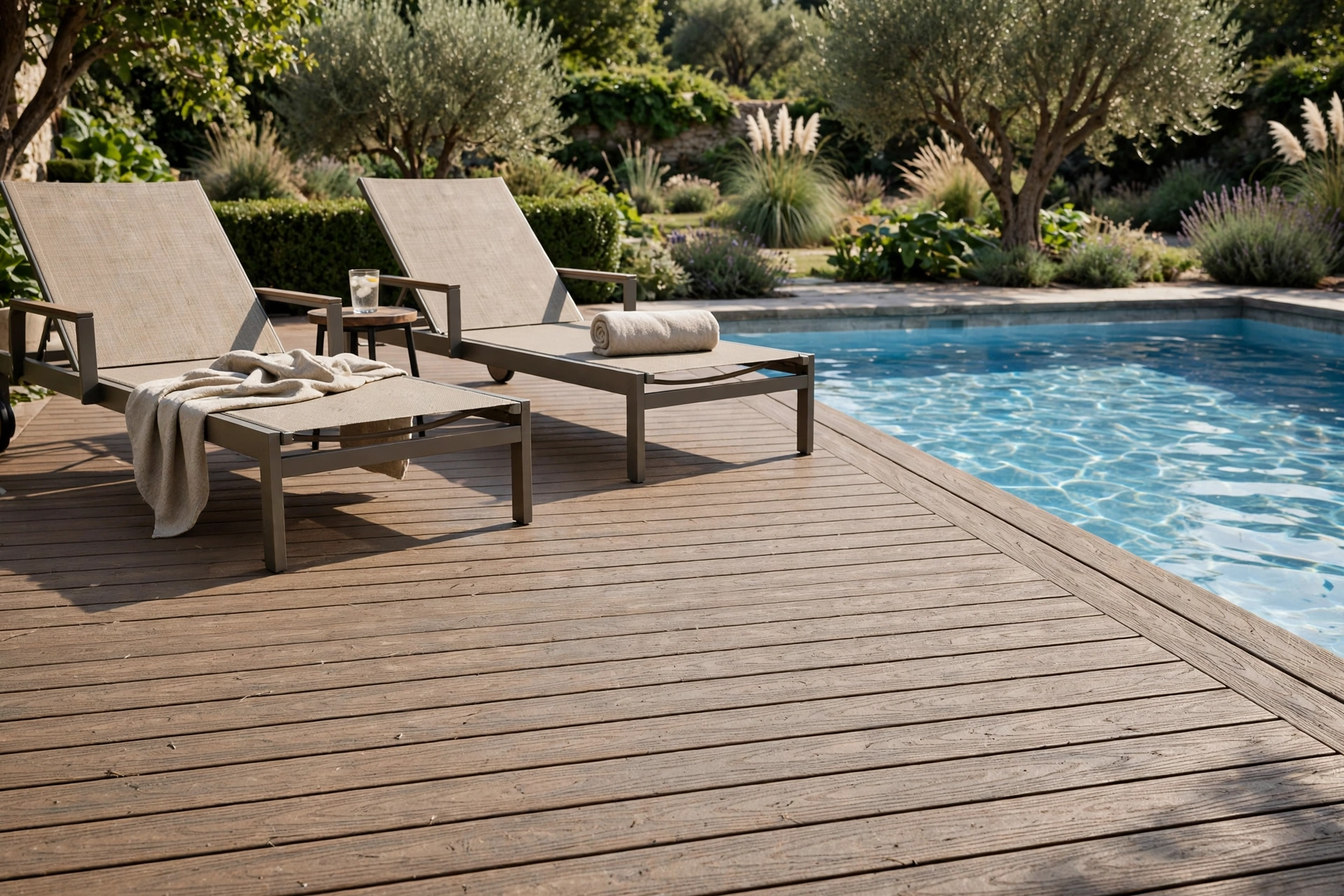
It is also a good choice when you want a consistent look across a large deck, since composite boards vary less than natural timber. If your deck will see daily use from children, pets, and garden furniture, the resistance to splinters and rot is a genuine practical benefit, not just a selling point. It works well around pools and hot tubs too, where bare feet and splashes are common and a splinter-free surface matters.
Where It May Not Be the Best Choice
Composite decking may not be the best choice if you love the natural variation of real timber, since its even surface can look less authentic up close. It is also worth thinking twice if your budget is tight, because composite boards usually cost more upfront than basic timber.
Another point to consider is repair. A damaged composite board usually needs replacing rather than sanding, and matching the exact shade later can be tricky if the range changes. If you enjoy restoring and refinishing timber, or you want the lowest possible starting cost, solid wood may be the better fit for your project. In very hot sun, darker composite boards can also become hot underfoot, which matters for bare feet.

What Affects the Cost of Composite Decking
The cost of a composite deck depends on more than the boards alone, so comparing board prices is only part of the picture. The board range, colour, and whether the board has a protective cap all affect the price, and so does the size of the deck and the frame underneath.
It is also worth thinking about lifetime cost rather than just the first bill. Composite decking usually needs less treatment over the years, which can balance a higher starting price, while timber needs regular products and time. Getting a full quote that covers frame, boards, fixings, and fitting gives a fairer comparison than board prices alone, and it avoids surprises halfway through the project.
Fitting costs vary with the complexity of the job. A simple flat deck on level ground is straightforward, while steps, raised sections, curved edges, and built-in lighting all add time and materials. If you plan to build the deck yourself, allow for tools, fixings, and waste boards, since cutting around corners and edges always uses more material than a simple rectangle.
A Simple Buying Checklist
Use this checklist before you order composite decking, so you compare like with like, avoid common surprises, and end up with boards that suit your garden, your budget, and the way you will use the deck every day for years to come.
- Order samples and check the colour outdoors in daylight before you buy.
- Read the maker’s guidance on gaps, fixings, and ventilation under the deck.
- Check whether the board is capped or uncapped, and what that means for stains.
- Confirm the board length and width, and how much waste your layout will create.
- Ask about the frame, drainage, and support spacing your chosen board needs.
- Get a full quote covering boards, frame, fixings, and fitting, not just boards.
- Keep a spare board or two for future repairs, in case the shade changes.
Conclusion
Composite wood decking is a practical middle ground between solid wood and fully plastic decking, offering a timber-like look with less routine care. It is made by blending wood fibre with plastic, which helps it resist rot, insects, and moisture better than untreated timber.
The right choice comes down to your garden, your budget, and how much upkeep you are happy to do. If a tidy, consistent, low-care deck sounds right, composite decking is well worth considering. Take time to compare samples, read the maker’s fitting guidance, and get a full quote before you commit, so the deck you build is one you will enjoy for years.
Frequently Asked Questions
Is composite wood decking real wood?
No, composite wood decking is not solid wood. It is a manufactured board made by blending wood fibre with plastic, so it looks like wood but behaves differently and needs less routine treatment than timber.
Does composite decking need sealing or staining?
Generally no, composite decking does not need the yearly sealing or staining that solid wood decks require. A regular sweep and an occasional wash are usually enough to keep the surface clean and looking good.
Is composite decking slippery when wet?
Composite decking can be slippery when wet, like most deck surfaces, especially if dirt or algae builds up. Regular cleaning and choosing a textured board help, and shaded or damp areas need extra care.
Can you cut composite decking like wood?
Yes, composite decking boards can usually be cut and fixed with ordinary woodworking tools, following the maker’s guidance. Always check the instructions for the correct fixings, gaps, and support spacing.
Is composite decking better than wood decking?
It depends on your priorities. Composite decking needs less upkeep and resists rot better, while solid wood looks more natural, can be refinished, and often costs less at the start.
Disclaimer: This article is for general information only and does not offer professional building, safety, or buying advice. Decking products, prices, and fitting requirements vary by maker and location, so always read the maker’s instructions and speak to a qualified professional before starting a decking project. This article contains no guest posting, paid promotion, or advertising, and no brand is recommended.
Thanks for visiting Clearise Cleaning Services! Discover more helpful tips and expert cleaning insights by exploring our related categories.