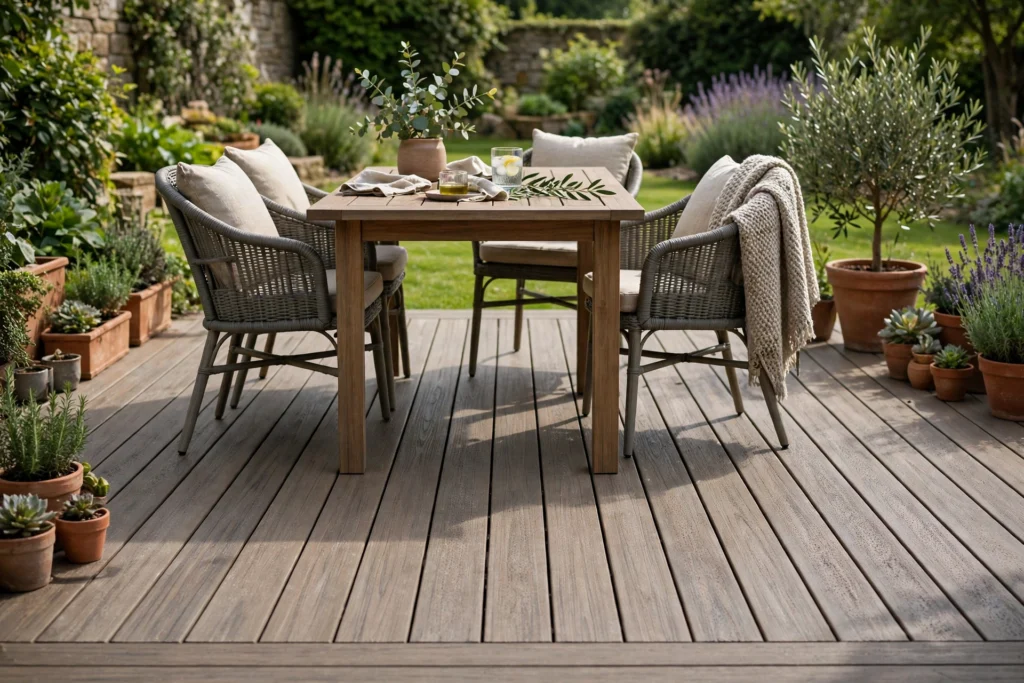
Composite decking comes in more than one width, and that choice changes how your deck looks, how much material you need, and how easy the boards are to lay. A width that suits a small balcony may look wrong on a large garden deck, so it pays to understand the options before you order.
Learning how wide composite decking is matters before you order, because a width that suits a straight run may waste a lot of material on a deck with angles and steps. This guide explains the widths you are likely to find, what narrow and wide boards each do well, and how to pick a width that fits your deck, your budget, and the look you want.

The Short Answer: How Wide Is Composite Decking?
Composite decking boards are most often sold in a standard width of roughly five to six inches, with narrower and wider boards also available in many ranges. The exact width varies by maker and range, so the maker’s own product details are the figure to trust for the board you are buying.
In simple terms, standard boards suit most decks, narrow boards give a finer, more detailed look, and wide boards give a bolder, more modern look with fewer joints.
Common Composite Decking Widths
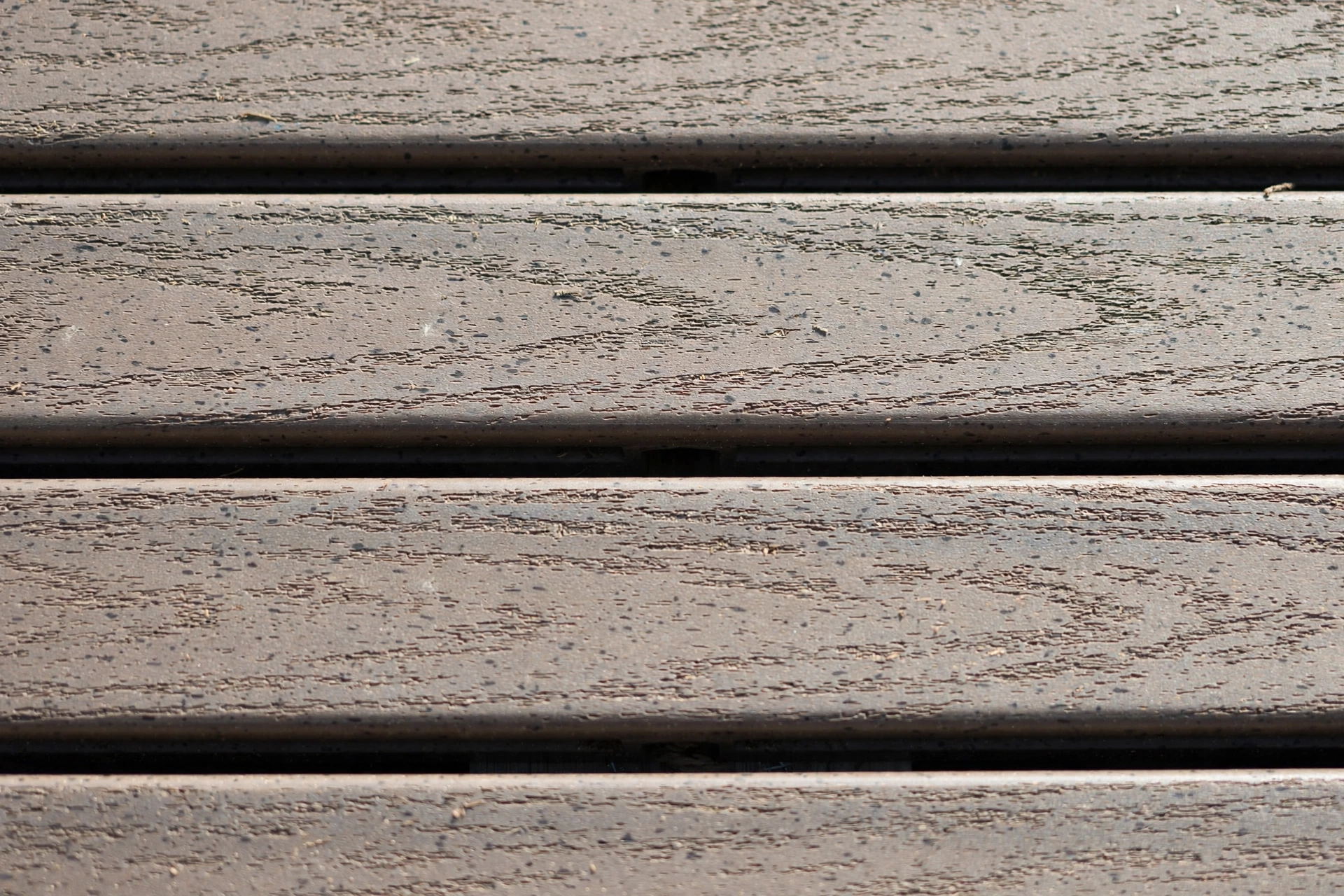
Most composite decking ranges centre on a standard board width, with a narrower option and a wider option alongside it in many collections. Standard boards are the easiest to find and the most widely stocked, which makes matching boards, trims, and fixings simpler if you need extra lengths later.
| Board width | Best for | Things to watch |
|---|---|---|
| Narrow | Small, traditional, or patterned decks | More joints, more fixings, more groove cleaning |
| Standard | Most decks, and easiest to match later | Can look plain on a very large, open deck |
| Wide | Large, modern, open decks | Shows uneven framing, can look heavy on small decks |
Narrower boards are slimmer than standard and are often chosen for smaller decks, detailed patterns, or a traditional timber look with more joints. Wider boards are noticeably broader than standard and are often chosen for large, open decks where fewer joints give a calmer, more modern surface.
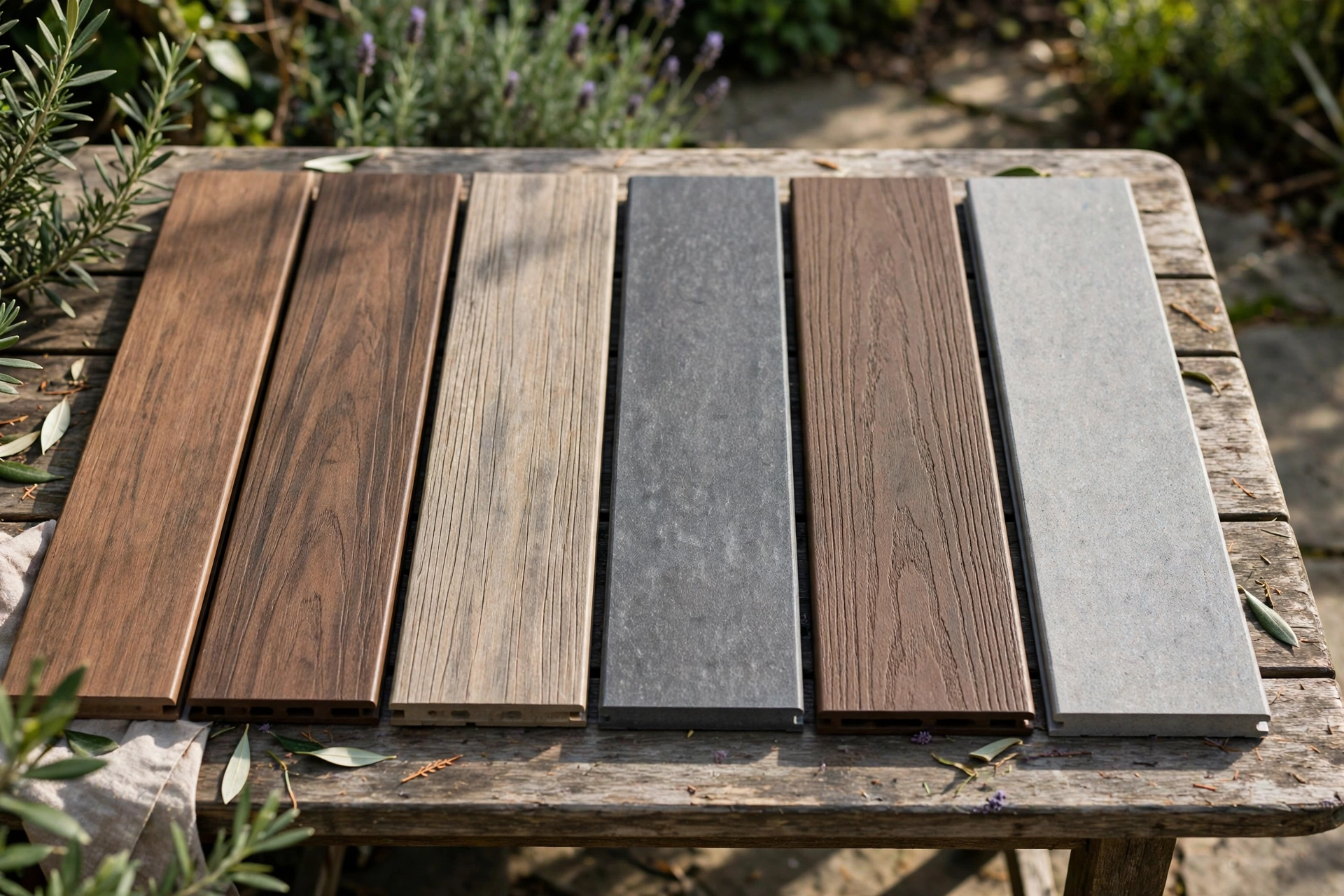
When you compare ranges, check the width as it is actually sold, because some makers measure the full board and others describe the visible face after fitting. A board that looks the same width in a photograph may differ by a small amount once it is fixed in place, and that small difference adds up across a wide deck. Always confirm the width, the gap the maker recommends, and whether the board is solid or hollow, since all three affect the finished look.

Narrow Boards: Look and Feel
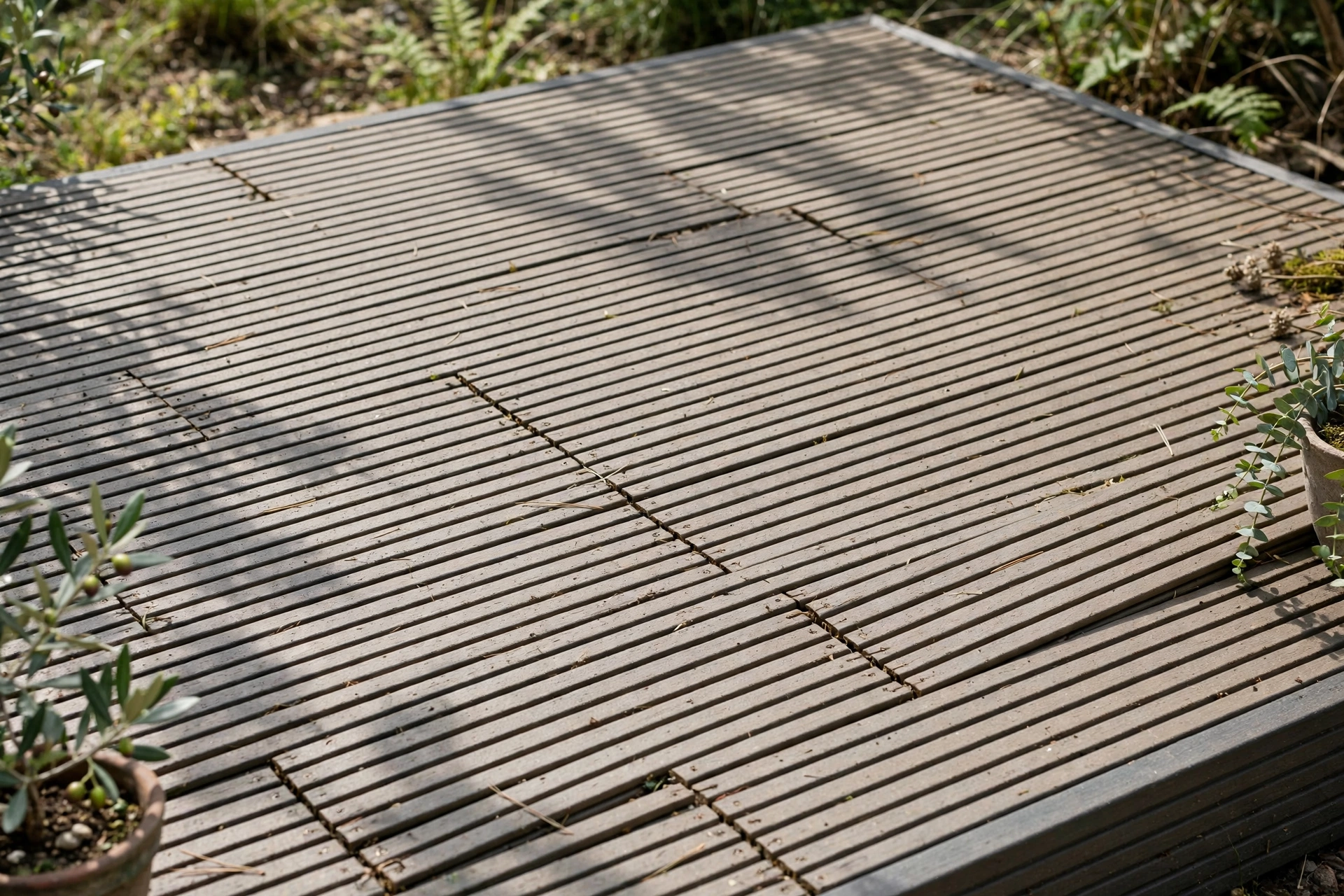
Narrow composite boards give a deck a fine, detailed surface with more joints running across it, which suits traditional homes and smaller outdoor spaces. Because each board is slimmer, the deck shows more lines, and that busy pattern can make a small deck feel carefully finished rather than plain.
Narrow boards also suit curved edges and detailed borders, where slimmer pieces bend and fit around shapes more easily than wide ones.
The trade-off is time and fixings: more boards mean more lengths to cut, more fixings to place, and more joints to keep clean. On a large deck, narrow boards can also look busy, and the extra joints can draw the eye away from the garden beyond. Narrow boards work best where detail matters more than speed, such as a small patio deck, a balcony, or a deck with a decorative border.
Wide Boards: Look and Feel
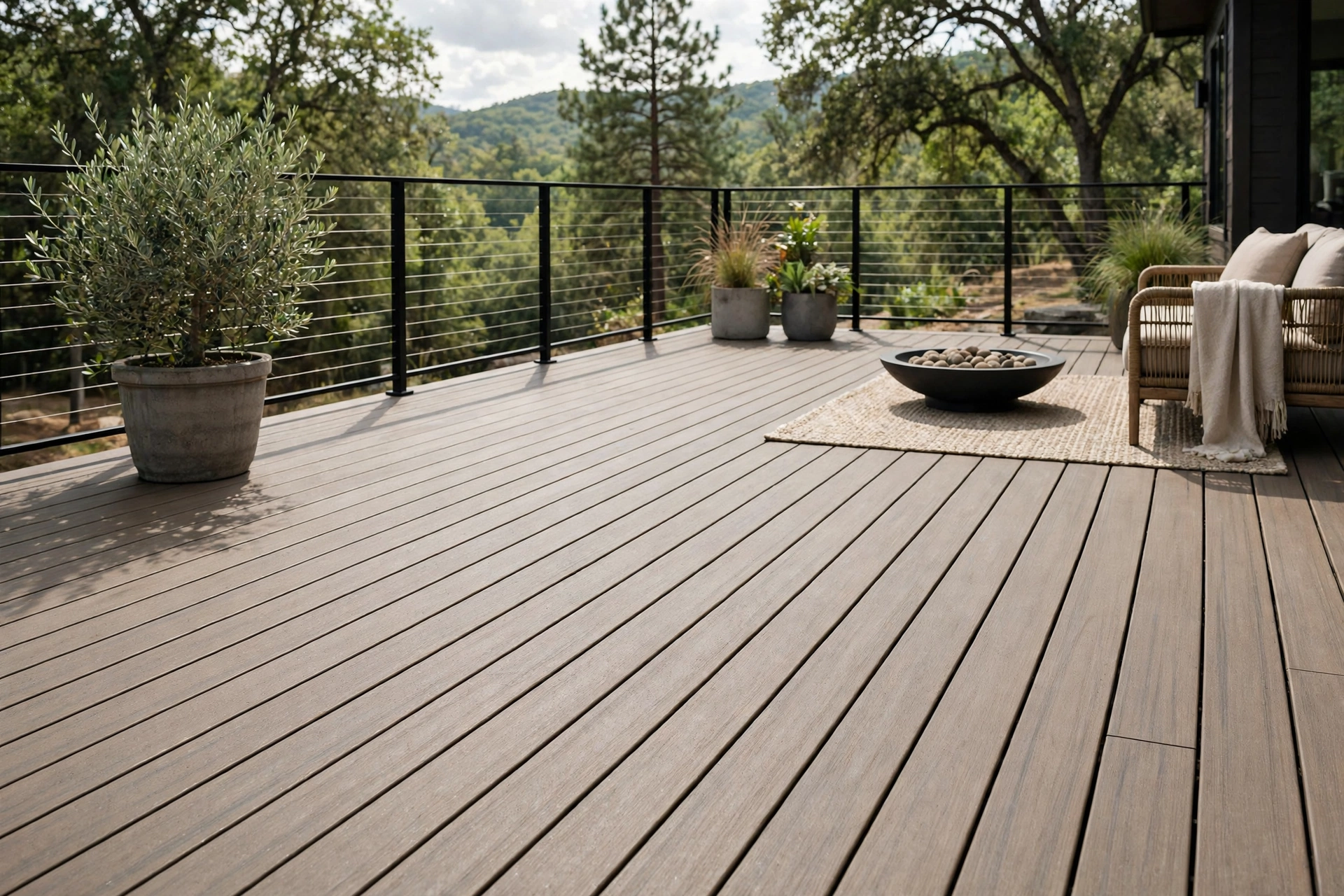
Wide composite boards give a deck a bold, modern surface with fewer joints, which suits large decks and contemporary homes. With fewer lines breaking up the surface, the eye travels across the deck more easily, and the space can feel larger and calmer.
Wide boards also cover ground faster, so a big deck needs fewer lengths, fewer fixings, and often less fitting time than the same deck built with narrow boards.
The trade-off is that wide boards show every uneven joist and every small cutting error more clearly, because there are fewer joints to hide them. They can also look heavy on a very small deck, where one or two wide boards may dominate the whole space. Wide boards work best on open, level decks where a clean, modern look is the goal and the frame underneath is straight and true.
How Width Affects Gaps and Joints
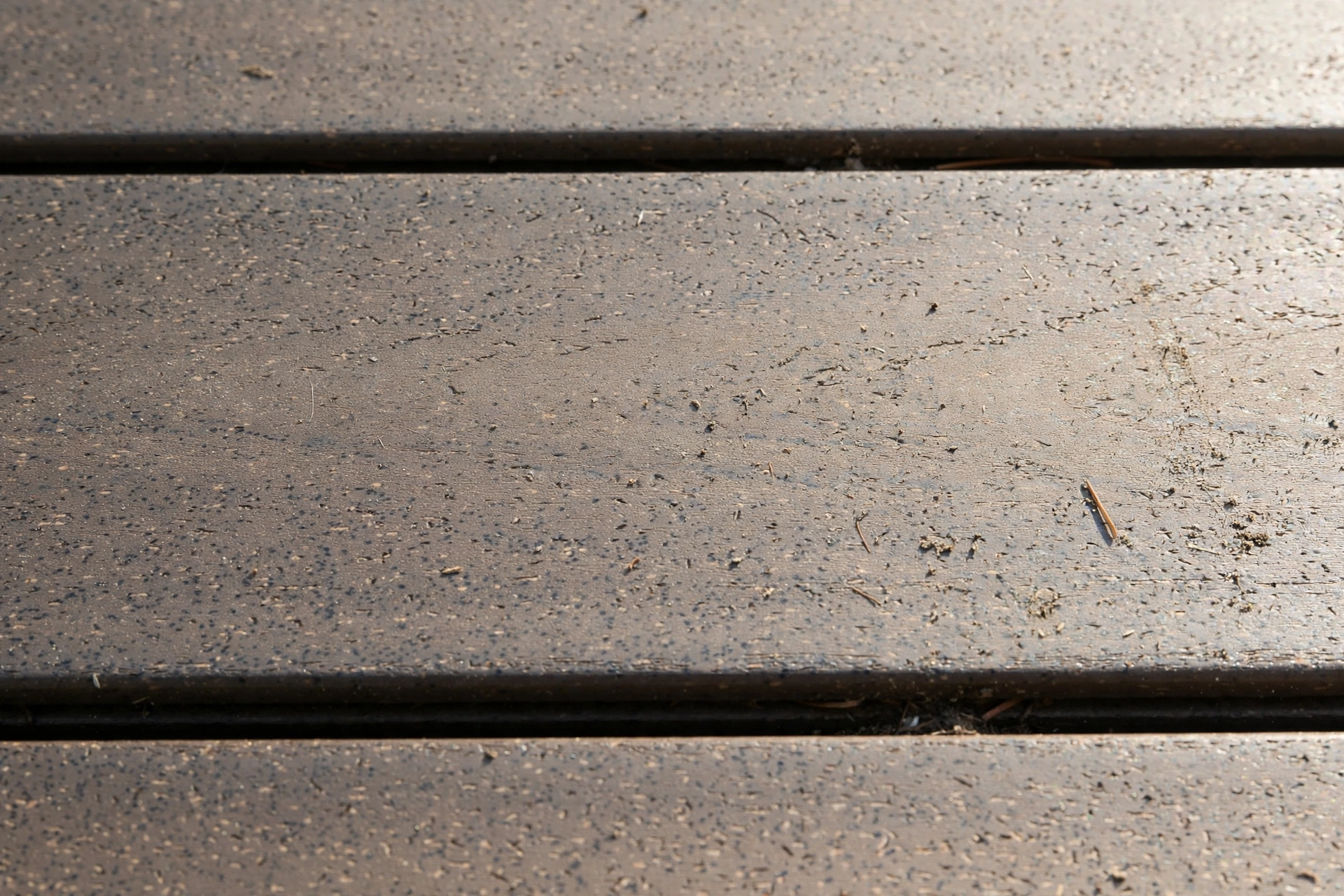
Board width changes how many gaps and joints your deck will have, and that changes both the look and the upkeep. Every board needs a small gap beside its neighbour so it can expand and contract with temperature changes, and the maker will state the gap to leave.
Narrow boards mean more boards, more gaps, and more joints across the deck, which gives a detailed look but also more grooves where dirt and leaves can collect.
Wide boards mean fewer boards, fewer gaps, and fewer joints, which gives a cleaner surface and less groove cleaning. However, each gap on a wide-board deck is more visible, so uneven gaps stand out more. However wide or narrow your boards are, keep the gaps even and follow the maker’s guidance, because gaps that are too tight can cause boards to press together, while gaps that are too wide can look untidy and trap debris.
How Width Affects Waste and Layout
Board width affects how much material you waste, because deck lengths rarely divide neatly into the deck’s width. When you lay boards across a deck, the last board in each row often needs cutting, and the offcut may be too short to reuse elsewhere.
Narrow boards usually leave smaller offcuts, so waste tends to be lower, while wide boards can leave larger offcuts that are harder to use again.
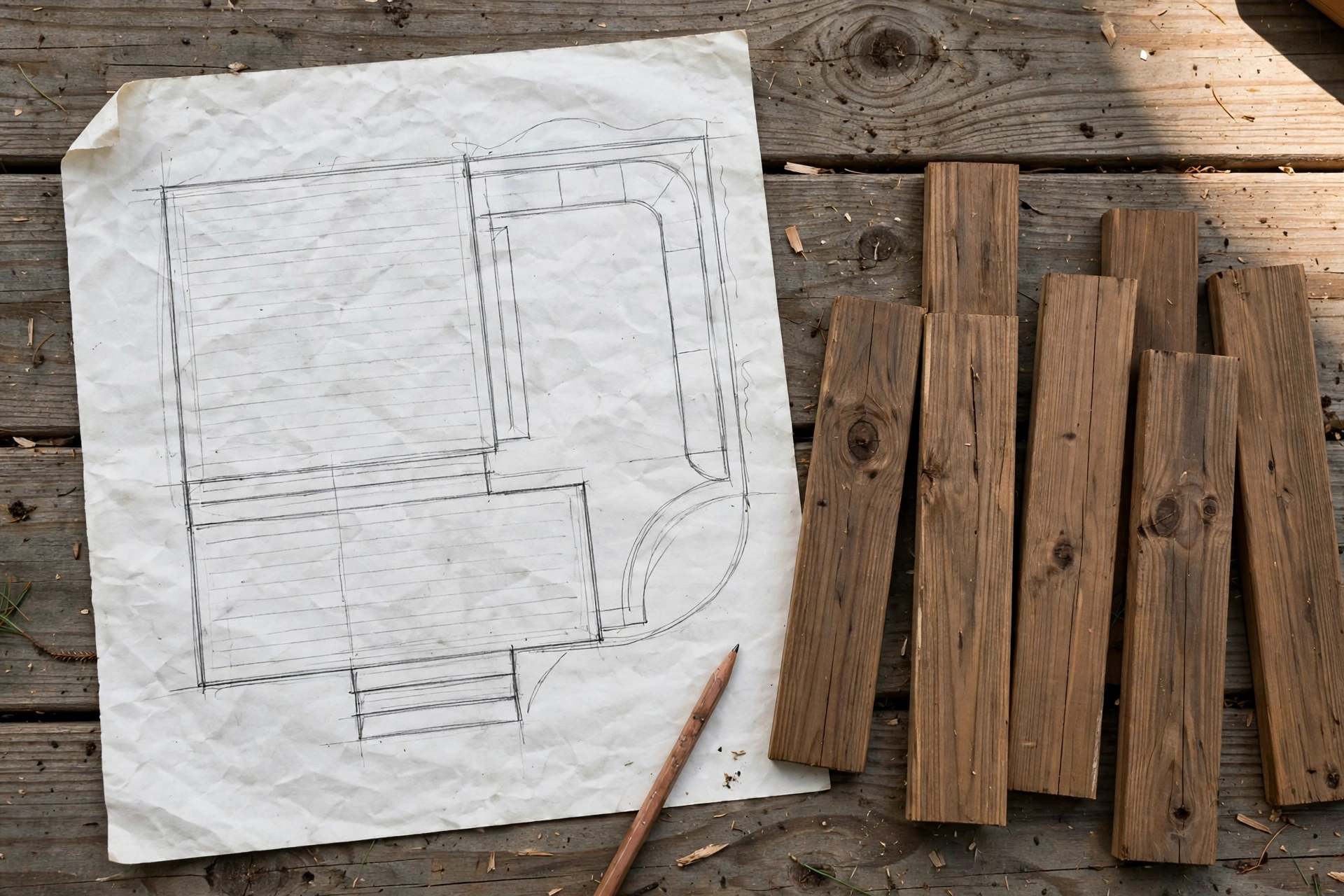
Planning the layout before you order helps a lot. Sketch the deck, mark the direction the boards will run, and work out how many full boards fit across the width, allowing for the recommended gaps. If the final row would be a very thin strip, consider starting with a cut board on each side so the edges look balanced, or choose a different width that divides more neatly. Ordering a small amount extra for cuts and mistakes is sensible, and your supplier can advise on a sensible allowance for your deck shape.

Widths for Different Deck Shapes and Patterns
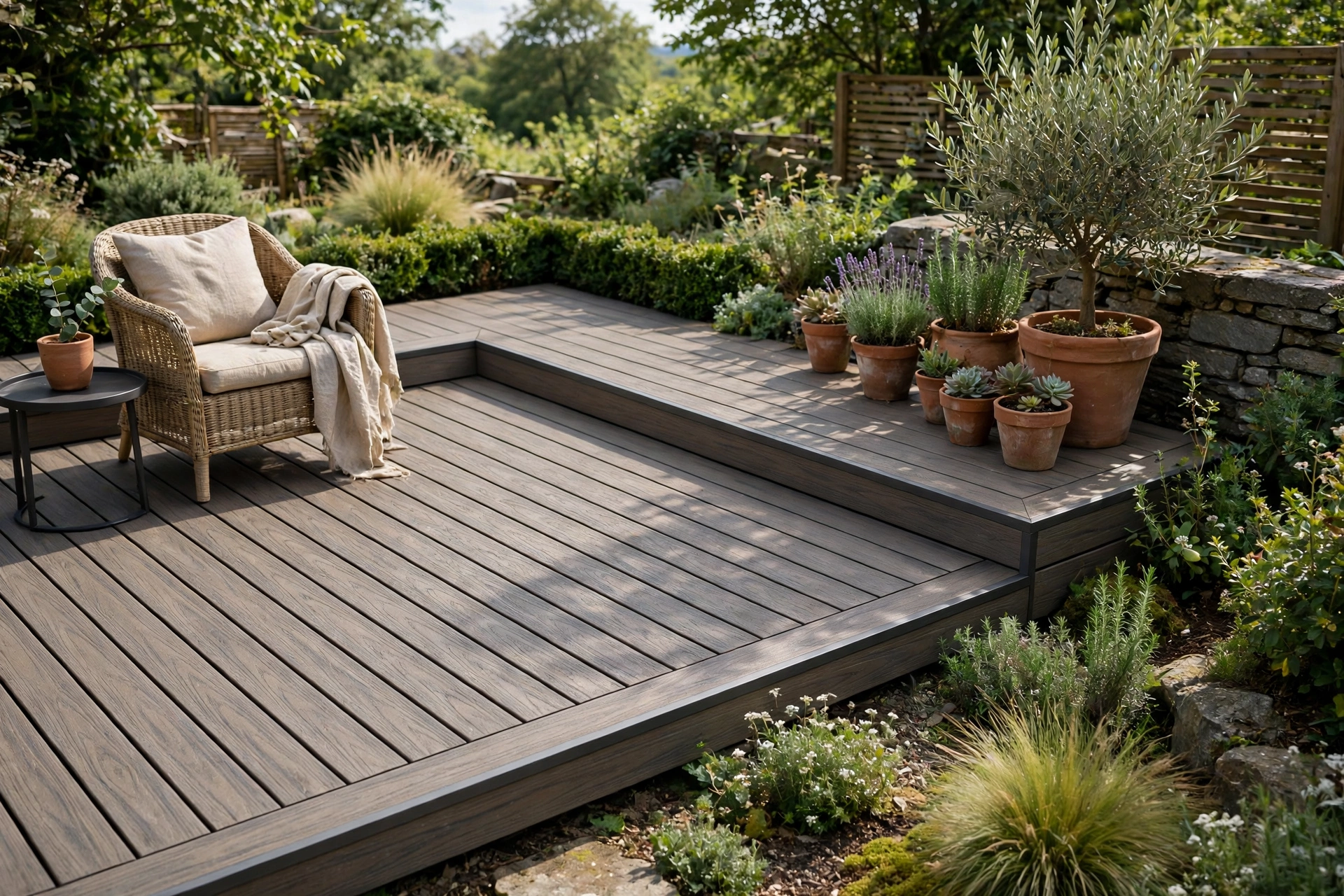
Straight, rectangular decks suit almost any board width, so the choice there is mostly about looks. A standard width is a safe choice for a plain rectangular deck, while wide boards suit a large rectangle and narrow boards suit a small one.
The shape matters more when the deck is not a simple rectangle, because boards must be cut around corners, steps, and posts.
Decks with angles, curves, or diagonal patterns suit narrower boards, because slimmer pieces fit awkward shapes with less waste and fewer awkward cuts. Herringbone and picture-frame patterns also work better with narrower or standard boards, since wide boards can make a pattern look heavy and can waste more material at the corners. For a deck with steps, consider how the width works on the step treads too, so the treads and the main deck look like one design rather than two different ones.
Measuring Your Deck Before You Choose a Width
Measuring your deck before you choose a width prevents the most common ordering mistake: buying boards that do not divide neatly across the space. Start by measuring the length and width of the area, then measure fixed features such as posts, steps, doors, and drains.
Note the direction of the house wall, because boards usually run away from the house or along it, and that direction decides which measurement the width must divide into.
Next, sketch the deck on paper with its measurements marked, and try each width you are considering against the shorter measurement. Divide the deck width by the board width plus the recommended gap, and see how many full boards fit and what is left over. If the leftover strip is very narrow, a different width may give a tidier finish. Take your sketch and measurements to your supplier, who can check your sums and confirm how the width you like is actually sold.

A Simple Step-by-Step Width Plan
A short plan keeps width choice simple and avoids costly reordering, because each step builds on the one before it. Follow these steps in order, and do not skip the measuring stage, since it is the step that saves the most money and prevents a second delivery.
- Measure the deck area and mark posts, steps, doors, and drains on a sketch.
- Decide the direction the boards will run, usually away from the house wall.
- Shortlist two or three widths from ranges you like, and note each maker’s stated width and recommended gap.
- Divide the deck width by each board width plus gap, and check the leftover strip for each option.
- Choose the width that divides most neatly and suits the deck’s size and style.
- Order the boards plus a small allowance for cuts, and keep the maker’s fitting guidance with the delivery.
Width-Choice Checklist
Use this checklist before you place an order, and tick each point off against the range you have chosen. It takes only a few minutes, but it can prevent the most common width mistakes, from guessing a width to forgetting the gap.
- The maker’s stated width is confirmed, not guessed from a photograph.
- The recommended gap is known and allowed for in the layout sums.
- The width divides neatly across the deck, without a very thin leftover strip.
- The width suits the deck’s size: narrow for small or detailed decks, wide for large open decks.
- The width suits the pattern: straight runs suit any width, while angled or patterned decks suit narrower boards.
- Trims, fixings, and spare boards in the same width are available if needed later.
Does Width Change Care and Cleaning?
Board width has a small effect on care and cleaning, mainly through the number of gaps on the surface. Narrow boards have more gaps, so there are more grooves to sweep and more places where leaves and dirt can settle, especially under trees.
Wide boards have fewer gaps, so sweeping is quicker, but each gap is more visible, so a build-up of dirt in one groove stands out more.
In everyday use, the difference is modest, and the board’s surface finish matters more than its width. A textured or grooved surface will hold dirt whatever its width, while a smooth surface is easier to sweep. Whatever width you choose, sweep regularly, clear the gaps now and then, and follow the maker’s cleaning guidance rather than using harsh chemicals, which can damage the surface over time.
Common Mistakes When Choosing a Width
The most common mistake is choosing a width from a photograph without checking the maker’s stated width, which leads to a deck that does not divide neatly. Another common mistake is picking wide boards for a very small deck, where they can look heavy and leave awkward offcuts.
A third mistake is forgetting the gap: boards laid without the recommended gap can press together as temperatures change, while gaps that vary from board to board look untidy.

Conclusion
Composite decking widths are simple once you know what to look for: a standard width suits most decks, narrow boards suit small or detailed spaces, and wide boards suit large, modern decks, so start from your deck’s size and shape.
The right width is the one that divides neatly across your deck, matches the deck’s size and pattern, and leaves even gaps that are easy to keep clean.
Frequently Asked Questions
What is the standard width of composite decking?
The standard width of composite decking is roughly five to six inches in many ranges, but the exact figure varies by maker and range. Always check the maker’s stated width for the board you are buying before you order.
Are wide composite deck boards better than narrow ones?
Neither width is better in every case. Wide boards suit large, modern decks with fewer joints, while narrow boards suit small, traditional, or patterned decks. The best choice depends on your deck’s size, shape, and style.
How do I work out how many boards I need?
Divide the deck width by the board width plus the recommended gap to find how many full boards fit. Then check the leftover strip, allow for cuts and mistakes, and confirm your sums with your supplier before ordering.
Do composite decking widths affect the gaps between boards?
Yes, width affects how many gaps a deck has. Narrow boards create more gaps and joints, while wide boards create fewer gaps, but each gap is more visible. Keep all gaps even and follow the maker’s recommended gap.
Can I mix different widths on one deck?
You can mix widths for a border or pattern, but mixing widths across the main deck surface can look untidy and complicate fitting. Plan a mixed look as a deliberate border or feature, not as a random mix.
Disclaimer
This article is provided purely for general information. It is not professional fitting, building, or buying advice, and it does not promote any brand, product, or service. Decking widths, gaps, and fitting methods vary by maker and range, so always check the maker’s own product details and fitting guidance, and speak to a qualified professional if you are unsure about your deck’s structure, safety, or local rules. Clearisecleaningservices.com does not offer guest posting, paid promotion, or advertising through this article.