Choosing paint for an interior wall can feel harder than the painting itself, because the shelves offer many types, finishes and promises, and the wrong choice shows up every day. A finish that looks perfect in a bedroom may mark easily in a hallway, and a paint that suits a living room may struggle in a steamy bathroom.
This guide answers the question in plain language: what kind of paint for interior walls is right for your home? It explains the main paint types, the finishes from flat to gloss, which finish suits each room, when primer matters, and how many coats to expect. By the end, you should be able to choose with confidence, without needing to know any brand names.
The Short Answer: What Kind of Paint for Interior Walls?
For most interior walls, a water-based paint in an eggshell or satin finish is the safest all-round choice, because it is easy to apply, dries fairly quickly, has a mild odour, and can be wiped clean. Bedrooms and living rooms usually suit eggshell, while kitchens, bathrooms and hallways usually benefit from the extra washability of satin.
That short answer covers most homes, but it is not the whole story. Flat paint hides wall flaws better, semi-gloss suits trim and very wet areas, and some walls need primer first. The rest of this guide explains why each choice works, so you can adjust the answer to your own rooms.
Water-Based Paint: The Usual Choice for Interior Walls
Water-based paint, often called latex paint, is the usual choice for interior walls today, because it is easy to brush and roll, dries faster than older oil-based paint, and cleans up with soap and water. Most paints sold for interior walls in home stores are water-based, which makes them the default starting point for most rooms.
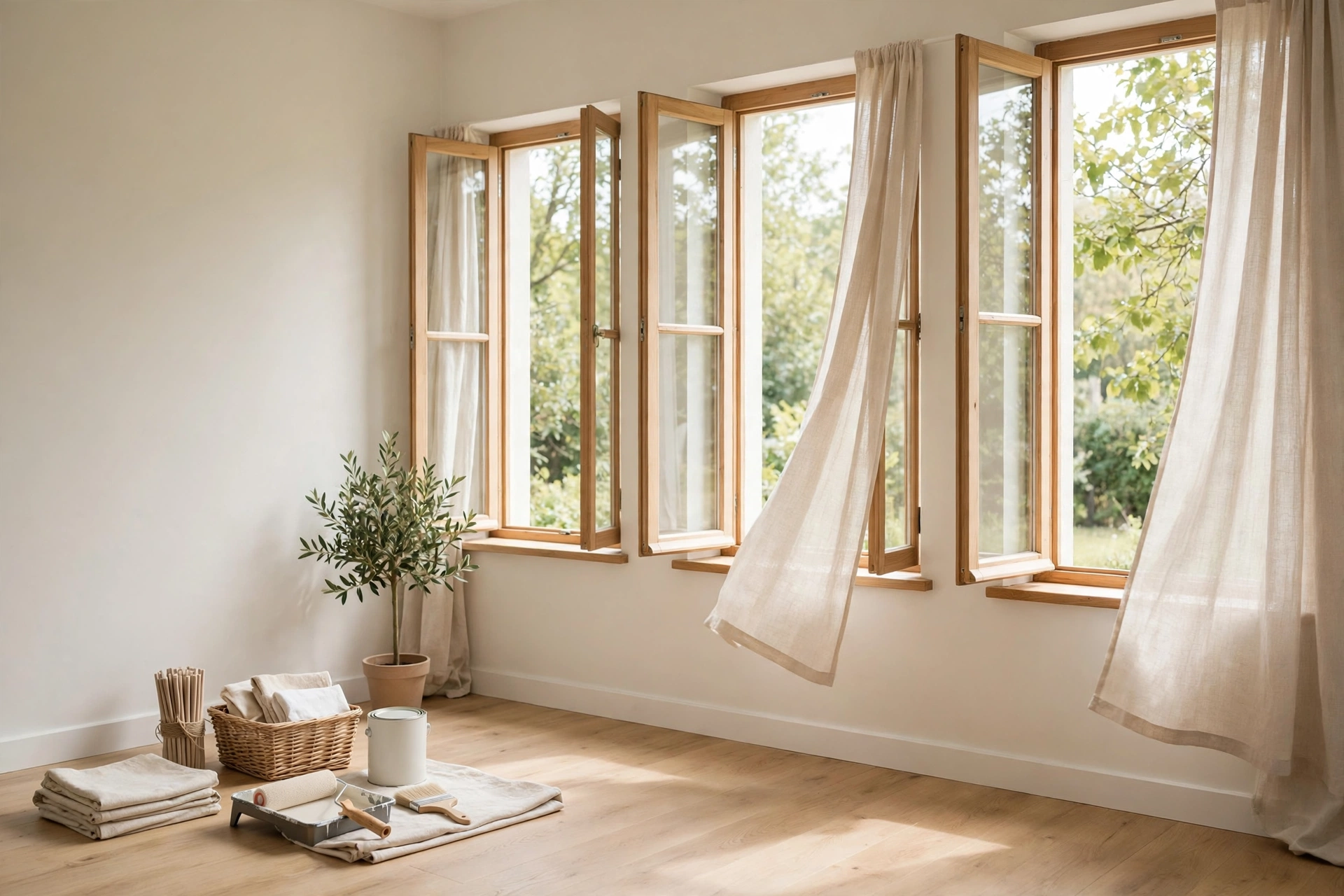
Water-based paint also tends to have a milder smell than oil-based paint, so a freshly painted room is usually comfortable again sooner, especially with the windows open. It holds its colour well and is less likely to yellow than oil-based paint, which suits light-coloured walls. For a first-time painter, it is also more forgiving, since brushes and rollers wash out easily.
Oil-based paint is still sold, but it dries more slowly, smells stronger and needs solvents for cleanup, so it is rarely the best choice for interior walls.
Acrylic and Enamel Paints: What the Names Mean
Acrylic paint is a type of water-based paint made with acrylic resins, and it is one of the most common kinds of interior wall paint you will find. The word acrylic on a can usually means the paint is water-based, flexible when dry, and resistant to cracking, which is why it is widely used on interior walls.
Enamel is a more confusing word, because it describes a hard, smooth finish rather than a single ingredient. In the past, enamel usually meant oil-based paint, but today many paints labelled enamel are water-based paints that dry to a tough surface. That toughness is why enamel-style paints are often used on trim, doors and cabinets, where the surface gets touched and knocked more often.
The practical point is simple: do not choose by the word on the front of the can alone. Look at what the paint is made for, whether it is water-based, and what finish it gives. A good interior wall paint will say clearly on the can that it is suitable for interior walls, and that guidance matters more than whether the label says acrylic or enamel.
Paint Finishes Explained: From Flat to Gloss
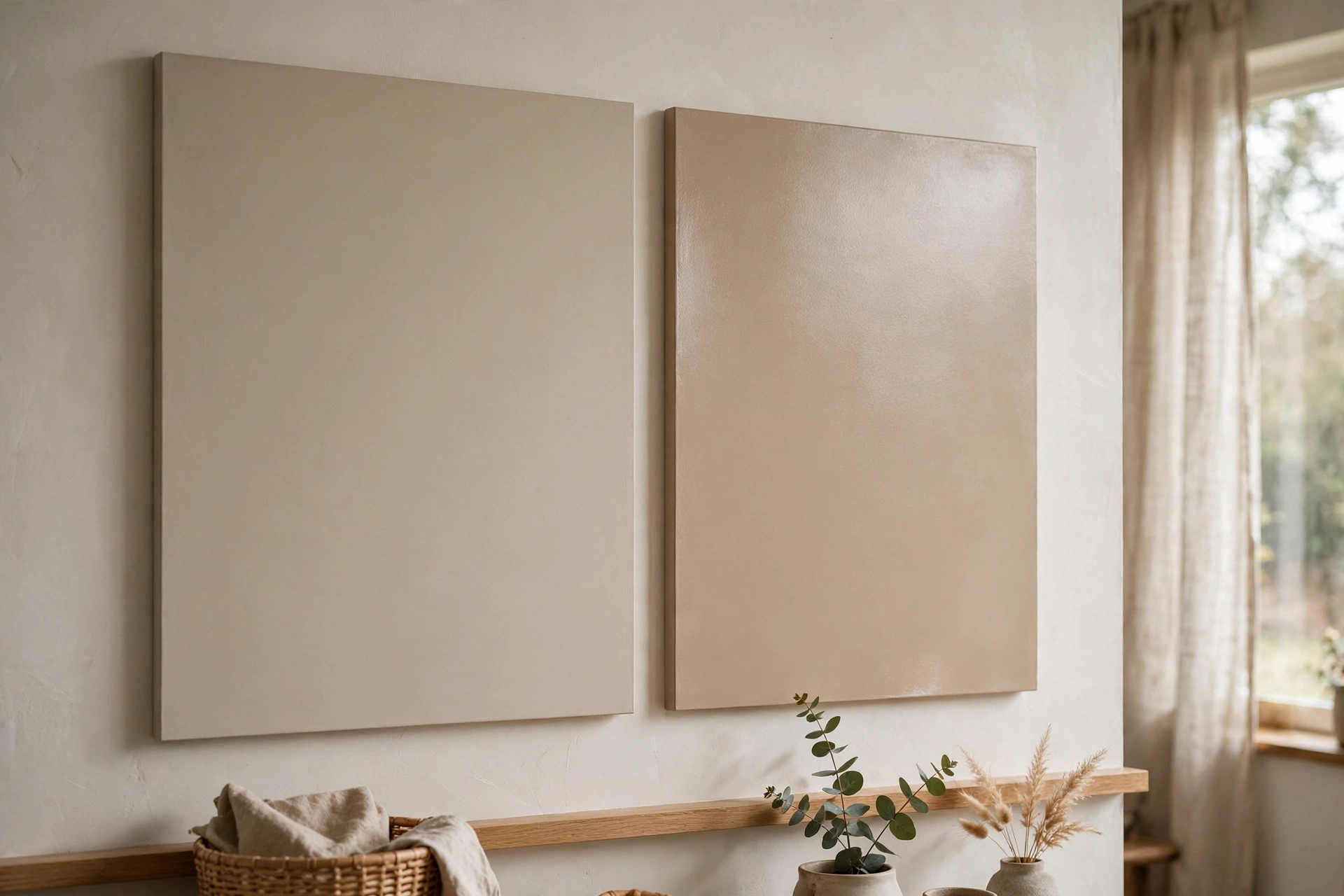
Paint finish means how shiny the dried paint looks, and it affects both the appearance of a wall and how easy it is to clean. Flat paint has almost no shine, eggshell has a soft, low sheen like the shell of an egg, satin has a gentle glow, semi-gloss has a clear shine, and gloss is the shiniest of all.
Flat paint is kind to imperfect walls, because its lack of shine hides small bumps, patches and uneven plaster better than shinier finishes. The trade-off is that flat paint marks more easily and is harder to wash, so scrubbing a stain can leave a shiny patch. Eggshell sits in the middle: it hides flaws fairly well and can handle light wiping, which is why it is popular in living rooms and bedrooms.
Satin and semi-gloss are tougher and easier to clean, because their smoother surface lets dirt and marks be wiped off without damaging the paint as quickly. The trade-off is that shine shows up wall flaws more clearly, so the wall needs to be smooth and well prepared. Gloss is the toughest and shiniest, but it shows every flaw, so it is rarely used on large wall areas and is more common on trim and doors.
Which Finish Suits Which Room?
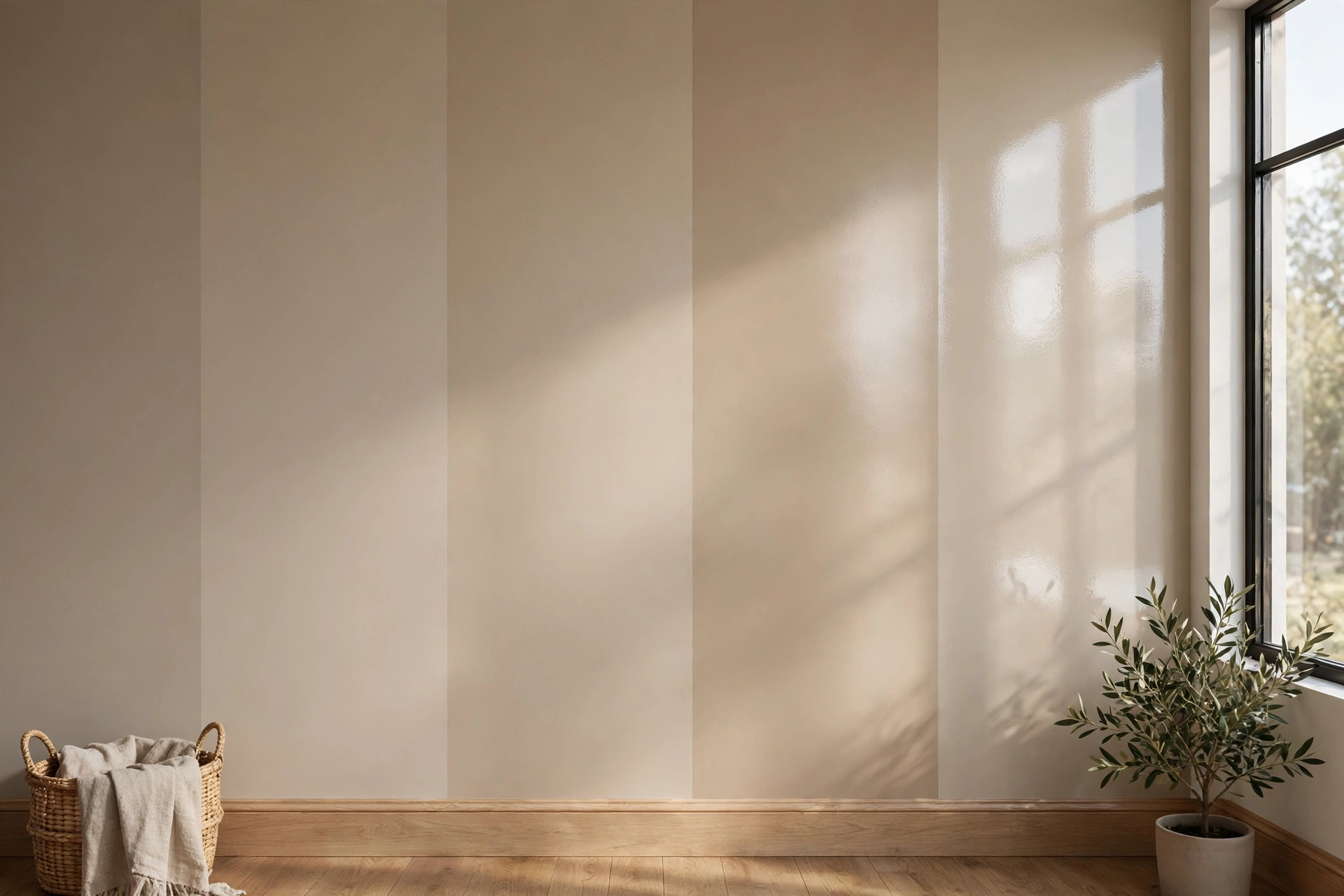
The best paint finish for a room depends on how the room is used, how much moisture it gets, and how often the walls need cleaning. A quiet bedroom and a busy hallway make very different demands on paint, so one finish rarely suits the whole house perfectly.
The table below gives a simple starting point for each room. Treat it as a guide, not a strict rule, because the condition of your walls and your own tolerance for cleaning also matter. If your walls are uneven, a flatter finish will be more forgiving; if you have young children or pets, a more washable finish will save effort later.
| Room | Suggested finish | Why it suits the room |
|---|---|---|
| Living room | Eggshell or satin | Soft look, light cleaning, handles everyday marks |
| Bedroom | Flat or eggshell | Calm, low-shine look, hides small wall flaws |
| Kitchen | Satin or semi-gloss | Washable, copes with splashes and cooking marks |
| Bathroom | Satin or semi-gloss | Handles moisture and frequent wiping |
| Hallway and stairs | Satin | Tough, washable, copes with knocks and fingerprints |
| Children’s room | Satin | Easy to wipe clean after marks and scuffs |
| Trim, doors and woodwork | Semi-gloss or gloss | Hard-wearing, easy to clean, highlights detail |
Choosing Paint for Living Rooms and Bedrooms
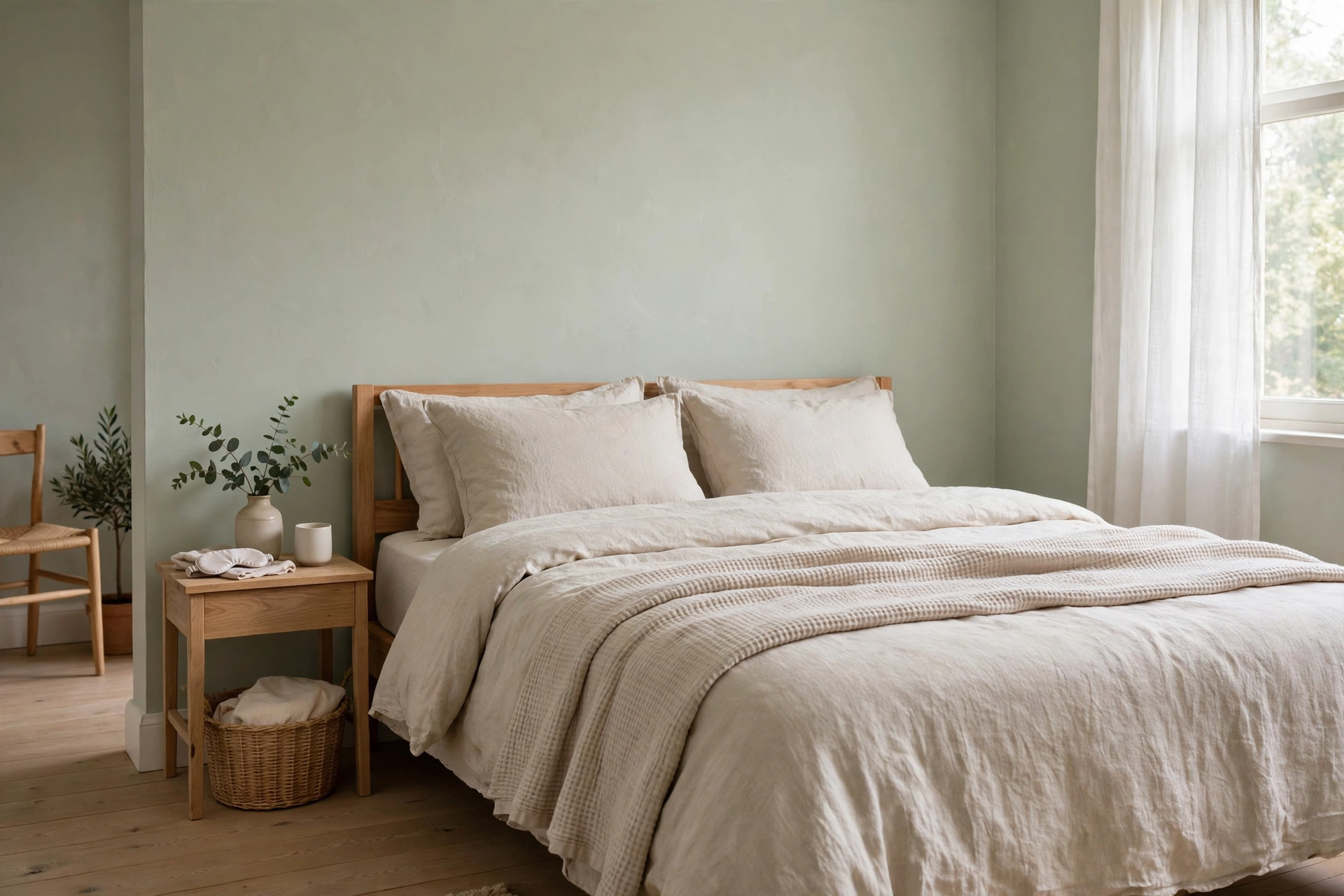
Living rooms and bedrooms are usually the easiest rooms to paint, because they are dry, quiet spaces where the walls are not washed often. An eggshell finish is a popular choice for both, since it gives a soft, warm look without the flat paint problem of marking at the lightest touch.
For a living room, think about how the room is used. A room where people gather, children play and pets wander will benefit from satin rather than eggshell, because satin wipes clean more easily. A formal or little-used living room can suit eggshell or even flat paint, since the walls are rarely touched.
Bedrooms suit a calm, low-shine finish, and many people choose flat or eggshell for a restful feel. Flat paint hides the small flaws that older bedroom walls often have, but it is harder to clean, so eggshell is usually the better balance unless the walls are very uneven. Ceilings are a separate case: flat paint is the usual choice for ceilings, because it does not reflect light unevenly and hides flaws overhead.
Choosing Paint for Kitchens, Bathrooms and Hallways
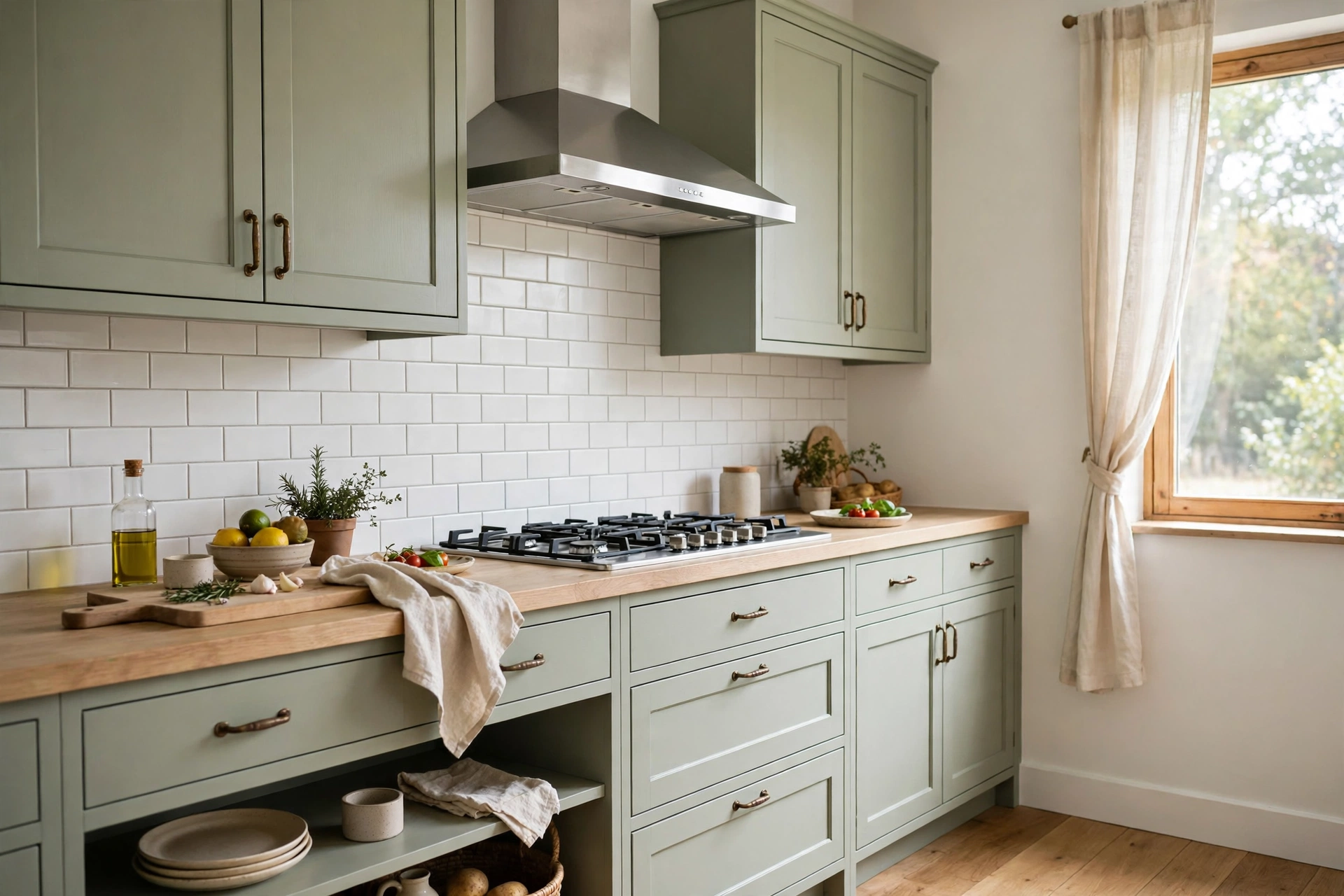
Kitchens, bathrooms and hallways are the hardest-working rooms for paint, because their walls face moisture, splashes, steam and constant touching. A satin or semi-gloss finish is usually the best choice here, since both can be wiped clean repeatedly without wearing away quickly.
In a kitchen, walls near cooking areas collect grease and splashes, so washability matters more than a perfectly flat look. Satin is a good balance for most kitchen walls, while semi-gloss suits the areas closest to sinks and cookers, where wiping happens most. In a bathroom, moisture is the main concern: steam and condensation sit on walls daily, so a satin or semi-gloss paint that resists moisture and can be wiped down is practical, and good ventilation matters just as much as the paint itself.
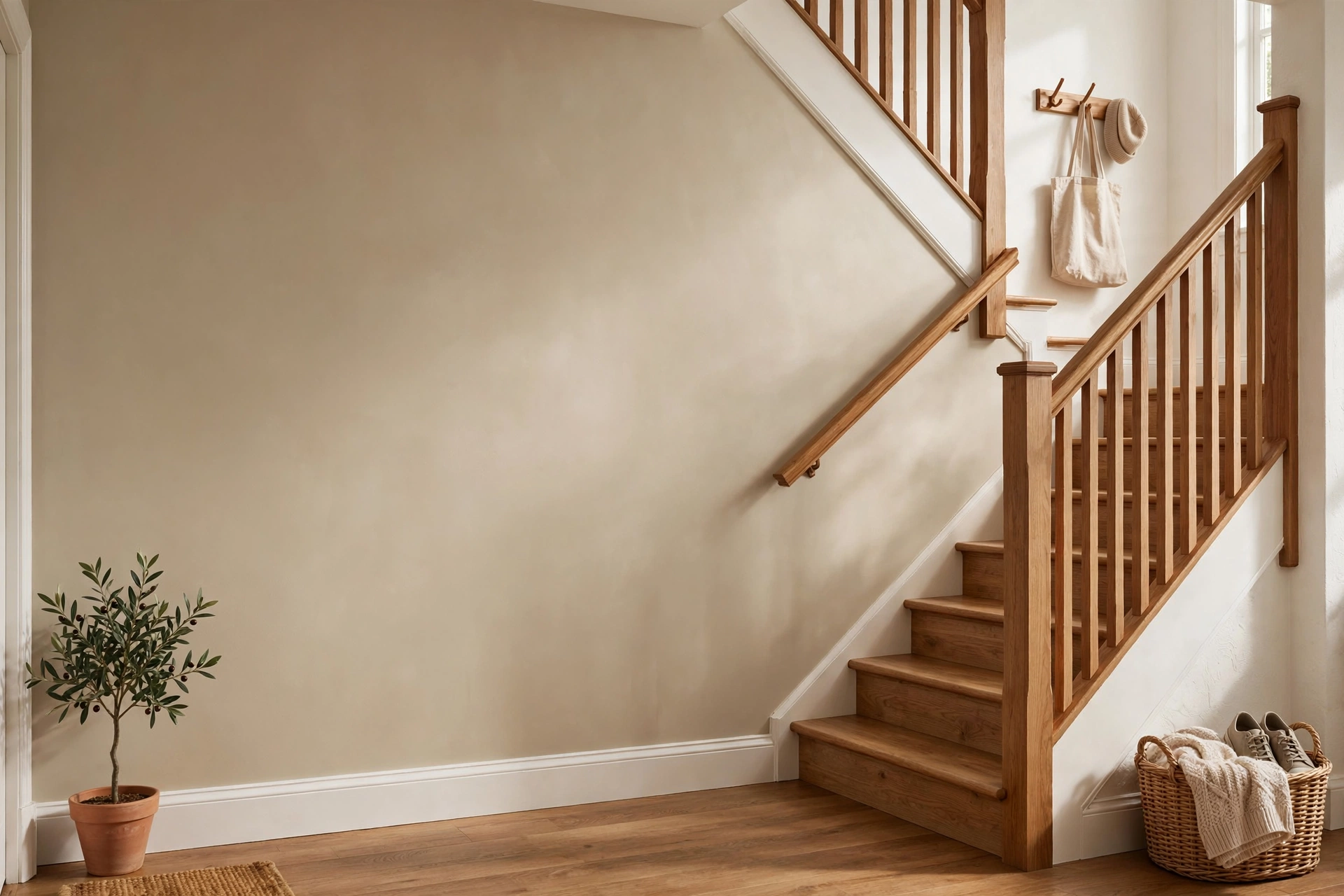
Hallways and stairwells take knocks from bags, hands and furniture, and fingerprints show quickly at hand height. Satin is the usual answer, because it is tough enough to be wiped clean but does not look as shiny as semi-gloss across a large wall.
Primer: When You Need It and When You Can Skip It
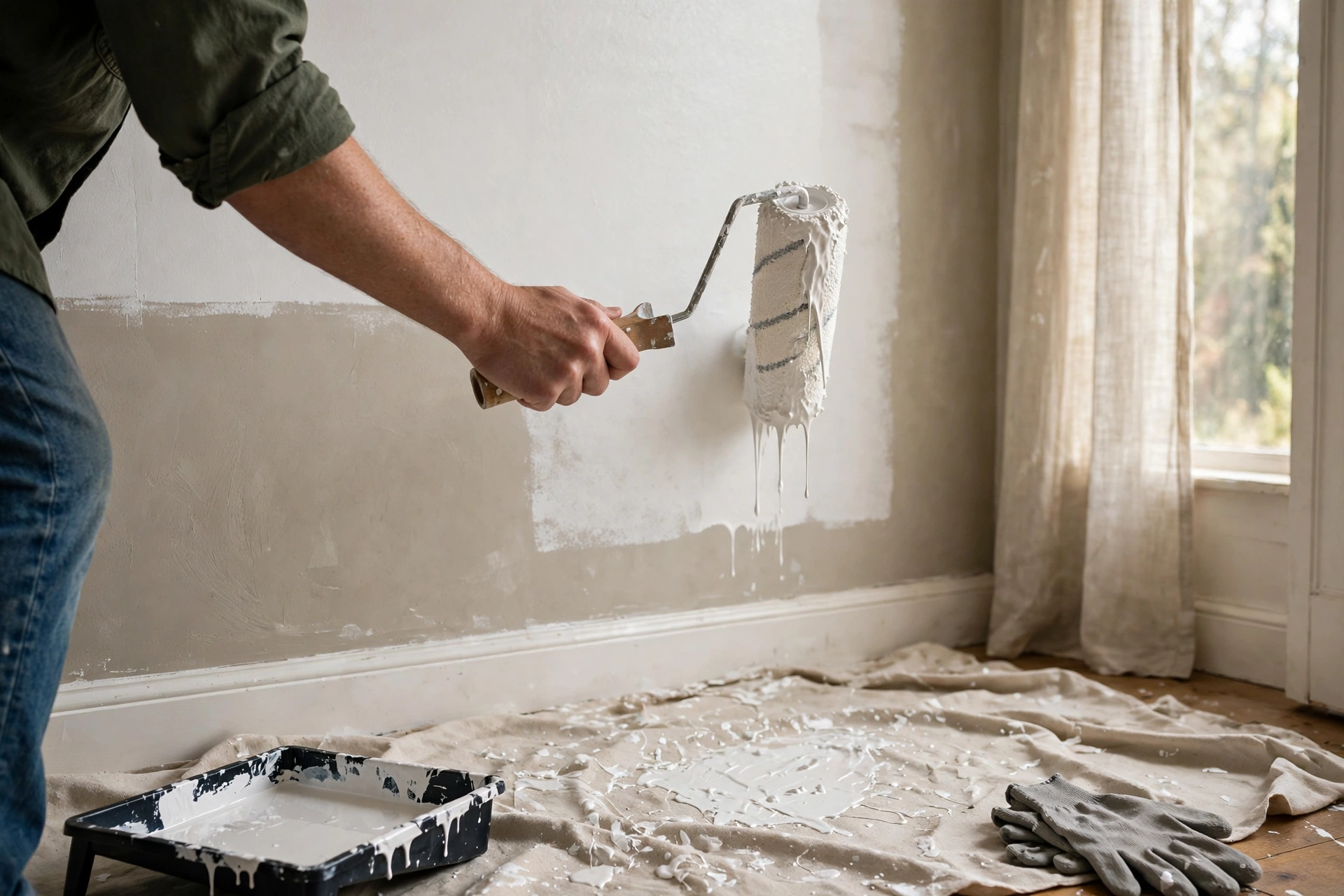
Primer is a preparatory coat that helps paint stick evenly, covers stains and patches, and gives a uniform base for the topcoat. You need primer on new, unpainted drywall, on walls with stains or repairs, and when you are making a big colour change, such as covering a dark wall with a light colour.
New drywall soaks up paint unevenly, so painting it without primer can leave a patchy finish that needs extra coats to fix. Patched areas and filler behave the same way: they absorb paint differently from the surrounding wall, and primer evens that out. Stains from water marks or smoke can also bleed through ordinary paint, so a stain-blocking primer is worth using there. A big colour change is another case where primer saves time, because it covers the old colour and lets the new colour show true in fewer coats.
You can often skip primer when repainting a wall that is already in good condition with a similar colour, since the old paint acts as a base. Many paints are also sold as paint-and-primer in one, which can work well on previously painted walls in good condition. If you are unsure, priming is rarely wasted: it costs a little extra time, but it usually gives a smoother result.
How Many Coats and How Much Paint Do You Need?
Most interior walls need two coats of paint over primer or a sound existing coat, because one coat rarely gives full, even colour. The first coat covers and evens out the surface, while the second coat gives the true colour and a uniform finish, especially when the new colour is lighter or darker than the old one.
Follow these steps to plan your paint quantity sensibly:
- Measure each wall’s width and height, multiply them, and add the walls together to get the total area.
- Subtract a rough allowance for large windows and doors, but do not over-subtract, since cutting in around them uses paint too.
- Check the coverage stated on the paint can, since coverage varies by product, surface and application method.
- Plan for two coats, and round up rather than down, so you have enough for touch-ups.
- Buy all the paint for one room at the same time, so the colour matches across every can.
Coverage varies a lot: rough or porous walls drink up more paint than smooth, previously painted walls. It is better to have a little left over for future touch-ups than to run out halfway through the second coat.

Low-Odour and Low-VOC Paints: What to Know
Low-odour and low-VOC paints are water-based paints made to release fewer of the compounds that cause strong paint smells. VOC stands for volatile organic compounds, which are chemicals that evaporate from paint as it dries and create the familiar paint smell in a freshly painted room.
For most people, the practical benefit is comfort: a room painted with a low-odour paint is usually pleasant to be in sooner, and the smell fades faster, especially with good ventilation. This matters most in bedrooms, children’s rooms and small rooms with little airflow. Low-VOC paint performs much like ordinary water-based paint for ordinary interior walls, so choosing it does not usually mean accepting a weaker finish.
A few honest cautions still apply. Low-odour does not mean no odour at all, and a freshly painted room still needs ventilation while it dries, whatever the label says. Labels and rules vary by region, so read what the can actually claims. If anyone in the household has a health condition affected by paint fumes, check the product guidance and ask a professional before painting.
Colour, Light and Washability: Making the Final Choice
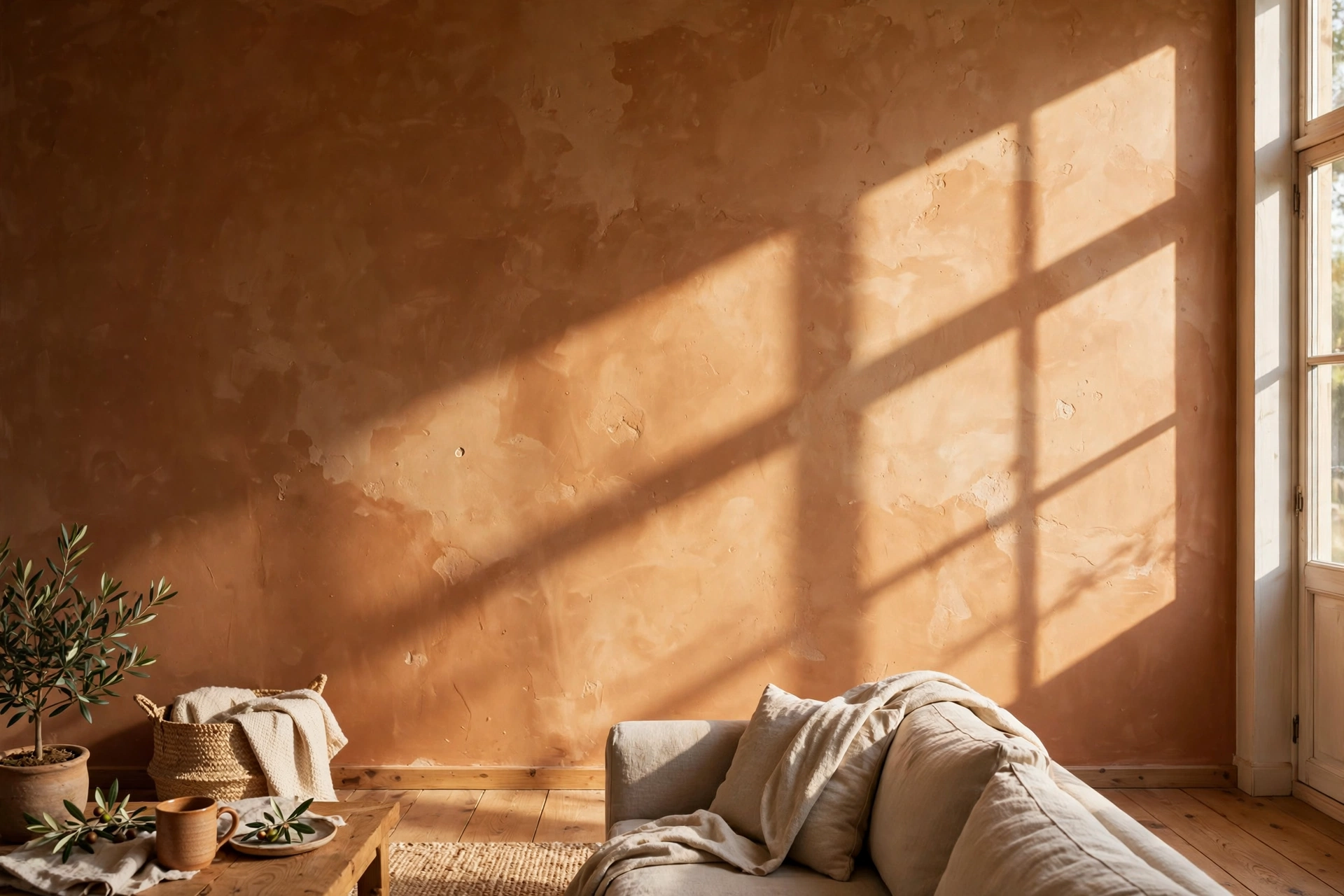
Colour, light and washability should be decided together, because a colour that looks perfect in a shop can look very different on your wall. Paint colours change with daylight, lamplight and the direction a room faces, so a warm white can look yellow in one room and grey in another.
Before committing, test the colour on your own wall. Paint a large test patch, or paint a board you can move around the room, and look at it in morning light, evening light and lamplight over a day or two. This simple step prevents the most common regret in interior painting: a colour that looked right on a small card but feels wrong across a whole wall.
Washability is the last piece of the choice. If the room is busy, has children or pets, or faces cooking and moisture, choose the more washable finish even if a flatter finish looks slightly softer. A paint that can be wiped clean will look better for longer than a delicate finish that marks in the first month.
Common Mistakes When Choosing Interior Wall Paint
The most common mistake when choosing interior wall paint is picking a finish for looks alone, without thinking about cleaning. Flat paint in a hallway or a children’s room looks soft on day one, but it marks quickly and is hard to wash, so the room soon looks worse than it would with satin.
Other mistakes are just as easy to make. Skipping primer on new drywall or over stains leads to patchy colour and extra coats, while choosing a colour from a small card without testing it on the wall leads to surprises once it covers a whole room. Buying too little paint is another frequent error, since running out mid-job risks a visible colour difference between cans. Finally, many people forget the ceiling and trim: ceilings usually need flat paint, and trim usually needs semi-gloss or gloss.
Avoiding these mistakes is mostly a matter of slowing down: match the finish to the room, prime where it matters, test the colour, and buy enough paint for two coats plus touch-ups.
Conclusion
What kind of paint for interior walls is best? For most homes, the answer is a water-based paint, usually in an eggshell finish for living rooms and bedrooms and a satin finish for kitchens, bathrooms and hallways, with primer wherever the wall is new, stained or changing colour dramatically.
That simple combination covers most rooms well, and the details in this guide let you adjust it: flatter for hiding flaws, shinier for washability, low-odour where comfort matters, and always tested on your own wall before you commit. Choose the paint for the room it will live in, not just the colour you like in the shop.
Frequently Asked Questions
What is the best paint for interior walls?
A water-based paint in eggshell or satin is best for most interior walls, since it applies easily, dries fairly quickly, has a mild odour, and can be wiped clean.
What paint finish is best for living rooms?
Eggshell is best for most living rooms because it looks soft and warm, hides small flaws fairly well, and handles light cleaning, while satin suits busier family rooms.
Should I use flat or satin paint on interior walls?
Use flat paint where walls are uneven and rarely touched, and satin where walls need washing, such as hallways, kitchens and children’s rooms, since satin cleans far more easily.
Do I need primer before painting interior walls?
Yes, on new drywall, patched areas, stains, and big colour changes, primer gives an even base and truer colour, while sound walls repainted in a similar colour often do not need it.
Is low-VOC paint good for interior walls?
Yes, low-VOC paint works well for ordinary interior walls and smells less while drying, but it still needs ventilation, and labels vary, so always read the can’s own claims.
Disclaimer: This article is provided for general information only. It is not professional painting, building, or health advice, and it does not promote any brand, product, or service. Paint types, finishes, and availability vary by region and manufacturer, so always check the guidance on the specific product and seek qualified professional advice before painting, especially in homes with health sensitivities or older painted surfaces.