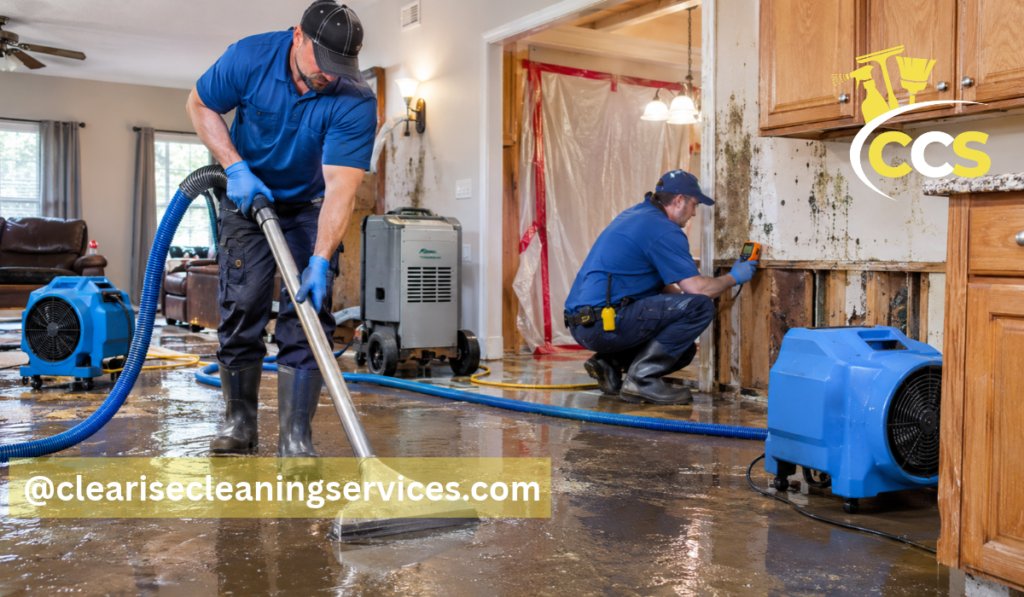
Emergency water damage restoration begins with checking safety, assessing the damage, and controlling the water source. The crew then removes standing water, evaluates affected materials, cleans where needed, and uses drying equipment to remove trapped moisture. Regular measurements help determine when the building is ready for repairs.
The exact process depends on where the water came from, how far it spread, and whether it contains contaminants. A burst supply pipe requires a different response from a sewage backup or storm flood.
When we plan Emergency Water Damage Restoration in NJ, we focus first on preventing further harm. Removing visible water matters, but completing the job also means addressing moisture inside walls, beneath flooring, and around other affected materials.
The First Call Helps Establish the Situation
During the initial call, we ask about the water source, affected rooms, and when you first noticed the problem. We also need to know whether water continues entering the property.
Describe any immediate hazards, including wet electrical equipment, sagging ceilings, or sewage. Tell us whether anyone has difficulty leaving the affected area.
These details help the responding team prepare equipment and identify other professionals who may be needed.
If you can safely reach a water shutoff without entering a hazardous area, stopping a plumbing leak may limit damage. Do not enter standing water to reach electrical controls. CDC guidance advises calling an electrician when the main switch cannot be reached from a dry location.
We Check Safety Before Starting Cleanup
A flooded room can contain hazards that are not obvious from the doorway. Water may reach outlets, appliances, or concealed wiring. Wet ceilings can lose strength, and flooded floors may hide sharp objects.
We assess access and determine whether the work area needs isolation. Depending on the conditions, an electrician, plumber, or structural specialist may need to assist before restoration proceeds.
A flooded basement also requires attention to conditions outside the building. Rapidly pumping out deep water while surrounding ground remains saturated can create structural concerns, so removal must reflect the situation.
The immediate goal is safe access, not rushing equipment into every wet room.
We Assess the Source and Extent of Damage
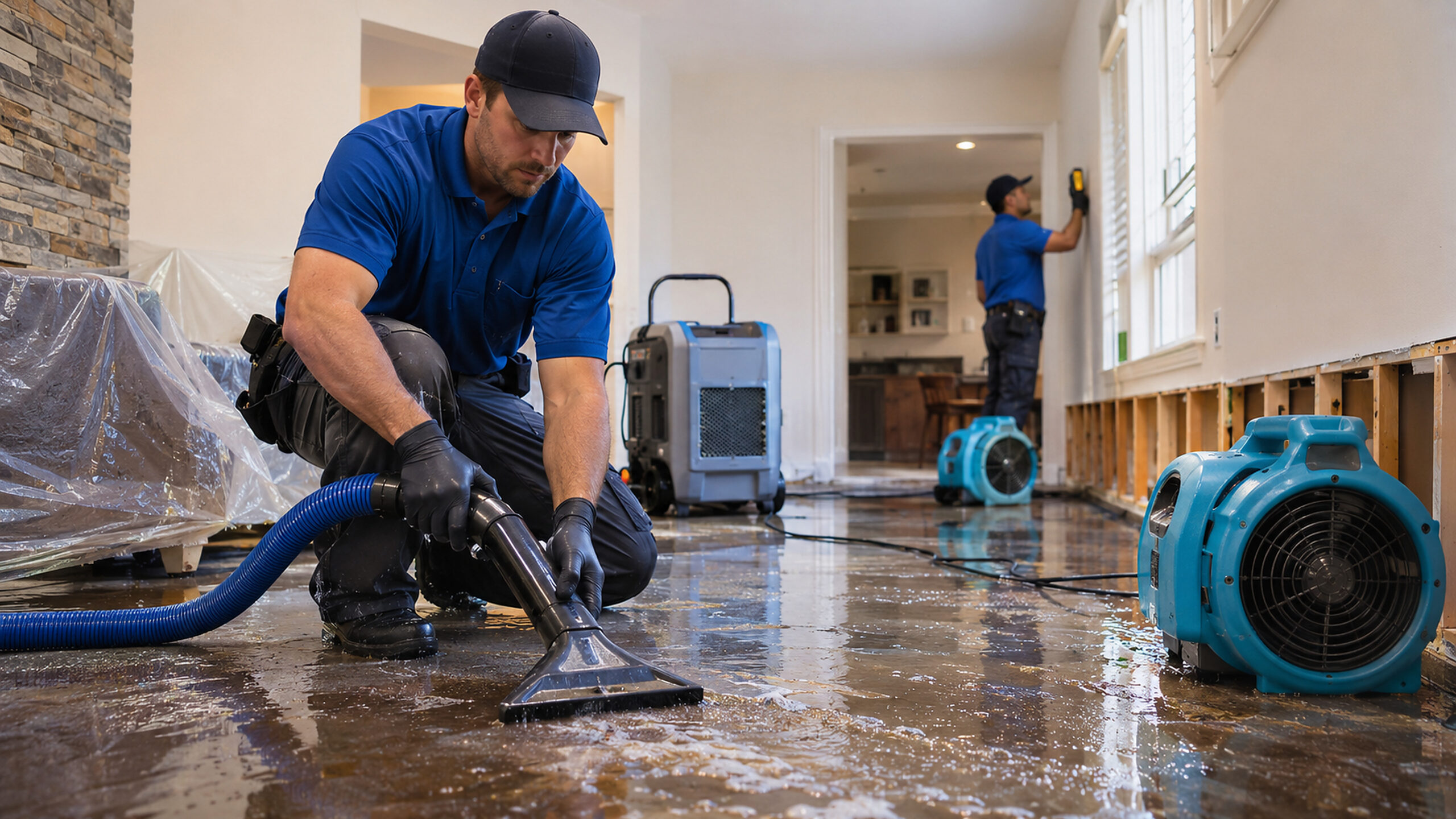
Next, we inspect where the water traveled. The wet area often extends beyond the puddle you can see.
Water can move beneath flooring, soak into drywall, or spread through adjoining rooms. Moisture meters help assess affected materials. Thermal imaging may help locate areas for investigation, but temperature patterns alone do not confirm moisture.
We also consider contamination. Water from a sanitary source can become contaminated as it contacts materials or remains untreated. Appearance alone does not establish whether it is safe.
The ANSI/IICRC S500 standard provides a professional framework covering assessment, safety, drying technology, documentation, and other restoration tasks.
For Emergency Water Damage Restoration in NJ, these findings guide the scope rather than a fixed cleanup package.
The Water Source Needs Correction
Drying cannot provide a lasting result while water keeps entering.
A plumber may need to repair a burst pipe or leaking connection. A sewage backup may require drain work. Roof leaks, failed sump pumps, and groundwater intrusion may need different specialists.
We explain how source control relates to the cleanup. Repairing the cause and restoring the damage are connected tasks, but they may fall under separate service agreements.
If the source cannot be permanently corrected immediately, appropriate temporary measures may help limit further intrusion. The restoration plan must account for that limitation.
We Remove Standing Water
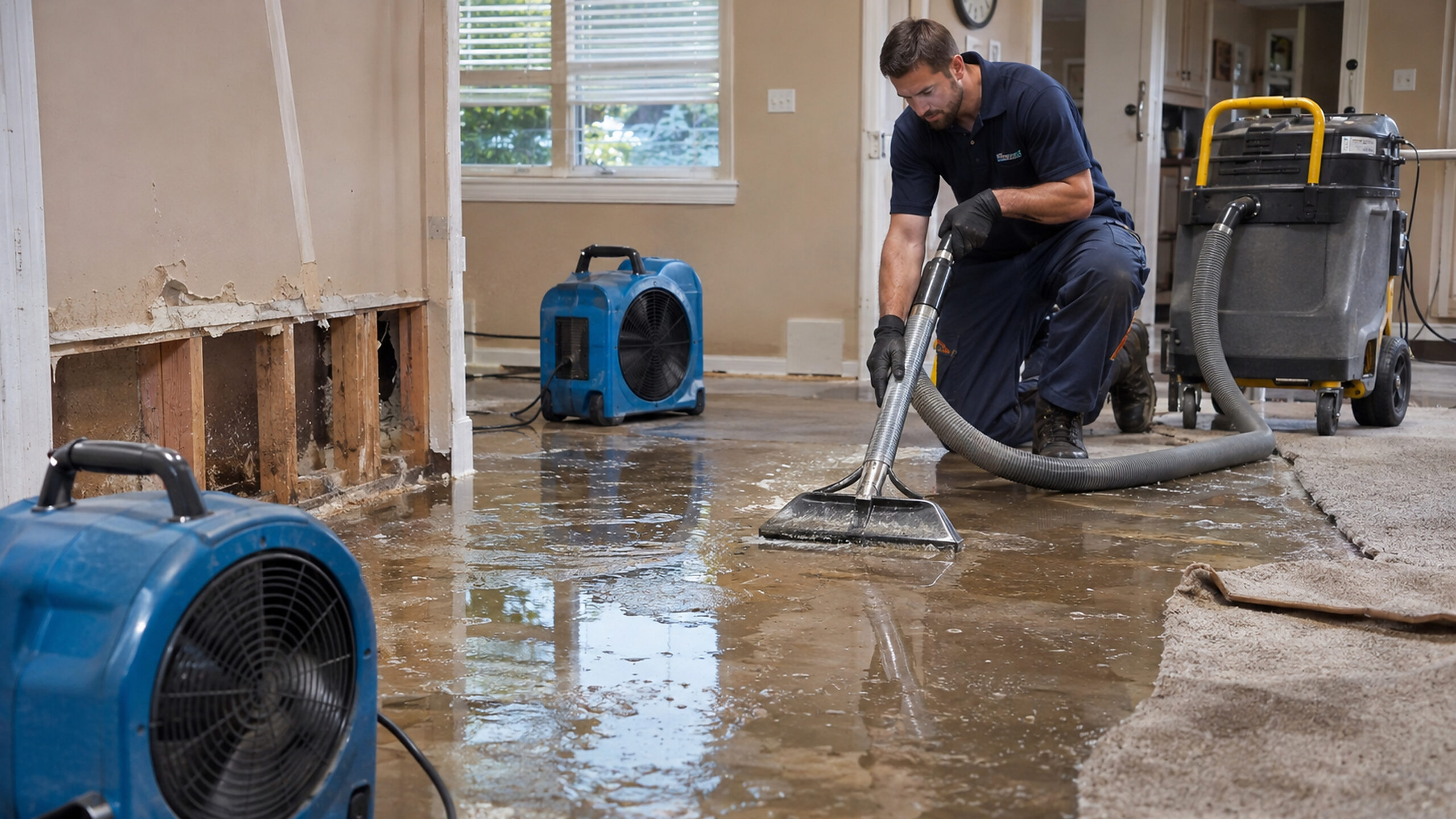
Once conditions allow, we use pumps or extraction equipment suited to the water depth, contamination, and affected surfaces.
Removing liquid water reduces the amount that must evaporate during drying. We may extract water from accessible flooring and evaluate wet contents as work progresses.
However, extraction does not make soaked materials dry. Carpet can feel less wet while padding or the subfloor still holds moisture.
We check what remains beneath and behind visible surfaces. That helps avoid ending the emergency response before hidden damage receives attention.
We Decide What Can Be Saved
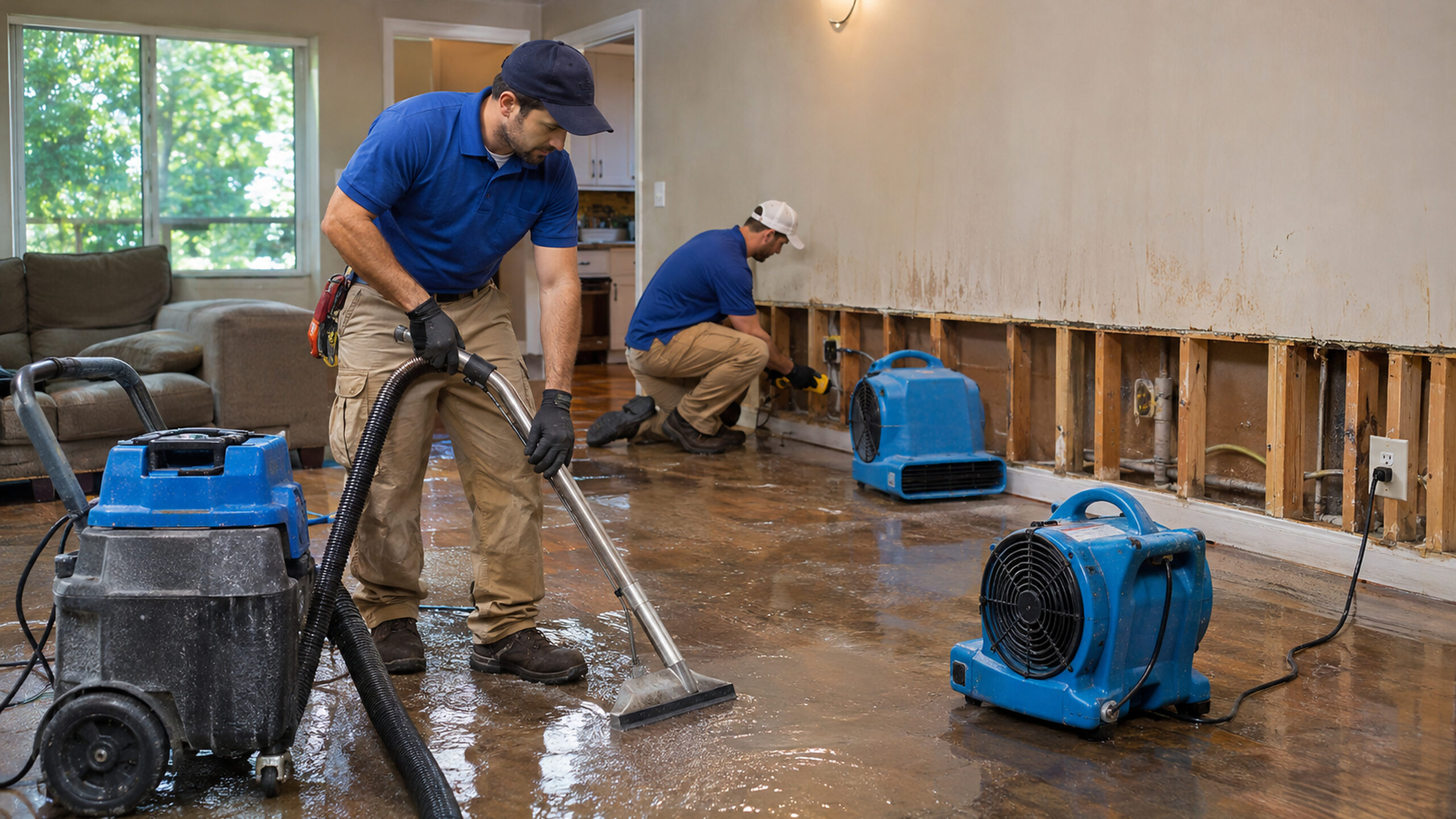
Not every wet material needs replacement, and not every material can be restored safely.
We consider contamination, physical damage, accessibility, and whether the item can be cleaned and dried. Sound materials affected by a sanitary leak may be salvageable. Porous materials exposed to sewage may require removal.
Swollen cabinets, damaged flooring, wet insulation, and weakened drywall each need individual assessment.
Where necessary, we remove selected materials to access trapped moisture. Before disturbing older building materials, the work may require evaluation for hazards such as asbestos or lead.
We explain proposed removal and document affected items. The goal is to preserve suitable materials while removing those that prevent safe, effective restoration.
Cleaning Comes Before Drying Contaminated Areas
Contaminated water requires more than extraction and equipment placement.
We establish appropriate work boundaries, remove unsalvageable contaminated materials, and clean surfaces using methods suited to the situation. Where disinfectants are appropriate, we follow their labels and required contact times.
Spraying a product over dirty surfaces does not replace cleaning. It also does not make every porous material safe to keep.
Visible mold changes the approach. EPA guidance cautions against using fans where mold is already visible because airflow can spread it. The crew should assess containment and remediation needs before directing air through affected areas.
Drying Equipment Removes Trapped Moisture
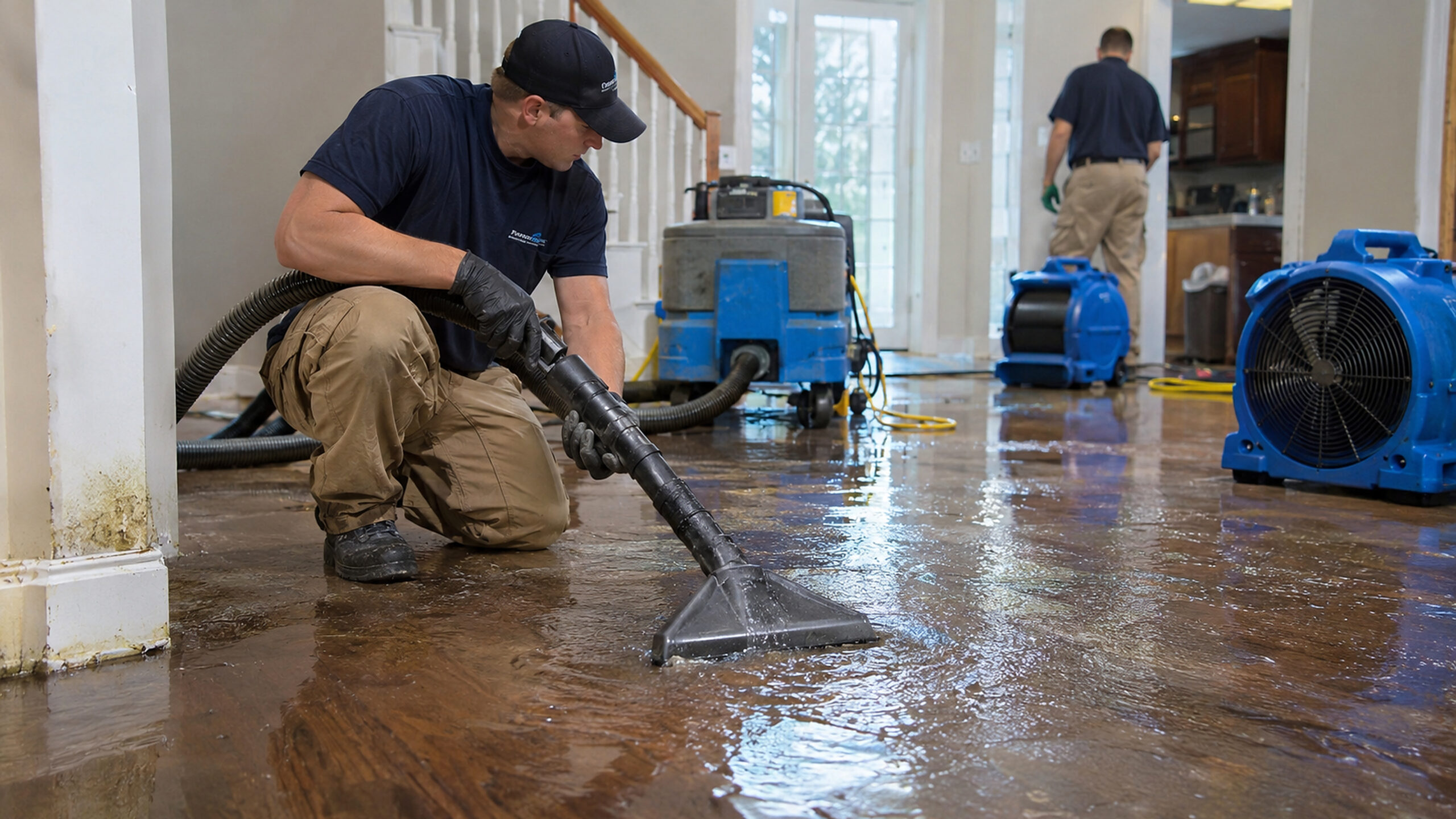
After appropriate preparation, we establish a drying plan.
Air movers help moisture evaporate from suitable surfaces. Dehumidifiers remove moisture from the air, helping maintain conditions that support continued drying.
We position equipment according to the affected materials, room layout, and measurements. A large number of fans does not automatically mean better results.
Some assemblies need additional access or specialized drying methods. Others cannot be dried effectively without removal.
During Emergency Water Damage Restoration in NJ, outdoor humidity and building conditions can influence equipment decisions. Opening windows may help in some circumstances and work against controlled drying in others.
Follow the crew’s instructions about doors, windows, and equipment operation.
We Monitor Progress Instead of Guessing
A dry-looking surface does not prove that moisture inside the material has reached an acceptable level.
We take repeat readings and compare them with appropriate drying goals, material requirements, and unaffected areas where useful. We also monitor temperature and humidity.
These checks help us adjust equipment and identify areas that are not responding as expected.
Drying time varies with the materials, amount of water, access, and environmental conditions. Some projects need several days; complicated losses can take longer.
EPA recommends cleaning and drying flood-affected homes and contents within 24 to 48 hours where possible. This emphasizes prompt action, but it does not guarantee that a saturated building will finish drying within that period.
Documentation Supports the Next Decisions
We record damage, proposed work, material removal, and drying progress. Photos and moisture records help explain what happened and why particular steps were necessary.
If you plan to file an insurance claim, contact your insurer promptly and ask about its documentation requirements.
Keep invoices, receipts, and a record of affected belongings. Do not delay necessary safety measures while waiting for a routine insurance appointment.
Coverage depends on the policy and cause of loss. Restoration documentation supports the claim process, but the restoration company does not determine insurance coverage.
Repairs Begin After Conditions Are Ready
Emergency mitigation limits further damage. Reconstruction returns the affected areas to usable condition.
Depending on the loss, repairs may involve drywall, insulation, flooring, paint, or cabinetry. Confirm whether reconstruction forms part of the agreement or requires a separate contractor.
We verify that retained materials meet the relevant drying requirements before closing cavities or installing finishes. Electrical and structural concerns also need appropriate clearance.
New paint or flooring should not hide unresolved moisture or a continuing leak.
Help the Process Move Forward Safely
While restoration continues, keep children and pets outside the work area. Avoid moving equipment or switching it off without discussing the reason with the crew.
A few practical steps help:
- Provide safe access to affected rooms.
- Share information about earlier leaks or water damage.
- Keep requested documents and photos organized.
- Report new odors, leaks, or changes promptly.
Ask whether you can remain in the property. The answer depends on contamination, access, building safety, and the extent of the work.
Restore the Property With Clear Next Steps
A complete emergency response combines safe assessment, source control, extraction, appropriate cleaning, measured drying, and a plan for repairs. Each stage should address the actual conditions rather than just the visible water.
If you need Emergency Water Damage Restoration in NJ, contact NSH Home Services. We can assess the situation, explain the required work, and help you understand the next steps toward restoring your property.
Thanks for visiting Clearise Cleaning Services! Discover more helpful tips and expert cleaning insights by exploring our related categories.