A carpet beetle is a small household pest that often goes unnoticed until damage starts to show up on clothing, rugs, or stored fabrics. These insects belong to the Dermestidae family, a group known for feeding on dried animal and plant materials. In many homes, the adult beetles are more of a nuisance than a danger because they usually feed on pollen outdoors, while the larvae are the stage that causes the real trouble indoors. Extension sources continue to describe carpet beetles as one of the most common fabric pests found in homes, especially where natural fibers, lint, hair, or stored food are available.
That difference between adults and larvae is important. Adult carpet beetles are small beetles that may appear near windows, light sources, or flowers. The larvae, however, are the destructive stage. They feed slowly in dark, quiet places and can damage wool, silk, fur, feathers, leather, and other items made from natural materials. Because they prefer hidden spaces such as closets, baseboards, storage boxes, air vents, and the edges of carpeting, many people do not realize they have a carpet beetle problem until they notice holes, shed skins, or repeated damage to household items.
Carpet Beetle Overview
| Feature | Details |
| Common Name | Carpet Beetle |
| Scientific Family | Dermestidae |
| Common Species | Varied Carpet Beetle, Black Carpet Beetle, Furniture Carpet Beetle |
| Size | About 2–5 mm (very small) |
| Color | Black, brown, or patterned with white, yellow, or orange scales |
| Main Damage Stage | Larvae |
| What They Eat | Wool, silk, fur, leather, feathers, natural fabrics, lint, pet hair |
| Where They Hide | Carpets, closets, furniture edges, air vents, storage boxes |
| Signs of Infestation | Holes in fabrics, shed skins, larvae, beetles near windows |
| Risk to Humans | Do not bite but larval hairs may cause skin irritation |
| Active Season | Mostly spring and summer for adults |
| Prevention | Regular vacuuming, sealed storage, clean fabrics before storing |
What a Carpet Beetle Is and How It Differs From Other Household Pests
A carpet beetle is not the same thing as a bed bug, flea, or clothes moth, even though people sometimes confuse them. Carpet beetles are scavenging insects. Instead of feeding on blood like bed bugs or biting people like fleas, they feed on organic material. That includes dead insects, pet hair, lint, wool, feathers, animal-based fabrics, and in some cases grain- or seed-based stored products.
They are often mistaken for clothes moths because both pests can damage fabrics. The main difference is that clothes moth larvae usually leave smaller, more scattered holes and are linked closely to fabric-only infestations, while carpet beetle larvae can feed on a wider range of materials and are often tied to lint, debris, pet hair, dead insects, and hidden food sources around the home. Adult carpet beetles are also beetles, not moths, so their body shape, wing covers, and behavior are different. In practice, this matters because control methods for a carpet beetle problem usually depend heavily on finding hidden food sources and improving cleaning habits, not just treating one damaged item.
Common Types of Carpet Beetles Found Indoors
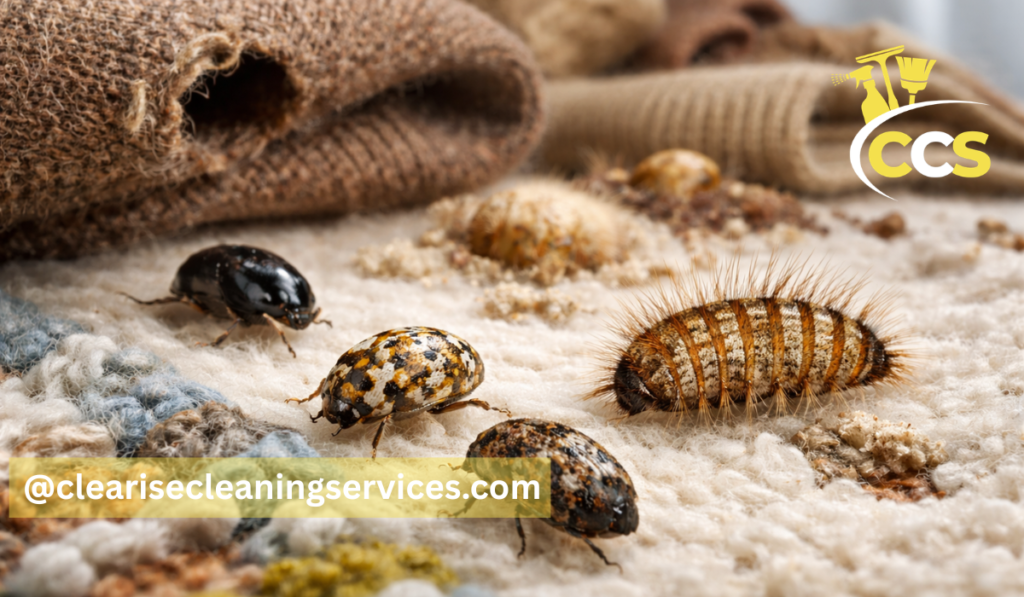
Several carpet beetle species are commonly found in homes. The varied carpet beetle, Anthrenus verbasci, is one of the most familiar. It is a very small, rounded beetle with a mixed pattern of light and dark scales that can look mottled or speckled. The black carpet beetle, Attagenus unicolor, is darker, more elongated, and often considered especially important because its larvae can damage both fabrics and some stored foods. The furniture carpet beetle, Anthrenus flavipes, looks similar to other rounded Anthrenus species, with patterned scales that may include yellow, orange, white, and black. The common carpet beetle, Anthrenus scrophulariae, is another mottled species and is often described as having a more distinct reddish or orange line or patching along the back.
Even though these species look slightly different, homeowners usually do not need to identify the exact species to know they have a carpet beetle problem. In most cases, the more useful step is recognizing the signs of infestation and understanding that the hairy larvae, not the adult beetles, are the stage doing the damage.
Carpet Beetle Identification Quick Comparison
| Type | Appearance | Size | Key Identification Feature |
| Varied Carpet Beetle | Mixed white, brown, yellow pattern | 2–3 mm | Speckled “calico” pattern |
| Black Carpet Beetle | Solid black or dark brown | 3–5 mm | Long oval shape |
| Furniture Carpet Beetle | Round with yellow/orange scales | 3–4 mm | Light colored patterns |
| Common Carpet Beetle | Black with red/orange line | 3–4 mm | Distinct central colored stripe |
How to Identify Carpet Beetles at Different Life Stages
Adult carpet beetles are small, usually between about 2 and 5 millimeters depending on the species, and they may appear rounded or slightly elongated. Some are shiny black or dark brown, while others have mixed white, yellow, brown, orange, or black scales that create a spotted look. Adults are often seen on windowsills because they are attracted to light.
The larvae are much easier to link to damage. They are small, brown to tan, and covered with noticeable hairs. Many have a carrot-shaped or tear-drop shape, and some have a tuft of longer hairs at the rear end. Eggs are tiny and usually hidden close to the food source, so most people never see them. What homeowners usually notice first are the larvae themselves, the brown cast skins they leave behind as they grow, or unexplained damage to natural-fiber items.
Why Carpet Beetle Larvae Cause the Most Household Damage
The larval stage is the reason a carpet beetle becomes a real household pest. Larvae feed on materials that contain proteins such as keratin and on other dry organic matter. That is why they can damage wool rugs, silk garments, fur, feathers, leather goods, felt, taxidermy items, and other natural fabrics or animal-based materials. Some species also develop in pet food, cereal products, grains, seeds, and other stored food sources.
This feeding usually happens slowly and out of sight. A carpet beetle infestation can continue for quite a while in a quiet closet, beneath heavy furniture, inside a vent, or in a box of stored blankets before the damage becomes obvious. By the time visible holes appear, larvae may already be well established in more than one area of the house.
Materials and Household Items Carpet Beetles Are Attracted To
Carpet beetles are especially attracted to items made from natural fibers and materials with organic buildup. That includes carpets, rugs, wool coats, silk scarves, fur trim, feather-filled items, blankets, upholstered furniture, stored textiles, and clothing packed away for long periods. They also make use of pet hair, lint, dead insects, and dust that collects in corners or under furniture.
In some homes, the problem is not limited to fabrics. Certain dermestid beetles can also develop in dry pantry items such as grains, cereals, seeds, and pet food. This is one reason a carpet beetle infestation can seem confusing at first. The source may not be the damaged sweater you found in the closet. It could be a bag of pet food, an undisturbed vent full of lint, a dead insect accumulation in a light fixture, or even a bird or rodent nest linked to the building.
Early Signs That Carpet Beetles May Be Living in Your Home
One of the first signs of a carpet beetle problem is irregular damage to fabric or carpeting. Instead of clean, neat wear patterns, you may notice rough holes or bare spots in rugs, blankets, sweaters, or stored clothing. Another strong clue is the presence of shed larval skins, which look dry, brownish, and bristly. These often collect near baseboards, in drawers, or in the corners of closets.
Adults on windowsills are another common sign, especially during warmer months when they move toward light. Homeowners may also see live larvae crawling slowly on walls, around vents, under furniture, or in storage areas. Small dark fecal pellets can sometimes be present, although visible debris, cast skins, and damage are usually more practical clues during home inspection.
Step-by-Step Quick Guide: How to Check for Carpet Beetles
Step 1 — Inspect fabrics
Look for irregular holes in wool clothing, carpets, blankets, and upholstery.
Step 2 — Check hidden spaces
Search along baseboards, under furniture, and inside closets.
Step 3 — Look for larvae or shed skins
Hairy larvae or brown shed skins are strong signs of infestation.
Step 4 — Check windowsills
Adult carpet beetles often gather near windows because they are attracted to light.
Step 5 — Inspect stored items
Boxes with old fabrics, stored clothes, or blankets can hide larvae.
Where Carpet Beetles Usually Hide Inside a House
A carpet beetle prefers places that are dark, quiet, and rarely disturbed. Common hiding areas include under beds and sofas, along carpet edges, under baseboards, inside closets, behind stored boxes, within folded fabrics, and in air ducts or vent openings where lint and hair collect. They may also develop in attics, basements, or storage rooms where items are left untouched for long periods.
This habit of hiding is exactly why infestations can spread without being noticed. People tend to clean open floor areas and visible surfaces, but carpet beetle larvae thrive in the overlooked spaces that collect fibers, crumbs, insect remains, and dust.
The Carpet Beetle Life Cycle and How Infestations Develop
Like other beetles, a carpet beetle passes through four stages: egg, larva, pupa, and adult. Females place eggs near materials that can feed the young. After hatching, the larvae do most of the feeding and may remain in that stage for a long period compared with the adult stage. They grow, shed skins several times, then pupate before emerging as adults.
Infestations develop gradually when there is a steady food source and little disturbance. A quiet closet full of unwashed wool clothing, a vent with years of lint, or a hidden food source behind walls can support repeated generations. Adults may fly in from outdoors during warm weather, which is one reason infestations can begin even in otherwise clean homes.
Are Carpet Beetles Harmful to Humans?
Carpet beetles do not bite people. That point is important because many homeowners first worry that unexplained skin irritation means they have biting insects. What can happen, however, is a skin reaction to the hairs on carpet beetle larvae. This reaction is often called carpet beetle dermatitis. Sensitive people may develop itchy skin, red bumps, or irritation after contact with infested fabrics or with airborne larval hairs. In some cases, the irritation may be confused with bites from other pests.
Heavy infestations can also stir up irritating hairs and dust during cleanup, which may bother the skin or airways of sensitive individuals. That does not make a carpet beetle a direct medical threat in the way biting or disease-carrying pests can be, but it does mean the problem should not be ignored when reactions are happening in the home.
Practical Ways to Prevent Carpet Beetles From Entering Your Home
Prevention starts with limiting access and reducing the things that attract them. Since adults can enter from outdoors, it helps to repair torn window screens, seal gaps around doors and foundations, and pay attention to flowers or plant material brought indoors, because adult beetles naturally feed on pollen and can be carried in from outside.
It also helps to reduce indoor buildup of lint, hair, dead insects, and food debris. Homes with pets, storage rooms, rarely moved furniture, or older vents often give carpet beetles exactly the kind of hidden food sources they need. Prevention is not only about blocking entry. It is also about making the home less welcoming after they get inside.
Cleaning and Storage Habits That Help Reduce Carpet Beetle Risk
Good cleaning habits are still the most reliable long-term defense against a carpet beetle infestation. Extension guidance consistently recommends frequent, thorough vacuuming of carpets, rugs, upholstered furniture, closet floors, edges, corners, and areas under furniture. Vacuuming removes not only larvae and adults, but also lint, hair, and debris that can support future infestations. Bags or vacuum contents should be discarded promptly after cleaning infested areas.
Storage matters just as much. Clothing and blankets should be cleaned before storage because stains, body oils, and food residue can make fabrics more attractive. Susceptible items should then be stored in sealed plastic bags or airtight containers. Current extension advice also notes that hot laundering or dry cleaning is effective for washable infested articles, and freezing for a period of days can help with some stored items when the material can safely tolerate cold.
Safe and Effective Methods to Control Carpet Beetle Infestations
The most effective carpet beetle control plan usually begins with inspection, not spraying. You need to find the source. That may be a wool rug, a box of fabrics, pet hair under furniture, a bird nest in a vent, a bag of dry pet food, or another hidden organic source. Once located, infested materials should be cleaned, treated with heat or cold when appropriate, dry-cleaned, washed, or discarded if heavily damaged.
For washable fabrics, hot laundering or dry cleaning is widely recommended by university IPM programs. Thorough cleaning of the surrounding area is also essential, because treatment of one item without removing nearby eggs, larvae, and debris often leads to reappearance. Insecticides may play a limited role in some situations, but most expert guidance emphasizes sanitation, source removal, and protected storage as the foundation of control.
When a Carpet Beetle Problem Requires Professional Pest Control
A professional inspection is worth considering when the infestation is large, damage is spreading to several rooms, the source cannot be found, or the problem keeps returning even after cleaning and storage improvements. Professional help may also be needed when beetles are linked to wall voids, vents, animal remains, large nesting sites, or delicate infested items that cannot be safely washed or discarded. UC IPM notes that some stuffed or specialty items may require treatment by licensed professionals rather than simple surface spraying.
Professional pest control can be especially helpful when a carpet beetle issue is part of a larger hidden sanitation problem. In that case, the goal is not only to kill insects but also to identify the source and stop the cycle from starting again.
Conclusion
A carpet beetle may be small, but it can become a serious household nuisance when larvae are allowed to feed quietly on fabrics, stored goods, and hidden organic debris. The adults are mostly harmless, but the larvae are responsible for the damage people see on rugs, clothing, blankets, and other natural materials.
Early detection makes a big difference. If you notice holes in natural fabrics, shed skins, larvae in hidden spaces, or adult beetles near windows, it is worth checking closets, vents, storage boxes, and carpet edges right away. In most homes, the best protection against carpet beetles is a mix of routine cleaning, careful storage, prompt treatment of infested items, and reducing the hidden debris that supports them. With steady care, most carpet beetle problems can be brought under control and prevented from coming back.
Frequently Asked Questions (FAQs)
What Attracts Carpet Beetles Into A House?
Carpet beetles are attracted to natural fibers, lint, pet hair, dead insects, and stored food products. They often enter homes through open windows, flowers, or gaps in screens.
Are Carpet Beetles Dangerous To Humans?
Carpet beetles do not bite or transmit diseases. However, the tiny hairs on their larvae can sometimes cause skin irritation or mild allergic reactions in sensitive people.
Where Do Carpet Beetles Usually Hide?
They prefer dark and undisturbed areas such as under furniture, inside closets, along carpet edges, inside air ducts, and in stored boxes of fabrics.
How Can I Get Rid Of Carpet Beetles Naturally?
Regular vacuuming, washing fabrics in hot water, freezing infested items, and storing clothes in airtight containers can help remove and prevent carpet beetles.
Do Carpet Beetles Damage Carpets Only?
No. Carpet beetles can also damage clothing, upholstery, blankets, wool rugs, leather items, feathers, and other materials made from natural fibers.
Disclaimer: This article is intended for educational and informational purposes only. While the information provided about carpet beetles is based on commonly accepted pest-control knowledge, infestation situations may vary. For severe or persistent infestations, consulting a licensed pest control professional is recommended.
Thanks for visiting Clearise Cleaning Services! Discover more helpful tips and expert cleaning insights by exploring our related categories.