Bringing a new baby home changes everything, including how your house gets messy and how fast it happens. Between feeding, diaper changes, laundry piles, and broken sleep, cleaning often becomes a stressful “whenever I can” task. And when you do clean, you might find yourself sanitizing constantly, wiping every surface twice, and still feeling unsure if you’re doing the safest thing for your baby.
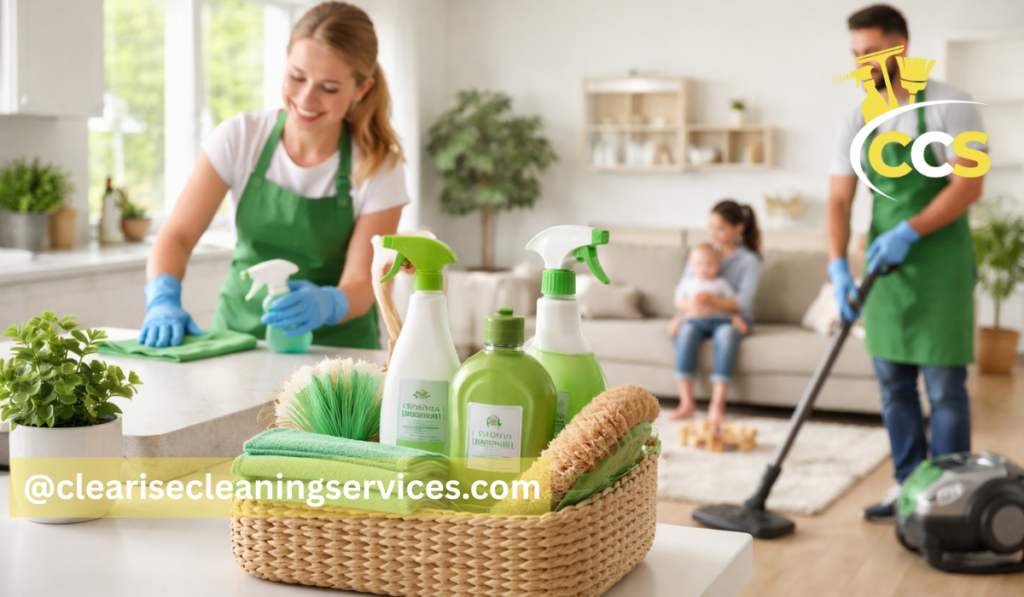
That’s exactly why green cleaning services matter for new parents. Babies spend a lot of time close to floors, rugs, and upholstery, and they touch everything, then put their hands in their mouths. Harsh chemical residues, strong fragrances, and poor indoor air quality can feel more noticeable in a baby’s first months, especially if anyone in the home has allergies, asthma, or scent sensitivity. A truly green approach focuses on safer products, smarter methods, and cleaner air, not just a “fresh smell” that masks dirt.
In this guide, I’ll show you how to choose green cleaning services that are genuinely safer and effective, not just marketed as eco-friendly. You’ll learn what questions to ask before booking, how to spot greenwashing, what you should expect from a professional visit, and how to build a realistic cleaning plan that works with new-parent life.
What “Green Cleaning” Really Means (and what it does NOT)
A Simple Definition
Green cleaning isn’t just “cleaning with a nicer smell” or using a bottle that has a leaf on the label. In simple terms, green cleaning services aim to clean your home using safer chemistry, safer methods, and a waste-reduction mindset.
That usually means:
- Safer chemistry: cleaners that avoid harsh solvents, heavy perfumes, and strong irritants, and focus on ingredients that get the job done with a lower risk of leaving harsh residue behind.
- Safer methods: cleaning techniques that reduce dust, trap allergens, and limit what floats into the air (for example, microfiber methods and high-filtration vacuuming).
- Waste reduction: refill systems, concentrated products, reusable cloth systems, and less single-use plastic whenever possible.
Most importantly, green cleaning is about outcomes you can feel in real life: a home that looks clean, smells neutral, and feels comfortable to breathe in, especially for a baby’s sensitive environment.
“Natural,” “Eco-Friendly,” “Non-Toxic”: What These Labels Usually Imply
Here’s the tricky part: words like “natural,” “eco-friendly,” and “non-toxic” are often used loosely. They can mean different things depending on the company, and sometimes they’re used more for marketing than for clear standards.
- Natural can simply mean “some ingredients come from plants.” It doesn’t automatically mean “safe for everyone,” because even plant-based ingredients can irritate skin or trigger allergies.
- Eco-friendly often refers to environmental impact, like biodegradable ingredients or reduced plastic use, but it doesn’t always address fragrance, residues, or sensitivity concerns.
- Non-toxic sounds reassuring, but it can be vague unless the company explains what they avoid and what they use instead.
That’s why the best green cleaning services are transparent. They can explain their products, methods, and how they handle homes with babies, allergies, or scent sensitivity.
The Hidden Difference New Parents Care About Most: Residue + Air
For new parents, the biggest difference usually comes down to two things: what’s left behind on surfaces (residue) and what ends up in the air.
A home can look spotless, but if the products leave a film on floors, coffee tables, high chairs, or play mats, that matters when your baby is crawling, touching, and tasting everything. Strong cleaners and heavy fragrances can also stay in the air longer than you expect, which can feel uncomfortable for postpartum parents and anyone sensitive to smells.
Many families notice this most in these situations:
- Lingering fragrance that sticks to fabric, cushions, curtains, and rugs
- “Chemical clean” smell that causes headaches or throat irritation
- Overuse of disinfectants on every surface, even when it’s not necessary
- Poor ventilation during cleaning, trapping fumes indoors
A truly green approach doesn’t rely on perfume to prove something is clean. It focuses on removing soil, grime, and germs appropriately, while keeping air quality and comfort in mind, which is exactly what many new parents want.
Why Green Cleaning Services Are Especially Helpful for New Parents
Newborn-Safe Priorities (what changes after baby arrives)
Before baby, many people clean based on what looks messy. After baby, cleaning becomes more about what your child touches and breathes every day.
A few things change fast:
- Floor time becomes real life. Babies spend hours on the floor, even before crawling. Dust, crumbs, pet dander, and cleaner residue matter more when cheeks and hands are literally on the surface.
- The hand-to-mouth phase is nonstop. Babies grab anything, then immediately put their hands or toys in their mouths. If harsh products leave residue on coffee tables, play mats, or low shelves, that exposure can add up.
- Toy rotation becomes a daily routine. Some toys stay in the living room, some go in the crib, some get dropped on the floor every 10 minutes. You want cleaning methods that keep surfaces clean without leaving strong smells or sticky films behind.
- Bottle prep areas need a calm, clean setup. Kitchen counters, sinks, drying racks, and the surrounding area become “food-adjacent zones” even if you’re not cooking there.
New parents also tend to focus on high-touch zones, because these are the surfaces that spread germs the fastest in a busy household:
- Door handles and cabinet pulls
- Light switches
- Remotes and phone screens
- Faucet handles and toilet flush levers
- Refrigerator handles and microwave buttons
- Crib rails, changing table edges, and nursery drawer knobs
Good green cleaning services understand these priorities and clean strategically, without turning your whole home into a “chemical zone.”
Indoor Air Quality And Allergen Control (the underrated benefit)
One of the biggest benefits of green cleaning is something you can’t always see: cleaner air.
New parents are often indoors a lot, especially in the early months. If your home has dust, pet hair, pollen, or lingering product fumes, you feel it more quickly when you’re tired and the baby is sensitive.
Professional green teams often focus on methods that reduce what gets kicked into the air, such as:
- HEPA vacuuming, which helps trap fine particles instead of blowing them back out
- Microfiber strategies, which grab dust rather than pushing it around
- Low-dust techniques, like damp wiping rather than dry dusting that makes particles float
This matters even more if anyone in the home has allergies, asthma, eczema, or frequent congestion. A cleaner home isn’t just about shine, it’s about comfort and breathing.
Postpartum + Scent Sensitivity Considerations
Postpartum life can make your senses stronger. A smell that never bothered you before can suddenly feel overwhelming.
That’s why fragrance matters. Many traditional cleaners and “freshening” sprays rely on strong scents to signal “clean,” but fragrance can linger in:
- Upholstery
- Curtains
- Carpets and rugs
- Bedding
- Nursery furniture
Fragrance-free or low-scent cleaning options are often a better fit for new parents. And here’s the truth: a strong “fresh scent” isn’t the same thing as a healthy clean. Sometimes it’s just perfume covering up residue or poor cleaning technique.
A quality green service can usually offer fragrance-free products and will be honest about what they use, so you’re not guessing after the crew leaves.
What To Expect From Professional Green Cleaning Services
Typical Service Types
Most green cleaning companies offer a few main service styles. Knowing the difference helps you book the right one for your situation.
- Recurring cleaning (weekly, bi-weekly, monthly): Best for staying ahead of mess with minimal stress. Many new parents prefer bi-weekly because it keeps the home manageable without feeling constant.
- One-time deep clean: Great before baby arrives, after a rough season, or if you’re starting fresh with a new company.
- Move-in/move-out cleaning: More detailed, often includes inside cabinets, appliances, and heavier build-up.
- Post-construction cleaning: Ideal after renovations, because fine dust can spread everywhere and needs careful removal.
If you’re exhausted and overwhelmed, recurring service is often the simplest long-term solution. If you feel like the home is “beyond normal cleaning,” start with a deep clean first, then maintain.
Room-By-Room Scope (what “standard” usually includes)
A standard visit usually focuses on the areas that affect daily life the most. Here’s what most professional green cleaning services cover in a typical home:
Kitchen
- Wipe counters and backsplashes
- Clean sink and faucet, remove grime around the base
- Degrease cooktop surfaces safely
- Spot-clean cabinet fronts where fingerprints collect
- Vacuum and mop floors
Bathrooms
- Clean and sanitize sinks, counters, and faucets
- Scrub toilets inside and out
- Clean showers/tubs, target soap scum
- Address mineral build-up where possible (hard water areas need the right method)
- Wipe mirrors and high-touch points
Bedrooms
- Dust surfaces, wipe high-touch areas
- Vacuum floors and rugs
- Light tidying and straightening (depends on company policy)
Living Areas
- Dust furniture and surfaces
- Vacuum rugs and floors
- Mop hard floors
- Clean common touchpoints (remotes aren’t always included unless requested, so mention it)
Common add-ons that many companies charge extra for:
- Inside the oven
- Inside the fridge
- Baseboards and doors in detail
- Inside cabinets and drawers
- Interior windows
If you have a baby, it’s smart to tell the cleaner which zones matter most: play area, nursery, bottle prep counter, and high-touch points.
Specialty Add-Ons: Couch + Upholstery + Carpet
New parents often discover quickly that fabrics take a beating. Between spit-up, milk drips, snack crumbs, and the occasional diaper leak, soft surfaces can hold odors and allergens.
The good news: couch cleaning services and upholstery cleaning can be done in greener ways, but technique matters.
Greener upholstery and carpet cleaning usually focuses on:
- Low-tox detergents that rinse clean (so they don’t leave a sticky residue that attracts more dirt)
- Hot-water extraction choices that balance effectiveness and moisture control
- Smart ventilation timing, like opening windows or running fans afterward so the home dries faster and feels comfortable
Upholstery cleaning matters most when:
- You notice a lingering odor
- Baby spends time on the couch or upholstered chair (feeding, burping, contact naps)
- Allergies are flaring
- You have pets that sit on furniture
- Fabric looks clean but feels dusty or “flat”
If you’re booking upholstery work, ask how long drying takes and what products they use, especially if the baby will be in that room the same day.
The Green Cleaning Products And Methods That Actually Work
Not all “green” cleaning is equal. Some companies rely on a few eco-friendly bottles but still use the same old habits: over-spraying, heavy fragrance, and wiping everything with the same rag. The best green cleaning services get results by combining smarter products with proven techniques, so your home is truly clean, not just scented.
What Makes Products “Greener” In Practice
A greener product is not automatically “weak.” Many modern formulas clean extremely well, but they’re designed to reduce harsh residue and strong fumes.
Here are the product features that usually matter most:
- Plant-based surfactants: These are the cleaning agents that lift dirt and grease. Plant-based surfactants can be effective while feeling gentler on sensitive environments.
- Enzymes: Enzyme cleaners break down organic messes like milk drips, spit-up, food smears, and pet accidents. This is helpful in homes with babies because it targets the “real mess” without relying on strong perfumes.
- Fragrance-free options: This is a big one for new parents. “Unscented” or “fragrance-free” is often a better choice than strong “fresh linen” smells that linger for hours.
- Biodegradable formulas: These tend to break down more easily in the environment, and many brands also aim for safer ingredient profiles overall.
A simple rule: a good company can tell you what they use and why. If they can’t explain their products clearly, that’s a sign to dig deeper.
Tools And Techniques That Matter More Than The Bottle
This is where professional cleaners separate themselves from DIY. Even the best product won’t work well if the technique is poor.
The most effective green teams use:
- Microfiber systems: Microfiber grabs dust and soil instead of pushing it around. It’s one of the easiest ways to reduce airborne dust, which is great for nurseries and living rooms where baby spends time.
- Dilution control: A professional approach means using the right concentration, not “more product = more clean.” Overuse can leave residue that attracts dirt and irritates sensitive skin.
- HEPA filtration: HEPA vacuums can trap fine particles like dust, pollen, and pet dander better than standard vacuums. That matters when you’re trying to improve indoor comfort, not just appearance.
- Low-moisture methods: For floors and certain surfaces, less water can be better. It reduces dry time, helps prevent musty smells, and is often safer for wood finishes and baseboards.
In real homes, better tools and technique often give more benefit than switching from one “green” bottle to another.
Your “Baby-Safe Cleaning Product” Red-Flag List (simple checklist)
You don’t need to memorize ingredients, but you should know what to ask about. If you’re hiring green cleaning services, request clarity on whether they avoid or limit:
- Chlorine bleach for routine cleaning (some homes may need it occasionally, but it shouldn’t be the default everywhere)
- Heavy fragrance or added perfume sprays
- Harsh solvents that can leave strong fumes
- Aerosol air fresheners used to “finish the job”
- Disinfectants used on every surface, even when normal cleaning is enough
A good service will explain where they use stronger products (if ever), why, and how they keep air and residue concerns in mind for families.
How To Spot A Truly Eco-Friendly Company (Avoid Greenwashing)
When you search for best green cleaning services, you’ll notice many companies use the same words: eco-friendly, green clean, non-toxic, safe. The reality is that “green” can be real or it can be branding. The safest move is to choose a company that is transparent and consistent, not one that just sounds good online.
The 10 Questions To Ask Before You Book (copy/paste script)
Use these questions as a simple filter. You can paste this into a message or ask it during a phone call:
- Can you share a product list you use in homes with babies?
- Do you offer fragrance-free options?
- Do you bring your own supplies and microfiber cloth system?
- Do you use HEPA vacuums or high-filtration vacuums?
- How do you handle high-touch zones like switches, handles, remotes, and nursery surfaces?
- Do you use disinfectants by default, or only when needed?
- How do you prevent cross-contamination (bathroom cloths vs kitchen cloths)?
- What’s your process for floors and play areas where babies crawl?
- How do you reduce waste, like refills or concentrates, if you claim eco-friendly service?
- Do you have a written green policy or training for staff?
You’re not being “difficult” by asking. A serious company will usually appreciate it, because it shows you value standards.
What “Proof” Looks Like (without becoming a chemist)
You don’t need a science degree to judge credibility. Look for practical proof, like:
- Transparent product disclosure: They can tell you brands or ingredient standards, not “trust us, it’s green.”
- Consistent methods: Microfiber system, HEPA filtration, clear room process, and a plan for high-touch zones.
- Staff training: They can explain how workers are trained, especially around safe handling and avoiding over-spraying.
- Clear policies: How they handle fragrance requests, allergies, baby items, and special surfaces.
If a company has solid systems, it usually shows in how confidently they explain their process.
The “Too Good To Be True” Warning Signs
Be careful if you notice:
- They won’t disclose products at all (even basic categories)
- Strong perfume masking as a “final touch”
- No process details, only buzzwords like “100% non-toxic” without explanation
- They dodge questions about fragrance-free options or filtration methods
- Their marketing sounds perfect, but reviews mention lingering smell, sticky residue, or rushed work
A trustworthy green service doesn’t need hype. It needs transparency, good technique, and consistent results.
Choosing The Best Green Cleaning Services For Your Family
Picking a cleaner when you have a baby is not the same as picking a cleaner when it’s just adults. You’re not only paying for a tidy house. You’re paying for trust, consistency, and a process that respects your home as a sensitive environment. The easiest way to choose well is to compare companies the same way every time, instead of going by marketing photos.
A Scoring Rubric (easy comparison table idea for your article)
Before you book, shortlist 2–4 companies and score each one from 1 to 5 (1 = weak, 5 = excellent). You can even paste this into your notes app.
Transparency (1–5)
- Do they share a product list or at least clear product standards?
- Can they explain what they use and why?
Fragrance-Free Capability (1–5)
- Do they offer truly fragrance-free options?
- Will they avoid scented sprays and “finishing” perfumes?
HEPA + Dust Control (1–5)
- Do they use HEPA filtration or high-filtration vacuums?
- Do they use microfiber techniques that reduce airborne dust?
Child/Pet Protocols (1–5)
- Do they have rules for toys, bottle prep areas, and play mats?
- Do they avoid leaving wet floors or residue where babies crawl?
Satisfaction Guarantee, Bonding/Insurance (1–5)
- Are the workers vetted?
- Are they insured?
- Do they have a clear re-clean policy if something is missed?
This rubric turns a confusing decision into something practical. If a company scores high in the areas that matter most to your family, you can book with more confidence.
Best-Fit Profiles (quick matching)
Not every family needs the same type of service. Here are quick “best-fit” profiles that make choosing easier.
Best For Newborn Homes: Fragrance-Free + Strict Product List
If you’re in the early weeks and everything feels extra sensitive, prioritize:
- fragrance-free products
- clear product disclosure
- gentle methods on baby-touch surfaces (floors, low furniture, nursery)
Best For Allergy Families: HEPA + Dust-Minimizing Routines
If you’re dealing with allergies, asthma, eczema flare-ups, or constant congestion, prioritize:
- HEPA vacuuming
- microfiber dust control
- a process that reduces airborne dust (not just quick dry dusting)
Best For Busy Parents: Reliable Recurring Schedule + Simple Booking
If your biggest struggle is time and mental load, prioritize:
- consistent arrival windows
- easy rescheduling
- predictable recurring service
- clear scope so you’re not re-explaining every visit
The “best” company is the one that matches your home’s reality, not the one with the most impressive buzzwords.
Why Reviews Matter, And How To Read Them Like A Pro
Reviews help, but only when you read them the right way. One angry review can happen to any business. What matters is the pattern across many reviews.
When reading green cleaning services reviews, scan for keywords that show real experience, especially for sensitive homes:
- “smell” or “fragrance”
- “residue” or “film”
- “baby-safe” or “safe for kids”
- “allergies” or “asthma”
- “thoroughness”
- “trustworthy crew”
- “consistent” or “same quality every time”
Also, look for details that sound real:
- “They asked about my product preferences.”
- “No strong scent afterward.”
- “They focused on the nursery and high-touch areas.”
If you’re searching locally, use local platforms to compare patterns, not one-offs. For example, people searching a cleaning service dc often use platforms like Yelp and Google reviews. The key is not one review, it’s whether multiple reviews mention the same strengths or the same problems.
Cost, Value, And What Affects Pricing
Price matters, but the cheapest service can become expensive if you keep rebooking because you’re unhappy. For new parents, value often comes from consistency and a process that respects your home’s air and surfaces.
What Usually Changes The Price
Most green cleaning services price based on a few predictable factors:
- Home size: number of bedrooms, bathrooms, total square footage
- Condition: light maintenance clean vs heavy build-up
- Frequency: recurring service usually costs less per visit than a one-time clean
- Add-ons: oven, fridge, inside cabinets, baseboards, and couch cleaning services or upholstery work
- Pets: pet hair and dander often require extra vacuuming and detail work
- Clutter level: cleaning around items takes longer than cleaning open surfaces
If a quote_attach feels unusually high, it’s often because the company expects deeper work or more time in the home.
Green Vs Traditional: Is It “More Expensive”?
Sometimes, yes, green services can be slightly higher. That’s often because:
- Safer products can cost more
- Staff training is more specific
- Professional tools like high-filtration vacuums and microfiber systems are an investment
But for families, the value is usually not “a greener label.” The value is:
- better indoor comfort (less harsh smell, less irritation)
- less residue on baby-touch surfaces
- a cleaning approach that’s more thoughtful and consistent
If you’re comparing “cheap and fast” vs “clean and comfortable,” many new parents find the second option saves stress long-term.
How To Get An Accurate Quote Without Back-And-Forth
To avoid endless messaging, give the company clear information up front. Send:
- Bedrooms and bathrooms (example: 3 bed / 2 bath)
- Home type: apartment, townhouse, single-family
- Must-do areas: nursery, play area, bottle prep zone, bathrooms
- Pain points: kitchen grease, hard water soap scum, pet hair, dust
- Add-ons you want: inside fridge, oven, baseboards, or upholstery
- Fragrance-free requirement: say this clearly if it matters to you
- Scheduling preference: weekly, bi-weekly, monthly
The more specific you are, the more accurate the quote becomes, and the smoother your first visit will be.
A New-Parent Cleaning Plan (Practical, Experience-Style Guidance)
When you’re exhausted and the baby is finally asleep, the last thing you need is a complicated cleaning routine. The goal isn’t perfection. The goal is to keep your home comfortable, low-stress, and healthier where it counts most. This simple plan works whether you’re cleaning yourself or hiring green cleaning services.
“Before The Cleaners Arrive” Checklist (15 minutes)
A short prep makes the cleaning visit more effective. You’re not cleaning before the cleaners, you’re removing obstacles so they can do a better job faster.
- Put away tiny items: pacifiers, small toys, bottle parts, chargers, hair clips, coins
- Clear sink and counter zones: especially the bottle prep area and the bathroom sink area
- Laundry basket strategy: toss loose clothes, burp cloths, and blankets into one basket so floors are clear
- Toy bin reset: do a quick sweep of toys into a bin so the crew can vacuum and mop properly
- Quick notes: tell them what matters most today (nursery, floors, bathroom, kitchen touchpoints)
This 15-minute prep usually gives you a “bigger result” than adding extra products or extra instructions.
The Priority Order That Gets The Biggest Health Payoff
If you only have budget or energy for certain tasks, focus on the areas that affect baby exposure and household comfort first.
- Floors (crawl zone)
Floors hold dust, crumbs, pet dander, and product residue. Since babies spend so much time close to the ground, clean floors are often the highest-impact job. - Bathrooms
Bathrooms grow moisture issues quickly. A consistent routine prevents build-up and keeps the space hygienic without needing harsh chemicals every time. - Kitchen Touchpoints
Focus on handles, counters, faucets, microwave buttons, and refrigerator doors. These are the “germ highways” in most homes. - Dust + Air (vents, fans, surfaces)
Dust control is comfort control. HEPA vacuuming, microfiber wiping, and smart dusting reduce what ends up in the air you breathe. - Upholstery (only if needed)
Upholstery is important when there are spills, odors, pet hair, or allergy flare-ups. If it looks fine and doesn’t smell, it can be an occasional add-on instead of every visit.
After-Clean Ventilation + Re-Entry Tips (simple and realistic)
Even with green products, it’s smart to handle the “after clean” period well.
- Air out the home for 15–30 minutes if weather allows. Open a couple of windows and let fresh air circulate.
- Time the visit with naps when possible, especially if you’re sensitive to any smell at all. Many new parents book cleaning during a longer nap window or when they can take a short stroller walk.
- Avoid harsh “disinfect-everything” habits. Clean first, disinfect only where it’s needed (like high-touch points during sickness season). Over-disinfecting can create more irritation than benefit in a normal healthy home.
- Let floors fully dry before baby plays. This is basic but important, especially for crawling babies.
Local Intent Section (DC Area)
If you’re in the DC area, you’ll notice there are many companies using the word “green,” but their actual process can be very different. These tips help you choose smarter when searching locally.
Finding Green Cleaning Services Near Washington, DC
When searching for green cleaning services near washington, dc, filter for practical fit, not just pretty branding:
- Licensing/insurance expectations: Ask if they’re insured and bonded and if they have clear policies for damage or missed areas.
- Apartment/condo experience: DC buildings often have concierge rules, elevator bookings, and delivery entrances. A company familiar with these details is less likely to be late or rushed.
- Parking/building rules: Some crews build parking time into the schedule. Clarify arrival windows so the clean isn’t shortened.
A local company that understands DC logistics usually delivers more consistent service.
Green Cleaning Services Near Georgetown, Washington
If you’re looking for green cleaning services near georgetown, washington, older homes and townhomes bring special considerations:
- Stairs and tight spaces: A rushed crew can miss details. Look for companies that plan time realistically.
- Older finishes and delicate materials: Natural stone, older wood, and vintage tile need the right products and methods.
- Tighter schedules: Georgetown traffic and parking can affect reliability, so recurring consistency matters a lot.
For townhomes, ask if they have a plan for “top-to-bottom flow” so floors don’t get re-dirtied during the visit.
Arlington & Nearby: Choosing An Arlington Cleaning Service
For families searching an arlington cleaning service, the biggest win is usually reliability.
- Commute windows: Choose a company that can commit to a realistic time window and communicate delays.
- Recurring stability: The best experience is when the same standards are applied each visit, not a different approach every time.
- Family-friendly consistency: If you prefer fragrance-free, HEPA vacuuming, or special care in a nursery, Arlington families often do best with a company that documents preferences and follows them every visit.
If You’re Searching “Cleaning Service DC” But Want Greener Options
If you type cleaning service dc, you’ll see a mix of standard services and “green” services. To find greener providers more easily, refine your search with phrases like:
- “fragrance-free house cleaning”
- “HEPA home cleaning”
- “non-toxic maid service”
These phrases often pull up companies that serve sensitive homes, not just companies that use green buzzwords.
“Green Cleaning Services Near Me” Tips That Actually Help
When you search green cleaning services near me, add a few extra words that force better matches:
- Add your neighborhood (or “near [landmark]”)
- Add “fragrance-free” if scent matters
- Add “HEPA” if allergies matter
- Add “product list” to find companies willing to disclose what they use
This helps you skip the vague marketing pages and find services that match real family needs.
Brand/Name Confusion FAQs (Handle the extra keywords safely)
This is important because many companies use similar names. It’s easy to book the wrong business or assume two listings are the same company when they’re not.
What’s The Difference Between “Green Clean” And “Green Cleaning Services”?
“Green clean” is often used as a general phrase, and sometimes it’s also used as a brand name. Green cleaning services is a broader term that describes the type of service. The safest approach is to verify what you’re actually booking by checking:
- the company’s official website
- their exact business name and address
- the services they list (recurring, deep clean, upholstery, etc.)
- recent reviews and photos
Is “Green Maid Cleaning Services” A Specific Company Or A Service Type?
It can be either. Some businesses use names like “green maid,” while others use it as a general description. To confirm what you’re dealing with, check:
- the exact business name and logo on the website
- location and service area
- phone number consistency across listings
- reviews that mention the same crew or same office
- licensing/insurance details and service scope
Who Owns “Green Cleaning Services”?
Ownership depends on the exact company you mean, because many businesses use similar names. If you’re trying to verify who owns green cleaning services in your area, do it responsibly by:
- checking the “About” page and legal business name
- looking at local business directories and registration information
- confirming consistent contact info (address, phone, email) across listings
- asking the company directly if the name appears in multiple listings
This avoids confusion and helps you make sure you’re booking the correct business.
What Are “Vr Green Clean Services” And “Dulce Cleaning Service” In Search Results?
Search results can show different local brands that use similar wording, and sometimes listings look alike even when they’re unrelated. If you see names like vr green clean services or dulce cleaning service, use a verify-first checklist:
- Location: are they truly in your service area?
- Services offered: do they provide what you need (recurring cleaning, deep clean, couch cleaning services, etc.)?
- Reviews: do multiple reviews mention consistent standards, fragrance control, and trust?
- Credentials: insured/bonded, clear policies, transparent process
- Contact consistency: same phone/address across platforms
This keeps you from booking the wrong company based on a similar name.
Conclusion
You don’t need a picture-perfect home to be a great parent. You just need a healthier baseline that supports your baby and your sanity. The right green cleaning services can help you reduce harsh residue, improve indoor comfort, and keep high-touch areas under control without relying on heavy fragrance or constant disinfecting.
Focus on providers that are transparent, fragrance-aware, and serious about dust and air quality. Shortlist two or three companies, use the question script, and book a trial clean so you can judge results in real life, not just in marketing photos. With the right routine and the right team, green cleaning services can give you something every new parent needs more of: time for rest, time for baby, and a home that feels calm and clean.
FAQ
Are Green Cleaning Services Safe For Newborns?
They can be a great option for newborn homes, especially when the company offers fragrance-free products and avoids harsh residue. Always ask what products they use and how they handle baby-touch surfaces like floors and nursery areas.
Do Green Products Disinfect?
Some green products can disinfect, but many green approaches focus on cleaning soil first and disinfecting only when needed. A good company will explain when they use disinfectants and why, instead of spraying everything by default.
Are Fragrance-Free Services Available?
Many providers offer fragrance-free options, but you should confirm it clearly before booking. Ask if they avoid scented sprays, scented detergents, and “freshening” products at the end of the visit.
How Often Should A New Parent Book?
Most new parents find bi-weekly cleaning is the sweet spot. Weekly can be helpful during the newborn stage or in high-mess homes, while monthly is usually best for smaller homes that stay tidy between visits.
What Should I Ask About Product Ingredients?
Ask for a product list and whether they avoid chlorine bleach for routine cleaning, heavy fragrance, and harsh solvents. You don’t need to be a chemist, you just need clarity and transparency.
Is Couch Cleaning Safe With A Baby At Home?
It can be safe when low-tox products are used and drying time is managed well. Ask what detergents they use, how long drying takes, and how they ventilate the area so the baby isn’t exposed to lingering moisture or strong odors.
How Do I Compare Green Cleaning Services Reviews?
Look for patterns in reviews, not one-off complaints. Pay attention to mentions of smell, residue, allergies, baby-safe practices, thoroughness, and whether the crew is trustworthy and consistent.
What Should The Best Green Cleaning Services Provide?
The best providers are transparent about products, offer fragrance-free options, use smart dust control (like HEPA and microfiber), follow child/pet protocols, and have clear policies for quality and satisfaction.
Disclaimer: This article is for general informational purposes only. It is based on practical experience, industry knowledge, and commonly accepted cleaning practices. Cleaning methods, products, and results may vary by service provider and household needs. Always confirm product ingredients, safety policies, and suitability for babies, pets, or allergies directly with your chosen green cleaning services provider before booking.
Thanks for visiting Clearise Cleaning Services! Discover more helpful tips and expert cleaning insights by exploring our related categories.