Mosquitoes can turn a normal evening into a stressful experience, especially when there are babies or young children in the house. Their bites are itchy, uncomfortable, and in many regions, mosquitoes can also carry diseases, which makes parents naturally more cautious. While store-bought repellents are easy to find, many families prefer a homemade mozzie repellent because they want something safer, more natural, and tailored to their needs rather than relying on harsh chemicals.
Homemade solutions appeal to parents because they are generally cost-effective, customizable, and made from ingredients that are already familiar. When mixed properly, they can provide gentle protection without the strong odors or synthetic additives found in many commercial sprays. They also give you more control over what touches your child’s skin, which is a comforting thought for anyone with a baby who reacts easily to new products.
In this guide, we’ll explore a wide range of DIY mosquito repellents — including simple skin-safe sprays, vinegar-based mixtures, herbal smoke for outdoor use, essential-oil blends, and environmental strategies that help keep mosquitoes away from your home altogether. The goal is to help you understand which methods work best, when to use them, and how to keep your family comfortable during mosquito season. By the end, you’ll have a practical, trustworthy set of tools you can use to handle mosquitoes in ways that suit your home, your routine, and your child’s needs.
Understanding Mosquitoes & Why Protection Matters (for Parents)
Why Mosquitoes Are More Than Just Annoying — Health Risks And Disease Potential
Mosquito bites aren’t just itchy spots that fade after a few days. In many parts of the world, mosquitoes are capable of spreading illnesses such as dengue, malaria, Zika, West Nile virus, and chikungunya. Even if you live in an area where these diseases are rare, repeated bites can cause skin irritation, allergic reactions, and sleep disruption.
For young children, that discomfort often shows up as crankiness, scratching, or restlessness at night. Because they can’t explain what’s wrong, parents may end up dealing with an upset child who just seems “off” without realizing that mosquito bites are the culprit. That’s why preventing bites is more than just convenience — it’s part of maintaining everyday comfort and wellbeing.
How Mosquitoes Find Humans: Smell, Scent, CO₂, Body Heat, And More
Mosquitoes are surprisingly skilled hunters. They don’t simply fly around waiting for random creatures to bump into; they actively seek targets using several biological cues:
- Carbon dioxide released when we breathe
- Body heat and infrared detection
- Sweat and natural skin odors
- Movement and visual cues
Our scent profile plays a major role. Certain skin bacteria, hormones, and sweat chemistry can make one person much more appealing to mosquitoes than another. That’s why some children seem to get bitten constantly, while others in the same group barely get touched.
Homemade repellents aim to interrupt these signals — not by killing mosquitoes outright, but by making the human body harder to detect or less attractive.
Why Babies And Young Children Are Particularly Vulnerable
Babies and young children tend to receive more noticeable reactions from bites because their skin is thinner and more sensitive. Their immune system is also still developing, which means an ordinary bite may produce more swelling, redness, or discomfort than you’d typically see in an adult.
Another issue is behavioral. Infants and toddlers can’t stop themselves from scratching, which increases the risk of infection. Parents who have dealt with a bitten child know how quickly a harmless bite can turn into an angry, irritated patch of skin.
There’s also the question of chemical exposure. Products made for adults often contain ingredients that may not be suitable for young children, especially at high concentrations. This is one reason families explore homemade solutions—not because all natural ingredients are automatically safe, but because they offer more control over what touches a child’s skin.
The Principle Behind Repellents: How They Work And Why They’re Effective
All repellents, whether homemade or store-bought, work by interfering with mosquito senses. They don’t typically kill the insects; instead, they make humans harder to detect or less attractive.
There are several ways this can happen:
- Masking human scent so mosquitoes can’t easily identify targets
- Creating an odor barrier that discourages mosquitoes from landing
- Disrupting receptors that allow mosquitoes to smell CO₂ or skin odors
Chemical repellents like DEET and picaridin are designed to be long-lasting and potent, while natural repellents rely on plant-based compounds found in essential oils, herbs, and other aromatic ingredients. These natural options often smell pleasant to humans but are irritating or confusing to mosquitoes.
Each approach has limitations. Natural solutions may require more frequent reapplication, while chemical products often last longer but may raise concerns for families with young children. Understanding these trade-offs is essential when choosing the right method for your home.
Natural Ingredients That Work — What Science & Experts Say
Essential Oils Known To Repel Mosquitoes (overview)
Many plants produce oils with strong scents that naturally discourage insects. Over time, people have learned to extract these oils and use them as mosquito deterrents. Some of the most commonly used include:
- Citronella — perhaps the best-known plant-based repellent; often used in sprays, candles, and body lotions
- Eucalyptus or lemon eucalyptus — frequently cited for its effectiveness; has a sharp scent mosquitoes avoid
- Lavender — gentle, calming smell that’s useful for indoor use or bedtime
- Peppermint — strong menthol aroma that may interfere with mosquito detection
- Tea tree — recognized for antimicrobial properties; scent may discourage insects
- Rosemary and thyme — herbal scents that work well in outdoor settings
- Cinnamon — bold fragrance that can deter mosquitoes but may be too strong for direct skin application
- Cedarwood — woody scent that may help keep insects away from decking or outdoor seating
These oils aren’t identical in strength or duration. Some last only a short time on the skin, while others work better in diffusers or outdoor environments. Choosing the right oil often depends on personal preference, sensitivity, and where the repellent will be used.
Why These Oils Work — How They Interfere With Mosquito Odor Receptors Or Mask Human Scent
Mosquitoes rely heavily on scent to locate people. They detect carbon dioxide, sweat chemicals, and skin bacteria through specialized receptors. The compounds in certain essential oils seem to interfere with these receptors or create scent barriers, making humans harder to track.
Essential oils don’t make mosquitoes disappear; they simply create conditions where insects are less likely to land. Some oils may disrupt the mosquito’s ability to sense CO₂, while others mask the odor profile that usually attracts them.
This explains why essential oils are often blended rather than used on their own. A combination of scents can provide broader, layered protection, even if each ingredient alone offers only partial coverage.
Other Natural Ingredients And Their Roles
While essential oils get most of the attention, other household items can support or enhance mosquito repellent mixtures:
- Vinegar (white or apple cider) — strong scent that mosquitoes avoid; often used as a base in sprays
- Witch hazel or alcohol — helps dilute essential oils and allows them to mix with water more easily
- Coconut or neem oil — acts as a carrier oil for skin-based blends; may slow evaporation and keep scents active longer
- Herbs and plants like basil, mint, or lemongrass — provide a mild passive deterrent when placed indoors or near seating areas
These ingredients don’t always work as direct repellents, but they help stabilise essential oils, improve texture, and make application gentler on the skin. Carrier oils, for example, reduce the risk of irritation, which is an important consideration when making mixtures for children or people with sensitive skin.
Pros And Cons Of Natural Repellents Vs Commercial Chemical Repellents
Natural mosquito repellents appeal to many families because they feel safer and more familiar. However, they come with advantages and limitations that are worth understanding.
Potential benefits:
- Perceived safety — made from recognizable ingredients
- Skin-friendly options — especially when diluted correctly
- Customizable scents — easier to tailor to preference
- Eco-friendly perception — fewer synthetic chemicals
Possible drawbacks:
- Shorter duration — oils evaporate faster and may require frequent reapplication
- Variable effectiveness — ingredients can differ in potency and consistency
- Skin sensitivity risk — essential oils must be diluted carefully
- Lack of regulation — unlike commercial products, homemade mixtures aren’t tested for strength or stability
Chemical repellents such as DEET or picaridin are designed to be long-lasting and reliable, but some parents hesitate to use them on young children or prefer to limit synthetic chemicals in daily routines.
The decision often comes down to a simple balance: natural ingredients can offer gentle, everyday protection, while commercial products may be more suitable when mosquitoes are abundant or disease risk is higher.
DIY Recipes for Homemade Mozzie Repellent (Skin-Safe Sprays & Lotions)
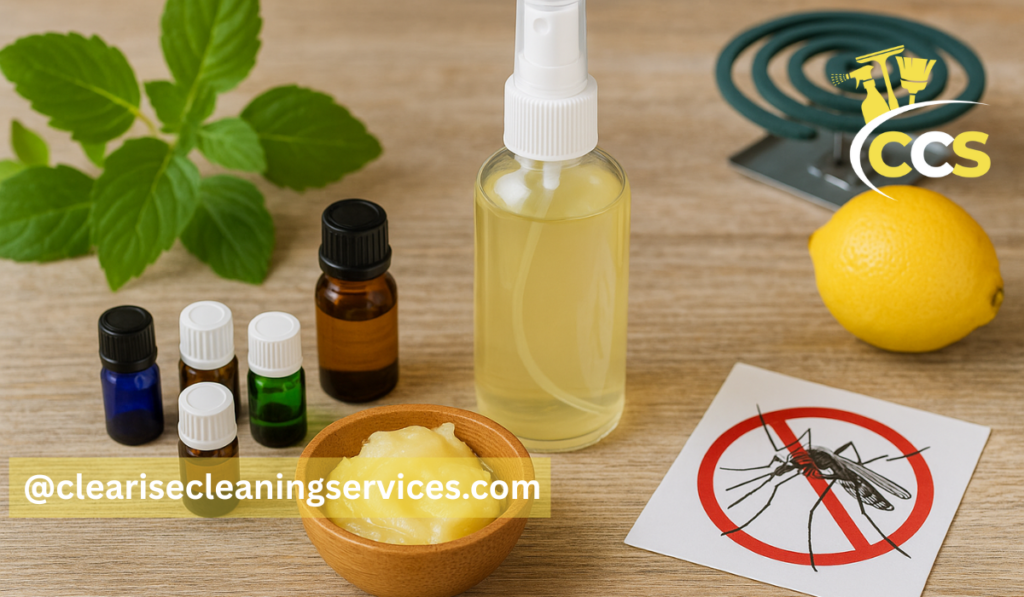
Many families prefer making their own repellents because they can adjust the ingredients to match their skin type, scent preference, and comfort level. The following recipes are simple, affordable, and easy to make at home. They’re suitable for most adults and older children, although infants may require extra caution. These blends are designed as homemade mozzie repellent for humans, not for pets, and should always be handled responsibly.
Basic Essential-Oil Spray (water + witch hazel or alcohol)
A water-based spray is one of the quickest ways to create a homemade mozzie repellent with essential oils, and it’s useful for everyday outings, school runs, or time spent in the yard. It works because the oils form a scent barrier that mosquitoes tend to avoid.
Simple recipe to try:
- 2 oz distilled water
- 1 oz witch hazel or rubbing alcohol
- 30–50 drops of essential oils such as citronella, lavender, peppermint, tea tree, or a mix
Shake well before each use. Spray onto exposed skin or lightly mist clothing, avoiding the eyes, mouth, and any broken or irritated skin. The scent fades fairly quickly, so you may need to reapply every hour or two, especially if you sweat or spend time outdoors.
A few safety reminders help keep this blend comfortable for everyone:
- Essential oils can be strong, so keep the concentration moderate
- Always do a patch test on a small area of skin first
- Avoid use on infants unless you’ve spoken with a pediatric professional, as young skin can be sensitive
This type of spray is convenient because it’s light, fast-drying, and can be customized with the oils you prefer.
Oil-Based Lotion or Balm (coconut oil, jojoba, or similar)
For people who dislike water-based sprays, an oil-based balm or lotion can feel more soothing, especially in dry or cooler weather. Coconut oil is often used as the base, but jojoba or almond oil can work too.
A simple idea is to combine melted coconut oil with a small amount of peppermint or lavender essential oil. Once it cools, the mixture becomes a soft balm that can be applied to arms and legs before heading outdoors.
This style of diy insect repellent for home is useful in the evening, when children are settling down, or during mild weather when skin tends to dry out. It adds moisture while offering gentle protection. However, it may feel too heavy in hot weather or if you already use skincare products that are oil-based.
Vinegar-Based Spray (apple cider or white vinegar)
A vinegar blend is a simple homemade mozzie repellent vinegar formula that can be prepared quickly using ingredients most people already have in their kitchen.
A basic mix could look like:
- 1 part vinegar
- 3 parts water
- Optional: a few drops of mosquito-repelling essential oil
This spray is lightweight and doesn’t leave an oily residue, which makes it practical for everyday use. The downside is that vinegar has a sharp, unmistakable smell that some people dislike, and it may require frequent reapplication since the scent fades quickly.
If you’re using it on skin, test it first to check for irritation, as vinegar can be drying, especially on sensitive areas.
“No-Oil” DIY Options (for users sensitive to oils)
Not everyone enjoys the feel of oils on their skin, and some people are sensitive to strong fragrances. In that case, a very simple homemade spray can be made by combining water, a splash of vinegar, and a small amount of mild liquid soap. The soap helps the mixture cling lightly to the skin, although its repellent strength will be moderate at best.
Another low-effort option is to use fresh herbs. Mint, basil, rosemary, and lemongrass are popular choices because their natural aromas may discourage mosquitoes. They’re not very strong as direct repellents but can help create a more comfortable environment when placed near seating areas or gently crushed to release their scent.
These options aren’t substitutes for true repellents, but they can contribute to an overall strategy of discouraging mosquitoes without relying on strong oils.
Indoor/Outdoor Use: Sprays vs Surface or Area Treatments
Sprays are best suited for direct skin or clothing application, especially when you’re outdoors, walking, or in areas with noticeable mosquito activity.
For indoor spaces or patios, area treatments may work better. Diffusers, scented cloths, or mild herbal smoke can influence the environment without applying anything to the skin. These methods are less precise than sprays, but they can make a living space more comfortable when combined with basic home prevention steps like screens, fans, or avoiding standing water.
Understanding when to use sprays and when to rely on environmental methods can help you build a routine that feels natural and low-effort, rather than constantly applying products to your child’s skin.
Beyond Sprays: Smoke, Ambient Methods & Environmental Repellents
Homemade sprays are useful for direct protection, but they aren’t always the easiest or most convenient option, especially when you’re sitting outside or trying to make a shared space more comfortable. In those situations, environmental methods can help reduce mosquito activity without repeatedly applying products to your skin. These approaches don’t usually eliminate mosquitoes entirely, but they can create a more tolerable environment for families, especially in the evenings.
Herbal Smoke / Burned Herbs / Incense — how smoke can deter mosquitoes
In many regions, people have relied on herbal smoke as a homemade mozzie repellent smoke to discourage insects during outdoor gatherings. Burning herbs like rosemary, thyme, or citronella-scented wood releases aromatic compounds that mosquitoes tend to avoid. Incense sticks containing similar scents can offer a mild deterrent as well, although their range is limited and they work best in smaller outdoor areas with little wind.
These approaches are considered low-tech, and they come with limitations. Smoke spreads inconsistently outdoors, and changes in wind can quickly reduce effectiveness. Still, for patios, balconies, or campfire settings, smoke can take the edge off, especially when combined with other measures.
A few safety tips can reduce discomfort or risk:
- Use smoke outdoors or in very well-ventilated spaces
- Keep smoke away from children’s eyes and airways
- Avoid closed indoor rooms where smoke can build up
These methods are informal and not meant to act as a homemade mosquito killer for outside, but they can make being outdoors more pleasant for short periods.
Ambient Diffusers & Indoor Repellent Methods
When spending time indoors, simple environmental strategies often work better than constant application of products. Essential-oil diffusers can release mild repellent aromas gradually, creating a less inviting environment for mosquitoes. Some people also place lightly scented cloths near windows, doors, or other points where insects tend to enter the home.
These methods work best when combined with basic physical barriers and habits, such as:
- Window screens or mosquito nets
- Closing doors at dusk
- Using fans to circulate air
Diffusers are not a guaranteed diy insect repellent for home, but they can make indoor areas more comfortable without coating the skin in oils or sprays. They also offer a calmer, continuous approach that fits well with evening family routines.
Landscaping & Natural Barrier Strategies (for outdoor areas)
Some plants naturally produce aromas that mosquitoes tend to avoid, which is why certain garden layouts can help reduce mosquito activity outdoors. Herbs such as basil, rosemary, citronella, lavender, mint, marigold, and catnip are commonly used to create a mild natural barrier around seating areas, garden edges, or balconies.
These plants are not powerful repellents by themselves, but they may discourage mosquitoes from lingering in the immediate area. For better results:
- Gently crush leaves occasionally to release scent
- Avoid stagnant water near plant beds
- Replace wilted plants and maintain healthy growth
This approach is subtle and cumulative, rather than instant, but it can contribute to a more comfortable outdoor environment over time.
Environmental Management: Making Your Home Mosquito-Unfriendly
Even the best homemade repellents can’t fully compensate for an environment that actively attracts mosquitoes. These insects generally need stagnant water to reproduce, and even a small amount — such as a toy left outside after a rainy day — can become a breeding site.
Simple environmental habits can make a big difference:
- Empty or cover containers that collect water, including planters, buckets, and outdoor toys
- Repair screens on windows and doors, and close them during peak mosquito hours
- Avoid leaving doors open at dusk, when mosquitoes are most active
- Check for damp, shaded places indoors — under furniture or near houseplants — as mosquitoes often rest there during the day
These steps don’t eliminate mosquitoes immediately, but they can gradually reduce the number that enter your home, improving the effectiveness of any repellent you choose to use.
Safety & Best Practices — Especially for New Parents & Children
Making your own repellents can feel empowering because you control the ingredients, but it’s important to remember that “natural” does not automatically mean “risk-free.” Essential oils and household ingredients can be useful tools, but they need to be handled thoughtfully, especially when children are involved.
Understanding Risks: Why “Natural” ≠ Always Safer
Many parents choose homemade solutions because they want to avoid strong chemicals. That’s understandable, but natural products still require care:
- Essential oils are not regulated to the same standard as medicines, so potency and purity can vary from one brand to another.
- Some oils can irritate the skin, trigger allergies, or cause redness, especially if applied directly without dilution.
- It’s wise to patch-test a small area of skin first, particularly for babies, toddlers, or anyone with eczema or sensitive skin.
- Avoid applying homemade repellents to broken skin, near the eyes or mouth, or on very young babies without professional guidance. Babies have thinner skin and may react differently than older children or adults.
When working with natural ingredients, a gentle, cautious approach tends to work best. A blend that feels comfortable for an adult may feel too strong for a child, so it’s better to start with mild concentrations and adjust only if needed.
Proper Storage, Shelf Life & Reapplication — keeping DIY repellents effective
Homemade mixtures don’t contain stabilizers or preservatives, so they generally degrade faster than commercial sprays. Light, heat, and oxygen can all break down essential oil compounds and make blends less effective.
To help maintain quality:
- Store mixes in dark glass bottles, away from heat and direct sunlight
- Make small batches that you plan to use within a reasonable timeframe
- Shake before each use, because oil and water naturally separate
Even with good storage habits, homemade repellents tend to lose potency faster than products designed to last for hours. Plan to reapply regularly, especially if you’re outside for a long time, sweating, or swimming. That doesn’t mean they’re ineffective, just that they work on a shorter cycle than chemical options.
When to Consider Commercial or Professional Solutions
Natural repellents can offer everyday protection, but there are situations where they might not be enough. If you live in an area where mosquitoes are especially dense or where illnesses such as dengue, malaria, or West Nile virus are a concern, it may be wise to use EPA-approved repellents that contain active ingredients like DEET or picaridin. These products are designed to provide predictable, long-lasting protection and have been studied extensively for safety when used correctly.
For large gardens, outdoor seating areas, or heavily infested spaces, DIY methods may work better when combined with structural measures, such as:
- Window screens or nets
- Eliminating standing water
- Outdoor fans or traps
- Professional treatments when necessary
The goal isn’t to discourage homemade approaches, but to acknowledge that different situations require different tools. Parents shouldn’t feel pressured to choose one method exclusively; layering strategies often provides the most practical and balanced protection.
Quick Guide: Which DIY Mozzie Repellent Fits Your Situation?
Choosing a repellant can feel confusing when you’re juggling kids, routines, and unpredictable outdoor conditions. This quick guide gives you a simple way to match common situations with practical DIY options, along with a brief explanation of why they work.
| Situation / Need | Recommended DIY Method(s) | Why / Tips |
| Short outdoor play / quick walk with baby | Light essential-oil spray (diluted), oil-based balm | Easy to apply, gentle scent, quick reapplication keeps it effective without much effort |
| Evening at home, kids inside room | Indoor diffuser or mild herbal smoke (well-ventilated), plant barrier + screens | Low-effort, passive approach that doesn’t require constant skin application; best for calmer, indoor settings |
| Outdoor garden / balcony seating | Ambient smoke, repellent plants + vinegar or essential-oil spray, environmental control (no standing water) | Creates a natural barrier around seating areas; combines scent deterrents with better outdoor hygiene |
| Low-budget, quick DIY | Vinegar-based spray, herb water spray | Uses common household ingredients; good for unexpected outings or when you don’t have specialty oils |
| High mosquito density / disease risk | Combine DIY + structural measures (screens, water removal) — or consider commercial repellents | Layered protection offers better coverage; prioritize safety if mosquitoes are persistent or disease risk is present |
This table doesn’t tell you what you “should” use, but it offers a realistic sense of what tends to work best in everyday family situations. Parents often switch between methods depending on the weather, mosquito activity, and how long the children will be outside, which is perfectly normal. Consistency matters more than perfection.
Common Mistakes & Myths — What to Avoid
Homemade repellents can work well, but there are a few misconceptions and habits that can reduce their effectiveness or create avoidable risks. Being aware of these helps parents use DIY options more safely and reliably.
Myth: “If it smells strong, it must be effective.”
A bold smell doesn’t always translate to long-lasting protection. Mosquitoes respond to specific compounds, not just strong odors, and poorly diluted mixtures can irritate the skin without improving results. Duration, proper dilution, and reapplication matter much more than intensity.
Mistake: Using undiluted essential oils directly on baby skin.
Pure oils are highly concentrated and can cause irritation, rashes, or discomfort. Babies have thin, sensitive skin, so always dilute oils carefully and test a small area before regular use. For very young infants, it’s best to talk with a pediatric professional before applying anything.
Mistake: Relying only on candles or incense indoors.
Scented smoke or candles may help outdoors, but in large or breezy spaces, they lose potency quickly. Indoors, they may not reach all areas, especially if windows or doors are open. These methods work best as occasional support, not a standalone solution.
Mistake: Ignoring environmental factors.
Even the best spray won’t make much difference if mosquitoes have easy access to your home or breed nearby. Standing water, open entry points, and humid indoor spots can invite mosquitoes back no matter how often you apply repellent. Prevention and hygiene play an essential role.
Conclusion
A well-made, natural homemade mozzie repellent can be a safe, practical way to reduce mosquito bites, especially for families with babies or young children. It gives you control over ingredients and allows you to create gentle blends tailored to your child’s skin and comfort level. When used alongside environmental measures, homemade mixtures can make daily life noticeably more comfortable during mosquito season.
The most effective approach usually involves layering different strategies, such as applying a light spray, using plants or diffusers indoors, eliminating standing water, and keeping screens in good condition. No single method solves the problem entirely, but combining small habits tends to create better, more consistent results over time.
It’s also important to use homemade products responsibly. Always dilute essential oils, patch-test new blends, store mixtures properly, and reapply as needed. These habits help maintain comfort while reducing the risk of skin irritation, particularly for young children.
Homemade repellents cannot always match the long-lasting performance of commercial products, especially in high-risk or heavily infested areas. But for everyday use, they offer a gentle, chemical-light alternative that many families find appealing.
The key is to try a few approaches, observe what works for your environment, and adjust the routine to fit your home and comfort level. With a bit of experimentation, you can create an effective, family-friendly plan that keeps mosquitoes from dominating your time outdoors.
FAQs
Do Homemade Mosquito Repellents Really Work?
They can help reduce mosquito activity, especially for everyday use, but they often require more frequent reapplication than commercial products. Effectiveness varies depending on ingredients, weather, and individual scent.
Can I Use Homemade Repellent On Babies?
Use caution with babies. Essential oils may irritate sensitive skin, and many are not recommended for infants. Always dilute properly, patch-test first, and consult a healthcare professional if unsure.
What Is The Best Homemade Repellent For Sensitive Skin?
Simple blends made with coconut oil and a small amount of lavender or peppermint oil are usually gentler. Vinegar-based sprays or herb infusions are alternatives for those who prefer oil-free options.
How Long Do Homemade Repellents Last On The Skin?
Most homemade repellents last 30 minutes to 2 hours, depending on ingredients, weather, sweat, and activity level. Natural mixtures generally don’t match the duration of chemical products.
Are Essential Oils Safe To Use As Mosquito Repellents?
Many essential oils are known to deter mosquitoes, but they must be properly diluted to avoid skin irritation. Quality can vary, and some oils may trigger allergies in sensitive individuals.
Can Indoor Plants Keep Mosquitoes Away?
Plants like basil, mint, citronella, and lavender may discourage mosquitoes from lingering, especially when placed near doors or outdoor seating. They are helpful but not a standalone solution.
Should I Still Use Commercial Repellent If Disease Risk Is High?
Yes. In areas with dengue, malaria, or other mosquito-borne diseases, commercial repellents containing DEET or picaridin may offer stronger, longer-lasting protection.
Disclaimer: The information provided in this article is for general educational purposes only and is not intended as medical advice. Homemade mosquito repellents can vary in effectiveness, and individual reactions to natural ingredients may differ. Always perform a patch test before using any mixture, especially on children or people with sensitive skin. Avoid applying products on infants or using essential oils without consulting a qualified healthcare professional. This article does not guarantee protection against mosquito-borne illnesses. In areas where mosquito-related diseases are common, consider approved commercial repellents or professional control services. Use your best judgment and follow safety guidelines when handling natural ingredients.
Thanks for visiting Clearise Cleaning Services! Discover more helpful tips and expert cleaning insights by exploring our related categories.