Keeping weeds under control is one of those chores most homeowners deal with sooner or later. Store-bought weed killers can work quickly, but they’re often expensive, and many people are uncomfortable using strong chemicals around their yard—especially if children, pets, or edible plants are nearby. That’s why homemade weed killers have become a popular alternative. They’re easy to make, use familiar ingredients, and can be applied in small batches whenever you need them.
Even so, choosing a DIY solution isn’t as simple as mixing a few household products together. Many homeowners worry about whether homemade sprays are actually effective, how they might affect soil or nearby plants, and whether repeated use could cause long-term problems. Safety is another concern: a solution that works on weeds might also irritate skin, harm pets, or reduce soil fertility if it’s too strong or used incorrectly.
This article focuses on practical, expert-backed guidance to help you understand when and how to use homemade weed killers effectively. You’ll learn what ingredients work best, how to mix them safely, and which methods are suitable for different parts of your yard. You’ll also find realistic advice on soil health, environmental impact, and long-term weed management.
Why Consider a Homemade Weed Killer?
Choosing a homemade weed killer isn’t just a trend—it’s a practical decision for many households looking for affordable and manageable ways to control weeds. People often discover that DIY methods solve a common set of problems without demanding a big budget or exposing the yard to aggressive chemicals.
Cost-Effectiveness
Most homemade recipes use everyday items such as vinegar, salt, soap, or lemon juice. These ingredients are inexpensive, easy to find, and can be bought in bulk if needed.
- Store-bought herbicides can be costly, especially for large yards.
- DIY solutions allow you to make as much or as little as you need.
- No need for continual purchases unless you run out of household ingredients.
For families maintaining driveways, pavements, and small lawn edges, the cost difference becomes noticeable over a few months.
Reduced Exposure to Synthetic Chemicals
Commercial weed killers are formulated for rapid results, but many homeowners prefer not to spray harsh chemicals around areas where:
- Children play
- Pets roam
- Herbs or vegetables grow
Homemade products give you more control over ingredients, which is reassuring for anyone trying to limit chemical exposure in day-to-day living. While DIY solutions are not automatically “safe,” they are familiar and adjustable.
Flexibility and Customization
Unlike commercial herbicides that come pre-mixed, DIY recipes can be tailored to match the situation:
- Stronger mix for stubborn weeds in pavement cracks
- Gentler spray near garden beds
- Spot treatment instead of broad spraying
Customization matters if you’re trying to kill weeds without damaging nearby plants, or if you want to be cautious because of pets or sensitive soil.
Environmentally Friendly or Lower-Impact
Homemade weed killers are often used in small, targeted areas, not sprayed across an entire yard. That difference reduces the amount of solution entering soil and storm drains.
Examples of lower-impact usage:
- Spraying weeds between patio stones
- Treating cracks in the driveway
- Managing small, isolated patches
When used responsibly, DIY mixtures can be a lower-impact option than frequent use of commercial chemicals. They don’t eliminate environmental risk, but they may help minimize it, especially when applied carefully and in the right context.
How Homemade Weed Killers Work — The Simple Science Behind Them
Homemade weed killers rely on a few basic principles that interfere with the plant’s ability to survive. They don’t work the same way as commercial herbicides, which often target root systems or plant hormones, but they can still be effective when used correctly. Most DIY mixtures focus on dehydrating the plant or damaging leaf tissue, which prevents the weed from producing energy and eventually causes it to die back.
Acidity (Vinegar, Lemon, Citrus-Based Ingredients)
Household vinegar contains acetic acid, which draws moisture out of plant cells. When sprayed directly on leaves, the acid causes rapid dehydration, giving the appearance of a leaf “burn.” This doesn’t always reach the root, but it can quickly kill seedlings and shallow-rooted weeds. Lemon juice or other acidic citrus ingredients work similarly, though they are usually less concentrated.
Key point: Acidity damages the outer layer of the leaf, so sunlight and heat help speed up the drying process.
Salt, Epsom Salt, and Mineral Salts
Salt disrupts the plant’s internal water balance by pulling moisture away from cells. When used in higher concentrations, it can dry out the entire plant, not just the leaves. Epsom salt and other mineral salts work in a similar way, though they sometimes offer slower results.
However, salt doesn’t stay on the plant—it eventually enters the soil, where it can change soil chemistry and make it harder for future plants to grow. That’s why salt-based solutions are best used on driveways, sidewalks, or gravel.
In simple terms: Salt dries weeds effectively, but it can also dry the soil, so use sparingly.
Surfactants (Dish Soap or Other Soaps)
Weed leaves often have a waxy surface that helps them repel water. Adding a small amount of dish soap acts as a surfactant, breaking that surface tension so the solution can stick rather than bead up and run off.
The soap itself doesn’t kill the plant, but it helps vinegar, salt, or other ingredients stay in contact long enough to do their job.
Why it matters: Without soap, much of the spray may roll off the plant before it has any effect.
Heat or Scalding (Boiling Water)
Heat is a non-chemical method that works by instantly damaging plant tissue. Pouring boiling water directly onto weeds between pavers or on hard surfaces causes leaves and stems to collapse, often killing small plants immediately. It’s especially helpful for weeds in narrow spaces where spraying is awkward.
This method doesn’t involve chemicals, but it still has limits—it may not kill deep roots, and repeated treatments might be needed for tough species.
Bottom line: Boiling water is fast, simple, and chemical-free, but may require a few rounds to fully eliminate persistent weeds.
Proven Homemade Weed Killer Recipes (with Variations)
Homemade weed killers aren’t one-size-fits-all. Different weeds, locations, and soil types call for different solutions. Below are four approaches, arranged from mild to strong, so you can choose a method that fits your needs without over-treating your yard.
Basic Vinegar + Dish Soap Spray
A simple recipe that works surprisingly well for young or small weeds sprouting in places where plants don’t need to be protected.
Ingredients
- 1 gallon white vinegar
- 1 tablespoon dish soap
How to Mix & Use
- Pour vinegar into a spray bottle or garden sprayer.
- Add dish soap and stir gently to avoid foam.
- Spray directly onto weed leaves on a sunny, dry day.
Why Sun Helps: sunlight accelerates moisture loss from leaf tissue, speeding up results.
Best For
- Small, shallow-rooted weeds
- Weeds between pavers or patio stones
- Driveways, sidewalks, cracks
This is not ideal for lawns or garden beds where you want to preserve plants, because vinegar is non-selective and may damage anything it touches.
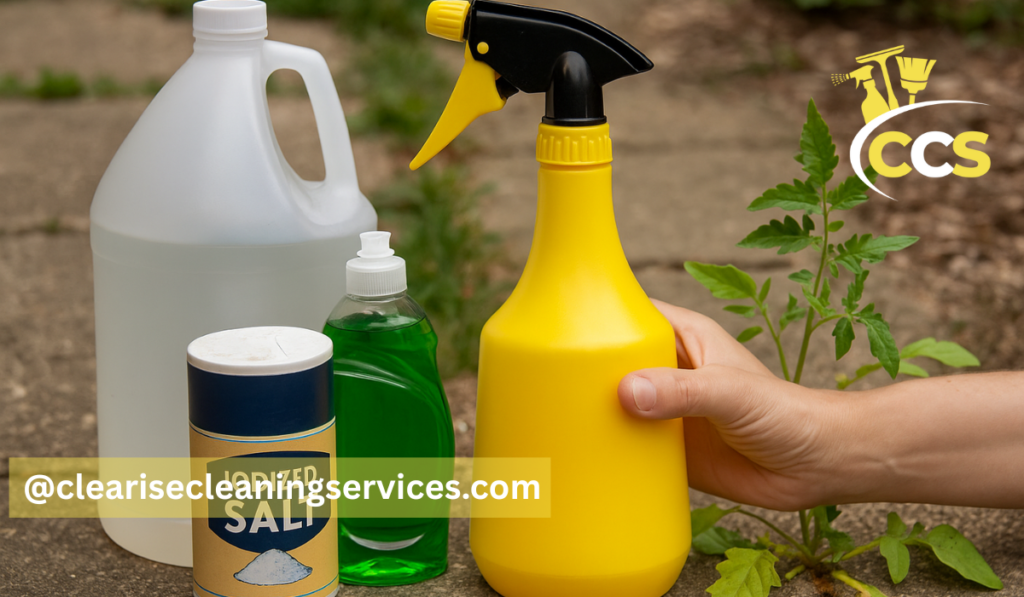
Strong Homemade Weed Killer (Vinegar + Salt + Soap)
This mixture provides stronger, longer-lasting results than basic vinegar because the salt adds a dehydrating effect.
Ingredients
- 1 gallon white vinegar
- 1 cup table salt
- 1 tablespoon dish soap
Mixing & Application Steps
- Dissolve salt completely in vinegar.
- Add dish soap and stir gently.
- Transfer to a spray bottle or garden sprayer.
- Apply directly to weeds, focusing on the foliage.
Best Use Case
- Stubborn, mature weeds
- Hard-to-reach cracks
- Broadleaf weeds in driveways and walkways
Important Caution
This mixture is non-selective and can damage or kill any plant it contacts.
Salt can also remain in the soil, reducing fertility and affecting future growth. Use sparingly, especially around garden beds or areas you may want to plant later.
Alternative / Eco-Friendly Mixes
These options rely on natural acids and minerals rather than high salt levels, making them a potentially gentler option for the environment.
Examples of Mixes
- Vinegar + lemon juice + dish soap
- Citrus oil + vinegar
- Strong horticultural vinegar + Epsom salt + soap
How They Work
- Citrus-based ingredients add extra acidity and natural oils that can break down leaf surfaces.
- Epsom salt creates a less persistent drying effect than table salt, though results can take longer.
- Horticultural vinegar is stronger than household vinegar and may be useful for more established weeds.
Best For
- Tougher weeds that resist regular vinegar
- Small patches in areas where soil health matters
Good to Know: Although these options avoid heavy salt, they should still be applied carefully to prevent damage to nearby plants.
Non-Chemical Methods (Boiling Water, Manual Removal, Mulching)
Not all effective weed control involves spraying.
Boiling Water
- Pour directly onto weeds, especially between pavers or along patio edges.
- Works quickly because heat destroys plant tissue.
Benefits
- No chemical residue
- Good for tight spaces where spraying is difficult
Manual Removal + Mulching
- Hand-pulling weeds followed by mulch or fabric barriers can prevent regrowth.
- Especially helpful around plants you want to protect.
Why Combine Methods
DIY sprays can kill surface growth, but physical barriers or manual removal help prevent seeds from returning. This approach supports long-term weed management without repeated chemical applications.
When & How to Apply Your Homemade Weed Killer (Best Practices)
Even the best homemade weed killer will perform poorly if it’s applied at the wrong time or in the wrong way. A few simple habits can make a big difference in how quickly weeds respond and how much of the surrounding landscape remains unharmed.
Choose the Right Weather
Homemade mixtures work best on a sunny, dry day. Heat and sunlight help the solution evaporate quickly, which accelerates leaf dehydration. If you spray just before rain or on damp leaves, much of the mixture can wash away, reducing its effectiveness.
Think of it this way: hot, clear weather gives your spray a head start.
Apply Directly and Cautiously
These solutions are non-selective, meaning they don’t distinguish between weeds and desirable plants. To avoid accidental damage:
- Spray directly on the weeds’ leaves
- Avoid drifting spray onto nearby flowers, vegetables, or grass
- Shield surrounding plants if there’s wind
Spot-treating is generally more effective than “blanket spraying,” especially around garden beds.
Use the Right Tool for the Job
If you’re treating a small number of weeds, a standard spray bottle is usually fine.
But for larger areas or repetitive tasks, a pump sprayer makes application faster and easier, and helps deliver a more consistent spray pattern.
- Pump sprayer = more efficient coverage
- Less hand fatigue
- Better reach for cracks and uneven surfaces
Start Small and Test First
A quick test on a small area can help you understand how your mixture behaves in your specific environment. Soil type, plant species, and sun exposure can all influence results.
- Test on one or two weeds
- Wait 24–48 hours
- Adjust mixture or method if needed
This step is especially helpful if you’re using a strong salt-based solution, which can alter soil health.
Be Prepared to Reapply
Homemade weed killers often work on the visible part of the plant, not the root system. As a result, some weeds—particularly deep-rooted or perennial species—may grow back.
- Check the area after a few days
- Repeat the treatment if green growth returns
- Persistent weeds may require multiple rounds over several weeks
Consistency usually matters more than strength. In many cases, a moderate spray applied twice works better than an overly strong mixture applied once.
Safety, Soil & Environmental Considerations — What Every Parent & Pet Owner Should Know
Homemade weed killers may feel “safer” because they use familiar ingredients, but that doesn’t mean they’re risk-free. If you have kids, pets, or a busy garden, it’s important to understand how these mixtures behave once they leave the spray bottle.
They’re Non-Selective — Anything Green Is at Risk
Whether you’re using vinegar, salt, or a stronger mix, most homemade weed killers cannot tell the difference between a weed and a plant you love.
- Spray drifting onto lawn = brown patches
- Overspray on flowers or vegetables = scorched leaves
- Runoff into garden beds = damaged roots and weakened plants
That’s why precision matters. Always spot-treat weeds and avoid “misting” large sections of lawn or beds.
Soil Health Can Suffer, Especially with Salt or Bleach
Some recipes rely heavily on salt or even bleach to get faster results. These can cause lasting damage:
- Salt can build up in the soil, pulling moisture away from plant roots and making it harder for anything to grow.
- Bleach can sterilize soil, disrupt microbial life, and affect drainage and structure.
Signs your soil is struggling:
- Plants failing to thrive in treated areas
- Water pooling instead of draining
- Weeds dying, but nothing else growing either
If you plan to plant in that area later, be very careful with salt- or bleach-based recipes—or avoid them altogether.
Think About Pets, Wildlife, and Beneficial Insects
Even if ingredients are “household safe,” they can still irritate animals or harm helpful creatures.
- Salt and strong acids can irritate paws and skin.
- Residue on leaves can affect insects that land or feed there.
- Pollinators like bees and butterflies don’t need to be sprayed directly to be affected by an over-treated area.
Simple safety habit:
- Keep children and pets away from treated areas until everything is fully dry.
- Avoid spraying near flowering plants that attract bees and other pollinators.
Never Mix Bleach and Vinegar
This one is critical and non-negotiable:
Do not mix bleach with vinegar or any strong acid.
Combining them releases toxic chlorine gas, which can cause:
- Coughing, chest pain, and breathing problems
- Eye and throat irritation
- Serious health emergencies in enclosed or poorly ventilated spaces
If a recipe you see online suggests mixing bleach with vinegar or another acid, ignore it. It’s unsafe for you, your family, and anyone nearby.
Long-Term Environmental Impact
Using a homemade weed killer once in a while on a few cracks in the driveway is one thing. Using large amounts, frequently, in the same area is another.
Heavy, repeated use can:
- Make soil inhospitable for future plants
- Reduce earthworms and beneficial soil organisms
- Lower biodiversity in that patch of ground
Because of this, it’s smart to think of homemade sprays as one tool, not the only tool:
- Combine them with manual weeding.
- Use mulch or landscape fabric to block light and reduce new weed growth.
- Reserve stronger mixes for small, hard surfaces like paths and paving, not whole beds.
Handled with care, a homemade weed killer can be part of a responsible garden routine. Used carelessly, it can cause the same kinds of problems people try to avoid with commercial chemicals—just in a different form.
Which Recipe Should You Use? (Parent-Friendly Recommendations)
Not every weed problem needs the strongest spray. Choosing the right method for the right place keeps your garden safer, especially if you have kids, pets, or a mix of flowers and veggies. Use the guide below as a quick decision map.
Quick Recommendation Table
| Scenario / Need | Recommended DIY Method(s) |
| Cracks in driveway, sidewalk, patio — weeds between pavers | Vinegar + dish soap spray or boiling water |
| Hard-to-kill weeds on hard surfaces (driveway, walkway) | Strong mix: vinegar + salt + dish soap (use carefully) |
| Small garden beds with delicate plants nearby | Skip sprays; use hand-weeding, mulch, or weed-barriers |
| Pet- and child-safe lawn/garden (minimal chemical exposure) | Boiling water, hand-weeding, careful spot treatments only |
| Large area / heavy weed infestation (non-planted area) | DIY sprays + repeat applications, or consider a registered herbicide after weighing risks |
Cracks in Driveways, Sidewalks & Patios
These are the easiest places to use a homemade weed killer because there are no roots you want to protect nearby.
Best options:
- Vinegar + dish soap spray
- Boiling water
Why these work well here:
- No desirable plants in the line of fire
- Runoff doesn’t land on garden beds
- You can target each crack directly
Spray or pour only where weeds are growing, and let the sun help finish the job.
Hard-to-Kill Weeds on Hard Surfaces
Some weeds seem to laugh at normal vinegar. For those stubborn patches in driveways or along paths, you may need something stronger.
Recommended:
- Vinegar + salt + dish soap mixture
Use this only:
- On hard surfaces, not in soil you care about
- Where you don’t plan to plant anything anytime soon
Because of the salt, this option is powerful but harsh. Think of it as a last step for problem spots, not a weekly routine.
Small Garden Beds with Delicate Plants Nearby
Around flowers, herbs, and vegetables, spraying anything non-selective (homemade or commercial) is risky.
Safer choices:
- Hand-weeding
- Mulch (wood chips, straw, bark)
- Weed-barrier fabric under paths or borders
Here, your goal is to protect the soil and roots, not just kill what’s visible. A bit more effort up front prevents bigger problems later.
Pet- and Child-Safe Lawns & Gardens
If kids play on the grass or pets roam freely, caution matters more than speed.
Prefer:
- Boiling water on isolated weeds in cracks or along edges
- Hand-pulling in lawns and beds
- Very careful, limited spot-treating (and only once it’s dry, allow access again)
Avoid:
- Heavy salt-based mixes in areas where pets walk or kids sit
- Treating large soft-surface areas (like lawns) with any non-selective spray
Think of this as a “slow but safe” approach.
Large Areas or Serious Weed Infestations
When a whole section of yard or a large non-planted area is overrun, homemade methods can still help—but they may require patience.
Realistic strategy:
- Use DIY sprays in sections over time
- Repeat applications as weeds regrow
- Combine with mowing, cutting, or manual removal
If the area is big, not planted, and needs a complete reset, it may be worth:
- Talking to a local garden professional
- Considering a registered herbicide used according to the label
This way, you’re making an informed choice instead of endlessly spraying and hoping for the best.
Common Mistakes & Misconceptions — What Experts Warn Against
Homemade weed killers can be useful tools, but they’re easy to misuse. A few misconceptions show up repeatedly in gardening forums and DIY videos, and they often lead to avoidable problems.
Mistake 1: Assuming Homemade Means “Safe for Everything”
It’s common to think that if ingredients come from the kitchen, they can’t do much harm. In reality, most DIY sprays are non-selective, which means they kill or damage any plant they contact.
- Vinegar can scorch lawn grass and vegetables
- Salt-based sprays can ruin soil structure
- Overspray can damage nearby roots
So while homemade doesn’t mean “toxic,” it doesn’t mean harmless, either.
Mistake 2: Overusing Salt or Bleach Recipes
Salt and bleach are sometimes used to boost killing power, but both can cause long-term damage.
- Salt can build up in soil and prevent future growth
- Bleach can sterilize soil and harm beneficial microbes
- Effects may last months, not days
People often overapply these mixtures, thinking more is better, but the cost is often dry, compacted, infertile soil in the treated area.
Mistake 3: Spraying in Wet or Rainy Conditions
Homemade weed killers rely on contact time to dehydrate the plant. Rain, irrigation, or even morning dew can dilute the spray or wash it off before it works.
What happens then:
- Weeds survive
- You waste time and materials
- You may reapply more frequently than necessary
Dry, sunny weather is one of the simplest predictors of success.
Mistake 4: Handling Strong Chemicals Without Precautions
Bleach and high-acidity mixtures may feel familiar because they’re household items, but they can still be dangerous when concentrated.
Risks include:
- Skin or eye irritation
- Breathing problems in poorly ventilated areas
- Accidental ingestion by pets or children
If you choose to use bleach—which many experts discourage—label containers and wear basic protective gear. A rushed job without safety steps increases risk for everyone around you.
Combining Strategies: Integrated Weed Management (For Best Results & Long-Term Garden Health)
Homemade weed killers can handle immediate problems, but long-term weed control usually requires a mix of approaches. Instead of reacting to weeds only when they appear, think about how to reduce the conditions that help them thrive.
Short-Term: Treat Visible Weeds Quickly
For cracks, pavements, and patios, fast action prevents weeds from seeding and spreading.
- DIY sprays for spot treatment
- Boiling water for fast, chemical-free control
This approach keeps weeds from taking advantage of neglected areas.
Medium-Term: Protect Beds and Soil
Weeds thrive in bare soil and disturbed areas. By strengthening the environment, you make it harder for them to return.
Options include:
- Hand-weeding around sensitive plants
- Mulch to block sunlight
- Weed-barrier fabric under stones or paths
- Occasional, careful spot-spraying
These methods reduce the need for repeat chemical use.
Long-Term: Maintain Soil Health
Healthy soil outperforms short-term hacks. After using salt or acidic sprays, replenish nutrients so plants have a better chance of thriving.
- Avoid repeated salt or bleach use
- Add compost or organic matter
- Support drainage and aeration
The better the soil, the less room weeds have to dominate.
Continuous: Monitor and Respond Early
Many weeds regrow from small fragments or deep roots. Catching them early is often easier than aggressive removal later.
- Walk the garden regularly
- Remove small growth before seeding
- Reapply gentle treatments if needed
A steady, moderate approach can be more successful than a single strong treatment that damages soil or nearby plants.
Conclusion
Homemade weed killers—especially simple mixtures made with vinegar, salt, and dish soap—offer a practical, low-cost way to manage unwanted plants in driveways, patios, and other non-planted areas. For many homeowners, they provide a more approachable alternative to commercial herbicides, especially when concerns about cost, chemicals, or convenience are top of mind.
That said, these solutions are not without risk. Because they are non-selective and can affect soil health, accuracy matters. Testing on a small area, using minimal amounts, and applying on sunny, dry days can help reduce unintended damage. Responsible use protects nearby plants, maintains soil quality, and keeps outdoor spaces safe for children and pets.
Long-term weed control often works best when homemade sprays are paired with other strategies, such as boiling water, manual weeding, mulching, and general garden care. These techniques reduce dependence on chemical or salt-heavy mixtures and promote a healthier outdoor environment.
Used thoughtfully, a homemade weed killer can be a helpful part of your garden toolkit—just remember that “strong” doesn’t always mean “safe for everything,” and using the right method for the right situation often delivers better results than over-treating with a harsh solution.
FAQs
Will Vinegar Kill Weeds Permanently?
Not usually. Vinegar damages the leaves it touches, causing them to wilt and die back, but it may not reach deep roots. Some weeds will regrow, especially perennials. Repeated treatments or physical removal may be needed.
Can I Use Bleach To Kill Weeds?
Technically, yes—bleach can kill weeds—but it’s not recommended. It can damage soil structure, harm beneficial organisms, and make it difficult for other plants to grow later. Bleach is also unsafe for pets and children, especially when used outdoors where runoff is unpredictable.
Is Homemade Weed Killer Safe Around Pets And Children?
It can be, but only with careful use. Apply mixtures directly to weeds, avoid overspray, and keep pets and children away from treated areas until everything is completely dry. Strong salt or acid solutions can irritate skin and paws, so minimize exposure.
How Soon Will I See Results?
On a warm, sunny day, you may see visible wilting within a few hours. Tougher or deep-rooted weeds may take longer, and some may need multiple applications over several days or weeks to fully control them.
Can I Use Homemade Solutions On My Lawn Or Vegetable Garden?
Use caution. Homemade weed killers are non-selective, meaning they can harm or kill the plants you want to keep. Spot treatment is safer than broad spraying, and manual removal may be better for high-value plants.
Disclaimer: The information provided in this article is for general educational purposes only and is not a substitute for professional gardening or environmental advice. Homemade weed killers may vary in effectiveness depending on climate, soil, and plant type, and improper use can damage plants, soil, or outdoor surfaces. Always test solutions on a small area first, use caution around children, pets, and desirable plants, and follow local regulations regarding chemical use and disposal. The author and website are not responsible for any adverse results, damages, or injuries arising from the use or misuse of the information provided.
Thanks for visiting Clearise Cleaning Services! Discover more helpful tips and expert cleaning insights by exploring our related categories.