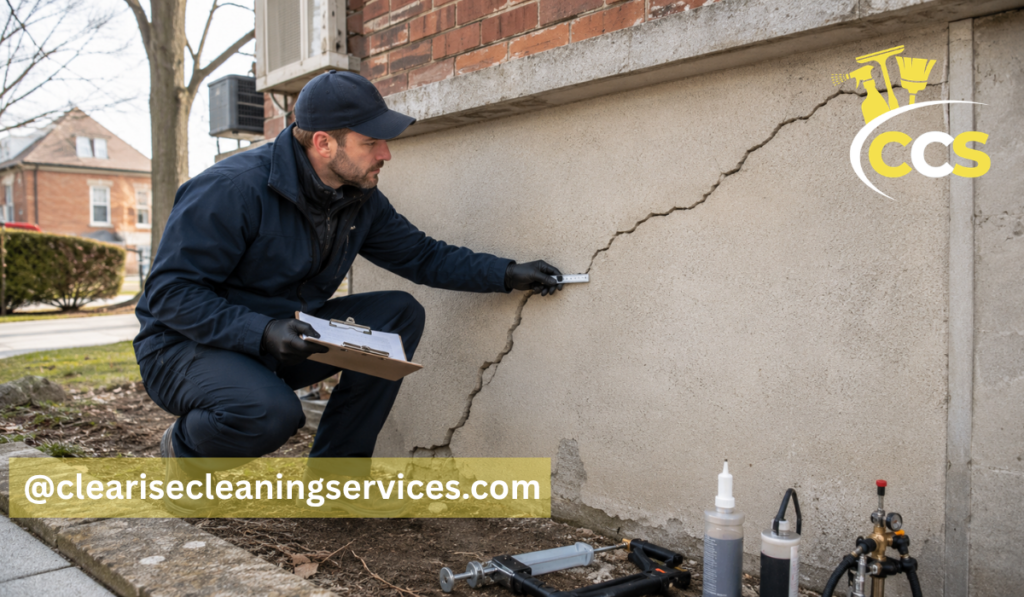
Foundation crack repair costs in the GTA range from a couple hundred dollars for a simple sealed injection to well into five figures for cases requiring structural stabilization. That range is wide enough to be unhelpful without context, which is exactly why it’s worth understanding what drives cost from the low end to the high end before requesting quotes. The price of any specific repair comes down to the crack type, the repair method it calls for, whether the underlying cause needs to be addressed alongside the crack itself, and site-specific factors like access and foundation type.
This guide breaks down what typically drives cost at each stage of foundation crack repair, gives realistic price ranges for the most common scenarios in the Toronto area, and outlines what to look for when comparing quotes from different contractors.
Why There’s No Single Answer to “How Much Does This Cost”
The wide cost range for foundation crack repair reflects genuinely different scopes of work rather than inconsistent pricing across contractors. A single stable hairline crack sealed with injection is a fundamentally different job from a horizontal crack accompanied by wall bowing that requires structural reinforcement, even though both fall under the general category of foundation crack repair.
Getting an accurate cost estimate requires an in-person assessment. Any quote given without a contractor actually examining the crack, checking for displacement, assessing wall condition around the crack, and understanding the site’s drainage context should be treated as a rough placeholder rather than a firm number. The gap between what a photo-based estimate suggests and what the work actually costs once a contractor has assessed the wall in person can be substantial.
Cost by Repair Method: Epoxy or Polyurethane Injection for a Single Crack
For a stable, isolated crack that doesn’t require addressing an underlying structural cause, injection repair is the standard method and the lowest-cost option. Epoxy injection, used for cracks that are stable and where the goal is restoring structural continuity as well as sealing against water, typically runs $400 to $800 per crack in the Toronto area, depending on the crack’s length and accessibility. Polyurethane injection, more commonly used for cracks primarily needing water sealing where some flexibility is beneficial, tends to fall in a similar range, sometimes slightly lower.
Multiple cracks on the same job typically see a reduced per-crack cost, since the contractor’s mobilization and setup cost is spread across more work. A home with three or four cracks needing injection might see a combined cost in the range of $1,200 to $2,500 rather than four times the single-crack price.
Crack Repair Combined with Interior Waterproofing Measures
When a crack is contributing to broader basement moisture issues that also involve interior drainage improvements, such as adding a section of interior drain tile near the affected wall or upgrading a sump system, the combined cost typically runs $2,000 to $5,000 depending on the scope of the interior work involved alongside the crack repair itself.
Crack Repair with Exterior Excavation and Localized Waterproofing
For cracks that warrant addressing from the exterior, whether because the crack is part of a larger area of foundation showing signs of moisture intrusion or because the interior side isn’t accessible for a full assessment, localized excavation with membrane application over the affected section typically costs $3,000 to $7,000, depending on the excavation depth required, the length of wall being addressed, and site access conditions.
Structural Reinforcement for Cracks Associated with Wall Movement
Horizontal cracks accompanied by wall bowing, or diagonal cracking associated with meaningful settlement, may require structural intervention beyond crack sealing. Carbon fiber strapping, which reinforces a bowing wall without requiring full excavation, typically costs $500 to $1,000 per strap, with most walls needing several straps depending on the wall’s width and the severity of the bowing. Steel I-beam bracing, a more robust option for more significant movement, runs higher per linear foot of wall addressed.
For cases involving genuine settlement requiring underpinning, where sections of the foundation are extended deeper to reach more stable soil or bedrock, costs escalate significantly and are priced individually based on an engineering assessment, often starting in the range of $10,000 to $15,000 per affected section and climbing from there depending on the scope required.
Factors That Move a Quote Within Its Range
Foundation type matters. Poured concrete foundations, which are more common in newer GTA construction, generally have more predictable crack repair costs than concrete block foundations, where cracking often follows mortar joints in stair-step patterns that can be more labour-intensive to address properly across multiple joint locations.
Access conditions affect cost meaningfully for any repair requiring exterior work. A foundation wall accessible from an open side yard costs less to excavate than one located behind mature landscaping, against a shared fence line, or beneath a deck or other structure that needs to be worked around or temporarily modified.
Number and location of cracks factor in beyond simple per-crack pricing. Cracks in multiple locations around the foundation may indicate a broader condition worth addressing comprehensively rather than crack by crack, which changes the appropriate scope and cost structure of the project.
Whether drainage correction is included affects both the immediate cost and the long-term value of the repair. A crack repair that doesn’t address why the crack developed or what’s continuing to stress the foundation may need to be revisited within a few years if the underlying moisture or settlement issue isn’t resolved. Including grading correction, downspout extension, or other drainage improvements as part of the project adds modest cost but improves the durability of the repair significantly.
What a Detailed Quote Should Include
A quote for foundation crack repair that’s genuinely useful for comparison purposes should specify several things clearly rather than presenting a single lump sum with minimal detail.
It should identify the specific repair method being proposed for each crack or area, since injection, exterior membrane application, and structural reinforcement are different scopes with different appropriate use cases. It should specify whether the quote assumes the crack is stable or includes contingency provisions if excavation reveals the wall condition is worse than visible from the surface. It should clarify whether drainage correction, such as grading or downspout work, is included or is a separate consideration the homeowner needs to address independently. And it should specify what warranty, if any, applies to the repair, and what conditions would void that warranty.
A quote that simply states “foundation crack repair, $X” without this level of detail makes it difficult to know exactly what’s being purchased or to compare meaningfully against another contractor’s proposal for what might be a different scope entirely.
Why the Cheapest Quote Isn’t Always the Best Value
Foundation crack repair is one of those categories of home repair where the cheapest available quote often reflects a narrower scope rather than genuine efficiency. A quote significantly below others for what appears to be the same crack may be omitting proper surface preparation before injection, using a lower-grade injection material, or not including any assessment of whether the crack is likely to recur due to an unaddressed underlying cause.
Since a failed or inadequate crack repair typically needs to be redone, sometimes at greater cost than the original repair would have been if done thoroughly the first time, the long-term value calculation favours a properly scoped repair over the lowest sticker price. Asking specifically what preparation and materials are included, and why a significantly lower quote differs from others received, helps clarify whether the difference reflects genuine efficiency or a reduced scope that may cost more in the long run.
Timing and Seasonal Cost Considerations
Foundation crack repair involving excavation is, like other masonry work, constrained by Ontario’s climate. Excavation and exterior waterproofing work is most practically done between late April and mid-October, when the ground isn’t frozen and conditions allow for proper backfill compaction. Interior injection repair can be done year-round, since it doesn’t depend on ground conditions in the same way.
Scheduling exterior work in spring, once the ground has fully thawed and before the peak demand season fills contractor calendars, often produces better pricing and availability than waiting until later in the season. Emergency repairs, such as an active leak requiring immediate attention regardless of season, may carry a premium for off-season or urgent scheduling, which is worth understanding if a crack is actively causing water intrusion during colder months and can’t reasonably wait for the standard repair season.
Comparing Crack Repair Cost Against the Cost of Inaction
The cost of foundation crack repair is worth weighing against what happens if the crack is left unaddressed. A stable, sealed crack that’s monitored and doesn’t progress carries minimal ongoing cost risk. An unsealed crack allowing water intrusion, however, can lead to costs well beyond the repair itself: interior water damage to flooring, drywall, and stored belongings; mould growth requiring remediation; and in cases where the underlying cause continues unaddressed, progressive widening that eventually requires a more expensive repair than would have been needed if addressed earlier.
This dynamic is particularly relevant for cracks associated with active hydrostatic pressure or settlement, where each additional season of exposure to freeze-thaw cycling and soil movement tends to worsen the underlying condition rather than leave it static. A $600 injection repair addressed promptly is a meaningfully different financial outcome than the same crack, left for several years, requiring $4,000 of combined structural and waterproofing work once it has progressed and caused secondary water damage.
For homeowners weighing whether a specific crack warrants prompt repair or can reasonably be monitored, an honest professional assessment is the most useful investment available. A foundation repair contractor who can distinguish between a crack that’s safe to monitor and one that needs prompt attention is providing genuinely useful guidance rather than simply generating a sale, and that distinction is worth getting right before deciding how to proceed.
Getting Multiple Quotes Without Wasting Everyone’s Time
Getting two or three quotes for foundation crack repair is reasonable practice, but it’s worth being upfront with each contractor about the fact that you’re comparing options, and asking each to provide the same level of scope detail so the comparison is meaningful. Photographing the crack from multiple angles with a ruler or coin for scale, and having basic information ready such as when the crack was first noticed and whether it’s been actively monitored, helps each contractor provide a more informed initial estimate even before an in-person visit, though the final number should still be confirmed after direct inspection.
If quotes vary significantly, ask each contractor to explain their reasoning rather than simply picking the lowest number. A contractor who has correctly identified a more involved underlying issue that another contractor missed may have a higher quote that actually reflects a more accurate and complete diagnosis. This is where the assessment quality matters as much as the price itself: a repair scoped correctly the first time, even at a higher initial cost, is typically better value than a lower-cost repair that addresses only the visible symptom. Homeowners in Toronto foundation repair and across the GTA should weigh contractor thoroughness alongside price when comparing options for this type of work.
FAQ
Is Foundation Crack Repair Tax Deductible Or Eligible For Any Home Improvement Rebates In Ontario?
Foundation crack repair is generally considered maintenance rather than a capital improvement for tax purposes on a primary residence, so it typically isn’t eligible for the same treatment as renovations that add value or extend the useful life of the property in a qualifying way. Some specific circumstances, such as repairs tied to accessibility modifications or certain energy efficiency programs, may have different treatment, but general foundation crack repair isn’t commonly covered by standard rebate programs. Consulting with a tax professional or checking current provincial and federal program listings is the appropriate way to confirm eligibility for any specific situation.
Can I Get A Fixed-price Quote Before Excavation Begins, Or Does The Price Always Change Once Work Starts?
A reputable contractor should be able to provide a firm quote based on their in-person assessment for the vast majority of standard crack repairs. Some genuine uncertainty exists for cases where excavation may reveal conditions not visible from the interior or exterior surface, such as unexpected deterioration behind existing parging or an undocumented prior repair attempt. A well-written quote should specify what would trigger a change order and roughly what cost range such changes might involve, so you’re not caught off guard by a significant increase without a clear explanation.
Does Foundation Crack Repair Cost More For Older Homes?
Not necessarily more expensive by default, but older homes can present additional complexity that affects cost. Concrete block foundations common in some older construction may have more complex crack patterns following mortar joints. Foundations with previous repair attempts using now-inappropriate materials may need that prior work addressed before new repair can be properly applied. And older weeping tile systems, if part of the scope, are more likely to need full replacement rather than simple inspection and clearing. These factors relate more to construction type and prior maintenance history than to age alone.
If I Get One Crack Repaired, Should I Expect Others To Appear Elsewhere On The Foundation?
It depends on the cause of the original crack. A single crack caused by isolated curing shrinkage doesn’t necessarily predict others. A crack caused by a sitewide condition, such as clay soil expansion affecting the whole foundation perimeter or a drainage issue affecting the entire property, is more likely to be accompanied by, or eventually followed by, similar cracking elsewhere on the foundation as the same forces act on other sections of the wall. This is part of why understanding the cause of a crack, not just repairing its visible symptom, matters for predicting and managing future maintenance needs.
Thanks for visiting Clearise Cleaning Services! Discover more helpful tips and expert cleaning insights by exploring our related categories.