A washing machine is meant to clean your clothes, but over time, it can become surprisingly dirty itself. Soap residue, fabric softener, hard water minerals, and lint slowly build up inside the machine. Add moisture to the mix, and it creates the perfect environment for mold and bacteria to grow. This is why many people start noticing unpleasant smells coming from their washer, even after a fresh cycle.
If you’ve ever opened your washing machine and noticed a musty odor or found your clothes not smelling as clean as they should, your machine likely needs attention. The good news is that learning how to clean a washing machine is simple and doesn’t require expensive products or complicated steps.
Regular cleaning not only removes odor and buildup but also helps your machine run more efficiently and keeps your laundry hygienic. With a few basic household items and some easy maintenance habits, you can keep your washing machine fresh, clean, and working properly for years.
How to Clean a Washing Machine
| Step | What to Do | Why It Matters |
| 1 | Run empty hot cycle | Loosens dirt and residue |
| 2 | Add vinegar | Breaks down buildup and odors |
| 3 | Run second cycle with baking soda | Removes lingering smells |
| 4 | Clean gasket & drawer | Removes hidden mold and soap scum |
| 5 | Check drain filter | Prevents clogs and improves performance |
| 6 | Leave door open after wash | Prevents moisture and mold |
Why Cleaning Your Washing Machine Is More Important Than You Think
It’s easy to assume that because a washing machine uses water and detergent, it stays clean on its own. In reality, the opposite is true. Every wash cycle leaves behind small amounts of detergent, dirt, and minerals. Over time, this buildup collects in hidden areas like the drum, pipes, and rubber seals.
This environment becomes a breeding ground for bacteria and mold. That’s often the reason behind unpleasant odors that transfer onto your clothes. Even if your laundry looks clean, it may not smell fresh due to residue inside the machine.
A dirty washing machine can also affect performance. It may not rinse properly, and buildup can reduce efficiency, leading to longer cycles and higher energy use. In some cases, clogged filters or drains can even cause mechanical issues.
There are clear signs that your washing machine needs cleaning. A musty smell, visible mold around the rubber gasket, or detergent residue in the drawer are all warning signals. If your clothes come out smelling worse than they went in, it’s definitely time to clean your machine.
How Often You Should Clean Your Washing Machine
Understanding how often to clean your washing machine is just as important as knowing how to do it. For most households, a deep clean every one to three months is enough to keep the machine in good condition.
However, this frequency can change depending on how often you use your washer. If you do multiple loads every day, your machine will need more frequent cleaning. On the other hand, occasional use may allow you to stretch the interval slightly.
Water type also plays a role. Hard water leaves behind mineral deposits that build up faster, which means you may need to clean more often. The type and amount of detergent you use matters as well. Using too much detergent can cause soap scum to accumulate, while liquid detergents may leave more residue than powder options.
By adjusting your cleaning routine based on these factors, you can prevent buildup before it becomes a problem.
What You’ll Need Before You Start
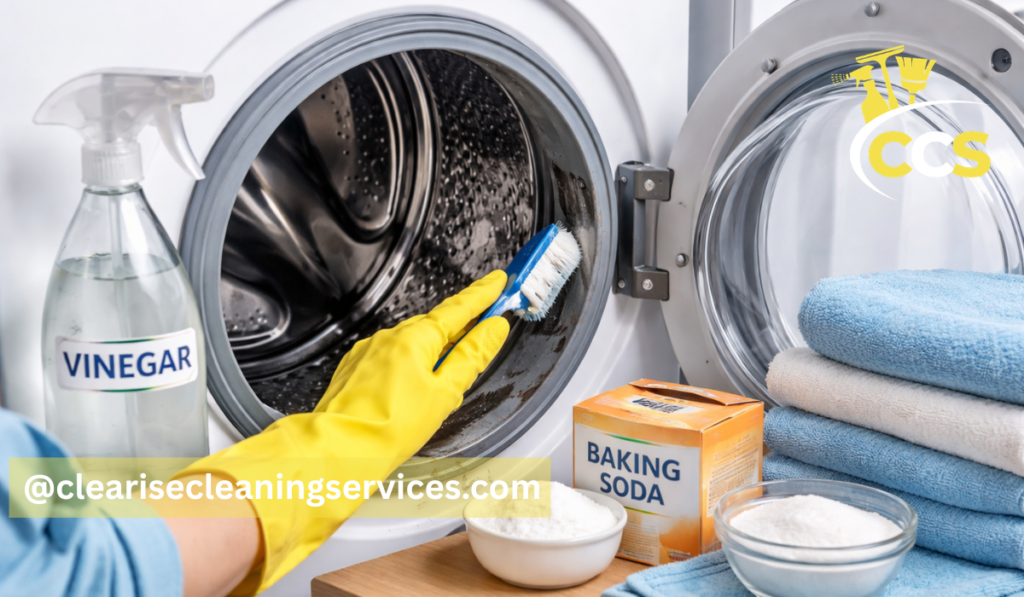
Before starting the cleaning process, it’s helpful to gather a few simple items. Most of what you need is likely already in your home. White vinegar is commonly used because it helps break down residue and neutralize odors. Baking soda is another useful ingredient, especially for removing stubborn smells and adding a gentle cleaning boost.
You’ll also need a soft cloth or sponge for wiping surfaces and a toothbrush or small brush to reach tight spaces. These tools make it easier to clean areas where dirt tends to hide.
If you prefer a ready-made solution, commercial washing machine cleaners are also available. These products are designed specifically for removing buildup and can be a convenient option, especially for heavily soiled machines.
While cleaning, it’s important to follow basic safety precautions. Never mix vinegar with bleach, as this can create harmful fumes. It’s also a good idea to check your machine’s manual, as some manufacturers recommend specific cleaning methods or products.
Deep Cleaning the Washing Machine Drum (Step-by-Step)
The drum is the heart of your washing machine, and it’s where most of the buildup collects. A deep clean helps remove hidden residue and refresh the entire system.
Start by running an empty hot water cycle. Hot water helps loosen dirt and dissolve buildup inside the drum and pipes. For a more effective clean, you can add white vinegar directly into the drum or the detergent dispenser. Vinegar works to break down soap scum and eliminate odors.
Once the first cycle is complete, a second cycle with baking soda can help target lingering smells. Adding baking soda directly into the drum provides an extra layer of cleaning and leaves the machine smelling fresh.
If your washing machine has a dedicated “tub clean” setting, you can use it for better results. This setting is designed to run longer cycles at higher temperatures, which improves cleaning efficiency.
In cases where odor or buildup is severe, a commercial cleaner may be the better option. These products are specially formulated to remove stubborn deposits and can be used according to the manufacturer’s instructions.
Step-by-Step Quick Guide (Simple Version)
- Run a hot, empty cycle
- Add 2 cups vinegar and run again
- Add baking soda and run another cycle
- Wipe gasket, drawer, and drum
- Clean filter and remove debris
- Leave door open to dry
Cleaning Key Parts of Your Washing Machine
Deep cleaning the drum is important, but it’s only part of the process. Several smaller components also need attention to keep the machine fully clean.
Rubber Gasket (Front Loaders)
The rubber gasket around the door of a front-loading machine is one of the most common places for mold and dirt to accumulate. Moisture often gets trapped in the folds, creating an ideal environment for bacteria. Gently pull back the gasket and wipe it with a cloth dampened with a vinegar and water solution. A toothbrush can help clean tight crevices where grime tends to hide.
Detergent Drawer and Dispenser
The detergent drawer collects leftover soap and fabric softener, which can harden over time. Removing the drawer and soaking it in warm, soapy water helps loosen this buildup. After soaking, scrub it gently to remove any residue before placing it back into the machine.
Drain Filter and Debris Trap
The drain filter is responsible for catching lint, hair, and small objects. If it becomes clogged, it can affect drainage and performance. Carefully open the filter compartment, usually located near the bottom front of the machine, and remove any debris. It’s best to place a towel underneath, as some water may spill out during this step.
Front Load vs Top Load: Does the Cleaning Method Change?
While the basic process of cleaning a washing machine remains similar, there are a few differences between front-loading and top-loading models.
Front-loading machines are more prone to mold because of their airtight design and rubber gasket. This means extra attention should be given to the door seal and ensuring it stays dry after each use.
Top-loading machines, on the other hand, usually have fewer issues with mold but can still develop buildup inside the drum and agitator. These machines may allow for easier access to the interior, making manual cleaning simpler.
Regardless of the type, both machines benefit from regular deep cleaning cycles and proper maintenance.
Simple Habits That Keep Your Washing Machine Fresh Longer
Once you’ve cleaned your washing machine, maintaining it becomes much easier with a few simple habits. One of the most effective steps is leaving the door or lid open after each wash. This allows moisture to escape and prevents mold from forming.
Using the correct amount of detergent is another key factor. Too much detergent doesn’t clean better; instead, it leaves behind residue that builds up over time. Measuring the right amount helps keep your machine cleaner.
A quick wipe-down of the rubber gasket and door area after each wash can also make a big difference. This small habit prevents moisture and dirt from settling in.
Avoiding moisture buildup overall is essential. Keeping the machine dry and well-ventilated reduces the chances of odor and mold returning.
Common Mistakes to Avoid When Cleaning a Washing Machine
When learning how to clean a washing machine, it’s just as important to know what not to do. One of the most serious mistakes is mixing vinegar and bleach. This combination produces toxic fumes and should always be avoided.
Using too much cleaning product is another common issue. More is not always better, and excess cleaner can leave its own residue behind. It’s best to follow recommended amounts for safe and effective results.
Ignoring smaller components like filters and dispensers can also limit the effectiveness of your cleaning routine. Even if the drum is clean, these parts can still hold dirt and bacteria.
Finally, skipping regular maintenance can undo all your efforts. Cleaning your machine once is not enough; consistency is what keeps it fresh and functioning properly.
When to Use a Commercial Washing Machine Cleaner
While household items like vinegar and baking soda work well for regular maintenance, there are situations where a commercial cleaner may be more effective. If your machine has a strong odor that doesn’t go away or has not been cleaned for a long time, a specialized product can provide a deeper clean.
Commercial cleaners are designed to target tough buildup, including limescale and detergent residue. They often come in tablet or powder form and are easy to use with a dedicated cleaning cycle.
Choosing the right cleaner depends on your machine type and personal preference. It’s always a good idea to follow the manufacturer’s recommendations to avoid any potential damage.
Conclusion
Keeping your washing machine clean is essential for maintaining fresh, hygienic laundry and ensuring your appliance works efficiently. Over time, dirt, detergent, and moisture can create buildup that affects both performance and cleanliness. By learning how to clean a washing machine properly, you can prevent these issues before they start.
A simple routine that includes regular deep cleaning and small daily habits can make a big difference. Cleaning the drum, paying attention to key components, and avoiding common mistakes will help extend the life of your machine.
In the end, a clean washing machine means cleaner clothes. Taking a little time to maintain it ensures every wash cycle delivers the fresh results you expect.
FAQs (People Also Ask)
What Is The Best Way To Clean A Washing Machine Naturally?
Using white vinegar and baking soda is one of the easiest and most effective natural methods. It helps remove odors, dissolve buildup, and kill bacteria without harsh chemicals.
How Often Should I Clean My Washing Machine?
You should clean your washing machine every 1–3 months. If you use it frequently or notice odors, clean it more often.
Can I Use Vinegar In My Washing Machine Safely?
Yes, vinegar is safe for most machines when used occasionally. However, always check your machine’s manual, as some manufacturers recommend avoiding it.
Why Does My Washing Machine Smell Bad?
Bad smells usually come from mold, bacteria, and detergent buildup inside the drum, gasket, or drain. Regular cleaning helps prevent this issue.
Do I Need A Commercial Washing Machine Cleaner?
Not always. Vinegar and baking soda work well for regular cleaning. Commercial cleaners are helpful for deep cleaning or heavy buildup.
Disclaimer: This content is for general informational purposes only. Always check your washing machine’s user manual before cleaning, and avoid mixing cleaning substances like vinegar and bleach, as it can produce harmful fumes.
Thanks for visiting Clearise Cleaning Services! Discover more helpful tips and expert cleaning insights by exploring our related categories.