A clean oven is an important part of a healthy and efficient kitchen. Over time, ovens collect grease, food spills, and burnt residue from everyday cooking. These stains may seem harmless at first, but they can affect how your oven performs and even create unpleasant smells when you cook. Learning how to clean an oven properly helps maintain a hygienic cooking space and ensures your meals taste the way they should.
Many people delay cleaning their ovens because the process can feel messy or time-consuming. However, regular cleaning prevents stubborn buildup and keeps the appliance working efficiently. When grease and burnt food remain inside the oven for too long, they can produce smoke, unpleasant odors, and uneven heating. In some cases, heavy residue may even increase the risk of small kitchen fires.
Fortunately, there are several safe and effective ways to clean an oven today. Some homeowners prefer natural methods such as baking soda and vinegar, which remove grease without harsh chemicals. Others rely on the oven’s built-in self-cleaning function that uses high heat to burn away residue. There are also simple maintenance techniques that help keep the oven cleaner between deep cleans.
In this guide, you will learn practical and easy methods for cleaning an oven thoroughly. The article explains how to prepare your oven before cleaning, which techniques work best for different types of messes, and how to maintain your appliance so it stays cleaner for longer. By the end, you will have a clear understanding of how to clean an oven safely and effectively using simple tools and household ingredients.
Best Ways to Clean an Oven
| Cleaning Method | Best For | Main Ingredients/Tools | Cleaning Time | Difficulty | Key Benefit |
| Baking Soda + Vinegar | Deep grease and burnt residue | Baking soda, vinegar, cloth | Overnight | Easy | Natural and chemical-free |
| Self-Cleaning Cycle | Very dirty ovens | Built-in oven feature | 2–4 hours | Very Easy | Burns residue into ash |
| Steam Cleaning | Light grease or fresh spills | Water, heat-safe bowl, lemon | 30–45 minutes | Easy | Quick maintenance |
| Commercial Oven Cleaner | Heavy baked-on grease | Oven cleaner spray | 1–2 hours | Moderate | Strong and fast cleaning |
| Rack Soaking Method | Greasy oven racks | Hot water, detergent | 2–6 hours | Easy | Removes stubborn rack grease |
Why Regular Oven Cleaning Matters
Keeping your oven clean is not just about appearance. A dirty oven can directly affect the quality of the food you cook. When grease and food residue accumulate inside the oven, they may burn again during cooking. This can produce smoke and unpleasant smells that affect the flavor of your meals. In some cases, leftover grease may even drip onto heating elements, causing small bursts of smoke while the oven is in use.
Another reason regular oven cleaning is important is safety. Grease buildup can become a fire hazard if it remains inside the appliance for long periods. Although modern ovens are designed with safety features, excessive grease and burnt food can still create risks. Cleaning the oven periodically helps reduce this danger and keeps your kitchen safer.
A clean oven also performs better. When the interior surfaces are covered with residue, heat may not circulate evenly. This can lead to uneven baking or roasting, where some parts of the food cook faster than others. By keeping the oven interior clean, heat can distribute more effectively, improving cooking results.
Regular maintenance also helps extend the life of the appliance. Ovens are long-term kitchen investments, and proper care helps prevent unnecessary wear. When grease and food particles build up around components like door seals or vents, they can cause additional strain on the appliance. Understanding how to clean an oven regularly ensures that it continues to operate smoothly for many years.
What to Do Before You Start Cleaning Your Oven
Before starting any cleaning process, it is important to prepare the oven properly. The first step is always to make sure the oven is turned off and completely cool. Cleaning a hot oven can be dangerous and may cause cleaning products or water to react with the heat.
Once the oven has cooled down, remove all racks, trays, and other accessories. These items should be cleaned separately because they often collect grease and burnt residue. Taking them out also makes it easier to reach every corner of the oven interior.
Preparing the surrounding area is another helpful step. Placing old towels or paper around the base of the oven can protect your kitchen floor from drips or cleaning residue. Wearing gloves while cleaning can also make the process more comfortable and protect your hands from grease and cleaning solutions.
Gathering your supplies beforehand will make the cleaning process smoother. Common items include baking soda, vinegar, warm water, a soft cloth, and a non-scratch scrubbing pad. Some people also use commercial oven cleaners, but natural solutions can often handle most oven messes effectively. Proper preparation ensures that when you begin the actual cleaning process, everything is ready and the task becomes much easier.
The Natural Baking Soda and Vinegar Method for Deep Cleaning
One of the most popular ways to learn how to clean an oven naturally is by using baking soda and vinegar. This method has become widely recommended because it removes grease effectively while avoiding strong chemical fumes.
Baking soda works as a gentle cleaning agent that breaks down grease and burnt food. When mixed with a small amount of water, it forms a thick paste that can be spread across the oven interior. This paste sticks to greasy surfaces and gradually loosens stubborn residue. Over several hours, the baking soda helps lift dirt away from the oven walls.
The process usually begins by spreading the baking soda paste across the interior surfaces of the oven, avoiding heating elements and vents. Areas with heavy grease or burnt food may need a thicker layer of the mixture. After applying the paste, it should be left in the oven for several hours or overnight so it can work effectively.
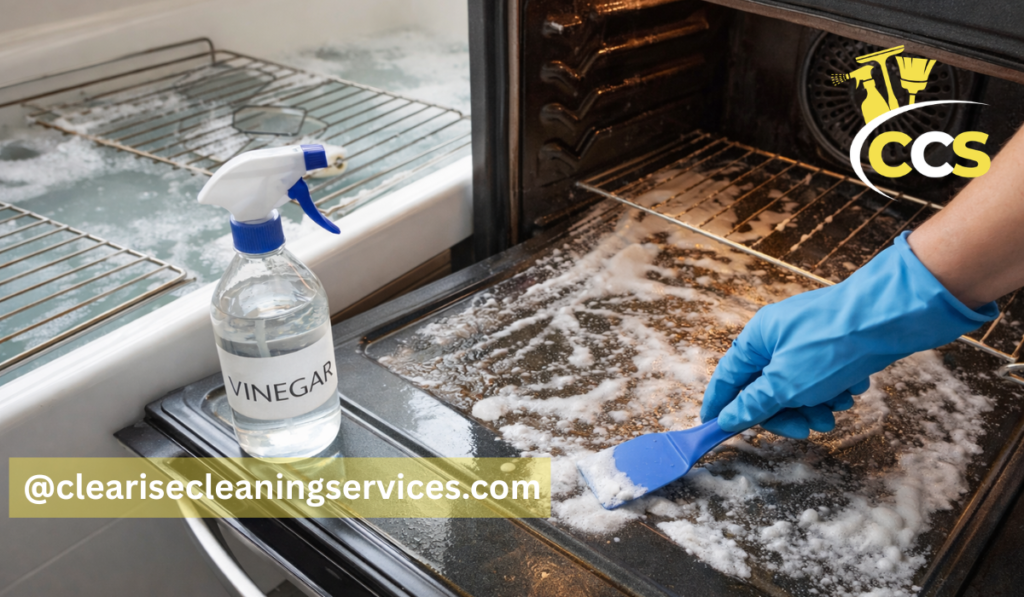
Vinegar plays an important role in the final stage of this cleaning method. When vinegar is sprayed onto the dried baking soda, a gentle foaming reaction occurs. This reaction helps loosen any remaining residue and makes it easier to wipe away stubborn stains.
After the foaming stops, the interior of the oven can be wiped clean with a damp cloth. In many cases, even baked-on grime becomes easy to remove. This natural approach is especially useful for households that prefer chemical-free cleaning solutions while still achieving a deep clean.
Simple Step-by-Step Guide: How to Clean an Oven
- Turn the oven off and let it cool completely.
- Remove racks and trays to clean them separately.
- Apply baking soda paste to greasy areas inside the oven.
- Leave it overnight so the grease loosens.
- Spray vinegar to break down remaining residue.
- Wipe the interior clean with a damp cloth.
- Clean racks separately using hot water and detergent.
- Dry everything and place racks back inside the oven.
Using the Oven’s Self-Cleaning Function Safely
Many modern ovens include a built-in self-cleaning feature designed to simplify maintenance. This function uses extremely high temperatures to burn away grease and food residue inside the oven. During the process, the debris turns into fine ash that can be wiped away once the oven cools.
While the self-cleaning cycle is convenient, it requires proper preparation. Before starting the cycle, the oven racks should usually be removed because the intense heat may damage their finish. It is also helpful to wipe away loose crumbs or large pieces of food to prevent excessive smoke during the cleaning process.
Ventilation is another important consideration. Because the oven heats to very high temperatures during the cycle, it can produce strong odors as residue burns away. Opening kitchen windows or turning on ventilation fans can help improve airflow while the oven cleans itself.
Once the self-cleaning cycle finishes, the oven must be allowed to cool completely before opening the door. After it cools, the remaining ash inside the oven can be wiped away with a damp cloth. This method can be very effective for heavy buildup, although many people still prefer occasional manual cleaning to avoid frequent high-heat cycles.
How to Clean Oven Racks Effectively
Oven racks often collect thick layers of grease and burnt food because they hold dishes directly during cooking. Over time, this residue can become difficult to remove with simple wiping.
A common solution is soaking the racks in hot water for several hours. Many people use a bathtub, large sink, or storage container filled with warm water and a small amount of dish detergent. The heat helps soften grease, making it easier to remove later.
After soaking, a non-scratch scrubbing pad or sponge can be used to gently remove remaining residue. For particularly stubborn spots, a soft brush or steel wool may help loosen the buildup. However, care should be taken to avoid damaging the rack’s coating.
Cleaning the racks separately from the oven interior ensures that each part receives proper attention. Once the racks are fully clean and dry, they can be placed back inside the oven.
Cleaning the Oven Door Glass Without Scratching It
The oven door glass often becomes cloudy because of grease splatters and baked-on food particles. Over time, these stains can make it difficult to see inside the oven while cooking.
A gentle cleaning approach works best for glass surfaces. A simple baking soda paste can be spread across the glass and left for about half an hour. This helps loosen stubborn food stains without scratching the surface.
After the paste has had time to work, it can be wiped away with a damp cloth. If any residue remains, a soft sponge or cloth can remove it with gentle pressure. Avoid using rough materials that could scratch the glass.
In cases where burnt food is very difficult to remove, a razor scraper held at a slight angle can carefully lift the residue from the surface. When used carefully, this technique removes stubborn buildup while protecting the glass.
Quick Steam Cleaning for Light Oven Messes
Sometimes the oven only needs a light cleaning rather than a full deep clean. In these situations, steam cleaning can be a simple and effective option.
Steam helps loosen grease and food residue so it can be wiped away easily. This method often involves placing a heat-safe bowl of water inside the oven and heating it for a short period. As the water heats, steam fills the oven and softens grime on the interior surfaces.
After the oven cools slightly, the loosened residue can be wiped away with a damp cloth. Steam cleaning works best for light spills or fresh grease that has not yet hardened.
While it may not replace deep cleaning for heavy buildup, steam cleaning is useful for quick maintenance between larger cleaning sessions.
Common Oven Cleaning Mistakes to Avoid
When learning how to clean an oven, it is important to avoid certain mistakes that could damage the appliance. One common error is using overly harsh chemicals that may leave strong fumes or damage interior surfaces.
Another mistake is scrubbing with extremely abrasive tools. Rough brushes or sharp metal objects can scratch the oven interior and door glass, making surfaces harder to clean in the future.
Cleaning heating elements incorrectly is another issue. These components are delicate and should not be covered with thick cleaning pastes or soaked with water. Avoid applying cleaning solutions directly to these parts.
Finally, skipping basic safety precautions can create unnecessary risks. Ensuring the oven is cool, maintaining proper ventilation, and using gentle cleaning methods will help keep the process safe and effective.
Simple Habits That Keep Your Oven Cleaner for Longer
Maintaining a clean oven becomes much easier when small habits are practiced regularly. Preventing spills during cooking is one of the most helpful steps. Placing trays or oven liners on lower racks can catch drips before they reach the bottom of the oven.
Cleaning small spills soon after the oven cools is another effective habit. Fresh stains are much easier to remove than grease that has hardened over time. A quick wipe with a damp cloth can often prevent buildup from becoming a bigger problem.
Regularly checking the oven interior also helps identify small messes before they become stubborn stains. By adopting these simple maintenance habits, homeowners can reduce how often deep cleaning is needed.
Conclusion
Learning how to clean an oven properly is an important part of maintaining a safe and efficient kitchen. A clean oven improves cooking performance, prevents unpleasant odors, and reduces potential fire risks caused by grease buildup.
Several effective cleaning methods are available, including natural solutions like baking soda and vinegar, the oven’s self-cleaning function, and quick steam cleaning for light messes. Each approach works best in different situations depending on how dirty the oven is and the type of appliance you have.
Choosing the right cleaning method and preparing the oven properly can make the entire process easier and safer. With regular care and simple maintenance habits, keeping the oven clean becomes far less challenging.
In the end, consistent cleaning helps ensure that your oven continues to cook food evenly and safely. By making oven care a routine part of kitchen maintenance, you can enjoy better cooking results and a cleaner cooking environment every day.
FAQs
What Is The Easiest Way To Clean An Oven?
The easiest method is using a baking soda paste and vinegar. It loosens grease overnight and can be wiped away easily without strong chemicals.
How Often Should You Clean Your Oven?
Most experts recommend cleaning the oven every 3–6 months, depending on how often you cook and how much grease builds up.
Can I Use Vinegar Alone To Clean An Oven?
Vinegar helps break down grease, but it works best when combined with baking soda because the mixture lifts stubborn residue more effectively.
Is The Self-cleaning Oven Feature Safe?
Yes, but you should remove racks, ventilate the kitchen, and keep children or pets away because the cycle produces very high heat and strong odors.
What Removes Burnt Food From The Oven Glass?
A baking soda paste or a gentle scraper can remove burnt food from oven glass without scratching the surface.
Disclaimer: The information in this article is intended for general educational and household guidance purposes only. Cleaning methods may vary depending on oven models and manufacturer instructions. Always follow the safety guidelines provided in your appliance manual before attempting any cleaning method.
Thanks for visiting Clearise Cleaning Services! Discover more helpful tips and expert cleaning insights by exploring our related categories.