Silver is one of those materials that naturally loses its shine over time, no matter how carefully you try to protect it. Exposure to air, moisture, sulphur in everyday products, perfumes, sweat, and even the oils from your skin all trigger a slow chemical reaction known as tarnishing. That dull, dark layer you see on your rings, necklaces, cutlery or decorative pieces isn’t permanent, but it can make your silver look old and uncared for.
The good news is that you don’t need expensive store-bought cleaners or professional services to fix it. With a few safe and simple methods, you can bring back the original shine of your silver using things that are already in your home. In this guide, you’ll learn expert-backed, practical and easy ways to clean silver at home — from gentle soap-and-water care to smart kitchen hacks that work surprisingly well. Each method is safe, beginner-friendly and designed to help you restore your silver without causing damage.
Understanding Why Silver Tarnishes and How to Protect It
Tarnishing happens when silver reacts with elements in the environment, especially sulfur, oxygen and moisture. This reaction forms a thin, dark layer on the surface, making your silver look dull or slightly blackened. It’s a natural process, and it affects both sterling silver and pure silver, although sterling silver tarnishes faster because it contains small amounts of other metals.
Everyday life speeds up this process more than most people realize. Things like skin oils, sweat, body lotions, perfumes, hairspray, and even the humidity in the air can cause silver to darken faster. Wearing silver jewelry while cooking, washing hands, or using beauty products exposes it to tiny sulfur particles and moisture, which makes tarnish develop even quicker. Contact with other metals, rubber bands or certain fabrics can also accelerate discoloration.
The best way to slow down tarnish is to practice simple protective habits. Store silver in soft, lint-free cloths or tarnish-resistant pouches so air and moisture can’t reach it easily. Keep jewelry away from bathrooms or humid areas, and try to avoid leaving silver exposed on open shelves. For items you wear often, wiping them gently with a soft cloth after each use helps remove oils and prevents buildup. If the silver is especially valuable or rarely worn, consider airtight storage or small anti-tarnish strips to keep it bright for longer.
Gentle Everyday Cleaning: Soap, Water and Soft Cloth
If your silver just looks a bit dull or slightly dusty — nothing too dark or deeply tarnished — this is the method you turn to. It’s the kind of routine clean that keeps your silver looking fresh without doing anything harsh. Think of it as your “regular maintenance wash.”
What you need:
- Mild dish soap
- Warm water
- A soft microfiber or cotton cloth
How to do it:
- Fill a small bowl with warm water and add a few drops of mild dish soap.
- Stir gently to create a light, soapy mixture.
- Place your silver pieces in the bowl for a quick soak, or dip your cloth into the mixture if the item is more delicate.
- Wipe the silver gently, making sure to clean all sides and small details.
- Rinse under clean, lukewarm water to remove any leftover soap.
- Dry completely with a soft cloth, then buff lightly to bring back its shine.
This works because soap breaks down oils and everyday dirt without affecting the metal itself. It’s one of the safest ways to clean silver and perfect for regular upkeep. Just keep in mind — if the silver is heavily tarnished or deeply discolored, this gentle method won’t be strong enough. That’s when you move on to deeper-cleaning solutions.
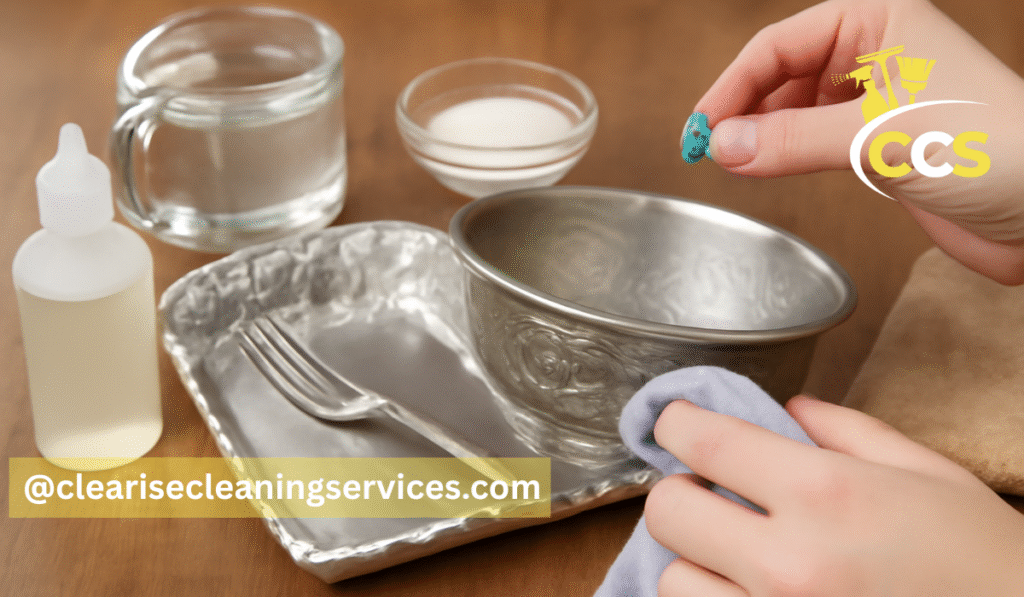
The Classic DIY Method: Baking Soda, Salt, Aluminum Foil and Hot/Boiling Water
This is one of the most trusted home methods to remove deep tarnish quickly, especially when silver looks dark and heavily discolored.
A fast, reliable method to remove heavy tarnish at home
This method works through a simple chemical reaction. When aluminum foil, baking soda, salt and hot water come together, they create an ion-transfer process that pulls the tarnish off your silver. The dark layer (silver sulfide) shifts onto the aluminum foil, which is why the foil ends up looking dull or dirty by the end.
Steps to Follow
- Line a heat-safe bowl or tray with aluminum foil, shiny side facing up.
- Place your silver pieces directly on the foil so they’re touching it.
- Add about 1 tablespoon baking soda and 1 tablespoon salt.
- Pour boiling or very hot water until the items are completely submerged.
- Let the reaction work for a few minutes — a light fizzing sound means it’s cleaning.
- Remove with tongs, rinse with lukewarm water, and dry thoroughly.
- Finish by buffing with a soft cloth.
When This Method Works Best
This technique is ideal for heavily tarnished silverware, cutlery, trays, bowls, and larger items that need a quick, dramatic improvement.
Important Warnings
Avoid using this on delicate silver-plated items, antique pieces, or jewelry with gemstones, pearls or glued settings. The heat and chemical reaction can weaken adhesives or disturb certain stones, so fragile or high-value silver should be cleaned using gentle methods or taken to a professional.
Alternative Household-Item Methods (Vinegar, Lemon Juice, Toothpaste and Others)
If you prefer simple kitchen-based solutions, these everyday items can refresh lightly tarnished silver without using strong chemicals or complicated tools.
Simple at-home ingredients that safely brighten your silver
Several household ingredients work as mild cleaners because of their natural acidity or gentle abrasiveness. They’re great for quick touch-ups, small jewelry pieces, or situations where you want a cleaner method without using heat.
White Vinegar (or Vinegar + Baking Soda)
White vinegar is effective for stubborn but not deeply embedded tarnish. You can soak silver items in plain vinegar for a couple of hours, then rinse and dry. Another option is mixing vinegar with baking soda to create a mild fizzing solution. This helps lift tarnish more quickly but should still be used only on durable, plain silver pieces.
Lemon Juice (With or Without Salt)
Lemon’s natural acidity helps break down light tarnish gently. This method is especially helpful for small jewelry items like rings or earrings. Mix lemon juice with a pinch of salt for a quicker polish, apply it using a soft cloth, and rinse thoroughly afterward. It’s best for minor discoloration rather than heavy or dark tarnish.
Toothpaste for Light Stains
Toothpaste can work surprisingly well for light stains or a quick shine. Always use a non-abrasive, gel-free toothpaste to avoid scratching the surface. Apply a small amount with a soft cloth or a very soft toothbrush, gently rub, then rinse and dry. This method works best for simple jewelry pieces and light dullness.
When These Methods Work (and When They Don’t)
These household tricks are ideal when your silver has mild tarnish, when you need a quick refresh, or when you’re working with small pieces. However, avoid them if your silver is heavily tarnished, antique, or silver-plated with delicate patterns. Strong acidity, rubbing, or repeated cleaning may affect the plating or fine details. For valuable or fragile items, gentle cleaning or professional care is always safer.
What to Avoid: Safe vs Risky Cleaning Practices
Silver is durable, but it’s also easy to damage if you use the wrong cleaning habits. A few common mistakes can scratch the surface, weaken the metal, or ruin delicate finishes, so it’s important to know what to stay away from before you start cleaning.
Cleaning mistakes that can do more harm than good
Harsh abrasives are one of the biggest enemies of silver. Powders with strong grit, scrubbing pads and hard-bristled brushes can leave scratches that are difficult to fix. Even if they make the silver look shiny for a moment, the tiny scratches make tarnish return faster the next time.
Dishwasher cleaning is another practice to avoid. High heat, strong detergents and rapid water pressure can cause discoloration and even permanent spotting. The same goes for bleach, ammonia and other heavy chemicals — they strip the silver’s natural surface and may react badly with plating or decorative details.
Chemical-based silver dips and strong commercial polishes should also be used carefully. While they work quickly, they’re not ideal for antiques, silver-plated items or jewelry with gemstones. Repeated use can thin out the plating or remove protective coatings that preserve the piece’s value and shine. If your silver has stones, delicate engravings or sentimental value, it’s better to choose milder cleaning methods or get professional help instead.
Tips for Jewelry: Rings, Necklaces and Delicate Pieces
Jewelry needs a little extra care because it often comes with delicate shapes, small crevices and sometimes gemstones that can react badly to strong cleaning methods.
Gentle care that protects your jewelry’s shine and structure
For pieces like rings, necklaces, bracelets and earrings, stick to mild cleaning methods. Soap and warm water are usually enough to remove oils and light dirt. If you need a bit more cleaning power, a tiny amount of mild toothpaste or lemon juice can help, but always test gently and avoid rubbing too hard.
A soft microfiber cloth is your best tool, especially when you’re polishing the surface. If you need to clean around small details or crevices, use a soft-bristled toothbrush and light pressure. The goal is to lift dirt without scratching the metal.
Once your jewelry is clean, make sure each piece is fully dry before storing it. Even a small amount of moisture can speed up tarnish, especially in closed storage like boxes or pouches. For items with pearls, gemstones or glued settings, avoid DIY chemical reactions or boiling-water methods entirely — heat and strong formulas can weaken adhesives or disturb delicate stones. When in doubt, or if the piece is antique or very valuable, professional cleaning is always the safest choice.
Quick Maintenance & Regular Care to Keep Silver Shiny Long-Term
Regular upkeep slows down tarnish and reduces how often you need deep cleaning. These small habits keep your silver bright for a much longer time.
Wipe After Each Use
Silver jewelry and tableware collect oils, sweat, food residue and perfume particles during use. Wiping each piece with a soft cloth right after wearing or washing helps remove these deposits before they turn into tarnish.
Store Silver Properly
Always store silver in a dry, airtight container or a tarnish-resistant pouch. Limiting exposure to air and humidity prevents the oxidation process that causes discoloration.
Keep Silver Away From Moisture and Sulfur
Moisture, lotions, perfumes, rubber bands and sulfur-rich foods can speed up tarnish. Avoid storing silver near these items, and don’t leave silver in humid spaces like bathrooms.
Light Cleaning for Frequently Used Items
If you wear or use certain silver pieces often, give them a light clean every couple of months. This removes early buildup and prevents the heavy tarnish that requires stronger cleaning methods.
When to Call a Professional: Antique, Plated or Gemstone Silver
Some silver pieces need expert care because the wrong DIY method can cause permanent damage.
Fine Silver or Delicate Silver-Plated Items
Silver-plated items have a thin outer layer of silver. Strong reactions, abrasive cleaners or repeated polishing can slowly remove that thin layer. If the finish looks delicate or you’re unsure how thick the plating is, a professional cleaner is the safest option.
Jewelry with Gemstones, Pearls or Glued Parts
Many rings and necklaces include stones that are heat-sensitive or attached with adhesives. Boiling water methods, aluminum-foil reactions or strong cleaners can loosen the glue or alter the stone’s appearance. Pearls, opals, turquoise and other soft stones should never be exposed to harsh cleaning.
Antique or Heirloom Pieces
Older silver often has a natural patina that adds value and character. Over-cleaning or using strong reactions may remove these details and reduce the piece’s worth. For sentimental or antique items, a jeweler or silver restoration specialist can clean the surface without damaging age-related features.
Bonus Hacks and Lesser-Known Tricks (With Caution)
These creative home tricks can help with minor tarnish, but they should be used carefully and only on simple, non-delicate silver items.
Toothpaste for Small Spots
A tiny amount of gentle, non-abrasive toothpaste can remove light stains from rings or earrings. Always spot-test first and use a very soft cloth to avoid scratches.
Lemon Juice and Salt
Mixing lemon juice with a pinch of salt can brighten lightly tarnished small items. The mild acidity helps lift discoloration, but it should never be used on silver-plated or antique pieces.
Salt + Baking Soda Foil Bath for Non-Valuable Silverware
For everyday silverware that isn’t delicate or sentimental, an occasional foil bath can remove deep tarnish quickly. Follow it with a gentle polish to maintain shine. Avoid using this method frequently, as it may be too strong for delicate finishes.
Conclusion
Cleaning silver at home is simple once you understand what causes tarnish and how different methods work. With everyday materials like soap, baking soda, lemon juice and vinegar, you can restore shine without damaging your pieces. Regular care — like wiping after use, storing silver properly, and avoiding moisture — keeps your jewelry and silverware bright for longer. Stronger methods, like the foil and baking soda bath, are best saved for heavily tarnished items.
Always choose a cleaning method based on the type and value of your silver. Delicate, antique or gem-set pieces need a gentler, more expert approach. With a bit of attention and the right technique, your silver can stay beautiful and shiny for years — no special products or expensive tools needed.
FAQs
What Is The Safest Way To Clean Silver At Home?
Mild soap and warm water are the safest for most silver items. This method removes light dirt without damaging the metal or weakening delicate pieces.
Can Toothpaste Really Clean Silver?
Yes, but only if it’s non-abrasive. It works for light stains on simple jewelry, but avoid it on silver-plated or antique items.
Does Lemon Juice Clean Silver?
Lemon juice can brighten lightly tarnished silver because of its mild acidity. It’s best for small jewelry pieces, but not ideal for heavily tarnished or plated items.
How Often Should I Clean My Silver?
Light cleaning every few months is enough for frequently used items. For jewelry you wear daily, a quick wipe after each use helps prevent tarnish.
When Should I Avoid DIY Cleaning?
Any silver that’s antique, plated, or has gemstones should be handled carefully. Strong reactions or heat can cause permanent damage, so professional cleaning is safer.
Disclaimer: This guide provides general, home-based cleaning tips for silver items. Always consider the type, age and condition of your silver before attempting any method. Delicate, antique or gemstone pieces may require professional cleaning to avoid damage. Use these methods responsibly and test gently when trying a new cleaning approach.
Thanks for visiting Clearise Cleaning Services! Discover more helpful tips and expert cleaning insights by exploring our related categories.