Stainless steel appliances are a popular choice in modern kitchens because they look sleek, clean, and professional. However, keeping them that way can be surprisingly difficult. Unlike other surfaces, stainless steel easily shows fingerprints, smudges, grease marks, and streaks. Even after cleaning, many people notice dull patches or uneven shine, which can make appliances look dirty again within minutes.
The main reason for these issues is that stainless steel requires a specific cleaning approach. Simply wiping it down with any cloth or cleaner is not enough. The direction you wipe, the products you use, and even the type of cloth can all affect the final result. One of the most important techniques is wiping in the direction of the grain, which helps prevent streaks and protects the surface.
In this guide on how to clean stainless steel appliances, you will learn simple, safe, and effective methods that actually work. From understanding the surface to choosing the right cleaning solution and maintaining the shine, this article will help you keep your appliances looking spotless without frustration.
Easy Reference
| Step | What to Do | Best Method | Key Tip |
| 1 | Identify the grain | Look for lines on surface | Always clean along the grain |
| 2 | Choose cleaner | Vinegar, soap, or cleaner | Match cleaner to dirt level |
| 3 | Apply solution | Use microfiber cloth | Avoid over-spraying |
| 4 | Wipe surface | Follow grain direction | Prevent streaks |
| 5 | Dry & buff | Use dry cloth | Essential for shine |
| 6 | Optional polish | Use small amount of oil | Don’t overuse |
Understanding Stainless Steel Surfaces Before You Start
Before you begin cleaning, it is helpful to understand what makes stainless steel different from other materials. Stainless steel is not completely smooth. If you look closely, you will notice fine lines running either horizontally or vertically across the surface. These lines are known as the grain, and they play a big role in how the surface reacts to cleaning.
Because of this grain, dirt, grease, and cleaning residue can settle into tiny grooves. When you wipe against the grain, you push particles deeper into these lines, which can lead to streaks and a cloudy appearance. On the other hand, cleaning along the grain helps lift dirt out and creates a more even finish.
Stainless steel also tends to show fingerprints easily because of its reflective surface. Natural oils from your hands leave marks that become visible almost immediately. This is why appliances like refrigerators and ovens often look smudged even after light use.
Understanding these basic characteristics is the first step in learning how to clean stainless steel appliances properly. Once you know how the surface behaves, it becomes much easier to clean it without causing damage or leaving streaks behind.
Step-by-Step Quick Guide (Simple Version)
- Find the grain on your appliance
- Use a soft microfiber cloth
- Apply a gentle cleaner (vinegar, soap, or product)
- Wipe in the direction of the grain
- Dry and buff for a streak-free finish
- Add light polish if needed
Tools and Materials You’ll Need for Safe Cleaning
Using the right tools is just as important as using the right technique. One of the best tools for cleaning stainless steel is a soft microfiber cloth. These cloths are gentle on the surface and effective at picking up dirt, grease, and moisture without leaving lint behind. In contrast, paper towels may seem convenient, but they can leave fibers and sometimes create light scratches over time.
It is also important to avoid abrasive tools such as steel wool or rough scrubbing pads. While these might remove stubborn stains quickly, they can permanently damage the finish of stainless steel. Once scratches appear, they are difficult to fix and can make the appliance look worn.
For everyday cleaning, you do not need many supplies. A soft cloth, a mild cleaning solution, and clean water are usually enough. The goal is to keep things simple and gentle. Using harsh or unnecessary products often causes more harm than good.
Choosing the right materials ensures that your cleaning process is both effective and safe, helping you maintain the original look of your appliances for a long time.
Choosing the Right Cleaning Method for Your Needs
There is no single method that works for every situation, which is why it is important to choose the right cleaning approach based on your needs. For routine cleaning, natural solutions are often the best option. A simple mixture of white vinegar and water can effectively remove fingerprints and light grease. Vinegar helps break down oils while leaving minimal residue behind.
For daily maintenance, warm water mixed with a small amount of dish soap works well. This method is gentle and suitable for regular use, especially when appliances are only slightly dirty. It helps remove everyday grime without affecting the finish.
When dealing with tougher stains, such as mineral deposits or rust spots, you may need a specialized stainless steel cleaner. These products are designed to handle heavy buildup while still being safe for the surface when used correctly.
If you prefer environmentally friendly options, there are also plant-based cleaners available. These often use natural oils and ingredients to clean and polish at the same time, providing a balanced solution without harsh chemicals.
Understanding these different methods allows you to choose what works best for your situation, making it easier to maintain clean and shiny appliances.
Step-by-Step Process to Clean Stainless Steel Appliances Properly
To get the best results, it is important to follow a clear and consistent process. Start by preparing the surface. Remove any loose dirt or crumbs using a dry microfiber cloth. This prevents particles from scratching the surface during cleaning.
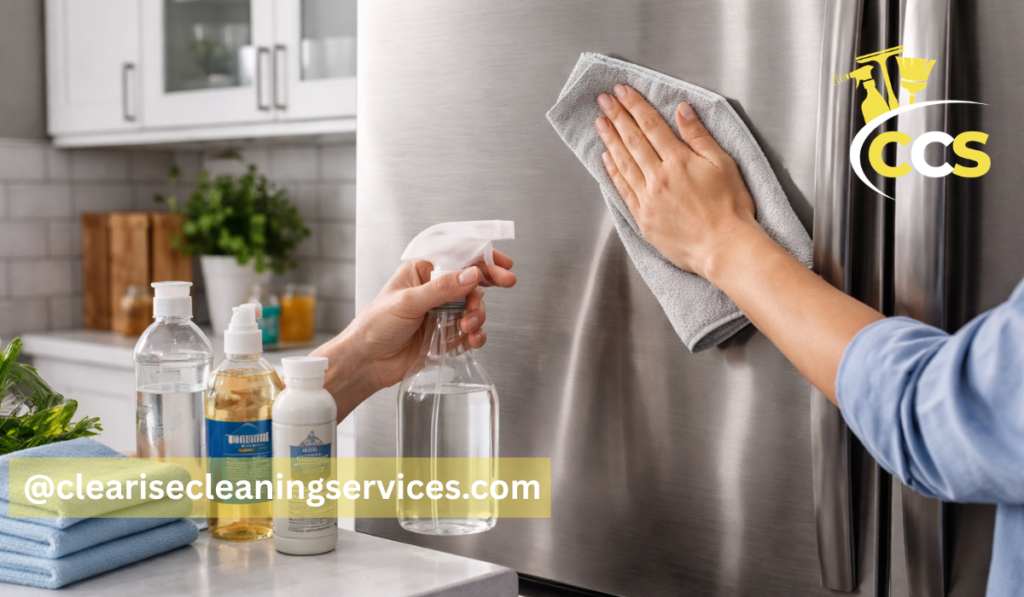
Next, apply your chosen cleaning solution. You can either spray it directly onto the appliance or onto your cloth. Applying it to the cloth often gives you better control and prevents excess liquid from dripping.
Once the surface is ready, begin wiping gently in the direction of the grain. This step is essential. Moving along the grain helps remove dirt from the tiny grooves and reduces the chance of streaks forming. Avoid circular motions or wiping against the grain, as this can spread residue unevenly.
After cleaning, use a clean, dry microfiber cloth to wipe the surface again. This step, known as buffing, is what creates a streak-free finish. It removes any remaining moisture and brings out the natural shine of the stainless steel.
Following this simple process consistently is one of the most effective ways to learn how to clean stainless steel appliances without leaving marks behind.
How to Remove Stubborn Stains, Grease, and Rust Spots
Sometimes, regular cleaning is not enough, especially when dealing with heavy grease or stubborn stains. In these cases, a slightly stronger approach is needed, but it should still be done carefully to avoid damage.
For thick grease buildup, applying a mild cleaner and letting it sit for a short time can help loosen the residue. After that, gently wipe it away using a microfiber cloth, always following the direction of the grain. Patience is important here, as scrubbing too hard can harm the surface.
Rust spots or mineral deposits may require a specialized stainless steel cleaner. These products are designed to target tough stains without scratching. However, they should be used according to instructions and not more often than necessary.
Even when dealing with stubborn areas, it is important to stay gentle. Using excessive force or harsh tools may remove the stain, but it can also leave permanent marks. A careful and controlled approach ensures that your appliances remain in good condition.
Polishing Stainless Steel for a Like-New Shine
After cleaning, polishing can help restore the original shine of stainless steel appliances. This step is optional but useful if you want a more polished and professional look.
Polishing is usually done with a small amount of oil or a dedicated stainless steel polish. The key is to use only a very small quantity. Apply it to a clean cloth and gently wipe it along the grain. This helps enhance the shine and creates a smooth, even finish.
It is important not to overuse oil or polish. Applying too much can leave a sticky layer that attracts dust and fingerprints, which defeats the purpose of cleaning. A light application is enough to achieve the desired effect.
When done correctly, polishing adds the final touch to your cleaning routine, making your appliances look almost new again.
Common Mistakes That Can Damage Stainless Steel
Many cleaning problems happen because of simple mistakes that are easy to avoid. One of the most common is using harsh chemicals like bleach or ammonia. These can damage the protective layer of stainless steel and cause discoloration.
Another mistake is using abrasive tools such as scouring pads or steel wool. While they may remove dirt quickly, they also create scratches that cannot be repaired easily.
Wiping against the grain is another frequent issue. This not only leaves streaks but also pushes dirt deeper into the surface, making it harder to clean properly.
Overusing oils or strong cleaners can also cause problems. Instead of improving the shine, they can leave residue that attracts more dirt over time.
Avoiding these mistakes is just as important as following the right cleaning steps. Small changes in your approach can make a big difference in the final result.
Simple Maintenance Tips to Keep Appliances Looking New
Keeping stainless steel appliances clean does not have to be a time-consuming task. With a few simple habits, you can maintain their appearance with minimal effort.
A quick daily wipe using a dry or slightly damp microfiber cloth can prevent fingerprints and smudges from building up. This small step helps keep the surface looking fresh and reduces the need for deep cleaning.
It is also helpful to clean spills and grease as soon as they happen. Fresh stains are much easier to remove than dried ones, which can require more effort and stronger cleaners.
Regular deep cleaning can be done once a week or as needed, depending on how often the appliances are used. This helps maintain both cleanliness and shine without letting dirt accumulate.
By staying consistent with these simple habits, you can keep your appliances looking new without spending too much time or effort.
Conclusion
Learning how to clean stainless steel appliances properly can make a noticeable difference in how your kitchen looks and feels. The key is to understand the surface, use the right tools, and follow simple techniques such as wiping with the grain and buffing the surface dry.
Consistency is just as important as technique. Regular cleaning and gentle care help prevent buildup, reduce streaks, and maintain the natural shine of stainless steel. By avoiding common mistakes and sticking to safe methods, you can protect your appliances from damage and keep them looking their best.
With the right approach, cleaning stainless steel becomes a quick and easy task rather than a frustrating one. Simple habits and proper care will ensure a long-lasting, streak-free shine that enhances the overall appearance of your kitchen.
FAQs
What Is The Best Thing To Clean Stainless Steel Appliances With?
A mixture of white vinegar and water or mild dish soap works best for regular cleaning. For tough stains, a stainless steel cleaner is more effective.
Why Do My Stainless Steel Appliances Still Look Streaky After Cleaning?
Streaks usually happen when you wipe against the grain or skip the drying step. Always buff with a dry microfiber cloth for a smooth finish.
Can I Use Vinegar On Stainless Steel Appliances?
Yes, vinegar is safe and effective for removing fingerprints and grease. Just make sure to wipe and dry properly afterward.
How Often Should I Clean Stainless Steel Appliances?
Light cleaning can be done daily or every few days, while deep cleaning should be done weekly or as needed.
What Should I Avoid When Cleaning Stainless Steel?
Avoid bleach, ammonia, and abrasive pads, as they can damage the surface and cause permanent scratches.
Disclaimer: This article is for informational purposes only. Always test cleaning products on a small, hidden area before full use. Follow manufacturer guidelines for your specific appliance to avoid damage.
Thanks for visiting Clearise Cleaning Services! Discover more helpful tips and expert cleaning insights by exploring our related categories.