Vinegar has been used as a natural cleaner for generations, mostly because it’s affordable, easy to find, and effective at cutting through everyday grime. Many people also like the idea of using it on wood floors because it feels safer than chemical-heavy cleaners, especially in homes with young children. But when it comes to mopping hardwood floors with vinegar, opinions are split.
Some cleaning experts say that a very diluted vinegar solution can be safe for certain sealed hardwood floors and may help remove dull buildup. At the same time, many flooring manufacturers warn that vinegar’s acidity can gradually weaken or dull a floor’s protective finish. This difference in opinion leaves many parents confused, especially when online tips and home hacks seem to contradict professional advice.
That’s why this guide is designed to give you a calm, clear explanation — the kind new parents need when they’re already juggling a lot. By the end, you’ll understand whether vinegar is right for your floor type, how long white vinegar might take to cause damage, what safer alternatives exist, and what is truly the best way to clean wood floors when you have babies, toddlers, or pets crawling around.
How Vinegar Interacts With Hardwood Floors – The Science and the Risk
Vinegar is a mild acid, and that’s the key detail that determines whether it helps or harms your hardwood floors. Most modern hardwood floors are coated with a polyurethane finish, which protects the wood and prefers cleaners that are close to pH-neutral. When an acidic solution like vinegar is used too often, it slowly breaks down this protective layer — even if the wood underneath remains untouched.
That’s why you’ll find mixed opinions online. Vinegar does cut grease, lift grime and deodorize surfaces without leaving strong chemical fumes behind. It’s also inexpensive, which makes it a popular DIY choice for many families. But flooring brands and professional cleaners often caution that repeated vinegar use can dull, cloud or etch the finish over time. This is especially true for older floors, waxed floors or wood that has not been properly sealed.
How Long Does White Vinegar Take to Damage Hardwood Floors?
There isn’t a single exact timeframe because the effect depends on:
- How strong the vinegar solution is
- How often it’s used
- Whether the floor is sealed or worn
- The age and type of finish
In most cases, vinegar doesn’t cause sudden, obvious damage after one cleaning. The risk comes from slow, repeated exposure. Expert advice consistently warns that vinegar’s acidity causes gradual, cumulative dulling, meaning the floor may look fine at first but lose shine over months or years of frequent use.
Is Mopping Hardwood Floors With Vinegar Safe in Your Home? A Parent Checklist
Before using vinegar on hardwood floors, it helps to go through a quick, practical checklist. This keeps your floors protected and ensures your cleaning routine stays safe for babies, toddlers and pets.
Quick Decision Checklist
Ask yourself these questions first:
- Is your floor sealed with a modern polyurethane finish, or is it waxed, oiled or older unfinished wood?
Vinegar behaves very differently depending on the type of finish. Sealed floors tolerate moisture better; waxed or oiled floors do not. - What does the flooring manufacturer recommend?
Many brands clearly state whether vinegar is safe, unsafe or discouraged for long-term use. - Do you have crawling babies, kids with allergies or pets that lick the floor?
In homes with little ones, choosing low-residue, low-acid cleaners is usually safer for delicate skin and air quality.
When Diluted Vinegar Can Be Considered (With Caution)
Vinegar may be acceptable in the following situations:
- Your hardwood floors are fully sealed with a modern polyurethane finish.
- You’re using it occasionally, not as a daily or weekly routine.
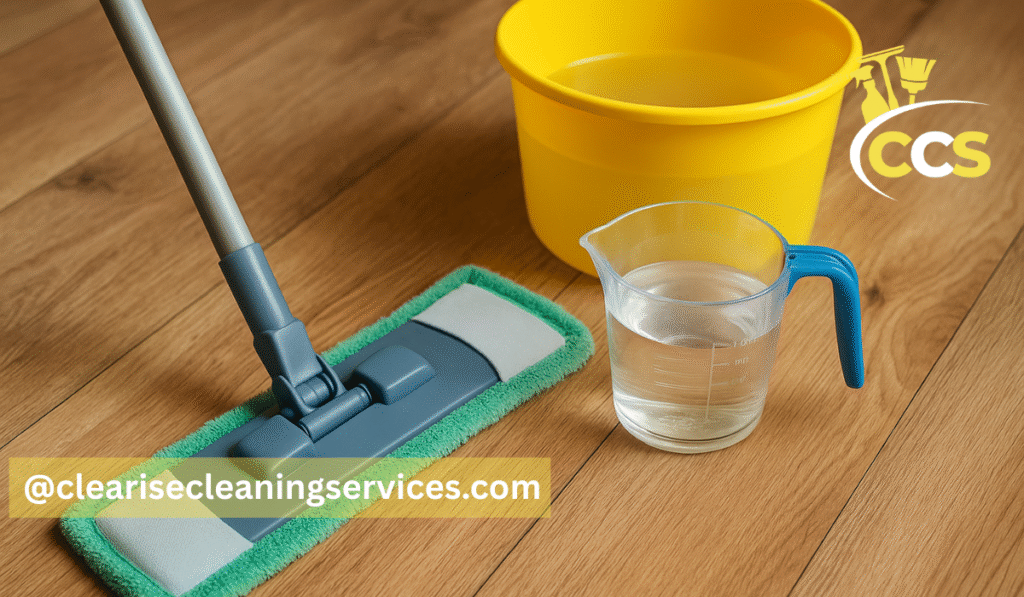
- The mixture is very diluted, typically a small amount of vinegar in a full bucket of warm water.
- You clean with a barely damp microfiber mop, never a wet or dripping mop.
This approach helps reduce the risk of dulling while still giving you a quick, budget-friendly cleaning option.
When You Should Avoid Vinegar Completely
In these situations, vinegar is not recommended at all:
- Waxed or oiled hardwood floors — vinegar breaks down these finishes quickly.
- Older or worn floors — even small amounts of moisture can seep through and damage the wood.
- Damaged polyurethane finish — scratches or thin spots expose the wood underneath.
- Any situation where flooring brands like Bona explicitly say: “Do not use vinegar.”
Using vinegar on these types of floors may lead to cloudiness, streaking, or long-term dullness that is expensive to reverse.
Extra Notes for Parents
- Diluted vinegar reduces slip risk, which is important for kids running around at home.
- It has no harsh chemical smell, making it easier on babies and toddlers with sensitivities.
- Always store your cleaning solution out of reach — even natural mixtures should be kept safely away from children.
This checklist gives you a simple, parent-friendly way to decide whether mopping hardwood floors with vinegar is right for your home.
How to Mop Hardwood Floors With Vinegar Safely (If Your Floor Is Compatible)
If your flooring type and manufacturer guidelines allow it, mopping hardwood floors with vinegar can be done safely — but only when you’re careful with how much you use and how you apply it. The goal is to clean the surface without weakening the finish or leaving excess moisture behind.
Correct Dilution for Mopping Hardwood Floors With Vinegar
The solution must be extremely mild. A stronger mix won’t clean better — it will only increase the risk of dulling the finish.
Safe dilution ratio:
- ½ cup of white vinegar
- 1 gallon of warm water
This creates a light, gentle mixture that lifts surface dirt without overwhelming the protective coating. Never use vinegar full strength on hardwood floors.
Step-by-Step Method for New Parents
Follow these steps for a safe and effective cleaning routine:
- Sweep or vacuum first
Remove dust, crumbs and grit with a soft-bristle broom or vacuum attachment. This prevents scratches during mopping. - Lightly mist or dip a microfiber mop
If dipping, wring it thoroughly until the mop is just damp — not wet. - Mop following the wood grain
Work in small sections so you can control moisture and avoid streaking. - Dry immediately
In areas where kids play or walk often, wipe with a clean microfiber towel right after mopping. This keeps the surface safe for tiny feet and reduces the chance of moisture damage.
Extra Safety Touches in Family Homes
A few extra habits make this method safer for homes with babies, toddlers and pets:
- Keep children and pets off the floor until it’s completely dry.
- Never pour the vinegar solution directly onto the floor.
- Avoid leaving standing puddles, which can seep into the wood and cause long-term damage.
- Store leftover cleaning mix in a safe, out-of-reach area.
With the right dilution and technique, parents can use vinegar as an occasional cleaning option while keeping floors — and little ones — protected.
Popular Vinegar Floor Hacks Online – What Experts Think
The internet is full of creative cleaning hacks, especially on social media and forums. Some of them sound convincing, but when it comes to hardwood floors — especially in homes with children — it’s important to understand the risks behind these viral mixtures. Here’s what experts say about the most common vinegar-based cleaning hacks.
Cleaning Wood Floors With Vinegar and Dawn
One popular DIY recipe combines vinegar + Dawn dish soap + warm water. People like it because:
- Vinegar helps break down mineral deposits
- Dawn lifts grease and sticky residue
- The mixture smells mild compared to commercial cleaners
But experts warn that using this on hardwood floors can backfire. Dawn can leave behind a slippery, cloudy film, especially if not rinsed well. Over time, this creates dull patches that are hard to remove without professional help. When you add vinegar into the mix too often, the acidity can slowly wear down the finish.
This hack may work for tile or laminate — but hardwood floors need gentler care.
Mopping Hardwood Floors With Vinegar and Baking Soda
Another viral idea is mixing vinegar with baking soda. But here’s the science:
- Vinegar is an acid.
- Baking soda is a base.
- When combined, they neutralize each other.
This means you lose most of the cleaning strength. What’s left behind is a gritty, powdery residue that can scratch wood if not cleaned thoroughly. On hardwood floors, this hack does more harm than good and offers no added benefit.
What People Say in “Vinegar on Hardwood Floors Reddit” Threads
Reddit discussions show a wide mix of real-world experiences:
- Some homeowners say very diluted vinegar works fine for occasional cleaning on their sealed floors.
- Others report that vinegar made their floors look dull, streaky or cloudy over time.
- Many users recommend switching to wood-specific cleaners, especially brands approved by flooring manufacturers.
Overall, even community discussions highlight that results vary based on floor type, finish quality and how often vinegar is used.
Safer Alternatives: What Is the Best Thing to Use to Clean Wood Floors
If you’re unsure about mopping hardwood floors with vinegar, you’re not alone. Many flooring professionals recommend using gentler, pH-neutral cleaners instead. These options protect the finish, avoid long-term dulling, and keep your home safe for babies, toddlers and pets. Here are the best alternatives — including store-bought cleaners, DIY recipes and when to call in professionals.
PH-Neutral Commercial Cleaners
Wood floors are finished with coatings that perform best with cleaners that are close to pH neutral (neither acidic nor alkaline). That’s why brands like Bona hardwood floor cleaner have become parent favorites. They offer:
- A formula designed specifically for sealed hardwood floors
- No acidic ingredients that can break down the finish
- Low-residue cleaning, safe for crawling babies
- A streak-free, natural-looking shine
Most flooring manufacturers — including companies that make polyurethane finishes — recommend wood-specific cleaners because they maintain the protective top layer rather than weakening it over time.
In short:
For regular cleaning, a pH-neutral hardwood floor cleaner is usually the safest long-term choice.
Homemade Wood Floor Cleaner Without Vinegar
If you prefer a natural or budget-friendly DIY option, you can make a gentle floor cleaner without vinegar. This keeps you away from acids while still giving the floor a clean, fresh surface.
Simple DIY recipe:
- 1 gallon of warm water
- 2–3 drops of gentle dish soap or castile soap
- Mix gently to avoid bubbles
Use a damp microfiber mop, never soaking wet. This mixture lifts dirt without damaging the finish or leaving cloudy streaks.
This option is great for parents who want a mild, kid-safe cleaner that works for everyday maintenance.
When to Use Deep Cleaning Products or Pro Services
Sometimes the issue isn’t surface dirt — it’s deeper buildup. In that case, stronger DIY solutions or vinegar aren’t the answer.
Consider deeper cleaning methods when you notice:
- Sticky buildup that doesn’t go away
- Layers of old wax or polish
- Scratches, dullness or worn finish
- Floors that look aged even after cleaning
For these situations, you have two smart options:
- Use hardwood-floor-specific deep cleaners
These products break down residues without harming the finish. They should always be used according to the manufacturer’s instructions. - Call a professional floor cleaning or refinishing service
Professionals can:
- Remove old wax safely
- Buff and re-coat the finish
- Restore shine without sanding
- Identify hidden water damage
This is especially helpful in homes with young children since pros ensure the floors remain safe, smooth and easy to clean afterward.
How To Deep Clean Wooden Floors Safely In Family Homes
When you’re trying to figure out how to deep clean wooden floors, the goal is to remove hidden dirt and buildup without damaging the finish or making the surface unsafe for little hands and feet. In family homes, that means gentle methods, low-residue products and a bit of patience.
Regular Maintenance Before Any Wet Mopping
Deep cleaning should never be the first step. You’ll get better results (and fewer scratches) if you stay on top of simple daily or weekly care:
- Dust or sweep frequently with a soft-bristle broom.
- Use a vacuum with a wood-safe head (no rotating beater bar on bare floors).
- Pay extra attention to high-traffic areas like hallways, play zones and dining spaces.
By removing grit and crumbs first, you prevent them from acting like sandpaper when you mop.
Step-by-Step Deep Clean Routine
Here’s a safe, practical routine you can follow when your floors need more than a quick wipe:
- Spot-treat sticky or dirty areas
- Use a damp microfiber cloth and a small amount of wood-safe cleaner.
- For dried-on food or drink, hold the damp cloth on the spot for a few seconds, then gently wipe.
- Choose your cleaner wisely
- If your floor and manufacturer allow it, you may use a mild vinegar solution very occasionally.
- Otherwise, go with a wood-specific cleaner such as Bona or another pH-neutral product.
- Mop with a damp (not wet) microfiber mop
- Lightly spray the cleaner or dip and wring out the mop until it’s just damp.
- Work in small sections, following the wood grain.
- Dry as you go
- Use a clean, dry microfiber towel to wipe each section, especially in kids’ play areas and near cribs or couches.
This method removes deeper grime while still respecting the finish and keeping the floor safe for family life.
Extra Care When You Have Crawling Babies or Toddlers
If little ones spend a lot of time on the floor, add these extra steps:
- Choose low-residue products that won’t leave a film on the surface.
- After deep cleaning, you can go over high-contact areas once more with a slightly damp cloth and plain water, then dry.
- Keep the room well-ventilated while cleaning so any mild smells or moisture clear quickly.
The idea is simple: when kids touch, crawl and sometimes even put toys from the floor into their mouths, you want the surface to be clean but not coated in harsh chemicals.
Optional Note: Gentle Natural Methods
Some experts and homeowners mention other gentle ideas — for example, very diluted black tea on certain finishes to revive warmth and shine. If you’re curious about these methods:
- Always read your floor manufacturer’s care guide first.
- Test in a small, hidden area before using it on a large section.
- Stop immediately if you see any cloudiness, streaking or dull patches.
Deep cleaning wooden floors in a family home is not about strong chemicals or harsh scrubbing. It’s about consistent care, gentle products and safe routines that keep both your floors and your children protected.
What You Should Not Clean Hardwood Floors With
When it comes to hardwood floors, the wrong cleaner can cause permanent damage. Knowing what you should not clean hardwood floors with is just as important as choosing the right products. Here’s a clear list of what to avoid to keep your floors — and your family — safe.
Avoid These Products on Hardwood Floors
- Full-strength vinegar or frequent mopping hardwood floors with vinegar
The acidity can slowly eat away at the floor’s protective finish, especially on older, waxed or sensitive surfaces. - Bleach, ammonia, hydrogen peroxide and strong multi-surface cleaners
These are too harsh for wood and can cause discoloration, streaking or chemical burns on the finish. - Oil soaps, wax (on polyurethane floors), and abrasive scrubbers like steel wool
Oil soaps can leave a sticky residue, wax causes uneven buildup, and abrasive tools can scratch the finish. - Steam mops or soaking-wet string mops
Excess moisture can seep between boards, causing swelling, warping or long-term water damage.
For Parents: Why Avoiding These Products Matters
Using the wrong cleaner doesn’t just harm your floors — it affects your child’s environment:
- Harsh chemicals leave behind strong fumes that can irritate babies, toddlers and pets.
- Residues from oil soaps or wax can create slippery surfaces, increasing fall risks.
- Deep damage to the finish leads to expensive repairs, which is the last thing busy parents need.
Final Parent-Friendly Summary
Many parents like the idea of natural cleaning, which is why mopping hardwood floors with vinegar is so popular online. But hardwood floors are delicate — and what matters most is your floor type, the condition of the finish and the manufacturer’s specific recommendations.
You have several safe choices:
- Use vinegar rarely and only in a very diluted form if your floors are compatible
- Choose a trusted cleaner like Bona hardwood floor cleaner for routine care
- Try a homemade wood floor cleaner without vinegar for a gentle alternative
With the right routine, you can keep your floors clean, smooth and safe for crawling babies, curious toddlers and playful pets — all without damaging your hardwood. A little care goes a long way, and your floors will reward you with years of warmth, beauty and comfort.
FAQ and Final Thoughts for New Parents
Is Mopping Hardwood Floors With Vinegar Always Bad?
Not always — but it’s not always ideal either.
Vinegar can be safe on certain sealed hardwood floors when used in a very diluted mixture and only on rare occasions. However, many modern flooring experts and manufacturers still recommend pH-neutral, wood-specific cleaners because they protect the finish longer. For families, that means less risk and less stress in the long run.
What Is The Safest Routine If I Have Kids And Pets?
The safest cleaning routine for families is simple:
- Dust or sweep daily
- Spot clean sticky areas with a damp cloth
- Use a pH-neutral hardwood floor cleaner for regular mopping
- Keep every cleaning solution — even mild ones — locked away from children and pets
This keeps floors clean without exposing little ones to unnecessary residues or harsh chemicals.
9.3 Can I Ever Deep Clean With Vinegar If I Already Used Bona Or Other Products?
Yes, but with caution.
Before switching between products, always:
- Check your floor manufacturer’s care guide
- Perform a small patch test in a hidden area
If the finish reacts poorly, stop immediately and stick to wood-approved cleaners. Consistency helps maintain shine and prevents chemical conflicts that can dull the surface.
Disclaimer: This article is for general informational purposes only. Always follow your flooring manufacturer’s care guidelines before using vinegar or any cleaning product. Test cleaners in a small, hidden area first. Keep all cleaning solutions out of reach of children and pets.
Thanks for visiting Clearise Cleaning Services! Discover more helpful tips and expert cleaning insights by exploring our related categories.