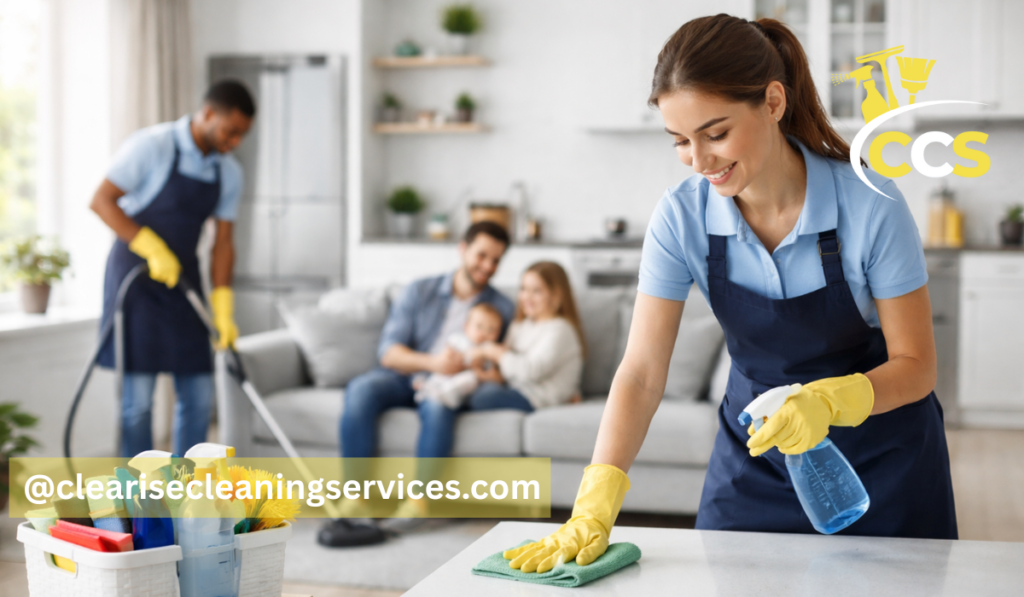
Becoming a confirming new parent changes everything, including what “a clean home” even means. Days are shaped around feeding schedules, short naps, and unexpected visitors, all while sleep is limited and energy runs low. Add concerns about germs, dust, and clutter building up faster than usual, and even simple household tasks can start to feel overwhelming.
This is where a professional house cleaning service can make a real difference. Instead of spending your limited time scrubbing bathrooms or chasing crumbs on the floor, you get back hours each week and a reliable level of cleanliness you can trust. A well-planned cleaning routine helps maintain basic hygiene, reduces stress, and takes a big mental load off your plate during an already demanding phase of life.
By the end of this guide, you will clearly understand what type of cleaning service makes sense for new parents, how much a professional house cleaning service typically costs, and what steps help keep your home clean and baby-safe without adding extra pressure to your day.
Quick “Book This” Guide for New Parents (30-second decision)
When you are exhausted and short on time, choosing the right cleaning option quickly matters. This simple guide helps new parents decide what to book without overthinking it.
If you’re 0–12 weeks postpartum
Best choice: a “reset” deep clean plus a light maintenance plan
The first few weeks after birth are usually the most overwhelming. A deep clean helps reset the home by removing built-up dust, grime, and bacteria, especially in kitchens, bathrooms, and floors. After that, a light weekly or bi-weekly visit keeps things under control without constant effort from you.
If you’re hosting family or friends (or a baby celebration)
Best choice: a one-time cleaning focused on key areas
When guests are coming, focus on what people notice most. Bathrooms, kitchen surfaces, floors, and common living areas should be the priority. A one-time professional house cleaning service can make the home feel fresh and welcoming without committing to an ongoing plan.
If your place is small or you’re renting
Best choice: apartment cleaning service DC with smart add-ons
Small apartments still collect mess quickly, especially with a baby. An apartment cleaning service DC works best when paired with add-ons like inside the fridge or oven. A clear checklist ensures cleaners focus on the most important areas rather than spreading time too thin.
If someone in the home is sick
Best choice: targeted disinfecting of high-touch areas
You do not need heavy chemicals everywhere. Focus on door handles, light switches, bathroom fixtures, kitchen counters, and shared surfaces. A professional house cleaning service can handle targeted disinfecting safely while avoiding unnecessary chemical exposure in baby areas.
What a Professional House Cleaning Service Typically Includes (and what “deep cleaning” really means)
Understanding what is included helps avoid confusion and disappointment. Not all cleaning services are the same, and “deep cleaning” often means different things to different companies.
Standard cleaning (maintenance)
This is the most common service for busy families. It usually includes dusting, vacuuming, mopping floors, cleaning bathrooms, wiping kitchen surfaces, taking out trash, and a light tidy of main living spaces. Standard cleaning works best on a weekly or bi-weekly schedule to maintain cleanliness over time.
Deep cleaning services DC (reset clean)
Deep cleaning services DC focus on areas that are skipped during regular visits. This includes built-up grime, baseboards, edges, corners, high and low surfaces, and extra attention to bathrooms and kitchens. Before booking, always clarify what is included and which items are considered add-ons so there are no surprises.
Move-in / move-out cleaning
This service is designed for empty or nearly empty homes. It often includes cleaning inside cabinets, drawers, and appliances, with walls or heavy stains sometimes offered as optional extras. It is ideal when moving with a newborn or preparing a space before settling in.
Apartment and condo cleaning (DC-specific reality)
In Washington, DC, apartment and condo cleaning comes with extra factors. Elevator access, parking rules, building check-in procedures, and shorter service windows can all affect cleaning time. Sharing these details in advance helps the professional house cleaning service work more efficiently and deliver better results.
New-Parent Priorities Most Cleaning Pages Don’t Cover (your unfair advantage for ranking)
Most cleaning guides talk about “sparkling kitchens” and “fresh bathrooms.” New parents need something more practical: a home that feels safe for a baby, calm for tired adults, and easy to maintain without extra stress. These priorities are often missing on typical cleaning service pages, which is exactly why adding them makes your content more helpful and more likely to rank.
“Baby-zone” cleaning: what actually matters
When a baby is in the house, cleanliness is less about perfect looks and more about the areas your baby will touch, crawl on, or put their hands on and then into their mouth. That is why a “baby-zone” approach makes sense.
Focus your attention on:
- Floors, because crawling and tummy time turn the floor into a daily living space
- Low shelves and lower cabinet faces, where little hands reach first
- Play mats and activity areas, which collect dust, crumbs, and pet hair quickly
- Crib exterior rails, especially if your baby is starting to chew or grip the rails
- Changing area surfaces, where spills happen and germs spread fast
Also, ask your cleaner to pay extra attention to high-touch items that adults use constantly:
- Doorknobs
- Light switches
- Fridge handles
- Faucet handles
- Microwave buttons and cabinet pulls
These surfaces quietly collect germs and are easy to miss during a quick clean, but they matter a lot in a household with a newborn.
Fragrance and residue control (the hidden trigger)
Many families do not realize this until after a cleaning, but strong scents and leftover product residue can make a home feel uncomfortable, especially for babies and postpartum parents who are more sensitive to smells.
A simple solution is to ask for:
- Low-odor or fragrance-free cleaning options
- A rinse or wipe-down approach on surfaces your baby touches regularly (like play areas and changing stations)
This keeps surfaces clean without leaving a film or strong smell behind. It also gives you peace of mind that your baby’s “touch zones” are not covered in leftover cleaner.
Nap-friendly scheduling plus a noise plan
New parents live by nap windows, and a cleaning appointment can accidentally disrupt the whole day if it is not planned well. The best professional house cleaning service providers will work with you on timing and room order, but you can make it even smoother by having a simple noise plan.
Here are two strategies that work in real life:
- Decide if vacuuming should happen first or last depending on nap timing
- Set a room order based on your baby’s routine, such as living areas first, nursery last
A very helpful method is the “one quiet room” strategy:
- Keep one room calm and closed (often the nursery or bedroom)
- The cleaner does that room at the end, or skips it if the baby is sleeping there
This small adjustment can make cleaning day feel manageable instead of stressful.
Postpartum reality: reduce decision fatigue
One of the biggest struggles for new parents is not the cleaning itself. It is the mental load. Explaining priorities every time, deciding what matters most, and remembering what was missed takes energy you do not have.
The easiest fix is to create one default cleaning checklist you can reuse every visit. Keep it short, clear, and repeatable. Once you have a “standard plan,” you stop managing the service each time and the cleaner can deliver consistent results without constant back-and-forth.
How to Choose the Best Cleaning Services DC Without Getting Burned
Washington, DC has many options, and that is the problem. You can find everything from premium teams to rushed, inconsistent services. The goal is to choose a cleaner you can trust, especially when you have a baby at home and you do not have time for trial and error.
The trust checklist (EEAT-style selection criteria)
If you want a trustworthy service, start with the basics that signal professionalism and safety. A reliable company should be able to answer these clearly:
- Do you do background checks or vetting for cleaners?
- Are you insured and bonded?
- Do you provide training or quality checks?
- Do you use a clear checklist and defined scope?
- Do you have a satisfaction policy (and how does it work)?
For new parents, this matters because you are letting someone into your home and around baby items. Clear systems and accountability usually lead to better results.
The “scope clarity” checklist (avoids surprises)
Many bad experiences happen because the customer assumed something was included, and the company assumed it was not. A quick scope conversation before booking prevents most issues.
Ask what they will not do, such as:
- Mold remediation
- Heavy lifting or moving furniture
- Hazardous waste cleanup
- Pest or biohazard situations
Then confirm what counts as add-ons, which often include:
- Inside oven
- Inside fridge
- Inside cabinets
- Interior windows
- Baseboards or blinds (sometimes included only in deep cleans)
When both sides agree on the scope, you get better work and fewer surprises on the bill.
Consistency vs marketplace flexibility
In DC, you will see two common models.
1) Company team model (cleaning company)
- Pros: training, insurance, consistent checklist, replacements if someone is sick
- Cons: sometimes higher cost, less flexibility on specific cleaner requests
2) Independent cleaner platforms or marketplace services
- Pros: flexible scheduling, you might find a great individual cleaner
- Cons: quality can vary a lot, and policies/coverage may be unclear depending on the platform
For new parents, consistency often matters more than finding the cheapest option. If you want less stress, a team model with clear policies usually feels more reliable.
The review-reading method that actually works
Most people skim star ratings. That is not enough. Instead, search reviews for details that match your life stage.
Look for reviews that mention:
- “baby”
- “postpartum”
- “thorough”
- “time on site”
- “communication”
- “consistent”
Also watch for red flags, such as:
- Cleaners rushing in and out
- Vague pricing or surprise fees
- Complaints about missed corners, skipped rooms, or careless handling of items
- Poor communication when rescheduling is needed
This method takes a few extra minutes, but it saves you from booking the wrong service and having to start over.
Professional House Cleaning Service Cost (Washington, DC + what changes the price)
Typical pricing ranges you’ll see in DC
In Washington, DC, pricing usually lands in a few common patterns:
- Typical per-visit range: many households pay around $129 to $237, with an average near $183 for a standard professional cleaning visit.
- Starting prices can be lower (especially for smaller apartments or limited-scope cleans), with some DC listings showing starting costs around $75, but the final price rises based on size, condition, and add-ons.
- If a company quotes by the hour, you’ll often see about $40–$55/hour as a general U.S. benchmark, and many one-time visits nationally land around $174–$256 on average.
For deep cleaning services DC, pricing is typically higher than maintenance cleaning because it takes longer and includes detail work. Nationally, deep cleans commonly land around $300 for a one-time job, and may be priced by hour, square foot, or flat rate.
The 7 biggest pricing drivers (simple explanation)
Here’s what usually changes your professional house cleaning service cost in DC:
- Home size (more rooms and bathrooms = more time).
- Home condition (a “reset” clean costs more than a well-maintained home).
- Service type (standard vs. deep clean vs. move-out). Deep cleaning and move-out cleaning are priced higher because they’re more detailed.
- Frequency (weekly/bi-weekly often costs less per visit than one-time).
- Pets (hair, dander, litter areas, and extra vacuum time).
- Add-ons (inside fridge, inside oven, inside cabinets, interior windows, baseboards, blinds).
- Parking/building access (DC rowhomes, permit parking, condos with elevator rules, concierge check-in, carrying supplies up stairs).
How to estimate cost before you call (a “good / better / best” model for new parents)
This quick budgeting model helps you plan without guesswork:
- Good (small reset + essentials): Standard cleaning focused on bathrooms, kitchen, floors, and the main living area. Ideal if you already keep things fairly tidy, but you’re exhausted.
- Better (new-parent sweet spot): One deep clean “reset” first, then switch to bi-weekly maintenance. This is often the best value because it prevents grime from building up again.
- Best (lowest mental load): Deep clean reset + weekly lighter visits for 6–12 weeks (newborn phase), then step down to bi-weekly once routines stabilize.
A helpful rule: if you feel like the home needs “catch-up,” start with deep cleaning services DC first. If it already feels mostly under control, start with standard cleaning and add one or two targeted add-ons.
Transparent wording to include in your quote request
You can mention cost concerns without sounding like you only care about the cheapest option. Here are a few lines you can copy-paste:
- “I’m comparing a few options and want a clear quote. Can you confirm what’s included in a standard clean vs. a deep clean?”
- “We’re new parents, so we’d like special focus on bathrooms, kitchen, floors, and high-touch areas. What would that cost for our home size?”
- “Do you offer a first-visit deep clean and then a maintenance plan? If yes, what’s the price difference between weekly and bi-weekly?”
- “Can you list your add-on prices (inside fridge, inside oven, inside cabinets) so we can choose based on budget?”
This keeps the tone professional and shows you value clarity and quality, not just a low price.
Washington, DC + Georgetown: Local Intent Sections (to capture your extra keywords naturally)
Professional house cleaning service near Georgetown, Washington
If you’re searching for a professional house cleaning service near Georgetown, Washington, it helps to plan around the neighborhood realities:
- Tight parking and limited space can affect arrival time and carrying supplies.
- Older rowhomes often have more stairs, more trim detail, and dust that collects in corners and baseboards.
- Historic finishes (old wood, delicate surfaces, older tile/grout) benefit from gentle methods instead of harsh scrubbing.
- If you have pets, Georgetown homes and rugs can hold onto hair fast, so a “pet zones” checklist helps.
For Georgetown especially, checklists matter because older homes often have more molding, trim, baseboards, and ledges where dust builds up. A clear scope helps the cleaner focus on what actually changes how the home feels.
House cleaning services Washington, DC: what to ask because it’s DC
When comparing house cleaning services Washington, DC, ask questions that match DC living:
- Arrival windows: “Do you provide a specific time window or just ‘morning/afternoon’?”
- Parking instructions: “Do you need a guest parking spot, loading zone, or permit guidance?”
- Building coordination: “If I’m in a condo, can you work with the concierge or callbox?”
- Supplies policy: “Do you bring your own supplies and vacuum, or should we provide anything?”
- Fragrance preference: “Can you use low-odor or fragrance-free products in baby areas?”
These small questions prevent the most common DC problems: late arrivals, access delays, and mismatched expectations.
Apartment cleaning service DC: “small space” does not mean “fast”
A apartment cleaning service DC visit can still take real time because the hardest rooms are the same ones in any home:
- Kitchens and bathrooms are detail-heavy, even in a studio.
- Tight layouts can slow movement, especially if there’s baby gear, bottles, and laundry baskets.
If you want the best results, use a simple priority list:
- Bathroom
- Kitchen
- Floors in baby and main living zones
- High-touch areas (switches, handles)
Then add fridge/oven only if budget and time allow.
“Best cleaning services DC” is subjective — define “best” for a new-parent home
When people search best cleaning services DC, they often mean different things. For new parents, “best” usually means:
- Reliable and consistent (same checklist, similar results each visit)
- Safe and respectful (careful around baby items, clear product choices)
- Easy to manage (simple booking, clear communication, fair policies)
- Worth the money, not necessarily the cheapest
If you want to include “dc cleaning service reddit” style expectations in your decision, the big theme is usually the same: people are happiest when the service is consistent and the scope is clear, not when it’s just low-cost.
The Baby-Safe Cleaning Framework (trustworthy, non-alarmist)
When you have a newborn, it’s normal to think “everything must be disinfected.” The truth is simpler and less stressful. A baby-safe home is mostly about smart cleaning habits, targeted disinfecting when it truly matters, and avoiding harsh chemical use in places your baby touches all the time.
Cleaning vs disinfecting (most people mix these up)
Cleaning is the step that removes dirt, crumbs, dust, and many germs by physically wiping and washing. This alone reduces most everyday risk because germs often leave with the grime.
Disinfecting is when you use a product designed to kill germs on a surface. It can be helpful, but it is not needed on every surface every day. Disinfecting becomes more useful after illness, when dealing with bathroom-related contamination, or when multiple people are touching the same high-contact areas.
A simple way to think about it is this:
- If it looks dirty or sticky, clean first.
- If someone is sick or you are handling raw food mess, clean first, then disinfect.
This approach keeps your home safe without turning cleaning into a chemical-heavy routine.
What to disinfect when you have a newborn
For most newborn households, disinfecting should be targeted, not whole-house. Focus on:
High-touch points
- Door handles and knobs
- Light switches
- Fridge handles
- Faucet handles
- Remote controls and phone screens
- Cabinet pulls and microwave buttons
Kitchen and bathroom surfaces
- Kitchen counters after raw meat handling
- Sink and faucet area
- Bathroom toilet handle/seat area
- Bathroom sink counter and faucet
- Diaper changing surface (especially after a leak)
Sick-room strategy (when someone has a cold or flu)
If someone in the home is sick, keep it simple:
- Choose one “sick zone” room if possible
- Disinfect high-touch surfaces in that room daily
- Wash bedding and towels more often
- Avoid spraying chemicals in the air or on soft baby items
This reduces spread without overdoing it. The goal is “clean enough to be safe,” not “sterile like a hospital.”
Product safety basics you can request (without micromanaging)
You do not need to control every product your cleaner uses, but you can request a few common-sense practices that protect your baby and keep the home comfortable.
Ask for:
- Ventilation: windows cracked open or fans used when stronger products are needed
- Dwell time awareness: disinfectants must sit for a specific time to work; rushing can leave residue and reduce effectiveness
- No mixing chemicals: especially bleach with ammonia or vinegar, which can create harmful fumes
- Baby items separation: cleaners should avoid spraying directly on toys, pacifiers, bottles, breast pump parts, and feeding gear
- Fragrance control: low-odor or fragrance-free products in baby zones
These requests are normal and professional cleaners usually respect them. It also helps the cleaning feel safer and more predictable.
Your “First Visit” Game Plan (so the cleaner does the maximum in the same hours)
A first visit is your best chance to get a strong reset. The goal is not to impress the cleaner. The goal is to guide their time toward what matters most to you, especially when you are tired and juggling baby routines.
The 15-minute prep that pays off
You do not need to “pre-clean,” but a quick prep helps the cleaner spend more time cleaning and less time moving things around.
In 15 minutes, try to:
- Clear countertops as much as possible (especially kitchen and bathroom)
- Pick up clothes, bottles, and random items from floors and beds
- Put toys in one bin or basket (even a laundry basket works)
- Define any no-go rooms (nursery during nap, your bedroom if you need rest)
- Secure pets if they get anxious or follow cleaners around
- Leave a small note about your top priorities
This prep is not about perfection. It’s about saving paid time.
The priority list for exhausted parents
When you have limited hours booked, you want “high impact” cleaning first. Here’s a helpful way to split priorities:
Must-do (highest impact)
- Bathrooms (toilet, sink, shower/tub, floors)
- Kitchen surfaces and sink area
- Floors in main living areas and baby zones
- High-touch points (handles, switches, faucets)
Nice-to-have (if time allows)
- Baseboards and door frames
- Blinds or detailed dusting
- Inside fridge, inside oven
- Inside cabinets
- Interior windows
If you are booking deep cleaning services DC for a first reset, push the cleaner toward corners, baseboards, and detail work. If you are booking maintenance, prioritize bathrooms, kitchen, and floors.
The communication script (copy/paste)
Here’s a short message you can send before the visit. It sets expectations clearly without sounding demanding:
“Hi! We’re new parents, so thank you for helping us get the home in a good place. Our top priorities are bathrooms, kitchen, floors (especially in baby areas), and high-touch surfaces like handles and switches. We prefer low-odor/fragrance-free products in baby zones. Please avoid spraying directly on baby items (toys, bottles, feeding gear). Baby usually naps from __ to __, so if possible we’d like the nursery/bedroom kept quiet during that time. Thank you!”
This message saves you from explaining everything while holding a baby.
Deep Cleaning Services DC: A Room-by-Room “Reset Clean” Checklist (outline-level)
This is the kind of checklist that helps you understand what a deep clean should cover. It also helps you compare services fairly because you can ask, “Do you include these items in your deep cleaning services DC package?”
Kitchen reset (grease, sinks, handles, high-touch)
- Degrease around stove and backsplash (surface-level unless add-on)
- Clean countertops and sanitize sink area
- Wipe cabinet faces and handles (high-touch)
- Clean microwave interior (often included)
- Spot-clean visible fingerprints and splatters
- Add-on options: inside oven, inside fridge, inside cabinets
Bathrooms (soap scum, grout lines, fixtures, mirrors)
- Remove soap scum on tub/shower walls and doors
- Clean grout lines where buildup is visible
- Disinfect toilet, handle area, and surrounding surfaces
- Polish fixtures and clean mirrors
- Mop floors and detail edges
Bedrooms (dust zones, under-bed edges, linens plan)
- Dust reachable surfaces and nightstands
- Vacuum/mop floors including edges
- Light organization of obvious clutter (if agreed)
- Under-bed edges if accessible
- Linens plan: confirm whether sheet changes are included or extra
Nursery plus baby gear zone (low surfaces, floors, safe wipe-down approach)
- Focus on low shelves, changing station surfaces, and floor cleanliness
- Wipe crib exterior rails with a safe, low-residue approach (no heavy fragrance)
- Avoid spraying directly on baby items
- Vacuum carefully around nursery corners where dust collects
Living areas (crumb zones, upholstery vacuum, entryway dirt control)
- Target crumb zones (sofas, under cushions if requested)
- Dust surfaces and wipe high-touch items
- Entryway: the “dirt funnel” of most homes, especially in DC
- Vacuum rugs thoroughly, especially if baby is doing tummy time nearby
Floors (what to do for hardwood vs tile vs carpet)
- Hardwood: vacuum first, then damp mop with a gentle cleaner to avoid streaks and residue
- Tile: focus on edges and corners where grime builds, plus grout attention in bathrooms
- Carpet: thorough vacuum with extra passes in high-traffic areas; consider periodic professional carpet cleaning if stains or odors build up
This room-by-room breakdown matches what many people expect from a deep clean, but it also adds the new-parent focus that many generic cleaning pages leave out.
Add-Ons That Actually Matter for New Parents (uncommon but high-value)
Most cleaning companies offer a long list of extras. New parents don’t need all of them. The goal is to pick add-ons that remove the biggest stress points, reduce germs where it matters, and save you time in the exact places you’re already overwhelmed.
Inside fridge plus inside oven (when it’s worth it)
Inside the fridge is worth it when:
- You’ve had lots of quick meals, takeout, and half-used containers lately
- Milk spills, formula drips, or old leftovers are building up
- You are constantly opening the fridge with one hand while holding the baby
A clean fridge makes daily life easier because you can see food fast, avoid smells, and reduce the “what’s leaking in here?” surprise.
Inside the oven is worth it when:
- You rely on sheet-pan meals or quick baked foods
- You notice smoke or smells when preheating
- Grease buildup makes you avoid using the oven
If your oven is rarely used, you can skip it and put that budget toward bathrooms, floors, or a fridge clean instead.
A simple new-parent rule: choose inside fridge more often than inside oven, unless you cook daily.
Laundry reset: bedding plus towels rotation (if offered)
Not all cleaners offer laundry help, but when they do, it can be a huge relief during the newborn stage.
A “laundry reset” add-on usually means:
- Stripping the bed and putting on clean sheets
- Rotating towels and bath mats
- Starting one load and moving it through the cycle (if time allows)
This matters because bedding and towels quietly collect sweat, spit-up, and moisture. Fresh linens also make the home feel cleaner even if you are too tired to do anything else.
If you choose this add-on, keep it simple:
- Leave clean sheets and towels in one easy-to-find spot
- Use one consistent set so the cleaner doesn’t have to hunt
- Tell them exactly what you want changed (master bed only, or all beds)
Bottle-feeding station reset (sink plus drying rack zone)
This is one of the most practical add-ons for new parents, and it’s rarely mentioned on generic cleaning pages.
A bottle-feeding station reset focuses on:
- Cleaning the sink and faucet area thoroughly
- Wiping the counter space around bottle prep
- Cleaning and drying the bottle drying rack area
- Disinfecting high-touch spots like soap pumps and handles
Important note: professional cleaners should not wash bottle parts or anything that needs food-safe handling unless your service specifically includes it and you trust their process. But keeping the sink and prep area clean reduces smells, sticky buildup, and stress.
If you’re breastfeeding, the same concept applies to pump-parts zones, storage containers, and the counter area you use most.
Post-guest recovery clean (fast turnaround plan)
Visitors can be helpful, but they also bring clutter and extra mess. A post-guest recovery clean is a smart one-time add-on that resets the home quickly after family leaves.
This add-on is worth it when:
- You’ve had overnight guests using bathrooms
- The kitchen has been heavily used
- Floors and living areas feel “lived in” fast
A good post-guest clean should prioritize:
- Bathrooms first
- Kitchen surfaces and sink
- Floors in common areas
- Trash, recycling, and quick tidy of visible clutter zones
This gives you your home back without spending days catching up.
“DC Cleaning Service Reddit” Style Advice (without the chaos)
People often search “dc cleaning service reddit” because they want real, unfiltered experiences. The comments can be helpful, but they can also be messy and inconsistent. Here’s a clear summary of what people usually complain about, what they praise, and how you can use that advice without getting stuck in internet noise.
What people usually complain about (and how to avoid it)
1) Pricing surprises
- Problem: you think you booked one thing, but add-ons appear later
- Fix: ask for a written list of what’s included and the price for each add-on before booking
2) Rushed cleans
- Problem: cleaners move too fast and miss corners, edges, or details
- Fix: ask how long they expect the job to take for your home size, and confirm the number of cleaners coming
3) Inconsistency
- Problem: the first clean is great, then results drop
- Fix: choose a service with a repeatable checklist and quality control, and ask if you can request the same team
4) Unclear scope
- Problem: you assumed baseboards or inside appliances were included, but they weren’t
- Fix: confirm scope in plain language: “Do you clean baseboards in standard cleaning, or only deep cleaning?”
These issues are common, but they’re also easy to prevent with a few direct questions.
What people praise (green flags)
When customers love a service, the positive reviews usually sound similar. Look for:
- A consistent team or consistent quality even if the team changes
- A clear checklist that matches what you care about
- Easy rescheduling, especially important for parents dealing with sick days or unpredictable weeks
- Respectful communication and careful handling of your home and personal items
- They don’t need managing every time because they remember preferences and priorities
For new parents, the best service is often the one that makes your life easier, not the one that promises the most.
How to sanity-check recommendations
Whether the recommendation comes from Reddit, a neighbor, or a local group chat, use this quick checklist before you trust it:
Ask:
- “What did you pay?”
- “How big is your home and how many bathrooms?”
- “Was it a one-time clean or recurring?”
- “What was included, and what cost extra?”
- “How long were they there and how many cleaners came?”
This turns vague praise into real, comparable info. It also helps you estimate what a similar professional house cleaning service would cost for your home in Washington, DC.
Spotlight Examples (to capture brand and keyword variations naturally)
This section helps you naturally include brand-style searches and comparison intent. The goal is not to promote any single company. It’s to teach readers what to look for so they can choose confidently, whether they’re considering a local provider, a recommendation, or a name they saw online.
E&G cleaning DC: what to look for on any company’s “services” page
If someone searches “e&g cleaning dc” or any similar brand name, they usually want fast proof that the company is legitimate and reliable. The “services” page should answer the practical questions clearly, not hide them.
Here’s what to look for:
- A satisfaction policy: What happens if something is missed? Do they re-clean? Is there a time window to report issues?
- Checklist clarity: Does the company explain what is included in standard cleaning versus deep cleaning?
- Clear exclusions: Do they state what they do not handle, such as mold, biohazards, heavy lifting, or pest cleanup?
- Transparent add-ons: Are extras listed with pricing or at least clearly described, like inside fridge, inside oven, inside cabinets, windows, baseboards, blinds?
If a services page is vague, that often leads to vague results. New parents usually do better with a professional house cleaning service that explains scope clearly and has simple, consistent policies.
Professional apartment cleaning: the checklist that keeps small homes feeling big
When you book professional apartment cleaning, the goal is not just cleanliness. It’s making the space feel calmer and more open. Small homes feel messy faster, especially with baby gear, bottles, laundry, and strollers taking up space.
A strong apartment checklist focuses on “visual calm” zones:
- Entryway reset: shoes, dust, floor edges, quick wipe of handles and switches
- Kitchen detail: sink, counters, cabinet fronts, stove surface, microwave front, trash area
- Bathroom detail: shower/tub, toilet, sink, mirror, floor edges
- Floors: vacuum plus mop where needed, especially in baby zones
- Clutter-control approach: light tidy around surfaces so cleaning can happen properly (without reorganizing your whole home)
If you want better results, tell the cleaner which areas should look “most calm” when they leave. For example: living room floor clear, kitchen counters mostly open, bathroom feeling fresh.
Ongoing Maintenance Plan for Parents (simple, realistic)
A good plan is one you can actually follow when you’re tired. The best cleaning routine is the one that keeps your home stable without becoming another project to manage.
Weekly vs bi-weekly: what actually works with a baby
- Weekly cleaning is best if:
- You have a newborn phase with lots of laundry, bottles, visitors, and quick meals
- You have pets, especially shedding dogs or cats
- You feel stressed when floors and bathrooms slip even a little
- Bi-weekly cleaning is best if:
- Your home is already fairly organized
- You can handle light in-between upkeep (10–15 minutes a day)
- You mainly want bathrooms, kitchen, and floors kept from building up
A very common new-parent strategy is: weekly for 6–12 weeks, then switch to bi-weekly once routines improve.
The 10-minute daily reset (parent-proof)
This is not a “perfect house” routine. It’s a sanity routine. Choose one time each day, even if it’s messy and imperfect.
Try this simple 10-minute reset:
- Put dishes or bottles into the sink or dishwasher
- Clear one counter area (just one)
- Toss trash and gather recycling
- Quick floor sweep in the baby zone (or one fast vacuum pass)
- Put random items into one “reset basket” (sort later, or never)
Even doing only three of these steps makes the next day easier.
The “one deep clean per quarter” strategy (seasonal reset)
Deep cleaning is not something most parents want every month. A realistic plan is:
- One deep cleaning visit every 3 months, plus regular maintenance in between
This quarterly reset focuses on:
- Baseboards and edges
- Dust buildup in corners and behind furniture
- Bathroom grout and soap scum buildup
- Kitchen grease and detail zones
- Extra attention to floors and high/low spots
It prevents “slow dirt” from building up and keeps maintenance cleans more effective.
Conclusion
A clean home with a newborn is not about perfection. It’s about stability, comfort, and removing stress wherever you can. A professional house cleaning service helps you get time back, keep a reliable baseline of hygiene, and reduce the mental load that builds up during early parenthood.
The simplest path is this: pick the right service type, choose a cleaner you can trust with clear scope and policies, use a baby-safe cleaning plan, and set one repeatable checklist so you are not managing every visit. If your home feels behind, book a reset deep clean first. If it feels mostly okay but hard to maintain, start with a one-time clean and then move into weekly or bi-weekly maintenance.
And remember, the goal is not a showroom home. The goal is a home that feels calm, safe, and easier to live in while you focus on your baby and your own recovery.
FAQs
What Does A Professional House Cleaning Service Include?
Most standard visits include dusting, vacuuming, mopping, bathroom cleaning, wiping kitchen surfaces, taking out trash, and a light tidy in main living areas. Deep cleaning is more detailed and may include baseboards, edges, high/low spots, and extra kitchen and bathroom work.
How Much Does A Professional House Cleaning Service Cost In Washington, DC?
Costs vary by home size, condition, and service type. In DC, many standard cleanings fall into a common per-visit range, while deep cleaning and move-out cleaning are higher due to added time and detail. The best way to get an accurate quote is to share your home size, number of bathrooms, and whether you want standard or deep cleaning.
Is Deep Cleaning Worth It For New Parents?
Yes, especially as a first “reset.” It saves time long-term because it removes built-up grime in bathrooms, kitchens, and floors, making future maintenance visits faster and easier.
What Should I Do Before Cleaners Arrive (With A Newborn)?
Spend 10–15 minutes clearing counters, picking items off floors, defining any no-go rooms, and noting your priorities. You don’t need to pre-clean, just make it easier for them to access surfaces.
How Do I Find Professional House Cleaning Services Near Me Without Overpaying?
Compare quotes based on what’s included, not just price. Ask for a written checklist, confirm add-on costs, and read reviews for consistency, time on site, and communication. Make sure the company is insured and clear about policies.
Do I Need Disinfecting Every Visit?
Usually no. Routine cleaning is enough for day-to-day life. Disinfecting is most useful after illness or for high-touch points and certain kitchen and bathroom surfaces. A targeted approach works better than heavy chemicals everywhere.
What’s Best For An Apartment Cleaning Service Dc Booking?
Prioritize bathrooms, kitchen, and floors first. Apartments feel cleaner when entryways and visible surfaces are reset. Consider add-ons like inside fridge if it’s becoming stressful, and give a simple priority list so time is used well.
Disclaimer: This article is for general informational purposes only. Cleaning needs, costs, and safety practices may vary based on home size, condition, location, and individual preferences. Always confirm service details, pricing, and product use directly with your chosen professional house cleaning service, especially when infants or health sensitivities are involved.
Thanks for visiting Clearise Cleaning Services! Discover more helpful tips and expert cleaning insights by exploring our related categories.