Shed foundation is the base that keeps your shed level, stable, dry, and protected from long-term damage. Whether you are installing a small garden shed, a backyard storage shed, or a larger workshop-style structure, the foundation you choose affects everything from door alignment and floor strength to drainage, wood rot prevention, and overall shed longevity.
A shed may look simple from the outside, but it still needs a strong, level surface underneath. Without the right shed base, the structure can sink, shift, collect moisture, or become uneven over time. That is why choosing the best shed foundation is one of the most important decisions before building or installing a shed.
This guide explains the main shed foundation types, including gravel, concrete, wood, blocks, pavers, skids, and piers. You will also learn how to build a shed foundation step by step, compare gravel vs concrete shed foundation options, understand costs, avoid common mistakes, and choose the right base for your soil, climate, shed size, and budget.
What Is a Shed Foundation?
A shed foundation is the prepared base that supports a shed and keeps it off direct contact with the ground. Its main job is to create a stable surface and level surface so the shed floor, walls, roof, and doors stay properly aligned.
A good storage shed foundation spreads the weight of the shed evenly across the ground. It also helps prevent problems caused by ground moisture, standing water, soft soil, frost movement, and poor drainage. Depending on the shed type, the foundation may be made from compacted gravel, concrete slab, concrete blocks, pressure-treated lumber, pavers, skids, or concrete piers.
Think of the foundation as the part of the shed you may not notice every day, but you will definitely notice if it fails. A weak base can lead to a sagging shed floor, stuck doors, cracked framing, water damage, and costly repairs.
For small sheds, a simple gravel shed foundation or block base may be enough. For larger structures, heavy equipment storage, or long-term use, a concrete shed foundation or pier system may be a better choice.
Do You Need a Foundation for a Shed?
Yes, in most cases, you do need a foundation for your shed. The real question is not whether a shed needs a base, but what type of shed floor foundation is best for your situation.
Placing a shed directly on grass or bare soil is usually a mistake. Grass holds moisture, soil shifts after rain, and the shed floor can absorb water from below. Over time, this can cause wood rot, mold, decay, uneven flooring, and doors that no longer open or close smoothly.
A foundation also helps with drainage under shed areas. If rainwater pools around the base, the shed may settle unevenly or develop moisture damage. A proper foundation lifts the shed slightly above the ground and allows water to drain away.
A shed foundation is especially important if:
- The shed is larger than a small tool shed
- The ground is uneven, soft, muddy, or sloped
- You live in an area with heavy rain, snow, or freeze-thaw cycles
- You plan to store heavy equipment, bikes, tools, or machinery
- You want the shed to last for many years
Even if you are building a budget shed, a simple shed base made from gravel, pavers, or concrete blocks is much safer than placing the shed directly on soil.
Best Shed Foundation Types Compared
There is no single best shed foundation for every yard. The right choice depends on your shed size, budget, local building codes, soil condition, slope, drainage, and how permanent you want the shed to be.
| Shed Foundation Type | Best For | Main Benefits | Possible Drawbacks |
| Gravel shed foundation | Most storage sheds | Great drainage, affordable, DIY-friendly | Needs proper compaction and edging |
| Concrete slab for shed | Large or permanent sheds | Very strong, durable, long-lasting | Higher cost and more labor |
| Concrete blocks for shed foundation | Small to medium sheds | Low-cost and simple | Can shift if not installed correctly |
| Paver shed base | Small garden sheds | Clean look and easy access | Requires careful leveling |
| Wood skid foundation | Movable or smaller sheds | Flexible and simple | Must use pressure-treated lumber |
| Concrete pier foundation | Sloped ground or frost areas | Strong support and good for uneven sites | More planning and digging required |
A gravel base for shed is one of the most popular choices because it is affordable, drains well, and works for many backyard sheds. A concrete slab foundation is better for a heavy-duty shed, workshop, or long-term structure. Wood shed foundation options, such as skids and timber frames, are useful for smaller sheds, especially when the shed may need to be moved later.
For uneven ground or sloped terrain, concrete piers or properly installed blocks can help create a level frame without cutting deeply into the yard.
Gravel Shed Foundation: Best for Drainage and DIY Builds
A gravel shed foundation is one of the best choices for homeowners who want a practical, affordable, and drainage-friendly base. It works well for many storage sheds because gravel allows water to move away instead of collecting under the floor.
A typical gravel base uses crushed stone, often around 0-¾” crushed stone, because angular stone locks together better than smooth pea gravel. Many DIY builders use about 4 to 6 inches of gravel, depending on soil conditions and shed size. A layer of landscape fabric or geotextile membrane under the gravel helps reduce weed growth and keeps soil from mixing with the stone.
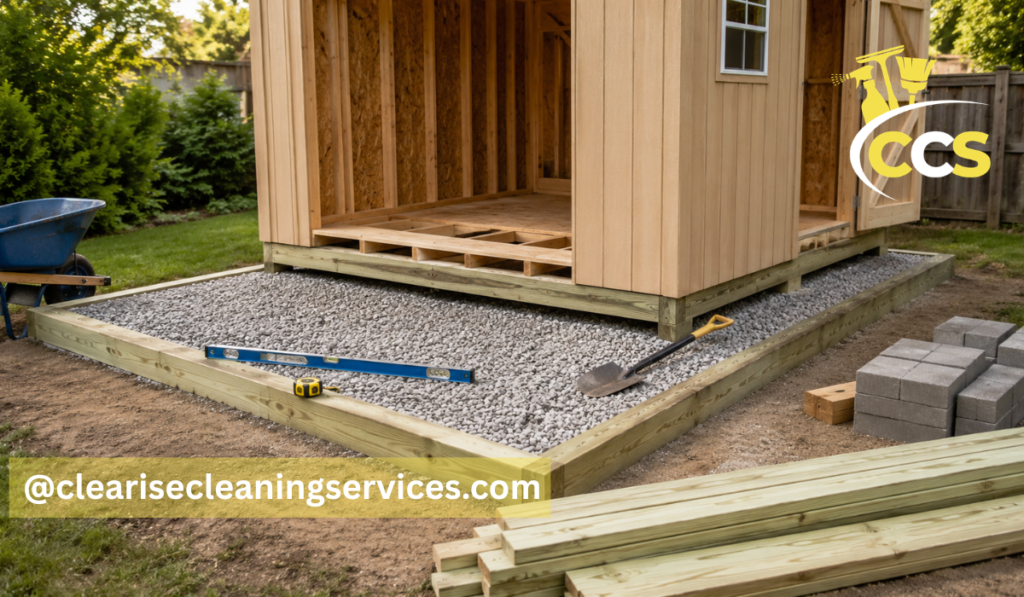
The key to a strong gravel base is compaction. Loose gravel can shift under weight, so the area should be leveled and compacted with a mechanical compactor if possible. If you are building a simple shed base, you can frame the area with pressure-treated lumber, fill it with crushed stone, and make sure the surface is level before setting the shed.
A gravel foundation is especially helpful in wet areas because it improves drainage and reduces ground moisture under the shed. It is also a good option when you want a shed foundation without concrete.
However, gravel may not be the best choice for very heavy equipment, vehicles, or permanent workshop sheds. In those cases, a concrete slab may provide better long-term support.
Concrete Shed Foundation: Best for Permanent and Heavy-Duty Sheds
A concrete shed foundation is one of the strongest and most permanent options. It is ideal for large sheds, workshops, garages, or sheds used for heavy equipment storage. If you plan to store riding mowers, motorcycles, tools, machinery, or other heavy items, a concrete slab for shed use can provide excellent support.
Concrete is durable, level, and long-lasting when installed correctly. It can also serve as both the foundation and the shed floor. A typical shed slab is often around 4 inches thick for standard use, although heavier sheds may need a thicker slab, rebar, or reinforcing mesh. Some concrete foundations also use plastic sheeting as a moisture barrier and control joints to help manage cracking.
A concrete slab should be slightly above grade so water does not flow onto it. Many builders aim for the finished slab surface to sit at least several inches above surrounding ground level. Proper site preparation, formwork, drainage, and curing are important.
The downside is cost. A concrete foundation usually requires more labor, more materials, and sometimes professional help. It is also permanent, so you should be confident about shed placement before pouring.
Choose concrete when you need strength, durability, and long-term performance. Choose gravel or blocks if you want a cheaper, easier, and more flexible DIY shed foundation.
Wood, Skid, Block, Paver, and Pier Foundations
Not every shed needs gravel or a full concrete slab. Several other shed foundation types can work well depending on the situation.
A wood shed foundation usually uses pressure-treated lumber, 4-by-4 runners, skids, or a timber frame. A wood skid foundation is useful for smaller sheds because it gives the structure support while keeping it somewhat movable. Always use ground contact lumber or pressure-treated wood because untreated lumber can rot quickly near soil and moisture.
Concrete blocks for shed foundation are another simple option. Blocks can support the shed frame at key points, especially for smaller sheds. However, they must sit on compacted ground or gravel, and spacing matters. Blocks placed too far apart can cause floor sagging. For many shed floors, supports are often spaced around 4 feet apart, but the right spacing depends on the shed design and manufacturer guidelines.
A paver shed base is useful for small garden sheds, resin sheds, or light storage units. Pavers create a clean, flat surface, but they need a compacted base below them. If the ground shifts, the pavers can become uneven.
A concrete pier foundation is better for sloped yards, frost-prone areas, or larger structures that need deeper support. Piers may require holes around 10″ to 12″ in diameter, and in cold climates, they may need to extend below the frost line to reduce frost heave.
Gravel vs Concrete Shed Foundation: Which Is Better?
The gravel vs concrete shed foundation decision depends on how you plan to use your shed.
A gravel foundation is usually better if you want a lower-cost, DIY-friendly base with strong drainage. It is ideal for garden sheds, storage sheds, and many backyard utility sheds. Gravel is also easier to adjust or remove later, making it a good choice if the shed may not be permanent.
Concrete is better if you need a strong, permanent, heavy-duty base. A concrete shed foundation is a smart choice for large sheds, workshops, or sheds that will hold heavy machines, vehicles, or tools. It gives a smooth floor surface and excellent long-term durability.
Here is a simple comparison:
| Factor | Gravel Foundation | Concrete Foundation |
| Cost | Usually lower | Usually higher |
| DIY difficulty | Easier | Harder |
| Drainage | Excellent | Needs proper slope and drainage |
| Permanence | Semi-permanent | Permanent |
| Heavy loads | Good for normal sheds | Best for heavy-duty use |
| Repair flexibility | Easier to adjust | Harder to modify |
For most homeowners, a properly built gravel shed base is enough. For a large shed, workshop, or long-term structure, a concrete slab may be worth the higher cost.
How to Build a Shed Foundation Step by Step
Learning how to build a shed foundation starts with planning. The exact steps depend on whether you choose gravel, blocks, pavers, wood, piers, or concrete, but the basic process is similar.
Step 1: Choose the Right Location
Pick a spot with good drainage and enough clearance around the shed. Avoid low areas where water collects. If possible, choose level ground or a slight high point in the yard.
Step 2: Check Permits, HOA Rules, and Utility Lines
Before digging, check local building codes, shed permits, zoning codes, setback requirements, and HOA rules. Also contact local utility marking services before digging post holes or pier holes. Underground utilities can be dangerous and expensive to damage.
Step 3: Mark the Shed Perimeter
Use wood stakes, mason line, string, and a tape measure to mark the shed layout. To square the corners, use the 3-4-5 method: measure 3 feet on one side, 4 feet on the other, and adjust until the diagonal is 5 feet. Also compare diagonal measurements across the full layout.
Step 4: Level and Prepare the Ground
Remove grass, roots, loose soil, and debris. For gravel or paver foundations, excavate enough depth for the base material. For a gravel foundation, many projects use around 4″ of gravel or more after excavation and compaction.
Step 5: Add the Foundation Material
For gravel, lay landscape fabric, add crushed stone, and compact it. For blocks or pavers, create a compacted base first. For wood frames, use pressure-treated lumber. For concrete slabs, install forms, gravel base, reinforcement if needed, and pour concrete.
Step 6: Check Level, Square, and Anchoring
Use a line level, post level, or long level to confirm the base is even. Make sure the foundation is square before placing the shed. If needed, use anchor bolts, ground anchors, or a shed anchoring system for wind protection.
Shed Foundation Cost, Size, Soil, and Climate Factors
Shed foundation cost can vary widely depending on the type of foundation, shed size, labor, soil condition, and local material prices. A simple block or gravel foundation is usually cheaper than a concrete slab. A professional concrete job or pier system costs more but may be necessary for larger sheds.
For a small shed such as a 6×6 shed, 8×8 shed, or 8×10 shed, a gravel base, pavers, skids, or concrete blocks may be enough. For a medium shed like a 10×12 shed, a framed gravel base, block system, or small slab can work well. For larger sheds such as a 12×16 shed, 12×20 shed, or 160 square foot shed, stronger support may be needed.
Soil also matters. Clay soil holds water and expands, so drainage is critical. Sandy soil drains well but may need compaction. Wet or soft ground may require a deeper gravel base, piers, or professional advice.
Climate is another major factor. In cold regions, the frost line, frost heave, and freeze-thaw cycle can move shallow foundations. Some pier foundations may need to extend 12 inches below the frost line. In rainy climates, drainage and airflow under the shed are more important. In windy regions, anchoring becomes a safety priority.
The cheapest shed foundation is not always the best. A low-cost base that sinks, shifts, or traps water can cost more later in repairs.
Drainage, Permits, Anchoring, and Mistakes to Avoid
Good drainage is one of the most important parts of any shed foundation installation. Water should move away from the shed, not under it. A gravel base helps because it allows water to drain through the stone. The surrounding soil should also slope away from the foundation when possible.
Moisture control helps prevent wood rot, mold, decay, and floor damage. If your shed has a wood floor, airflow underneath is important. Avoid trapping the floor directly against wet soil.
Permits and codes should not be ignored. Some areas require a shed building permit, especially for larger sheds, concrete slabs, electrical work, or permanent structures. Your local Building Department, county office, or Homeowners Association may have rules about setbacks, size limits, drainage, and placement.
Anchoring is also important, especially in windy areas. A concrete slab may use wedge-style anchor bolts, while other sheds may use ground anchors or tie-down kits. Proper anchoring helps keep the shed secure during storms or high winds.
Common shed foundation mistakes include building on grass, skipping compaction, ignoring drainage, using the wrong gravel, spacing blocks too far apart, failing to check square, forgetting frost conditions, and choosing a foundation only because it is cheap. A base that is even 1/2″ out of square or 1/4″ out of level can create problems over time.
Shed Foundation Maintenance and Longevity
A good foundation can last many years, but it still needs occasional inspection. Check the base at least once or twice a year, especially after heavy rain, snow, or freeze-thaw weather.
Look for signs of trouble such as water pooling, soft soil, shifting blocks, cracked concrete, sinking corners, sagging floors, or shed doors not closing properly. If you notice one corner settling, fix it early before the structure twists.
For gravel foundations, rake and top up gravel if needed. Make sure the edges stay contained and water keeps draining away. For concrete slabs, watch for cracks, settlement, and drainage problems around the perimeter. For wood skids or timber frames, inspect for rot, insect damage, and moisture buildup.
A well-built foundation improves shed performance, protects the floor, and extends the life of the structure. Poor foundations usually fail slowly, so regular maintenance helps catch small problems before they become expensive repairs.
Quick Shed Foundation Checklist Before You Build
Before you start building, use this simple checklist:
| Checklist Item | Why It Matters |
| Choose the right location | Avoids standing water and poor drainage |
| Check local codes and permits | Prevents legal or HOA issues |
| Mark utility lines | Keeps digging safe |
| Select the right foundation type | Matches shed size, soil, and budget |
| Level and square the site | Prevents door and floor problems |
| Use proper materials | Improves durability |
| Compact the base | Reduces sinking and shifting |
| Plan for drainage | Prevents moisture damage |
| Anchor the shed if needed | Improves wind resistance |
| Inspect yearly | Extends shed foundation life |
This checklist works whether you are planning a DIY shed base, gravel pad, paver base, concrete slab, block foundation, or pier system.
Conclusion
The right shed foundation depends on your shed size, budget, soil, drainage, climate, and long-term plans. For most homeowners, a gravel shed foundation offers the best balance of affordability, drainage, and DIY installation. For large, permanent, or heavy-duty sheds, a concrete shed foundation may be the better investment.
No matter which shed base you choose, make sure it is level, stable, well-drained, and built with the right materials. A strong foundation protects your shed from moisture, shifting, frost damage, and early wear, helping it stay useful for many years.
FAQs
What Is The Cheapest Foundation For A Shed?
The cheapest shed foundation is usually concrete blocks, pavers, skids, or a simple gravel base. However, the cheapest option is not always best. If the ground is wet, soft, or uneven, a slightly stronger foundation can prevent future repairs.
Can You Put A Shed Directly On Grass?
You should not put a shed directly on grass. Grass and soil hold moisture, which can cause wood rot, mold, floor sagging, and foundation movement. At minimum, use gravel, blocks, pavers, or skids.
Is Gravel Enough For A Shed Foundation?
Yes, gravel is enough for many storage sheds when installed correctly. A compacted gravel shed foundation with landscape fabric and proper drainage is one of the best DIY options for most backyard sheds.
How Much Gravel Do I Need For A Shed Foundation?
Many gravel shed bases use about 4 to 6 inches of gravel, but the amount depends on shed size, soil condition, and drainage needs. A larger shed or wet yard may need a deeper gravel base.
How Thick Should A Concrete Slab Be For A Shed?
For many standard sheds, a concrete slab is often around 4 inches thick. Heavy-duty sheds, workshops, or vehicle storage may need thicker concrete, reinforcement, or professional design.
What Is The Best Shed Foundation For Uneven Ground?
For uneven ground or a slope, concrete piers, properly installed blocks, or a framed gravel pad can work well. The goal is to create a level support system without allowing the shed to twist or settle unevenly.
Do I Need A Permit For A Shed Foundation?
Maybe. Permit rules depend on your location, shed size, foundation type, and whether the shed is permanent. Always check with your local building department or HOA before construction.
What Is The Best No-concrete Shed Foundation?
The best no concrete shed foundation is usually a compacted gravel base, wood skid foundation, paver base, or block foundation. For most DIY storage sheds, gravel is the strongest all-around no-concrete option.
Disclaimer: This article is for general informational purposes only. Individual results, preferences, site conditions, costs, and local requirements may vary. Always check what applies to your specific situation before starting a shed foundation project.
Thanks for visiting Clearise Cleaning Services! Discover more helpful tips and expert cleaning insights by exploring our related categories.