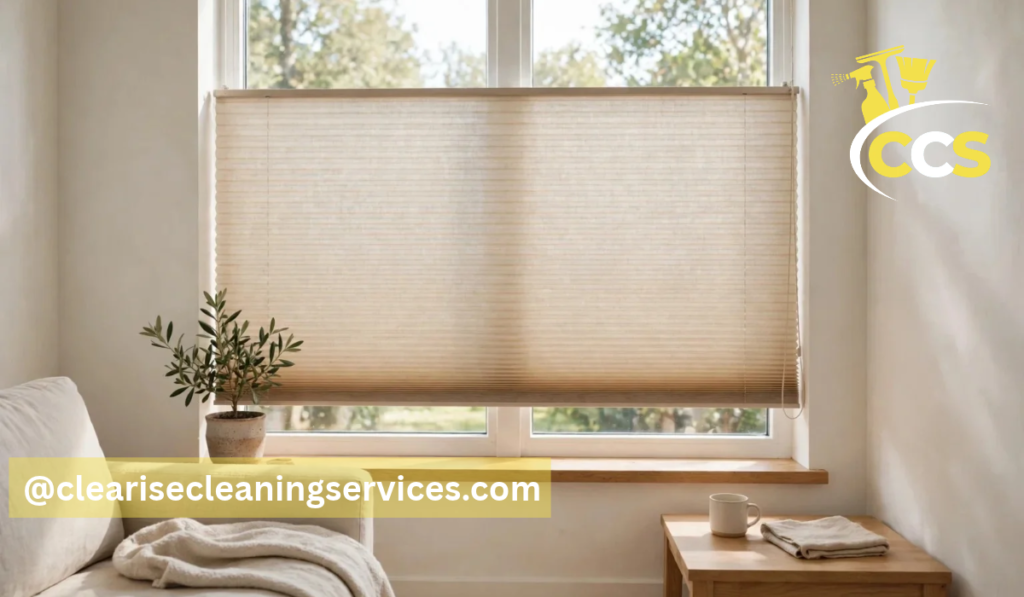
Most windows need something to soften the light, give privacy, and make a room feel finished, yet the choice of covering can feel confusing. A cell shade is one of the simplest options, and it suits many homes because it looks neat, folds away tidily, and handles light in a gentle way.
This guide explains what a cell shade is in plain language. It covers how honeycomb cells work, the difference between single and double cells, light filtering and blackout fabrics, how the shades move, where they suit best, how they compare with other coverings, measuring basics, cleaning, cost factors, and the mistakes to avoid.
The Short Answer: What Is a Cell Shade?
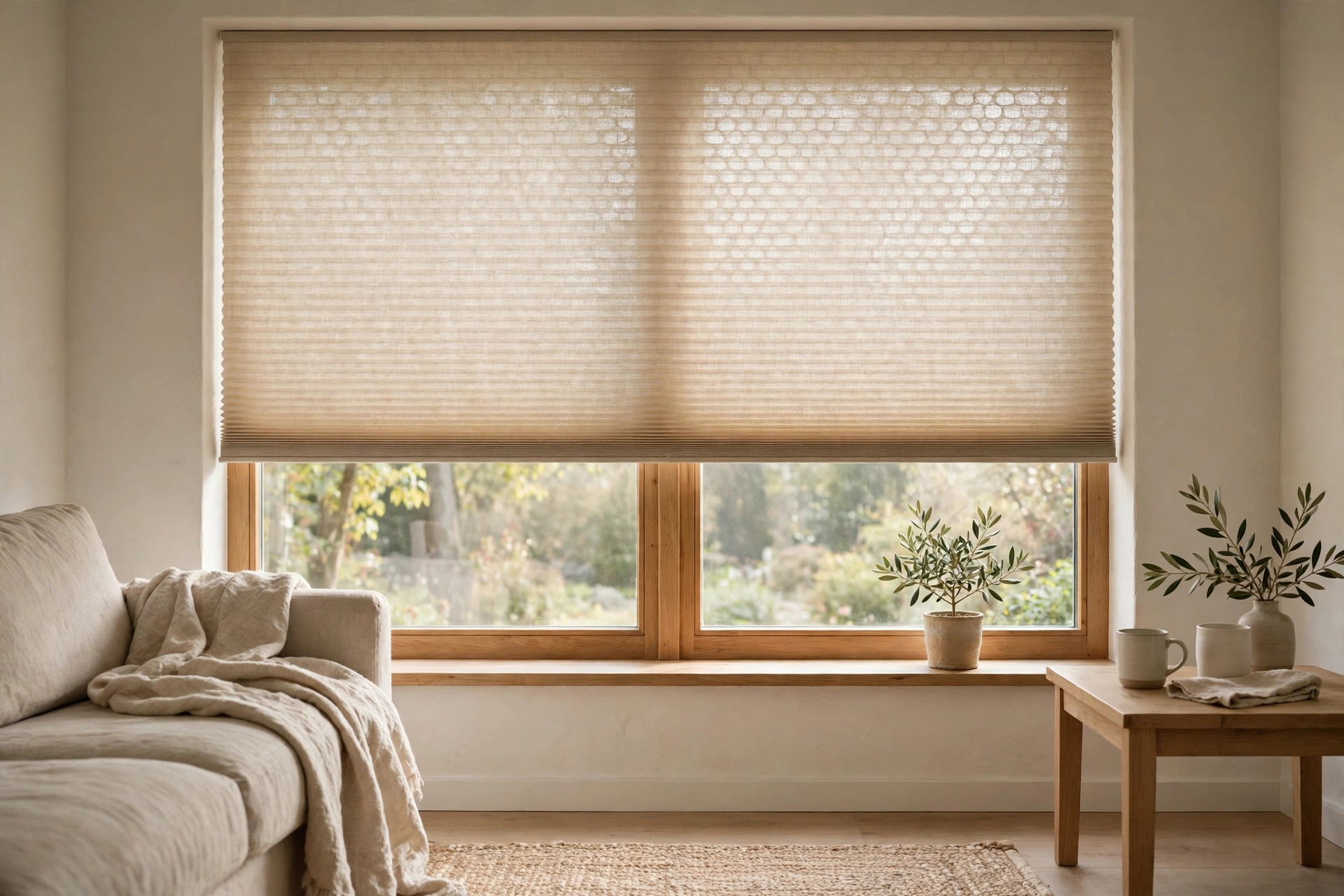
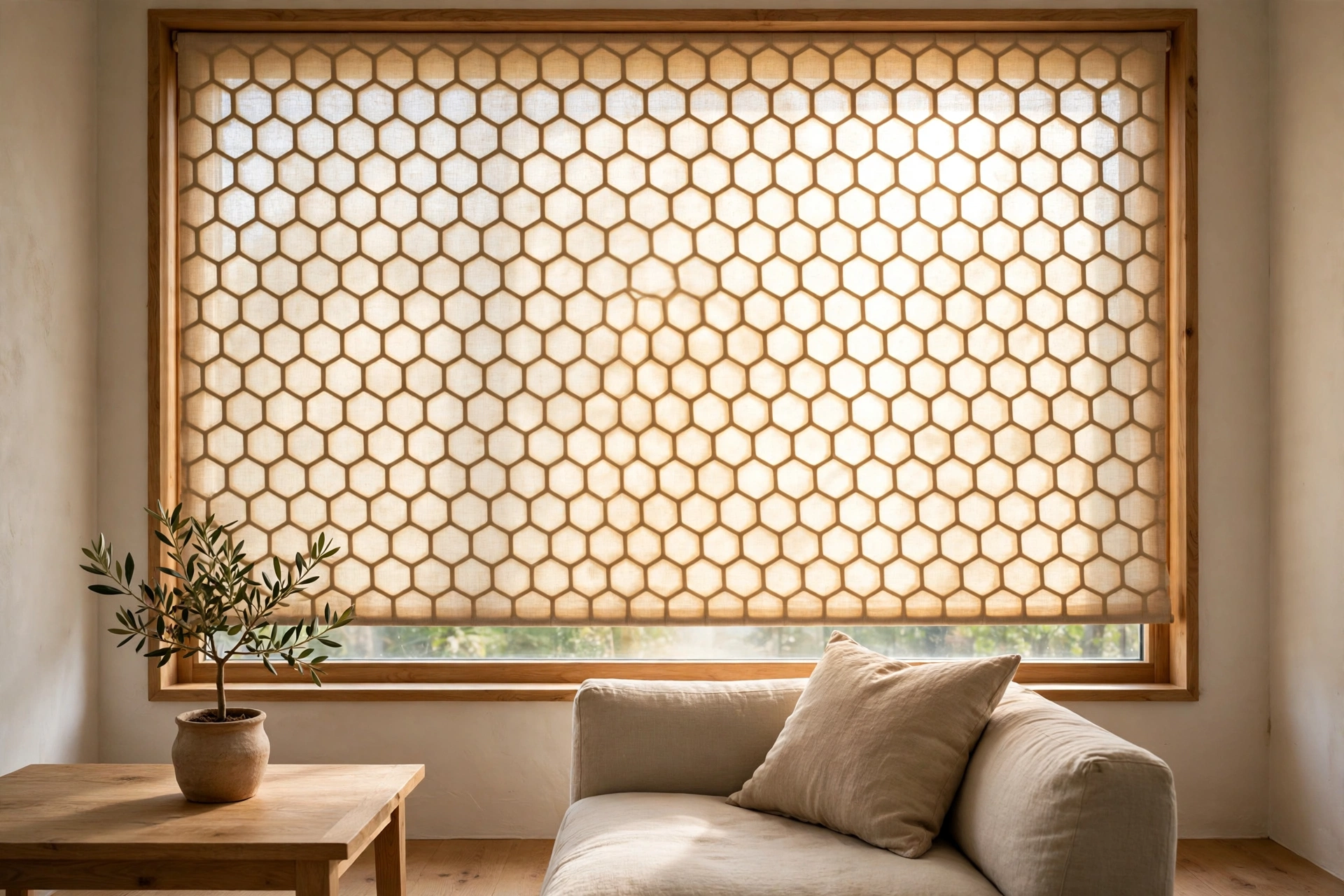
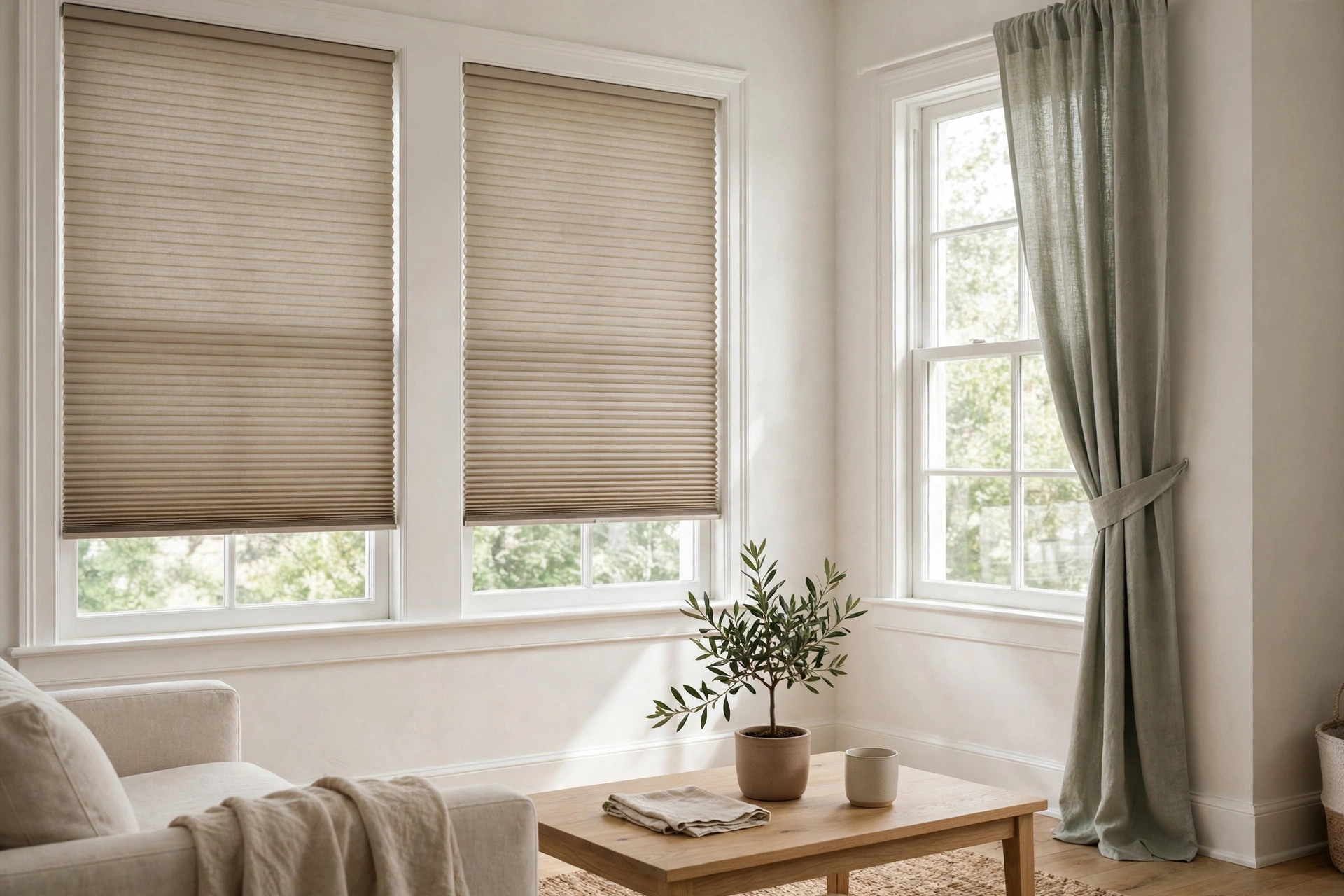
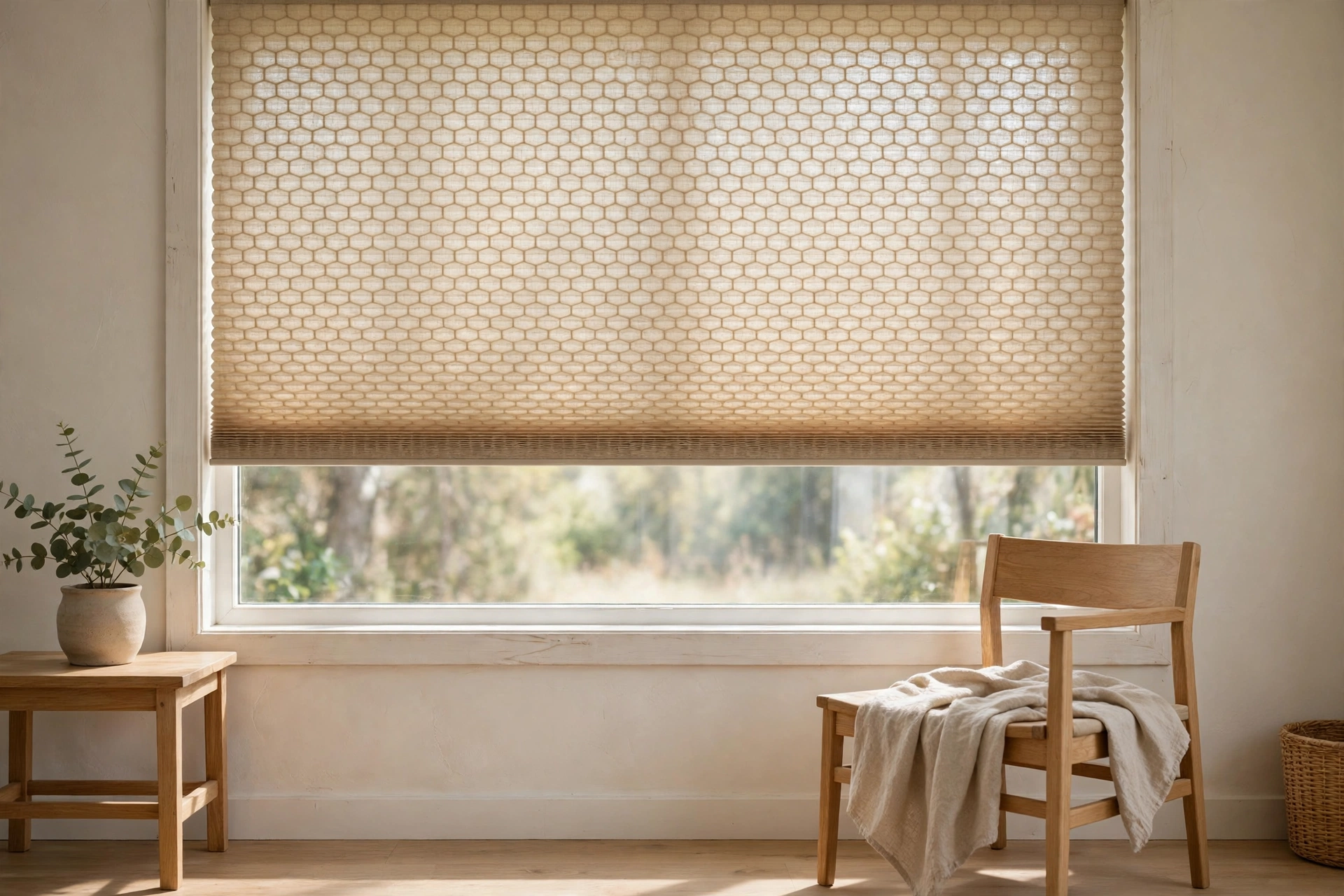
A cell shade, also called a honeycomb shade or cellular shade, is a window covering made from pleated fabric folded into rows of hollow, honeycomb-shaped cells. When the shade is lowered, the cells stack together and form an insulating layer across the window, and when it is raised, the fabric folds up into a slim bundle at the top.
The name comes from the shape. Seen from the side, the fabric forms a row of six-sided pockets, much like a honeycomb, and those pockets trap air. That trapped air is the reason cell shades are often praised for insulation, because still air slows the movement of heat through a window. The shade itself is light, simple to use, and available in many colours and fabrics.
How Honeycomb Cells Work
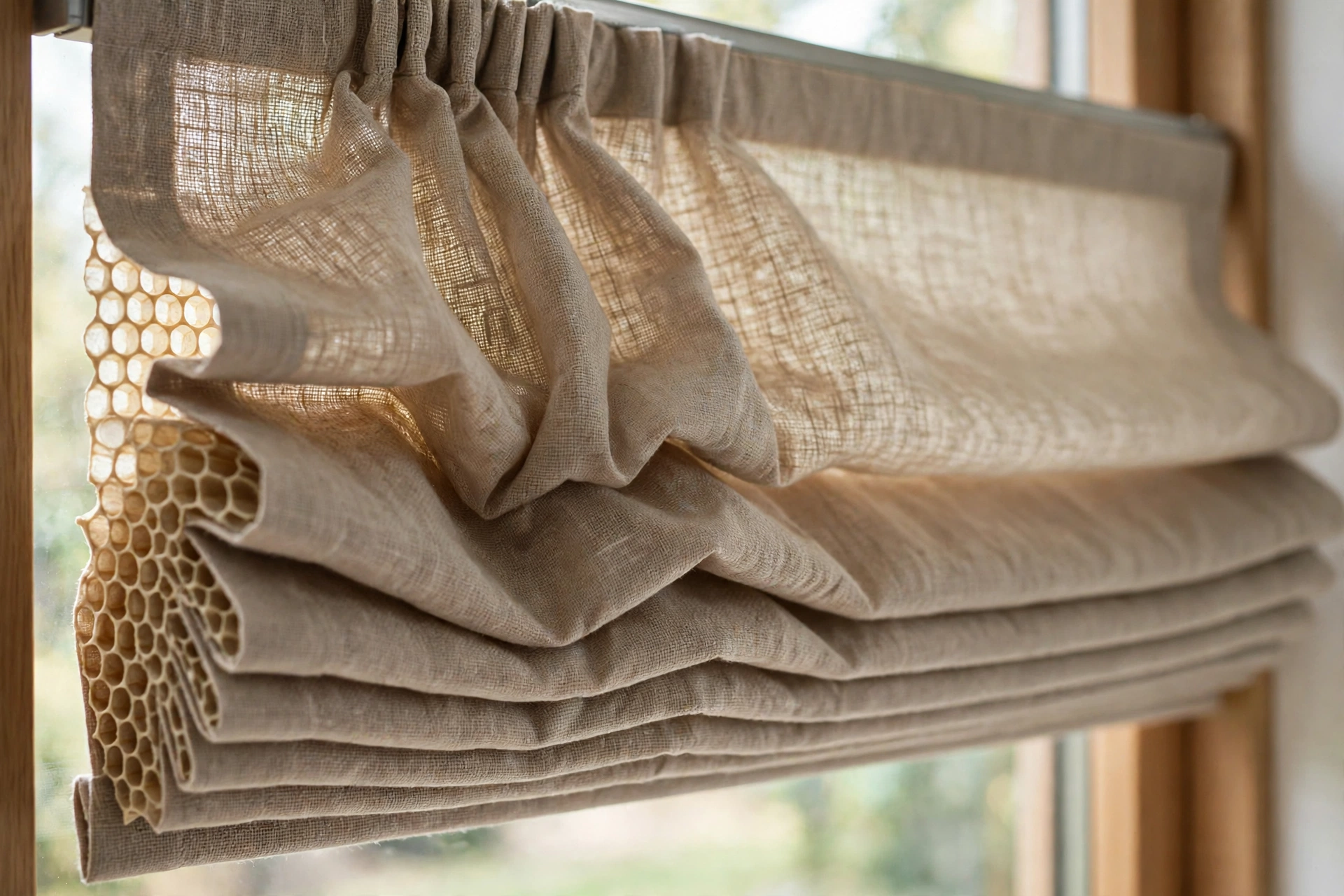
Honeycomb cells work by trapping air inside the folded pockets of the shade, which slows heat moving between the room and the glass. A window is usually the weakest point in a room for heat loss and heat gain, so adding a layer of still air in front of it helps the room stay steadier.
Think of it like a quilt for the window. A single flat sheet of fabric does little to slow heat, but a layer of pockets full of still air does much more, because air itself is a poor conductor of heat. The cells do not need power or moving parts to do this; they simply sit across the window and create that buffer. The effect is gentle rather than dramatic, and it works best when the shade fits the window well, with small gaps at the edges.
Single Cell vs Double Cell
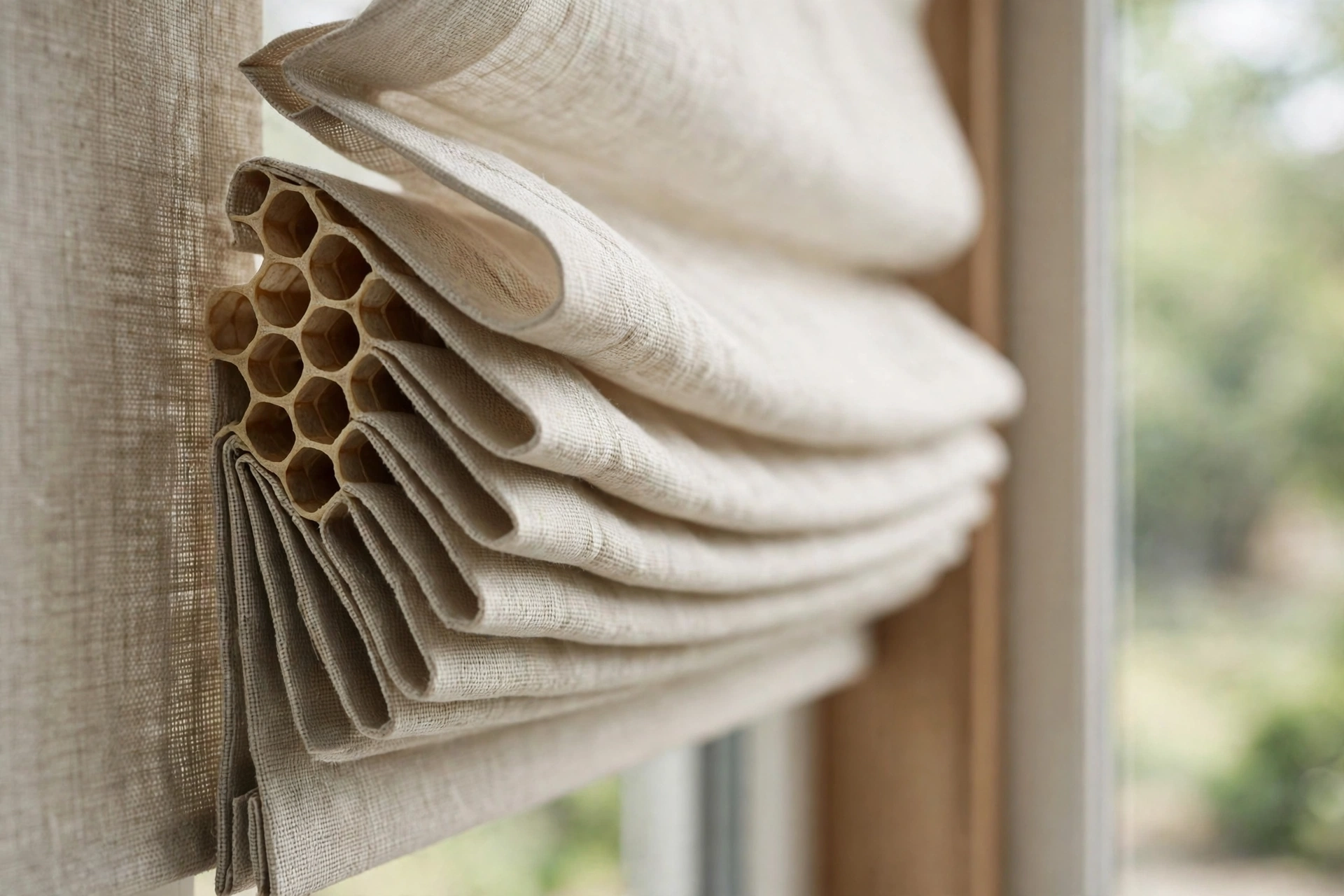
The difference between single cell and double cell shades is the number of honeycomb layers in the fabric: a single cell shade has one row of pockets, while a double cell shade has two rows joined together. Double cell shades are thicker and bulkier, while single cell shades are slimmer and fold into a smaller stack at the top.
In everyday use, a single cell shade suits most windows well, especially where space above the window is limited or a slim look matters. A double cell shade gives a deeper layer of trapped air, so it is often chosen for large windows, cold rooms, or windows that face harsh sun. The trade-off is size: double cells take up more room when raised and can look heavier on a small window, so the choice depends on the window and the room.
Light Filtering, Room Darkening and Blackout
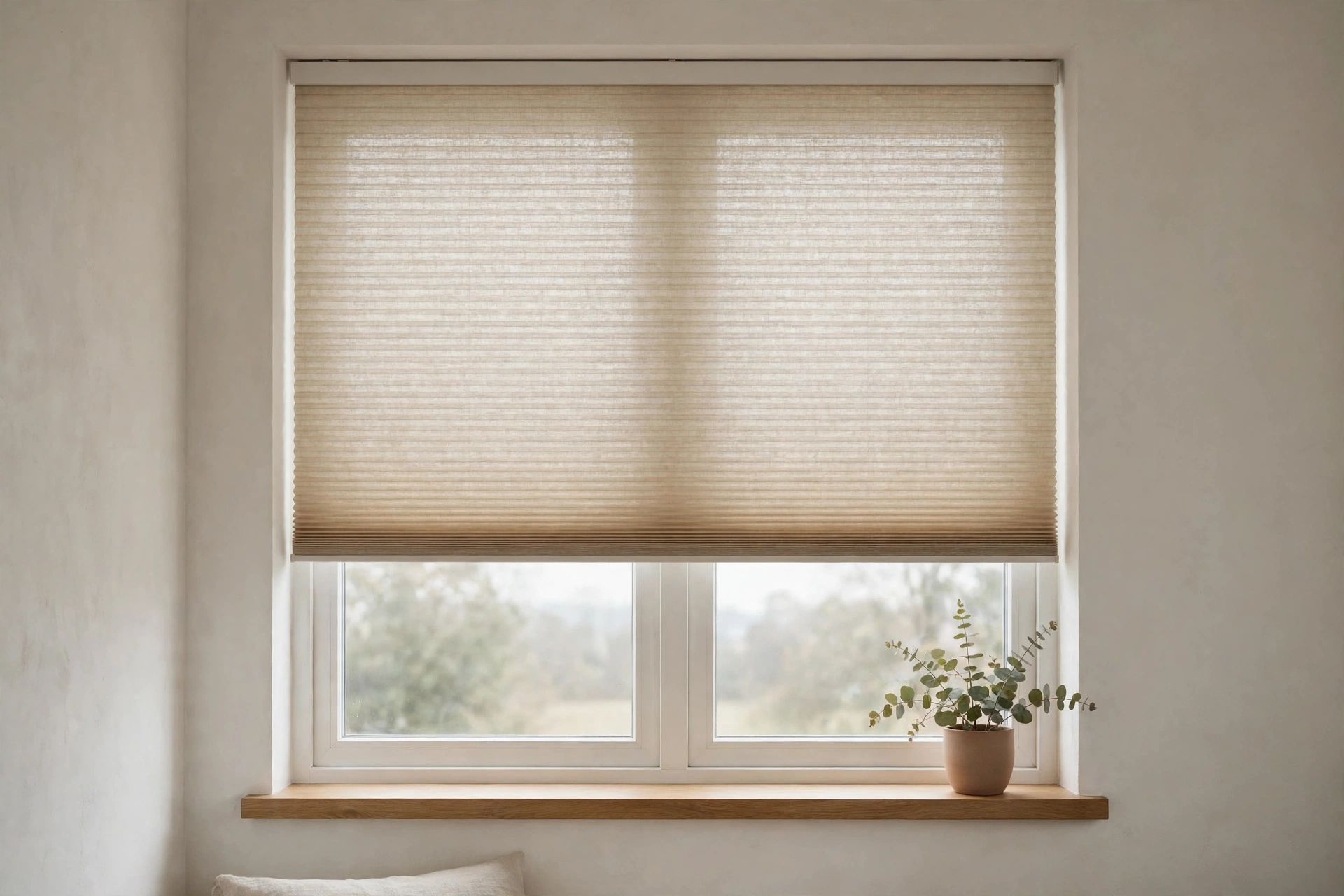
Light filtering, room darkening and blackout describe how much light a cell shade lets through, and they are the most important choice after size. A light filtering shade softens daylight and gives daytime privacy while still letting a gentle glow into the room, so it suits living rooms and kitchens well.
Room darkening fabrics block most light and suit bedrooms, nurseries, and rooms used for watching television, where glare matters. Blackout cell shades block nearly all incoming light when fully lowered and fitted well, and they are the strongest choice for shift workers, light sleepers, and bedrooms facing streetlights. No shade can block light around its edges completely, so a close fit matters as much as the fabric, and side channels can help where darkness is the priority.
How Cell Shades Move and Operate
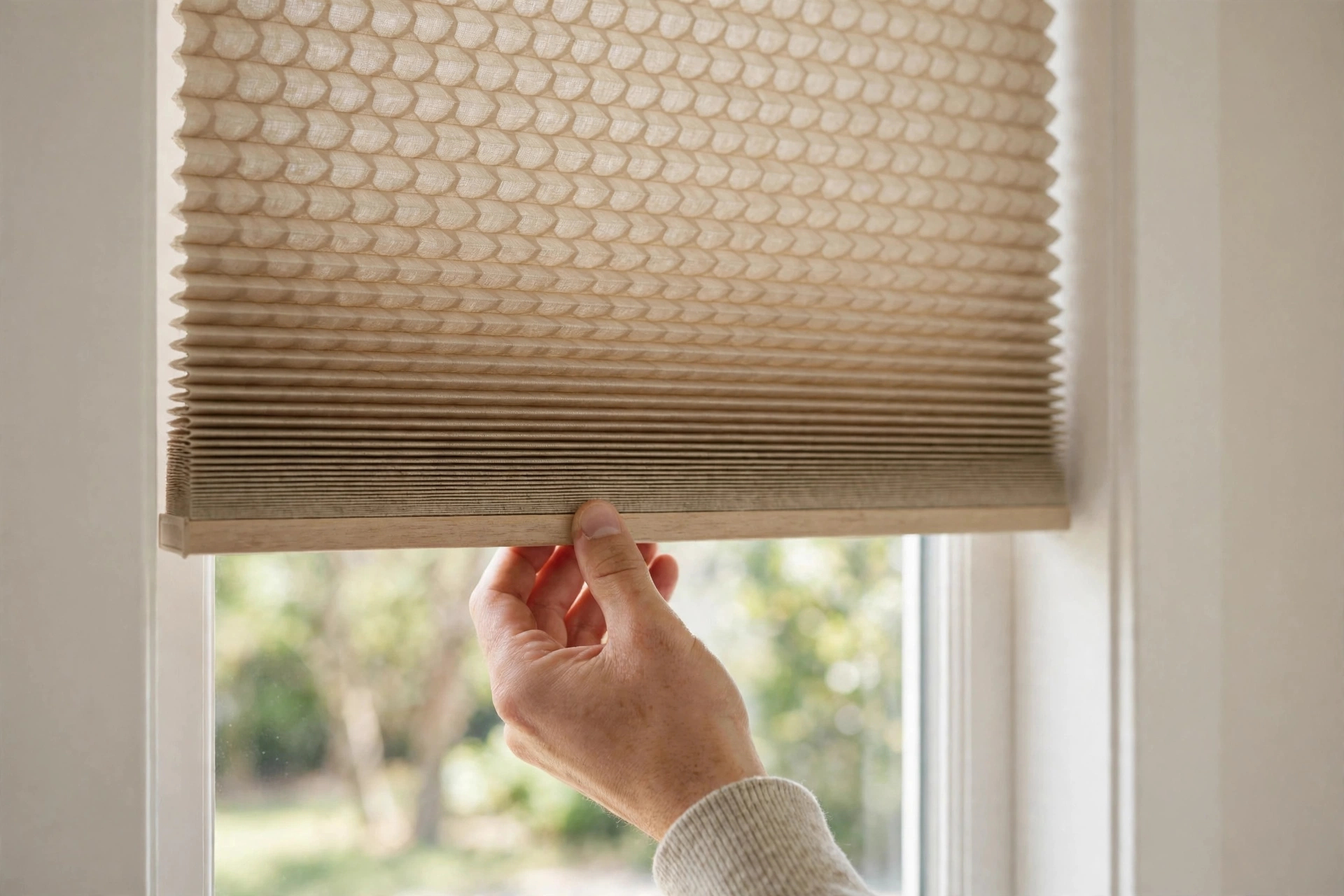
Cell shades move in several ways, and the operating style changes how easy the shade is to use every day. The simplest type uses a cord: pulling the cord raises or lowers the shade, and a cord lock holds it in place. Corded shades are common and affordable, but loose cords need care around children and pets.
Cordless shades are lifted and lowered by hand using the bottom rail, which gives a clean look and removes the cord concern. Top down bottom up shades are a popular variation: the shade can be lowered from the top as well as raised from the bottom, so you can let light in from above while keeping privacy at the bottom. Motorised shades, operated by remote or a smart home system, suit high or hard-to-reach windows, though they add cost and need power or batteries.
Where Cell Shades Suit Best
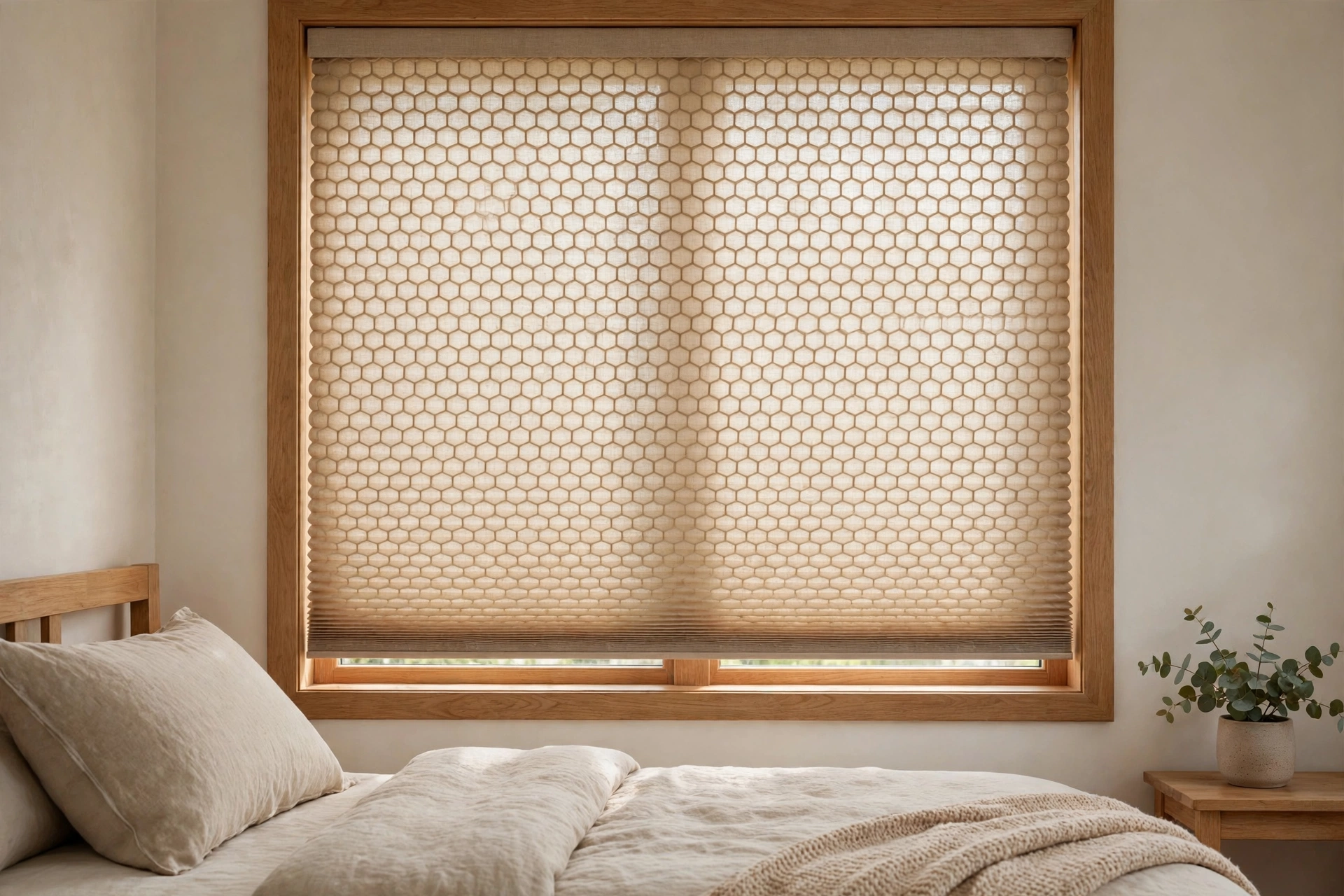
Cell shades suit best in rooms where soft light, privacy, and a tidy look matter more than heavy decoration, and they work on most standard window shapes. Bedrooms benefit from room darkening or blackout fabrics, living rooms suit light filtering fabrics, and bathrooms suit moisture-resistant fabrics where steam is common.
They are also a good fit for large windows and patio doors, where a single shade can cover a wide area without the bulk of heavy curtains. Kitchens suit them because the fabric is light and easy to wipe, though greasy air near a cooker can mark pale fabrics over time. Cell shades suit less well where a window is opened very often for ventilation, since the shade must be raised each time, and where a bold decorative statement is the main goal, curtains or shutters may suit better.
Cell Shades Compared With Other Window Coverings
Cell shades compare well with other coverings for softness and insulation, but each type has strengths, and the best choice depends on the room. Roller blinds are simpler and cheaper in general terms, but flat roller fabric does not trap air like honeycomb cells. Curtains add warmth, but take up more space and need more cleaning.
Venetian blinds give fine control over light direction through tilting slats, yet their gaps and hard surfaces feel less soft than fabric cells. Shutters are sturdy and long-lasting, but they cost more in general terms and suit a more permanent, fitted look. The table below sums up the main differences, and the right choice still depends on your window, your budget in general terms, and how you use the room.
| Covering | Light control | Insulation feel | Look and care |
|---|---|---|---|
| Cell shades | Soft, even light; filtering to blackout | Good, thanks to trapped air in cells | Neat and soft; light dusting and wiping |
| Roller blinds | Simple up or down; some filtering fabrics | Basic, flat fabric only | Slim and simple; easy to wipe |
| Curtains | Flexible with layers; can be heavy | Good with thick, lined curtains | Soft and decorative; needs washing |
| Venetian blinds | Precise tilt control for glare | Basic, with gaps between slats | Crisp and modern; slats need dusting |
| Shutters | Good tilt and panel control | Good when closed and well fitted | Smart and sturdy; higher cost in general terms |
Cell shades win on a balance of softness, insulation, and tidiness, while other coverings win where decoration, precise tilt, or a very low cost is the priority. Many homes mix types, using cell shades in bedrooms and living rooms and curtains or blinds elsewhere, which is a sensible way to get the best of each.
Measuring and Fitting Basics
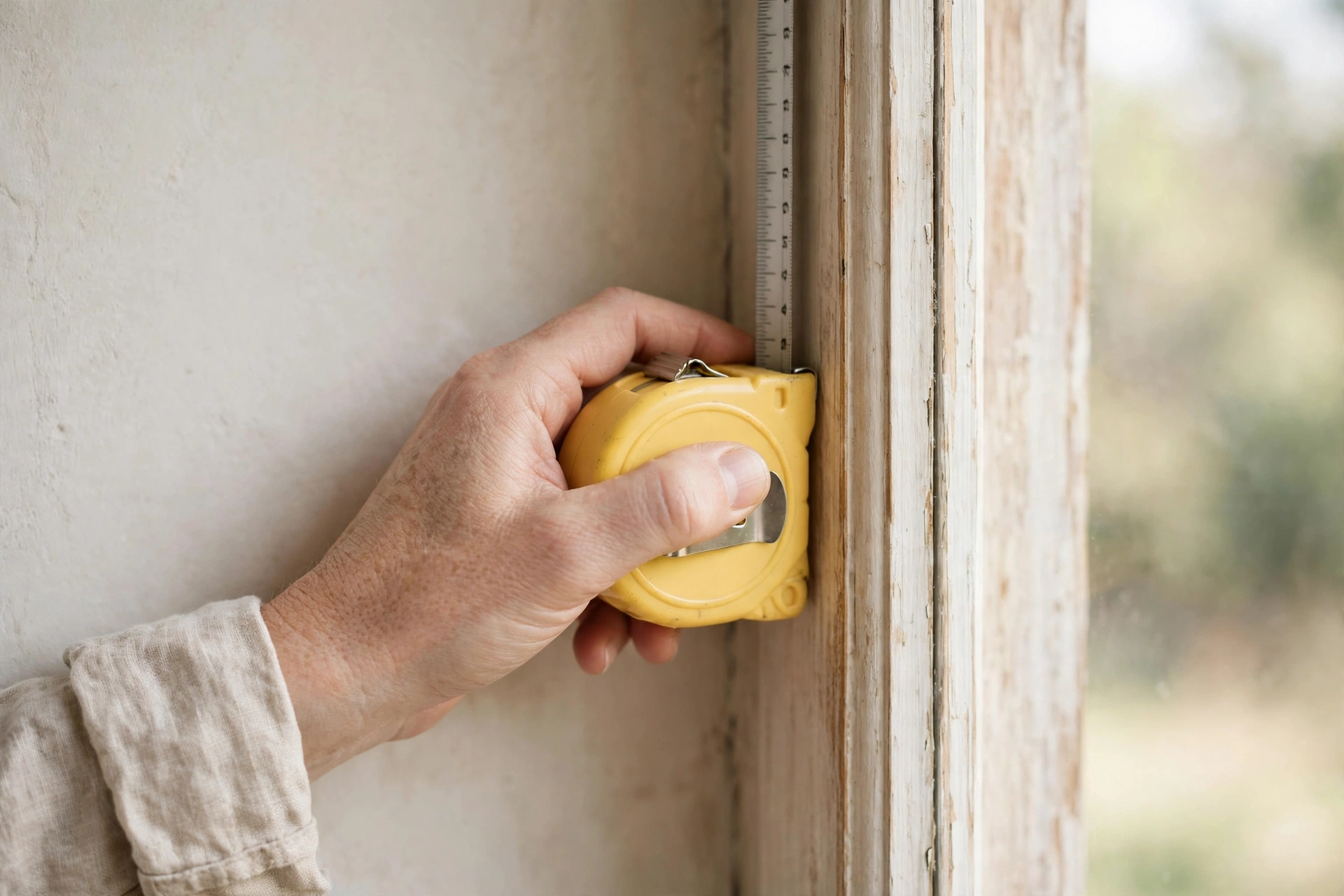
Measuring and fitting basics start with deciding whether the shade sits inside the window frame or outside it, because that choice changes all measurements. An inside mount sits within the frame and looks neat, but needs enough frame depth for the hardware, while an outside mount covers the whole frame and suits shallow frames or windows needing more light blocking.
Measure the width in three places — top, middle, and bottom — and use the smallest figure for an inside mount, then measure the height in three places and use the longest for an outside mount, following the maker’s own measuring guide for the product you choose. Check for handles, locks, and window cranks that might block the shade, and note whether the window opens inward. Fitting is usually a matter of fixing two or three brackets level, clipping the shade in, and testing the movement, but if the window is out of square or the shade is wide and heavy, a professional fitter is worth considering.
Cleaning and Everyday Care
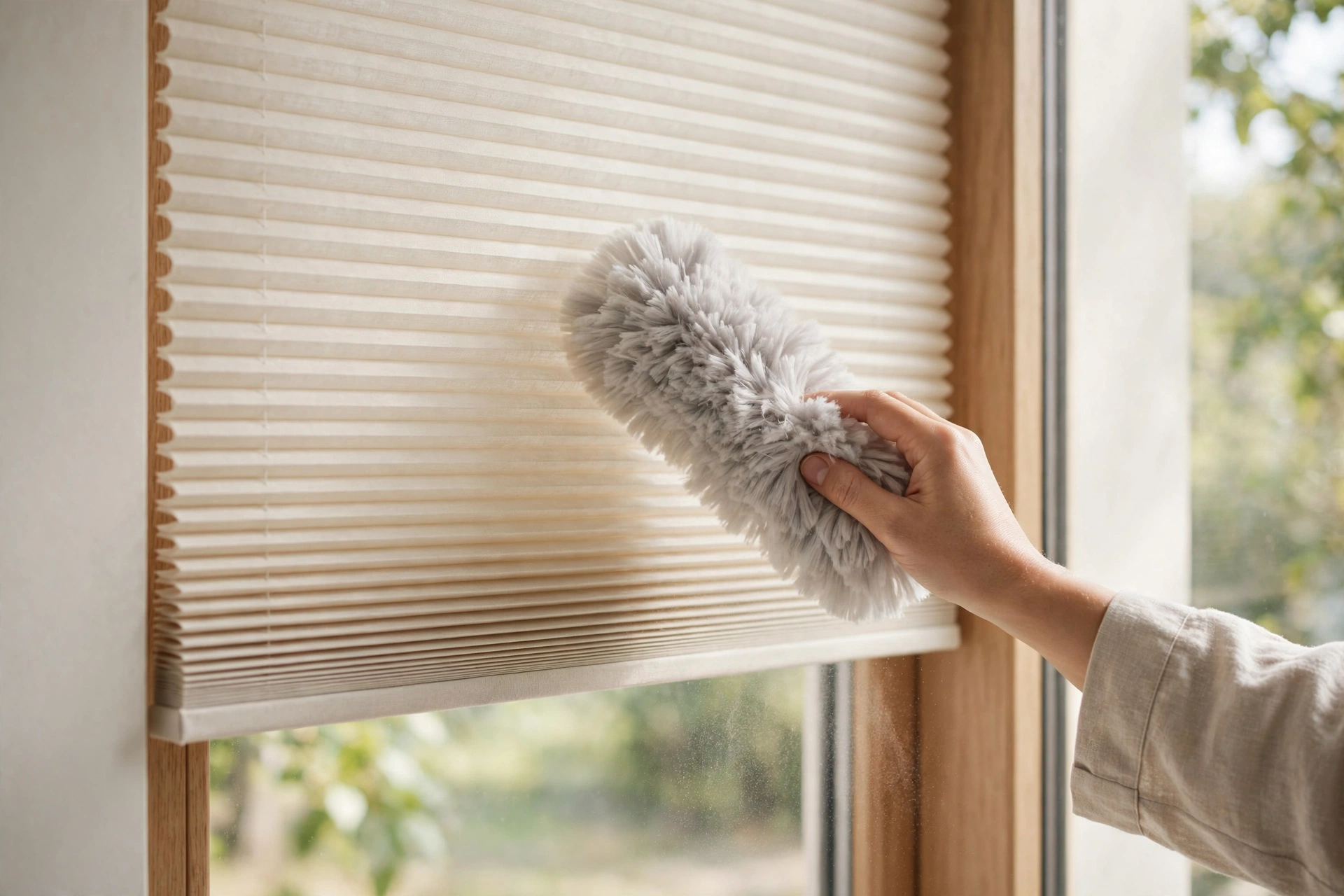
Cleaning and care for cell shades is light work, because the fabric is delicate and should not be soaked or scrubbed hard. Dusting with a feather duster or a vacuum cleaner on a low setting with a brush attachment keeps dust from building up in the pleats, and working from top to bottom stops dust falling onto cleaned areas.
For marks, dab gently with a barely damp cloth and mild soap, then let the shade dry fully while lowered, and avoid harsh chemicals, bleach, and steam cleaners, which can damage the fabric or its shape. Raise and lower the shade gently, keeping the bottom rail level so the pleats stack evenly, and keep cords or operating parts free of tangles. In kitchens and bathrooms, more frequent dusting helps, since steam and cooking air settle on fabric, and a shade that is cleaned little and often will last longer than one that is neglected and then scrubbed hard.
What Affects the Cost of Cell Shades
What affects the cost of cell shades is mainly size, cell type, fabric, and operating style, with fitting and extras adding to the total in general terms. Larger shades need more fabric and stronger hardware, double cell shades use more material than single cell shades, and blackout or special fabrics cost more than basic light filtering fabrics in general terms.
Motorised operation adds the most to the price in general terms, because it needs a motor, a power source, and sometimes a control system, while cordless operation usually sits between corded and motorised. Custom sizes, unusual window shapes, and professional fitting also raise the total, while standard sizes and DIY fitting keep it lower. Because prices vary widely by maker, region, and retailer, compare like with like — same cell type, same fabric, same operation — and get written quotes before deciding, rather than judging on a single headline price.
Common Mistakes When Choosing Cell Shades
The most common mistake when choosing cell shades is measuring only once and ordering a shade that does not fit a window slightly out of square. Windows are rarely perfect rectangles, so one width measurement can leave gaps or a shade that binds, and the fix is to measure in several places and follow the maker’s guide.
Other mistakes are easy to make too. Choosing a light filtering fabric for a bedroom and then finding streetlight keeps you awake, or choosing blackout for a living room that then feels gloomy in daytime, both come from picking fabric before thinking about the room. Forgetting about handles, cranks, and opening windows leads to a shade that cannot move freely, and choosing a corded shade without thinking about children and pets misses a safety point. Finally, picking the cheapest shade for a large, sunny window can mean faded fabric and a short life, while a fabric suited to sun and use lasts far better.

A Simple Choosing Checklist
A simple choosing checklist turns the advice in this guide into a short routine you can work through before ordering, and it catches the errors that cause most regrets. It takes only a few minutes, and it is worth doing even for a single window.
Work through the list in order:
- Decide the room and its main need: privacy, darkness, soft light, or insulation.
- Choose the fabric: light filtering, room darkening, or blackout, matched to that need.
- Decide single cell or double cell, based on window size and how much insulation matters.
- Choose the operation: corded, cordless, top down bottom up, or motorised.
- Decide inside or outside mount, and check frame depth, handles, and opening direction.
- Measure width and height in three places each, and follow the maker’s measuring guide.
- Check safety for children and pets, especially with corded shades.
- Compare like with like on fabric, cell type, and operation before ordering.
A shade chosen against this checklist is far more likely to fit well, suit the room, and last. If any answer is uncertain, pause and check again rather than guessing, since a wrong shade is harder to return than a right one is to order.
Conclusion
What is a cell shade? It is a pleated fabric shade whose honeycomb cells trap air, soften light, and give privacy in a neat, simple package. Single cells suit most windows, double cells add insulation for larger or colder windows, and the fabric choice — light filtering, room darkening, or blackout — should follow the room’s needs.
Choose the operation that fits your household, measure carefully in several places, and clean the shade little and often. Done that way, a cell shade is a quiet, practical window covering that looks good, feels soft, and makes a room more comfortable through every season.
Frequently Asked Questions
What is a cell shade made of?
A cell shade is made of pleated fabric folded into hollow honeycomb cells, usually a polyester-type fabric, with a headrail at the top and a bottom rail that moves the shade up and down.
Are cell shades the same as honeycomb shades?
Yes, cell shades, honeycomb shades, and cellular shades are different names for the same type of shade, all describing the folded, honeycomb-shaped pockets in the fabric.
Do cell shades block light completely?
Blackout cell shades block nearly all light when fully lowered and well fitted, but some light can still pass around the edges, so a close fit matters for the darkest result.
Are cordless cell shades safer for children?
Yes, cordless shades remove the looped cord hazard of corded shades, which is why many households with young children and pets prefer cordless or motorised operation.
Can cell shades be used in bathrooms?
Yes, if the fabric is suited to moisture and the room is ventilated, but steam and damp can mark fabric over time, so regular dusting and good airflow help them last.
Disclaimer: This article is provided for general information only. It is not professional window-covering, building, or safety advice, and it does not promote any brand, product, or service. Shade sizes, fabrics, and suitability vary by product, region, and home, so always check the guidance for the specific product you choose and seek qualified professional advice before fitting, especially for large, high, or unusually shaped windows and for child safety.
Thanks for visiting Clearise Cleaning Services! Discover more helpful tips and expert cleaning insights by exploring our related categories.