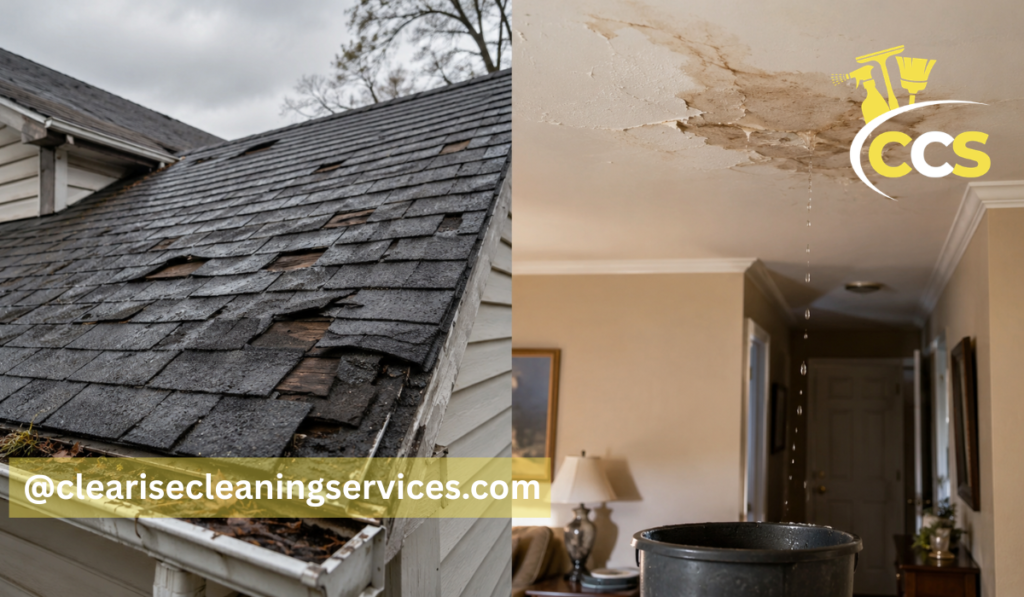
Roofs almost never fail out of nowhere. They drop hints for months, sometimes years, and most of us miss every single one. By the time water is dripping into a saucepan on the landing, the roof has usually been asking for help for a long time. Here are the seven hints to look for, in the order they usually appear.
1. Grit In The Gutters
Concrete and clay tiles shed a fine grit as their surface wears. A little is normal. Handfuls of it in the gutter mean the tiles are ageing fast and their protective surface is going. Think of it as the roof leaving you a note.
2. A Tile That Is Not Quite Straight
Stand across the road and look at the roof line. Every tile should sit in a neat, even pattern. One tile sitting proud, slipped or at an angle has lost its fixing. On its own it is a small, cheap fix. Left alone, wind gets underneath it, and one loose tile becomes five.
3. Moss That Never Dries Out
Moss itself does not destroy a roof, but it holds water against the tiles like a wet sponge. In winter that trapped water freezes, expands and cracks the tile surface. Thick moss on the shaded side of the roof is a sign the covering is staying damp for too long.
4. A Faint Brown Ring On A Ceiling
This is the indoor clue, and it is the one people explain away. A pale tea-coloured ring on an upstairs ceiling means water has already been getting in, even if it looks dry today. Leaks travel along timbers before they show, so the stain is often nowhere near the actual hole. This is the point to stop watching and start acting. A professional team that handles roof repairs can trace the leak back to its true source rather than patching where the stain happens to be.
5. Daylight In The Loft
Pick a bright day, climb into the loft, turn off the torch and wait for your eyes to adjust. You should see darkness. Pinpricks of daylight mean gaps in the covering, and where light gets in, so does rain.
6. Flashing That Has Lifted Or Cracked
Flashing is the metal sealing the joins around chimneys and walls. It is the hardest working part of the roof and the most common leak point. Lifted edges, splits or cheap mastic smeared over old lead are all signs a previous repair is on borrowed time.
7. Sagging Along The Ridge
The top line of the roof should be dead straight. A dip or a wave in it suggests the timbers underneath are carrying too much weight or have been weakened by long-term damp. Of all seven signs, this is the one that should never wait.
What To Do Next
You do not need to fix any of this yourself, and you should not be up a ladder trying. What you can do is look, twice a year, from the ground and from the loft. If you spot two or more of these signs, get a proper inspection booked. London firms such as JP Building Services have published their own guide to the common signs a roof needs repairs, and the message from the trade is always the same. Roofs give you plenty of warning. The expensive part is ignoring it.
Thanks for visiting Clearise Cleaning Services! Discover more helpful tips and expert cleaning insights by exploring our related categories.