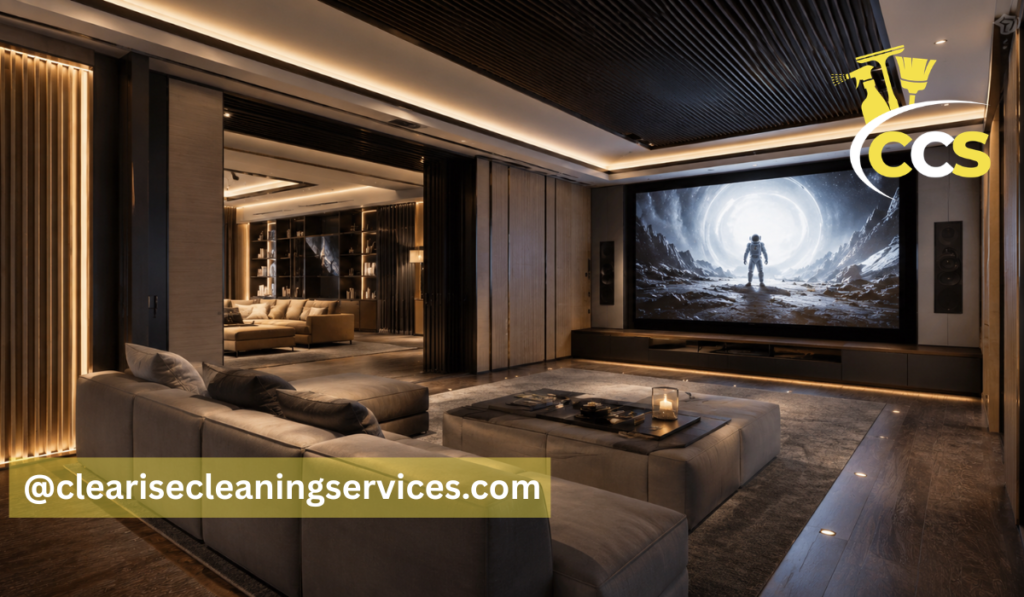
Home entertainment flyarchitecture describes an approach to designing entertainment spaces that can change according to the needs of the people using them. Instead of creating a room that serves only one purpose, this idea combines home theater planning, interior architecture, flexible furniture, hidden technology, lighting, sound control, and 3D visualization.
A normal living room, basement, spare bedroom, or family room can become an immersive entertainment area when the layout is planned carefully. A retractable screen can turn an everyday lounge into a cinema. Movable seating can create space for gaming or social gatherings. Built-in storage can hide speakers, cables, consoles, and other equipment when they are not needed.
The main features of home entertainment flyarchitecture usually include adaptable room layouts, concealed technology, integrated acoustic treatment, layered lighting, modular furniture, and digital planning tools. However, there is no single formula that works for every home. The best result depends on the room’s dimensions, available budget, number of users, entertainment preferences, and everyday household routine.
This guide explains both the design concept and the practical decisions involved in creating a flexible entertainment space.
Quick Guide Table
| Design Area | Main Purpose | Practical Approach |
| Flexible layout | Helps one room support several activities | Use modular sofas, movable chairs, folding tables, and sliding partitions |
| Screen placement | Creates comfortable and clear viewing | Match screen size and height to the room and seating distance |
| Hidden technology | Keeps the room neat when equipment is off | Conceal cables, speakers, consoles, and screens inside ventilated storage |
| Acoustic planning | Improves dialogue and controls echo | Add rugs, fabric panels, acoustic wood, curtains, and suitable speaker placement |
| Layered lighting | Creates atmosphere and improves safety | Combine ambient, task, pathway, cove, and step lighting |
| Smart controls | Makes the room easier to operate | Use simple presets for movies, gaming, music, and everyday use |
| 3D visualization | Identifies layout problems before construction | Test furniture size, pathways, screen angles, lighting, and speaker positions |
| Future upgrades | Reduces costly rebuilding later | Leave cable routes, access panels, storage space, and spare connections |
Step-by-Step Planning Guide
- Define the room’s main purpose
Decide whether the space will mainly support movies, television, gaming, music, sports, family use, or several activities. - Measure the complete room
Record the wall lengths, ceiling height, windows, doors, sockets, columns, and fixed furniture. - Choose a realistic seating capacity
Avoid adding more seats than the room can comfortably support. - Select the display system
Compare a television with a projector based on room size, light control, viewing habits, and budget. - Plan the sound system early
Choose speaker positions before completing walls, cabinets, and decorative finishes. - Create flexible furniture arrangements
Use modular or movable pieces so the room can change easily. - Add layered lighting
Combine general lighting, task lights, dimmable ambient lights, and safe pathway illumination. - Hide equipment carefully
Conceal cables and devices without blocking ventilation or maintenance access. - Test the layout digitally
Use 3D models to review viewing angles, furniture scale, movement space, and storage. - Review budget and long-term use
Prioritize comfort, acoustics, wiring, ventilation, and usability before decorative upgrades.
Understanding the Meaning of Home Entertainment Flyarchitecture
The phrase home entertainment flyarchitecture is commonly used to describe the relationship between entertainment technology and adaptable architectural design. It is not a formal building standard or one fixed interior style. Instead, it can be understood as a broad design idea focused on making entertainment spaces flexible, visually organized, and easy to use.
The concept connects several related areas. Home theater design focuses on movies, screens, speakers, and seating. Media-room design supports television, gaming, music, and family activities. Flexible interior planning allows one room to serve several purposes. Architectural visualization helps designers test these ideas digitally before construction begins.
Different people may interpret the term in different ways. A homeowner may see it as a smart living room with hidden equipment. An interior designer may focus on materials, lighting, and furniture. A 3D artist may use it to describe a futuristic entertainment-room concept. All of these interpretations share one central idea: the room should respond to changing needs rather than remain fixed.
The Core Idea Behind a Transformable Entertainment Space
A transformable entertainment space is designed to change without requiring a full room renovation each time. During the day, it may function as a bright family living area. At night, curtains can close, lights can dim, and a screen can appear to create a private cinema.
The same room may also change from a family area into a gaming zone, a music-listening space, or a place for friends to gather. This can be achieved through movable chairs, modular sofas, folding tables, sliding partitions, and retractable screens.
Flexibility is especially useful in smaller homes, where dedicating an entire room to occasional movie use may not be practical. A well-planned layout allows the room to remain useful throughout the day while still providing an immersive entertainment experience when required.
Key Design Elements of Home Entertainment Flyarchitecture
The visual character of home entertainment flyarchitecture often includes clean lines, uncluttered surfaces, and carefully integrated technology. Screens, speakers, lighting, and storage are treated as part of the room rather than added after the design is complete.
Geometric wall panels, ceiling details, recessed lighting, and smooth built-in cabinets can create a modern appearance. Some rooms use a futuristic theme, while others combine technology with warm materials such as wood, fabric, and soft furnishings.
Comfort should remain as important as visual impact. A room filled with advanced technology may look impressive, but it will not work well if the seating is uncomfortable, the sound is unclear, or the controls are confusing. The room should also remain attractive when the screen and equipment are turned off.
Planning the Room Around Its Main Purpose
Before choosing furniture or equipment, decide how the room will be used most often. A room designed mainly for movies will have different needs from one used for gaming, music, sports, or general family entertainment.
It is also important to decide how frequently the layout must change. A living room that becomes a cinema every evening needs a simple transformation process. Furniture should move easily, controls should be clear, and equipment should be quick to access.
Set a realistic seating capacity based on the room’s size. More seats are not always better if they block walkways or create poor viewing angles. Measure doors, windows, ceiling height, wall space, and existing furniture before selecting a screen.
Separate essential features from optional upgrades. Good seating, suitable screen placement, clear sound, proper ventilation, and safe lighting are usually more important than decorative effects.
Designing a Flexible and Space-Shifting Layout
A flexible layout should support several activities without feeling crowded. Modular sofas can be rearranged for movies, conversation, or gaming. Movable chairs and nesting tables can be stored or repositioned when extra floor space is needed.
Sliding or folding partitions can separate an entertainment area from another part of an open-plan home. A retractable projector screen can disappear into the ceiling, while a television may be hidden behind a sliding panel or cabinet door.
Built-in storage is helpful for controlling clutter. Game controllers, cables, remotes, discs, and accessories can be kept close to the entertainment system without remaining visible.
Every layout should be tested in both its normal and entertainment positions. Walkways, doors, and access to storage must remain clear. A dramatic layout that requires heavy furniture to be moved every day may quickly become inconvenient.
Concealing Screens, Speakers, Cables, and Media Equipment
Hidden technology is one of the most recognizable features of home entertainment flyarchitecture. Cables may run through walls, ceilings, floors, or dedicated channels so they do not cross the room.
Media players, receivers, and consoles can be placed inside custom cabinets, but ventilation is essential. Electronic equipment produces heat, and fully sealed storage can cause overheating. Cabinets may need air gaps, vents, fans, or open backs.
Speakers can be built into walls, ceilings, or decorative panels. Subwoofers may also be hidden, but they should not be placed inside tight furniture that blocks airflow or changes the sound.
Access panels are important because cables and equipment may need repair or replacement. Concealment should make the room cleaner, not make basic maintenance impossible.
Acoustic Planning for Clear and Controlled Sound
Acoustic treatment and soundproofing are related but different. Acoustic treatment improves sound inside a room by reducing echo and controlling reflections. Soundproofing reduces the amount of sound that enters or leaves the room.
Common problems include echo, heavy bass in one part of the room, weak dialogue, wall vibration, and noise passing into nearby bedrooms. Fabric-wrapped panels, acoustic wood panelling, thick rugs, curtains, upholstered furniture, and bass traps can help improve indoor sound.
Soundproofing may require insulated walls, sealed gaps, solid doors, and special wall construction. This is particularly important in apartments, shared houses, and homes where entertainment areas are close to sleeping spaces.
Speaker positions and acoustic features should be planned before decorative work begins. Moving a speaker or adding hidden wiring is much more difficult after walls and ceilings have been completed.
Layered Lighting for Comfort, Safety, and Atmosphere
A successful entertainment room usually needs more than one source of light. Ambient lighting provides general brightness, task lighting helps people use controls or find items, and pathway lighting supports safe movement in a darkened room.
Recessed ceiling lights and indirect cove lighting can provide soft illumination without creating strong reflections on a screen. Floor-level strips and step lights are useful where platforms, stairs, or changes in floor height are present.
Separate dimming zones allow each lighting group to be controlled independently. A movie setting may turn off ceiling lights while keeping low pathway lights active. A gaming setting may use brighter background lighting to reduce contrast between the screen and the room.
Screens should be positioned away from direct glare. Glossy surfaces, uncovered windows, and bright lights behind the seating area can reduce picture quality and cause discomfort.
Choosing the Right Screen and Display Arrangement
Televisions are usually brighter, simple to operate, and suitable for rooms with some daylight. Projectors can create a larger image and a stronger cinema feeling, but they normally perform best when room lighting is controlled.
Screen size should be based on seating distance and room width, not only on budget. A screen that is too small may feel disappointing, while one that is too large can become tiring or difficult to view comfortably. The display should be positioned close to seated eye level so viewers do not need to tilt their heads upward.
Projector planning must also consider throw distance, ceiling height, and screen position. Some projectors require a long distance from the screen, while short-throw models can operate from much closer positions.
A single large display works well for most households. Multiple screens may suit sports viewing or complex gaming setups, but they should not overwhelm the room.
Speaker Placement and Audio System Integration
A home cinema sound system may include front, center, surround, subwoofer, and overhead speakers. The center speaker is especially important because it carries much of the dialogue in films and television.
Front speakers should form a balanced sound area around the screen. Surround speakers should support the listening experience without calling attention to their exact location. Overhead speakers can add height effects where the room and system support them.
Subwoofer placement often requires testing because bass behaves differently throughout a room. A position that sounds strong in one seat may sound weak in another. Furniture, walls, and room shape can all affect the result.
Built-in speakers provide a cleaner appearance, while freestanding models may be easier to adjust or replace. Whichever type is used, speakers should not be blocked by sofas, cabinets, or thick decorative materials.
Furniture and Seating That Support Multiple Uses
Seating should match the room’s size, viewing position, and daily function. Theater recliners offer individual comfort but can take up a large amount of space. Sectional sofas are more suitable for family use, while modular seating provides the greatest flexibility.
Movable ottomans, storage benches, and small tables can support several activities without permanently filling the floor. In larger theater rooms, a raised rear seating platform may improve sightlines, but it must include safe steps and suitable lighting.
Furniture materials should be durable and easy to clean. Very light or reflective upholstery may be distracting near a screen, while oversized furniture can limit movement and block sound.
The goal is to create cinematic comfort without turning an everyday living area into a room that only works during movie night.
Materials, Colours, and Finishes for an Immersive Interior
Darker colours around the screen can reduce reflections and help the image stand out. However, the entire room does not need to be black. Deep grey, navy, brown, muted green, and warm wood can create a cinema-inspired atmosphere without making the room feel cold.
Matte finishes are generally better than glossy ones near the display. Wood panels, fabric surfaces, carpet, and upholstered furniture can also support acoustic control.
Textured ceilings and geometric walls may add visual interest, but too many strong features can make the space feel busy. The room should still connect naturally with the design of the rest of the home, especially when it forms part of an open living area.
Smart Controls and Home Automation
Smart controls can simplify a room by bringing screens, sound, lighting, curtains, temperature, and media sources into one system. A movie scene might lower the screen, close the curtains, dim the lights, and select the correct audio input.
Controls may include mobile apps, handheld remotes, wall panels, or voice commands. However, the system should remain easy for all household members to use. Manual switches and basic remote functions should remain available for essential tasks.
Reliable wired connections are useful for fixed equipment, while wireless systems provide flexibility. Connected devices should receive software updates, use secure passwords, and be placed on a protected home network where possible.
Using 3D Models to Plan Home Entertainment Flyarchitecture
3D visualization allows a room to be tested before construction or equipment purchasing begins. A digital model can show whether the furniture is too large, whether the screen is visible from every seat, and whether walking paths remain clear.
A well-organized 3D archive can store room models, furniture, lighting fixtures, screens, speakers, and materials. Designers working with Rhino may use 3DM models and free Rhino models during early concept development.
Downloaded assets should be checked carefully. Their dimensions may not be accurate, and some may contain unnecessary detail that slows down the design file. File compatibility, material quality, and licensing terms should also be reviewed.
Free models are helpful for testing ideas, but they should never replace accurate measurements of the real room.
Finding Furniture and Architectural Assets for 3D Visualization
Free archviz models can save time when building an early visual concept. Resources offering furniture 3D models free may provide sofas, recliners, storage units, media cabinets, lighting fixtures, screens, speakers, and wall panels.
Designers may also encounter collections described as Archibase 3D objects or Archbox 3D assets. These resources can support visualization, but every model should be checked for scale, file type, texture quality, and level of detail.
A highly detailed model may look realistic but make the project difficult to manage. Simpler assets are often suitable for layout testing, while higher-quality versions can be used for final renders.
Usage rights are also important. A model that is free to download may not always be approved for commercial images, published projects, or resale.
Adding Natural and Decorative 3D Elements Without Losing Focus
Decorative objects can make an architectural visualization feel more realistic, but they should support the design rather than distract from it.
For example, a dead tree 3D model could appear in a dramatic courtyard outside a media room, through a large window in a cinematic render, or within a science-fiction entertainment concept. It may help create mood, but it should not become the main subject if the purpose of the image is to explain the room layout.
Every decorative element should use realistic scale, lighting, textures, and positioning. Too many unrelated objects can make the design confusing and reduce the clarity of the final presentation.
Building a Practical 3D Workflow From Concept to Final Layout
Begin by measuring the room and creating its basic digital shell. Mark doors, windows, sockets, columns, ceiling changes, and other fixed features. Next, place the screen and primary seating because these elements influence most later decisions.
Add speakers, acoustic treatment, lighting, storage, and cable routes. Import suitable furniture models and test several arrangements. Review sightlines from each seat and check that pathways remain clear.
Create more than one option before selecting the final layout. A 3D model may reveal problems that are difficult to notice on a simple floor plan, such as blocked views or furniture that appears too large.
Finalize the design before ordering custom cabinets, screens, or expensive equipment.
Common Home Entertainment Flyarchitecture Mistakes
One common mistake is designing mainly for appearance while ignoring daily use. Other problems include choosing an oversized screen, blocking speakers with furniture, overlooking sound leakage, and relying on one bright ceiling light.
Hidden cabinets may cause equipment to overheat if ventilation is missing. Permanent furniture may reduce flexibility, while complex automation can make basic functions difficult.
In 3D planning, inaccurate or unlicensed models can lead to poor decisions. Another mistake is completing walls and cabinetry without leaving access for future repairs, cable replacement, or technology upgrades.
Budget Planning and Priority Decisions
Divide the budget into essential needs and optional additions. Room layout, wiring, sound control, ventilation, safe lighting, and suitable seating should normally come before decorative features.
Custom millwork and motorized systems can create a seamless result, but modular furniture, cable channels, curtains, and freestanding acoustic panels may offer lower-cost alternatives.
Professional labour may be needed for electrical work, structural changes, soundproofing, or advanced automation. These costs should be included from the beginning.
A clear 3D plan can also reduce expensive mistakes by showing layout problems before materials or equipment are purchased.
Adapting the Concept to Different Room Sizes
In a small apartment, home entertainment flyarchitecture may involve a wall-mounted television, compact sound system, modular sofa, hidden storage, and blackout curtains. Large structural changes may not be necessary.
A medium family room may support a larger screen, several speakers, adjustable lighting, and flexible seating. Basements and dedicated theater rooms offer more control over sound, lighting, and seating rows.
Open-plan spaces may use sliding panels, curtains, rugs, and directional speakers to create a more focused entertainment zone. A guest room can use a sofa bed, retractable screen, and movable furniture to serve two purposes.
The design should always respond to the actual room rather than copying an image created for a completely different space.
A Step-by-Step Home Entertainment Flyarchitecture Planning Checklist
- Define the room’s main and secondary uses.
- Measure the full space accurately.
- Decide how many people need comfortable seating.
- Choose between a television and a projector.
- Plan the screen height, size, and viewing distance.
- Mark speaker and subwoofer positions.
- Choose suitable acoustic treatments.
- Create separate lighting zones.
- Plan cables, power points, storage, and ventilation.
- Test the room with 3D models.
- Review safety, accessibility, and maintenance access.
- Finalize the budget and installation order.
Conclusion
Home entertainment flyarchitecture brings together flexible architecture, entertainment technology, sound planning, lighting, furniture, and digital visualization. Its purpose is not simply to create a futuristic room. It is to make a living space more adaptable, comfortable, and useful.
The most successful design reflects real household needs. It provides clear sound, comfortable viewing, safe movement, simple controls, and enough flexibility for everyday life. Hidden equipment and dramatic visual features can improve the room, but they should never reduce practicality.
Careful measurements, thoughtful planning, and realistic 3D testing usually matter more than buying the most expensive screen or sound system. When each feature supports the way the room will actually be used, an ordinary space can become an immersive entertainment environment without losing its everyday value.
Frequently Asked Questions
What does home entertainment flyarchitecture mean?
Home entertainment flyarchitecture describes a flexible approach that combines entertainment technology, architectural planning, interior design, adaptable furniture, hidden equipment, sound control, and digital visualization.
Is Home Entertainment Flyarchitecture Only For Dedicated Theaters?
No. It can be used in living rooms, basements, guest rooms, apartments, family rooms, and other spaces that need to support entertainment and everyday activities.
Do I Need Expensive Equipment To Create This Type Of Space?
Not necessarily. A practical layout, suitable screen, clear sound, flexible furniture, controlled lighting, and organized cables can matter more than expensive equipment or complex automation.
Why Are 3d Models Useful During The Planning Process?
3D models help test furniture scale, screen position, viewing angles, lighting, speaker placement, storage, and walking space before construction or equipment purchases begin.
What Should Be Planned First In An Entertainment Room?
Start with room measurements, primary use, seating capacity, screen position, speaker placement, wiring, lighting, ventilation, and movement paths before choosing decorative finishes.
Disclaimer: This article provides general educational and design information only. Room conditions, electrical systems, building rules, acoustic needs, equipment requirements, and installation risks can vary. Consult qualified designers, electricians, installers, or building professionals before making structural, electrical, or major technical changes.
Thanks for visiting Clearise Cleaning Services! Discover more helpful tips and expert cleaning insights by exploring our related categories.