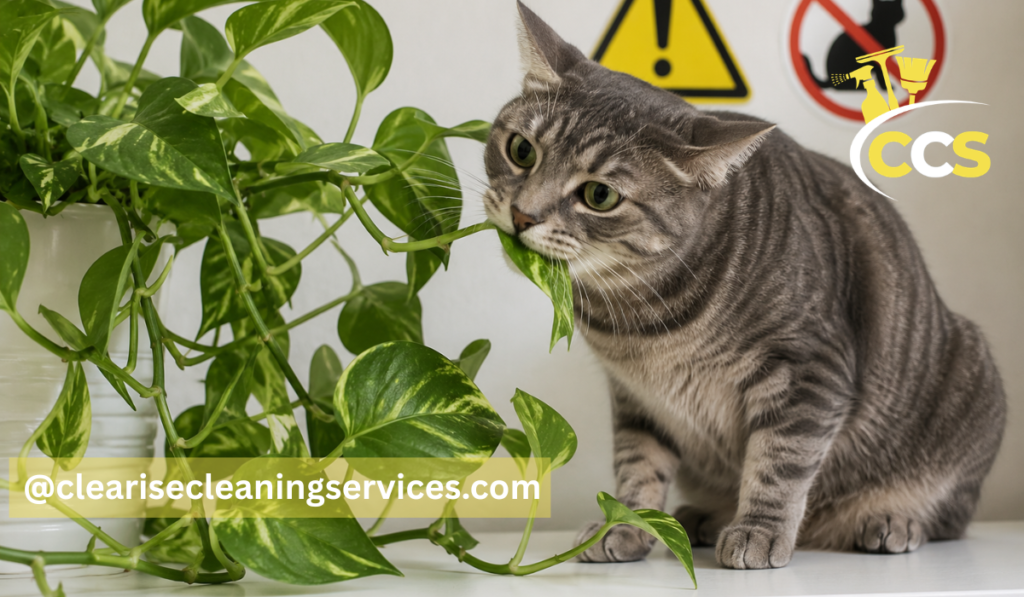
Pothos is one of the most common indoor plants because it is beautiful, easy to grow, and can survive in many home conditions. You may know it by names like golden pothos, devil’s ivy, marble queen pothos, neon pothos, or simply pothos. Its trailing vines and heart-shaped leaves make it a favorite for shelves, hanging baskets, and bright corners.
But if you live with a cat, the important question is simple: are pothos toxic to cats? Yes, pothos plants are toxic to cats if they chew or eat the leaves or stems. The plant does not usually cause life-threatening poisoning, but it can cause strong mouth pain, drooling, vomiting, swelling, and distress.
Many cat owners search this topic after seeing their cat bite a leaf, knock over a plant, or suddenly drool near a houseplant. Others want to know before buying pothos because cats are naturally curious and often explore plants with their mouths.
This article explains why pothos is toxic to cats, what symptoms to watch for, what to do if your cat eats pothos, when to call a vet, and which houseplants may be safer choices.
Quick Guide Table
| Topic | Quick Answer |
| Are pothos toxic to cats? | Yes, pothos are toxic if chewed or eaten. |
| Toxic part | Leaves and stems. |
| Main cause | Insoluble calcium oxalate crystals. |
| Common signs | Drooling, pawing, vomiting, mouth swelling. |
| Usually fatal? | Rarely, but it can be painful. |
| What to do first | Remove the plant and call your vet if symptoms appear. |
Step-by-Step Guide: What to Do If Your Cat Chews Pothos
- Move the pothos plant away immediately.
- Check your cat for drooling, vomiting, swelling, or distress.
- Offer fresh water, but do not force your cat to drink.
- Do not give human medicine.
- Call your vet or pet poison control if symptoms appear or you are unsure.
Why Pothos Plants Are Toxic to Cats
Pothos plants are toxic to cats because they contain insoluble calcium oxalate crystals. These crystals are tiny, sharp particles found inside the plant. They are not like a liquid poison that spreads through the body. Instead, they cause irritation when the plant is chewed.
The risky parts of the plant include the leaves and stems. Since cats usually chew soft leaves or dangling vines, these are the parts they are most likely to contact. When a cat bites into pothos, the crystals are released and can stick into the soft tissues of the mouth, tongue, lips, and throat.
This is why symptoms often appear quickly. A cat may suddenly drool, paw at the mouth, shake its head, or act uncomfortable soon after chewing the plant. The reaction can look scary because the mouth is very sensitive, and the irritation can be painful.
Even a small bite may be enough to bother some cats. Other cats may chew a leaf and show only mild signs. The reaction depends on how much plant material was chewed, how sensitive the cat is, and whether any was swallowed.
Common Symptoms After a Cat Chews Pothos
The most common symptoms after a cat chews pothos are related to the mouth and throat. You may notice drooling or foaming at the mouth. This happens because the mouth is irritated, and the cat may produce extra saliva in response.
Some cats paw at their face or mouth because they feel burning, scratching, or discomfort. They may also lick their lips repeatedly, shake their head, or seem restless. Vomiting can happen if the cat swallows plant pieces or if the irritation makes the stomach upset.
Swelling may appear around the lips, tongue, gums, or mouth. Mild swelling is more common, but any swelling should be watched closely. If swelling becomes severe or affects breathing, it becomes urgent.
A cat may also refuse food or water for a while because the mouth or throat feels sore. This can worry owners, especially if the cat normally eats well. In many mild cases, symptoms improve after the irritation settles, but it is still wise to monitor the cat carefully.
Other signs can include vocalizing, hiding, pacing, gagging, or acting stressed. Since cats often hide pain, even small behavior changes matter after possible plant exposure.
My Cat Ate Pothos But Seems Fine
If your cat ate pothos but seems fine, do not panic, but do not ignore it either. Some cats chew a small piece and spit it out quickly because the plant tastes unpleasant or causes instant mouth irritation. In that case, symptoms may be mild or short-lived.
It is also possible that your cat only touched or damaged the plant without swallowing much. A tiny nibble may not cause major symptoms. However, cats can hide discomfort, and signs may not always be obvious right away.
Watch your cat closely for drooling, vomiting, lip licking, pawing at the mouth, swelling, coughing, gagging, or changes in eating and drinking. Also check whether more leaves or stems have been chewed than you first noticed.
The phrase “my cat ate pothos but seems fine” is common because many cats do recover without serious problems. Still, “fine” should mean your cat is breathing normally, acting normally, not vomiting repeatedly, not drooling heavily, and not showing swelling.
If you are unsure how much was eaten, your cat is very young, old, already sick, or showing any unusual behavior, contact your veterinarian for advice.
How Serious Is Pothos Poisoning in Cats?
Pothos poisoning in cats is usually painful and irritating rather than fatal. In most cases, it affects the mouth, throat, and stomach more than the organs. This is different from some highly dangerous plants, such as true lilies, which can cause severe kidney damage in cats.
That said, pothos should still be taken seriously. A cat in pain may stop eating or drinking. Vomiting can cause dehydration if it continues. Swelling in the mouth or throat can become dangerous if it affects breathing, although this is not common.
The difference between irritation and severe poisoning is important. With pothos, the main problem is usually direct irritation from the crystals. The crystals cause burning, swelling, drooling, and discomfort where they touch. Severe cases are more concerning when there is a large amount eaten, repeated vomiting, strong swelling, or breathing difficulty.
So, are pothos toxic to cats in a serious way? They are toxic enough to keep away from cats and to call a vet if exposure happens. But they are not usually in the same danger category as plants that can quickly damage major organs.
What to Do If Your Cat Eats Pothos
If your cat eats pothos, first remove the plant from the area so your cat cannot chew more of it. Put the plant in a closed room, outside the cat’s reach, or somewhere your cat cannot access.
Next, check your cat’s mouth and behavior if it is safe to do so. Do not force your cat’s mouth open if they are stressed, painful, or trying to bite. Look for drooling, swelling, plant pieces, vomiting, or signs of distress.
You can offer fresh water. Some cats may drink and help clear the mouth naturally. Do not force water into your cat’s mouth because that can cause stress or choking. If your cat allows gentle help, you may wipe around the mouth with a damp cloth, but only if it is safe.
Contact your veterinarian or a pet poison control service for guidance, especially if you know your cat swallowed part of the plant. Give them helpful details, such as the type of pothos, how much may have been eaten, when it happened, and what symptoms you see.
Do not give human medicine unless a veterinarian tells you to. Also avoid trying home treatments that could make your cat more stressed.
When to Call a Vet Immediately
Call a vet immediately if your cat has trouble breathing, noisy breathing, severe swelling, or seems unable to swallow. These signs can mean the throat or airway is affected, and urgent care may be needed.
Repeated vomiting is another reason to call right away. One vomit may happen after plant irritation, but repeated vomiting can lead to dehydration and may need treatment. Extreme drooling, weakness, collapse, hiding in distress, or unusual tiredness should also be treated seriously.
You should also call quickly if your cat is a kitten, elderly, pregnant, or has a medical condition. These cats may not handle vomiting, stress, or reduced eating as well as healthy adult cats.
If you are not sure whether symptoms are serious, it is safer to ask a veterinarian. A quick call can help you decide whether home monitoring is enough or whether your cat should be seen.
Are Pothos Toxic to Dogs Too?
Yes, pothos are toxic to dogs too. The same insoluble calcium oxalate crystals that bother cats can also irritate a dog’s mouth, lips, tongue, throat, and stomach.
Common dog symptoms may include drooling, pawing at the mouth, vomiting, gagging, decreased appetite, and mouth swelling. Dogs may also chew larger amounts than cats because some dogs are less selective with plants. This can make symptoms more noticeable.
Pet owners with both cats and dogs should keep pothos away from both animals. Even if one pet ignores the plant, the other may chew it. A hanging pothos may look safe, but long vines can trail down and become easy for pets to reach.
Are Pothos Toxic to Cats According to ASPCA?
According to the ASPCA, golden pothos, also known as pothos or devil’s ivy, is listed as toxic to cats and dogs. This supports the simple answer: yes, pothos are toxic to cats.
ASPCA is often used by pet owners because it keeps a large toxic and non-toxic plant database. It is a helpful starting point when checking whether a houseplant is safe around pets.
This does not mean every cat will have a severe reaction, but it does mean pothos should not be treated as a cat-safe plant. If a plant is listed as toxic and your cat is likely to chew leaves, the safest choice is to remove it from your cat’s environment or place it somewhere truly unreachable.
Pothos vs Other Toxic Houseplants for Cats
Pothos is one of many common houseplants that can be harmful to cats. Snake plants are also toxic to cats, but they contain different irritating compounds and may cause stomach upset, drooling, nausea, or vomiting.
Philodendron and dieffenbachia are more similar to pothos because they also contain insoluble calcium oxalate crystals. They can cause mouth pain, drooling, swelling, and trouble swallowing.
Lilies are much more dangerous for cats than pothos. True lilies, including Easter lilies and daylilies, can cause severe kidney damage even in small amounts. This is why lily exposure should always be treated as an emergency.
The key point is that not all toxic plants carry the same risk. Pothos is usually irritating and painful, while some plants can be life-threatening. Still, any toxic plant should be kept away from cats.
Plants That Are Not Toxic to Cats
If you want houseplants but also want a safer home for your cat, choose plants that are widely listed as non-toxic to cats. Good options include spider plant, Boston fern, parlor palm, peperomia, and cat grass.
Spider plants are popular because they are easy to grow and have soft, arching leaves. Boston ferns add a full, green look without being considered toxic to cats. Parlor palms are another good choice for people who want a taller indoor plant.
Peperomia comes in many attractive varieties and is often a practical choice for small spaces. Cat grass is especially helpful because it gives cats a safe plant to chew, which may reduce their interest in other houseplants.
Even non-toxic plants can cause mild vomiting if a cat eats too much plant material. “Non-toxic” means the plant is not expected to poison your cat, not that it should become a snack every day.
How to Keep Cats Away From Pothos
The safest way to keep cats away from pothos is to remove the plant from areas your cat can access. High shelves may work for some cats, but many cats can climb surprisingly well. A shelf is only safe if your cat truly cannot reach it.
Hanging planters can help, but use them carefully. Long pothos vines can trail downward and become tempting toys. Trim the vines regularly if you keep the plant hanging.
Another option is to keep pothos in a closed room where your cat is not allowed. This works best if the door stays closed and the plant is not placed near a window or furniture your cat can reach.
You can also provide safe chewing alternatives, such as cat grass, and give your cat more playtime and enrichment. Some cats chew plants because they are bored, curious, or attracted to moving leaves. A more interesting environment can reduce plant chewing.
Still, training alone is not always reliable. If your cat is determined to chew plants, choosing pet-safe plants is the better long-term solution.
What Cat Owners Say Online About Pothos
Many people search “are pothos toxic to cats Reddit” because they want real stories from other pet owners. Online discussions can be helpful because they show what happened in everyday homes. Some owners say their cat chewed pothos and was fine. Others describe drooling, vomiting, or a stressful vet call.
These stories vary because every situation is different. One cat may bite a tiny leaf tip and spit it out. Another may chew several leaves or swallow stems. Some cats are more sensitive than others, and owners may not always know exactly how much was eaten.
Reddit and other forums can give comfort, but they should not replace veterinary advice. Personal stories cannot tell you what is safe for your specific cat. For plant toxicity, it is better to trust veterinary sources, poison control guidance, and your own vet.
A balanced approach is best: read experiences if they help you feel less alone, but make decisions based on your cat’s symptoms and professional advice.
Conclusion
So, are pothos toxic to cats? Yes, pothos plants are toxic to cats because they contain insoluble calcium oxalate crystals that can irritate the mouth, throat, and stomach. The reaction is usually painful rather than fatal, but it can still be upsetting for both the cat and the owner.
If your cat chews pothos, remove the plant, watch for symptoms, offer fresh water, and contact your vet or poison control if you are concerned. Call a vet immediately if there is trouble breathing, severe swelling, repeated vomiting, extreme drooling, weakness, or clear distress.
For a safer home, keep pothos away from cats or replace it with cat-friendly plants like spider plant, Boston fern, parlor palm, peperomia, or cat grass. A beautiful home and a safe cat can go together when you choose plants carefully.
The calmest answer is this: pothos is not the best plant for a cat-friendly home. If your cat likes to chew plants, choosing non-toxic alternatives is the safest and simplest decision.
FAQs
Are Pothos Toxic To Cats Or Just Irritating?
Pothos are toxic to cats because they contain insoluble calcium oxalate crystals. They usually cause painful mouth and throat irritation rather than organ damage.
My Cat Ate Pothos But Seems Fine. Should I Worry?
Yes, you should still watch your cat closely. Mild cases may pass, but drooling, vomiting, swelling, or breathing trouble means you should contact a vet.
Can Pothos Kill A Cat?
Pothos poisoning is rarely fatal, but it can be very painful. Serious swelling, repeated vomiting, or breathing problems need urgent veterinary care.
Are All Pothos Varieties Toxic To Cats?
Yes, common pothos varieties such as golden pothos, marble queen, neon pothos, and devil’s ivy are considered toxic to cats.
What Plants Are Safer For Cats Than Pothos?
Cat-safe options include spider plant, Boston fern, parlor palm, peperomia, and cat grass. Even safe plants should not be eaten in large amounts.
Disclaimer: This article is for general informational purposes only and is not a substitute for professional veterinary advice. If your cat chews pothos or shows symptoms, contact your veterinarian or a pet poison control center.
Thanks for visiting Clearise Cleaning Services! Discover more helpful tips and expert cleaning insights by exploring our related categories.