To clean a bathroom means to remove dirt, soap scum, mineral marks, and germs from every surface in the room, from the mirror and sink to the toilet, shower, tiles, and floor, and to leave the room dry, fresh, and ready to use again. Done in the right order, a full clean takes about an hour for a normal bathroom.
A bathroom looks small, but it collects many kinds of dirt at once. Steam leaves marks on mirrors and glass, soap leaves a film in the shower, water leaves mineral spots on taps, and damp corners invite mould if they stay wet. Daily wiping helps, but it rarely reaches the grout, the base of the toilet, or the shower drain.
This guide works from top to bottom and from dry dirt to wet cleaning, so dust and drips never spoil a surface you have already cleaned. You will clean one zone at a time, finish with the floor, and end with a short routine that keeps the next clean much shorter.
What a Full Bathroom Clean Really Includes
A full bathroom clean includes every visible surface and the hidden spots around them: the mirror, lights, sink, toilet, shower or bath, tiles and grout, taps, handles, door, and floor, plus towels, bins, and storage checked and reset. If a spot can collect water, soap, or dust, it belongs in the clean.
Many people clean only what they see in the mirror: the sink and the toilet seat. That leaves soap scum on the shower screen, dust on the light fitting, and grime around the toilet base. A full clean is different because it treats the bathroom as one connected room. Water moves, steam settles everywhere, and a dirty drain can make a clean sink smell stale.
Start by deciding what “done” means for your bathroom. A quick weekly clean covers the main surfaces. A deeper clean, done every few weeks, adds grout, drains, cabinet fronts, and the tops of tiles. This article covers the deeper clean, and the final section shows which parts to repeat weekly.

Gather Supplies Before You Start
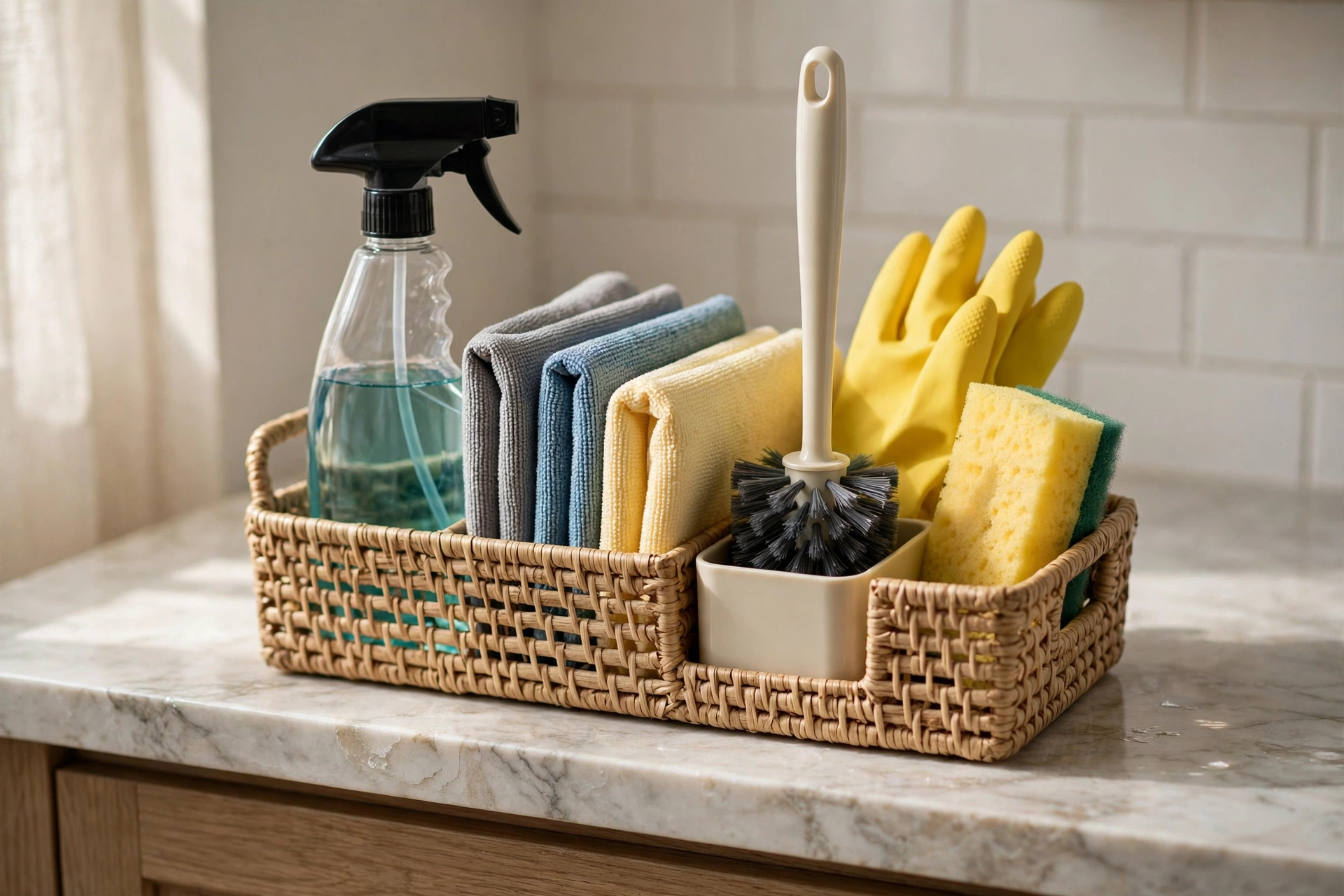
Before you start cleaning a bathroom, gather an all-purpose bathroom cleaner, dish soap, baking soda, white vinegar, a toilet cleaner and brush, microfibre cloths, a non-scratch sponge, an old toothbrush, rubber gloves, a bucket, and a bag for rubbish. Having everything ready first stops half-cleaned zones and repeated trips to the cupboard.
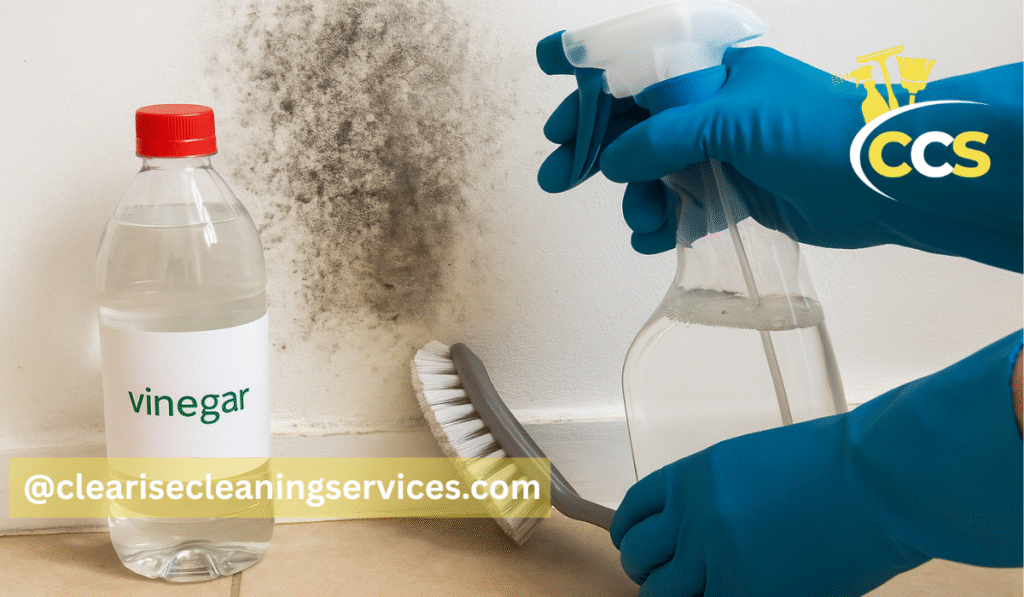
A bathroom cleaner handles soap scum and general grime, while dish soap in warm water works well on many surfaces. Baking soda makes a gentle paste for the sink and grout, and white vinegar helps dissolve mineral marks on taps and glass. Always read product labels, never mix bleach with vinegar or other cleaners, and keep cleaning products away from children and pets.
Wear gloves, open a window or switch on the extractor fan, and remove towels, mats, and loose items before you spray anything. Keep a dry cloth ready for mirrors and taps, because drying at the end is what prevents water spots. If you use a strong cleaner, give it the contact time stated on the label instead of scrubbing at once.
- All-purpose bathroom cleaner, toilet cleaner, dish soap, and baking soda
- White vinegar for mineral marks, used only where the maker allows it
- Microfibre cloths, a non-scratch sponge, a toilet brush, and an old toothbrush
- Rubber gloves, a bucket, rubbish bags, and a dry cloth for polishing
Start at the Top: Lights, Walls, and High Surfaces
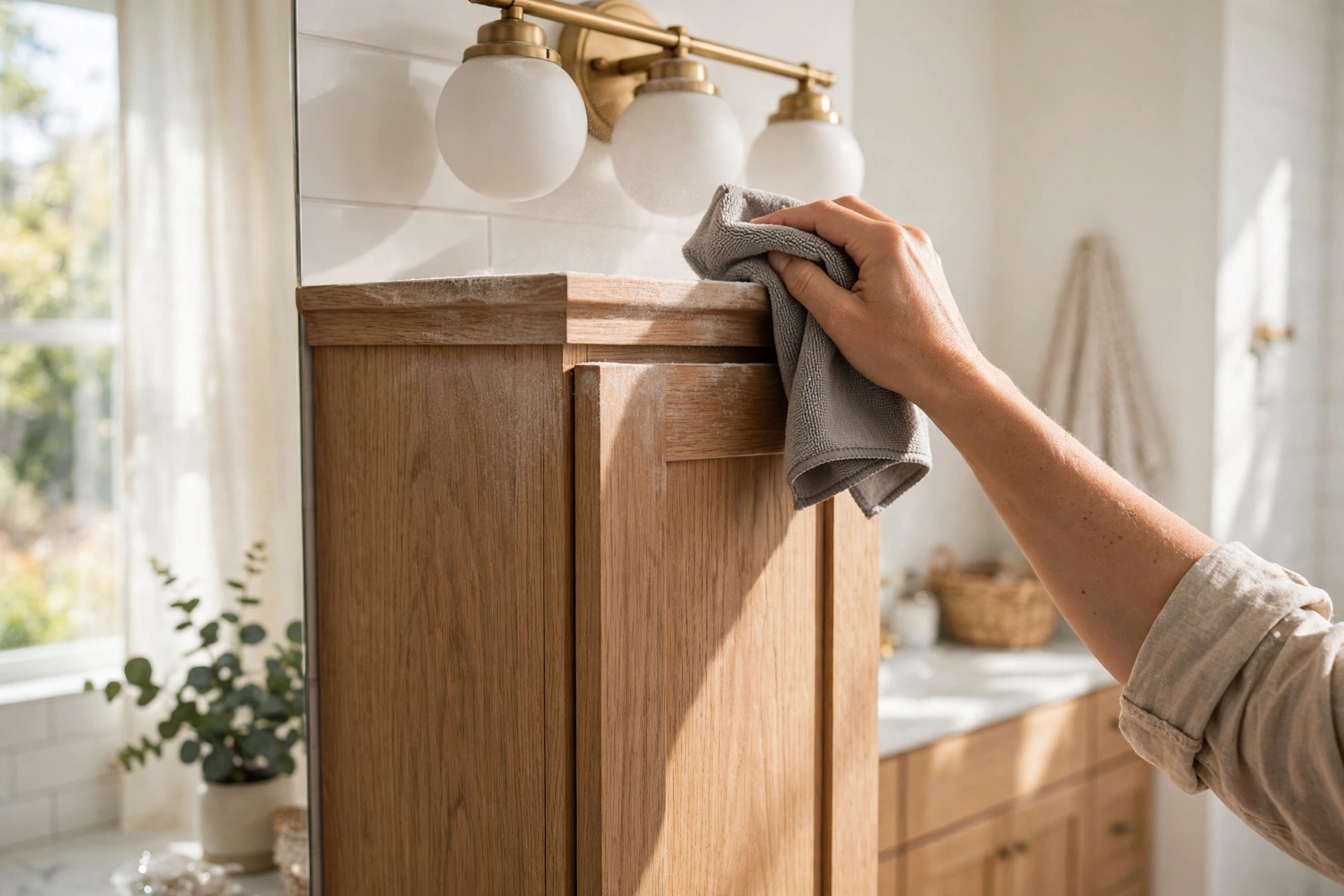
Start a bathroom clean at the top by dusting light fittings, vents, high tiles, and the tops of cabinets, then working downward so dust and drips fall onto surfaces you have not cleaned yet. This top-to-bottom order is the simplest way to avoid cleaning the same surface twice.
Dust and steam settle where you rarely look: the top of a mirror cabinet, the rim of a light fitting, and the vent cover. Wipe them with a dry cloth first, then a damp cloth if the surface allows it. Switch lights off and let bulbs cool before you touch them, and follow the maker’s instructions for removing covers.
Wipe high wall tiles with warm soapy water if they show splash marks, and rinse well so no soapy film remains. Leave high surfaces to dry while you move to the shower. This prevents drips onto your freshly cleaned sink later.
Clean the Shower and Bathtub
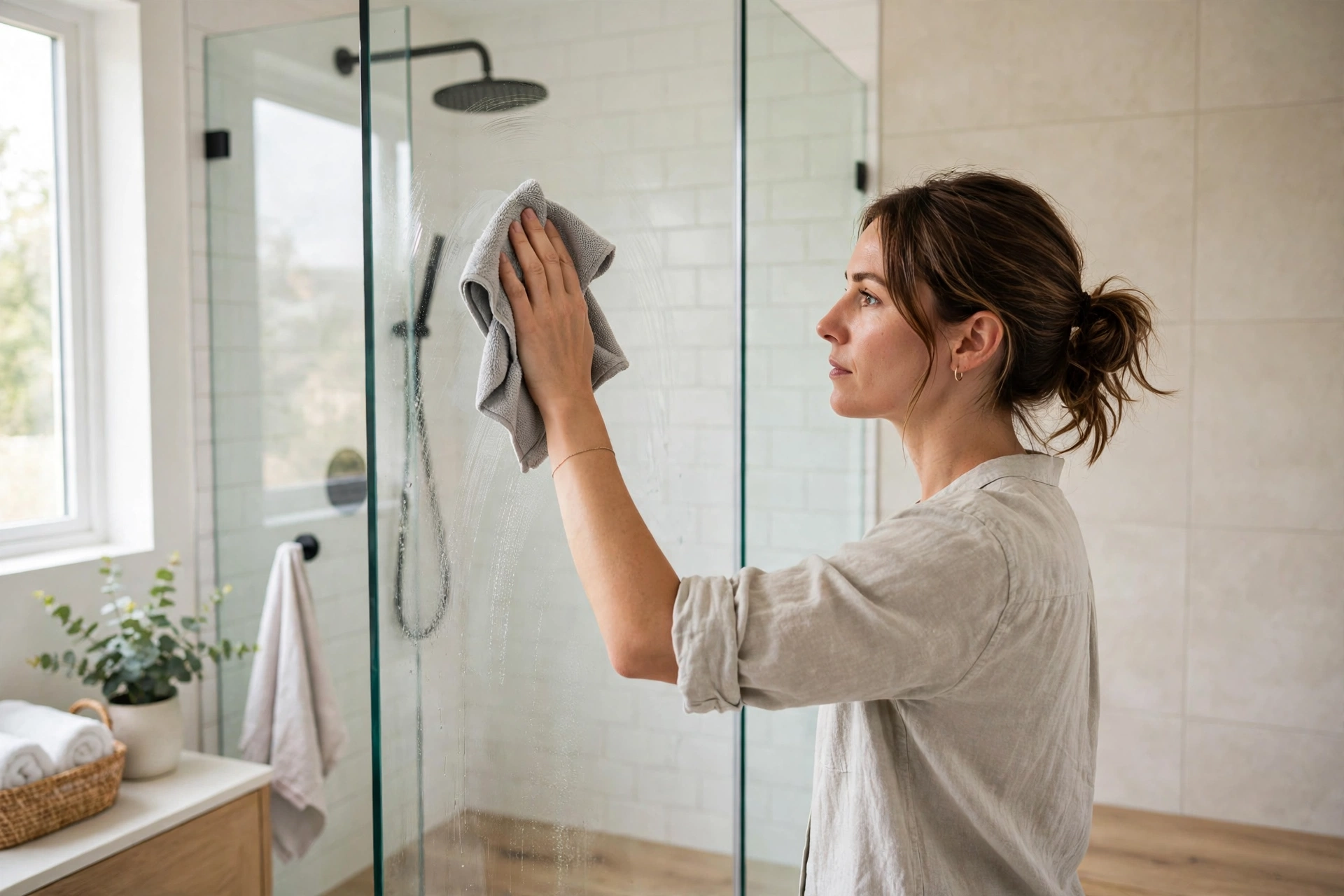
To clean a shower or bathtub, remove loose items, spray a bathroom cleaner over the walls, screen, and tub, let it sit for the time stated on the label, then scrub, rinse well, and dry the glass and taps. Letting the cleaner sit first softens soap scum, so you scrub less and scratch less.
Start with the shower head and taps. Wipe away loose dirt, then spray the walls from top to bottom and the screen or curtain on both sides. While the cleaner works, clean the drain cover and remove hair and loose dirt from the drain, following the maker’s guidance for your fitting. Scrub grout lines gently with a brush, and pay attention to corners where water collects.
Rinse everything well, because leftover cleaner can leave a slippery film and attract new dirt. Dry the glass with a microfibre cloth or a squeegee if you have one, and wipe the taps until they shine. For a bathtub, clean the rim and the outer panel too, and rinse the bath mat separately if it is washable.
Clean the Toilet the Right Way
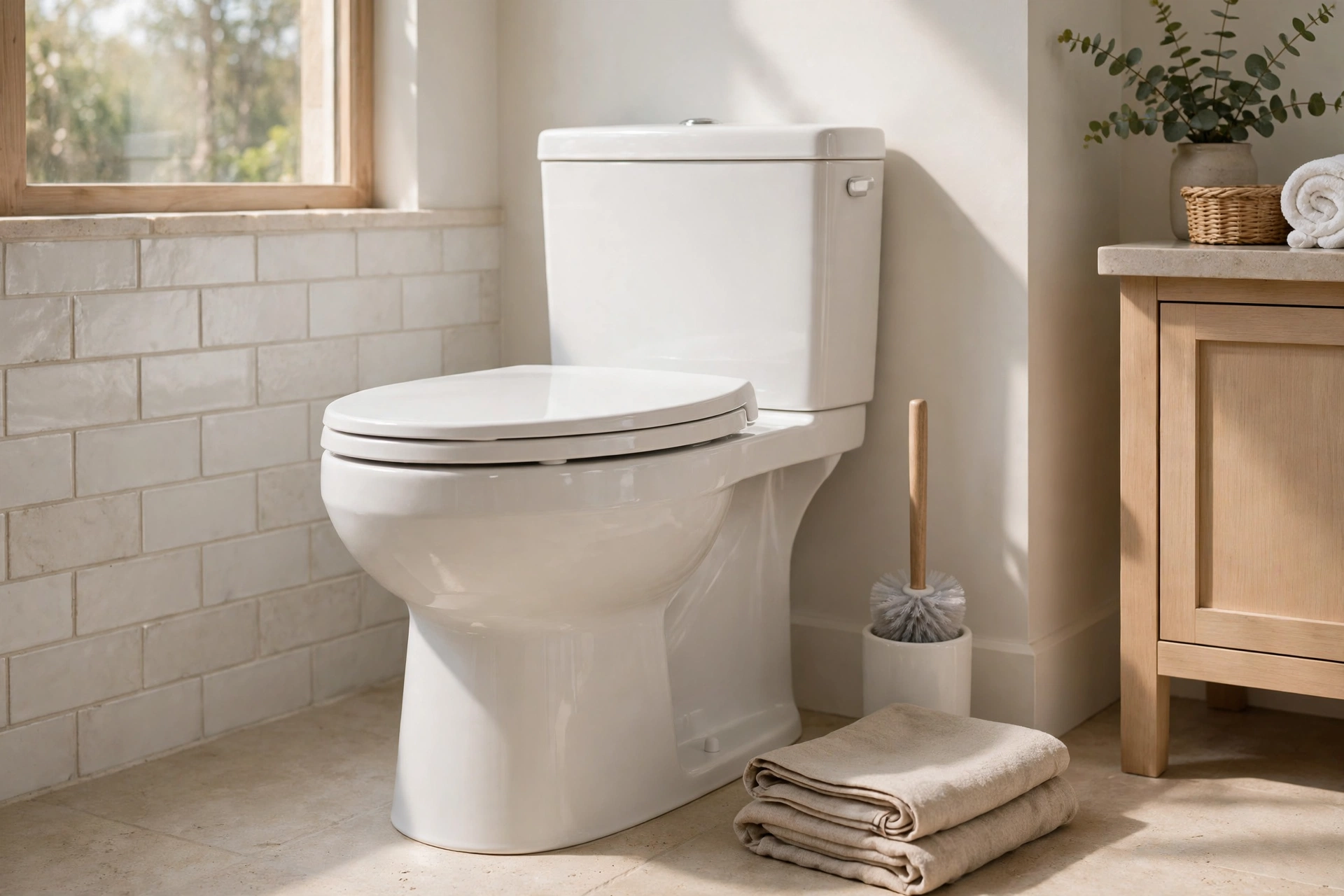
To clean a toilet properly, apply toilet cleaner under the rim and inside the bowl, let it sit, scrub with a toilet brush, flush, then wipe the seat, lid, handle, base, and nearby floor with a disinfecting cleaner and a separate cloth. Cleaning the bowl alone is not enough, because germs also collect on handles and the base.
Apply the cleaner first so it can work while you clean other parts of the bathroom, if your routine allows it. Scrub under the rim, where stains hide, then the bowl, then flush with the lid down if possible. Rinse the brush well and store it so it can dry, rather than leaving it in dirty water.
Wipe the outside in a sensible order: lid, seat, hinges, handle, tank, and base, finishing with the floor around the toilet. Use a separate cloth for the toilet area, wash your hands well afterwards, and replace the cloth or wash it before it touches another room. If the toilet seat is loose or damaged, tighten or replace it following the maker’s instructions.
Clean the Sink, Vanity, and Storage
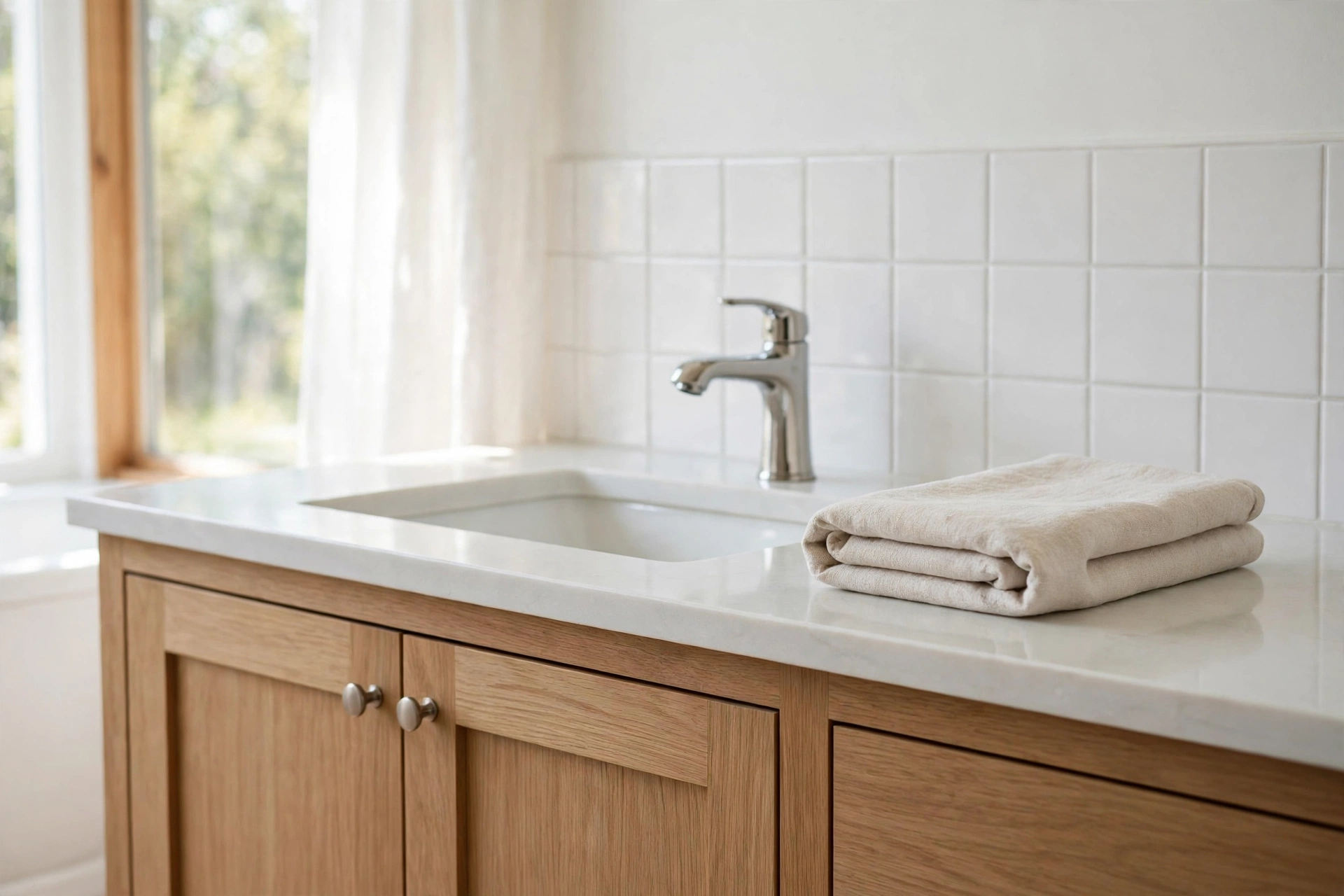
To clean a bathroom sink and vanity, clear the counter, wipe the basin and taps with warm soapy water or a bathroom cleaner, clean the drain and overflow, wipe cabinet fronts and handles, and put items back only when surfaces are dry. A clear counter makes the whole bathroom look cleaner at once.
Start by removing bottles, toothbrush holders, and loose items, and throw away empty containers. Wipe the basin from the rim inward, rinse, and dry it so water spots do not form. Clean around the base of the tap, where toothpaste and mineral marks collect, with a damp cloth or an old toothbrush, and rinse well.
Wipe the mirror cabinet or vanity doors, clean the handles, and check inside one cabinet at a time if you have time. Group similar items together, such as hair care and skin care, and keep daily items within reach. Put a clean hand towel out, and leave the counter as clear as you can, because a clear counter stays cleaner between deep cleans.
Clean Mirrors, Glass, and Fixtures
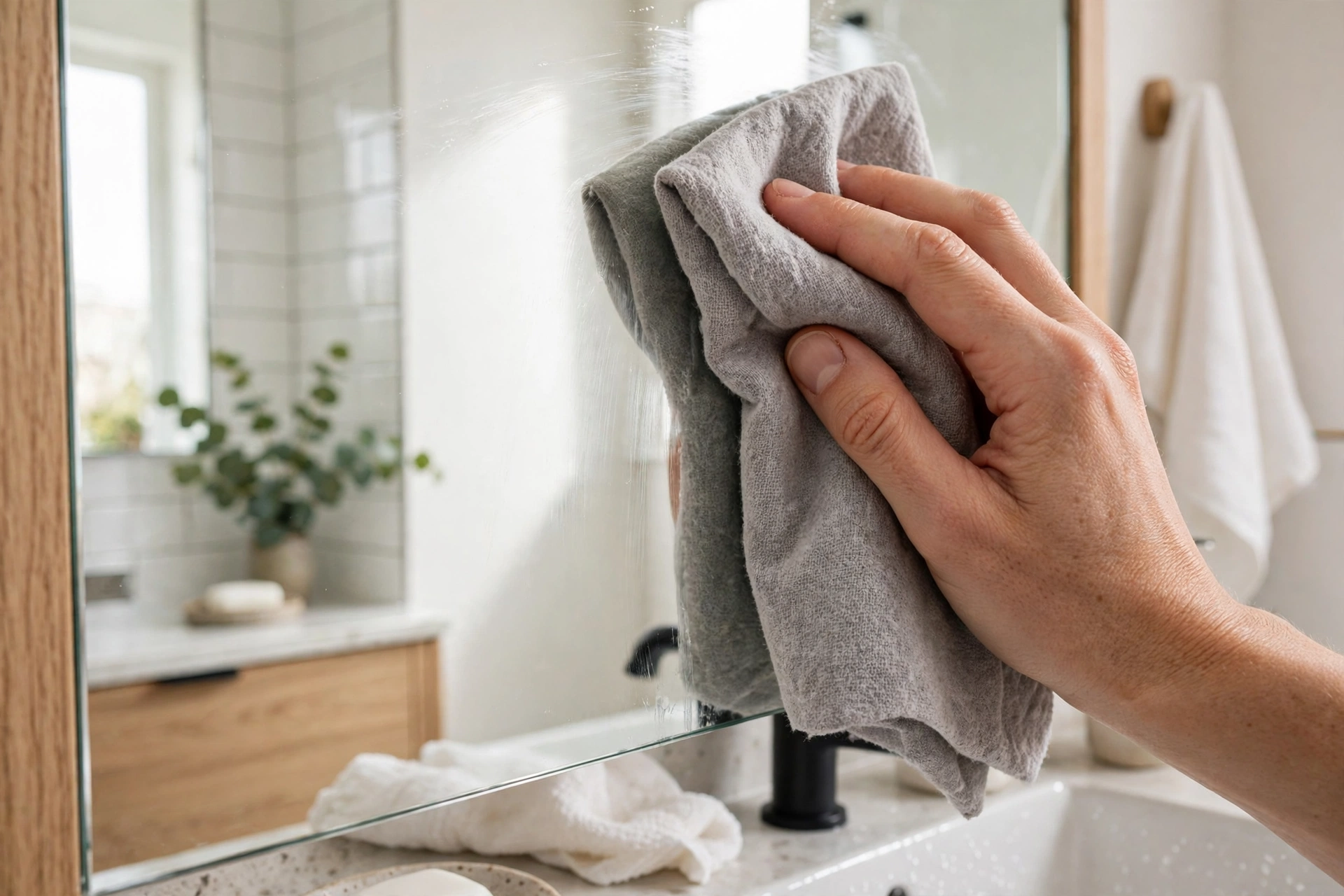
To clean a bathroom mirror and glass without streaks, spray a glass cleaner or a small amount of soapy water onto a cloth, not directly onto the glass, wipe in one direction, then buff dry with a clean microfibre cloth. Spraying the cloth first keeps cleaner out of the frame and off the wall.
Steam marks and toothpaste splashes are the usual problems on bathroom mirrors. Wipe the whole mirror, including the edges where grime collects, then check it from an angle for streaks. If streaks remain, buff again with a dry cloth rather than adding more cleaner, because extra product often causes the streaks.
Wipe light fittings, towel rails, and other fixtures with a damp cloth and dry them well, because water left on metal can leave spots. For chrome taps, a soft cloth and warm soapy water are usually enough, followed by drying. Avoid abrasive pads on mirrors, glass, and polished metal, since scratches show up quickly under bathroom light.
Tackle Tiles and Grout
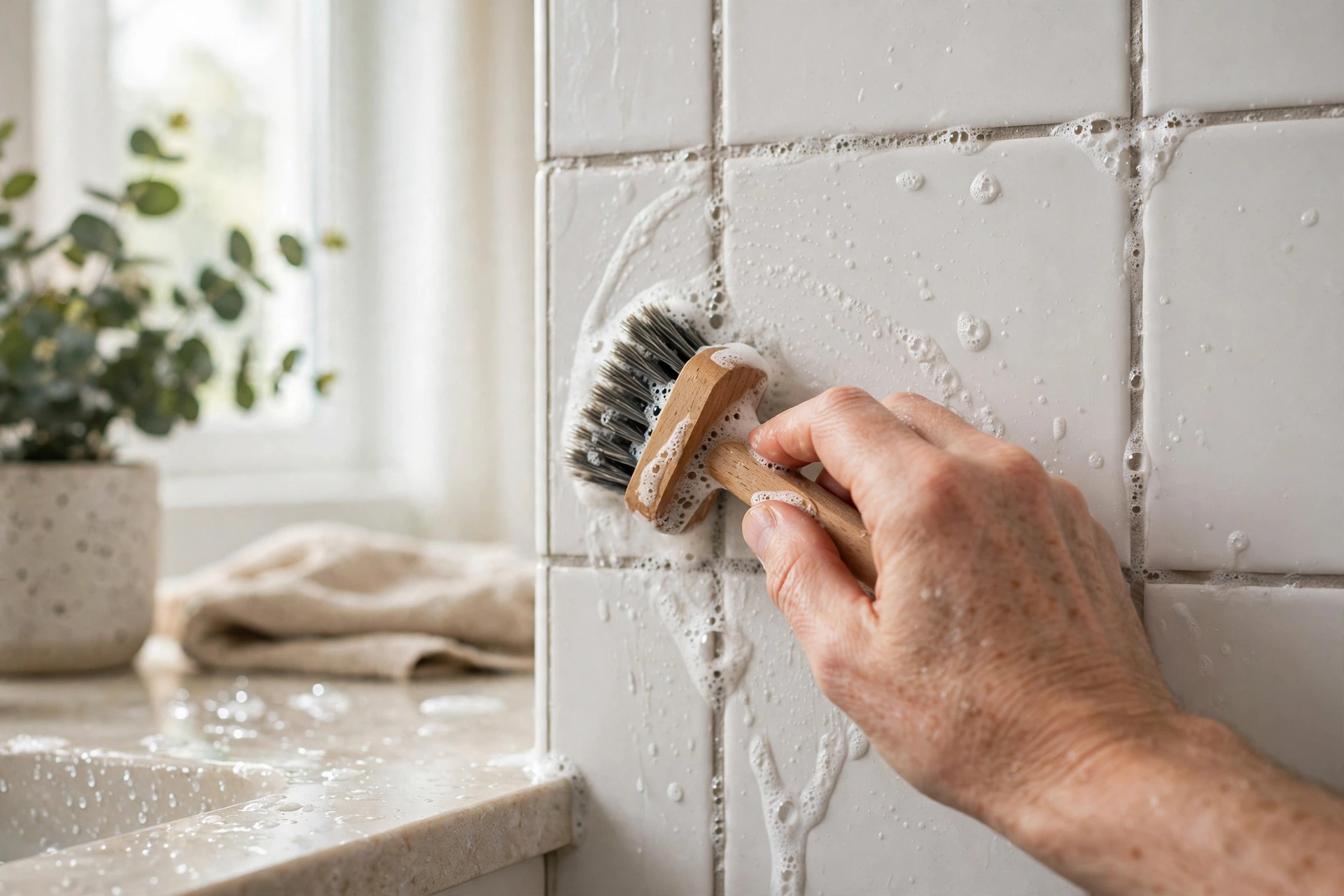
To clean bathroom tiles and grout, wash the tiles with warm soapy water or a bathroom cleaner, scrub grout lines gently with a brush and a baking soda paste, rinse well, and dry the area so damp grout does not stay wet for long. Grout is porous, so dirt settles into it and needs a brush, not just a wipe.
Tile surfaces usually clean easily, but grout lines need more time. Apply a paste of baking soda and water to a small section, scrub gently with an old toothbrush, and rinse before moving on, so the paste does not dry on the tiles. For coloured grout, test a hidden spot first, and follow the grout or tile maker’s guidance before using vinegar or a strong cleaner.
| Bathroom zone | Main task | Best simple tool |
|---|---|---|
| Shower and bath | Remove soap scum, rinse, dry glass | Bathroom cleaner, squeegee |
| Toilet | Clean bowl, seat, handle, base | Toilet cleaner, brush, separate cloth |
| Sink and vanity | Wipe basin, taps, cabinet fronts | Warm soapy water, microfibre cloth |
| Mirrors and fixtures | Remove streaks and spots, dry well | Glass cleaner, dry microfibre cloth |
| Tiles and grout | Wash tiles, brush grout lines | Baking soda paste, old toothbrush |
| Floor | Sweep, mop, dry edges and corners | Broom, mop, dry cloth |
Rinse grout well and dry the tiles with a cloth if you can, especially in corners and around the shower. Good ventilation helps here: leave the fan on or a window open until the room is dry. If grout stays stained, note it for repair rather than scrubbing harder.
Wash the Bathroom Floor
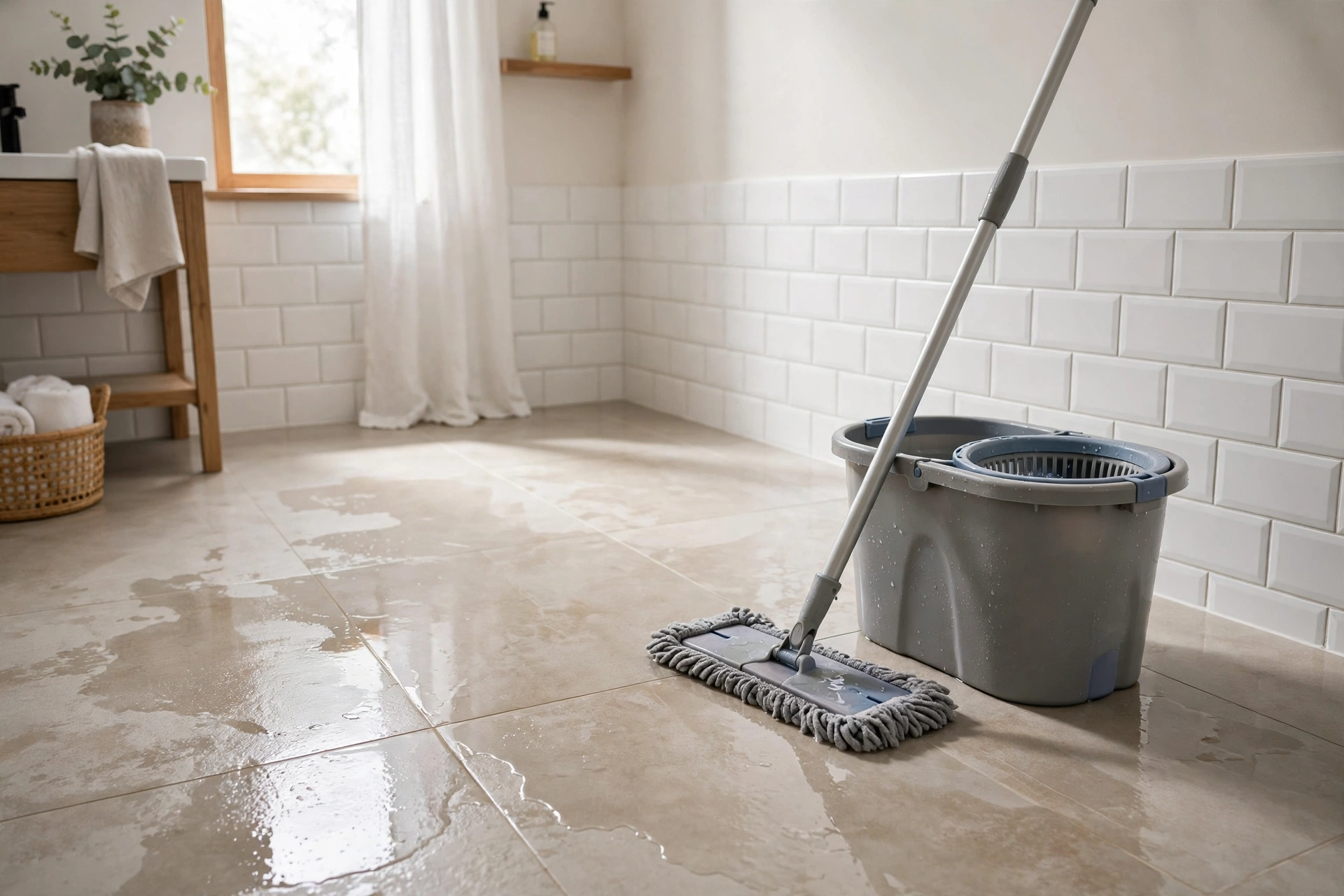
To wash a bathroom floor well, sweep or vacuum first to remove hair and dust, mop with a cleaner suited to the floor type, work from the far corner toward the door, and let the floor dry fully before putting mats back. Mopping over dry hair and grit spreads dirt instead of removing it.
Start by moving the bin, scale, and mats out of the way, and sweep corners, behind the toilet, and along the skirting boards, where hair collects. For tile floors, a damp mop with a suitable floor cleaner usually works well, and grout lines may need a brush for stubborn dirt. For vinyl or other floors, use only a cleaner the maker allows, and avoid standing water.
Pay attention to the area in front of the sink and shower, where water and soap are most common. Wipe the skirting boards with a damp cloth while the floor dries, and replace mats only when the floor is dry, so damp mats do not trap moisture underneath.
A Note on Washrooms: Same Steps, Different Word
If you search for how to clean a washroom, you want the same job as cleaning a bathroom: a toilet, sink, shower or bath, tiles, mirrors, and floor, cleaned in the same top-to-bottom order. The word washroom is more common in some homes, offices, and regions, and the steps in this guide apply in the same way.
The only real difference is scale. A small washroom or cloakroom may have no shower, so you can skip that section and spend the time on the toilet, sink, and floor instead. A larger family bathroom needs the full routine, including grout and the shower screen. Either way, keep the same order: high surfaces first, wet zones next, floor last.
Use the same safety rules too. Read product labels, never mix bleach with vinegar or other cleaners, ventilate the room, and dry surfaces at the end. A washroom that is cleaned and dried properly smells fresher and stays cleaner, whatever name you use for the room.
Declutter Cabinets, Towels, and Laundry
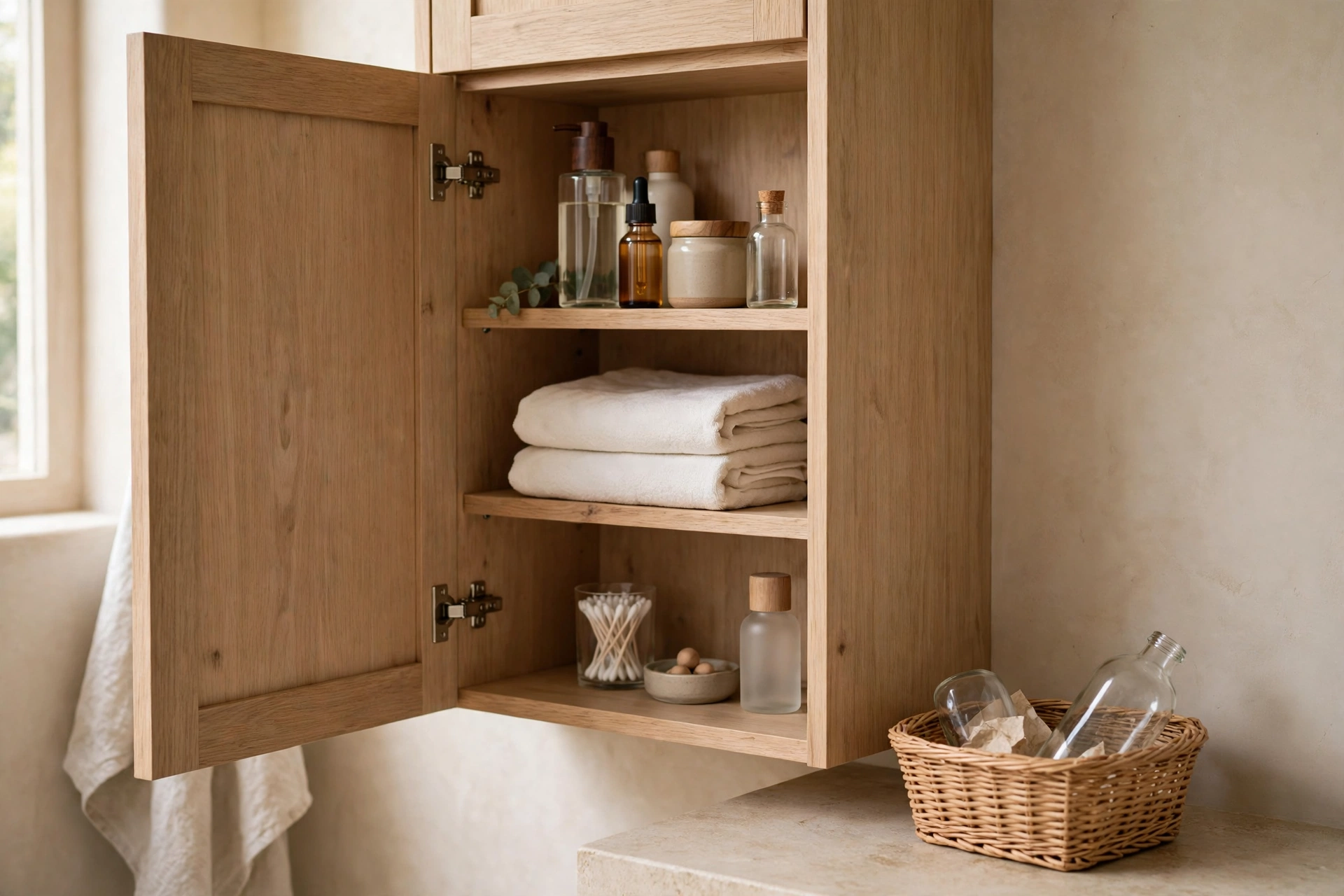
To finish a bathroom clean well, check cabinets and drawers, throw away empty or expired items, replace damp towels with clean ones, and take dirty laundry and rubbish out of the room. A bathroom can be scrubbed clean and still look messy if storage is full and towels are damp.
Open one cabinet at a time and remove items you no longer use, such as empty bottles and expired medicines, following local disposal guidance for medicines. Wipe the shelf, dry it, and put back only what you use. Keep daily items at the front and spare stock behind them, so the next clean does not turn into a full sort.
Replace hand towels and bath towels with clean, dry ones, and hang them so air can reach them. Take the bin out, replace the liner, and put a fresh roll of toilet paper within reach. These small steps finish the room.
Keep It Clean With a Simple Weekly Routine
To keep a cleaned bathroom clean, link each deep-clean task to a small weekly habit: wipe the sink and taps after brushing, squeegee the shower glass after use, clean the toilet once a week, and mop the floor weekly. Small, regular habits prevent the same heavy buildup from returning all at once.
A simple routine works better than a perfect routine you cannot keep. After a shower, a quick squeegee or towel-dry of the glass takes less than a minute and slows soap scum. Once a week, wipe the sink, toilet, and mirror, and sweep the floor. Once a month, pick one deeper task, such as grout, the shower drain, or one cabinet, so the work stays spread out.
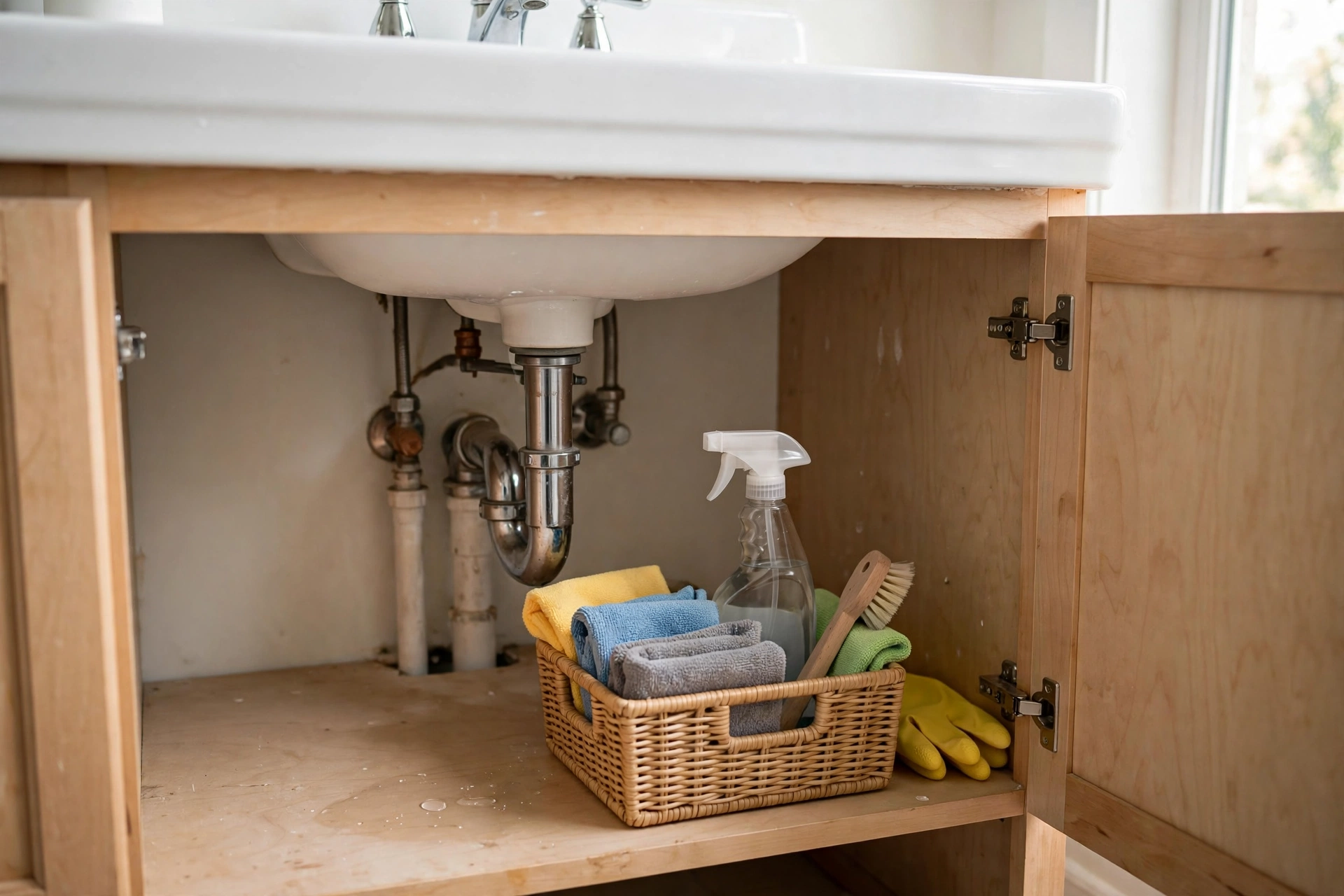
Keep bathroom cleaning supplies in one easy spot, such as a small caddy under the sink, so a quick wipe does not feel like a project. Replace sponges and cloths regularly, and leave the fan on after showers until the room is dry. If the bathroom feels damp again, check ventilation first, because a dry bathroom stays cleaner than a damp one.
Conclusion
A clean bathroom is not about perfection for one day; it is about giving the room a fresh start and a routine that keeps it pleasant to use. Work from top to bottom, clean one zone at a time, and match products to surfaces. With small weekly habits, the next bathroom clean will be shorter and simpler.
FAQs
How long does it take to clean a bathroom?
A normal home bathroom usually takes about an hour for a full clean, depending on size, soap scum, and grout condition. A quick weekly clean takes much less, often fifteen to twenty minutes.
How often should I clean my bathroom?
Most bathrooms benefit from a weekly clean of the main surfaces and a deeper clean every three to four weeks. Busy family bathrooms, or homes with hard water, may need the deeper clean more often.
What is the best order for cleaning a bathroom?
Start at the top and work down, and clean dry dirt before wet cleaning. Clear high surfaces first, then the shower, toilet, and sink, and finish with the floor last.
Can I use vinegar in the bathroom?
Vinegar can help with mineral marks on some taps and glass, but it is not safe for every surface. It may damage natural stone and some finishes, so check the maker’s guidance and test a hidden spot first.
How do I stop mould in the bathroom?
Keep the room dry and ventilated, wipe wet surfaces after showers, and leave the fan on until the room dries. If mould keeps returning, check for leaks or poor ventilation and seek professional help.
Disclaimer: This article is for general information only and does not provide professional cleaning, plumbing, or mould-remediation advice. Always follow the instructions for your surfaces, fixtures, and cleaning products, keep cleaning products away from children and pets, ventilate the room when using strong cleaners, and seek qualified help for leaks, damaged fixtures, electrical problems, or persistent mould. Clearise Cleaning Services does not offer guest posting, paid promotion, or advertising through this article.