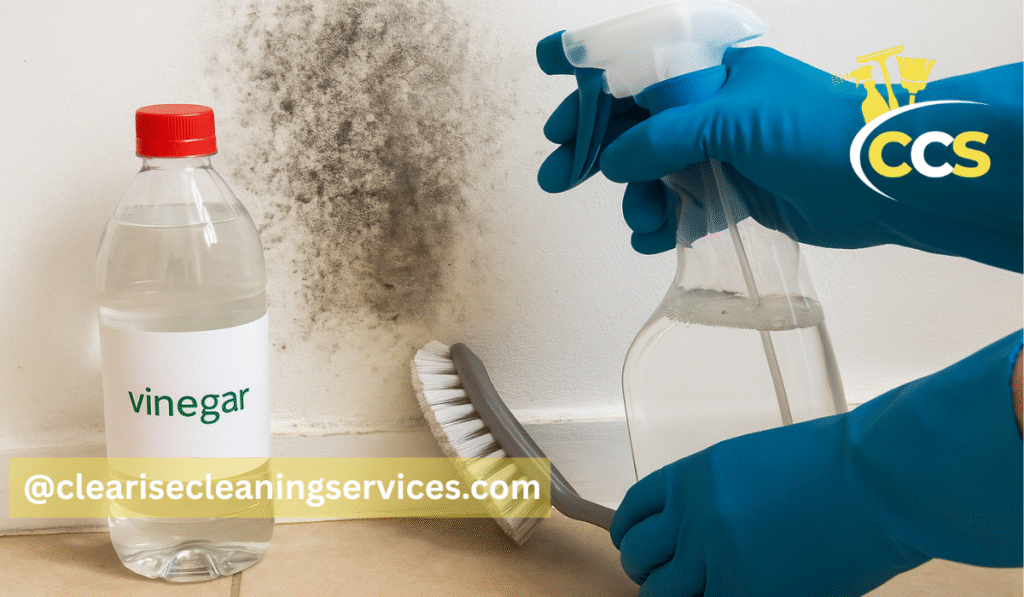
To clean a mattress means to remove dust and allergens by vacuuming, treat stains gently without soaking the mattress, control odour with a light, dry method, and let it dry fully before making the bed again. Done in that order, with as little moisture as possible, it freshens the bed without damaging the mattress inside.
A mattress collects dust, dead skin, sweat, and spills over time, even with clean sheets. You cannot see most of it, but you can feel the difference when a mattress is fresh: it smells cleaner, feels softer, and sleeps more comfortably. Sheets and a protector help, but they do not replace cleaning the mattress itself.
This guide works from dry cleaning to gentle wet treatment, so you never soak a mattress first. It covers different mattress types, common stains, odour, and protection, and ends with a routine that keeps the next clean much shorter.
Know Your Mattress Type First
Before you clean a mattress, identify its type, because foam, spring, hybrid, and latex mattresses react differently to water, heat, and cleaners. Check the label, the maker’s website, or your purchase records, and follow those instructions over any general guide.
Foam mattresses, including memory foam, absorb water easily and dry slowly, so they need minimal moisture and plenty of drying time. Spring mattresses have more airflow, but their padding can still hold moisture if soaked. Hybrid mattresses combine foam and springs, so they need the same caution as foam. Latex mattresses are more resilient, but still need gentle, minimal-moisture cleaning.
Colour, age, and any existing protector also matter. A mattress with a removable, washable cover should have that cover washed separately, following its label. If you are unsure about your mattress type, start with the gentlest method: vacuum, a light dry treatment, and a small test patch.

Strip the Bed and Vacuum Thoroughly
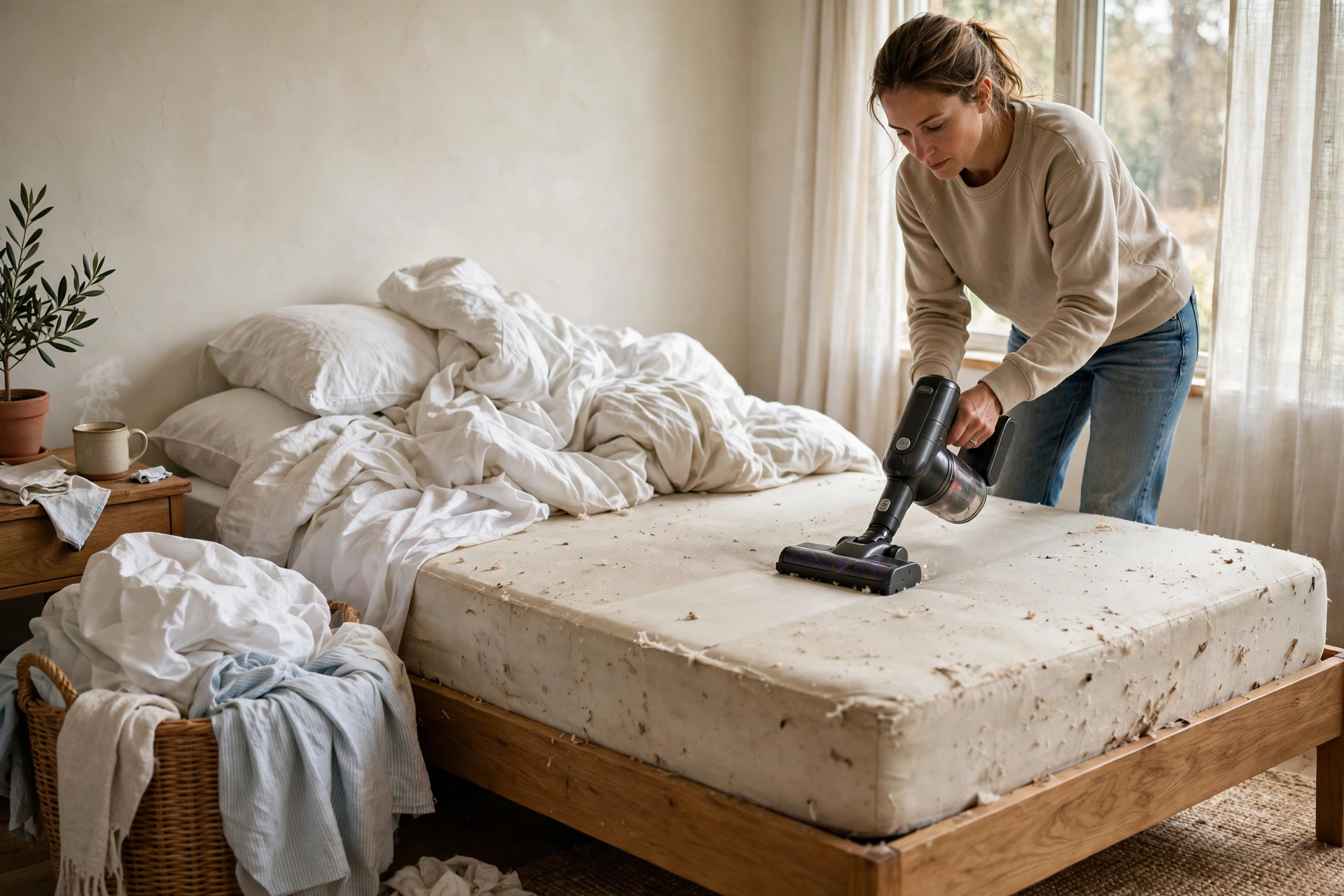
To clean a mattress well, strip the bed completely, including sheets, pillowcases, mattress protector, and any topper, then vacuum the whole surface slowly, including sides and seams. Vacuuming first removes loose dust, hair, and allergens that wet cleaning would only spread.
Use a vacuum with an upholstery tool if you have one, and go over the surface in overlapping passes, paying attention to seams, tufts, and edges, where dust collects. Vacuum the sides too, and the base or bed frame if it is dusty. Empty the vacuum bin or bag afterwards, so dust does not go back into the room.
Wash bedding and the protector separately, following their labels, while the mattress is exposed. This is also a good time to air the room, open a window if the weather allows, and let fresh air reach the mattress while you work. A clean, aired room makes the whole clean feel fresher.
- Strip sheets, pillowcases, protector, and topper completely
- Vacuum top, sides, and seams slowly, with an upholstery tool
- Vacuum the bed frame and floor around the bed
- Wash bedding separately, following its label
Treat Stains Gently, Without Soaking
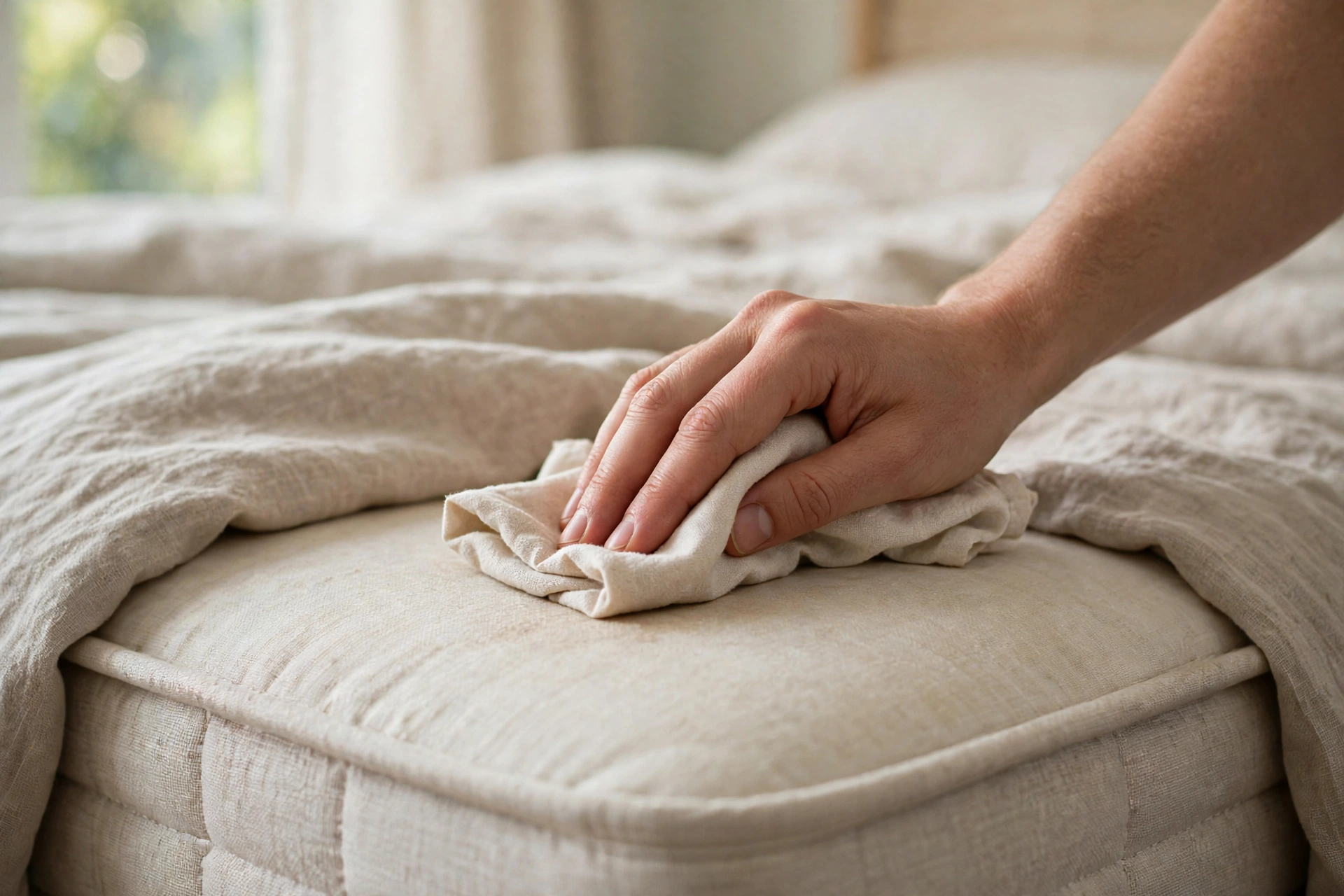
To treat a mattress stain, blot up as much as possible first, test any cleaner in a hidden spot, apply a small amount to a cloth rather than pouring it on the mattress, blot gently, and rinse by blotting with a clean, damp cloth. Blotting lifts the stain, while rubbing spreads it and soaking damages the mattress inside.
Speed matters for fresh stains, but calm steps matter more. For liquids, press a clean white cloth onto the stain and lift, repeating with a fresh section of cloth. For solids, lift them gently with a spoon or dull knife, working from the edge inward. White cloths help because you can see when colour stops transferring.
Test your cleaner on a hidden corner, wait a few minutes, and check for colour change or damage. If the test is fine, apply the cleaner to a cloth, blot the stain, and rinse by blotting with a cloth dampened in clean water, so no sticky residue remains. Work in small sections, and do not flood the mattress, because excess water is hard to dry and can cause smells.
Clean Common Mattress Stains by Type
To clean a common mattress stain, identify the stain type first, because different stains need different first steps, and guessing with one method often fails. Food, drink, sweat, urine, and blood each need a slightly different approach, but all need the same gentle, minimal-moisture rule.
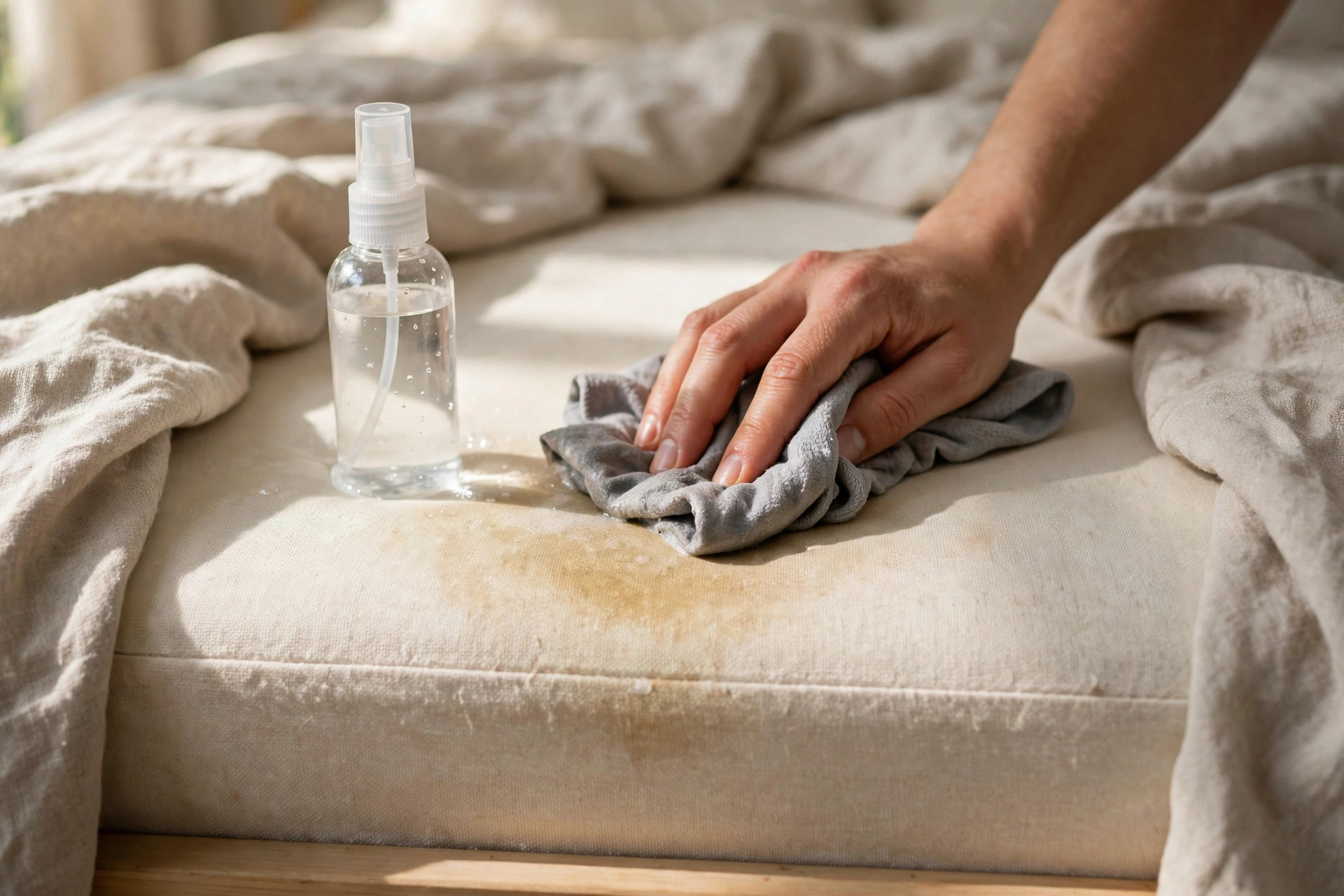
For food and drink spills, blot first, then use a small amount of dish soap in cool water on a cloth, blotting from the edge inward. For sweat marks, which often yellow over time, a baking soda paste, left briefly and then blotted away, can help, but test a hidden spot first. For urine, blot first, rinse by blotting with cool water, and use an enzyme cleaner if the label allows it, following its instructions exactly.
For blood, use cool water only at first, because hot water can set protein stains, and blot gently without scrubbing. For ink or dye, blot gently and seek advice rather than scrubbing hard, because aggressive treatment can spread the mark. If a stain does not move after gentle treatment, let the area dry fully before judging it, because a damp mattress often looks darker.
| Stain type | First step | Do not do |
|---|---|---|
| Fresh food or drink | Blot with a white cloth | Rub or pour cleaner on the mattress |
| Sweat marks | Blot, baking soda paste, test first | Soak the mattress |
| Urine | Blot, rinse by blotting, enzyme cleaner | Use hot water first |
| Blood | Blot with cool water only | Use hot water or scrub hard |
| Ink or dye | Blot gently, seek advice | Scrub hard or use bleach |
Remove Odour With a Light, Dry Method
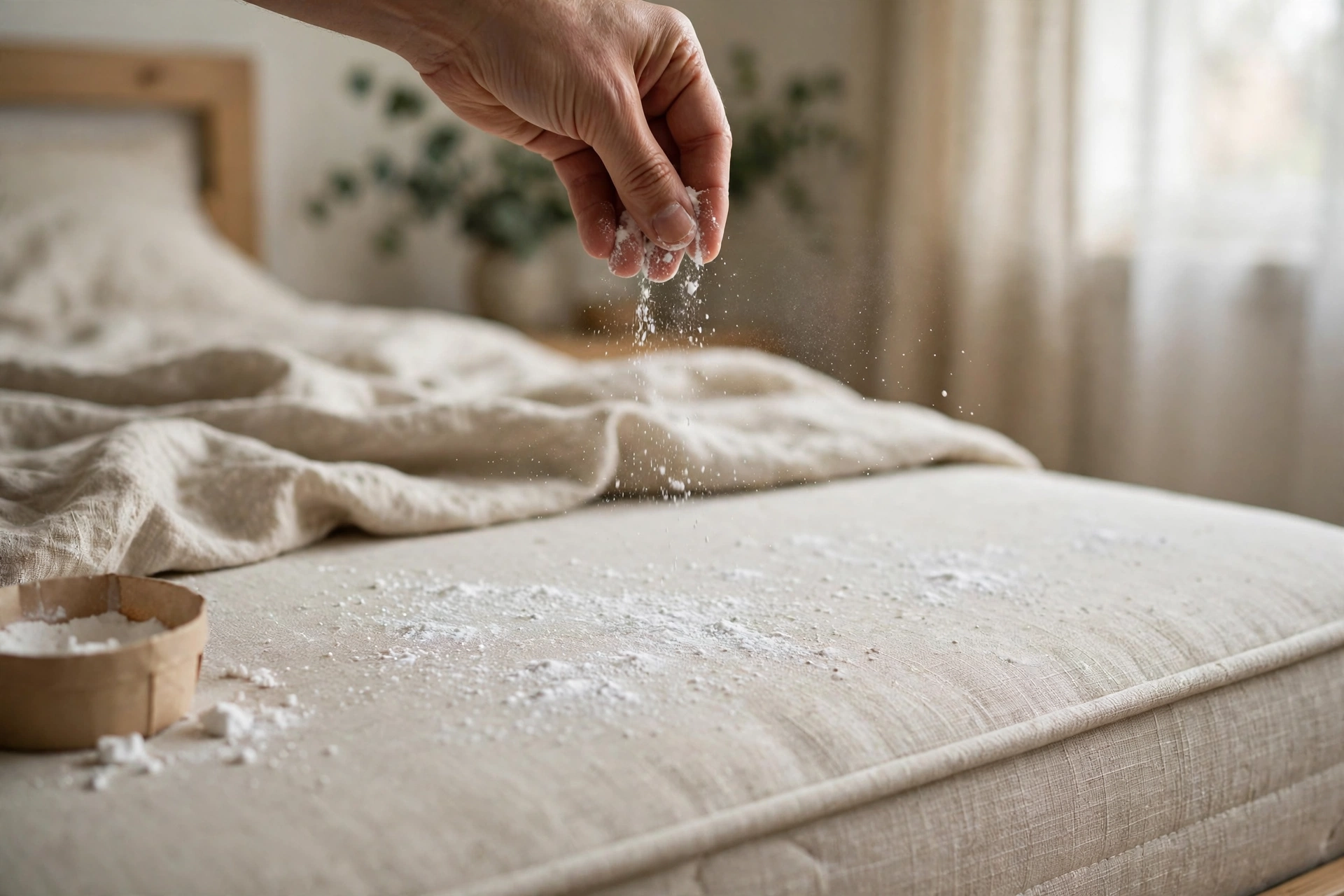
To remove mattress odour, vacuum first, sprinkle baking soda lightly and evenly over the surface, leave it for several hours if possible, then vacuum thoroughly until no powder remains. This dry method freshens a mattress without adding moisture, which is why it is safer than wet deodorising.
Spread baking soda thinly, not in thick piles, and leave it for at least a few hours, or overnight if you can, so it has time to absorb odours. Vacuum slowly afterwards, in overlapping passes, and check that no powder remains, because leftover powder can feel gritty and irritate sensitive skin. Do not use baking soda on a damp mattress, and do not add strong fragrances to mask a smell, because they can irritate and do not solve the cause.
If odour remains after a dry treatment and a thorough vacuum, check for a hidden stain or dampness underneath the mattress, and consider whether the mattress itself is old or damaged. A smell that persists after cleaning, or visible mould, needs professional advice, because surface treatment alone cannot fix a deep problem.
Dry the Mattress Fully Before Making the Bed
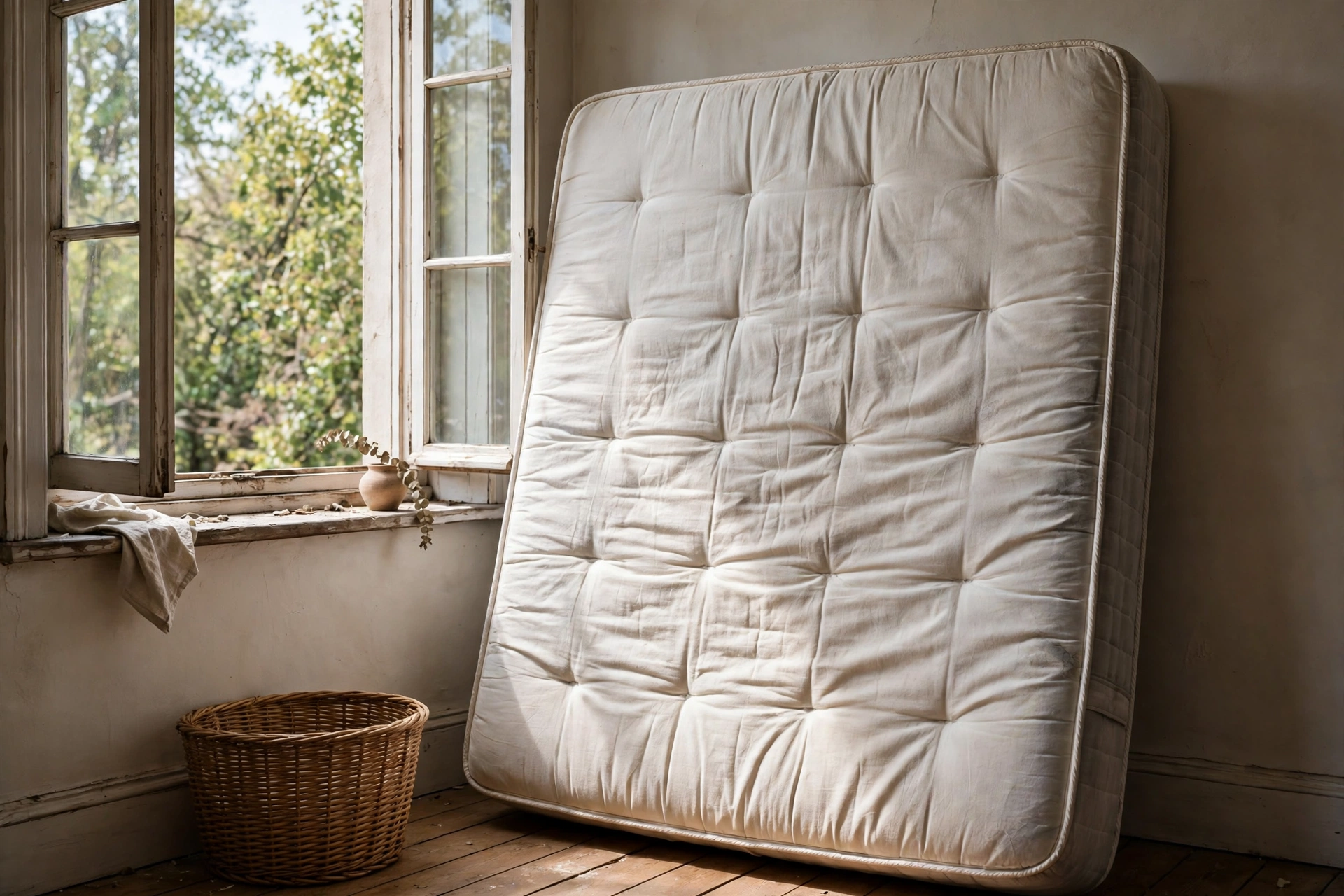
To dry a mattress properly after cleaning, improve airflow with open windows and fans, keep bedding off until the surface feels completely dry, and check seams and sides, not just the top. A mattress that feels dry on top can still be damp inside, and dampness can cause smells and damage over time.
Drying starts during cleaning, not after it. Use as little water as possible, blot excess moisture with dry towels, and create airflow across the mattress, not just above it. Open a window if the weather allows, run a fan, and, if possible, stand the mattress on its side for a short time to let air reach both faces, following the maker’s guidance for your mattress type.
Check the mattress by touch after a few hours, and lift a corner if you can to check underneath. Do not make the bed with sheets and a protector until the mattress is fully dry, because bedding traps moisture underneath. If a damp smell remains after drying, ventilate more and vacuum again once fully dry.
Protect the Mattress After Cleaning
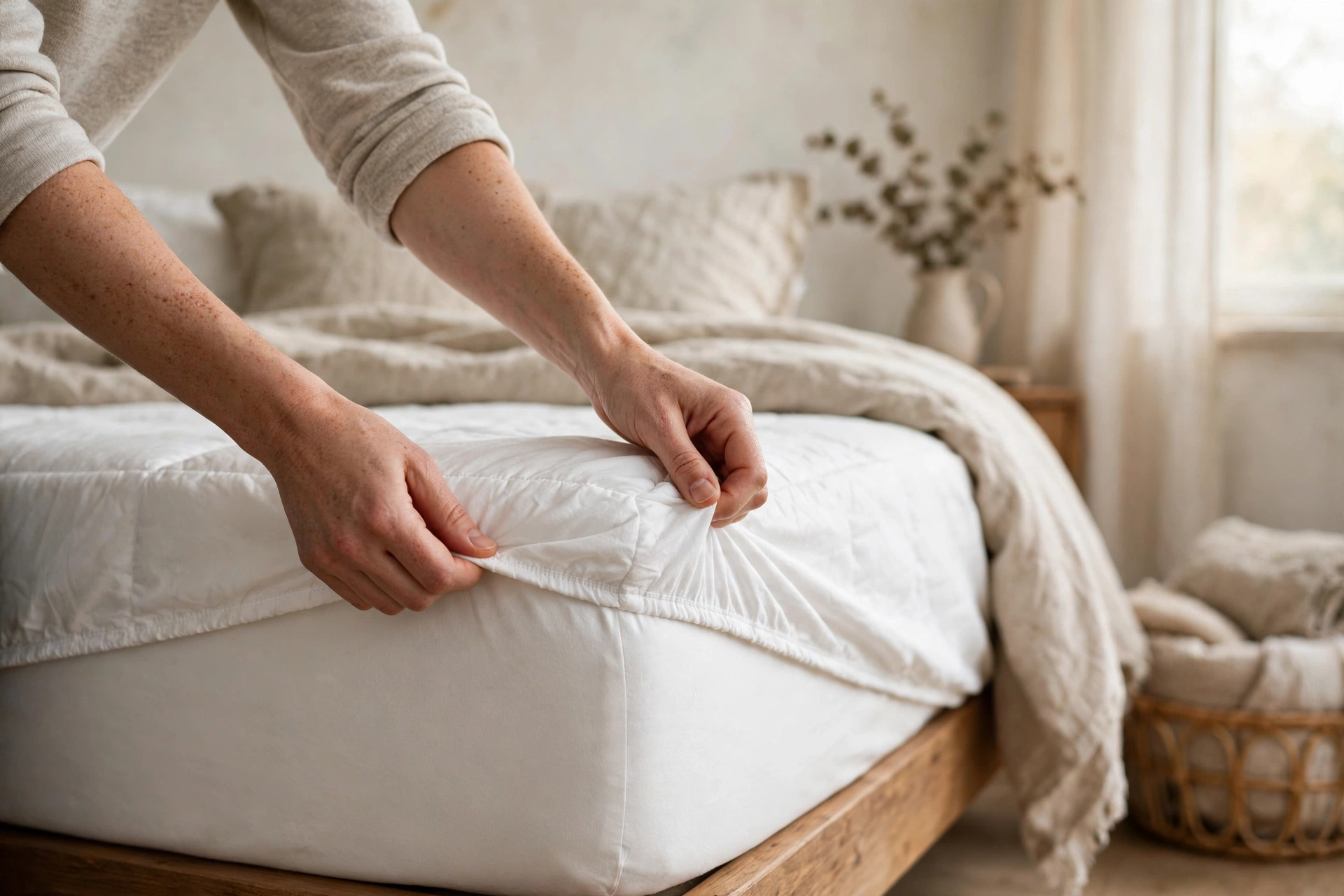
To protect a mattress after cleaning, use a washable mattress protector, keep bedding clean, and treat new spills promptly by blotting. Protection is mostly about daily habits, not a single product, and it extends the time between deep cleans.
Choose a protector that fits your mattress and is washable, following its label, and wash it regularly, so it does not become a source of dirt itself. Keep sheets clean and change them weekly, or more often in warm weather, because clean sheets reduce the dust and sweat that reach the mattress.
Avoid eating and drinking in bed if you can, or use a tray and wipe spills at once if you do. Keep pets off the bed if allergies are a concern, or use a washable cover for pet areas. These habits cost little time, but they make the next mattress clean noticeably easier.
Deal With Dust Mites and Allergens Gently
To reduce dust mites and allergens on a mattress, vacuum regularly with a clean filter, wash bedding in hot water if the label allows it, use allergen-proof covers where helpful, and keep bedroom humidity moderate. Dust mites thrive in warm, humid bedding, so dry, clean bedding is the simplest defence.
Vacuum the mattress monthly, or more often if allergies are a concern, using an upholstery tool and paying attention to seams. Wash pillowcases and sheets weekly in the hottest water their labels allow, and dry them fully before use. Use a washable protector and wash it regularly, so allergens do not build up underneath it.
Keep the bedroom ventilated and avoid damp bedding, because moisture helps dust mites thrive. This article does not make medical or allergy claims; if allergies are severe or persistent, seek qualified medical advice rather than relying on cleaning alone. Cleaning can reduce allergens, but it is not a medical treatment.
Rotate, Flip, and Check the Mattress Regularly
To keep a mattress in good shape, rotate it regularly if the maker allows it, check whether it can be flipped, and inspect it for sagging, lumps, or damage. Rotation spreads wear more evenly, so one area does not become softer or more stained than the rest.
Many modern mattresses are designed to be rotated, not flipped, because they have a comfort layer on top and a support layer below. Check the maker’s guidance before flipping, because flipping a one-sided mattress can damage it. Rotate head-to-foot every few months, and note the date, so you do not forget.
While rotating, inspect the mattress for stains, smells, or damage, and check the bed frame and base for dust or damage too. If a mattress sags badly, has persistent smells after cleaning, or is very old, replacement may be a better choice than repeated cleaning, and a retailer or maker can advise on that decision.
Keep a Simple Mattress Cleaning Routine
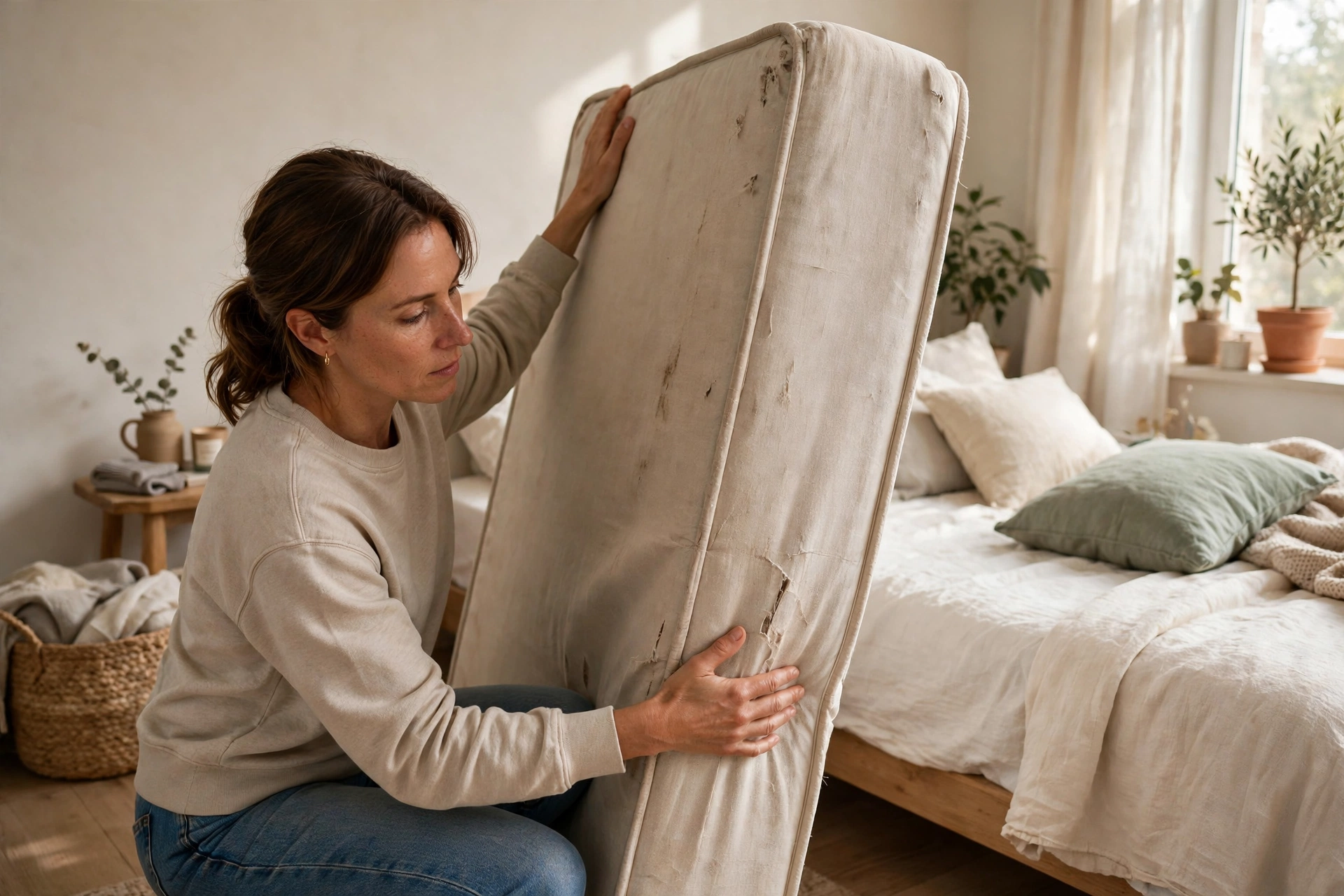
To keep a mattress clean with a simple routine, vacuum it monthly, treat spills at once, freshen it with baking soda every few months, and wash bedding weekly. A steady routine prevents dust and stains from becoming ground-in and keeps deep cleans shorter.
A routine does not need to be complex. Set a monthly vacuum session, a seasonal freshen with baking soda, and a quick spill kit nearby, such as white cloths and a mild cleaner, so a spill is treated quickly. Mark mattress cleaning dates on a calendar, so no season is forgotten.
Small habits also help: air the bedroom daily, keep the mattress dry, and use a protector. If a mattress looks dull despite regular vacuuming, check the vacuum filter and brush, and consider whether the protector needs washing. A mattress that is cared for regularly stays fresher for longer.
Air the Mattress and Bedroom Regularly
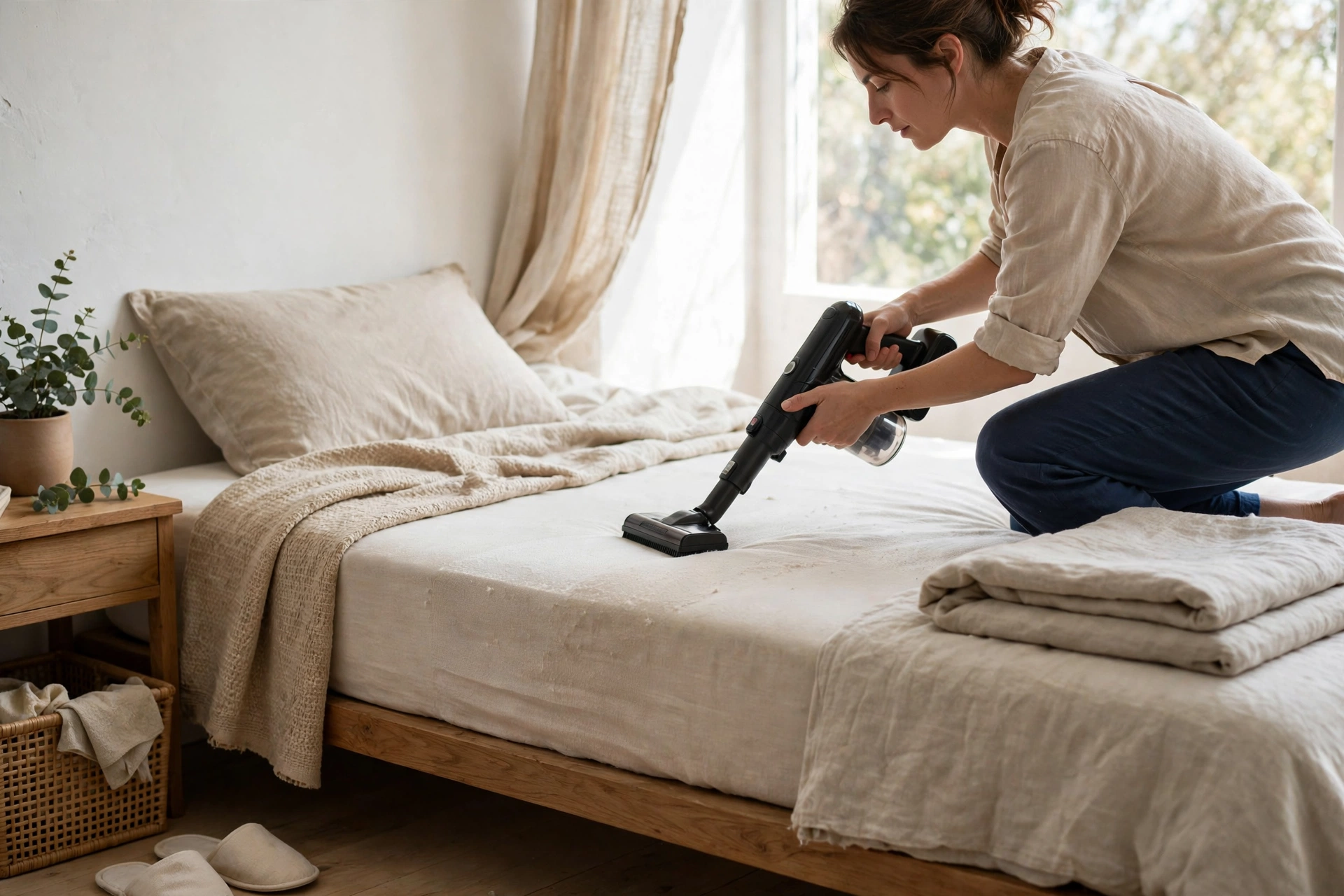
To air a mattress properly, open the bedroom window for a short time each day if the weather allows, pull back the bedding for a while after waking, and let fresh air reach the mattress surface. Airing helps moisture from sleep escape, so the mattress stays drier and fresher between cleans.
After waking, fold back the duvet and sheets for twenty to thirty minutes before making the bed, so trapped warmth and moisture can disperse. This simple habit is especially useful in humid weather or in rooms with little ventilation. Do not air a mattress in rain or damp air, because that adds moisture instead of removing it.
Airing is not a substitute for vacuuming or stain treatment, but it supports both. A mattress that is aired regularly smells fresher, dries faster after spot cleaning, and is less likely to develop the dampness that causes odours.
Wash Pillows and Bedding With the Mattress
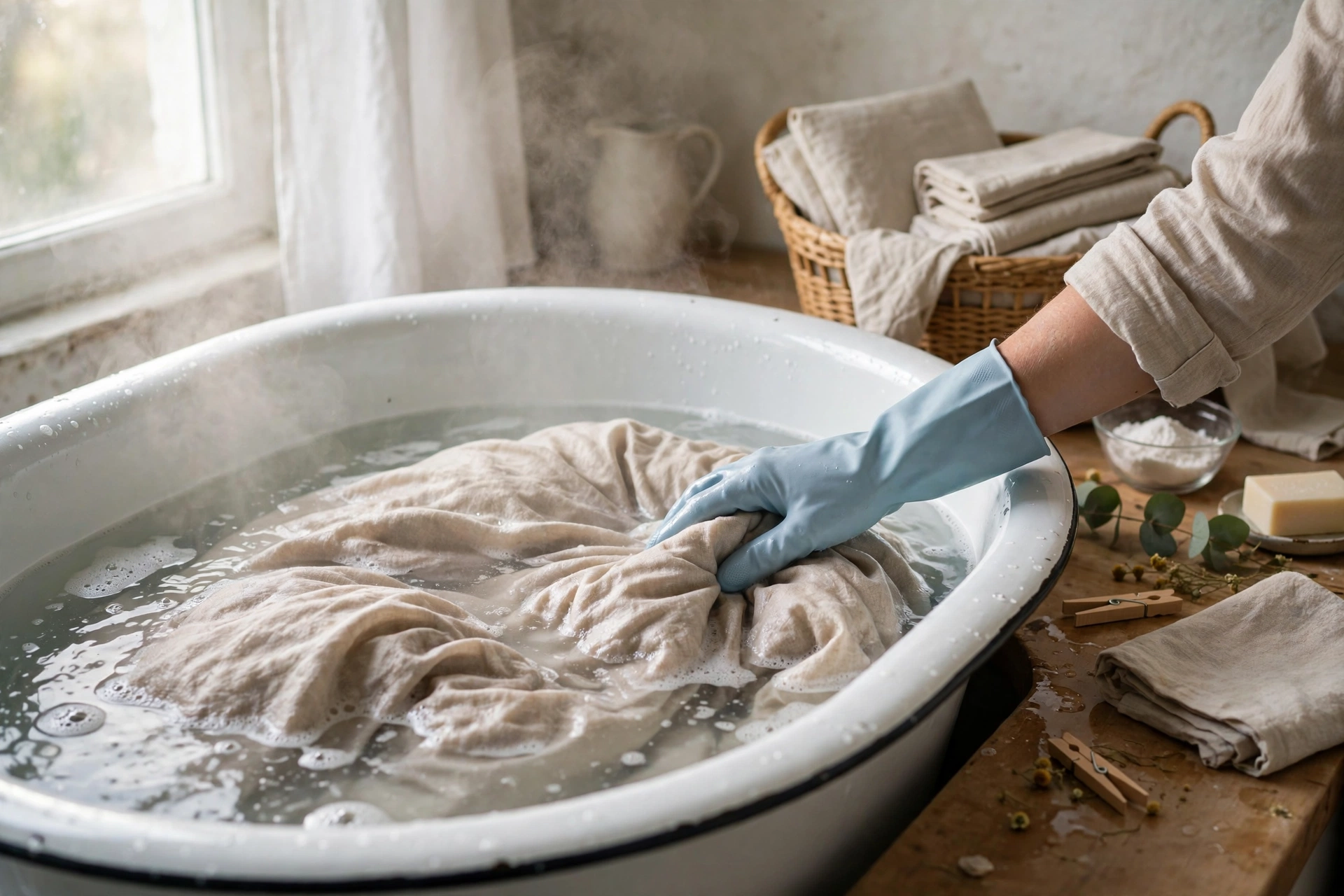
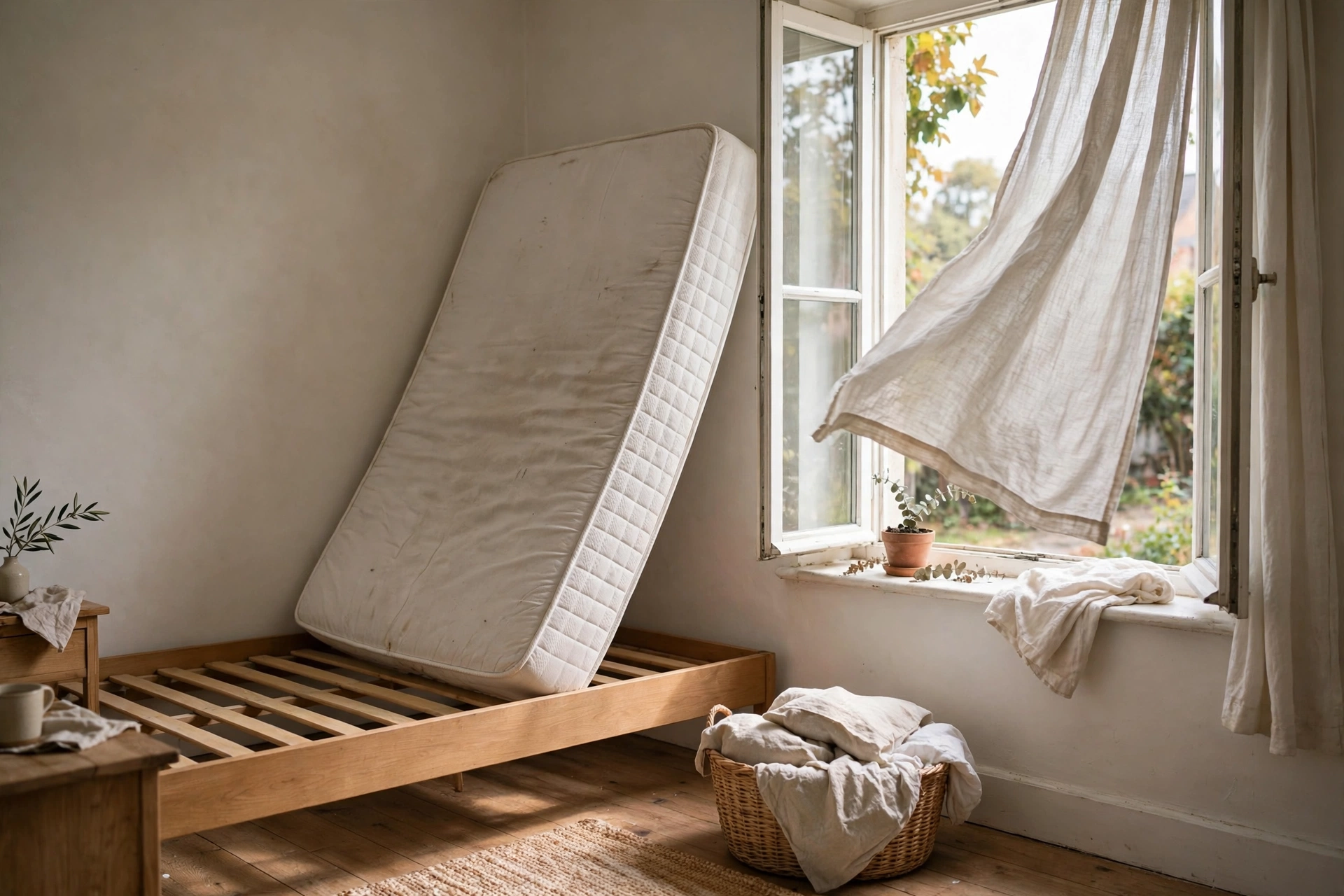
To complete a mattress clean, wash pillows, pillow protectors, and bedding following their labels, and dry them fully before putting them back on the bed. Pillows collect the same dust, sweat, and allergens as a mattress, so cleaning the mattress alone leaves half the bed untouched.
Check pillow labels first, because foam, feather, and synthetic pillows need different care. Wash pillow protectors and cases in the hottest water their labels allow, and dry them completely, because damp bedding can make a clean mattress feel damp again. Air pillows briefly before use, and replace pillows that are lumpy, flat, or smelly after washing.
Make the bed only when the mattress, pillows, and bedding are all dry. A fully fresh bed, not just a fresh mattress, is what makes the clean feel complete and helps you sleep more comfortably.
Conclusion
Cleaning a mattress well is less about strong products and more about a calm order: vacuum first, treat stains gently without soaking, control odour with a dry method, and dry fully before making the bed. With a simple routine and a washable protector, a mattress stays fresher, smells cleaner, and sleeps more comfortably.
FAQs
How often should I clean my mattress?
Vacuum your mattress monthly and freshen it with baking soda every few months. Treat spills at once, and do a deeper clean, including stain treatment, about twice a year or as needed.
Can I use baking soda on a mattress?
Yes, sprinkle it lightly, leave it for several hours, then vacuum thoroughly until no powder remains. Do not use it on a damp mattress, and do not leave thick piles of powder behind.
How long does a mattress take to dry after cleaning?
A mattress usually takes several hours to dry after gentle spot cleaning, depending on airflow and humidity. Do not make the bed until it feels completely dry, including seams and sides.
Will cleaning remove dust mites completely?
No cleaning method removes dust mites completely, but regular vacuuming, hot washing of bedding where labels allow, and allergen-proof covers can reduce them. Seek medical advice for severe allergies.
Should I flip my mattress?
Only if the maker says it can be flipped. Many modern mattresses are one-sided and should be rotated head-to-foot instead. Check the label or maker guidance before flipping.
Disclaimer: This article is for general information only and does not provide professional mattress cleaning, medical, or allergy advice. Always follow the instructions for your mattress, protector, and cleaning products, test cleaners in a hidden area first, keep products away from children and pets, and seek qualified help for large stains, damaged mattresses, persistent odour, or possible mould. Clearise Cleaning Services does not offer guest posting, paid promotion, or advertising through this article.