A roof is easy to forget. It sits above daily life, out of sight, and it usually gives no warning until a stain appears on a ceiling or water finds its way indoors. Roof maintenance is the quiet work that happens before that point: regular checks and small tasks that keep a roof doing its job.
In simple terms, roof maintenance is the routine care of a roof and its connected parts, such as gutters, flashing, and vents. It is not a single job. It is an ongoing habit, much like servicing a car, where small problems are found early while they are still easy to deal with.
This guide explains what roof maintenance really means in plain language. It covers what it includes, what it does not include, how it differs from repair and replacement, how often it is generally needed, what homeowners can safely do themselves, and the signs that maintenance has been left too long.
What Roof Maintenance Actually Is
Roof maintenance is the planned, routine care that keeps a roof in good working condition, rather than work done to fix something that has already failed. It is mostly made up of inspections, cleaning, and small adjustments, carried out on a regular basis before problems become serious.
Think of it as looking after the whole roofing system, not just the surface you see from the street. A roof includes shingles or tiles, the underlayment beneath them, flashing around chimneys and vents, gutters and downspouts, and the attic space below. Maintenance pays attention to all of these parts, because a problem in one area, such as a blocked gutter, can cause damage in another, such as a damp wall or a stained ceiling.
Keeping simple records also helps: noting when the roof was last checked, what was found, and what was done. That helps spot patterns over time, such as a valley that keeps collecting leaves. In short, roof maintenance is prevention, not emergency work.
Why Roof Maintenance Matters for a Home
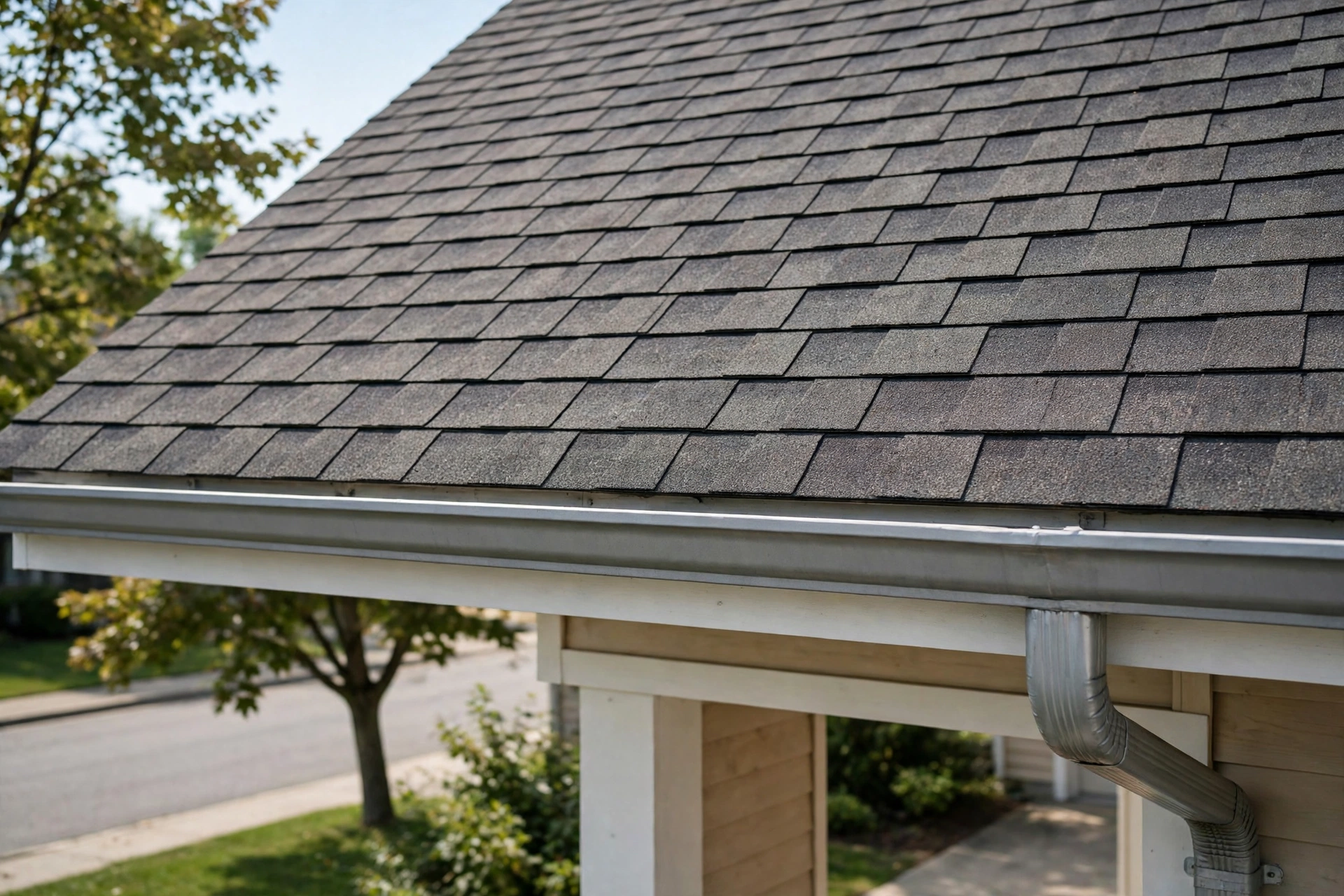
Roof maintenance matters because a roof protects everything beneath it, and small faults can grow quietly into larger, more costly problems. A loose shingle, a cracked seal, or a blocked gutter may look minor, yet each one can let water in, and water is the main enemy of a home’s structure.
When water gets past the roof surface, it can damage insulation, timber, plaster, and paint, and it can encourage damp and mould growth indoors. These problems are often more expensive and disruptive to fix than the small maintenance task that would have prevented them. Regular care also helps a roof last longer, because materials that are kept clean and well sealed tend to cope better with sun, wind, rain, and temperature changes.
There is a comfort benefit too. A well-maintained roof, with clear ventilation and a dry attic, helps a home stay drier and more comfortable through the seasons. A record of regular maintenance can also reassure future buyers that the roof has been looked after.
What Roof Maintenance Usually Includes
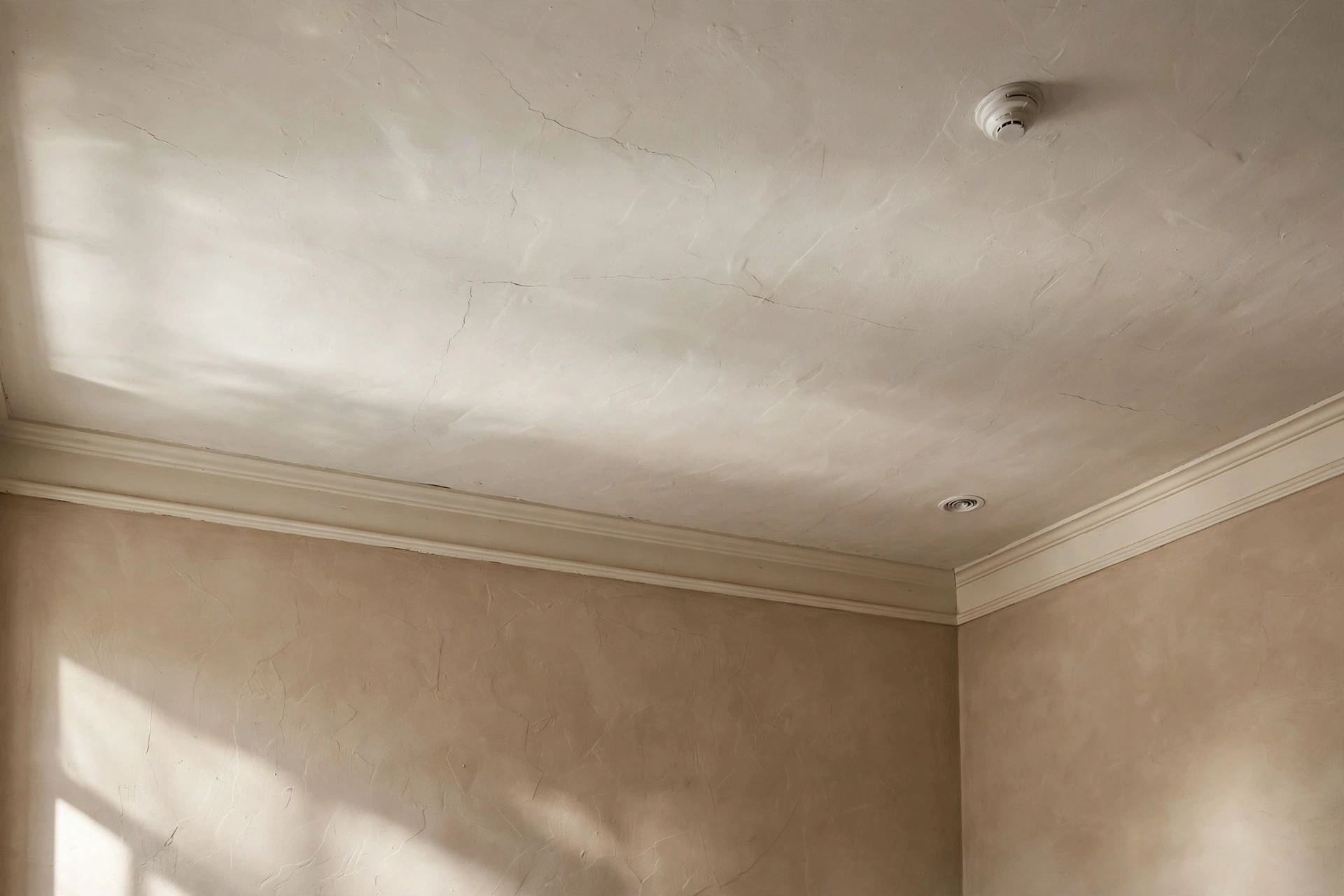
Roof maintenance usually includes a visual inspection, clearing debris, cleaning gutters and downspouts, and checking the parts most likely to wear or work loose. The exact tasks depend on the roof type, the climate, and the age of the roof, but the pattern is similar for most homes.
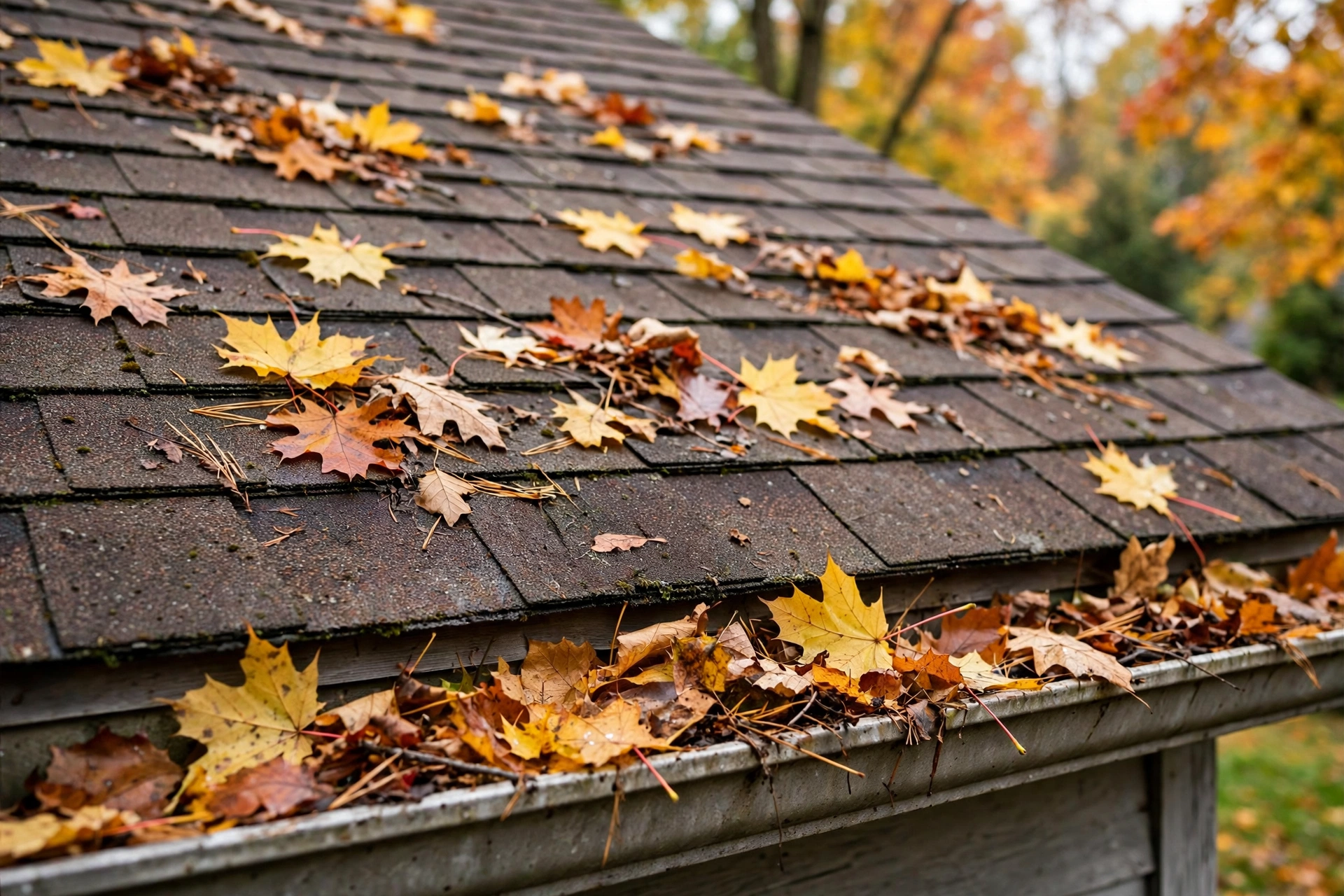
A typical maintenance visit or check covers the roof surface, looking for cracked, curled, or missing shingles or tiles, and for damaged flashing around chimneys, vents, and skylights. Gutters and downspouts are cleared so rainwater can drain freely, and valleys where two roof slopes meet are checked for trapped leaves and dirt. Vents and skylights are looked at for cracked seals or blocked airflow, and overhanging branches that brush the roof may be noted for trimming.
Inside the home, maintenance can include a quick attic check for daylight coming through gaps, damp patches, or signs of pests. Small tasks, such as resealing a minor gap, may be part of maintenance when simple and safe; anything larger usually becomes repair.
What Roof Maintenance Does Not Include
Roof maintenance does not include major repairs, structural work, or replacing large parts of a roof, and it is important not to confuse routine care with a full fix. Maintenance is about keeping a sound roof in good condition; it cannot undo serious damage that has already happened.
For example, it does not include replacing a whole slope of shingles, rebuilding a sagging section, or dealing with widespread rot. It also does not include installing a new roof, adding insulation to the whole attic, or redesigning drainage for a home. Those are larger projects, with different costs, materials, and skills involved.
Maintenance also does not guarantee that a roof will never leak. Even a well-maintained roof can be damaged by a severe storm, falling branches, or a manufacturing fault in a material. What maintenance does is reduce the chance of small, preventable problems turning into big ones, and help problems be found sooner when they do occur. Expecting it to make a roof invincible is a misunderstanding that leads to disappointment.
How Roof Maintenance Differs From Roof Repair
Roof maintenance differs from roof repair in timing and purpose: maintenance is planned care for a roof that is broadly sound, while repair is work to fix a specific fault that has already been found. Maintenance tries to prevent trouble; repair responds to it.
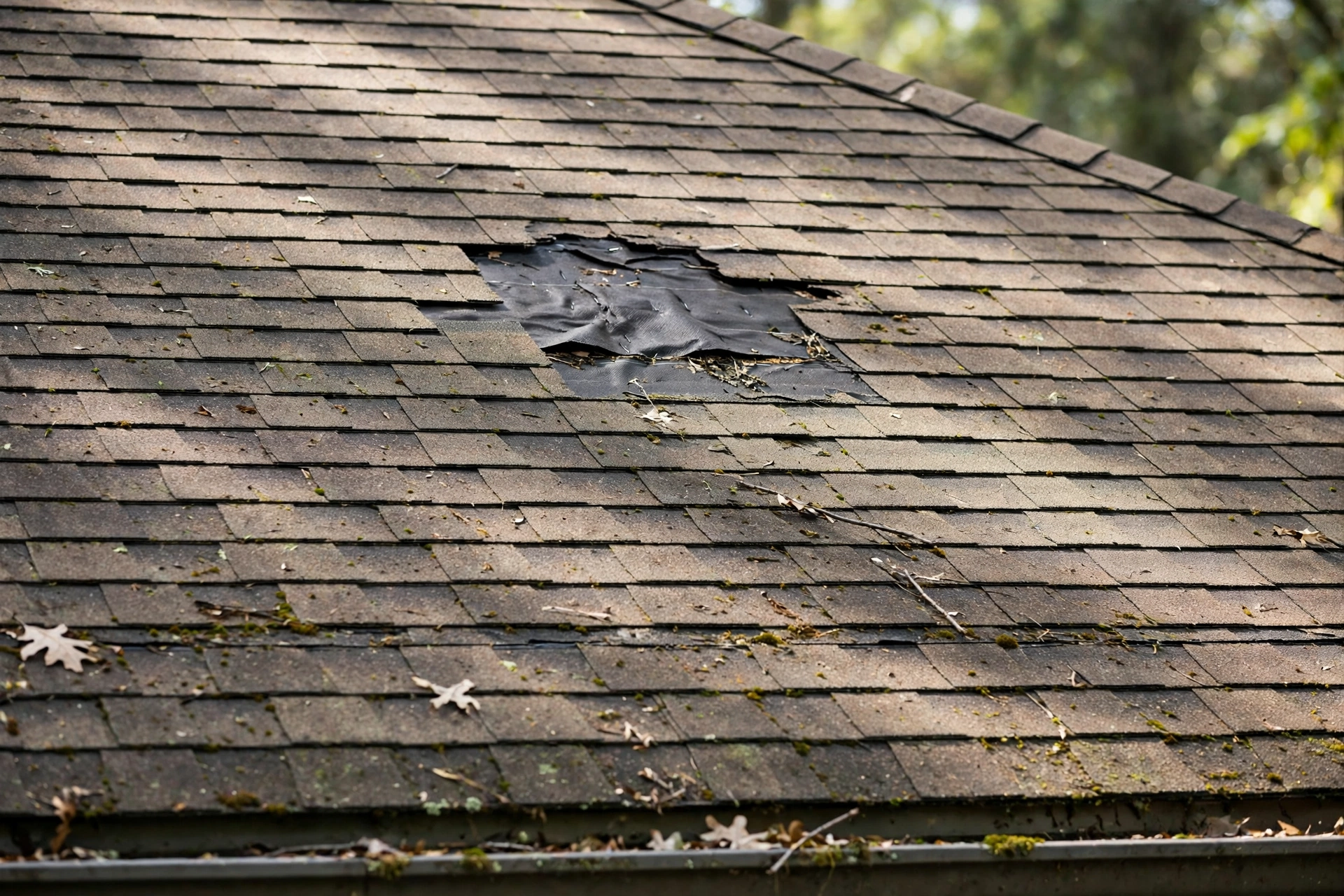
A maintenance check might find a single cracked shingle and replace it as a small task, but a repair job starts when a fault is already causing a problem, such as a leak, a missing section after a storm, or flashing that has failed and let water in. Repairs are often more urgent, more localised, and sometimes more costly, because they deal with damage rather than prevention.
The line can blur, because a check often uncovers something needing repair; then the check is maintenance and the follow-up is repair. Keeping the ideas separate helps planning: maintenance is regular and predictable, while repair is usually unplanned and tied to a particular fault.
How Roof Maintenance Differs From Roof Replacement
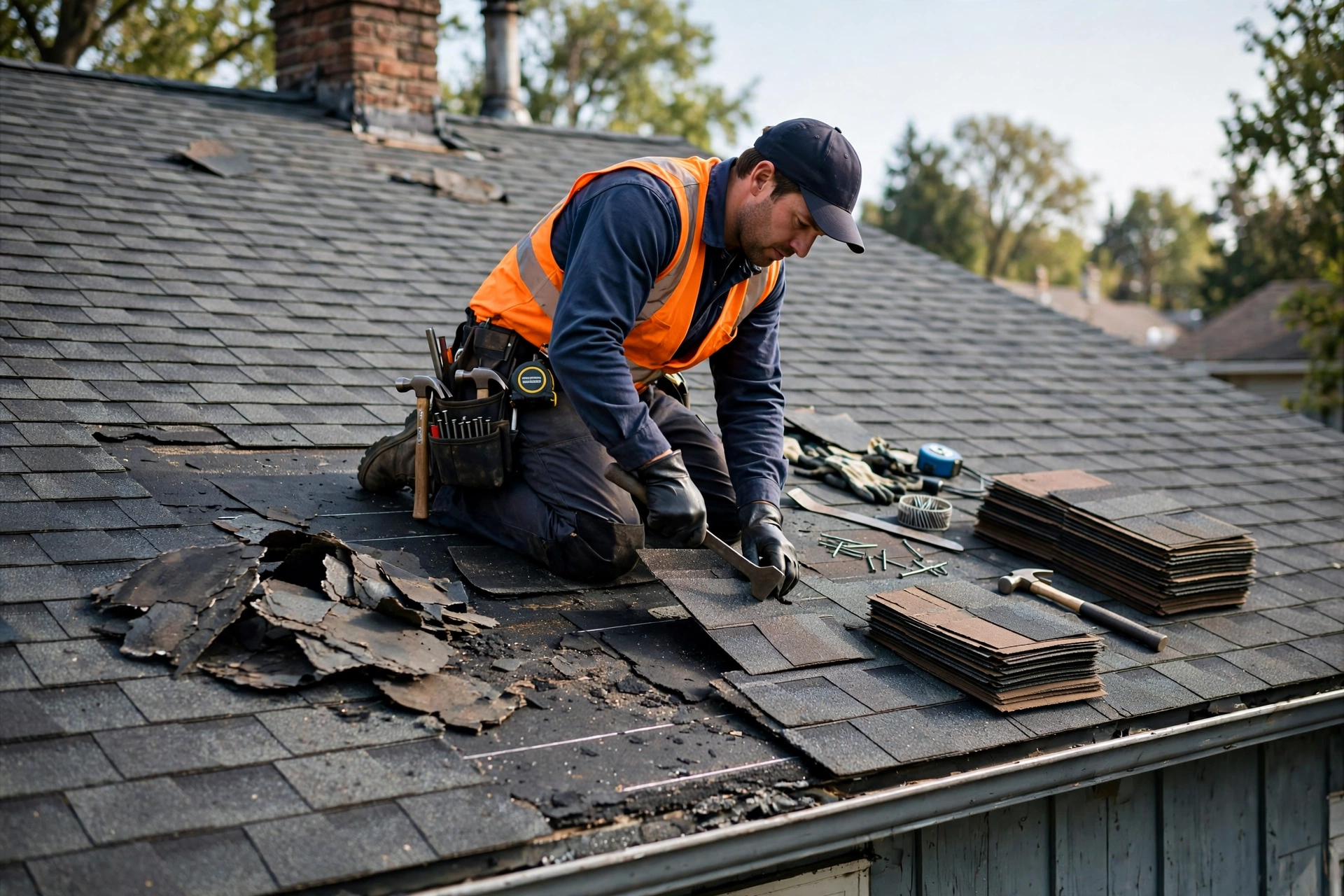
Roof maintenance differs from roof replacement in scale: maintenance looks after the roof you already have, while replacement means removing the old roof covering and installing a new one. Replacement is a major project, not a routine task, and it usually takes much longer and costs much more.
A roof is usually replaced when it reaches the end of its useful life, when damage is too widespread to repair sensibly, or when the structure needs attention. Maintenance cannot turn an aged, worn-out roof into a new one. At that stage, a professional assessment is the sensible next step.
Understanding this difference also helps with expectations. Regular maintenance can help a roof reach its expected life, but it does not extend that life without limit. When replacement becomes necessary, it is not a sign that maintenance failed; it is the normal end of a roof’s working life, and maintenance records can still help a professional judge what the new roof needs.
| Work type | When it happens | What it does | Example |
|---|---|---|---|
| Maintenance | Regularly, planned | Keeps a sound roof in good condition | Clearing gutters, inspecting flashing |
| Repair | After a fault is found | Fixes a specific problem | Replacing storm-damaged shingles, sealing a leak |
| Replacement | End of roof life, or widespread damage | Installs a new roof covering | Removing old shingles and fitting new ones |
How Often Roof Maintenance Is Needed
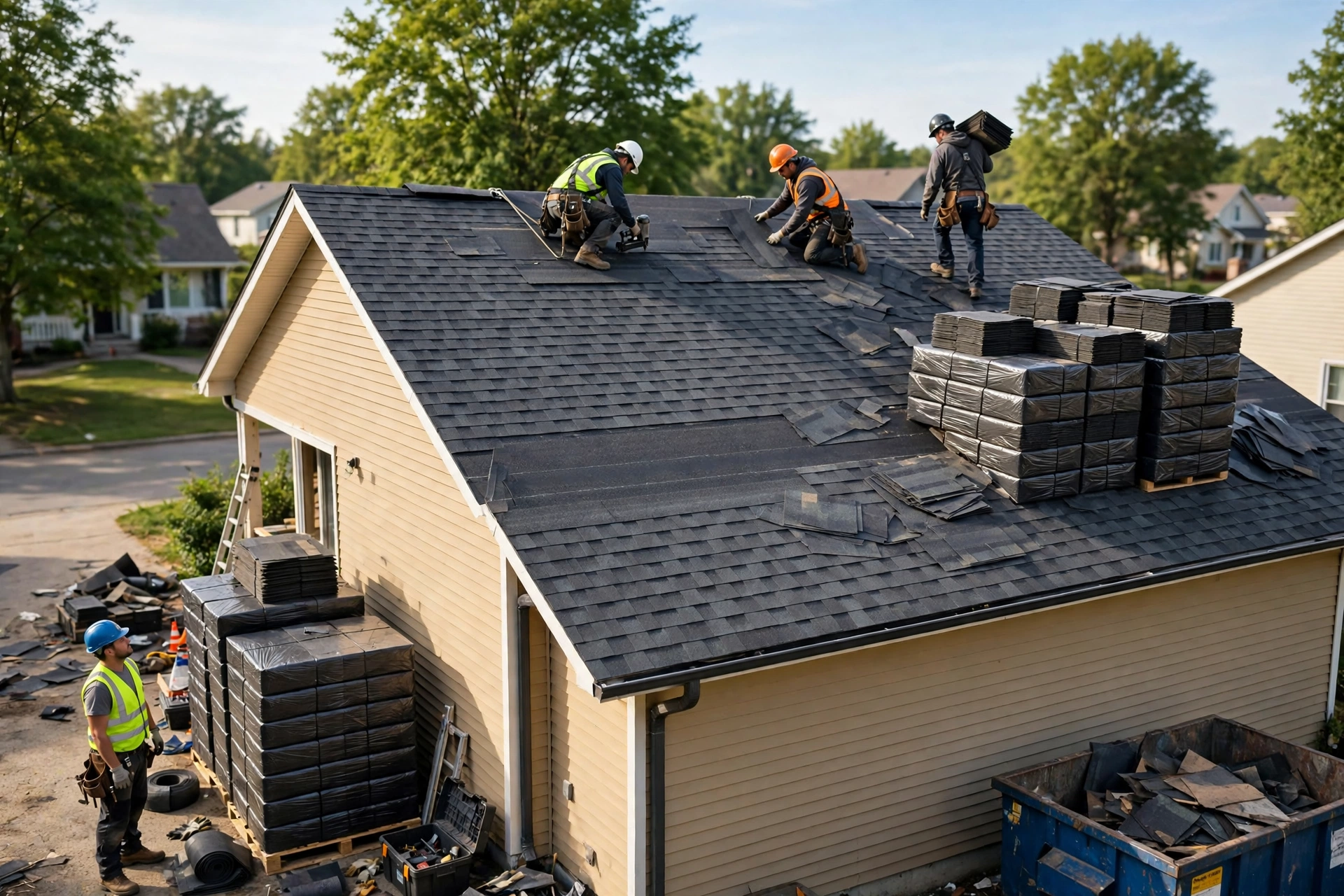
How often roof maintenance is needed depends on the roof type, its age, the local climate, and nearby trees, so there is no single schedule that fits every home. As a general guide, most homes benefit from a roof check at least once a year, plus a check after a severe storm.
Annual checks are useful because they catch slow changes, such as a seal drying out, moss building up, or a gutter starting to sag, before they cause damage. Homes under large trees, in areas with heavy rain or strong winds, or with older roofs may need more frequent attention, because leaves, debris, and weather wear build up faster there.
Seasonal timing can help too. A check before the wettest or stormiest season can make sure gutters are clear and seals are sound, while a check afterwards can catch storm damage early. The key point is regularity: a roof checked on a simple, repeatable routine is far more likely to stay in good condition than one checked only when a problem appears.
What Homeowners Can Do Safely Themselves
Homeowners can safely carry out several roof maintenance tasks from the ground or inside the home, without climbing onto the roof, and these checks alone can catch many common problems. Safety comes first, and no maintenance task is worth a fall.
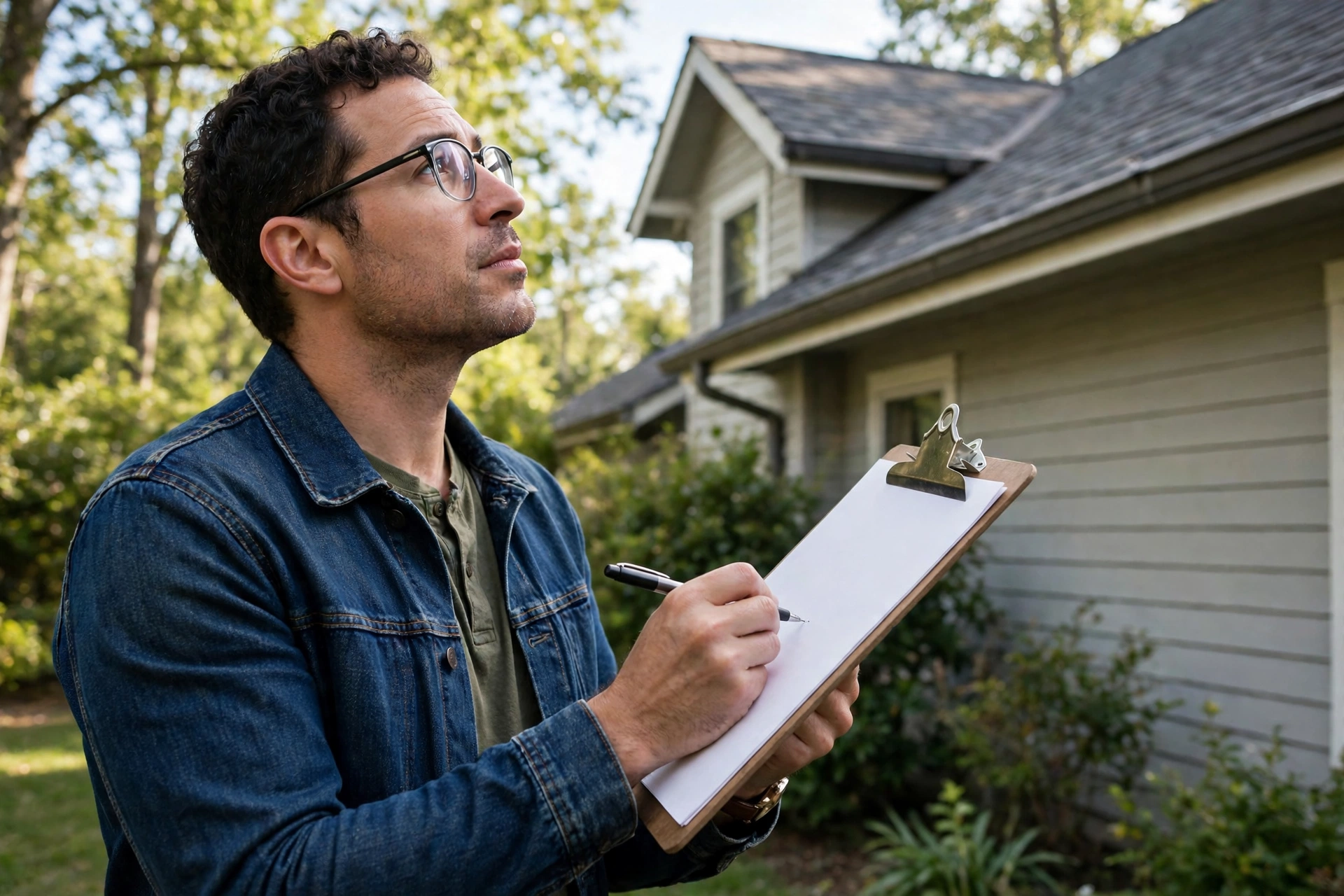
From the ground, using binoculars if helpful, a homeowner can look for missing or visibly damaged shingles, sagging gutters, loose flashing, and debris sitting in valleys. Gutters at ground level, and downspout outlets that can be reached safely, can be checked for blockages. Inside, an attic check for daylight through gaps, damp patches, or a musty smell can reveal leaks early. Keeping simple notes and photos of what was seen, and when, makes the next check easier and more useful.
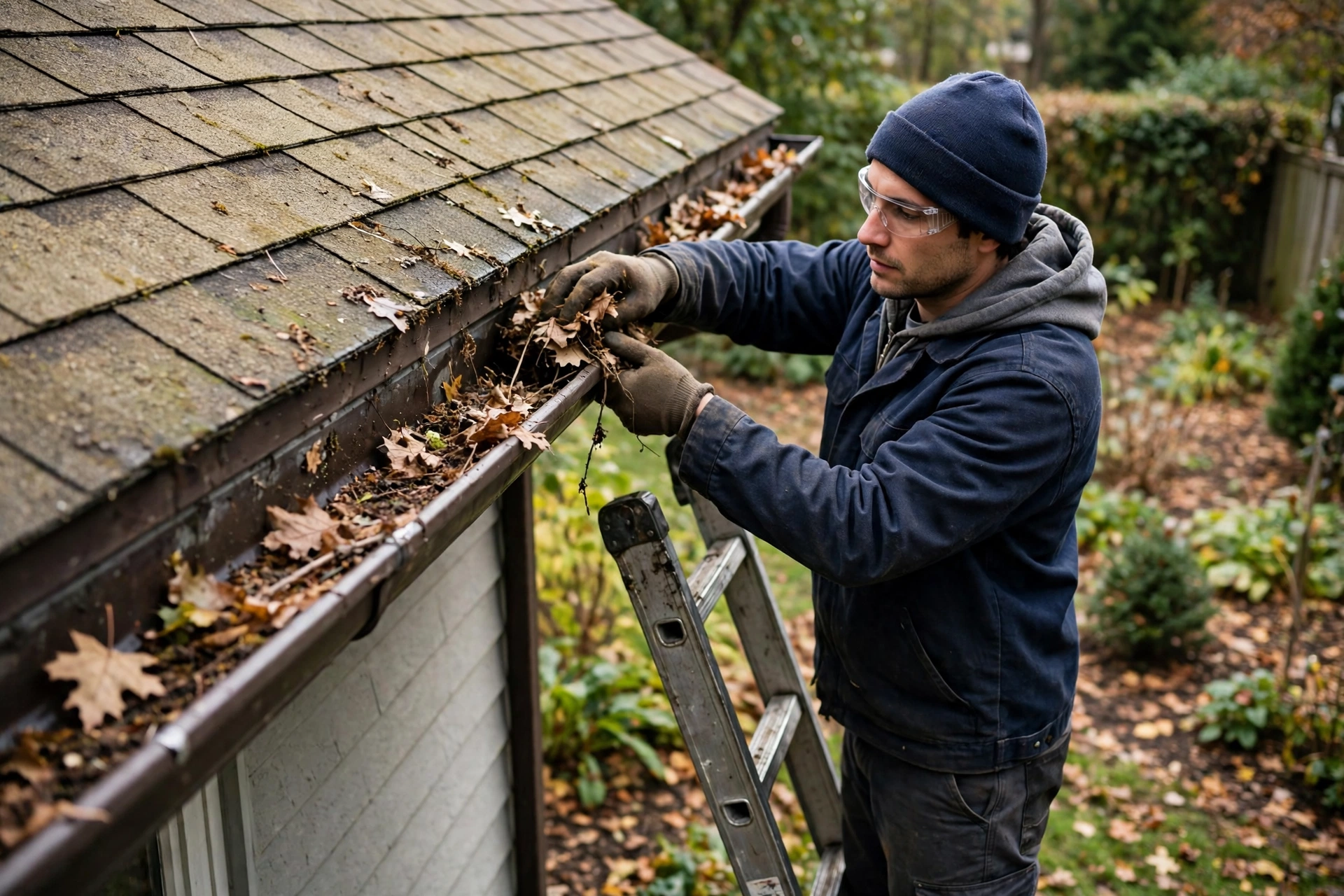
Homeowners can also trim back branches reachable safely from the ground, and clear gutters reachable with a stable ladder and a helper nearby. Climbing onto a steep, wet, or fragile roof, working near power lines, or walking on tiles not designed for foot traffic is not a safe homeowner task. When in doubt, the safe choice is to stop and ask a professional.

What Is Better Left to a Professional
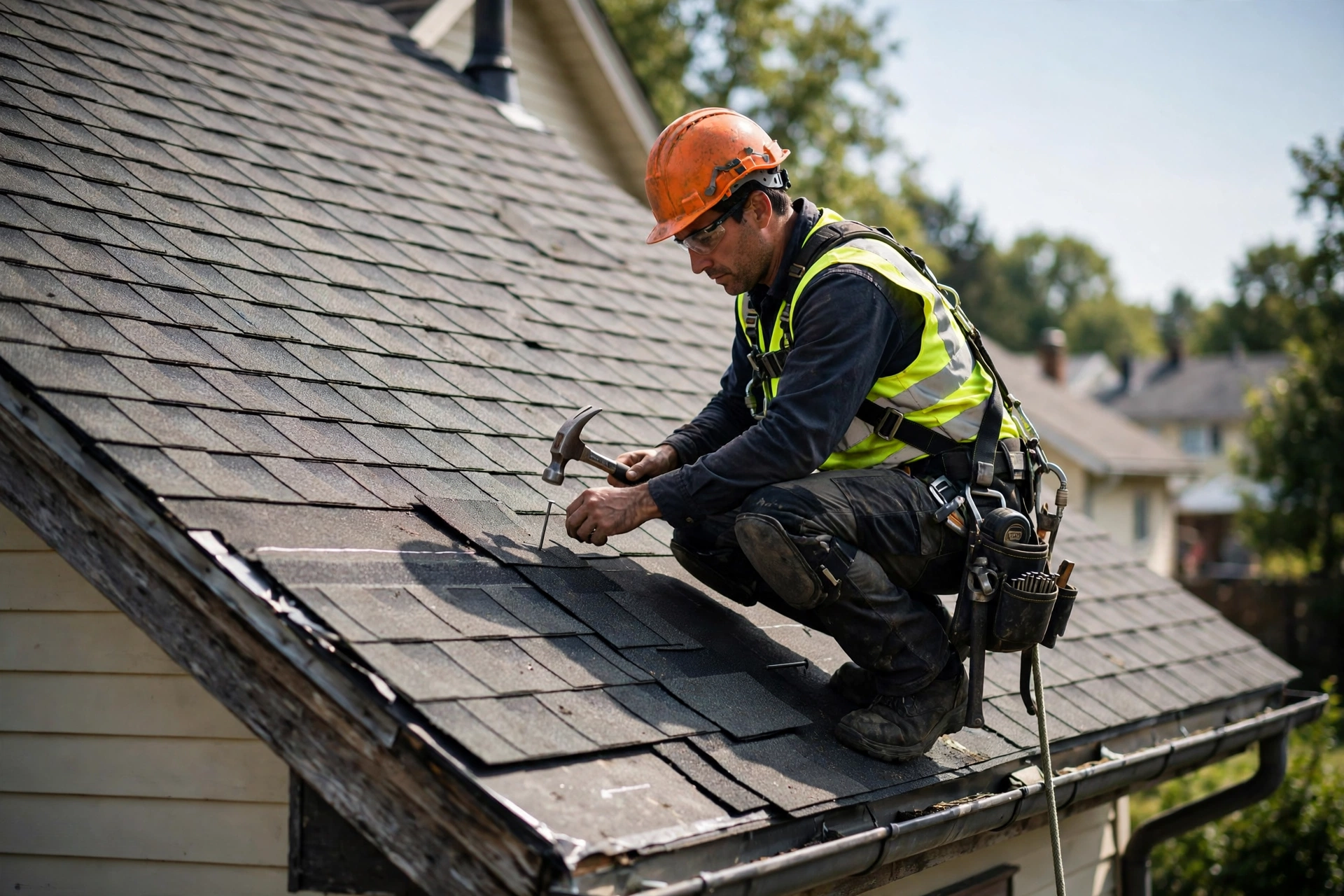
Work that involves climbing onto the roof, working at height, handling structural problems, or dealing with electrical or chimney parts is better left to a professional roofer. Professionals have the equipment, training, and experience to work safely and to judge what a problem really means.
A professional is the right choice for a full roof inspection on the roof surface, for replacing flashing, for repairing a leak whose source is unclear, and for any work on steep, high, or fragile roofs. They are also better placed to judge whether a roof needs repair or replacement, and to spot problems a ground-level check cannot see, such as worn underlayment or damaged timber beneath the surface.
Hiring a professional does not remove the homeowner’s role: ground-level checks, records, and accessible gutter clearing can still be passed to the professional. That teamwork keeps costs sensible: the professional’s time is spent on the skilled, high-risk work, while the homeowner handles the simple, safe observations in between visits.
Signs Your Roof Maintenance Is Overdue
Signs that roof maintenance is overdue are often small at first, which is why they are easy to miss, but together they point to a roof that has not been checked for too long. The most obvious sign is simply not knowing when the roof was last inspected.
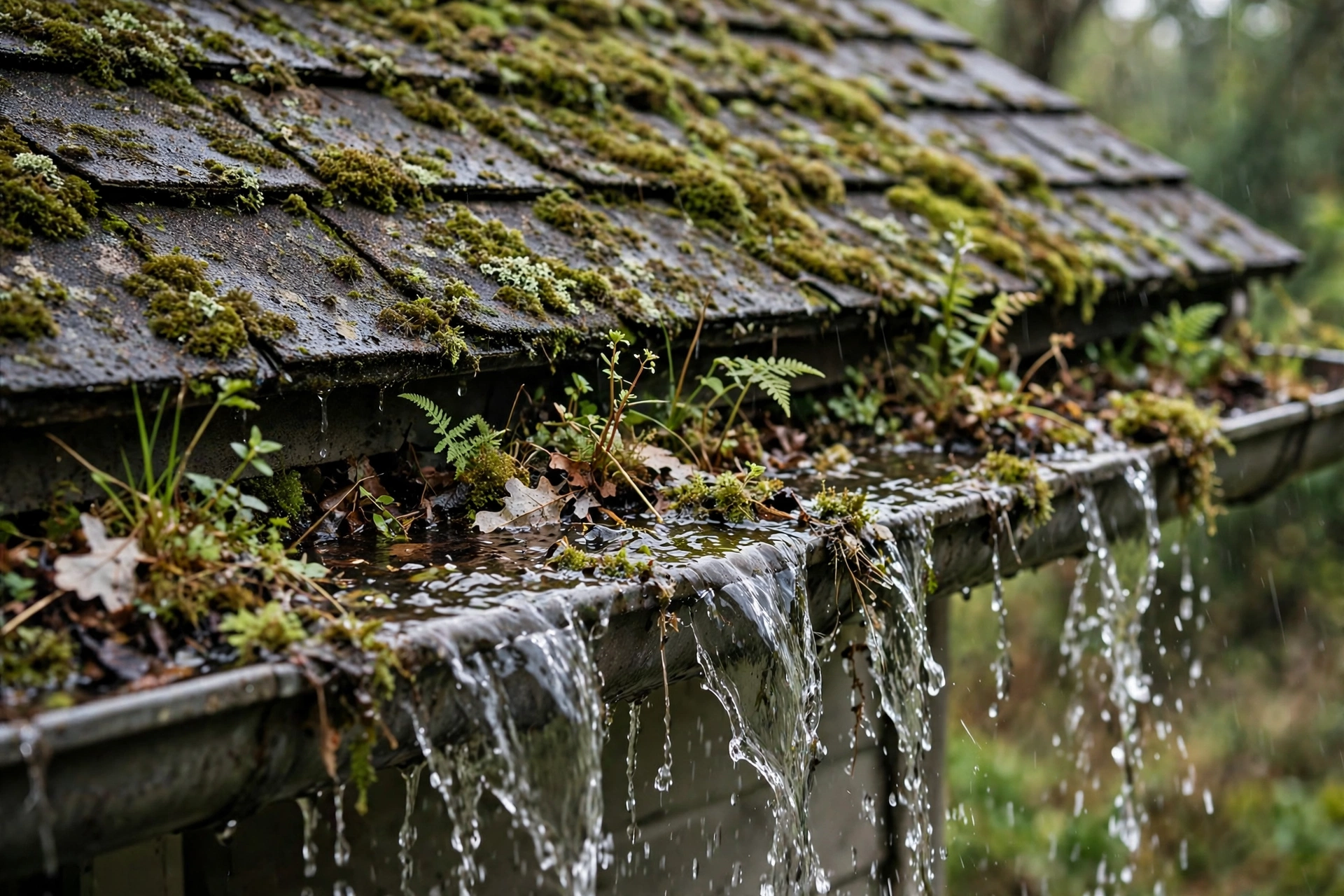
Visible signs include gutters overflowing in rain, plants growing in gutters, moss or algae spreading across the surface, shingles that are curled, cracked, or missing, and stains or damp patches on ceilings or in the attic. Granules in gutters, daylight through the attic roof, or a musty smell upstairs can also suggest wear building up unnoticed.
Other signs are less direct: a sudden rise in damp indoors, paint peeling near the top of walls, or a roof that has survived several storms without any check at all. Any one of these signs is a reason to arrange a proper check, and several together suggest maintenance is well overdue. Acting at this stage is still maintenance in spirit, because it aims to stop a small problem becoming a larger repair.
A Simple Yearly Roof Maintenance Routine
A simple yearly roof maintenance routine turns a vague intention into a repeatable habit, and it does not need to be complicated to be useful. The routine below follows the order most homeowners and professionals use, from safe observation to follow-up.
First, do a ground-level visual check of the roof, gutters, and flashing, and note anything that looks damaged, loose, or blocked. Second, check the attic for daylight, damp, or pests, and note the date and what was found. Third, clear accessible gutters and downspout outlets, and make sure water can drain freely away from the home. Fourth, arrange for a professional to inspect the roof surface itself, especially if the roof is older, steep, or has not been checked for a while.
Fifth, deal with small findings promptly, where it is safe to do so. Sixth, after a severe storm, repeat the ground-level and attic checks, even if the yearly check was recent. Finally, keep a short written record of each check, each finding, and each job done, so the next year’s routine starts with useful information rather than guesswork.
Common Misunderstandings About Roof Maintenance
Common misunderstandings about roof maintenance often lead homeowners to skip it, spend money in the wrong place, or expect more from it than it can deliver. Clearing these up makes the whole idea more practical. This section clears up the most common ones, so you can judge maintenance fairly.
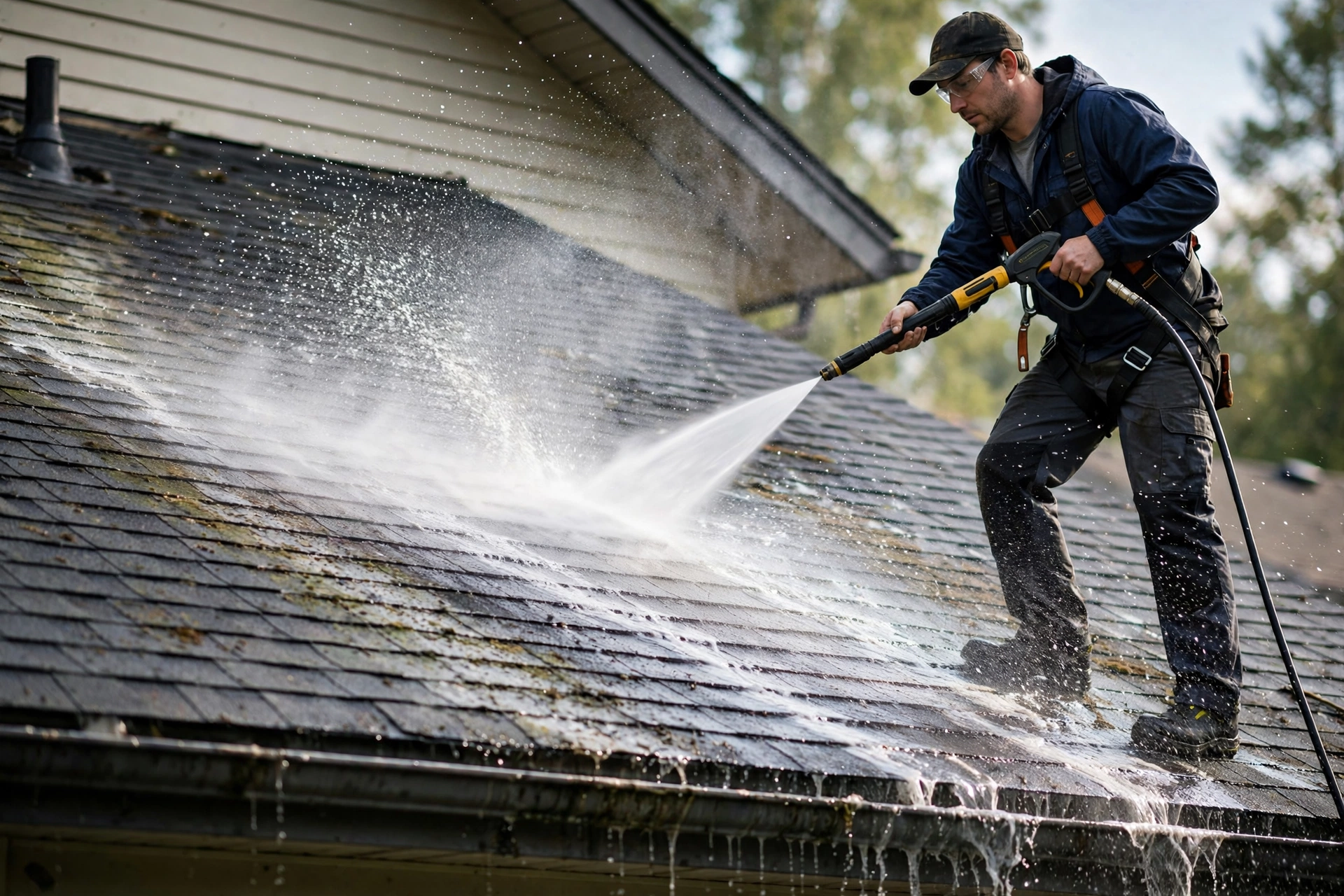
One is that a new roof needs no maintenance, yet fitting faults, blocked gutters, or debris can appear in its first years too. Another is that roof maintenance means only cleaning the surface, when in truth inspection, gutters, flashing, vents, and the attic matter just as much. A third is that pressure washing a roof is always good maintenance, when in fact high pressure can damage some materials and should only be used where the product guidance allows it.
A fourth misunderstanding is that maintenance and repair are the same thing, which can lead to surprise when a check uncovers a repair bill. A fifth is that maintenance is only needed after a storm, when most of its value comes from the quiet checks in between storms. Finally, some homeowners assume maintenance is only for older homes, yet trees, weather, and blocked gutters affect roofs of every age.
Conclusion
Roof maintenance is simple to describe and easy to put off: the regular inspection, cleaning, and small-scale care that keeps a roof, its gutters, flashing, and attic in good working order. It is not a repair or a replacement, and it cannot make a roof last forever, but it can help a sound roof stay sound for longer.
The most useful approach is a simple yearly routine: safe ground-level and attic checks, professional help for work at height or unclear faults, and a short record of findings. Add a check after severe storms, and deal with small findings promptly.
Done this way, roof maintenance becomes a quiet habit rather than a crisis. It protects the home beneath the roof, reduces the chance of small faults becoming large repairs, and gives homeowners a clearer picture of when repair, or eventually replacement, is genuinely needed.
Frequently Asked Questions
What is roof maintenance in simple terms?
Roof maintenance is the regular inspection, cleaning, and small-scale care of a roof and its gutters, flashing, and vents, carried out to keep a sound roof in good working order and catch small problems early.
How is roof maintenance different from roof repair?
Maintenance is planned care for a roof that is broadly sound, while repair fixes a specific fault already causing trouble, such as a leak or storm damage. A check may uncover a repair, but the two jobs are different.
How often should roof maintenance be done?
Most homes benefit from a roof check at least once a year, plus a check after a severe storm. Older roofs, homes under large trees, and homes in harsh weather may need more frequent attention.
Can I do roof maintenance myself?
You can safely do ground-level visual checks and attic checks, and clear accessible gutters with proper care. Work on the roof surface, steep roofs, or unclear faults is better left to a professional.
Does roof maintenance stop all roof leaks?
No, it cannot guarantee a roof will never leak, because storms or material faults can still cause damage. It reduces the chance of preventable problems and helps faults be found sooner.
Disclaimer: This article is provided for general information only. It is not professional roofing, building, or installation advice, and it does not promote any brand, product, or service. Roof types, materials, and suitability vary, so always check the guidance for your specific roof and seek qualified advice for your home before making a decision.
Thanks for visiting Clearise Cleaning Services! Discover more helpful tips and expert cleaning insights by exploring our related categories.