An indoor greenhouse is a small growing space inside your home that helps plants live in more stable conditions. Instead of leaving plants fully exposed on an open shelf, table, or windowsill, an indoor greenhouse creates a protected area where humidity, light, airflow, and temperature are easier to manage.
This is especially useful for plants that do not enjoy dry indoor air. Many tropical houseplants grow best when the air around them feels slightly moist, but most homes become dry because of heating, air conditioning, and poor natural humidity. An indoor greenhouse helps hold moisture around the plants so they do not dry out as quickly.
It can also help with seed starting, propagation, and winter plant care. If you want to start seeds before outdoor weather is warm enough, keep delicate cuttings from drying out, or protect tropical plants during cold months, an indoor greenhouse can make plant care much easier.
The best part is that there is no single style that works for everyone. Some people choose a beautiful indoor greenhouse cabinet for display plants. Others prefer a simple indoor greenhouse kit, a zippered tent, or a small tabletop greenhouse. Some setups include grow lights, fans, and humidity monitors, while others are very simple. The right choice depends on your space, budget, plants, and how much control you want over the growing environment.
Quick Guide Table: Indoor Greenhouse Options
| Indoor Greenhouse Type | Best For | Why Choose It |
| Indoor greenhouse cabinet | Tropical plants and stylish displays | Holds humidity well and looks like home furniture |
| Indoor greenhouse with lights | Low-light homes and winter growing | Gives plants steady light when windows are not enough |
| Mini indoor greenhouse | Small spaces, desks, and apartments | Easy to place on counters, shelves, or windowsills |
| Indoor greenhouse kit | Beginners and seed starting | Simple to set up and usually budget-friendly |
| Glass indoor greenhouse | Decorative plant collections | Looks clean, protects plants, and keeps humidity stable |
Simple Buying Guide
- Choose a cabinet or glass greenhouse if you want a decorative plant display.
- Choose an indoor greenhouse with lights if your room does not get enough sunlight.
- Choose a mini indoor greenhouse for apartments, desks, counters, or small plant collections.
- Choose an indoor greenhouse kit if you want something easy and beginner-friendly.
- Always check for space, airflow, light setup, humidity control, and safe cable placement.
How an Indoor Greenhouse Works Inside Your Home
An indoor greenhouse works by creating an enclosed or semi-enclosed growing space. This enclosure helps keep conditions more stable than the open air in your room. When plants release moisture through their leaves and soil, that moisture stays inside the greenhouse longer instead of quickly disappearing into the room.
This is why humidity is one of the biggest reasons people use an indoor greenhouse. A glass cabinet, plastic tent, or mini greenhouse can help raise the humidity around your plants without making your whole room feel damp. This is helpful for plants such as calatheas, anthuriums, ferns, orchids, and many young cuttings.
An indoor greenhouse also protects plants from drafts. Cold air from windows, doors, vents, or air conditioners can stress sensitive plants. Inside a greenhouse, the plants are more protected from sudden changes. This does not mean the setup should be sealed completely, because plants still need fresh air movement. It simply means the environment is less exposed than a normal shelf.
A plant shelf is usually open, so it gives you storage but not much climate control. A terrarium is usually much smaller and often used for tiny plants, mosses, or decorative displays. An indoor greenhouse sits between these two ideas. It gives you more space than a terrarium and more environmental control than a basic plant shelf.
Main Benefits of Using an Indoor Greenhouse
The main benefit of an indoor greenhouse is control. You can control the light, humidity, airflow, and placement much better than you can with plants scattered around the house. This makes it easier to care for plants that have similar needs.
For tropical plants, better humidity can reduce crispy leaf edges, slow leaf damage, and help new growth open more smoothly. It can also make propagation easier because cuttings often need steady moisture while they develop roots. A small enclosed greenhouse can keep cuttings from drying out too fast.
An indoor greenhouse is also helpful for starting seeds. Seeds and young seedlings need warmth, light, and steady moisture. A protected space makes it easier to keep trays organized and prevent them from drying unevenly. Many gardeners use an indoor greenhouse with lights to start vegetables, herbs, or flowers before moving them outside later.
Winter is another time when an indoor greenhouse becomes useful. Indoor heating often makes the air dry, and shorter daylight hours can slow plant growth. A greenhouse setup with grow lights can help plants continue growing in a more stable way. It can also reduce the stress caused by cold windows and sudden temperature changes.
Another benefit is organization. Instead of keeping humidity trays, seed trays, cuttings, lights, and plant tools spread across your home, an indoor greenhouse keeps everything in one tidy place.
Main Types of Indoor Greenhouses
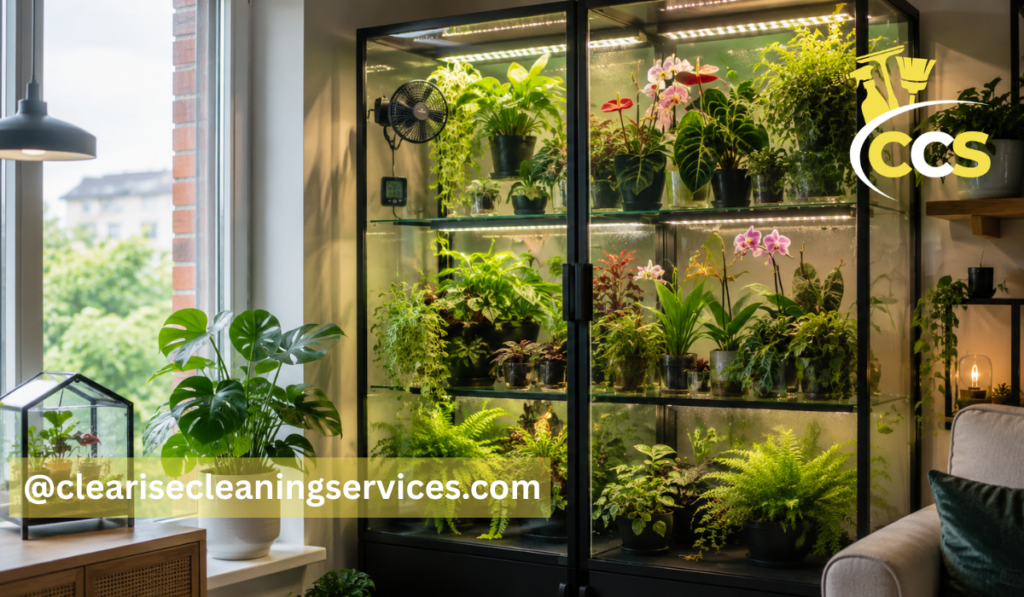
There are several common types of indoor greenhouses, and each one fits a different need. An indoor greenhouse cabinet is usually the most decorative option. It often uses a glass or metal display cabinet and turns it into a controlled plant space. This type is popular with houseplant collectors because it looks clean and can blend into home decor.
A zippered tiered greenhouse tent is more practical than decorative. It usually has metal shelving covered with clear plastic or vinyl. These are useful for seed starting, growing many small plants, or holding propagation trays. They may not look as polished as a cabinet, but they offer a lot of growing space for the price.
A tabletop or mini indoor greenhouse is best for small spaces. It can sit on a counter, desk, windowsill, or plant stand. This option works well for small ferns, cuttings, seedlings, and compact tropical plants. A mini indoor greenhouse with light is especially helpful when the room does not get enough natural sunlight.
An indoor greenhouse glass display case is similar to a cabinet but may be smaller or more decorative. It is usually chosen for plants that deserve to be seen, such as orchids, rare aroids, or small humidity-loving plants.
An indoor greenhouse kit is a ready-made option. It may include shelves, a cover, and sometimes grow lights or trays. This is a good choice for beginners who want a simple setup without planning every part separately.
Indoor Greenhouse Cabinet for a Stylish Plant Display
An indoor greenhouse cabinet is different from a basic shelf because it creates a more controlled space. A normal shelf can hold plants, but it does not hold humidity well and does not protect plants from drafts. A cabinet, especially one with glass doors, helps create a more stable environment while also making plants look like part of the room design.
This type of indoor greenhouse is best for people who want both function and style. It can turn a plant collection into a living display. Many people use cabinets for tropical houseplants, small orchids, ferns, hoyas, anthuriums, and rare plants that need extra care.
Glass doors help hold humidity, but the setup still needs airflow. Without air movement, moisture can sit on leaves and surfaces for too long. This can lead to mold, mildew, or plant disease. A small fan inside the cabinet can gently move air around without drying the plants too much.
An indoor greenhouse cabinet is worth choosing if you want something attractive, permanent, and easy to organize. It is also a good choice if you have pets, children, or limited floor space and want your plants protected behind doors.
A good cabinet setup usually includes grow lights, small fans, a digital hygrometer, and shelves that allow air and light to move between levels. Wire shelves or slotted acrylic shelves often work better than solid glass shelves because they do not block as much light or airflow.
Indoor Greenhouse IKEA Ideas and Cabinet Conversions
Indoor greenhouse IKEA ideas have become popular because many IKEA-style glass cabinets are affordable, simple, and easy to modify. People like them because they already look like furniture, so the greenhouse does not feel out of place in a living room, bedroom, or office.
A common indoor greenhouse IKEA setup starts with a glass display cabinet. The cabinet is then modified with grow lights, small fans, weatherstripping, and sometimes different shelving. Some people also drill or use existing openings for cables, depending on the cabinet design. The goal is to create a neat growing space that holds humidity while still allowing safe airflow and lighting.
Most cabinets need some changes before they work well as plant greenhouses. Grow lights are often attached under each shelf or along the sides. Small fans are added to keep air moving. Weatherstripping may be placed around door gaps if humidity escapes too quickly. Some people replace glass shelves with wire racks or custom acrylic shelves with openings.
Cable management is important in any cabinet conversion. Lights and fans need power, but cords should be arranged safely and kept away from standing water. A clean setup should be easy to inspect, easy to clean, and safe to use.
This type of indoor greenhouse is best for plant collectors who want a furniture-style display rather than a plastic tent. It may take more setup work in the beginning, but it can look polished and support healthy plant growth when planned well.
Indoor Greenhouse with Lights for Stronger Growth
An indoor greenhouse with lights is often better than one that depends only on window light. Natural light can be helpful, but it changes by season, weather, window direction, and the distance between the plant and the glass. Many homes simply do not provide enough steady light for strong indoor growth.
Full-spectrum LED grow lights are commonly used because they support plant growth while staying more energy-efficient than many older lighting options. They can be mounted above shelves, inside cabinets, or across the top of a mini greenhouse. The goal is to place the light close enough to help the plants but not so close that it causes heat stress or leaf damage.
In a cabinet or shelf setup, lights are usually placed above each level. This helps prevent the top shelf from receiving all the light while lower shelves stay dim. In a mini indoor greenhouse with light, the lamp may be built into the frame or attached above the cover.
Many indoor growers run grow lights for about 12 to 16 hours a day, depending on the plants and season. A timer makes this much easier because it keeps the light schedule consistent. Plants also need darkness, so lights should not stay on all day and night.
A mini indoor greenhouse with light is a smart choice if you have limited space, poor natural light, or want to grow seedlings and cuttings indoors. It keeps the setup simple and gives plants a better chance to grow evenly.
Small and Mini Indoor Greenhouse Options for Limited Space
A small indoor greenhouse can be just as useful as a large one if it matches your needs. Not everyone has space for a tall cabinet or wide shelving unit. Apartment gardeners, students, renters, and people with small rooms may prefer a compact setup that fits on a counter, desk, windowsill, or narrow plant stand.
A tabletop glass greenhouse is a good option for small decorative plants. It can hold a few ferns, miniature orchids, moss arrangements, or humidity-loving cuttings. It looks attractive and does not take over the room.
A small plastic propagation greenhouse is usually more practical. It may not be as decorative, but it is useful for seed trays, cuttings, and young plants. These are often lightweight, affordable, and easy to move. Some come with vents, which help you adjust airflow and moisture.
A mini indoor greenhouse with light is helpful when space and sunlight are both limited. It can support herbs, seedlings, or small tropical plants without needing a large window. This type is especially useful in apartments where window direction may not be ideal.
For compact setups, choose plants that stay small or grow slowly. Mini ferns, small hoyas, jewel orchids, baby anthuriums, and rooted cuttings can work well. Avoid plants that quickly outgrow the space unless you are prepared to move them later.
Indoor Greenhouse Kit vs DIY Indoor Greenhouse
An indoor greenhouse kit is a ready-made option that usually includes a frame, shelves, and a clear cover. Some kits may also include trays, vents, or grow lights. The main advantage is convenience. You do not have to plan every part from the beginning, and you can usually set it up quickly.
A kit is often better for beginners who want a simple way to start. It is also useful for seed starting because many kits are designed to hold trays and small pots. If your goal is function over appearance, a kit can be a practical and budget-friendly choice.
A DIY indoor greenhouse gives you more freedom. You can choose the exact cabinet, shelves, lights, fans, and layout. This is helpful if you have a specific space, a certain design style, or plants with special needs. DIY setups can look more attractive and perform better, but they usually require more planning.
Budget is an important difference. A simple kit may cost less at first, while a cabinet conversion may cost more after adding lights, fans, shelving, weatherstripping, and accessories. However, a DIY cabinet may last longer and look better in your home.
For most beginners, a basic indoor greenhouse kit or small greenhouse with lights is the easiest starting point. For plant collectors who care about appearance and custom conditions, a DIY cabinet may be the better long-term choice.
Best Plants to Grow in an Indoor Greenhouse
The best plants for an indoor greenhouse are plants that enjoy steady humidity and protection from dry air. Tropical houseplants are the most common choice. Plants such as anthuriums, philodendrons, alocasias, calatheas, and some hoyas often appreciate the extra moisture and stable conditions.
Ferns are also good candidates because many of them dislike dry indoor air. A small greenhouse can help keep their fronds from drying out too quickly. Orchids can also do well, especially smaller types that enjoy humidity and bright but gentle light.
Seedlings and cuttings are excellent choices for an indoor greenhouse. Young plants are more sensitive than mature plants, and they often need steady moisture while roots develop. Propagation trays can be kept together in one controlled area, making them easier to check and care for.
Small carnivorous plants may also benefit from a mini greenhouse, but they need the right light, water, and airflow. They should not be treated exactly like tropical foliage plants because many have specific care needs.
Not every plant needs a fully enclosed setup. Succulents, cacti, snake plants, and many drought-tolerant plants usually prefer drier air and strong light. Keeping them in a humid greenhouse may cause problems unless the setup is very well ventilated.
Essential Indoor Greenhouse Setup Components
A successful indoor greenhouse does not need to be complicated, but a few basic components make a big difference. Grow lights are usually the first important item. Even if the greenhouse is near a window, lights help provide steady brightness during cloudy days, winter months, or in darker rooms.
Small fans are just as important as lights. Humidity is helpful, but still air can create problems. Gentle airflow helps reduce mold, keeps leaves drier, and makes the environment healthier. The fan does not need to blow strongly. It only needs to keep the air moving.
A digital hygrometer helps you see the humidity and temperature inside the greenhouse. Without one, you are only guessing. This small tool makes it easier to know whether your plants are too dry, too wet, too hot, or too cold.
Some setups use a humidity tray or a small water source to raise moisture. Others rely on the plants and soil to create enough humidity inside the enclosure. Weatherstripping can help glass cabinets hold humidity better, but it should not make the cabinet completely airless.
Shelving also matters. Solid glass shelves can block light and airflow from moving down through the greenhouse. Wire shelves or slotted shelves often work better. Safe cable management is also important because grow lights and fans use electricity. Keep cords neat, dry, and easy to inspect.
Indoor Greenhouse Humidity, Airflow, and Temperature Guide
Most common indoor tropical plants prefer moderate to high humidity, but more humidity is not always better. A range around 60% to 80% works well for many tropical plants, though exact needs vary by species. Some plants are comfortable at lower levels, while very delicate plants may prefer higher humidity.
Airflow is what keeps humidity from becoming a problem. When air does not move, moisture can sit on leaves, soil, and cabinet walls. This can encourage mold, fungus, and rot. A small fan running gently inside the greenhouse can help prevent this.
To avoid stagnant air, leave some space between plants. A crowded greenhouse may look full and beautiful, but it can trap moisture between leaves. Plants should have enough room for air to move around them.
Temperature should also stay steady. Most indoor houseplants are comfortable in normal home temperatures, often around the same range people enjoy. Avoid placing the greenhouse near cold windows, heaters, fireplaces, or air-conditioning vents.
You can tell the greenhouse is too wet if there is constant heavy condensation, musty smell, mold on soil, or soft plant stems. It may be too dry if leaves curl, edges turn crispy, or cuttings wilt quickly. If leaves fade, stretch, or grow weakly, the light may be too low. If leaves burn or dry quickly, the lights may be too close or too strong.
Indoor Greenhouse for Winter Plant Care
An indoor greenhouse for winter can make a big difference because winter creates several challenges at once. Indoor heating dries the air, daylight hours become shorter, and cold drafts can stress plants. Even plants that grow well in summer may struggle during the colder months.
A greenhouse helps by holding humidity around the plants. This is useful for tropical plants that dislike dry heated rooms. It also protects plants from sudden drafts near doors or windows. If the greenhouse is placed in a stable room and away from cold glass, plants usually experience less stress.
Grow lights are especially helpful in winter. Since natural light is weaker and shorter, an indoor greenhouse with lights can help plants maintain healthier growth. The lights do not need to force fast growth; they simply help prevent plants from becoming weak, stretched, or inactive due to low light.
Watering should be adjusted in winter. Even inside a greenhouse, many plants use water more slowly when temperatures and light levels are lower. The soil may stay moist longer, so overwatering becomes a bigger risk. Always check the soil before watering rather than following a fixed schedule.
Airflow should continue in winter, even if humidity is lower. A small fan can keep the greenhouse fresh and reduce mold risk. The goal is balance: enough humidity to protect the plants, enough air movement to keep them healthy, and enough light to support steady growth.
Common Indoor Greenhouse Mistakes to Avoid
One of the most common mistakes is adding humidity without adding airflow. Many people assume a closed greenhouse should stay wet all the time, but plants still need fresh moving air. High humidity with no airflow can lead to mold, leaf spots, and root problems.
Another mistake is using weak or poorly placed lights. A light at the very top may not reach plants on lower shelves. Plants may stretch toward the light or grow unevenly. In most shelf or cabinet setups, each level needs its own light source.
Overwatering is also common. Because an indoor greenhouse holds moisture, soil may dry more slowly than it would on an open shelf. Watering too often can cause root rot, especially when pots do not drain well.
Crowding too many plants together can create hidden problems. Leaves may stay wet, pests can spread quickly, and airflow becomes blocked. It is better to leave some open space than to pack the greenhouse too tightly.
Using solid glass shelves without thinking about airflow and light is another issue. Glass may look clean, but it can block light from reaching lower plants and limit air movement. Wire or slotted shelves often work better for plant health.
Finally, do not ignore pests, mold, or condensation. A greenhouse can protect plants, but it can also allow small problems to spread if you never inspect it. Check leaves, soil, fans, lights, and corners regularly so you can fix issues early.
Conclusion
The best indoor greenhouse is the one that fits your plants, your home, and your care routine. If you want a stylish display for tropical plants, an indoor greenhouse cabinet or glass cabinet conversion may be the right choice. If you mainly want to start seeds or grow many small plants, a zippered greenhouse tent or indoor greenhouse kit may be more practical. If you have limited room, a small tabletop setup or mini indoor greenhouse with light can still provide excellent results.
A good setup does not need to be expensive or complicated. The most important parts are steady light, gentle airflow, humidity monitoring, safe wiring, and enough space for plants to breathe. When these basics are in place, an indoor greenhouse can help plants grow better in every season.
For winter care, propagation, tropical houseplants, or apartment gardening, an indoor greenhouse gives you more control than an open shelf or windowsill. Start with the plants you already have, choose a size that fits your space, and build a setup that is easy to maintain. A practical indoor greenhouse should make plant care simpler, healthier, and more enjoyable.
FAQs
What Is An Indoor Greenhouse Used For?
An indoor greenhouse is used to grow plants in a controlled space inside the home. It helps manage humidity, light, airflow, and temperature, making it useful for tropical plants, seedlings, and winter care.
Do Indoor Greenhouses Need Grow Lights?
Many indoor greenhouses work better with grow lights because window light is often weak or uneven. Grow lights help plants receive steady light, especially during winter or in darker rooms.
Is An Indoor Greenhouse Good For Apartments?
Yes, an indoor greenhouse can be great for apartments. Small cabinets, tabletop greenhouses, and mini indoor greenhouse kits allow you to grow healthy plants without needing outdoor garden space.
How Much Humidity Should An Indoor Greenhouse Have?
Most tropical plants do well with humidity around 60% to 80%. However, airflow is also important because too much trapped moisture without air movement can cause mold or plant rot.
What Plants Grow Best In An Indoor Greenhouse?
Tropical houseplants, ferns, orchids, seedlings, cuttings, and small humidity-loving plants grow well in an indoor greenhouse. Cacti and succulents usually prefer drier air and may not need one.
Disclaimer: This article is for general indoor gardening information only. Plant needs can vary based on species, home conditions, climate, lighting, and care routine. Always observe your plants closely and adjust humidity, watering, airflow, and lighting as needed.
Thanks for visiting Clearise Cleaning Services! Discover more helpful tips and expert cleaning insights by exploring our related categories.